Pregabalin Capsule
Product Images NDC 64980-415

View Photos of Packaging, Regulatory Labels, and Product Appearance

Product Visual Gallery

This gallery contains 21 technical images submitted to the FDA as part of the official labeling for Pregabalin (NDC 64980-415). Unlike standard consumer photos, these assets often include clinical data figures, molecular chemical structures, and official manufacturer packaging layouts.

As provided by Rising Pharma Holdings, Inc., these visuals offer a comprehensive scientific overview of the product's physical and chemical identity, aiding pharmacists and researchers in product verification and study.

FDA Label Image

Pregabalin-100mg-1000-jpg (Pregabalin 100mg 1000)
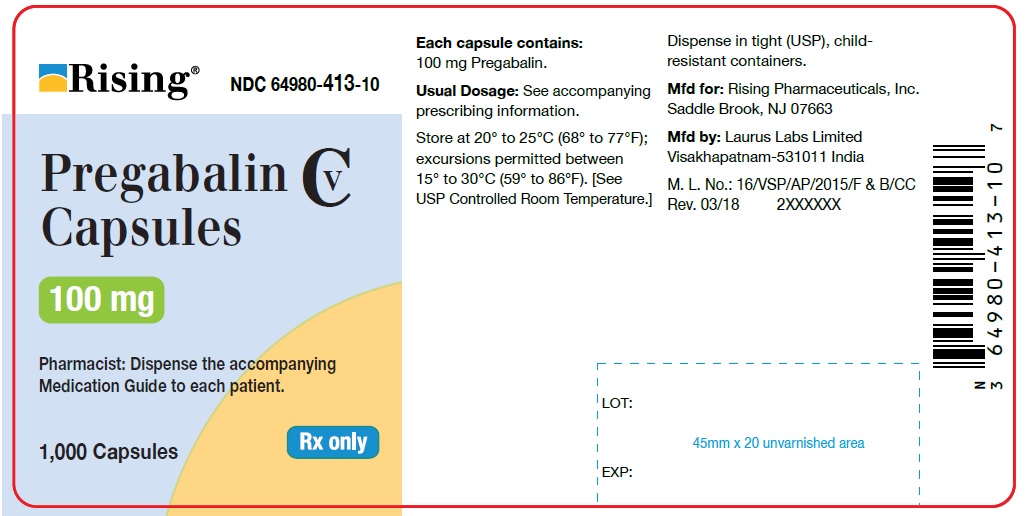
Pregabalin-100mg-1000-jpg (Pregabalin 100mg 1000)
Each capsule contains 100 mg of Pregabalin and should be dispensed in USP child-resistant containers. It is manufactured by Rising Pharmaceuticals, Inc. and the usual dosage can be found in the accompanying prescribing information. It should be stored at 20°C to 25°C (68°F to 77°F) with permitted excursions between 15°C to 30°C (59°F to 86°F). The medication guide should be dispensed to each patient. The NDC number is 64980-413-10 and it is manufactured by Laurus Labs Limited in Visakhapatnam, India.*
FDA Label Image

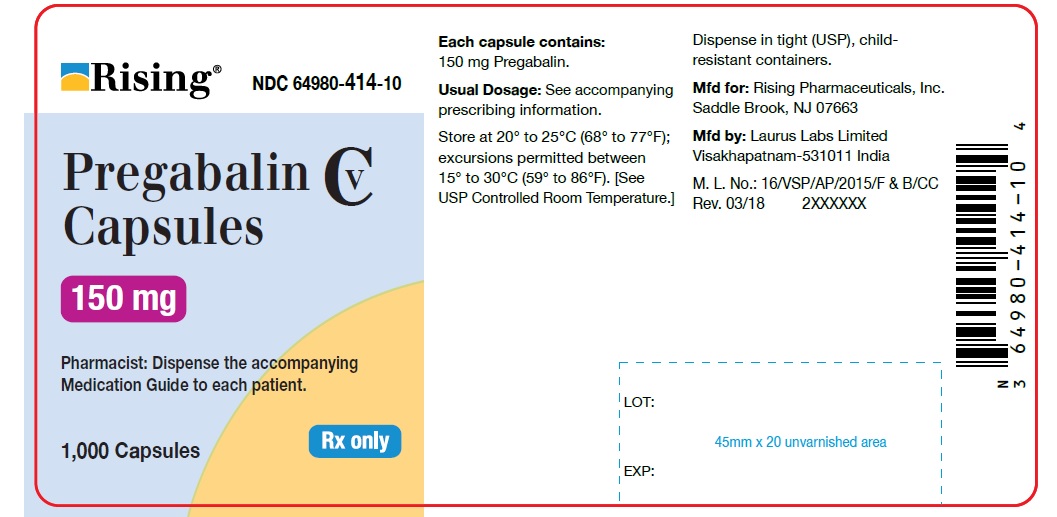
Pregabalin-150mg-1000-jpg (Pregabalin 150mg 1000)

Pregabalin-150mg-1000-jpg (Pregabalin 150mg 1000)
The Rising NDC 64980-414-10 is a package of 1000 capsules containing 150mg of Pregabalin each. It is recommended to dispense the medication guide to each patient. The usual dosage should be checked in the accompanying prescribing information. The capsules should be stored between 20°C to 25°C (68°F to 77°F), with excursions permitted between 15°C to 30°C (59°F to 86°F). The medication should be dispensed in child-resistant containers. The Rising Pharmaceuticals, Inc. manufactures it for Saddle Brook, NJ 07663, while Laurus Labs Limited also manufactures it in Visakhapatnam-531011 India.*
FDA Label Image

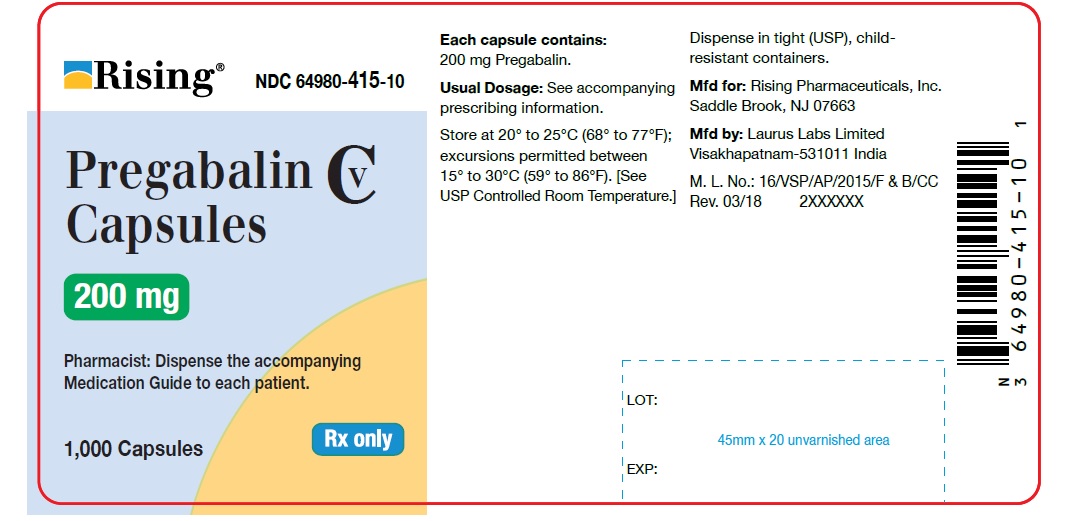
Pregabalin-200mg-1000-jpg (Pregabalin 200mg 1000)

Pregabalin-200mg-1000-jpg (Pregabalin 200mg 1000)
This is a medication called Pregabalin, which is contained in a capsule. The dosage information is not provided, and it is recommended to store the medication in a tight, child-resistant container at temperatures between 20-25°C. The medication guide should be dispensed to each patient along with their prescription. The manufacturer is Rising Pharmaceuticals, and the medication is produced by Laurus Labs Limited in India. This description does not include any mention of the uses or intended effects of Pregabalin.*
FDA Label Image

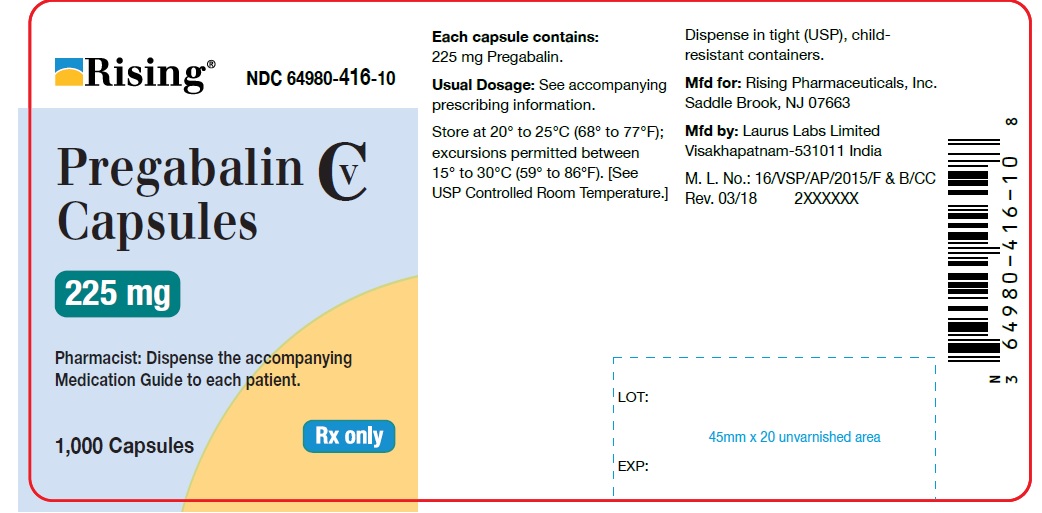
Pregabalin-225mg-1000-jpg (Pregabalin 225mg 1000)

Pregabalin-225mg-1000-jpg (Pregabalin 225mg 1000)
Each capsule contains 225mg of Pregabalin that should be dispensed in child-resistant containers. It is manufactured by Rising Pharmaceuticals, Inc. The dosage can be found in the accompanying prescribing information. It is suggested to store the capsules between 20°C to 25°C. The medication guide should be given to each patient by the pharmacist. The manufacturer is Laurus Labs Limited located in Visakhapatnam, India.*
FDA Label Image

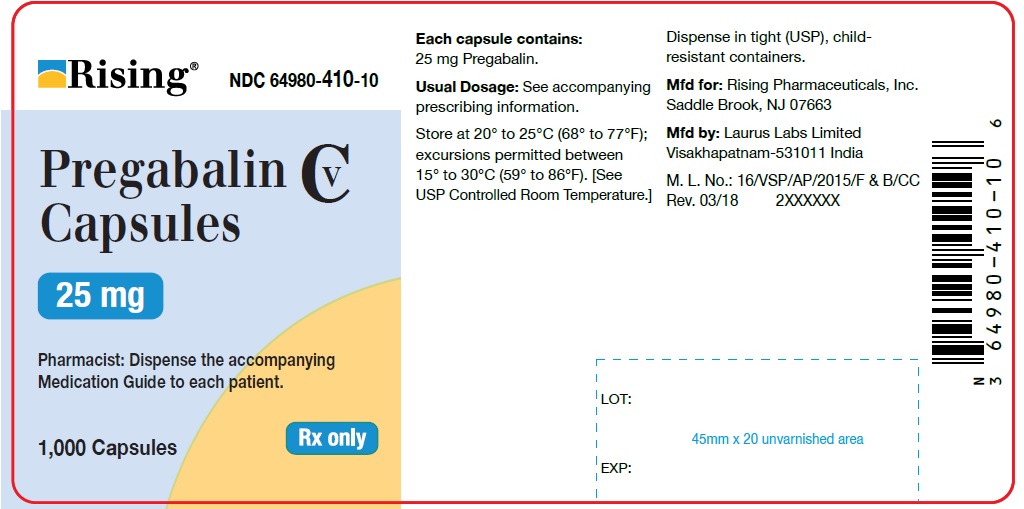
Pregabalin-25mg-1000-jpg (Pregabalin 25mg 1000)

Pregabalin-25mg-1000-jpg (Pregabalin 25mg 1000)
This is a medication information sheet for Pregabalin capsules, manufactured by Rising Pharmaceuticals. Each capsule contains 25mg of Pregabalin and should be stored in a tight child-resistant container at 15°-30°C (59°-86°F). The medication guide should be dispensed to each patient by the pharmacist. The NDC number for this medication is 64980-410-10, and it is manufactured by Laurus Labs Limited in India.*
FDA Label Image

Pregabalin-300mg-1000-jpg (Pregabalin 300mg 1000)

Pregabalin-300mg-1000-jpg (Pregabalin 300mg 1000)
This is a description of a medication called Pregabalin, which comes in capsule form and contains 300mg of the active ingredient. It should be stored in a tightly-sealed, child-resistant container at a temperature between 20°C and 25°C. The medication guide for patients should be dispensed by the pharmacist. The manufacturer is Rising Pharmaceuticals, Inc. produced by Laurus Labs Limited in India. The NDC code of the medication is 64980-417-10. Dosage information should be obtained from the accompanying prescribing information.*
FDA Label Image

Pregabalin-50mg-1000-jpg (Pregabalin 50mg 1000)

Pregabalin-50mg-1000-jpg (Pregabalin 50mg 1000)
This is a description of a medication containing 50mg Pregabalin per capsule. The accompanying prescribing information should be consulted for dosage instructions. It should be stored at 20° to 25°C (68° to 77°F) in a tight child-resistant container. The medication guide should be dispensed to each patient, per the pharmacist's instructions. The medication is manufactured by Laurus Labs Limited in Visakhapatnam-531011 India and distributed by Rising Pharmaceuticals, Inc. in Saddle Brook, NJ 07663.*
FDA Label Image

Pregabalin-75mg-1000-jpg (Pregabalin 75mg 1000)

Pregabalin-75mg-1000-jpg (Pregabalin 75mg 1000)
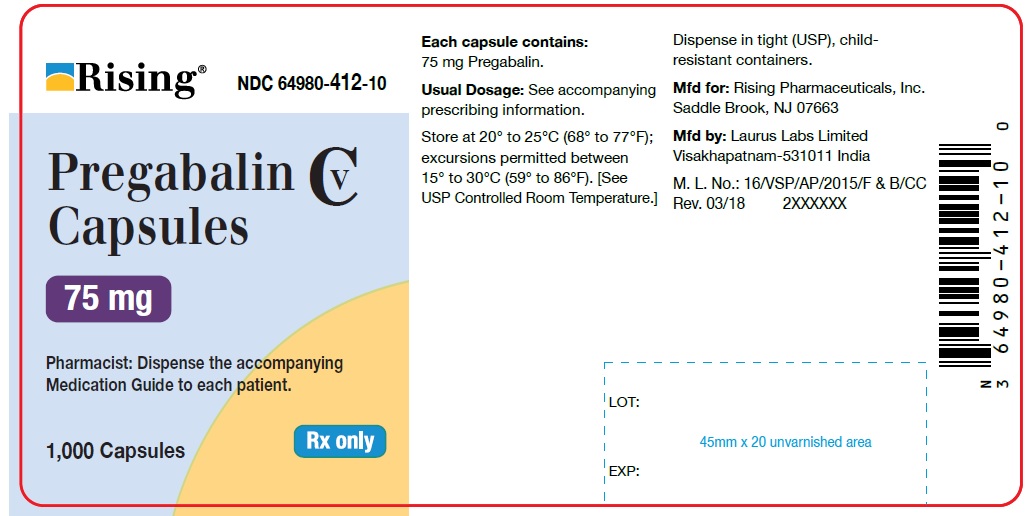
Each capsule contains 75 mg of Pregabalin and should be dispensed in tight child-resistant containers. Dosage information can be found in the accompanying prescribing information. Store between 20°C to 25°C (68°F to 77°F) with excursions permitted between 18°C to 30°C (89°F to 86°F). The medication guide should be dispensed to each patient by the pharmacist. Available in a bottle of 1000 capsules.*
FDA Label Image

Pregabalinchemistrystructure (Pregabalin Chem Structure)

FDA Label Image

Pregabalin-equation (Pregabalin Equation)

FDA Label Image

Pregabalinfig1 (Pregabalin Fig 01)

Pregabalinfig1 (Pregabalin Fig 01)
The text contains some numbers, single letters, and random characters. It's not possible to generate a useful description with this text.*
FDA Label Image

Pregabalinfig2 (Pregabalin Fig 02)

Pregabalinfig2 (Pregabalin Fig 02)
This appears to be a report or graph displaying the percent improvement in pain from a baseline for patients who took Pregabalin 160mg for three days. The graph shows that at 2 weeks, there was a 10% improvement in pain, and at 23 weeks, there was a 20% improvement in pain. The rest of the text is not available or makes no sense.*
FDA Label Image

Pregabalinfig3 (Pregabalin Fig 03)

Pregabalinfig3 (Pregabalin Fig 03)
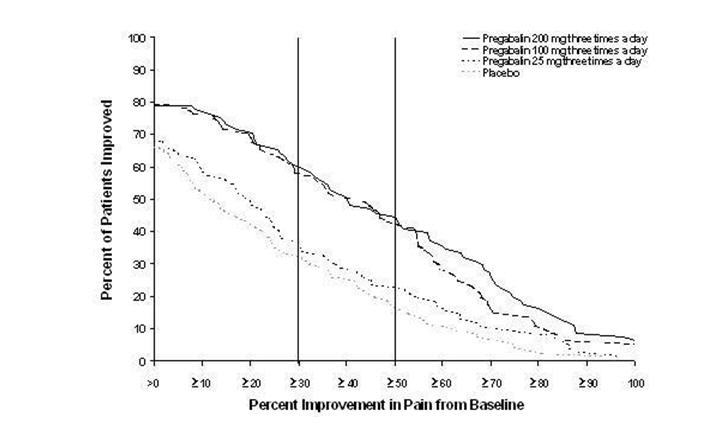
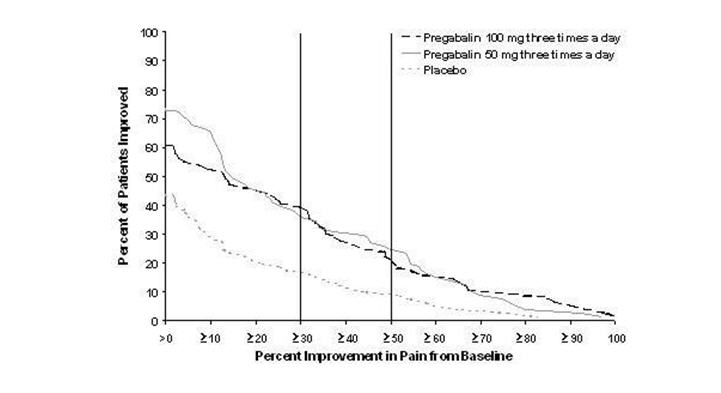
This appears to be a chart displaying the percent of patients improved and the percent improvement in pain from baseline for various medications. The medications listed are Pregatalin, Pregabain, and Pregabalin at various dosages and frequencies. The chart also includes dates, but it is unclear what they represent without additional context.*
FDA Label Image

Pregabalinfig4 (Pregabalin Fig 04)

FDA Label Image

Pregabalinfig5 (Pregabalin Fig 05)

Pregabalinfig5 (Pregabalin Fig 05)
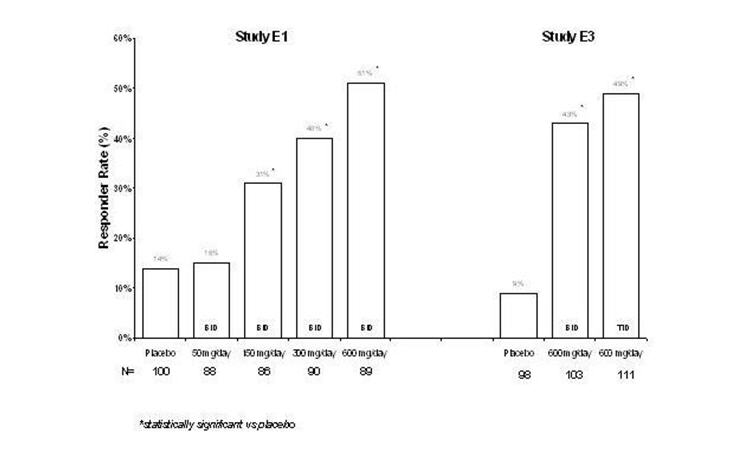
The text appears to be a table comparing the effectiveness of different doses of Fregabalin and Pregataiin in reducing pain. The table also includes a placebo group, and a percentage improvement in pain from baseline for each group. However, the text contains numerous errors and is difficult to interpret.*
FDA Label Image

Pregabalinfig6 (Pregabalin Fig 06)

FDA Label Image

Pregabalinfig7 (Pregabalin Fig 07)

FDA Label Image

Pregabalinfig8 (Pregabalin Fig 08)

Pregabalinfig8 (Pregabalin Fig 08)
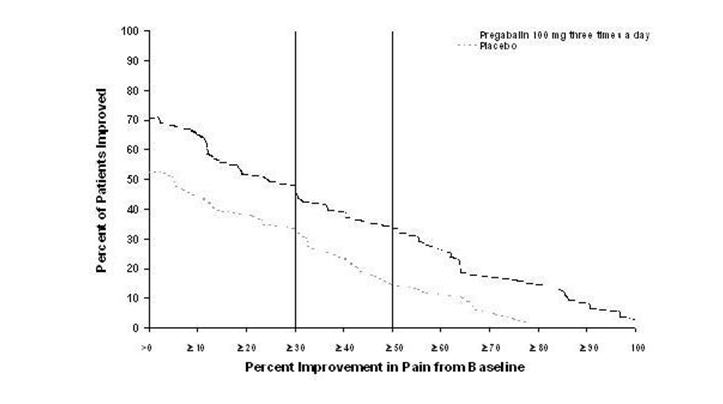
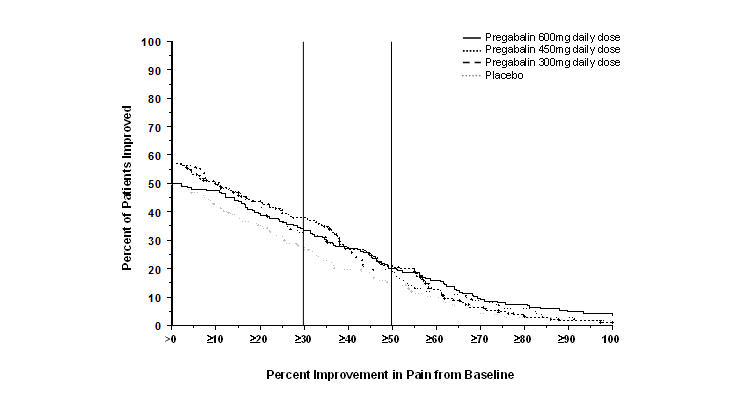
This text appears to be a chart showing different doses of pregabalin and a placebo, along with the percentage of patients and their improvement in pain from baseline. It is not possible to determine what the chart is specifically referencing without further information.*
FDA Label Image

Pregabalinfig9 (Pregabalin Fig 09)

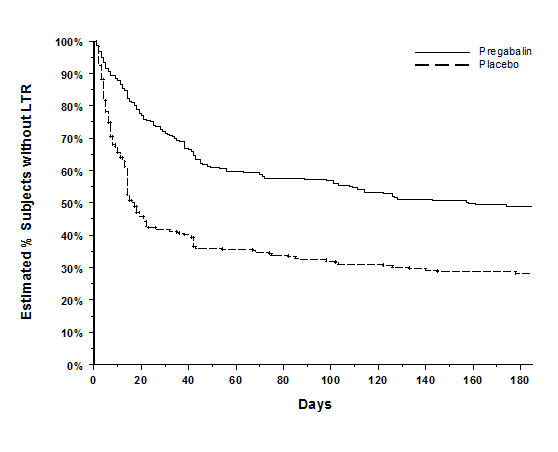
Pregabalinfig9 (Pregabalin Fig 09)
The text seems to be a table showing the estimated percentage of subjects without "LTR" for two different drugs, "Pregabain" and "Plcebo". The values in the table range from 0% to 20%, but there is no information about what "LTR" refers to or what kind of study or experiment this table is based on. The numbers "2 @ e & w00 12" and "160 150" seem unrelated to the rest of the text and may be artifacts of the process.*
FDA Label Image

Pregabalinfig10 (Pregabalin Fig 10)

FDA Label Image

Pregabalinfig11 (Pregabalin Fig 11)

Pregabalinfig11 (Pregabalin Fig 11)
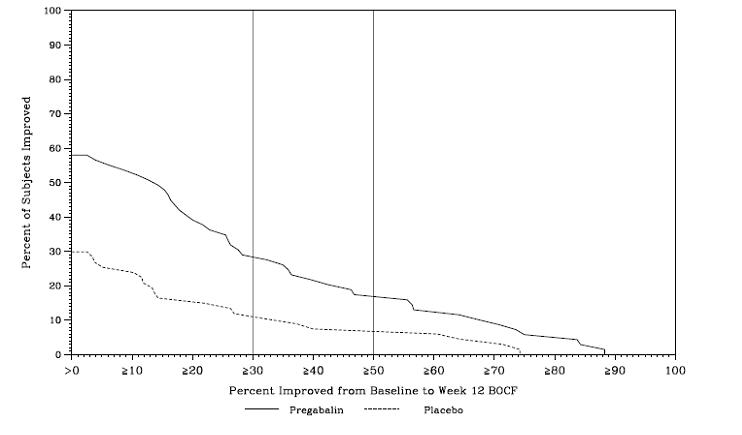
This data displays the percentage of subjects that improved after 16 weeks on either pregabalin or placebo treatment. The percentage of subjects that improved was at 100% and it was shown along the Y-axis. The X-axis shows a range of values from 210 to 270. The percent of improvement from baseline is shown in that range. In this range, only two treatment options, pregabalin and Placebo, were assessed with the percentage of improvement they each provided. The graph displays two columns, with Pregabalin offering 280% improvement and Placebo offering 200% improvement.*

* These product label images have been analyzed using experimental machine learning. Please verify findings with the primary label text.