Abiraterone Acetate Tablet
Product Images NDC 64980-418

19 FDA label images from Rising Pharma Holdings, Inc. · Packaging, Regulatory Labels, and Product Appearance

Product Visual Gallery

This gallery contains 19 technical images submitted to the FDA as part of the official labeling for Abiraterone Acetate (NDC 64980-418). Unlike standard consumer photos, these assets often include clinical data figures, molecular chemical structures, and official manufacturer packaging layouts.

As provided by Rising Pharma Holdings, Inc., these visuals offer a comprehensive scientific overview of the product's physical and chemical identity, aiding pharmacists and researchers in product verification and study.

FDA Label Image

Abiraterone-table1 (Abiraterone Table1)
Abiraterone-table1 (Abiraterone Table1)
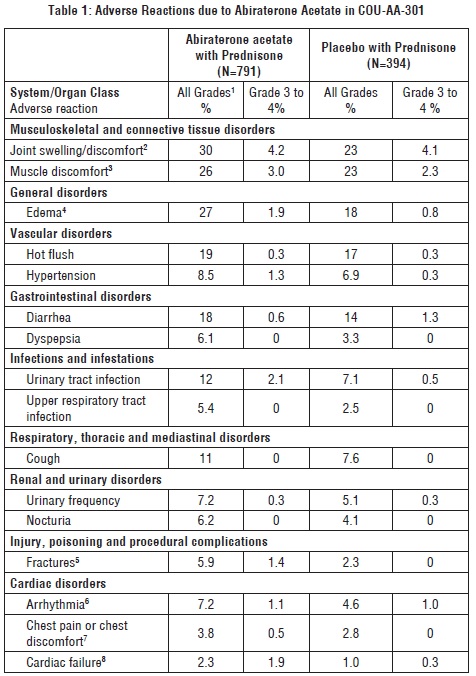
Data table listing adverse reactions reported in clinical study COU-AA-301 comparing Abiraterone acetate with Prednisone versus Placebo with Prednisone. The table categorizes reactions by system/organ class such as musculoskeletal disorders, general disorders, vascular disorders, gastrointestinal disorders, infections, respiratory disorders, renal disorders, injuries, and cardiac disorders, showing frequency percentages for all grades and grades 3 to 4 in both groups.*
FDA Label Image

Abiraterone-table2 (Abiraterone Table2)

Abiraterone-table2 (Abiraterone Table2)
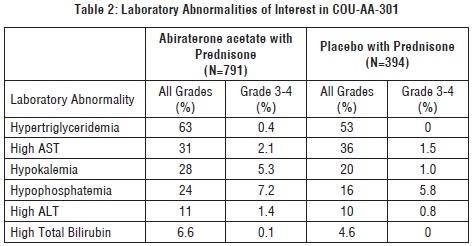
A table titled Laboratory Abnormalities of Interest in COU-AA-301 comparing the incidence rates of various laboratory abnormalities in patients treated with Abiraterone acetate with Prednisone (N=791) and Placebo with Prednisone (N=394). It lists abnormalities such as hypertriglyceridemia, high AST, hypokalemia, hypophosphatemia, high ALT, and high total bilirubin with corresponding percentages for all grades and grade 3-4 severity.*
FDA Label Image

Abiraterone-table3 (Abiraterone Table3)

Abiraterone-table3 (Abiraterone Table3)
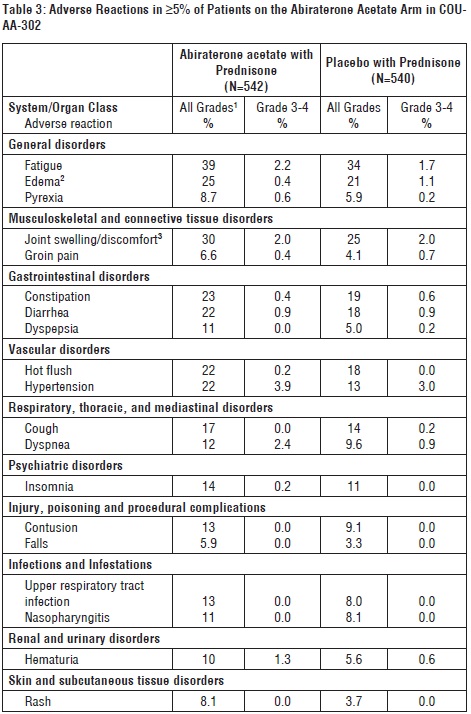
A data table titled 'Adverse Reactions in ≥5% of Patients on the Abiraterone Acetate Arm in COU-AA-302'. It compares the percentage of patients experiencing various adverse reactions, by system/organ class, between Abiraterone acetate with Prednisone (N=542) and Placebo with Prednisone (N=540). The table lists adverse reactions including fatigue, edema, musculoskeletal discomfort, gastrointestinal issues, vascular disorders, respiratory symptoms, psychiatric disorders, injuries, infections, renal, and skin disorders with corresponding incidence rates for all grades and grade 3-4 severity.*
FDA Label Image

Abiraterone-table4 (Abiraterone Table4)

Abiraterone-table4 (Abiraterone Table4)
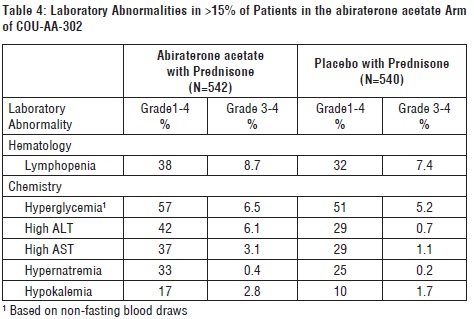
A data table titled 'Laboratory Abnormalities in >15% of Patients in the abiraterone acetate Arm of COU-AA-302' comparing the incidence percentages of various laboratory abnormalities in patients treated with Abiraterone acetate with Prednisone versus Placebo with Prednisone. The table lists abnormalities in hematology and chemistry categories, showing percentages of patients with Grade 1-4 and Grade 3-4 abnormalities, including lymphopenia, hyperglycemia, high ALT, high AST, hypernatremia, and hypokalemia.*
FDA Label Image

Abiraterone-table5 (Abiraterone Table5)

Abiraterone-table5 (Abiraterone Table5)
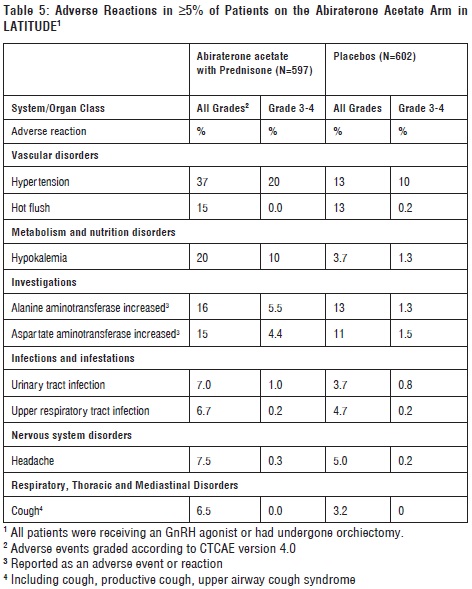
Table presenting adverse reactions occurring in 5% or more of patients on Abiraterone acetate with Prednisone compared to placebo, including categories such as vascular disorders, metabolism and nutrition disorders, investigations, infections, nervous system, and respiratory disorders. Incidence rates are detailed for all grades and grades 3-4 adverse events for both groups.*
FDA Label Image

Abiraterone-table6 (Abiraterone Table6)

Abiraterone-table6 (Abiraterone Table6)
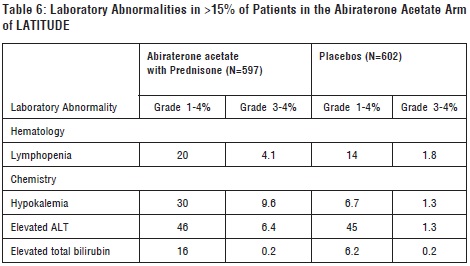
Data table presenting laboratory abnormalities occurring in more than 15% of patients in the Abiraterone Acetate arm of the LATITUDE study. It compares abnormalities in groups receiving abiraterone acetate with prednisone versus placebo, showing grades 1-4% and 3-4% for various hematalogy and chemistry parameters including lymphopenia, hypokalemia, elevated ALT, and elevated total bilirubin.*
FDA Label Image

Structure (Abiraterone Structure)

Structure (Abiraterone Structure)
Chemical structure of abiraterone acetate, showing its steroidal core with a pyridine ring and an acetate functional group.*
FDA Label Image

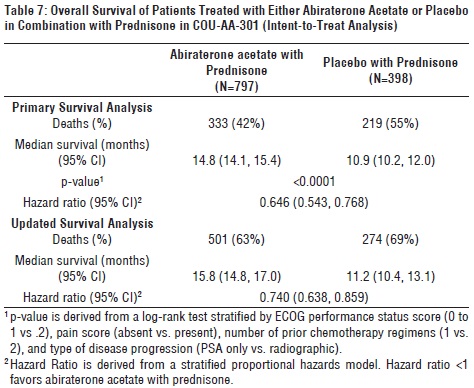
Abiraterone-table7 (Abiraterone Table7)

Abiraterone-table7 (Abiraterone Table7)
A data table titled 'Overall Survival of Patients Treated with Either Abiraterone Acetate or Placebo in Combination with Prednisone in COU-AA-301 (Intent-to-Treat Analysis)'. It compares survival outcomes including deaths, median survival in months, p-values, and hazard ratios for two groups: patients treated with Abiraterone acetate with prednisone (N=797) and patients treated with placebo with prednisone (N=398). The table includes primary and updated survival analyses with detailed statistical values and explanations of p-values and hazard ratios.*
FDA Label Image

Figure 1 (Abiraterone Figure 1)

Figure 1 (Abiraterone Figure 1)
A Kaplan-Meier overall survival curve comparing Abiraterone acetate and placebo over 21 months. The y-axis represents the percentage survival, and the x-axis shows time to death in months. The graph includes sample size counts at various time points for both groups, with Abiraterone acetate indicated by a solid line and placebo by a dashed line.*
FDA Label Image

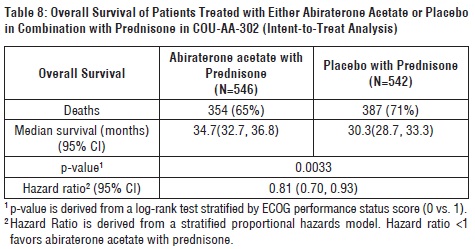
Abiraterone-table8 (Abiraterone Table8)

Abiraterone-table8 (Abiraterone Table8)
Data table titled 'Overall Survival of Patients Treated with Either Abiraterone Acetate or Placebo in Combination with Prednisone in COU-AA-302 (Intent-to-Treat Analysis)' comparing survival outcomes between groups treated with Abiraterone acetate plus prednisone and placebo plus prednisone, including deaths, median survival in months with 95% confidence intervals, p-value, and hazard ratio with confidence intervals.*
FDA Label Image

Figure 2 (Abiraterone Figure 2)

Figure 2 (Abiraterone Figure 2)
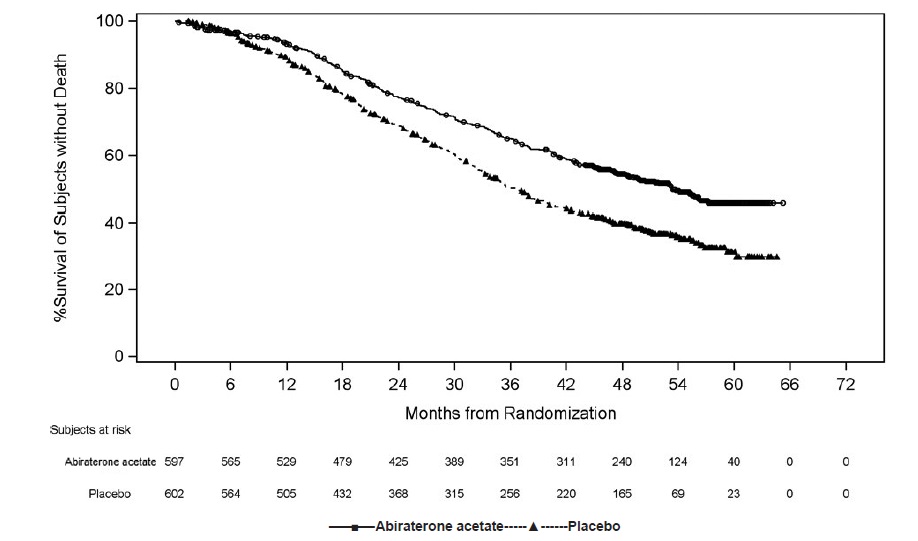
A survival curve chart comparing the percentage of subjects without death over months from randomization for Abiraterone acetate 250 mg tablets versus placebo. The x-axis represents the time in months, and the y-axis shows the percentage of surviving subjects. Two distinct curves indicate survival trends for the two groups over approximately 60 months.*
FDA Label Image

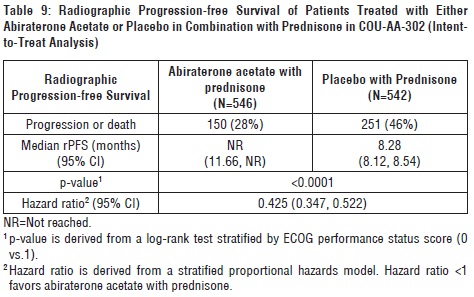
Abiraterone-table9 (Abiraterone Table9)

Abiraterone-table9 (Abiraterone Table9)
A data table titled 'Radiographic Progression-free Survival of Patients Treated with Either Abiraterone Acetate or Placebo in Combination with Prednisone in COU-AA-302 (Intent-to-Treat Analysis).' It compares radiographic progression-free survival outcomes, including progression or death percentages, median rPFS in months, p-values, and hazard ratios for Abiraterone acetate with prednisone versus placebo with prednisone groups.*
FDA Label Image

Figure 3 (Abiraterone Figure 3)

Figure 3 (Abiraterone Figure 3)
A Kaplan-Meier survival curve chart showing percentage of subjects without radiographic progression or death over time in months from randomization. Two curves compare Abiraterone acetate tablets versus placebo in a clinical study, with the number of subjects at risk at various time points displayed below the x-axis.*
FDA Label Image

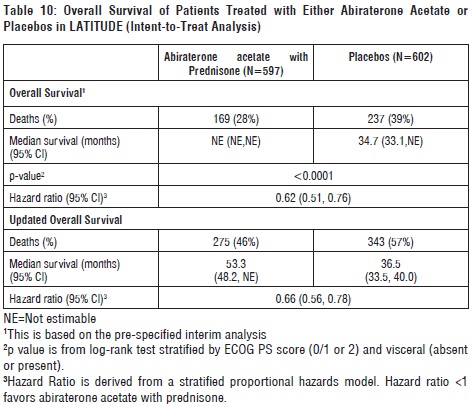
Abiraterone-table10 (Abiraterone Table10)

Abiraterone-table10 (Abiraterone Table10)
A data table titled 'Overall Survival of Patients Treated with Either Abiraterone Acetate or Placebos in LATITUDE (Intent-to-Treat Analysis)', comparing survival outcomes between patients given Abiraterone acetate with prednisone and those given placebos. It presents data on deaths, median survival in months, p-values, and hazard ratios for both overall and updated overall survival in two patient groups.*
FDA Label Image

Abiraterone-figure4 (Abiraterone Figure4)

Abiraterone-figure4 (Abiraterone Figure4)
A Kaplan-Meier survival curve showing the percentage survival of subjects without death over time in months from randomization. The graph compares two groups: Abiraterone acetate and Placebo, indicating different survival rates over approximately 60 months. The number of subjects at risk for each group is provided at multiple time points below the x-axis.*
FDA Label Image

Abiraterone-table11 (Abiraterone Table11)

Abiraterone-table11 (Abiraterone Table11)
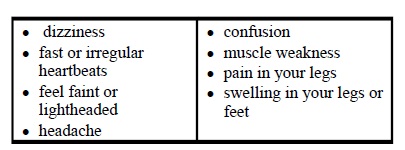
A text panel listing potential side effects including dizziness, fast or irregular heartbeats, faintness, lightheadedness, headache, confusion, muscle weakness, pain in legs, and swelling in legs or feet. This information is part of the safety or side effects section for a medication.*
FDA Label Image

Abiraterone-table12 (Abiraterone Table12)

Abiraterone-table12 (Abiraterone Table12)
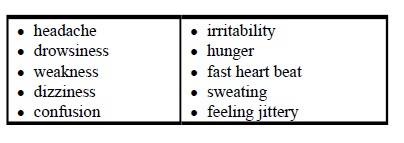
A text panel listing potential side effects including headache, drowsiness, weakness, dizziness, confusion, irritability, hunger, fast heart beat, sweating, and feeling jittery. The layout is in two columns with bullet points for each symptom.*
FDA Label Image

Abiraterone-table13 (Abiraterone Table13)

Abiraterone-table13 (Abiraterone Table13)
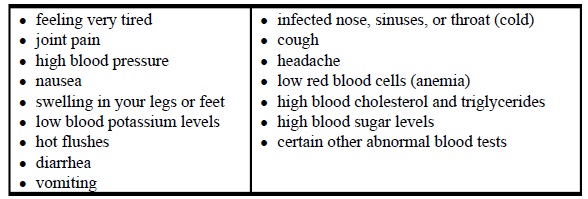
A text panel listing potential side effects or symptoms, including tiredness, joint pain, high blood pressure, nausea, swelling in legs or feet, low potassium, hot flushes, diarrhea, vomiting, colds, cough, headache, anemia, high cholesterol and triglycerides, high blood sugar levels, and other abnormal blood test results.*
FDA Label Image

Bottle-label (Abiraterone Label)

Bottle-label (Abiraterone Label)
Label for Abiraterone Acetate Tablets, USP 250 mg by Rising Pharma Holdings, Inc. The label indicates 120 tablets for oral use, prescription only, with a warning for pregnant women. It includes dosing information and storage instructions along with the NDC number 64980-418-12.*

* About these descriptions: Image descriptions on this page are generated by automated AI analysis of the product label images from the manufacturer's FDA label submission (SPL). They are provided for reference only and may contain errors or omissions. Always rely on the printed label itself and the official FDA labeling, and consult a pharmacist or healthcare professional with any questions about this product.