Aripiprazole Tablet
Product Images NDC 65162-899

View Photos of Packaging, Regulatory Labels, and Product Appearance

Product Visual Gallery

This gallery contains 15 technical images submitted to the FDA as part of the official labeling for Aripiprazole (NDC 65162-899). Unlike standard consumer photos, these assets often include clinical data figures, molecular chemical structures, and official manufacturer packaging layouts.

As provided by Amneal Pharmaceuticals Llc, these visuals offer a comprehensive scientific overview of the product's physical and chemical identity, aiding pharmacists and researchers in product verification and study.

FDA Label Image

C103b8f2-figure-01 (Aripiprazole Tablets 1)
FDA Label Image

2 mg Label (Aripiprazole Tablets 10)

FDA Label Image

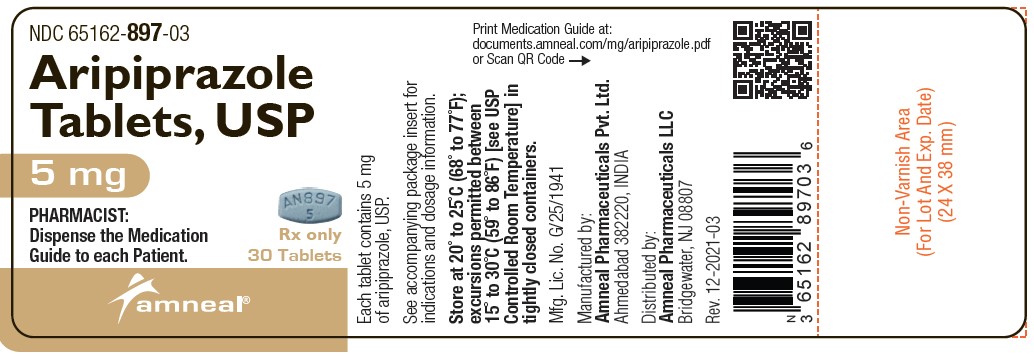
5 mg Label (Aripiprazole Tablets 11)

FDA Label Image

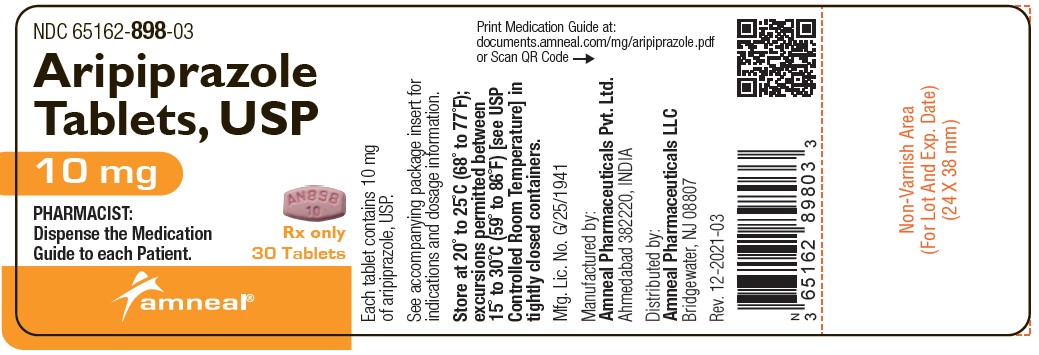
10 mg Label (Aripiprazole Tablets 12)

FDA Label Image

15 mg Label (Aripiprazole Tablets 13)

FDA Label Image

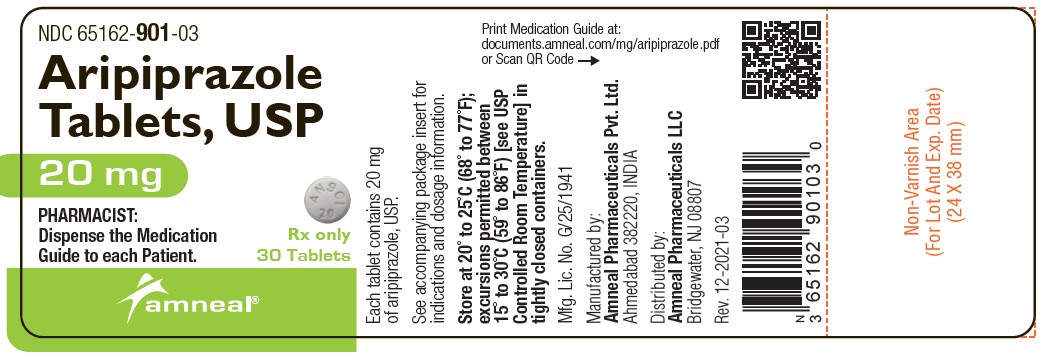
20 mg Label (Aripiprazole Tablets 14)

20 mg Label (Aripiprazole Tablets 14)
This is a medication guide for Aripiprazole, which is used to treat mental/mood disorders such as bipolar disorder, schizophrenia, and depression. It includes dosage instructions and possible side effects. Pharmacists are advised to dispense this guide to each patient. There is also a QR code on the document.*
FDA Label Image

30 mg Label (Aripiprazole Tablets 15)

FDA Label Image

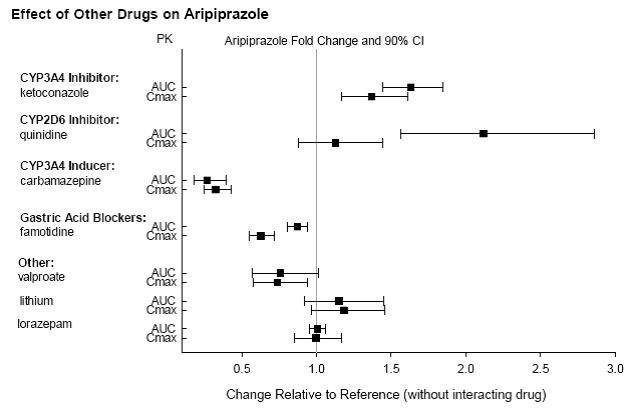
Fig-1 (Aripiprazole Tablets 2)

Fig-1 (Aripiprazole Tablets 2)
This text seems to be a table showing the effect of other drugs on Aripiprazole, with details about different inhibitors, inducers, and blockers. It includes fold change and confidence intervals to assess the relative change to the reference value when interacting with other drugs. It is likely information for medical professionals to determine potential drug interactions for patients taking Aripiprazole.*
FDA Label Image

Fig-2 (Aripiprazole Tablets 3)

Fig-2 (Aripiprazole Tablets 3)
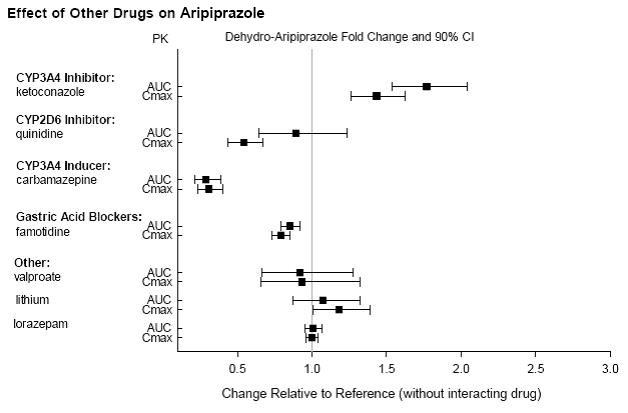
This text appears to be a chart or table with information about the effect of other drugs on aripiprazole. The drugs listed include ketoconazole, Y206 inhibitors, carbamazepine, famotine, valproate, and lorazepam. The chart also includes a "Fold Change" and a percent change, but without additional context or labels it is difficult to determine what these values indicate.*
FDA Label Image

Fig-3 (Aripiprazole Tablets 4)

Fig-3 (Aripiprazole Tablets 4)
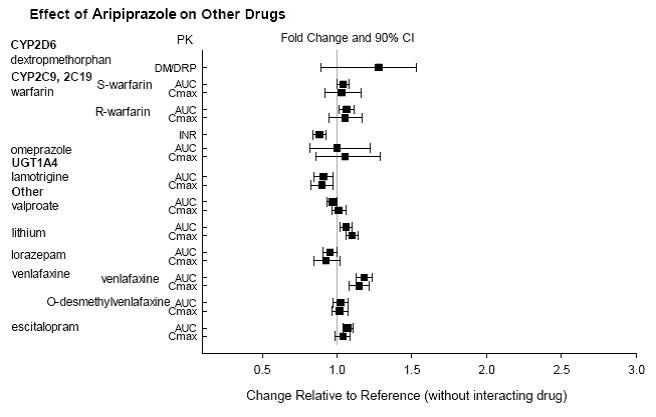
The text seems to be describing the effect of Aripiprazole on other drugs. The text contains names of various drugs such as dextromethorphan, omeprazole, valproate, Escitalopram, lorazepam, etc. along with their corresponding codes and reactions. The text also mentions a fold change and a 90% I for some drugs, but there is not enough information to know precisely what this refers to. Overall, it seems to be a pharmacological study or report.*
FDA Label Image

Fig-4 (Aripiprazole Tablets 5)

Fig-4 (Aripiprazole Tablets 5)
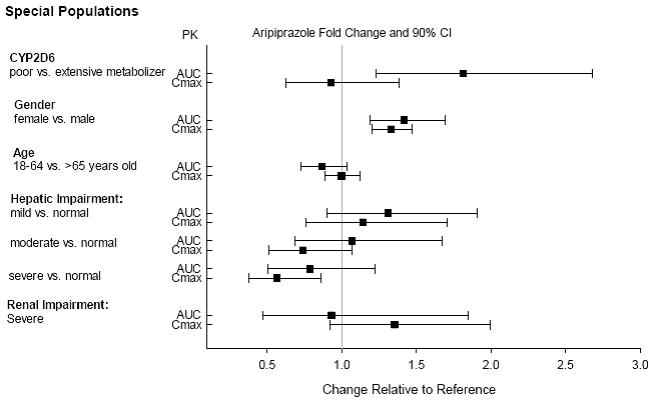
This text seems to be presenting a comparison between special populations based on factors such as metabolic rate, age, gender, hepatic impairment, and renal impairment. It also mentions a drug called Avipiprazole and presents its fold change and 90% confidence interval on a graph. However, the information is not clearly organized, and it may not be possible to fully understand the context and purpose without additional information.*
FDA Label Image

Fig-5 (Aripiprazole Tablets 6)

FDA Label Image

Fig-6 (Aripiprazole Tablets 7)

Fig-6 (Aripiprazole Tablets 7)
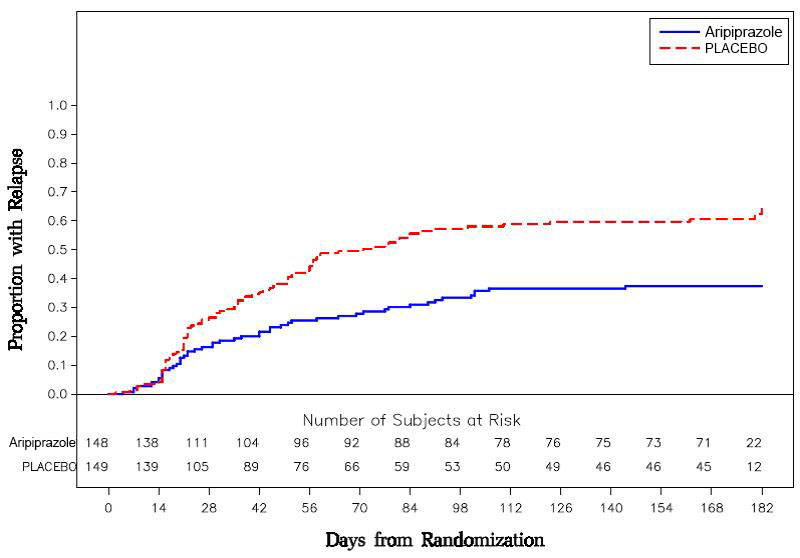
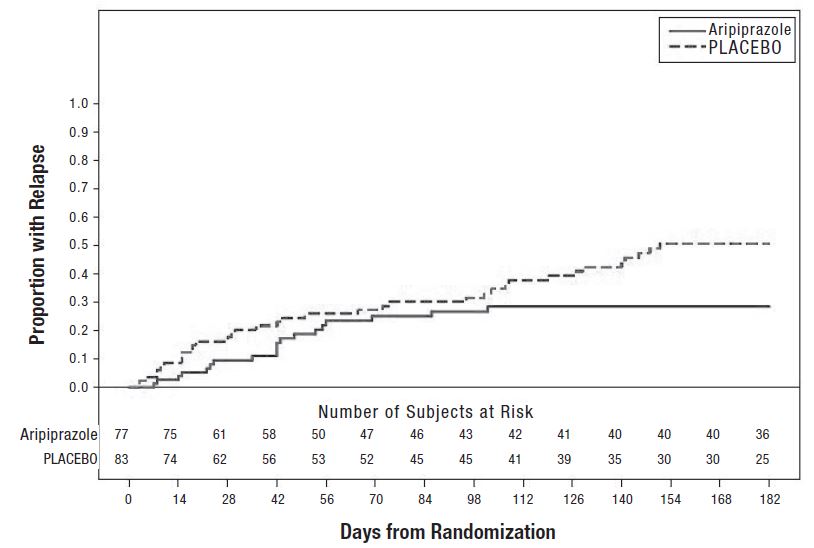
This appears to be a graph showing the proportion of people who experienced a relapse while taking Avipiprazole versus placebo over a certain period of time (measured in days from randomization). The numbers along the bottom and left side likely indicate the number of participants experiencing a relapse at each point in time.*
FDA Label Image

01 (Aripiprazole Tablets 8)

FDA Label Image

0102 (Aripiprazole Tablets 9)

0102 (Aripiprazole Tablets 9)
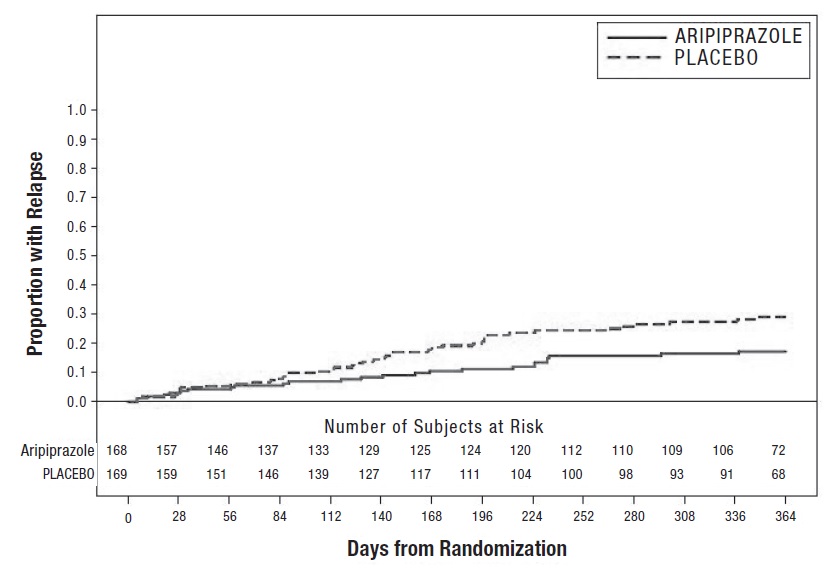
A clinical trial was conducted to compare the effectiveness of aripiprazole and a placebo treatment. The graph shows the proportion of subjects who experienced relapse over time (days from randomization). The study involved 168 to 72 subjects who received aripiprazole and 160 to 68 subjects who received the placebo. The results suggest that aripiprazole was more effective than the placebo in preventing relapse.*

* These product label images have been analyzed using experimental machine learning. Please verify findings with the primary label text.