1 Indications And Usage
Glycophos is indicated as a source of phosphorus in adults and pediatric patients 12 years and older as part of parenteral nutrition (PN) when oral or enteral nutrition is not possible, insufficient, or contraindicated.
The following Structured Product Label (SPL) was submitted to the FDA by Fresenius Kabi Usa, Llc for the product Glycophos (NDC 65219-348). This document serves as the official prescribing information, containing essential scientific data and clinical materials required for healthcare providers and patients.
This specific version of the label includes detailed information regarding 1 indications and usage, 2.1 important administration information, 2.2 important preparation information, 2.3 recommended dosage, 3 dosage forms and strengths, 4 contraindications, 5.1 pulmonary embolism due to pulmonary vascular precipitates, 5.2 hyperphosphatemia and hypocalcemia, and other regulatory disclosures. Use the navigation below to review specific sections of the FDA submission.
Glycophos is indicated as a source of phosphorus in adults and pediatric patients 12 years and older as part of parenteral nutrition (PN) when oral or enteral nutrition is not possible, insufficient, or contraindicated.
Injection: Sterile, non-pyrogenic, clear, colorless to slightly yellowish solution containing:
Glycophos is contraindicated in patients with:
Pulmonary vascular emboli and pulmonary distress related to precipitates in the pulmonary vasculature have been described in patients receiving admixed products containing calcium and phosphate or PN. The cause of precipitate formation has not been determined in all cases; however, in some fatal cases, pulmonary emboli occurred as a result of calcium phosphate precipitates. Precipitation following passage through an in-line filter and suspected in vivo precipitate formation have also been reported.
If signs of pulmonary distress occur, stop the PN infusion and initiate a medical evaluation. Visually inspect the prepared solution [see Dosage and Administration (2.2, 2.3)], the infusion set, and catheter prior to administration as well as periodically during the administration.
Hyperphosphatemia can occur with intravenous administration of phosphate-containing solutions, especially in patients with renal impairment. Hyperphosphatemia can cause the formation of insoluble calcium phosphorus products with consequent hypocalcemia, neurological irritability with tetany, nephrocalcinosis with acute kidney injury and, more rarely, cardiac irritability with arrhythmias.
Obtain serum phosphorus and calcium concentrations prior to administration of Glycophos and normalize calcium before administering Glycophos [see Dosage and Administration (2.1)]. Glycophos is contraindicated in patients with hyperphosphatemia and/or hypocalcemia [see Contraindications (4)].
Glycophos containing PN admixtures should be infused slowly to avoid phosphorus intoxication and hypocalcemia [see Dosage and Administration (2.3)].
Monitor serum phosphorus and calcium concentrations during treatment with Glycophos.
Closely monitor patients with congestive heart failure, renal impairment, cirrhosis, and in other clinical states in which there exists edema and/or sodium retention during Glycophos use [see Use in Specific Populations (8.6)]. The sodium content of Glycophos is 2 mEq/mL (46 mg/mL) and should be factored into the total sodium dose calculation for the prepared PN admixture.
Concomitant use of Glycophos with sodium-retaining drugs (e.g., corticosteroids, corticotropin, non-steroidal anti-inflammatory agents) may lead to edema due to fluid retention. Patients should be monitored for swelling and weight gain. If edema occurs, consider dose adjustment or discontinuation of the sodium-retaining drug [see Drug Interactions (7.1)].
Hypersensitivity reactions, including anaphylaxis, have been reported with Glycophos [see Adverse Reactions (6)]. Glycophos is contraindicated in patients with a history of a hypersensitivity reaction to sodium glycerophosphate or any of the active or inactive ingredients [see Contraindications (4)]. Stop administration of the PN admixture containing Glycophos immediately if signs or symptoms of a hypersensitivity reaction develop. Initiate appropriate treatment as clinically indicated.
Glycophos contains aluminum that may be toxic. Aluminum may reach toxic levels with prolonged parenteral administration if kidney function is impaired. Preterm neonates are particularly at risk because their kidneys are immature, and they require large amounts of calcium and phosphate solutions, which contain aluminum.
Research indicates that patients with impaired kidney function, including preterm neonates, who receive parenteral levels of aluminum at greater than 4 to 5 mcg/kg/day accumulate aluminum at levels associated with central nervous system and bone toxicity. Tissue loading may occur at even lower rates of administration.
Glycophos is not approved for use in pediatric patients less than 12 years of age, including preterm infants. Exposure to aluminum from Glycophos when administered at the maximum recommended dosage is not more than 0.5 mcg/kg/day [see Dosage and Administration (2.3), Description (11)].
When prescribing Glycophos for use in PN solutions containing other small volume parenteral products, limit the total daily patient exposure to aluminum in the PN admixture to no more than 5 mcg/kg/day [see Use in Specific Populations (8.4)].
Intravenous infusion of phosphate has been reported to cause a decrease in serum magnesium (and calcium) concentrations when administered to patients with hypercalcemia or diabetic ketoacidosis. Monitor serum magnesium concentrations during Glycophos treatment.
Glycophos must be diluted and administered via intravenous infusion as an PN admixture. Do not infuse directly intravenously without dilution. The infusion of hyperosmolar solutions into a peripheral vein may result in vein irritation, vein damage, and/or thrombosis. The primary complication of peripheral administration is venous thrombophlebitis, which manifests as pain, erythema, tenderness or a palpable cord. If thrombophlebitis develops, remove the catheter as soon as possible and initiate appropriate medical treatment.PN admixtures containing Glycophos with an osmolarity of 900 mOsmol/L or greater must be infused through a central catheter [see Dosage and Administration (2.1)].
The following clinically significant adverse reactions are described elsewhere in the labeling:
The following adverse reactions associated with use of intravenous Glycophos (Table 1) were identified in clinical studies or postmarketing reports. Given that some of these reactions were reported voluntarily from a population of uncertain size, it is not always possible to reliably estimate their frequency or establish a causal relationship to product exposure.
| System Organ Class | Adverse Reactions |
| Metabolism and Nutrition Disorders | Hyperphosphatemia Hypocalcemia Hypernatremia |
| Cardiac Disorders | Hypotension, Arrhythmia, Heart block Cardiac arrest, Bradycardia, Chest pain, ECG changes |
| Vascular Disorders | Phlebitis |
| Respiratory, Thoracic, and Mediastinal Disorders | Dyspnea |
| Renal and Urinary Disorders | Acute phosphate nephropathy (i.e., nephrocalcinosis with acute kidney injury) Decreased urine output Chronic kidney disease |
| Gastrointestinal Disorders | Diarrhea, stomach pain |
| Musculoskeletal and Connective Tissue Disorders | Weakness |
| Nervous System Disorders | Confusion, lethargy, paralysis, paresthesia |
| Skin and Subcutaneous Tissue Disorders | Pruritus Rash |
| Immune System Disorders | Anaphylaxis |
Concomitant use of Glycophos with sodium-retaining drugs (e.g., corticosteroids, corticotropin or non-steroidal anti-inflammatory agents) may lead to edema due to fluid retention. Monitor patients for swelling and weight gain. If edema occurs, consider modifying the Glycophos dosage or discontinue the concomitant sodium-retaining drug [see Warnings and Precautions (5.3)].
Risk Summary
Administration of the recommended dosage of Glycophos is not expected to cause major birth defects, miscarriage, or adverse maternal or fetal outcomes. Phosphorus is an essential mineral element. Parenteral supplementation with Glycophos, as part of PN, should be considered if a pregnant woman's requirements cannot be fulfilled by oral or enteral intake. Animal reproduction studies have not been conducted with intravenous sodium glycerophosphate.
The background risk of major birth defects and miscarriage for the indicated population is unknown. All pregnancies have a background risk of birth defect, loss, or other adverse outcomes. In the U.S. general population, the estimated background risk of major birth defects and miscarriage in clinically recognized pregnancies is 2% to 4% and 15% to 20%, respectively.
Risk Summary
Phosphate and glycerol are present in human milk. Administration of the recommended dosage of Glycophos is not expected to cause harm to a breastfed infant. There is no information on the effects of Glycophos on milk production. The developmental and health benefits of breastfeeding should be considered along with the mother's clinical need for Glycophos and any potential adverse effects on the breastfed child from Glycophos or from underlying maternal conditions.
Distribution
Approximately 85% of serum phosphate is free and ultra-filterable and 15% is protein-bound.
Elimination
Metabolism
Following intravenous administration, glycerophosphate is hydrolyzed in plasma to phosphate and glycerol by serum alkaline phosphatase.
Excretion
Intravenously infused phosphate not taken up by the tissues is excreted almost entirely in the urine.
Serum phosphorus is filterable by the renal glomeruli, and the greater than 80% of the filtered phosphorus is actively reabsorbed by the tubules.
Carcinogenesis
Carcinogenicity studies have not been conducted with sodium glycerophosphate or other glycerophosphate salts.
Mutagenesis
Sodium glycerophosphate was negative in the bacterial reverse mutation (Ames) assay, the thymidine kinase gene mutation assay with mouse lymphoma L5178Y TK+/- cells, and the in vivo mouse micronucleus assay.
Impairment of Fertility
Fertility studies have not been conducted with sodium glycerophosphate or other glycerophosphate salts.
The safety and effectiveness of Glycophos have been established in pediatric patients 12 years and older as a source of phosphorus as part of parenteral nutrition (PN) when oral or enteral nutrition is not possible, insufficient, or contraindicated. Use of Glycophos for this indication is supported by established safety and effectiveness of an inorganic phosphate product in adults with supportive pharmacokinetic data of Glycophos in adults [see Clinical Pharmacology (12.3)]. Glycerophosphate is hydrolyzed by serum alkaline phosphatase (ALP) to glycerol and phosphate, and the activity of ALP is expected to be similar in patients 12 years of age and older.
Glycophos contains aluminum that may be associated with central nervous system and bone toxicity [see Warnings and Precautions (5.5)].
Glycophos contains glycerophosphate which is hydrolyzed by ALP in plasma to phosphate and glycerol. Glycerol may increase plasma osmolarity. When prescribing Glycophos, consider the combined daily amount of glycerol from all sources (e.g., intravenous lipid emulsions) including Glycophos, which may increase glycerol exposure and lead to an increased risk of systemic toxicity.
The safety and effectiveness of Glycophos have not been established in pediatric patients younger than 12 years old. Use of Glycophos in this age group may result in increased plasma levels of glycerol.
It is not known whether geriatric patients treated with Glycophos respond differently from younger adult patients. In general, dose selection for an elderly patient should be cautious, starting at the low end of the dosing range because of the greater frequency of decreased hepatic, renal, or cardiac function, and of concomitant diseases or other drug therapy. Monitor renal function during treatment [see Use in Specific Populations (8.6)].
Phosphorus is known to be substantially excreted by the kidney and the risk of adverse reactions to Glycophos may be greater in patients with renal impairment. In patients with renal impairment, administration of solutions containing sodium ions, including Glycophos, may result in sodium retention [see Warnings and Precautions (5.2, 5.3)].
Glycophos is contraindicated in patients with eGFR less than 30 mL/min/1.73 m2 [see Contraindications (4)].
In patients with eGFR greater than or equal to 30 mL/min/1.73 m2 to less than 60 mL/min/1.73 m2, start at the low end of the dosage range and monitor serum phosphorus, sodium, calcium, and magnesium levels [see Dosage and Administration (2.3)].
Serious adverse reactions may occur from Glycophos overdosage [see Warnings and Precautions (5.2, 5.3, 5.4, 5.5, 5.6)].
Hyperphosphatemia is particularly a risk in patients with renal failure. Hyperphosphatemia can lead to hypocalcemia, which may be severe and result in ectopic calcification, particularly in patients with initial hypercalcemia. Tissue calcification may cause hypotension and organ damage and result in acute renal failure.
In the event of overdosage, discontinue Glycophos infusion immediately and institute general supportive measures, including electrocardiogram monitoring, laboratory monitoring, and correction of serum electrolyte concentrations, especially phosphorus, calcium, sodium, and magnesium.
Glycophos is a phosphorus replacement product containing hydrated sodium glycerophosphate
Sodium glycerophosphate is chemically designated as given below, with a molecular weight of 216.04 g/mol and is freely soluble in water.
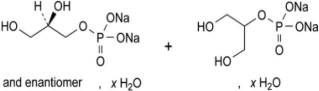
Structural Formula (Gly0j 0001 01)
Glycophos (sodium glycerophosphate injection), for intravenous use after dilution, is supplied as a clear, colorless to slightly yellowish, sterile, non-pyrogenic concentrated solution in 20 mL single-dose vials or 100 mL Pharmacy Bulk Package vials. Each mL contains 216 mg of anhydrous sodium glycerophosphate (corresponding to sodium glycerophosphate pentahydrate 306 mg and equivalent to phosphorus 31 mg [1 mmol]), sodium 46 mg (2 mEq), and Water for Injection.
Hydrochloric acid and/or sodium hydroxide may be added for pH adjustment (pH 7.2-7.6). The osmolarity is 2.8 mOsmol/mL (calc).
Glycophos contains no more than 250 mcg/L of aluminum [see Warnings and Precautions (5.5)].
Sodium glycerophosphate, an organic phosphate salt, functions as a source of phosphorus. Phosphorus in the form of organic and inorganic phosphate has a variety of biochemical functions in all organs and tissues, including critical roles in nucleic acid structure, energy storage and transfer, cell signaling, cell membrane composition and structure, acid-base balance, mineral homeostasis, and bone mineralization.
The exposure-response relationship and time course of pharmacodynamic response for the safety and effectiveness of sodium glycerophosphate have not been fully characterized.
In a clinical pharmacology study conducted in healthy adult subjects that compared pharmacokinetics of phosphate following a single intravenous infusion of Glycophos in comparison to inorganic phosphate given at the same dose (80 mmol phosphorus) via the same route of administration, serum phosphate concentration was slightly lower with Glycophos than inorganic phosphate, but the difference is not clinically meaningful for parenteral nutrition use.
Glycophos (sodium glycerophosphate injection) is a clear and colorless to slightly yellowish solution supplied as:
| Product Code | Unit of Sale | Strength (Concentration) | Packaging Type |
| 344020 | NDC 65219-346-20 Tray containing 25 units | Phosphorus 20 mmol/20 mL (1 mmol/mL) and Sodium 40 mEq/20 mL (2 mEq/mL) | NDC 65219-346-01 20 mL Single-Dose, plastic vial |
| 344100 | NDC 65219-348-10 Tray containing 20 units | Phosphorus 100 mmol/100 mL (1 mmol/mL) and Sodium 200 mEq/100 mL (2 mEq/mL) | NDC 65219-348-01 100 mL Pharmacy Bulk Package, plastic vial |
Store at 20°C to 25°C (68°F to 77°F) [see USP Controlled Room Temperature].
Pharmacy Bulk Package vial: Use within 4 hours after initial container closure penetration when stored at room temperature 20°C to 25°C (68°F to 77°F) [see Dosage and Administration (2.2)].
Store the PN admixture containing Glycophos under refrigeration at 2°C to 8°C (36°F to 46°F), for no longer than 24 hours [see Dosage and Administration (2.2)].
The container closure is not made with natural rubber latex.
Inform patients, caregivers or home healthcare providers of the following:
Manufactured by:

Fresenius Kabi Logo (Gly0j 0001 02)
Lake Zurich, IL 60047
www.fresenius-kabi.com/us
Fresenius Kabi and Glycophos are registered trademarks of Fresenius Kabi.
451882
PACKAGE LABEL – PRINCIPAL DISPLAY – Glycophos® (sodium glycerophosphate injection) 20 mL Vial Label
NDC 65219-346-01 Rx only
Glycophos®
(sodium glycerophosphate injection)
Phosphorus 20 mmol/20 mL
(1 mmol/mL)
Sodium 40 mEq/20 mL
(2 mEq/mL)
CAUTION: MUST DILUTE BEFORE
INTRAVENOUS INFUSION.
20 mL Single-Dose Vial.
Discard Unused Portion
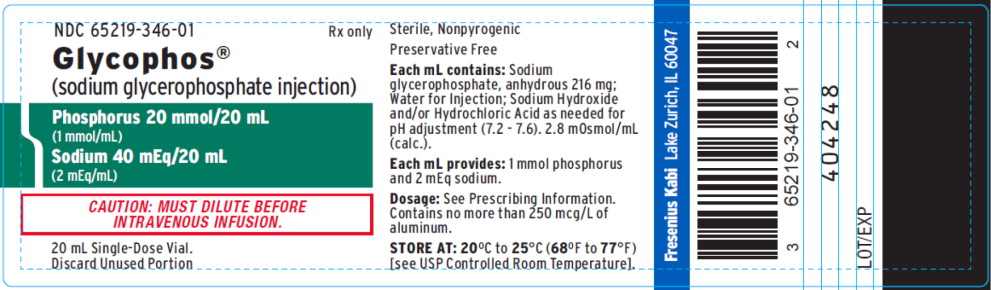
Package Label – Principal Display – Glycophos® (sodium Glycerophosphate Injection) 20 mL Vial Label (Gly0j 0001 03)
PACKAGE LABEL – PRINCIPAL DISPLAY – Glycophos® (sodium glycerophosphate injection) 20 mL Tray Label
NDC 65219-346-20 Rx only
Glycophos®
(sodium glycerophosphate
injection)
Phosphorus 20 mmol/20 mL
(1 mmol/mL)
Sodium 40 mEq/20 mL
(2 mEq/mL)
CAUTION: MUST DILUTE BEFORE
INTRAVENOUS INFUSION.
25 x 20 mL Single-Dose Vials.
Discard Unused Portion
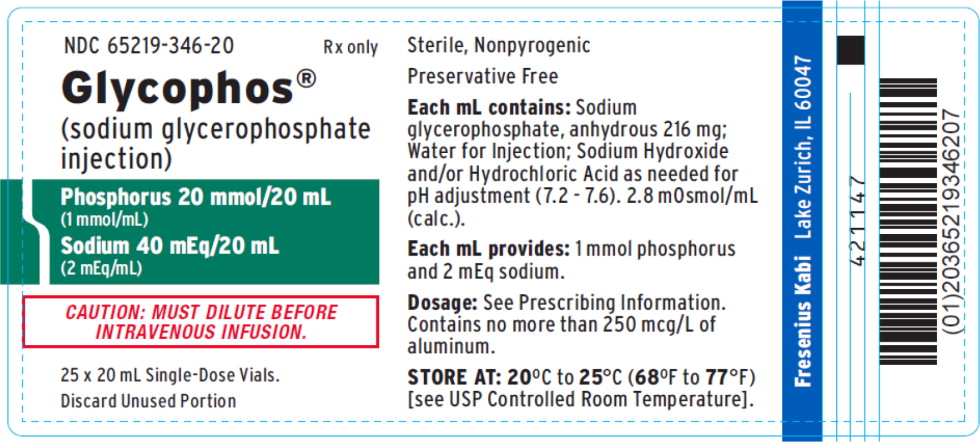
Package Label – Principal Display – Glycophos® (sodium Glycerophosphate Injection) 20 mL Tray Label (Gly0j 0001 04)
PACKAGE LABEL – PRINCIPAL DISPLAY – Glycophos® (sodium glycerophosphate injection) 100 mL Vial Label
NDC 65219-348-01 Rx only
Glycophos®
(sodium glycerophosphate
injection)
Phosphorus 100 mmol/100 mL
(1 mmol/mL)
Sodium 200 mEq/100 mL
(2 mEq/mL)
PHARMACY BULK PACKAGE—
Not for Direct Infusion
CAUTION: MUST DILUTE BEFORE
INTRAVENOUS INFUSION
100 mL
Pharmacy Bulk Package Vial
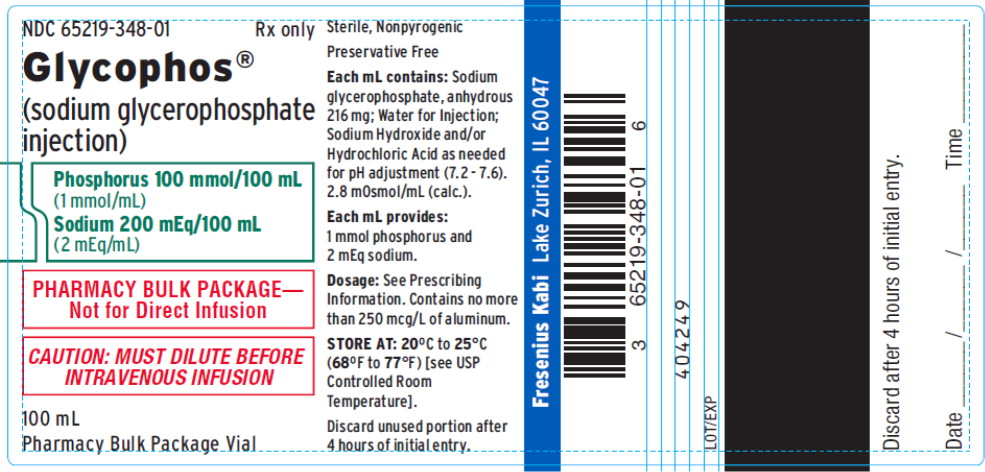
Package Label – Principal Display – Glycophos® (sodium Glycerophosphate Injection) 100 mL Vial Label (Gly0j 0001 05)
PACKAGE LABEL – PRINCIPAL DISPLAY – Glycophos® (sodium glycerophosphate injection) 100 mL Tray Label
NDC 65219-348-10 Rx only
Glycophos®
(sodium glycerophosphate
injection)
Phosphorus 100 mmol/100 mL
(1 mmol/mL)
Sodium 200 mEq/100 mL
(2 mEq/mL)
PHARMACY BULK PACKAGE—
Not for Direct Infusion
CAUTION: MUST DILUTE BEFORE
INTRAVENOUS INFUSION
20 x 100 mL Pharmacy Bulk Package Vials
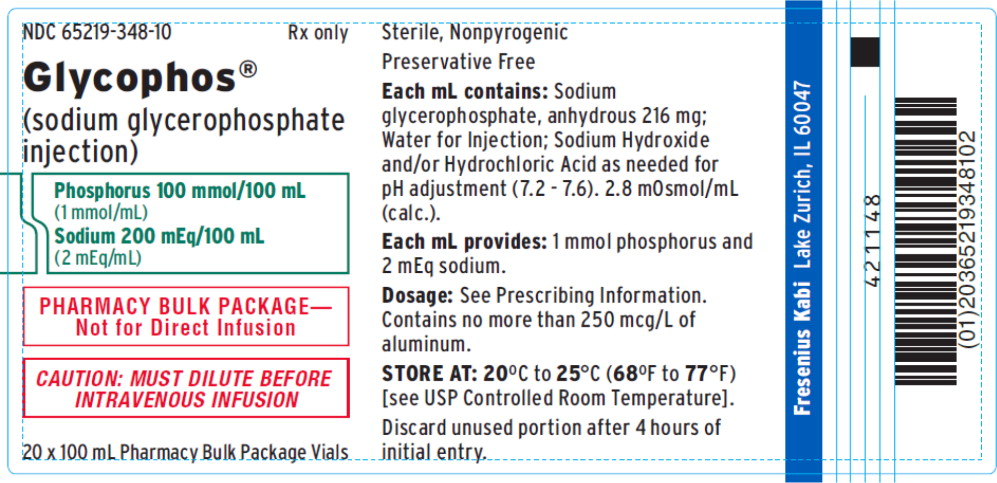
Package Label – Principal Display – Glycophos® (sodium Glycerophosphate Injection) 100 mL Tray Label (Gly0j 0001 06)
* Please review the disclaimer below.
