Multiple Electrolytes Ph 7.4 Injection, Solution
Product Images NDC 65219-389

View Photos of Packaging, Regulatory Labels, and Product Appearance

Product Visual Gallery

This gallery contains 6 technical images submitted to the FDA as part of the official labeling for Multiple Electrolytes Ph 7.4 (NDC 65219-389). Unlike standard consumer photos, these assets often include clinical data figures, molecular chemical structures, and official manufacturer packaging layouts.

As provided by Fresenius Kabi Usa, Llc, these visuals offer a comprehensive scientific overview of the product's physical and chemical identity, aiding pharmacists and researchers in product verification and study.

FDA Label Image

Figure (Kab00 0002 01)

FDA Label Image

Fresenius Kabi Logo (Kab00 0002 02)

FDA Label Image

Package Label (PRINCIPAL DISPLAY – Multiple Electrolytes Injection, Type 1, USP pH 7.4 500 mL Bag Label)

Package Label (PRINCIPAL DISPLAY – Multiple Electrolytes Injection, Type 1, USP pH 7.4 500 mL Bag Label)
This is a description of a pharmaceutical product called freeflex Multiple Electrolytes Injection. It is a 500 mL solution with multiple electrolytes added such as: sodium chloride, sodium gluconate, sodium acetate trihydrate, potassium chloride, and magnesium chloride. The solution is pH 7.4 and should only be used for intravenous purposes. The electrolytes in the solution are adjusted to the recommended levels for human consumption. The product should be used immediately after opening and should be stored between 68°F to 77°F until ready for use. The packaging is non-PVC and non- DEHP and is not made with natural rubber latex. For the correct dosages, it is recommended to refer to the package insert. Additives may be incompatible, therefore consulting with a pharmacist is also recommended.*
FDA Label Image

Package Label – Principal Display – Multiple Electrolytes Injection, Type 1, Usp Ph 7.4 500 mL Shipper Label (Kab00 0002 04)

Package Label – Principal Display – Multiple Electrolytes Injection, Type 1, Usp Ph 7.4 500 mL Shipper Label (Kab00 0002 04)
This is a description of a pharmaceutical product with the National Drug Code (NDC) 65219-389-05. It is a Multiple Electrolytes Injection, Type 1, USP, with a pH of 7.4. The packaging is 500 mL x 20. The product must be stored at 20° to 25°C (68° to 77°F) until ready to use, and extreme heat should be avoided. The lot and expiration date are L (01)30365219389058. This product is manufactured for NEEmes, with a quantity of 20. The manufacturer is Fresenius Kabi USA, LLC, based in Lake Zurich, IL, and the product is made in Germany.*
FDA Label Image

Package Label (PRINCIPAL DISPLAY – Multiple Electrolytes Injection, Type 1, USP pH 7.4 1000 mL Bag Label)

Package Label (PRINCIPAL DISPLAY – Multiple Electrolytes Injection, Type 1, USP pH 7.4 1000 mL Bag Label)
This is a description of a pharmaceutical product - Multiple Electrolytes Injection, Type 1, USP. It has a volume of 1000mL and contains various electrolytes like Sodium, Chloride, Potassium, Magnesium, Acetate, and Gluconate. It is for intravenous use, and the usual dosage can be checked from the package insert. The container is sterile, Non-PVC, Non-DEHP, and made without natural rubber latex. The product must be stored at 20° to 25°C (68° to 77°F), and one should avoid excessive heat. The product is manufactured in Germany and is available for use only after consulting with a pharmacist.*
FDA Label Image

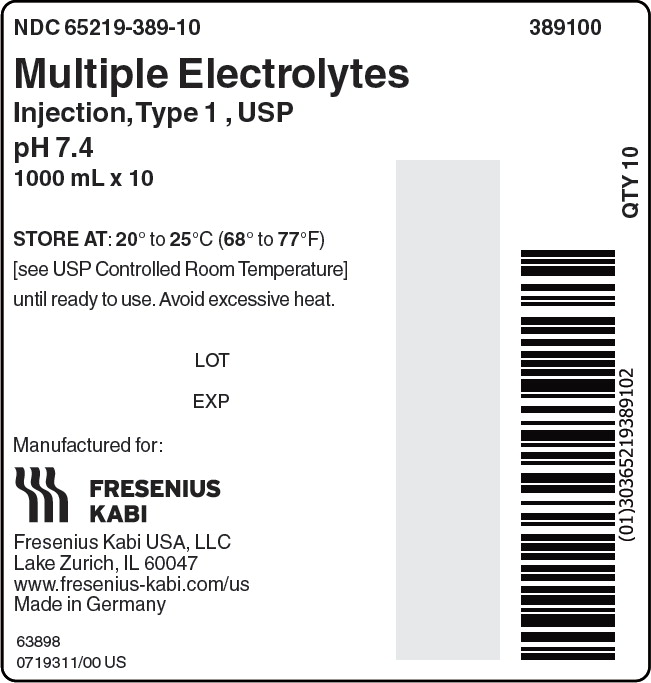
Package Label – Principal Display – Multiple Electrolytes Injection, Type 1, Usp Ph 7.4 1000 mL Shipper Label (Kab00 0002 06)

Package Label – Principal Display – Multiple Electrolytes Injection, Type 1, Usp Ph 7.4 1000 mL Shipper Label (Kab00 0002 06)
This is a description of a solution called Multiple Electrolytes Injection, Type 1, USP that comes in a 1000 mL x 10 bottle with a pH of 7.4. The product is manufactured by Fresenius Kabi USA and should be stored at 20° to 25°C (68° to 77°F) until it's ready to use. The packaging has a lot number and expiration date printed on it.*

* These product label images have been analyzed using experimental machine learning. Please verify findings with the primary label text.