Patients with Advanced Chronic Kidney Disease
Patients with advanced chronic kidney disease [i.e., eGFR < 30 mL/min/1.73 m2] including dialysis-dependent patients are at greater risk for severe hypocalcemia following denosumab products administration. Severe hypocalcemia resulting in hospitalization, life-threatening events and fatal cases have been reported. The presence of underlying chronic kidney disease-mineral bone disorder (CKD-MBD, renal osteodystrophy) markedly increases the risk of hypocalcemia. Concomitant use of calcimimetic drugs may also worsen hypocalcemia risk.
To minimize the risk of hypocalcemia in patients with advanced chronic kidney disease, evaluate for the presence of chronic kidney disease mineral and bone disorder with intact parathyroid hormone (iPTH), serum calcium, 25(OH) vitamin D, and 1,25(OH)2 vitamin D prior to decisions regarding Conexxence treatment. Consider also assessing bone turnover status (serum markers of bone turnover or bone biopsy) to evaluate the underlying bone disease that may be present. Monitor serum calcium weekly for the first month after Conexxence administration and monthly thereafter. Instruct all patients with advanced chronic kidney disease, including those who are dialysis-dependent, about the symptoms of hypocalcemia and the importance of maintaining serum calcium levels with adequate calcium and activated vitamin D supplementation. Treatment with Conexxence in these patients should be supervised by a healthcare provider who is experienced in diagnosis and management of CKD-MBD.
Treatment of Postmenopausal Women with Osteoporosis
The safety of denosumab in the treatment of postmenopausal osteoporosis was assessed in a 3-year, randomized, double-blind, placebo-controlled, multinational study of 7808 postmenopausal women aged 60 to 91 years. A total of 3876 women were exposed to placebo and 3886 women were exposed to denosumab administered subcutaneously once every 6 months as a single 60 mg dose. All women were instructed to take at least 1000 mg of calcium and 400 IU of vitamin D supplementation per day.
The incidence of all-cause mortality was 2.3% (n = 90) in the placebo group and 1.8% (n = 70) in the denosumab group. The incidence of nonfatal serious adverse events was 24.2% in the placebo group and 25.0% in the denosumab group. The percentage of patients who withdrew from the study due to adverse events was 2.1% and 2.4% for the placebo and denosumab groups, respectively. The most common adverse reactions reported with denosumab in patients with postmenopausal osteoporosis are back pain, pain in extremity, musculoskeletal pain, hypercholesterolemia, and cystitis.
Adverse reactions reported in ≥ 2% of postmenopausal women with osteoporosis and more frequently in the denosumab-treated women than in the placebo-treated women are shown in the table below.
Table 1. Adverse Reactions Occurring in ≥ 2% of Patients with Osteoporosis and More Frequently than in Placebo-treated Patients
| Preferred Term | Denosumab
(N = 3886)
n (%) | Placebo
(N = 3876)
n (%) |
Back pain
Pain in extremity
Musculoskeletal pain
Hypercholesterolemia
Cystitis
Vertigo
Upper respiratory tract infection
Edema peripheral
Sciatica
Bone pain
Abdominal pain upper
Anemia
Insomnia
Myalgia
Angina pectoris
Rash
Pharyngitis
Asthenia
Pruritus
Flatulence
Spinal osteoarthritis
Gastroesophageal reflux disease
Herpes zoster
| 1347 (34.7)
453 (11.7)
297 (7.6)
280 (7.2)
228 (5.9)
195 (5.0)
190 (4.9)
189 (4.9)
178 (4.6)
142 (3.7)
129 (3.3)
129 (3.3)
126 (3.2)
114 (2.9)
101 (2.6)
96 (2.5)
91 (2.3)
90 (2.3)
87 (2.2)
84 (2.2)
82 (2.1)
80 (2.1)
79 (2.0)
| 1340 (34.6)
430 (11.1)
291 (7.5)
236 (6.1)
225 (5.8)
187 (4.8)
167 (4.3)
155 (4.0)
149 (3.8)
117 (3.0)
111 (2.9)
107 (2.8)
122 (3.1)
94 (2.4)
87 (2.2)
79 (2.0)
78 (2.0)
73 (1.9)
82 (2.1)
53 (1.4)
64 (1.7)
66 (1.7)
72 (1.9)
|
Hypocalcemia
Decreases in serum calcium levels to less than 8.5 mg/dL at any visit were reported in 0.4% women in the placebo group and 1.7% women in the denosumab group. The nadir in serum calcium level occurred at approximately day 10 after denosumab dosing in subjects with normal renal function.
In clinical studies, subjects with impaired renal function were more likely to have greater reductions in serum calcium levels compared to subjects with normal renal function. In a study of 55 subjects with varying degrees of renal function, serum calcium levels < 7.5 mg/dL or symptomatic hypocalcemia were observed in 5 subjects. These included no subjects in the normal renal function group, 10% of subjects in the creatinine clearance 50 to 80 mL/min group, 29% of subjects in the creatinine clearance < 30 mL/min group, and 29% of subjects in the hemodialysis group. These subjects did not receive calcium and vitamin D supplementation. In a study of 4550 postmenopausal women with osteoporosis, the mean change from baseline in serum calcium level 10 days after denosumab dosing was -5.5% in subjects with creatinine clearance < 30 mL/min vs. -3.1% in subjects with creatinine clearance ≥ 30 mL/min.
Serious Infections
Receptor activator of nuclear factor kappa-B ligand (RANKL) is expressed on activated T and B lymphocytes and in lymph nodes. Therefore, a RANKL inhibitor such as denosumab products may increase the risk of infection.
In the clinical study of 7808 postmenopausal women with osteoporosis, the incidence of infections resulting in death was 0.2% in both placebo and denosumab treatment groups. However, the incidence of nonfatal serious infections was 3.3% in the placebo and 4.0% in the denosumab groups. Hospitalizations due to serious infections in the abdomen (0.7% placebo vs. 0.9% denosumab), urinary tract (0.5% placebo vs. 0.7% denosumab), and ear (0.0% placebo vs. 0.1% denosumab) were reported. Endocarditis was reported in no placebo patients and 3 patients receiving denosumab.
Skin infections, including erysipelas and cellulitis, leading to hospitalization were reported more frequently in patients treated with denosumab (< 0.1% placebo vs. 0.4% denosumab).
The incidence of opportunistic infections was similar to that reported with placebo.
Dermatologic Adverse Reactions
A significantly higher number of patients treated with denosumab developed epidermal and dermal adverse events (such as dermatitis, eczema, and rashes), with these events reported in 8.2% of the placebo and 10.8% of the denosumab groups (p < 0.0001). Most of these events were not specific to the injection site [see Warnings and Precautions (5.8)].
Osteonecrosis of the Jaw
ONJ has been reported in the osteoporosis clinical trial program in patients treated with denosumab [see Warnings and Precautions (5.4)].
Atypical Subtrochanteric and Diaphyseal Femoral Fractures
In the osteoporosis clinical trial program, atypical femoral fractures were reported in patients treated with denosumab. The duration of denosumab exposure to time of atypical femoral fracture diagnosis was as early as 2½ years [see Warnings and Precautions (5.5)].
Multiple Vertebral Fractures (MVF) Following Treatment Discontinuation
In the osteoporosis clinical trial program, multiple vertebral fractures were reported in patients after discontinuation of denosumab. In the phase 3 trial in women with postmenopausal osteoporosis, 6% of women who discontinued denosumab and remained in the study developed new vertebral fractures, and 3% of women who discontinued denosumab and remained in the study developed multiple new vertebral fractures. The mean time to onset of multiple vertebral fractures was 17 months (range: 7-43 months) after the last injection of denosumab. Prior vertebral fracture was a predictor of multiple vertebral fractures after discontinuation [see Warnings and Precautions (5.6)].
Pancreatitis
Pancreatitis was reported in 4 patients (0.1%) in the placebo and 8 patients (0.2%) in the denosumab groups. Of these reports, 1 patient in the placebo group and all 8 patients in the denosumab group had serious events, including one death in the denosumab group. Several patients had a prior history of pancreatitis. The time from product administration to event occurrence was variable.
New Malignancies
The overall incidence of new malignancies was 4.3% in the placebo and 4.8% in the denosumab groups. New malignancies related to the breast (0.7% placebo vs. 0.9% denosumab), reproductive system (0.2% placebo vs. 0.5% denosumab), and gastrointestinal system (0.6% placebo vs. 0.9% denosumab) were reported. A causal relationship to drug exposure has not been established.
Treatment to Increase Bone Mass in Men with Osteoporosis
The safety of denosumab in the treatment of men with osteoporosis was assessed in a 1-year randomized, double-blind, placebo-controlled study. A total of 120 men were exposed to placebo and 120 men were exposed to denosumab administered subcutaneously once every 6 months as a single 60 mg dose. All men were instructed to take at least 1000 mg of calcium and 800 IU of vitamin D supplementation per day.
The incidence of all-cause mortality was 0.8% (n = 1) in the placebo group and 0.8% (n = 1) in the denosumab group. The incidence of nonfatal serious adverse events was 7.5% in the placebo group and 8.3% in the denosumab group. The percentage of patients who withdrew from the study due to adverse events was 0% and 2.5% for the placebo and denosumab groups, respectively.
Adverse reactions reported in ≥ 5% of men with osteoporosis and more frequently with denosumab than in the placebo-treated patients were: back pain (6.7% placebo vs. 8.3% denosumab), arthralgia (5.8% placebo vs. 6.7% denosumab), and nasopharyngitis (5.8% placebo vs. 6.7% denosumab).
Serious Infections
Serious infection was reported in 1 patient (0.8%) in the placebo group and no patients in the denosumab group.
Dermatologic Adverse Reactions
Epidermal and dermal adverse events (such as dermatitis, eczema, and rashes) were reported in 4 patients (3.3%) in the placebo group and 5 patients (4.2%) in the denosumab group.
Osteonecrosis of the Jaw
No cases of ONJ were reported.
Pancreatitis
Pancreatitis was reported in 1 patient (0.8%) in the placebo group and 1 patient (0.8%) in the denosumab group.
New Malignancies
New malignancies were reported in no patients in the placebo group and 4 (3.3%) patients (3 prostate cancers, 1 basal cell carcinoma) in the denosumab group.
Treatment of Glucocorticoid-Induced Osteoporosis
The safety of denosumab in the treatment of glucocorticoid-induced osteoporosis was assessed in the 1-year, primary analysis of a 2-year randomized, multicenter, double-blind, parallel-group, active-controlled study of 795 patients (30% men and 70% women) aged 20 to 94 (mean age of 63 years) treated with greater than or equal to 7.5 mg/day oral prednisone (or equivalent). A total of 384 patients were exposed to 5 mg oral daily bisphosphonate (active-control) and 394 patients were exposed to denosumab administered once every 6 months as a 60 mg subcutaneous dose. All patients were instructed to take at least 1000 mg of calcium and 800 IU of vitamin D supplementation per day.
The incidence of all-cause mortality was 0.5% (n = 2) in the active-control group and 1.5% (n = 6) in the denosumab group. The incidence of serious adverse events was 17% in the active-control group and 16% in the denosumab group. The percentage of patients who withdrew from the study due to adverse events was 3.6% and 3.8% for the active-control and denosumab groups, respectively.
Adverse reactions reported in ≥ 2% of patients with glucocorticoid-induced osteoporosis and more frequently with denosumab than in the active-control-treated patients are shown in the table below.
Table 2. Adverse Reactions Occurring in ≥ 2% of Patients with Glucocorticoid-induced Osteoporosis and More Frequently with Denosumab than in Active-Control-treated Patients
|
| Preferred Term | Denosumab
(N=394)
n (%) | Oral Daily
Bisphosphonate
(Active-Control)
(N=384)
n (%) |
|
| | |
| Back pain
| 18 (4.6)
| 17 (4.4)
|
| Hypertension
| 15 (3.8)
| 13 (3.4)
|
| Bronchitis
| 15 (3.8)
| 11 (2.9)
|
| Headache
| 14 (3.6)
| 7 (1.8)
|
| Dyspepsia
| 12 (3.0)
| 10 (2.6)
|
| Urinary tract infection
| 12 (3.0)
| 8 (2.1)
|
| Abdominal pain upper
| 12 (3.0)
| 7 (1.8)
|
| Upper respiratory tract infection
| 11 (2.8)
| 10 (2.6)
|
| Constipation
| 11 (2.8)
| 6 (1.6)
|
| Vomiting
| 10 (2.5)
| 6 (1.6)
|
| Dizziness
| 9 (2.3)
| 8 (2.1)
|
| Fall
| 8 (2.0)
| 7 (1.8)
|
| Polymyalgia rheumatica*
| 8 (2.0)
| 1 (0.3)
|
Osteonecrosis of the Jaw
No cases of ONJ were reported.
Atypical Subtrochanteric and Diaphyseal Femoral Fractures
Atypical femoral fractures were reported in 1 patient treated with denosumab. The duration of denosumab exposure to time of atypical femoral fracture diagnosis was at 8.0 months [see Warnings and Precautions (5.5)].
Serious Infections
Serious infection was reported in 15 patients (3.9%) in the active-control group and 17 patients (4.3%) in the denosumab group.
Dermatologic Adverse Reactions
Epidermal and dermal adverse events (such as dermatitis, eczema, and rashes) were reported in 16 patients (4.2%) in the active-control group and 15 patients (3.8%) in the denosumab group.
Treatment of Bone Loss in Patients Receiving Androgen Deprivation Therapy for Prostate Cancer or Adjuvant Aromatase Inhibitor Therapy for Breast Cancer
The safety of denosumab in the treatment of bone loss in men with nonmetastatic prostate cancer receiving androgen deprivation therapy (ADT) was assessed in a 3-year, randomized, double-blind, placebo-controlled, multinational study of 1468 men aged 48 to 97 years. A total of 725 men were exposed to placebo and 731 men were exposed to denosumab administered once every 6 months as a single 60 mg subcutaneous dose. All men were instructed to take at least 1000 mg of calcium and 400 IU of vitamin D supplementation per day.
The incidence of serious adverse events was 30.6% in the placebo group and 34.6% in the denosumab group. The percentage of patients who withdrew from the study due to adverse events was 6.1% and 7.0% for the placebo and denosumab groups, respectively.
The safety of denosumab in the treatment of bone loss in women with nonmetastatic breast cancer receiving aromatase inhibitor (AI) therapy was assessed in a 2-year, randomized, double-blind, placebo-controlled, multinational study of 252 postmenopausal women aged 35 to 84 years. A total of 120 women were exposed to placebo and 129 women were exposed to denosumab administered once every 6 months as a single 60 mg subcutaneous dose. All women were instructed to take at least 1000 mg of calcium and 400 IU of vitamin D supplementation per day.
The incidence of serious adverse events was 9.2% in the placebo group and 14.7% in the denosumab group. The percentage of patients who withdrew from the study due to adverse events was 4.2% and 0.8% for the placebo and denosumab groups, respectively.
Adverse reactions reported in ≥ 10% of denosumab -treated patients receiving ADT for prostate cancer or adjuvant AI therapy for breast cancer, and more frequently than in the placebo-treated patients were: arthralgia (13.0% placebo vs. 14.3% denosumab) and back pain (10.5% placebo vs. 11.5% denosumab). Pain in extremity (7.7% placebo vs. 9.9% denosumab) and musculoskeletal pain (3.8% placebo vs. 6.0% denosumab) have also been reported in clinical trials. Additionally, in denosumab-treated men with nonmetastatic prostate cancer receiving ADT, a greater incidence of cataracts was observed (1.2% placebo vs. 4.7% denosumab). Hypocalcemia (serum calcium < 8.4 mg/dL) was reported only in denosumab -treated patients (2.4% vs. 0.0%) at the month 1 visit.
Risk Summary
Conexxence is contraindicated for use in pregnant women because it may cause harm to a fetus. There are insufficient data with denosumab products use in pregnant women to inform any drug-associated risks for adverse developmental outcomes. In utero denosumab exposure from cynomolgus monkeys dosed monthly with denosumab throughout pregnancy at a dose 50-fold higher than the recommended human dose based on body weight resulted in increased fetal loss, stillbirths, and postnatal mortality, and absent lymph nodes, abnormal bone growth, and decreased neonatal growth [see Data].
Data
Animal Data
The effects of denosumab on prenatal development have been studied in both cynomolgus monkeys and genetically engineered mice in which RANK ligand (RANKL) expression was turned off by gene removal (a “knockout mouse”). In cynomolgus monkeys dosed subcutaneously with denosumab throughout pregnancy starting at gestational day 20 and at a pharmacologically active dose 50-fold higher than the recommended human dose based on body weight, there was increased fetal loss during gestation, stillbirths, and postnatal mortality. Other findings in offspring included absence of axillary, inguinal, mandibular, and mesenteric lymph nodes; abnormal bone growth, reduced bone strength, reduced hematopoiesis, dental dysplasia, and tooth malalignment; and decreased neonatal growth. At birth out to 1 month of age, infants had measurable blood levels of denosumab (22-621% of maternal levels).
Following a recovery period from birth out to 6 months of age, the effects on bone quality and strength returned to normal; there were no adverse effects on tooth eruption, though dental dysplasia was still apparent; axillary and inguinal lymph nodes remained absent, while mandibular and mesenteric lymph nodes were present, though small; and minimal to moderate mineralization in multiple tissues was seen in one recovery animal. There was no evidence of maternal harm prior to labor; adverse maternal effects occurred infrequently during labor. Maternal mammary gland development was normal. There was no fetal NOAEL (no observable adverse effect level) established for this study because only one dose of 50 mg/kg was evaluated. Mammary gland histopathology at 6 months of age was normal in female offspring exposed to denosumab in utero; however, development and lactation have not been fully evaluated.
In RANKL knockout mice, absence of RANKL (the target of denosumab) also caused fetal lymph node agenesis and led to postnatal impairment of dentition and bone growth. Pregnant RANKL knockout mice showed altered maturation of the maternal mammary gland, leading to impaired lactation [see Use in Specific Populations (8.2), Nonclinical Toxicology (13.2)].
The no effect dose for denosumab product-induced teratogenicity is unknown. However, a Cmax of 22.9 ng/mL was identified in cynomolgus monkeys as a level in which no biologic effects (NOEL) of denosumab were observed (no inhibition of RANKL) [see Clinical Pharmacology (12.3)].
Risk Summary
There is no information regarding the presence of denosumab products in human milk, the effects on the breastfed infant, or the effects on milk production. Denosumab was detected in the maternal milk of cynomolgus monkeys up to 1 month after the last dose of denosumab (≤ 0.5% milk:serum ratio) and maternal mammary gland development was normal, with no impaired lactation. However, pregnant RANKL knockout mice showed altered maturation of the maternal mammary gland, leading to impaired lactation [see Use in Specific Populations (8.1), Nonclinical Toxicology (13.2)].
Pregnancy Testing
Verify the pregnancy status of females of reproductive potential prior to initiating Conexxence treatment.
Contraception
Females
Advise females of reproductive potential to use effective contraception during therapy, and for at least 5 months after the last dose of Conexxence.
Males
Denosumab was present at low concentrations (approximately 2% of serum exposure) in the seminal fluid of male subjects given denosumab. Following vaginal intercourse, the maximum amount of denosumab delivered to a female partner would result in exposures approximately 11,000 times lower than the prescribed 60 mg subcutaneous dose, and at least 38 times lower than the NOEL in monkeys.
Therefore, male condom use would not be necessary as it is unlikely that a female partner or fetus would be exposed to pharmacologically relevant concentrations of denosumab products via seminal fluid [see Clinical Pharmacology (12.3)].
Juvenile Animal Toxicity Data
Treatment with denosumab products may impair long-bone growth in children with open growth plates and may inhibit eruption of dentition. In neonatal rats, inhibition of RANKL (the target of denosumab therapy) with a construct of osteoprotegerin bound to Fc (OPG-Fc) at doses ≤ 10 mg/kg was associated with inhibition of bone growth and tooth eruption. Adolescent primates treated with denosumab at doses 10 and 50 times (10 and 50 mg/kg dose) higher than the recommended human dose of 60 mg administered every 6 months, based on body weight (mg/kg), had abnormal growth plates, considered to be consistent with the pharmacological activity of denosumab [see Nonclinical Toxicology (13.2)].
Cynomolgus monkeys exposed in utero to denosumab exhibited bone abnormalities, an absence of axillary, inguinal, mandibular, and mesenteric lymph nodes, reduced hematopoiesis, tooth malalignment, and decreased neonatal growth. Some bone abnormalities recovered once exposure was ceased following birth; however, axillary and inguinal lymph nodes remained absent 6 months post-birth [see Use in Specific Populations (8.1)].
Absorption
Following subcutaneous administration, the median time to maximum denosumab concentration (Tmax) was 10 days (range: 3 to 21 days).
Distribution
The mean volume of distribution for denosumab was 5.2 L (SD = 1.7 L).
Elimination
Serum denosumab concentrations declined over a period of 4 to 5 months with a mean half-life of 25.4 days (SD = 8.5 days; n = 46).
A population pharmacokinetic analysis was performed to evaluate the effects of demographic characteristics. This analysis showed no notable differences in pharmacokinetics with age (in postmenopausal women), race, or body weight (36 to 140 kg).
Seminal Fluid Pharmacokinetic Study
Serum and seminal fluid concentrations of denosumab were measured in 12 healthy male volunteers (age range: 43-65 years). After a single 60 mg subcutaneous administration of denosumab, the mean (± SD) Cmax values in the serum and seminal fluid samples were 6170 (± 2070) and 100 (± 81.9) ng/mL, respectively, resulting in a maximum seminal fluid concentration of approximately 2% of serum levels. The median (range) Tmax values in the serum and seminal fluid samples were 8.0 (7.9 to 21) and 21 (8.0 to 49) days, respectively. Among the subjects, the highest denosumab concentration in seminal fluid was 301 ng/mL at 22 days post-dose. On the first day of measurement (10 days post-dose), nine of eleven subjects had quantifiable concentrations in semen. On the last day of measurement (106 days post-dose), five subjects still had quantifiable concentrations of denosumab in seminal fluid, with a mean (± SD) seminal fluid concentration of 21.1 (± 36.5) ng/mL across all subjects (n = 12).
Drug Interactions
In a study of 19 postmenopausal women with low BMD and rheumatoid arthritis treated with etanercept (50 mg subcutaneous injection once weekly), a single-dose of denosumab (60 mg subcutaneous injection) was administered 7 days after the previous dose of etanercept. No clinically significant changes in the pharmacokinetics of etanercept were observed.
Cytochrome P450 substrates
In a study of 17 postmenopausal women with osteoporosis, midazolam (2 mg oral) was administered 2 weeks after a single-dose of denosumab (60 mg subcutaneous injection), which approximates the Tmax of denosumab. Denosumab did not affect the pharmacokinetics of midazolam, which is metabolized by cytochrome P450 3A4 (CYP3A4). This indicates that denosumab products should not alter the pharmacokinetics of drugs metabolized by CYP3A4 in postmenopausal women with osteoporosis.
Specific Populations
Gender: Mean serum denosumab concentration-time profiles observed in a study conducted in healthy men ≥ 50 years were similar to those observed in a study conducted in postmenopausal women using the same dose regimen.
Age: The pharmacokinetics of denosumab were not affected by age across all populations studied whose ages ranged from 28 to 87 years.
Race: The pharmacokinetics of denosumab were not affected by race.
Renal Impairment: In a study of 55 patients with varying degrees of renal function, including patients on dialysis, the degree of renal impairment had no effect on the pharmacokinetics of denosumab; thus, dose adjustment for renal impairment is not necessary.
Hepatic Impairment: No clinical studies have been conducted to evaluate the effect of hepatic impairment on the pharmacokinetics of denosumab products.
Carcinogenicity
The carcinogenic potential of denosumab products has not been evaluated in long-term animal studies.
Mutagenicity
The genotoxic potential of denosumab products has not been evaluated.
Impairment of Fertility
Denosumab had no effect on female fertility or male reproductive organs in monkeys at doses that were 13- to 50-fold higher than the recommended human dose of 60 mg subcutaneously administered once every 6 months, based on body weight (mg/kg).
Effect on Vertebral Fractures
Denosumab significantly reduced the incidence of new morphometric vertebral fractures at 1, 2, and 3 years (p < 0.0001), as shown in Table 3. The incidence of new vertebral fractures at year 3 was 7.2% in the placebo-treated women compared to 2.3% for the denosumab-treated women. The absolute risk reduction was 4.8% and relative risk reduction was 68% for new morphometric vertebral fractures at year 3.
Table 3. The Effect of Denosumab on the Incidence of New Vertebral Fractures in Postmenopausal Women
|
|
| Proportion of Women with
Fracture (%)+ | Absolute Risk Reduction (%)* (95% CI)
| Relative Risk
Reduction (%)*
(95% CI)
|
| Placebo
N = 3691 (%) | Denosumab
N = 3702
(%) |
| 0-1 Year
| 2.2
| 0.9
| 1.4 (0.8, 1.9)
| 61 (42, 74)
|
| 0-2 Years
| 5.0
| 1.4
| 3.5 (2.7, 4.3)
| 71 (61, 79)
|
| 0-3 Years
| 7.2
| 2.3
| 4.8 (3.9, 5.8)
| 68 (59, 74)
|
Denosumab was effective in reducing the risk for new morphometric vertebral fractures regardless of age, baseline rate of bone turnover, baseline BMD, baseline history of fracture, or prior use of a drug for osteoporosis.
Effect on Hip Fractures
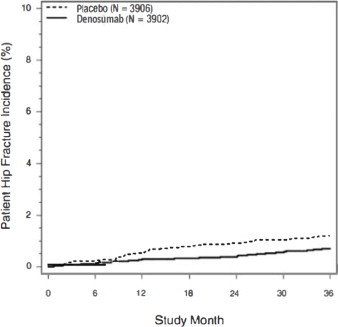
The incidence of hip fracture was 1.2% for placebo-treated women compared to 0.7% for denosumab-treated women at year 3. The age-adjusted absolute risk reduction of hip fractures was 0.3% with a relative risk reduction of 40% at 3 years (p = 0.04) (Figure 1).
Figure 1. Cumulative Incidence of Hip Fractures Over 3 Years |
|
| N = number of subjects randomized
|
Effect on Nonvertebral Fractures
Treatment with denosumab resulted in a significant reduction in the incidence of nonvertebral fractures (Table 4).
Table 4. The Effect of Denosumab on the Incidence of Nonvertebral Fractures at Year 3
|
|
|
| Proportion of Women with Fracture (%)+ | Absolute Risk Reduction (%) (95% CI)
| Relative Risk Reduction (%) (95% CI)
|
| Placebo
N = 3906
(%) | Denosumab
N = 3902
(%) |
| Nonvertebral fracture1 | 8.0
| 6.5
| 1.5 (0.3, 2.7)
| 20 (5, 33)*
|
Effect on Bone Mineral Density (BMD)
Treatment with denosumab significantly increased BMD at all anatomic sites measured at 3 years. The treatment differences in BMD at 3 years were 8.8% at the lumbar spine, 6.4% at the total hip, and 5.2% at the femoral neck. Consistent effects on BMD were observed at the lumbar spine, regardless of baseline age, race, weight/body mass index (BMI), baseline BMD, and level of bone turnover.
After denosumab discontinuation, BMD returned to approximately baseline levels within 12 months.
Bone Histology and Histomorphometry
A total of 115 transiliac crest bone biopsy specimens were obtained from 92 postmenopausal women with osteoporosis at either month 24 and/or month 36 (53 specimens in denosumab group, 62 specimens in placebo group). Of the biopsies obtained, 115 (100%) were adequate for qualitative histology and 7 (6%) were adequate for full quantitative histomorphometry assessment.
Qualitative histology assessments showed normal architecture and quality with no evidence of mineralization defects, woven bone, or marrow fibrosis in patients treated with denosumab.
The presence of double tetracycline labeling in a biopsy specimen provides an indication of active bone remodeling, while the absence of tetracycline label suggests suppressed bone formation. In patients treated with denosumab, 35% had no tetracycline label present at the month 24 biopsy and 38% had no tetracycline label present at the month 36 biopsy, while 100% of placebo-treated patients had double label present at both time points. When compared to placebo, treatment with denosumab resulted in virtually absent activation frequency and markedly reduced bone formation rates. However, the long-term consequences of this degree of suppression of bone remodeling are unknown.
Effect on Bone Mineral Density (BMD)
The primary efficacy variable was percent change in lumbar spine BMD from baseline to 1-year. Secondary efficacy variables included percent change in total hip, and femoral neck BMD from baseline to 1-year.
Treatment with denosumab significantly increased BMD at 1-year. The treatment differences in BMD at 1-year were 4.8% (+0.9% placebo, +5.7% denosumab; (95% CI: 4.0, 5.6); p < 0.0001) at the lumbar spine, 2.0% (+0.3% placebo, +2.4% denosumab) at the total hip, and 2.2% (0.0% placebo, +2.1% denosumab) at femoral neck. Consistent effects on BMD were observed at the lumbar spine regardless of baseline age, race, BMD, testosterone concentrations, and level of bone turnover.
Bone Histology and Histomorphometry
A total of 29 transiliac crest bone biopsy specimens were obtained from men with osteoporosis at 12 months (17 specimens in denosumab group, 12 specimens in placebo group). Of the biopsies obtained, 29 (100%) were adequate for qualitative histology and, in denosumab patients, 6 (35%) were adequate for full quantitative histomorphometry assessment. Qualitative histology assessments showed normal architecture and quality with no evidence of mineralization defects, woven bone, or marrow fibrosis in patients treated with denosumab. The presence of double tetracycline labeling in a biopsy specimen provides an indication of active bone remodeling, while the absence of tetracycline label suggests suppressed bone formation. In patients treated with denosumab, 6% had no tetracycline label present at the month 12 biopsy, while 100% of placebo-treated patients had double label present. When compared to placebo, treatment with denosumab resulted in markedly reduced bone formation rates. However, the long-term consequences of this degree of suppression of bone remodeling are unknown.
Effect on Bone Mineral Density (BMD)
In the glucocorticoid-initiating subpopulation, denosumab significantly increased lumbar spine BMD compared to the active-control at one year (Active-control 0.8%, denosumab 3.8%) with a treatment difference of 2.9% (p < 0.001). In the glucocorticoid-continuing subpopulation, denosumab significantly increased lumbar spine BMD compared to active-control at one year (Active-control 2.3%, denosumab 4.4%) with a treatment difference of 2.2% (p < 0.001). Consistent effects on lumbar spine BMD were observed regardless of gender; race; geographic region; menopausal status; and baseline age, lumbar spine BMD T-score, and glucocorticoid dose within each subpopulation.
Bone Histology
Bone biopsy specimens were obtained from 17 patients (11 in the active-control treatment group and 6 in the denosumab treatment group) at Month 12. Of the biopsies obtained, 17 (100%) were adequate for qualitative histology. Qualitative assessments showed bone of normal architecture and quality without mineralization defects or bone marrow abnormality. The presence of double tetracycline labeling in a biopsy specimen provides an indication of active bone remodeling, while the absence of tetracycline label suggests suppressed bone formation. In patients treated with active-control, 100% of biopsies had tetracycline label. In patients treated with denosumab, 1 (33%) had tetracycline label and 2 (67%) had no tetracycline label present at the 12-month biopsy. Evaluation of full quantitative histomorphometry including bone remodeling rates was not possible in the glucocorticoid-induced osteoporosis population treated with denosumab. The long-term consequences of this degree of suppression of bone remodeling in glucocorticoid-treated patients is unknown.
Effect on Bone Mineral Density (BMD)
The primary efficacy variable was percent change in lumbar spine BMD from baseline to month 24. An additional key secondary efficacy variable was the incidence of new vertebral fracture through month 36 diagnosed based on x-ray evaluation by two independent radiologists. Lumbar spine BMD was higher at 2 years in denosumab -treated patients as compared to placebo-treated patients [-1.0% placebo, +5.6% denosumab; treatment difference 6.7% (95% CI: 6.2, 7.1); p < 0.0001].
With approximately 62% of patients followed for 3 years, treatment differences in BMD at 3 years were 7.9% (-1.2% placebo, +6.8% denosumab) at the lumbar spine, 5.7% (-2.6% placebo, +3.2% denosumab) at the total hip, and 4.9% (-1.8% placebo, +3.0% denosumab) at the femoral neck. Consistent effects on BMD were observed at the lumbar spine in relevant subgroups defined by baseline age, BMD, and baseline history of vertebral fracture.
Effect on Vertebral Fractures
Denosumab significantly reduced the incidence of new vertebral fractures at 3 years (p = 0.0125), as shown in Table 5.
Table 5. The Effect of Denosumab on the Incidence of New Vertebral Fractures in Men with Nonmetastatic Prostate Cancer
|
|
| Proportion of Men with Fracture (%)+ | Absolute Risk Reduction (%)*
(95% CI) | Relative Risk
Reduction (%)*
(95% CI) |
| Placebo
N = 673
(%) | Denosumab
N = 679
(%) |
| 0-1 Year
| 1.9
| 0.3
| 1.6 (0.5, 2.8)
| 85 (33, 97)
|
| 0-2 Years
| 3.3
| 1.0
| 2.2 (0.7, 3.8)
| 69 (27, 86)
|
| 0-3 Years
| 3.9
| 1.5
| 2.4 (0.7, 4.1)
| 62 (22, 81)
|
Effect on Bone Mineral Density (BMD)
The primary efficacy variable was percent change in lumbar spine BMD from baseline to month 12. Lumbar spine BMD was higher at 12 months in denosumab -treated patients as compared to placebo-treated patients [-0.7% placebo, +4.8% denosumab; treatment difference 5.5% (95% CI: 4.8, 6.3); p < 0.0001].
With approximately 81% of patients followed for 2 years, treatment differences in BMD at 2 years were 7.6% (-1.4% placebo, +6.2% denosumab) at the lumbar spine, 4.7 % (-1.0% placebo, +3.8% denosumab) at the total hip, and 3.6% (-0.8% placebo, +2.8% denosumab) at the femoral neck.
How Supplied
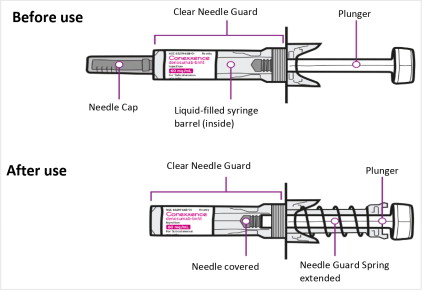
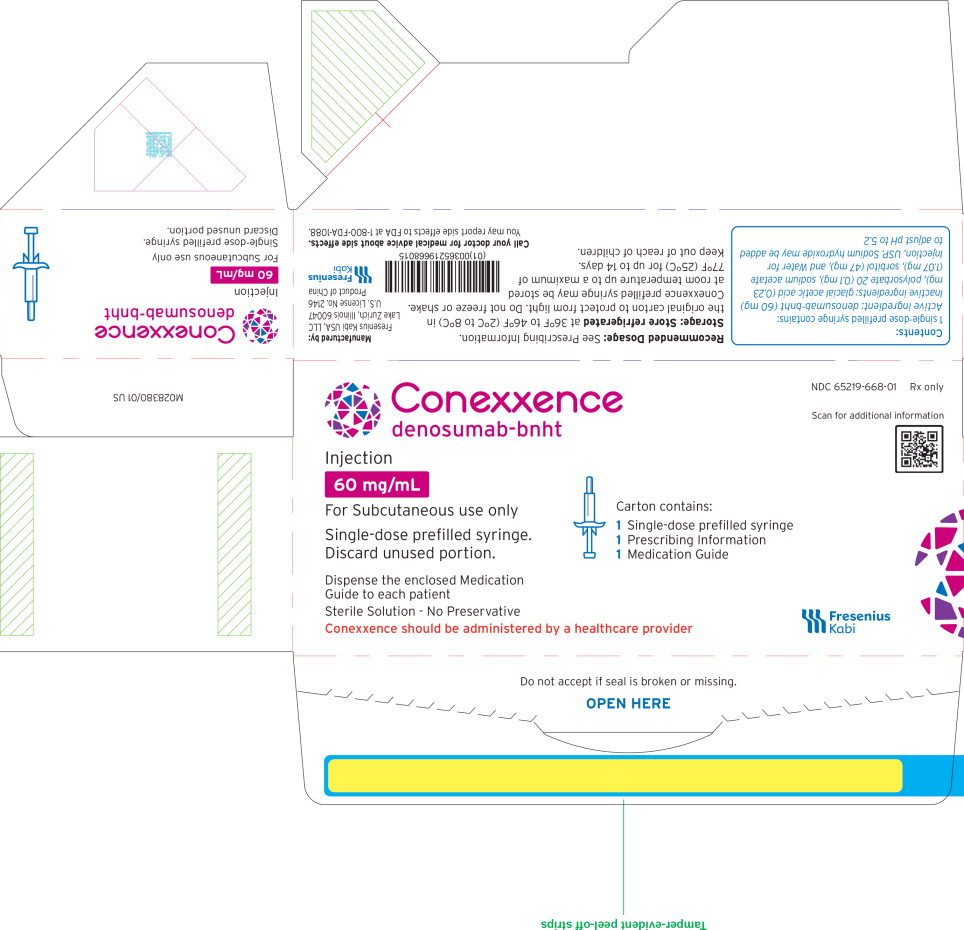
Conexxence (denosumab-bnht) injection is a clear, colorless to pale yellow solution in a single-dose prefilled syringe with an automatic clear needle safety guard.
| 60 mg/mL in a single-dose prefilled syringe
| 1 per carton
| NDC 6521966801
|
Hypocalcemia
Advise the patient to adequately supplement with calcium and vitamin D and instruct them on the importance of maintaining serum calcium levels while receiving Conexxence [see Warnings and Precautions (5.1), Use in Specific Populations (8.6)]. Advise patients to seek prompt medical attention if they develop signs or symptoms of hypocalcemia.
Severe Hypocalcemia in Patients with Advanced Chronic Kidney Disease
Advise patients with advanced chronic kidney disease, including those who are dialysis-dependent, about the symptoms of hypocalcemia and the importance of maintaining serum calcium levels with adequate calcium and activated vitamin D supplementation. Advise these patients to have their serum calcium measured weekly for the first month after Conexxence administration and monthly thereafter [see Dosage and Administration (2.2), Warnings and Precautions (5.1), Use in Specific Populations (8.6)].
Drug Products with Same Active Ingredient
Advise patients that if they receive Conexxence, they should not receive other denosumab products concomitantly [see Warnings and Precautions (5.2)].
Hypersensitivity
Advise patients to seek prompt medical attention if signs or symptoms of hypersensitivity reactions occur. Advise patients who have had signs or symptoms of systemic hypersensitivity reactions that they should not receive denosumab products [see Warnings and Precautions (5.3), Contraindications (4)].
Osteonecrosis of the Jaw
Advise patients to maintain good oral hygiene during treatment with Conexxence and to inform their dentist prior to dental procedures that they are receiving Conexxence. Patients should inform their physician or dentist if they experience persistent pain and/or slow healing of the mouth or jaw after dental surgery [see Warnings and Precautions (5.4)].
Atypical Subtrochanteric and Diaphyseal Femoral Fractures
Advise patients to report new or unusual thigh, hip, or groin pain [see Warnings and Precautions (5.5)].
Multiple Vertebral Fractures (MVF) Following Treatment Discontinuation
Advise patients not to interrupt Conexxence therapy without talking to their physician [see Warnings and Precautions (5.6)].
Serious Infections
Advise patients to seek prompt medical attention if they develop signs or symptoms of infections, including cellulitis [see Warnings and Precautions (5.7)].
Dermatologic Adverse Reactions
Advise patients to seek prompt medical attention if they develop signs or symptoms of dermatological reactions (such as dermatitis, rashes, and eczema) [see Warnings and Precautions (5.8)].
Musculoskeletal Pain
Inform patients that severe bone, joint, and/or muscle pain have been reported in patients taking denosumab products. Patients should report severe symptoms if they develop [see Warnings and Precautions (5.9)].
Pregnancy/Nursing
Counsel females of reproductive potential to use effective contraceptive measure to prevent pregnancy during treatment and for at least 5 months after the last dose of Conexxence. Advise the patient to contact their physician immediately if pregnancy does occur during these times. Advise patients not to take Conexxence while pregnant or breastfeeding. If a patient wishes to start breastfeeding after treatment, advise her to discuss the appropriate timing with her physician [see Contraindications (4), Use in Specific Populations (8.1)].
Schedule of Administration
Advise patients that if a dose of Conexxence is missed, the injection should be administered as soon as convenient. Thereafter, schedule injections every 6 months from the date of the last injection.
Conexxence (denosumab-bnht)
Manufactured by:
Fresenius Kabi USA, LLC
Lake Zurich, IL 60047, U.S.A
U.S. License No. 2146
Prolia® is a registered trademark of Amgen Inc.