Safe Sea Spf 50 Lotion
Product Images NDC 65435-0100

View Photos of Packaging, Regulatory Labels, and Product Appearance

Product Visual Gallery

This gallery contains 2 technical images submitted to the FDA as part of the official labeling for Safe Sea Spf 50 (NDC 65435-0100). Unlike standard consumer photos, these assets often include clinical data figures, molecular chemical structures, and official manufacturer packaging layouts.

As provided by Nidaria Technology Ltd, these visuals offer a comprehensive scientific overview of the product's physical and chemical identity, aiding pharmacists and researchers in product verification and study.

Product Images & Figures Index

FDA Label Image

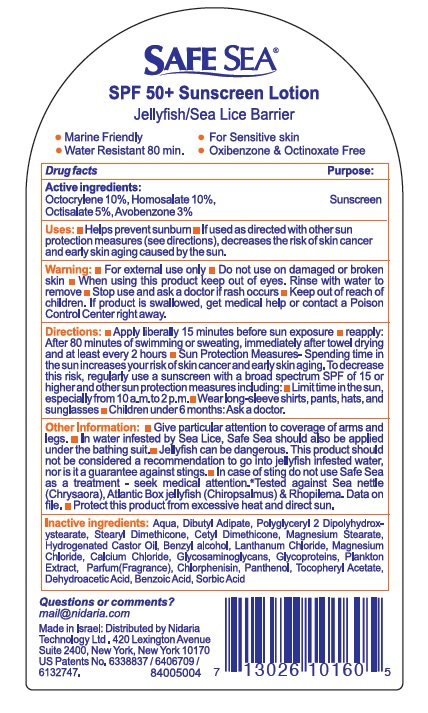
Back (Back50)

Back (Back50)
Safe Sea SPF 50+ Sunscreen Lotion is a marine-friendly sunscreen lotion recommended for sensitive skin that provides protection from sunburn and early skin-aging caused by UV radiation. It is also formulated to serve as a barrier against jellyfish and sea lice. The lotion contains Octocrykene 10%, Homosalate 10%, Sunscreen Octisalate 5%, and Avobenzone 3% considered drug facts purpos. The product should not be used on damaged or broken skin, and users are advised to keep it out of their eyes. Apply liberally 15 minutes before sun exposure and reapply every 80 minutes. Safe Sea recommends applying it in water infested by jellyfish or sea lice. The sunscreen lotion includes several ingredients such as Aqua, Doy Adoate, Polvhcen 2 Dipoyirer-i, Soy Dincoare ot Do osium Stearate, and many others. For questions or concerns, contact the manufacturer, Nidaria, at [email protected] or call +140.Now o Revva 0775.*
FDA Label Image

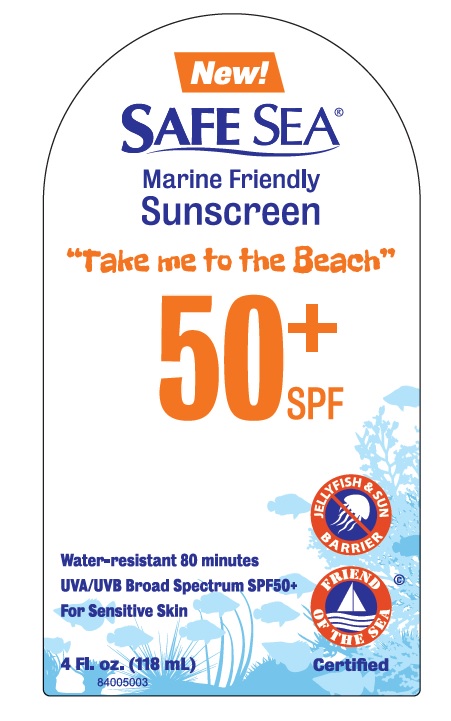
Front (Front50)

Front (Front50)
The text is a product advertisement for a marine-friendly sunscreen called Safe Sea. It claims to be water-resistant for 80 minutes and protects against UVA/UVB rays with a broad-spectrum SPF50+. It also features a new design and is marketed as being the perfect companion to take to the beach.*

* These product label images have been analyzed using experimental machine learning. Please verify findings with the primary label text.