Safe Sea For Kids Sunscreen With Jellyfish Sting Protective Spf 30 Plus
Product Images NDC 65435-0133

View Photos of Packaging, Regulatory Labels, and Product Appearance

Product Visual Gallery

This gallery contains 2 technical images submitted to the FDA as part of the official labeling for Safe Sea For Kids Sunscreen With Jellyfish Sting Protective Spf 30 Plus (NDC 65435-0133). Unlike standard consumer photos, these assets often include clinical data figures, molecular chemical structures, and official manufacturer packaging layouts.

As provided by Nidaria Technology Ltd., these visuals offer a comprehensive scientific overview of the product's physical and chemical identity, aiding pharmacists and researchers in product verification and study.

FDA Label Image

Safe Sea Spf 30 Plus A (Safeseaspf30plusa)
Safe Sea Spf 30 Plus A (Safeseaspf30plusa)
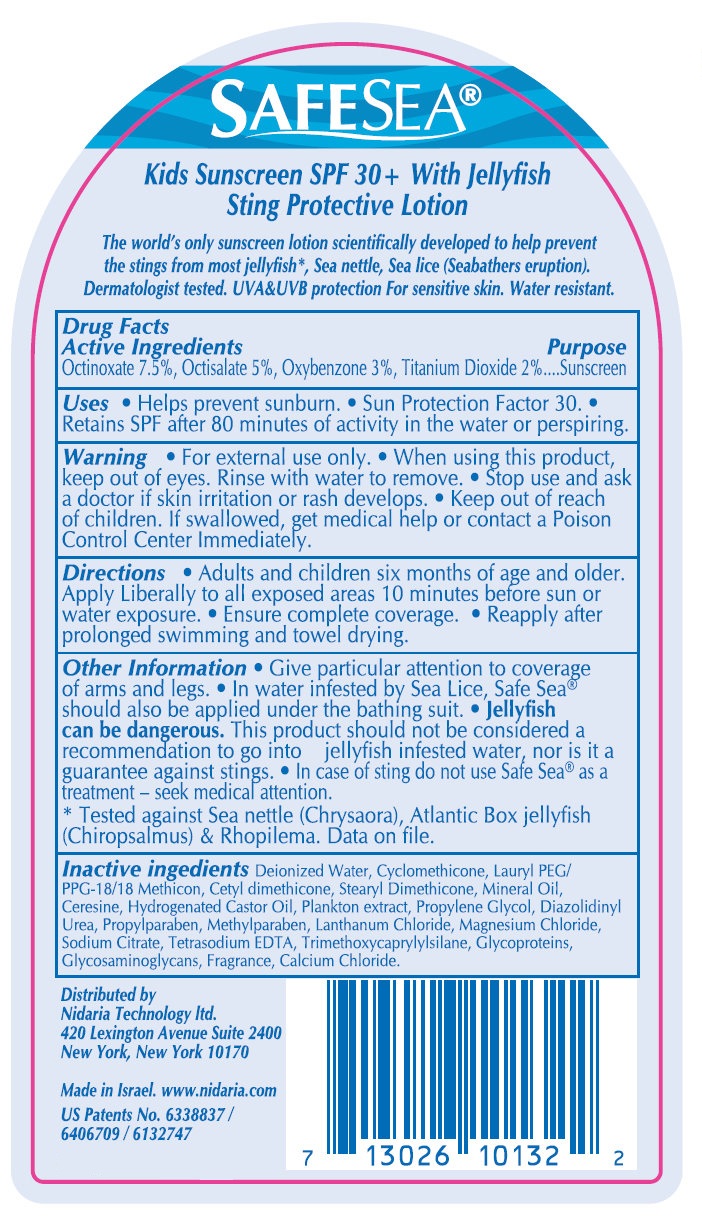
Kids Sunscreen SPF 30+ With Jellyfish Sting Protective Lotion is a scientifically developed sunscreen lotion that helps protect from the stings of most jellyfish, sea nettle, and sea lice. It has been dermatologist tested, provides UVA and UVB protection for sensitive skin, and is water-resistant. The active ingredients (Octinoxate, Octisalate, Oxybenzone, and Titanium Dioxide) help prevent sunburn and retain SPF for up to 80 minutes of activity in water or perspiration. However, it should be noted that jellyfish can still be dangerous, and Safe Sea should not be considered a recommendation to go into jellyfish-infested water, nor is it a guarantee against stings. If a sting occurs, do not use Safe Sea as a treatment; seek medical attention. The product contains several inactive ingredients, including fragrance, and is distributed by Nidaria Technology Itd.*
FDA Label Image

Safe Sea Spf 30 Plus B (Safeseaspf30plusb)

Safe Sea Spf 30 Plus B (Safeseaspf30plusb)
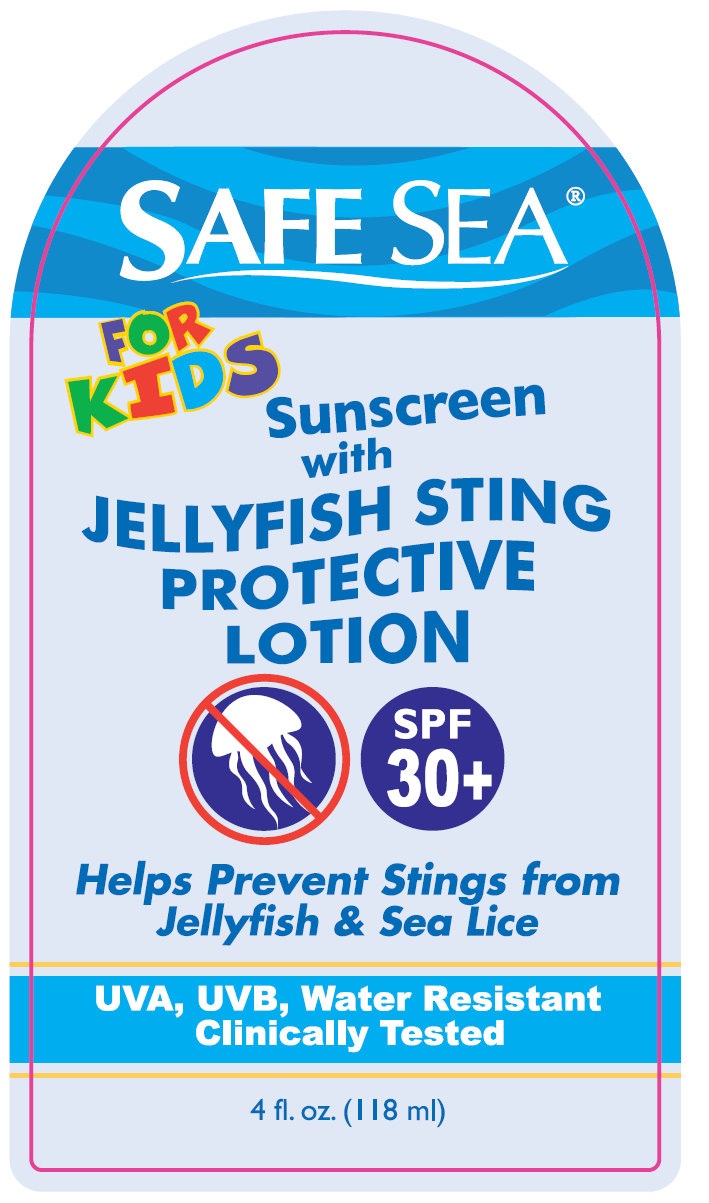
This product claims to help prevent stings from jellyfish and sea lice. It is also UVA/UVB protection and water resistant. The product has been clinically tested and the size is 41l.0z (118 ml)*

* These product label images have been analyzed using experimental machine learning. Please verify findings with the primary label text.