Dukal Sterile Alcohol Prep Pad Swab
Product Images NDC 65517-0002

56 FDA label images from Dukal Llc · Packaging, Regulatory Labels, and Product Appearance

Product Visual Gallery

This gallery contains 56 technical images submitted to the FDA as part of the official labeling for Dukal Sterile Alcohol Prep Pad (NDC 65517-0002). Unlike standard consumer photos, these assets often include clinical data figures, molecular chemical structures, and official manufacturer packaging layouts.

As provided by Dukal Llc, these visuals offer a comprehensive scientific overview of the product's physical and chemical identity, aiding pharmacists and researchers in product verification and study.

FDA Label Image

Figure 1 (Image 1)

Figure 1 (Image 1)
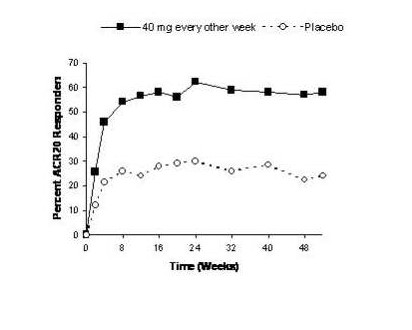
A line graph comparing the percentage of AC220 responders over time in weeks between two groups: one receiving 40 mg every other week and a placebo group. The graph shows that the treatment group maintains a higher response rate throughout the 48-week period.*
FDA Label Image

Figure 2 (Image 2)

Figure 2 (Image 2)
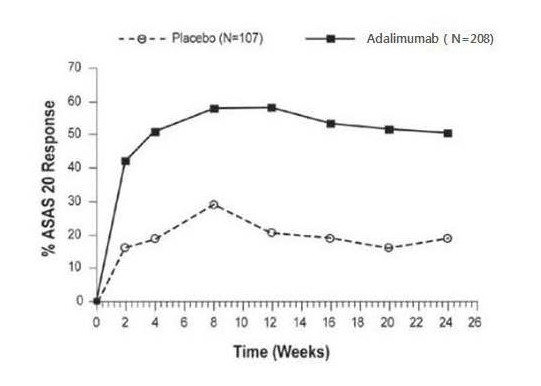
A line graph comparing % ASAS 20 Response over time (weeks) between Adalimumab and Placebo groups. The y-axis shows response percentage from 0 to 70%, and the x-axis shows time up to 24 weeks. Adalimumab shows a higher sustained response than Placebo throughout the period.*
FDA Label Image

Figure 3 (Image 3)

Figure 3 (Image 3)
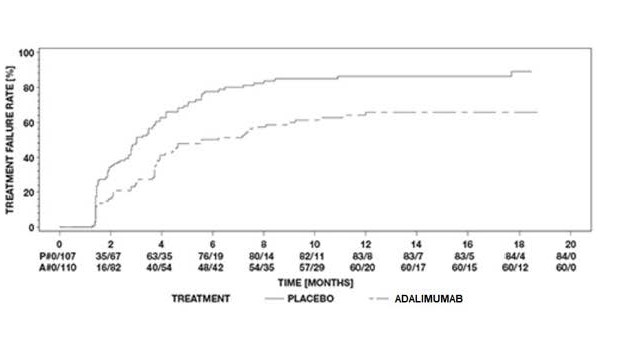
A line graph showing treatment failure rates over 20 months for three groups: Treatment, Placebo, and Adalimumab. The x-axis represents time in months, and the y-axis represents treatment failure rate percentage. The graph includes numerical data points below the x-axis for each group at specified time intervals.*
FDA Label Image

Figure 4 (Image 4)

Figure 4 (Image 4)
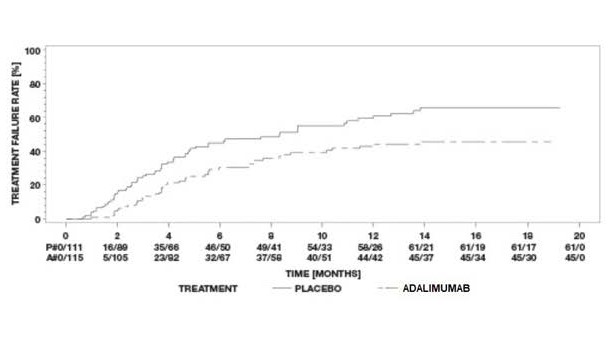
A treatment failure rate chart over time in months comparing three groups: treatment with a drug labeled Adalimumab, placebo, and another group labeled P*O/111 A*O/115. The y-axis shows treatment failure rate in percent, and the x-axis shows time in months with corresponding sample sizes. The chart illustrates the progression of treatment failure rates for each group over approximately 20 months.*
FDA Label Image

Figure 4 (Image 5)

Figure 4 (Image 5)
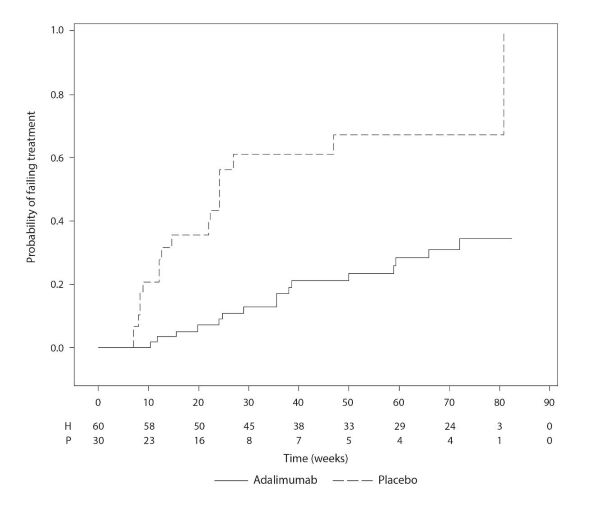
A Kaplan-Meier survival curve showing the probability of failing treatment over time in weeks. The graph compares two groups: Adalimumab and Placebo, with the placebo group exhibiting a higher probability of treatment failure over the study period. The x-axis represents time in weeks, and the y-axis shows the probability of failing treatment. Below the graph, the number of subjects at risk for each group is listed at multiple time points.*
FDA Label Image

Image (Image 6)

Image (Image 6)
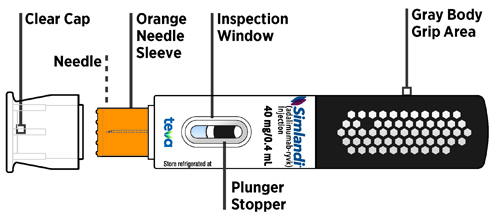
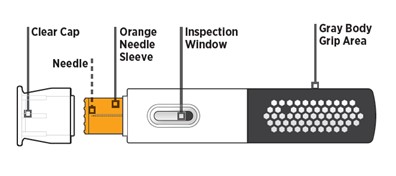
An instructional illustration of a prefilled syringe showing labeled components: clear cap, needle, orange needle sleeve, inspection window, plunger stopper, and gray body grip area. The syringe label indicates 40 mg/0.4 mL of Simlandri Injection solution.*
FDA Label Image

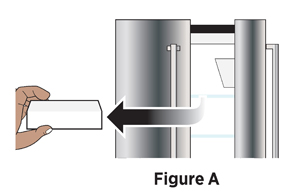
Figure A (Image 7)

Figure A (Image 7)
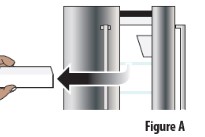
An instructional illustration labeled 'Figure A' showing a hand inserting a rectangular card or object into a slot or opening in a vertical metallic structure, with a large black arrow indicating the direction of insertion to the left.*
FDA Label Image

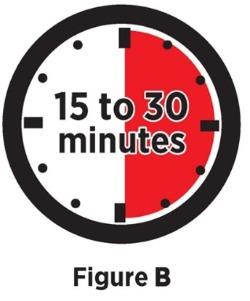
Figure B (Image 8)

Figure B (Image 8)
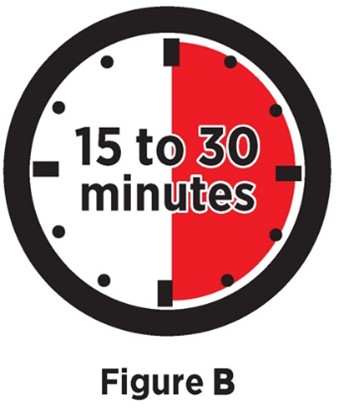
An illustration of a clock face showing a time interval shaded in red, indicating a time range of 15 to 30 minutes displayed in bold text inside the clock. The figure is labeled as Figure B below the clock image.*
FDA Label Image

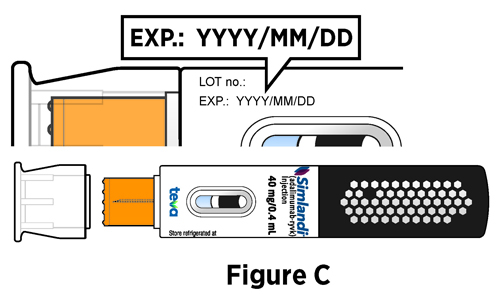
Figure C (Image 9)

Figure C (Image 9)
An instructional diagram labeled Figure C showing a Simlandri Inflatable Port with a 40 mg/0.4 mL dose, featuring a black grip with hexagonal pattern and a white slider mechanism. The image highlights the expiration date and lot number locations for the device.*
FDA Label Image

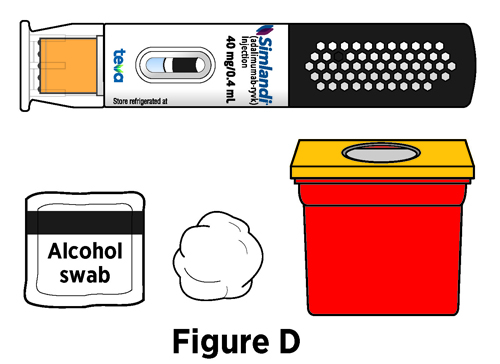
Figure D (Image 10)

Figure D (Image 10)
Illustration showing a medication inhaler labeled for albuterol sulfate with a dosage of 40 mcg per 0.4 mL, alongside an alcohol swab packet, a cotton ball, and a red sharps disposal container. The image appears to demonstrate items related to medication administration and sanitation.*
FDA Label Image

Figure E (Image 11)

Figure E (Image 11)
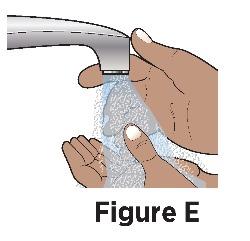
An instructional illustration labeled 'Figure E' showing a pair of hands holding a textured cloth or pad under running water from a faucet, demonstrating a step in cleaning or rinsing.*
FDA Label Image

Figure F (Image 12)

Figure F (Image 12)
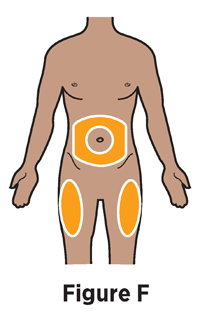
An anatomical illustration labeled Figure F showing a human torso and upper legs with highlighted orange areas around the navel and on the front upper thighs, indicating recommended application sites.*
FDA Label Image

Figure G (Image 13)

Figure G (Image 13)
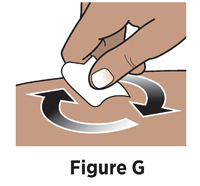
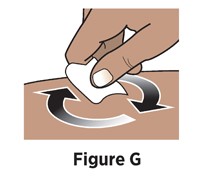
Illustration showing a hand using a swab with circular motion arrows on a surface, labeled as Figure G. This likely demonstrates the correct technique for applying the Dukal Sterile Alcohol Prep Pad topically.*
FDA Label Image

Figure H (Image 14)

Figure H (Image 14)
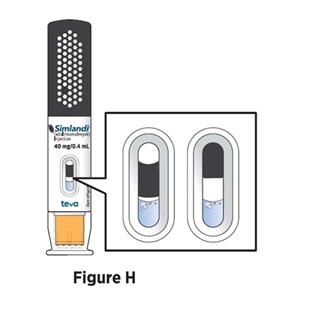
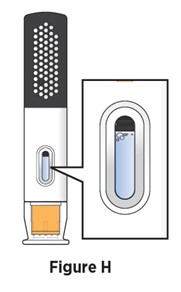
An instructional diagram labeled 'Figure H' showing a Simlandi product with a close-up detail of two test or indicator windows, one with a partial black fill and one without. The image appears to demonstrate a usage or indicator feature related to the product's contents or operation.*
FDA Label Image

Figure I (Image 15)

Figure I (Image 15)
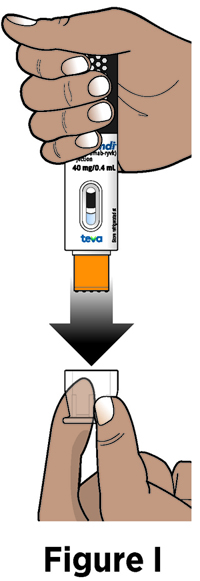
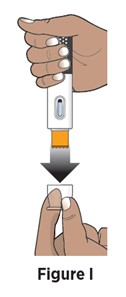
Illustration showing how to dispense liquid from a small tube onto a square swab or pad held between thumb and forefinger. The tube has a label partially visible with the brand name Teva and a dosage amount of 40 mg/0.4 mL. An arrow points downward from the tube to the pad, indicating the direction of dispensing.*
FDA Label Image

Figure J (Image 16)

Figure J (Image 16)
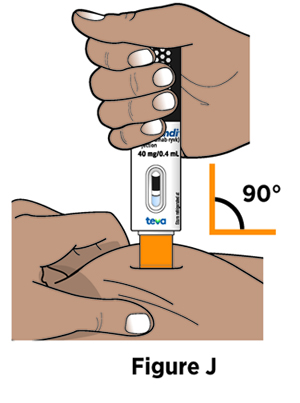
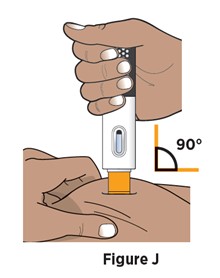
Illustration showing the proper technique to apply an injectable medication at a 90-degree angle to the skin. The image depicts one hand holding a syringe vertically above the skin surface, with the other hand supporting the area for injection. The syringe label includes partial text and a logo.*
FDA Label Image

Figure Kl (Image 17)

Figure Kl (Image 17)
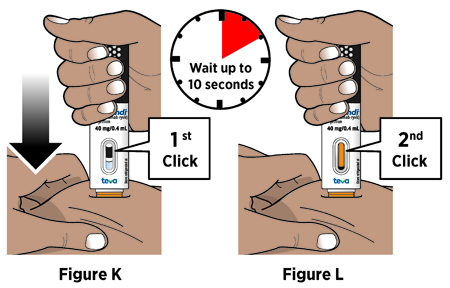
Instructional illustration showing two-step use of an alcohol prep pad dispenser labeled with 'teva'. Figure K demonstrates pressing the dispenser for the first click onto skin with a downward arrow. Figure L shows a second press for the second click. A clock graphic indicates to wait up to 10 seconds between steps.*
FDA Label Image

Figure M (Image 18)

Figure M (Image 18)
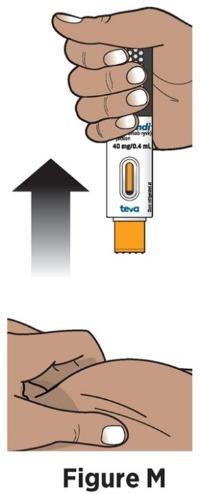
Instructional illustration showing a hand holding a medication tube with an arrow pointing upward, indicating the direction to squeeze or apply. Below, a hand is shown pressing or massaging a skin area, demonstrating topical application technique.*
FDA Label Image

Figure N (Image 19)

Figure N (Image 19)
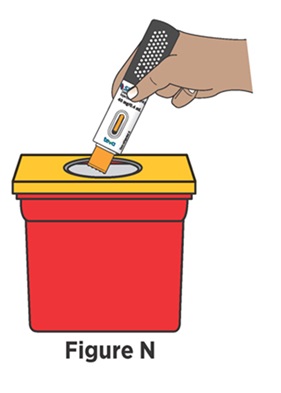
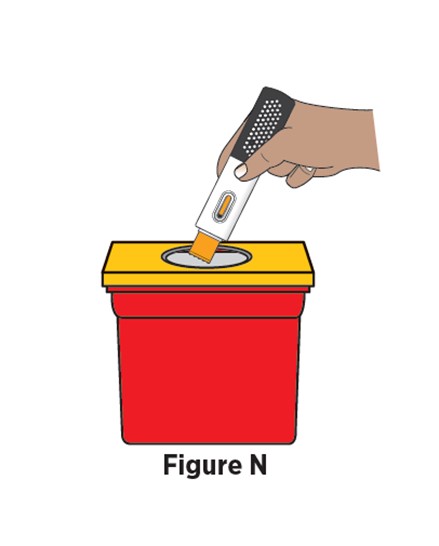
An instructional illustration showing a hand holding a Dukal Sterile Alcohol Prep Pad swab above a yellow-lidded red disposal container, demonstrating the proper disposal method of the used alcohol prep pad.*
FDA Label Image

Image (Image 20)

FDA Label Image

Image (Image 21)

Image (Image 21)
An instructional diagram of a medical device showing labeled components: Clear Cap, Needle, Orange Needle Sleeve, Inspection Window, and Gray Body Grip Area. The illustration appears to depict the parts of a syringe or injection device for procedural reference.*
FDA Label Image

Figure A (Image 22)

Figure A (Image 22)
An instructional illustration showing a hand inserting a rectangular alcohol prep pad packet into a dispenser, labeled as Figure A, indicating how to load the pad for use or dispensing.*
FDA Label Image

Figure B (Image 23)

Figure B (Image 23)
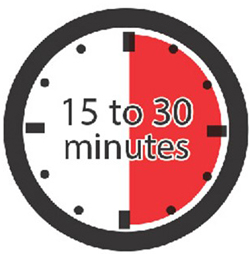
Illustration labeled 'Figure B' depicting a clock face with the right half shaded red and marked '15 to 30 minutes,' indicating a specified time range.*
FDA Label Image

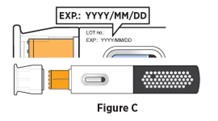
Figure C (Image 24)

Figure C (Image 24)
An instructional illustration labeled Figure C, depicting a step in using a swab product with visible expiration date and lot number fields. It shows removal of a protective flap from a swab applicator featuring a rectangular window and a textured tip area, consistent with antiseptic swab packaging components.*
FDA Label Image

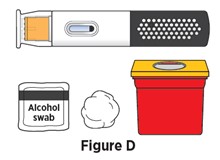
Figure D (Image 25)

Figure D (Image 25)
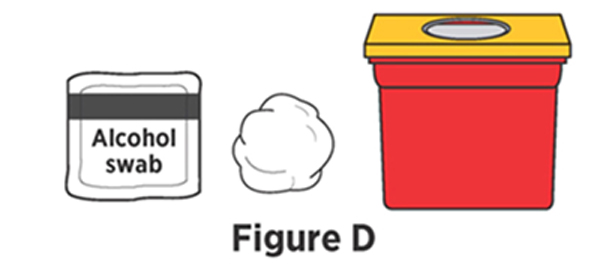
An instructional illustration labeled Figure D depicting a sequence of items related to usage and disposal: a sealed alcohol swab packet labeled 'Alcohol swab,' a cotton ball, and a red sharps disposal container with a yellow lid. The illustration seems to guide proper usage and disposal steps for alcohol prep pads or similar items.*
FDA Label Image

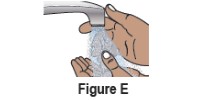
Figure E (Image 26)

Figure E (Image 26)
An illustration labeled Figure E showing a close-up of hands under running water from a faucet, demonstrating handwashing or rinsing.*
FDA Label Image

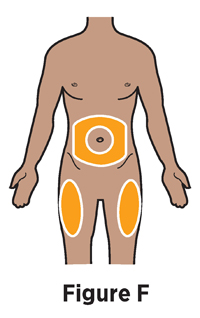
Figure F (Image 27)

Figure F (Image 27)
An anatomical diagram of a human torso and legs highlighting three orange oval areas: one on the abdomen around the navel and one on each thigh. The figure is labeled as Figure F, illustrating specific body sites likely for topical application or use instructions related to the product.*
FDA Label Image

Figure G (Image 28)

Figure G (Image 28)
Illustration labeled Figure G showing a hand using a Dukal Sterile Alcohol Prep Pad to clean skin with a circular wiping motion, indicated by two curved arrows.*
FDA Label Image

Figure H (Image 29)

Figure H (Image 29)
An instructional diagram labeled 'Figure H' showing a device with a perforated top section, a viewing window in the middle displaying a liquid inside, and an orange base. The diagram includes a zoomed-in inset view highlighting the liquid level observed through the viewing window.*
FDA Label Image

Figure I (Image 30)

Figure I (Image 30)
An instructional illustration showing a hand using a finger to peel or hold a small square pad, labeled as Figure I. The image suggests preparation or handling of a swab or pad product.*
FDA Label Image

Figure J (Image 31)

Figure J (Image 31)
An instructional illustration showing a hand holding an injection pen at a 90-degree angle to the skin on an arm, demonstrating proper injection technique.*
FDA Label Image

Figure Kl (Image 32)

Figure Kl (Image 32)
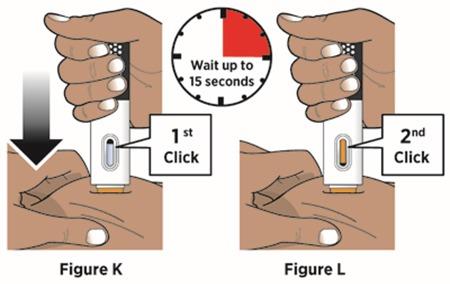
An instructional illustration showing two figures labeled K and L demonstrating a two-step clicking mechanism on a swab applicator over a fingertip. Figure K depicts the first click activating the swab, followed by a clock indicating to wait up to 15 seconds. Figure L shows the second click completing the process.*
FDA Label Image

Figure M (Image 33)

Figure M (Image 33)
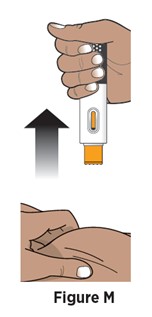
An instructional illustration labeled 'Figure M' depicting a hand using an injector device. The image shows the device held upright with an arrow pointing upward, and another hand with a finger extended as if to receive an injection or test. This likely demonstrates a step in the use of the device.*
FDA Label Image

Figure N (Image 34)

Figure N (Image 34)
An instructional illustration showing a hand disposing of a used alcohol prep pad into a red sharps or biohazard container through a circular opening in the container's yellow lid. The image is labeled "Figure N."*
FDA Label Image

Image (Image 35)

Image (Image 35)
An illustration of a calendar page showing the word 'MONTH' at the top, with a grid of circles representing days, some filled in white and others in gray, suggesting a tracking or marking system for days in a month.*
FDA Label Image

Image (Image 36)

Image (Image 36)
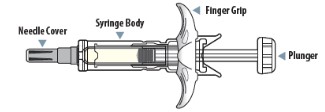
Illustration diagram of a syringe with labeled parts including needle cover, syringe body, finger grip, and plunger. The diagram visually identifies the components of the syringe mechanism.*
FDA Label Image

Figure A (Image 37)

Figure A (Image 37)
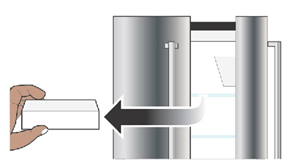
An instructional illustration showing a hand holding a box near a door, with an arrow indicating the box being moved toward or inserted into a slot or compartment on the door. This image appears to demonstrate packaging handling or placement instructions, possibly related to Dukal Sterile Alcohol Prep Pad packaging steps.*
FDA Label Image

Figure B (Image 38)

Figure B (Image 38)
A circular timer illustration showing a clock with half of its right side shaded red. The text "15 to 30 minutes" is displayed inside the clock face, likely indicating a recommended wait or duration period.*
FDA Label Image

Figure C (Image 39)

Figure C (Image 39)
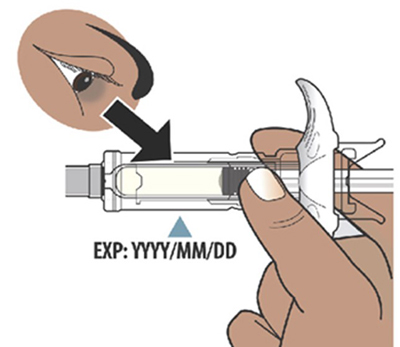
An instructional illustration showing the correct method to remove the cap from a syringe. The image features a hand holding the syringe and an arrow pointing from an eye, emphasizing caution to avoid eye contact. The syringe displays an expiration date placeholder in the format YYYY/MM/DD.*
FDA Label Image

Figure D (Image 40)

Figure D (Image 40)
Illustration showing a Dukal Sterile Alcohol Prep Pad package labeled "Alcohol swab," a cotton ball, and a red sharps disposal container with a yellow lid, likely indicating proper disposal methods for used alcohol prep materials.*
FDA Label Image

Figure E (Image 41)

Figure E (Image 41)
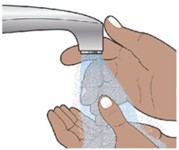
An illustration showing a pair of hands under running water from a faucet. The water is flowing over the hands, which appear to be washing or rinsing, with visible soap lather or bubbles on the skin.*
FDA Label Image

Figure F (Image 42)

Figure F (Image 42)
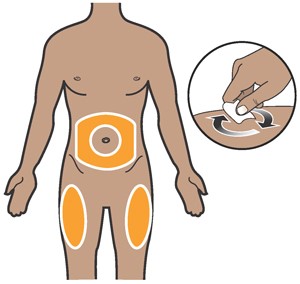
An instructional illustration showing the torso of a human figure with orange-highlighted areas on the abdomen and thighs, indicating recommended skin preparation sites. A close-up inset demonstrates a hand peeling back the packaging of a swab using a twisting motion.*
FDA Label Image

Figure G (Image 43)

Figure G (Image 43)
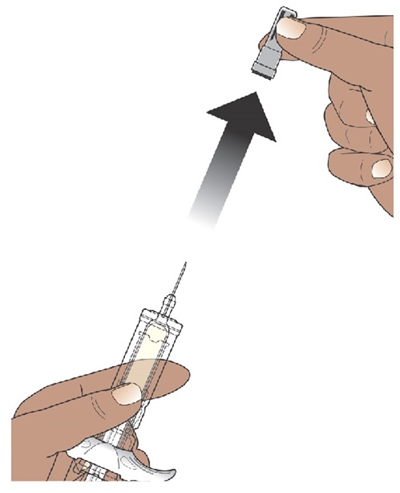
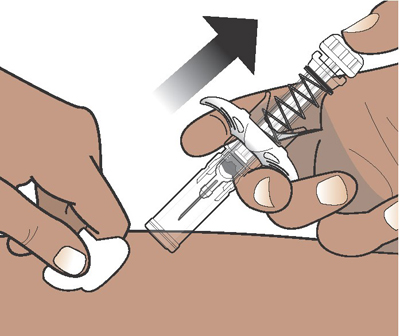
An instructional illustration showing two hands demonstrating the removal of the cap from a syringe needle. One hand holds the syringe, while the other pulls the needle cap upward, indicated by a large black arrow pointing away from the syringe.*
FDA Label Image

Figure H (Image 44)

Figure H (Image 44)
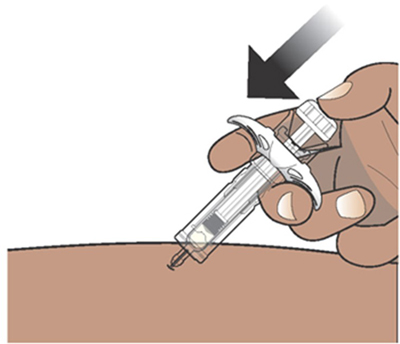
An instructional illustration showing a hand holding a syringe poised to inject, with an inset image depicting the application of a swabbing motion on the skin, likely representing the use of a sterile alcohol prep pad before injection.*
FDA Label Image

Figure I (Image 45)

Figure I (Image 45)
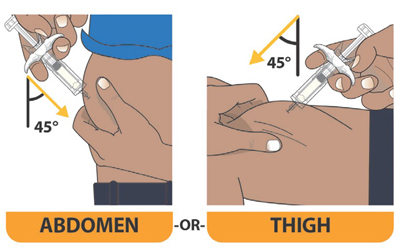
An instructional illustration showing two methods for injecting medication at a 45-degree angle angle. One panel demonstrates injection into the abdomen, indicated by a hand holding a syringe near a person's stomach. The other panel shows injection into the thigh, with a similar hand positioning and syringe angle. Both images focus on proper needle insertion technique.*
FDA Label Image

Figure J (Image 46)

Figure J (Image 46)
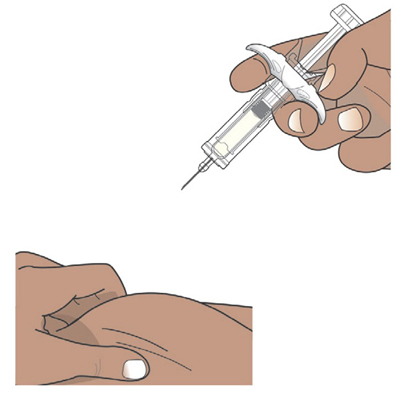
Illustration of a hand holding and preparing to inject with a syringe, with an arrow indicating the next step in the injection process. The image focuses on the syringe tip near the skin area.*
FDA Label Image

Figure K (Image 47)

Figure K (Image 47)
An instructional illustration showing hands holding and using a single-dose alcohol prep pad swab. One hand grips the swab container while the other hand holds it above a fingertip, indicating removing the top part of the container with a twisting motion, presumably to expose the alcohol pad for topical skin application.*
FDA Label Image

Figure L (Image 48)

Figure L (Image 48)
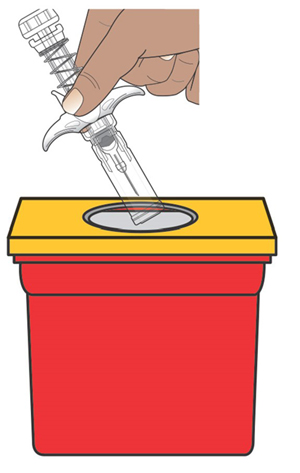
An instructional illustration showing a hand disposing of a syringe into a red sharps disposal container with a yellow lid, demonstrating safe syringe disposal technique.*
FDA Label Image

Image (Image 49)

Image (Image 49)
An illustration of a calendar page marked "MONTH" showing a grid of days with some days highlighted, representing a monthly schedule or tracking system.*
FDA Label Image

Qrg (Image 50)

Qrg (Image 50)
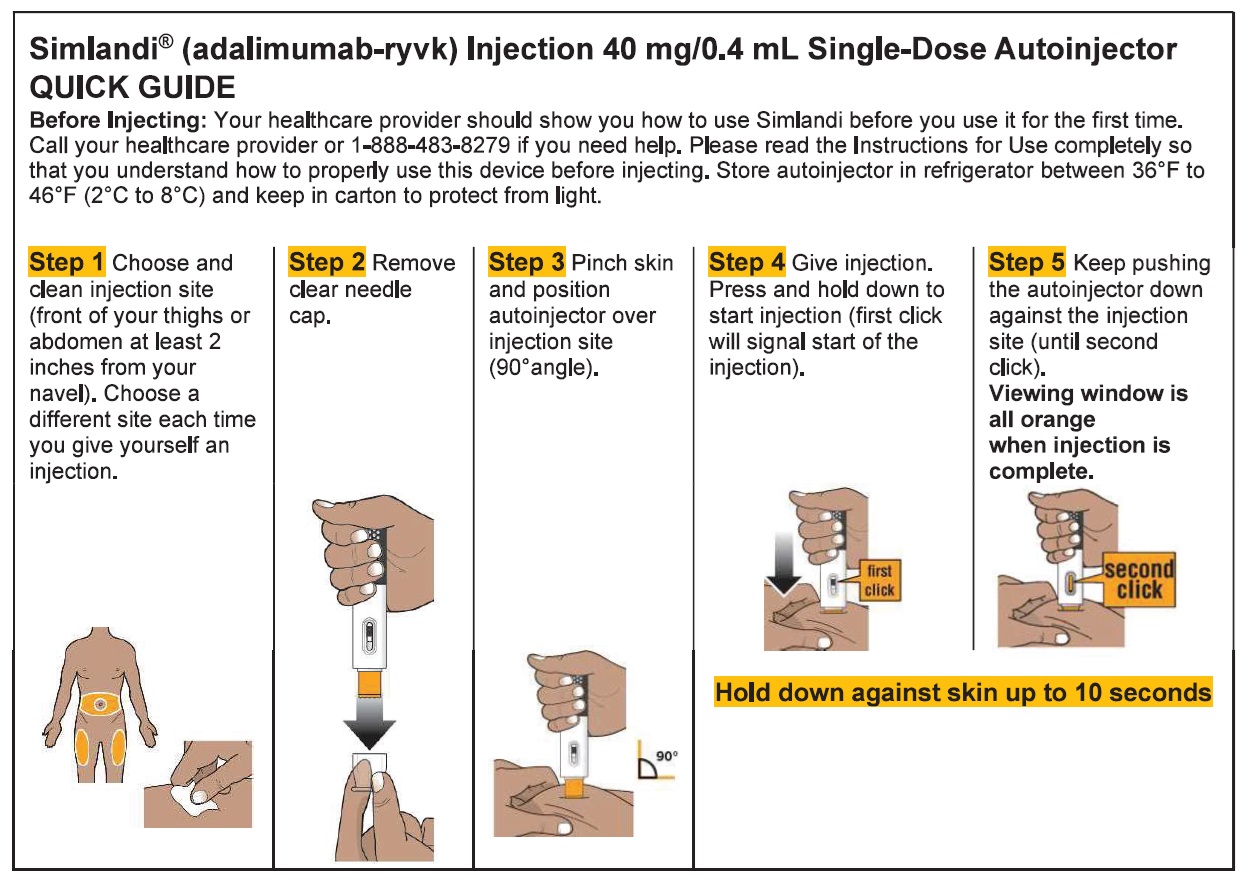
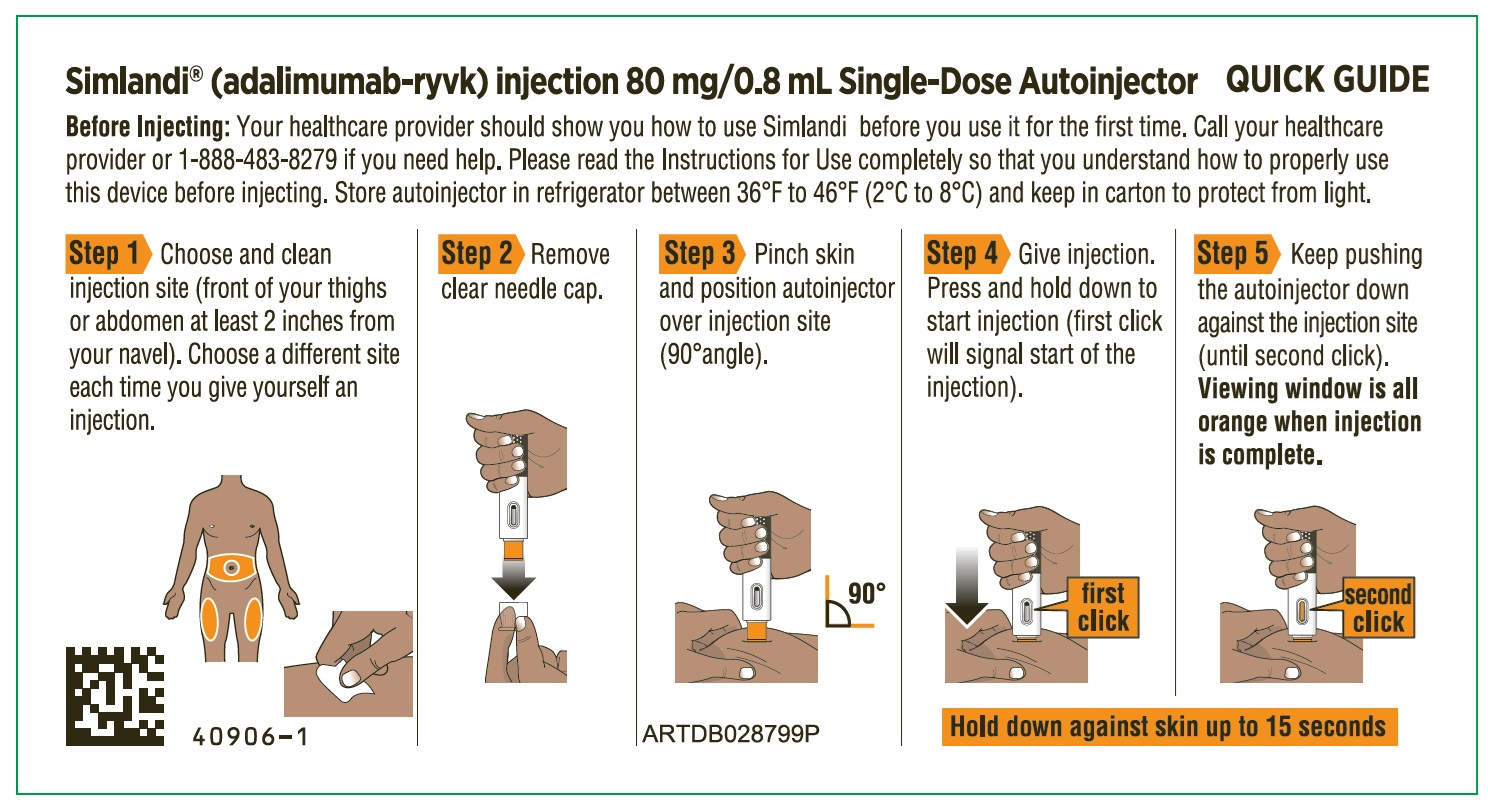
Quick guide instructions for using Simlandi (adalimumab-ryvk) Injection 40 mg/0.4 mL Single-Dose Autoinjector, including steps to choose and clean the injection site, remove needle cap, position device at 90° angle, give injection with first click, and continue pressing until second click with visual confirmation.*
FDA Label Image

Qrg (Image 51)

Qrg (Image 51)
Dukal Sterile Alcohol Prep Pad packaging label showing the product name, strength .7 mL/mL, dosage form as a topical swab, and the labeler Dukal LLC. The image features typical sterile alcohol prep pad packaging with relevant branding and product information visible on the front.*
FDA Label Image

80ai (Image 52)

80ai (Image 52)
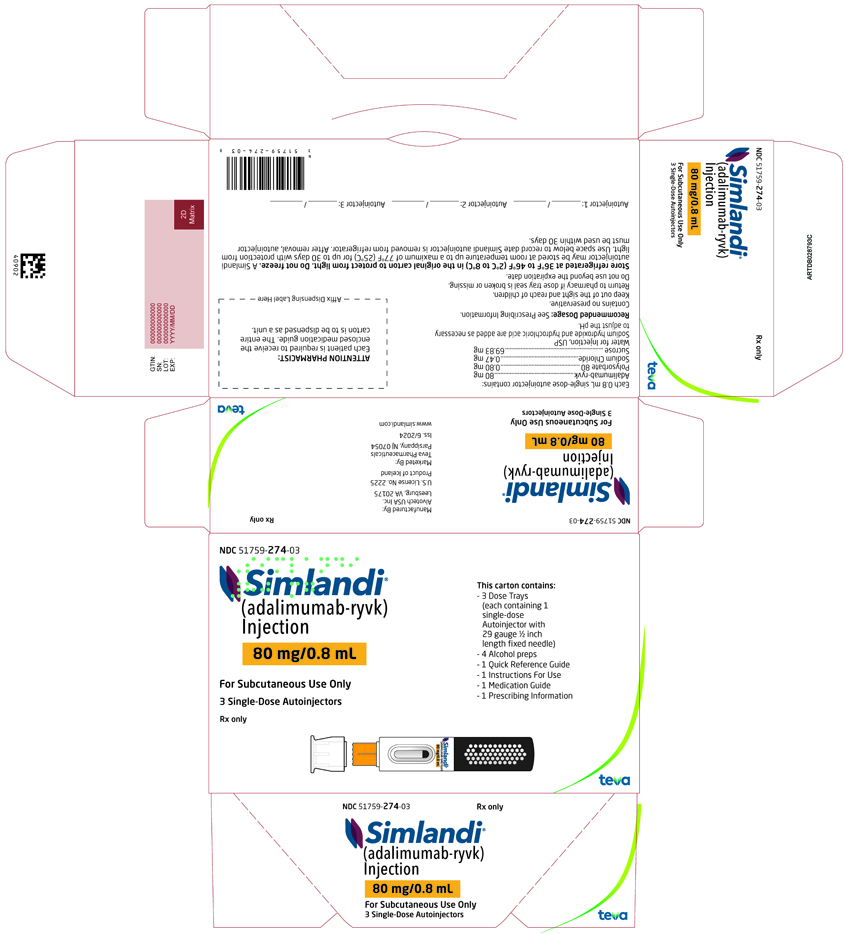
Dukal Sterile Alcohol Prep Pad packaging label in a flat, unfolded layout. The label indicates the product as an isopropyl alcohol swab for topical use. The labeler is Dukal LLC, with a strength of 0.7 mL/mL noted. The packaging shows information in a clear, structured format suitable for a single-use swab product.*
FDA Label Image

40ai (Image 53)

40ai (Image 53)
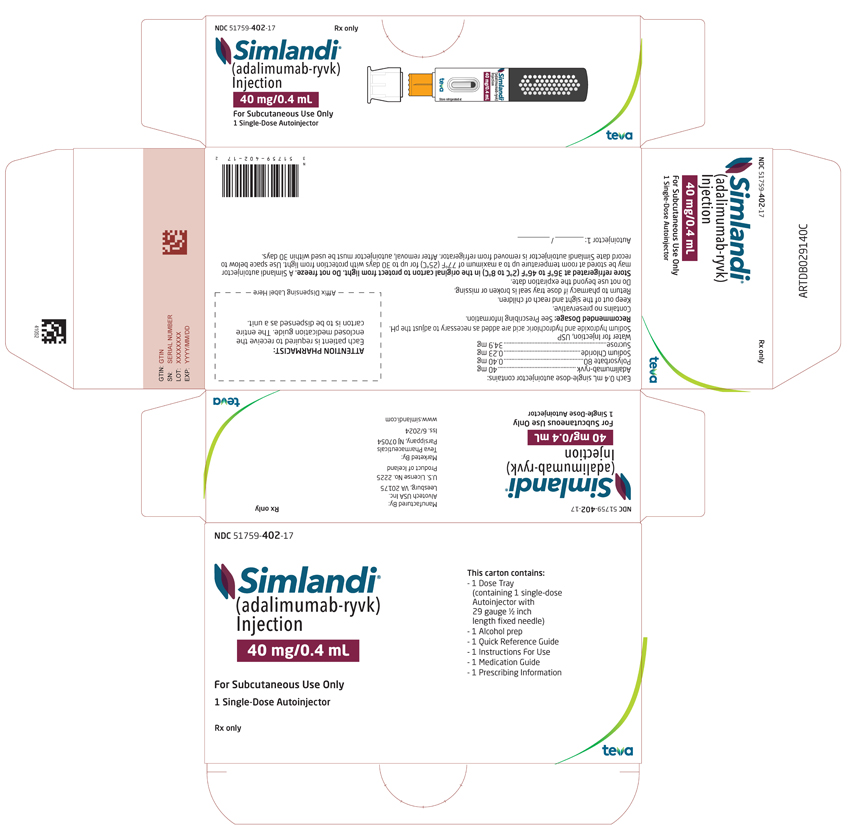
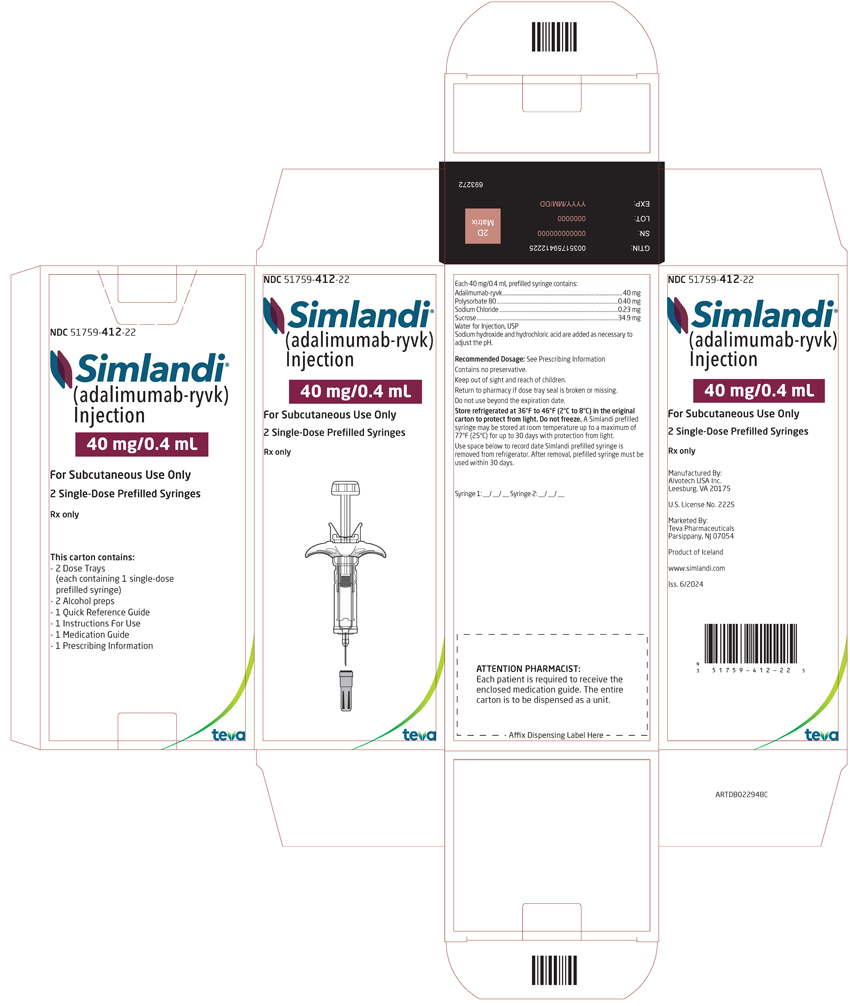
Box packaging label for Simlandi (adalimumab-ryvk) Injection, 40 mg/0.4 mL, a prescription single-dose autoinjector for subcutaneous use. The label includes the product name, active ingredient, strength, dosage form, usage instructions, and contains the Teva logo as the manufacturer.*
FDA Label Image

20sd (Image 54)

20sd (Image 54)
Packaging label for Dukal Sterile Alcohol Prep Pad, a topical swab containing 0.7 mL/mL isopropyl alcohol. The label includes product name, generic name, dosage form, strength, route of administration, and labeler Dukal LLC. The design features usage information and storage instructions for the alcohol prep pad.*
FDA Label Image

40sd (Image 55)

40sd (Image 55)
Packaging label for Dukal Sterile Alcohol Prep Pad containing isopropyl alcohol in swab form. The label shows a white and maroon design with product name, dosage form, and usage instructions. The labeler is Dukal LLC. The package appears to be a small, single-use swab intended for topical application, with details about contents and manufacturer.*
FDA Label Image

80sd (Image 56)

80sd (Image 56)
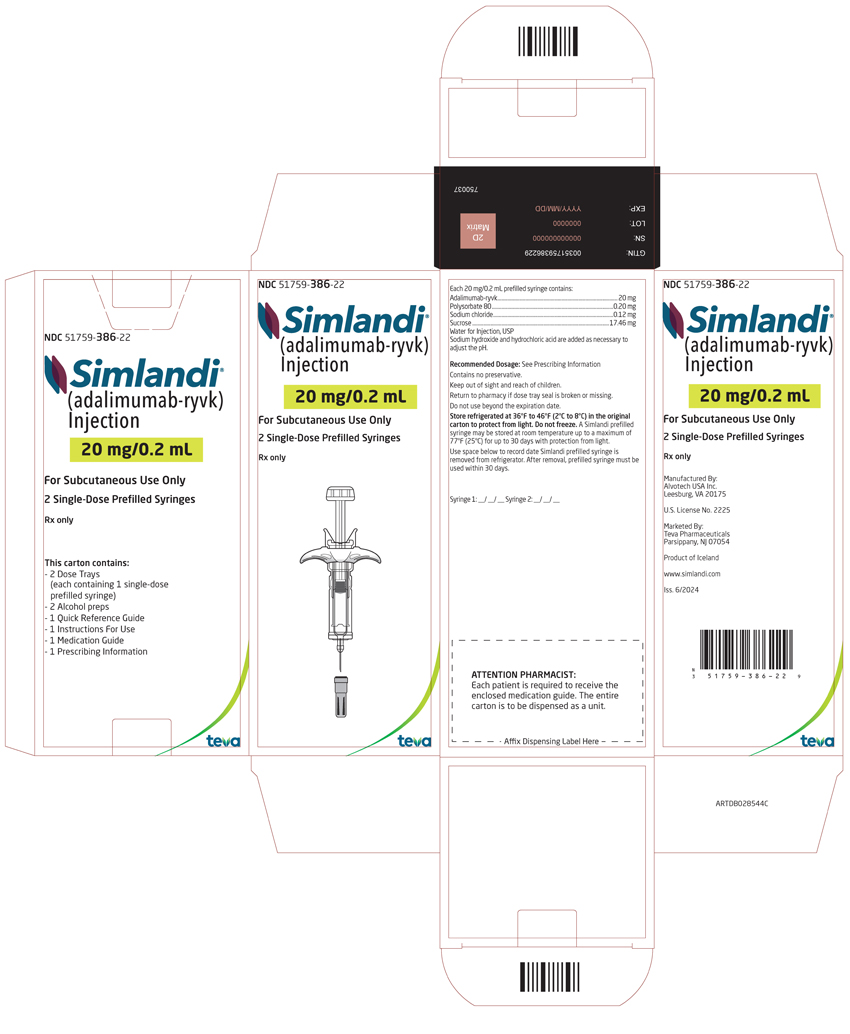
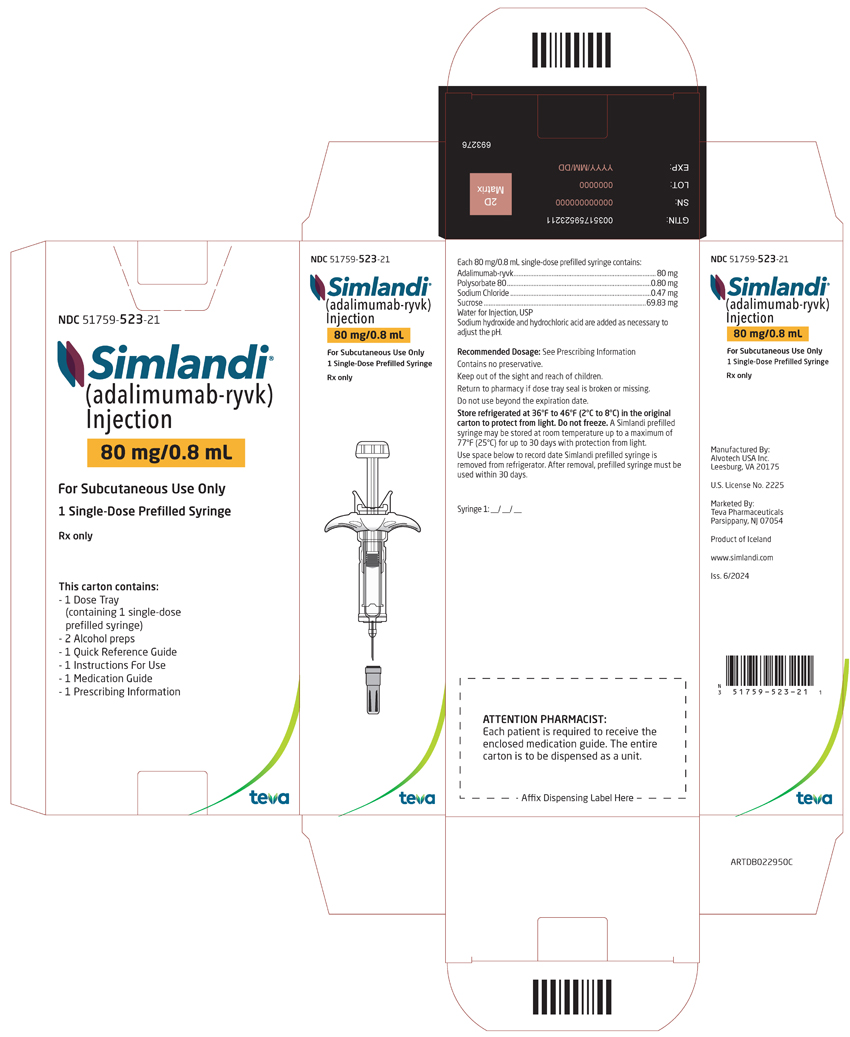
Label for Simlandi (adalimumab-ryvk) Injection 80 mg/0.8 mL by Teva Pharmaceuticals. The carton is for a single-dose prefilled syringe for subcutaneous use only, Rx only. It includes product details, usage instructions, storage guidelines, and manufacturer information from Alvotech USA Inc., marketed by Teva Pharmaceuticals.*
* About these descriptions: Image descriptions on this page are generated by automated AI analysis of the product label images from the manufacturer's FDA label submission (SPL). They are provided for reference only and may contain errors or omissions. Always rely on the printed label itself and the official FDA labeling, and consult a pharmacist or healthcare professional with any questions about this product.