Other
A. REDUCED EFFICACY IN NONVALVULAR ATRIAL FIBRILLATION PATIENTS WITH CRCL > 95 ML/MIN
SAVAYSA should not be used in patients with CrCL > 95 mL/min. In the ENGAGE AF-TIMI 48 study, nonvalvular atrial fibrillation patients with CrCL > 95 mL/min had an increased rate of ischemic stroke with SAVAYSA 60 mg once daily compared to patients treated with warfarin. In these patients another anticoagulant should be used [see Dosage and Administration (2.1), Warnings and Precautions (5.1), and Clinical Studies (14.1)].
B. PREMATURE DISCONTINUATION OF SAVAYSA INCREASES THE RISK OF ISCHEMIC EVENTS
Premature discontinuation of any oral anticoagulant in the absence of adequate alternative anticoagulation increases the risk of ischemic events. If SAVAYSA is discontinued for a reason other than pathological bleeding or completion of a course of therapy, consider coverage with another anticoagulant as described in the transition guidance [see Dosage and Administration (2.4), Warnings and Precautions (5.2), and Clinical Studies (14.1)].
C. SPINAL/EPIDURAL HEMATOMA
Epidural or spinal hematomas may occur in patients treated with SAVAYSA who are receiving neuraxial anesthesia or undergoing spinal puncture. These hematomas may result in long-term or permanent paralysis. Consider these risks when scheduling patients for spinal procedures. Factors that can increase the risk of developing epidural or spinal hematomas in these patients include:
- use of indwelling epidural catheters
- concomitant use of other drugs that affect hemostasis, such as nonsteroidal anti-inflammatory drugs (NSAIDs), platelet inhibitors, other anticoagulants
- a history of traumatic or repeated epidural or spinal punctures
- a history of spinal deformity or spinal surgery
- optimal timing between the administration of SAVAYSA and neuraxial procedures is not known
- a prior stroke (ischemic or unknown type), transient ischemic attack (TIA) or non-CNS systemic embolism, or
- 2 or more of the following risk factors:
– age ≥ 75 years,– hypertension,– heart failure, or– diabetes mellitus
- Advise patients to take SAVAYSA exactly as prescribed.
- Remind patients to not discontinue SAVAYSA without talking to the healthcare provider who prescribed it.
- Instruct patients to keep an adequate supply of tablets to ensure continuous dosing of SAVAYSA.
- Instruct patients who cannot swallow the tablet whole to crush SAVAYSA, combine with 2 to 3 ounces of water or applesauce and ingest immediately.
- Instruct patients who require a gastric tube to crush the SAVAYSA tablet and mix it with 2 to 3 ounces of water before administering immediately via the gastric feeding tube.
- Inform patients that if a dose is missed, they should take SAVAYSA as soon as possible the same day, and resume the normal dosing schedule the following day. The dose should not be doubled to make up for a missing dose.
- Advise patients that they may bleed more easily, may bleed longer, or bruise more easily when treated with SAVAYSA.
- Instruct patients to report any unusual bleeding immediately to their healthcare provider.
- For patients that are having neuraxial anesthesia or spinal puncture, advise patients to watch for signs and symptoms of spinal or epidural hematoma, such as back pain, tingling, numbness (especially in the lower limbs), muscle weakness, and stool or urine incontinence. If any of these symptoms occur, advise the patient to contact his or her physician immediately [see Boxed Warning].
- Remind patients to inform their healthcare providers that they are taking SAVAYSA before any surgery, medical, or dental procedure is scheduled.
- Remind patients to inform their healthcare providers and dentists if they plan to take, or are taking any prescription medications, over-the-counter drugs or herbal products.
- Remind patients to inform their healthcare provider immediately if they become pregnant or intend to become pregnant during treatment with SAVAYSA.
- Inform patients to not breastfeed if they are taking SAVAYSA [see Use in Specific Populations (8.2)].
[see Warnings and Precautions (5.4)].
Monitor patients frequently for signs and symptoms of neurological impairment. If neurological compromise is noted, urgent treatment is necessary [see Warnings and Precautions (5.4)].
Consider the benefits and risks before neuraxial intervention in patients anticoagulated or to be anticoagulated [see Warnings and Precautions (5.4)].
Limitation of Use for NVAF
SAVAYSA should not be used in patients with CrCL > 95 mL/min because of an increased risk of ischemic stroke compared to warfarin [see Dosage and Administration (2.1), Warnings and Precautions (5.1) and Clinical Studies (14.1)].
Reversal of Anticoagulant Effect
There is no established way to reverse the anticoagulant effects of SAVAYSA, which can be expected to persist for approximately 24 hours after the last dose. The anticoagulant effect of SAVAYSA cannot be reliably monitored with standard laboratory testing. A specific reversal agent for edoxaban is not available. Hemodialysis does not significantly contribute to edoxaban clearance [see Clinical Pharmacology (12.3)]. Protamine sulfate, vitamin K, and tranexamic acid are not expected to reverse the anticoagulant activity of SAVAYSA. The use of prothrombin complex concentrates (PCC), or other procoagulant reversal agents such as activated prothrombin complex concentrate (APCC) or recombinant factor VIIa (rFVIIa) may be considered but has not been evaluated in clinical outcome studies [see Clinical Pharmacology (12.2)]. When PCCs are used, monitoring for anticoagulation effect of edoxaban using clotting test (PT, INR, or aPTT) or anti-FXa activity is not useful and is not recommended.
The ENGAGE AF-TIMI 48 Study
In the ENGAGE AF-TIMI 48 study, the median study drug exposure for the SAVAYSA and warfarin treatment groups was 2.5 years.
Bleeding was the most common reason for treatment discontinuation. Bleeding led to treatment discontinuation in 3.9% and 4.1% of patients in the SAVAYSA 60 mg and warfarin treatment groups, respectively.
In the overall population, major bleeding was lower in the SAVAYSA group compared to the warfarin group [HR 0.80 (0.70, 0.91), p < 0.001]. Table 6.1 shows major bleeding events (percentage of patients with at least one bleeding event, per year) for the indicated population (CrCL ≤ 95 mL/min).
| Event A subject can be included in multiple sub-categories if he/she had an event for those categories. | SAVAYSA 60 mg Includes all patients with CrCL ≤ 95 mL/min randomized to receive 60 mg once daily, including those who were dose-reduced to 30 mg once daily because of prespecified baseline conditions. N = 5417 n (%/year) | Warfarin N = 5485 n (%/year) | SAVAYSA 60 mg vs. Warfarin HR (95% CI) |
|---|---|---|---|
| Abbreviations: HR = Hazard Ratio versus Warfarin, CI = Confidence Interval, n = number of patients with events, N = number of patients in Safety population, | |||
| Major Bleeding A major bleeding event (the study primary safety endpoint) was defined as clinically overt bleeding that met one of the following criteria: fatal bleeding; symptomatic bleeding in a critical site such as retroperitoneal, intracranial, intraocular, intraspinal, intra-articular, pericardial, or intramuscular with compartment syndrome; a clinically overt bleeding event that caused a fall in hemoglobin of at least 2.0 g/dL (or a fall in hematocrit of at least 6.0% in the absence of hemoglobin data), when adjusted for transfusions (1 unit of transfusion = 1.0 g/dL drop in hemoglobin). | 357 (3.1) | 431 (3.7) | 0.84 (0.73, 0.97) |
| Intracranial Hemorrhage (ICH) ICH includes primary hemorrhagic stroke, subarachnoid hemorrhage, epidural/subdural hemorrhage, and ischemic stroke with major hemorrhagic conversion. | 53 (0.5) | 122 (1.0) | 0.44 (0.32, 0.61) |
| Hemorrhagic Stroke | 33 (0.3) | 69 (0.6) | 0.49 (0.32, 0.74) |
| Other ICH | 20 (0.2) | 55 (0.5) | 0.37 (0.22, 0.62) |
| Gastrointestinal Gastrointestinal (GI) bleeds include bleeding from upper and lower GI tract. Lower GI tract bleeding includes rectal bleeds. | 205 (1.8) | 150 (1.3) | 1.40 (1.13, 1.73) |
| Fatal Bleeding Fatal bleed is a bleeding event during the on-treatment period and adjudicated as leading directly to death within 7 days. | 21 (0.2) | 42 (0.4) | 0.51 (0.30, 0.86) |
| ICH | 19 (0.2) | 36 (0.3) | 0.54 (0.31, 0.94) |
| Non-intracranial | 2 (< 0.1) | 6 (< 0.1) | ---- |
The most common site of a major bleeding event was the gastrointestinal (GI) tract. Table 6.2 shows the number of and the rate at which patients experienced GI bleeding in the SAVAYSA 60 mg and warfarin treatment groups.
| SAVAYSA N = 5417 n (%/year) | Warfarin N = 5485 n (%/year) | |
|---|---|---|
| Major Gastrointestinal (GI) Bleeding GI bleeding was defined by location as upper or lower GI | 205 (1.78) | 150 (1.27) |
| Upper GI | 123 (1.06) | 88 (0.74) |
| Lower GI Lower GI bleeding included anorectal bleeding | 85 (0.73) | 64 (0.54) |
| GUSTO GUSTO – Severe or life-threatening bleeding that caused hemodynamic compromise and requires intervention Severe GI bleeding | 16 (0.14) | 17 (0.14) |
| Fatal GI bleeding | 1 (< 0.1) | 2 (< 0.1) |
The rate of anemia-related adverse events was greater with SAVAYSA 60 mg than with warfarin (9.6% vs. 6.8%).
The comparative rates of major bleeding on SAVAYSA and warfarin were generally consistent among subgroups (see Figure 6.1). Bleeding rates appeared higher in both treatment arms (SAVAYSA and warfarin) in the following subgroups of patients: those receiving aspirin, those in the United States, those more than 75 years old and those with reduced renal function.
| Figure 6.1: Adjudicated Major Bleeding in the ENGAGE AF-TIMI 48 During or within 2 days of stopping study treatment Study |
|---|
| Note: The figure above presents effects in various subgroups all of which are baseline characteristics and most of which were pre-specified. The 95% confidence limits that are shown do not take into account how many comparisons were made, nor do they reflect the effect of a particular factor after adjustment for all other factors. Apparent homogeneity or heterogeneity among groups should not be over-interpreted. |
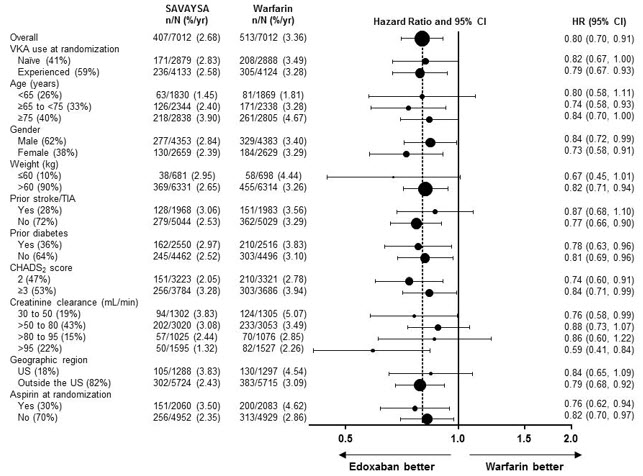 Figure 6.1 (Savaysa 01) |
Other Adverse Reactions
The most common non-bleeding adverse reactions (≥ 1%) for SAVAYSA 60 mg versus warfarin were rash (4.2% vs. 4.1%), and abnormal liver function tests (4.8% vs. 4.6%), respectively.
Interstitial Lung Disease (ILD) was reported as a serious adverse event on treatment for SAVAYSA 60 mg and warfarin in 15 (0.2%) and 7 (0.1%) patients, respectively. Many of the cases in both treatment groups were confounded by the use of amiodarone, which has been associated with ILD, or by infectious pneumonia. In the overall study period, there were 5 and 0 fatal ILD cases in the SAVAYSA 60 mg and warfarin groups, respectively.
The Hokusai VTE Study
The safety of SAVAYSA in the treatment of VTE was assessed in the Hokusai VTE study. The duration of drug exposure for SAVAYSA was ≤ 6 months for 1561 (37.9%) of patients, > 6 months for 2557 (62.1%) of patients and 12 months for 1661 (40.3%) of patients.
Bleeding was the most common reason for treatment discontinuation and occurred in 1.4% and 1.4% of patients in the SAVAYSA and warfarin arms, respectively.
Bleeding in Patients with DVT and/or PE in the Hokusai VTE Study
The major safety outcome was Clinically Relevant Bleeding, defined as the composite of Major and Clinically Relevant Non-Major (CRNM) Bleeding that occurred during or within three days of stopping study treatment. The incidence of Clinically Relevant Bleeding was lower in SAVAYSA than warfarin [HR (95% CI): 0.81 (0.71, 0.94); p = 0.004].
Table 6.3 shows the number of patients experiencing bleeding events in the Hokusai VTE Study.
| SAVAYSA (N = 4118) | Warfarin (N = 4122) | |
|---|---|---|
| Abbreviations: N = number of patients in the modified intent-to-treat population; n = number of events; CRNM = clinically relevant non-major | ||
| Clinically Relevant Bleeding Primary Safety Endpoint: Clinically Relevant Bleeding (composite of Major and CRNM). (Major/CRNM), n (%) | 349 (8.5) | 423 (10.3) |
| Major Bleeding A major bleeding event was defined as clinically overt bleeding that met one of the following criteria: associated with a fall in hemoglobin level of 2.0 g/dL or more, or leading to transfusion of two or more units of packed red cells or whole blood; occurring in a critical site or organ: intracranial, intraspinal, intraocular, pericardial, intra-articular, intramuscular with compartment syndrome, retroperitoneal; contributing to death. , n (%) | 56 (1.4) | 66 (1.6) |
| Fatal bleeding | 2 (<0.1) | 10 (0.2) |
| Intracranial fatal | 0 (0.0) | 6 (0.1) |
| Non-fatal critical organ bleeding | 13 (0.3) | 25 (0.6) |
| Intracranial bleeding | 5 (0.1) | 12 (0.3) |
| Non-fatal non-critical organ bleeding | 41 (1.0) | 33 (0.8) |
| Decrease in Hb ≥ 2 g/dL | 40 (1.0) | 33 (0.8) |
| Transfusion of ≥ 2 units of RBC | 28 (0.7) | 22 (0.5) |
| CRNM Bleeding CRNM bleeding was defined as overt bleeding not meeting the criteria for a major bleeding event but that was associated with a medical intervention, an unscheduled contact (visit or telephone call) with a physician, temporary cessation of study treatment, or associated with discomfort for the subject such as pain, or impairment of activities of daily life. | 298 (7.2) | 368 (8.9) |
| Any Bleed | 895 (21.7) | 1056 (25.6) |
Patients with low body weight (≤ 60 kg), CrCL ≤ 50 mL/min, or concomitant use of select P-gp inhibitors were randomized to receive SAVAYSA 30 mg or warfarin. As compared to all patients who received SAVAYSA or warfarin in the 60 mg cohort, all patients who received SAVAYSA or warfarin in the 30 mg cohort (n = 1452, 17.6% of the entire study population) were older (60.1 vs 54.9 years), more frequently female (66.5% vs 37.7%), more frequently of Asian race (46.0% vs 15.6%) and had more co-morbidities (e.g., history of bleeding, hypertension, diabetes, cardiovascular disease, cancer). Clinically relevant bleeding events occurred in 58/733 (7.9%) of the SAVAYSA patients receiving 30 mg once daily and 92/719 (12.8%) of warfarin patients meeting the above criteria.
In the Hokusai VTE study, among all patients the most common bleeding adverse reactions (≥ 1%) are shown in Table 6.4.
| SAVAYSA 60 mg (N = 4118) n (%) | Warfarin (N = 4122) n (%) | |
|---|---|---|
| Bleeding ADRs Adjudicated Any Bleeding by location for all bleeding event categories (including Major and CRNM) | ||
| Vaginal Gender specific vaginal bleeding percentage is based on number of female subjects in each treatment group | 158 (9) | 126 (7.1) |
| Cutaneous soft tissue | 245 (5.9) | 414 (10) |
| Epistaxis | 195 (4.7) | 237 (5.7) |
| Gastrointestinal bleeding | 171 (4.2) | 150 (3.6) |
| Lower gastrointestinal | 141 (3.4) | 126 (3.1) |
| Oral/pharyngeal | 138 (3.4) | 162 (3.9) |
| Macroscopic hematuria/urethral | 91 (2.2) | 117 (2.8) |
| Puncture site | 56 (1.4) | 99 (2.4) |
| Non-Bleeding ADRs | ||
| Rash | 147 (3.6) | 151 (3.7) |
| Abnormal liver function tests | 322 (7.8) | 322 (7.8) |
| Anemia | 72 (1.7) | 55 (1.3) |
Bleeding in Patients with VTE in the Hokusai VTE Cancer Study
The safety of SAVAYSA in patients with cancer and VTE was evaluated in the Hokusai VTE Cancer study [see Clinical Studies (14.2)]. The median duration of SAVAYSA exposure was 211 days (range, 2 to 423). The safety outcome was major bleeding that occurred during or within three days of stopping study treatment. The incidence of major bleeding was higher in the SAVAYSA arm than in the dalteparin arm [HR (95% CI): 2.00 (1.09, 3.66)].
Table 6.5 presents the bleeding results from the Hokusai VTE Cancer study.
| SAVAYSA (N = 522) | Dalteparin (N = 524) | |
|---|---|---|
| Abbreviations: N = number of patients in the modified intent-to-treat population; n = number of events; CRNM = clinically relevant non-major | ||
| Major Bleeding A major bleeding event was defined as clinically overt bleeding that met one of the following criteria: associated with a fall in hemoglobin level of 2.0 g/dL or more, or leading to transfusion of two or more units of packed red cells or whole blood; occurring in a critical site or organ: intracranial, intraspinal, intraocular, pericardial, intra-articular, intramuscular with compartment syndrome, retroperitoneal; contributing to death. , n (%) | 32 (6.1%) | 16 (3.1%) |
| Fatal bleeding | 1 (0.2%) All events in this table, except for the fatal bleeding event on SAVAYSA, are based on adjudicated events. The fatal bleeding event on SAVAYSA was adjudicated as a major bleed; however, the adjudicated cause of death was cancer-related death. | 2 (0.4%) |
| Intracranial | 0 | 1 (0.2%) |
| Lower gastrointestinal | 1 (0.2%) | 1 (0.2%) |
| Non-fatal critical organ bleeding | 5 (1%) | 6 (1.1%) |
| Intracranial bleeding | 2 (0.4%) | 2 (0.4%) |
| Non-fatal non-critical organ bleeding | 27 (5.2%) | 8 (1.5%) |
| Gastrointestinal | 22 (4.2%) | 4 (0.8%) |
| Upper gastrointestinal | 18 (3.4%) | 3 (0.6%) |
| Lower gastrointestinal | 3 (0.6%) | 1 (0.2%) |
| Decrease in Hb ≥ 2 g/dL | 28 (5.4%) | 11 (2.1%) |
| CRNM Bleeding CRNM bleeding was defined as overt bleeding not meeting the criteria for a major bleeding event but that was associated with a medical intervention, an unscheduled contact (visit or telephone call) with a physician, temporary cessation of study treatment, or associated with discomfort for the subject such as pain or impairment of activities of daily life. , n (%) | 70 (13.4%) | 48 (9.2%) |
| Any Bleeding, n (%) | 137 (26.2%) | 104 (19.8%) |
In patients with GI cancer at randomization, major bleeding occurred in 13.2% (18/136) in the SAVAYSA group and 2.4% (3/125) in the dalteparin group. In patients without GI cancer at randomization, major bleeding occurred in 3.6% (14/386) in the SAVAYSA group and 3.3% (13/399) in the dalteparin group.
Treatment of NVAF
Based on clinical experience from the ENGAGE AF-TIMI 48 study, dose reduction in patients concomitantly receiving P-gp inhibitors resulted in edoxaban blood levels that were lower than in patients who were given the full dose. Consequently, no dose reduction is recommended for concomitant P-gp inhibitor use [see Dosage and Administration (2.1), Clinical Pharmacology (12.3), and Clinical Studies (14.1)].
Treatment of Deep Vein Thrombosis and Pulmonary Embolism
[see Clinical Studies (14.2)]
Risk Summary
Available data about SAVAYSA use in pregnant women are insufficient to determine whether there are drug-associated risks for adverse developmental outcomes. In animal developmental studies, no adverse developmental effects were seen when edoxaban was administered orally to pregnant rats and rabbits during organogenesis at up to 16-times and 8-times, respectively, the human exposure, when based on body surface area and AUC, respectively (see Data).
The estimated background risk of major birth defects and miscarriage for the indicated population is unknown. All pregnancies have a background risk of birth defect, loss, or other adverse outcomes. In the U.S. general population, the estimated background risk of major birth defects and miscarriage in clinically recognized pregnancies is 2-4% and 15-20%, respectively.
Clinical Considerations
Disease-associated maternal and/or embryo/fetal risk
Pregnancy confers an increased risk of thromboembolism that is higher for women with underlying thromboembolic disease and certain high-risk pregnancy conditions. Published data describe that women with a previous history of venous thrombosis are at high risk for recurrence during pregnancy.
Fetal/Neonatal adverse reactions
Use of anticoagulants, including edoxaban, may increase the risk of bleeding in the fetus and neonate. Monitor neonates for bleeding [see Warnings and Precautions (5.3)].
Labor or delivery
All patients receiving anticoagulants, including pregnant women, are at risk for bleeding. SAVAYSA use during labor or delivery in women who are receiving neuraxial anesthesia may result in epidural or spinal hematomas. Consider use of a shorter acting anticoagulant as delivery approaches [see Warnings and Precautions (5.3)].
Data
Animal Data
Embryo-fetal development studies were conducted in pregnant rats and rabbits during the period of organogenesis. In rats, no malformation was seen when edoxaban was administered orally at doses up to 300 mg/kg/day, or 49 times the human dose of 60 mg/day normalized to body surface area. Increased post-implantation loss occurred at 300 mg/kg/day, but this effect may be secondary to the maternal vaginal hemorrhage seen at this dose. In rabbits, no malformation was seen at doses up to 600 mg/kg/day (49 times the human exposure at a dose of 60 mg/day when based on AUC). Embryo-fetal toxicities occurred at maternally toxic doses, and included absent or small fetal gallbladder at 600 mg/kg/day, and increased post-implantation loss, increased spontaneous abortion, and decreased live fetuses and fetal weight at doses equal to or greater than 200 mg/kg/day, which is equal to or greater than 20 times the human exposure.
In a rat pre- and post-natal developmental study, edoxaban was administered orally during the period of organogenesis and through lactation day 20 at doses up to 30 mg/kg/day, which is up to 3 times the human exposure when based on AUC. Vaginal bleeding in pregnant rats and delayed avoidance response (a learning test) in female offspring were seen at 30 mg/kg/day.
Risk Summary
There are no data on the presence of edoxaban in human milk, or its effects on the breastfeeding infant or on milk production. Edoxaban was present in rat milk. Because of the potential for serious adverse reactions in nursing infants, including hemorrhage, advise patients that breastfeeding is not recommended during treatment with SAVAYSA.
Cardiac Electrophysiology
In a thorough QT study in healthy men and women aged 19-45 years, no QTc interval prolongation was observed with edoxaban (90 mg and 180 mg).
Effect of PCCs on Pharmacodynamics of SAVAYSA
There is no systematic evaluation of bleeding reversal by 4-factor prothrombin complex concentrate (PCC) products in patients who have received SAVAYSA.
Effects of PCC (50 IU/kg) on the pharmacodynamics of edoxaban were studied in healthy subjects following a punch biopsy. Following administration of a single dose of edoxaban, endogenous thrombin potential (ETP) returned to pre-edoxaban baseline levels in 0.5 hours after the initiation of a 15-minute infusion of 50 IU/kg PCC, compared to more than 24 hours with placebo. Mean ETP levels continued to increase and exceeded pre-edoxaban baseline, reaching maximum elevations (~40% over pre-edoxaban levels) at 22 hours after initiating PCC dose, which was the last observation of ETP. The clinical relevance of this ETP increase is unknown.
Pharmacodynamic Interactions
Aspirin
Co-administration of aspirin (100 mg or 325 mg) and edoxaban increased bleeding time relative to that seen with either drug alone.
NSAID (Naproxen)
Co-administration of naproxen (500 mg) and edoxaban increased bleeding time relative to that seen with either drug alone.
Absorption
Following oral administration, peak plasma edoxaban concentrations are observed within 1-2 hours. Absolute bioavailability is 62%. Food does not affect total systemic exposure to edoxaban. SAVAYSA was administered with or without food in the ENGAGE AF-TIMI 48 and Hokusai VTE trials.
Administration of a crushed 60 mg tablet, either mixed into applesauce or suspended in water and given through a nasogastric tube, showed similar exposure compared to administration of an intact tablet.
Distribution
Disposition is biphasic. The steady-state volume of distribution (Vdss) is 107 (19.9) L [mean (SD)]. In vitro plasma protein binding is approximately 55%. There is no clinically relevant accumulation of edoxaban (accumulation ratio 1.14) with once daily dosing.
Steady-state concentrations are achieved within 3 days.
Metabolism
Unchanged edoxaban is the predominant form in plasma. There is minimal metabolism via hydrolysis (mediated by carboxylesterase 1), conjugation, and oxidation by CYP3A4.
The predominant metabolite M-4, formed by hydrolysis, is human-specific and active and reaches less than 10% of the exposure of the parent compound in healthy subjects. Exposure to the other metabolites is less than 5% of exposure to edoxaban.
Elimination
Edoxaban is eliminated primarily as unchanged drug in the urine. Renal clearance (11 L/hour) accounts for approximately 50% of the total clearance of edoxaban (22 L/hour). Metabolism and biliary/intestinal excretion account for the remaining clearance. The terminal elimination half-life of edoxaban following oral administration is 10 to 14 hours.
Specific Populations
Hepatic Impairment
In a dedicated pharmacokinetic study, patients with mild or moderate hepatic impairment (classified as Child-Pugh A or Child-Pugh B) exhibited similar pharmacokinetics and pharmacodynamics to their matched healthy control group. There is no clinical experience with edoxaban in patients with severe hepatic impairment [see Use in Specific Populations (8.7)].
Renal Impairment
In a dedicated pharmacokinetic study, total systemic exposure to edoxaban for subjects with CrCL > 50 to < 80 mL/min, CrCL 30 to 50 mL/min, CrCL < 30 mL/min, or undergoing peritoneal dialysis, were increased by 32%, 74%, 72%, and 93%, respectively, relative to subjects with CrCL ≥ 80 mL/min [see Use in Specific Populations (8.6)].
Hemodialysis
A 4-hour hemodialysis session reduced total edoxaban exposure by less than 7%.
Age
In a population pharmacokinetic analysis, after taking renal function and body weight into account, age had no additional clinically significant effect on edoxaban pharmacokinetics.
Weight
In a population pharmacokinetic analysis, total exposure in patients with median low body weight (55 kg) was increased by 13% as compared with patients with median high body weight (84 kg).
Gender
In a population pharmacokinetic analysis, after accounting for body weight, gender had no additional clinically significant effect on edoxaban pharmacokinetics.
Race
In a population pharmacokinetic analysis, edoxaban exposures in Asian patients and non-Asian patients were similar.
Drug Interactions
In vitro Drug Interactions Studies
In vitro studies indicate that edoxaban does not inhibit the major cytochrome P450 enzymes (CYP1A2, 2A6, 2B6, 2C8/9, 2C19, 2D6, 2E1, or 3A4) and does not induce CYP1A2, CYP3A4 or the P-gp transporter (MDR1). In vitro data also indicate that edoxaban does not inhibit the following transporters at clinically relevant concentrations: P-gp, the organic anion transporters OAT1 or OAT3; the organic cation transporters OCT1 or OCT2; or the organic ion transporting polypeptides OATP1B1 or OATP1B3. Edoxaban is a substrate of P-gp transporter.
Impact of Other Drugs on SAVAYSA
The effect of co-administered amiodarone, cyclosporine, dronedarone, erythromycin, ketoconazole, quinidine, verapamil, and rifampin on edoxaban exposure is shown in Figure 12.1.
Figure 12.1: Summary of Drug Interaction Study Results
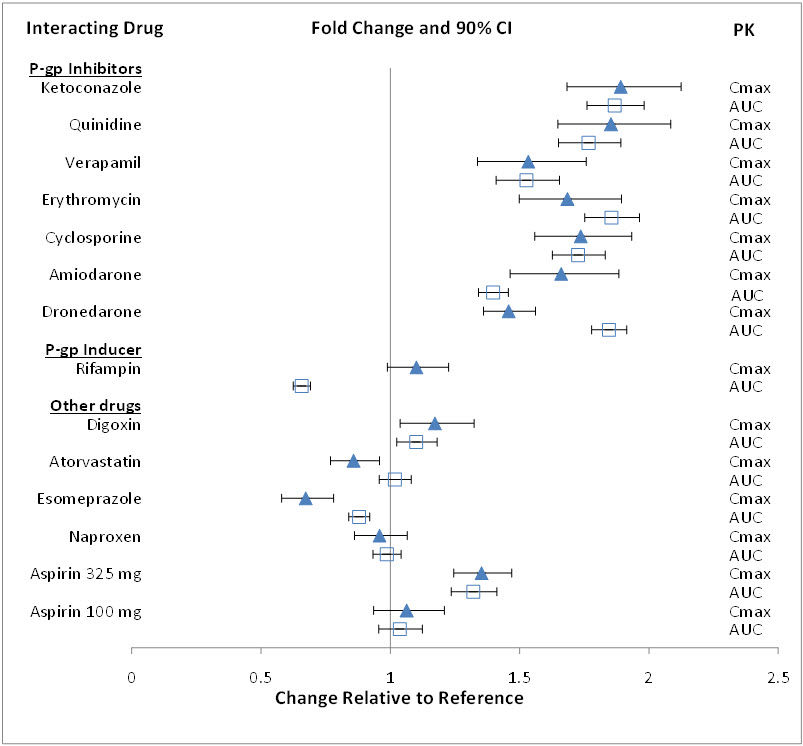
Figure 12.1 (Savaysa 03)
Impact of Edoxaban on Other Drugs
Edoxaban increased the Cmax of concomitantly administered digoxin by 28%; however, the AUC was not affected. Edoxaban had no effect on the Cmax and AUC of quinidine.
Edoxaban decreased the Cmax and AUC of concomitantly administered verapamil by 14% and 16%, respectively.
The ENGAGE AF-TIMI 48 Study
The ENGAGE AF-TIMI 48 (NCT00781391) study was a multi-national, double-blind, non-inferiority study comparing the efficacy and safety of two SAVAYSA treatment arms (60 mg and 30 mg) to warfarin (titrated to INR 2.0 to 3.0) in reducing the risk of stroke and systemic embolic events in patients with NVAF. The non-inferiority margin (degree of inferiority of SAVAYSA to warfarin that was to be ruled out) was set at 38%, reflecting the substantial effect of warfarin in reducing strokes. The primary analysis included both ischemic and hemorrhagic strokes.
To enter the study, patients had to have one or more of the following additional risk factors for stroke:
A total of 21,105 patients were randomized and followed for a median of 2.8 years and treated for a median of 2.5 years. Patients in the SAVAYSA treatment arms had their dose halved (60 mg halved to 30 mg or 30 mg halved to 15 mg) if one or more of the following clinical factors were present: CrCL ≤ 50 mL/min, low body weight (≤ 60 kg) or concomitant use of specific P-gp inhibitors (verapamil, quinidine, dronedarone). Patients on antiretroviral therapy (ritonavir, nelfinavir, indinavir, saquinavir) as well as cyclosporine were excluded from the study. Approximately 25% of patients in all treatment groups received a reduced dose at baseline, and an additional 7% were dose-reduced during the study. The most common reason for dose reduction was a CrCL ≤ 50 mL/min at randomization (19% of patients).
Patients were well balanced with respect to demographic and baseline characteristics. The percentages of patients age ≥ 75 years and ≥ 80 years were approximately 40% and 17%, respectively. The majority of patients were Caucasian (81%) and male (62%). Approximately 40% of patients had not taken a Vitamin K Antagonist (VKA) (i.e., never took a VKA or had not taken a VKA for more than 2 months).
The mean patient body weight was 84 kg (185 lbs) and 10% of patients had a body weight of ≤ 60 kg. Concomitant diseases of patients in this study included hypertension (94%), congestive heart failure (58%), and prior stroke or transient ischemic attack (28%). At baseline, approximately 30% of patients were on aspirin and approximately 2% of patients were taking a thienopyridine.
Patients randomized to the warfarin arm achieved a mean TTR (time in therapeutic range, INR 2.0 to 3.0) of 65% during the course of the study.
The primary endpoint of the study was the occurrence of first stroke (either ischemic or hemorrhagic) or of a systemic embolic event (SEE) that occurred during treatment or within 3 days from the last dose taken. In the overall results of the study, shown in Table 14.1, both treatment arms of SAVAYSA were non-inferior to warfarin for the primary efficacy endpoint of stroke or SEE. However, the 30 mg (15 mg dose-reduced) treatment arm was numerically less effective than warfarin for the primary endpoint, and was also markedly inferior in reducing the rate of ischemic stroke. Based on the planned superiority analysis (ITT, which required p < 0.01 for success), statistical superiority of the 60 mg (30 mg dose-reduced) treatment arm compared to warfarin was not established in the total study population, but there was a favorable trend [HR (99% CI): 0.87 (0.71, 1.07)].
| Events | SAVAYSA 30 mg Includes patients dose-reduced to 15 mg for the 30 mg treatment group and 30 mg for the 60 mg treatment group (N = 7002) n (%/yr) The event rate (%/yr) is calculated as number of events/subject-year exposure. | SAVAYSA 60 mg (N = 7012) n (%/yr) | Warfarin (N = 7012) n (%/yr) | SAVAYSA 30 mg vs. warfarin HR (CI) 97.5% CI for primary endpoint of First Stroke or SEE. 95% CI for Ischemic Stroke, Hemorrhagic Stroke or Systemic Embolism p-value | SAVAYSA 60 mg vs. warfarin HR (CI) p-value |
|---|---|---|---|---|---|
| Abbreviations: HR = Hazard Ratio versus Warfarin, CI = Confidence Interval, n = number of events, mITT = Modified Intent-to-Treat, N = number of patients in mITT population, SEE = Systemic Embolic Event, yr = year. | |||||
| First Stroke or SEE | 253 (1.6) | 182 (1.2) | 232 (1.5) | 1.07 (0.87, 1.31) p = 0.44 | 0.79 (0.63, 0.99) p = 0.017 |
| Ischemic Stroke | 225 (1.4) | 135 (0.9) | 144 (0.9) | 1.54 (1.25, 1.90) | 0.94 (0.75, 1.19) |
| Hemorrhagic Stroke | 18 (0.1) | 39 (0.3) | 75 (0.5) | 0.24 (0.14, 0.39) | 0.52 (0.36, 0.77) |
| Systemic Embolism | 10 (< 0.1) | 8 (< 0.1) | 13 (< 0.1) | 0.75 (0.33, 1.72) | 0.62 (0.26, 1.50) |
Figure 14.1 is a plot of the time from randomization to the occurrence of the first primary endpoint in all patients randomized to 60 mg SAVAYSA or warfarin.
| Figure 14.1: Kaplan-Meier Cumulative Event Rate Estimates for Primary Endpoint (first occurrence of stroke or SEE) (mITT On-treatment Study Period defined as Initial Dose to Final Dose + three days ) |
|---|
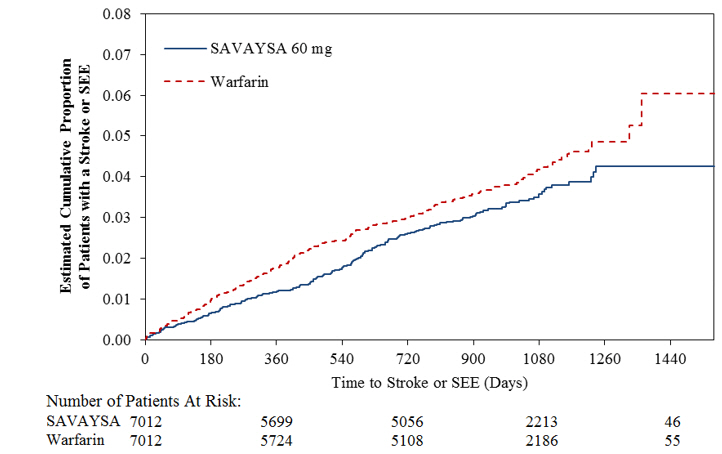 Figure 14.1 (Savaysa 04) |
The incidence rate of the primary endpoint of stroke or SEE in patients (N = 1776) treated with the 30 mg reduced dose of SAVAYSA because of a CrCL level ≤ 50 mL/min, low body weight ≤ 60 kg, or the concomitant use of a P-gp inhibitor drug, was 1.79% per year. Patients with any of these characteristics who were randomized to receive warfarin had an incidence rate of the primary endpoint of 2.21% per year [HR (95% CI): 0.81 (0.58, 1.13)].
In all randomized patients during the overall study period, the rates of CV death with SAVAYSA and warfarin were 2.74% per year vs. 3.17% per year, respectively [HR (95% CI): 0.86 (0.77, 0.97)].
The results in the ENGAGE AF-TIMI 48 study for the primary efficacy endpoint for most major subgroups are displayed in Figure 14.2.
| Figure 14.2: ENGAGE AF-TIMI 48 Study: Primary Efficacy Endpoint by Subgroups (ITT Analysis Set) |
|---|
| Note: The figure above presents effects in various subgroups all of which are baseline characteristics and most of which were pre-specified. The 95% confidence limits that are shown do not take into account how many comparisons were made, nor do they reflect the effect of a particular factor after adjustment for all other factors. Apparent homogeneity or heterogeneity among groups should not be over-interpreted. |
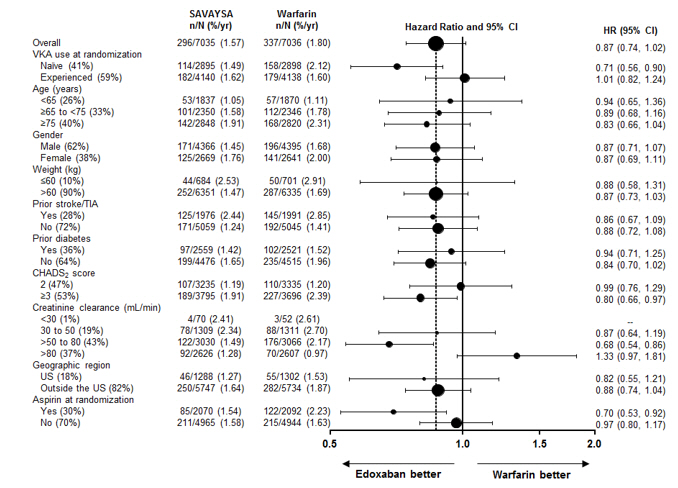 Figure 14.2 (Savaysa 05) |
The results of the ENGAGE AF-TIMI 48 study show a strong relationship between the blood levels of edoxaban and its effectiveness in reducing the rate of ischemic stroke. There was a 64% increase in the ischemic stroke rate in patients in the 30 mg treatment arm (including patients with dose reduced to 15 mg) compared to the 60 mg treatment arm (including patients with dose reduced to 30 mg). Approximately half of the SAVAYSA dose is eliminated by the kidney, and edoxaban blood levels are lower in patients with better renal function, averaging about 30% less in patients with CrCL of > 80 mL/min, and 40% less in patients with CrCL > 95 mL/min when compared to patients with a CrCL of > 50 to ≤ 80 mL/min. Given the clear relationship of dose and blood levels to effectiveness in the ENGAGE AF-TIMI 48 study, it could be anticipated that patients with better renal function would show a smaller effect of SAVAYSA compared to warfarin than would patients with mildly impaired renal function, and this was in fact observed.
Table 14.2 shows the results for the study primary efficacy endpoint of first stroke or SEE as well as the effects on ischemic and hemorrhagic stroke in the pre-randomization CrCL subgroups for SAVAYSA 60 mg (including 30 mg dose-reduced) and warfarin. There was a decreased rate of ischemic stroke with SAVAYSA 60 mg compared to warfarin in patients with CrCL > 50 to ≤ 80 mL/min [HR (95% CI): 0.63 (0.44, 0.89)]. In patients with CrCL > 80 to ≤ 95 mL/min the results for ischemic stroke slightly favor warfarin with a confidence interval that crosses 1.0 [HR (95% CI): 1.11 (0.58, 2.12)]. The rate of ischemic stroke was higher relative to warfarin in the patients with CrCL > 95 mL/min [HR (95% CI): 2.16 (1.17, 3.97)]. Pharmacokinetic data indicate that patients with CrCL > 95 mL/min had lower plasma edoxaban levels, along with a lower rate of bleeding relative to warfarin than patients with CrCL ≤ 95 mL/min. Consequently, SAVAYSA should not be used in patients with CrCL > 95 mL/min [see Dosage and Administration (2.1), Warnings and Precautions (5.1), Adverse Reactions (6.1), and Clinical Pharmacology (12.3)].
In patients with CrCL ≤ 95 mL/min, the SAVAYSA 60 mg (30 mg dose-reduced) treatment arm reduced the risk of stroke or SEE when compared to warfarin [HR (95% CI): 0.68 (0.55, 0.84)].
In the indicated population (CrCL ≤ 95 mL/min), during the overall study period, the rates of CV death with SAVAYSA and warfarin were 2.95% per year vs. 3.59% per year, respectively [HR (95% CI): 0.82 (0.72, 0.93)].
| STROKE TYPE Renal Function Subgroups Renal function subgroups are based on estimated creatinine clearance in mL/min calculated using the Cockcroft-Gault formula. | Treatment Arm | n (N) | Event Rate (%/yr) | SAVAYSA 60 mg vs. Warfarin HR (95% CI) |
|---|---|---|---|---|
| Abbreviations: HR = Hazard Ratio versus Warfarin, CI = Confidence Interval, n = number of events, mITT = Modified Intent-to-Treat, N = number of patients in mITT population, yr = year. | ||||
| PRIMARY ENDPOINT (STROKE/SEE) | ||||
| ≤ 95 (Indicated Population) | Warfarin | 211 (5485) | 1.8 | 0.68 (0.55, 0.84) |
| SAVAYSA 60 mg | 142 (5417) | 1.2 | ||
| ≤ 50 83% of patients with pre-randomization CrCL ≤ 50 mL/min in the SAVAYSA 60 mg group were dose-reduced and consequently received SAVAYSA 30 mg daily. All patients in the warfarin group with CrCL ≤ 50 mL/min were treated in the same way as those with higher levels of CrCL. | Warfarin | 50 (1356) | 2.0 | 0.90 (0.60, 1.34) |
| SAVAYSA 60 mg | 45 (1372) | 1.8 | ||
| > 50 to ≤ 80 | Warfarin | 135 (3053) | 2.0 | 0.53 (0.40, 0.70) |
| SAVAYSA 60 mg | 71 (3020) | 1.1 | ||
| > 80 to ≤ 95 | Warfarin | 26 (1076) | 1.0 | 1.05 (0.61, 1.82) |
| SAVAYSA 60 mg | 26 (1025) | 1.1 | ||
| > 95 See Boxed Warning | Warfarin | 21 (1527) | 0.6 | 1.87 (1.10, 3.17) |
| SAVAYSA 60 mg | 40 (1595) | 1.0 | ||
| ISCHEMIC STROKE | ||||
| ≤ 95 (Indicated Population) | Warfarin | 129 (5485) | 1.1 | 0.80 (0.62, 1.04) |
| SAVAYSA 60 mg | 102 (5417) | 0.9 | ||
| ≤ 50 | Warfarin | 28 (1356) | 1.1 | 1.11 (0.66, 1.84) |
| SAVAYSA 60 mg | 31 (1372) | 1.2 | ||
| > 50 to ≤ 80 | Warfarin | 83 (3053) | 1.2 | 0.63 (0.44, 0.89) |
| SAVAYSA 60 mg | 52 (3020) | 0.8 | ||
| > 80 to ≤ 95 | Warfarin | 18 (1076) | 0.7 | 1.11 (0.58, 2.12) |
| SAVAYSA 60 mg | 19 (1025) | 0.8 | ||
| > 95 | Warfarin | 15 (1527) | 0.4 | 2.16 (1.17, 3.97) |
| SAVAYSA 60 mg | 33 (1595) | 0.9 | ||
| HEMORRHAGIC STROKE | ||||
| ≤ 95 (Indicated Population) | Warfarin | 70 (5485) | 0.6 | 0.50 (0.33, 0.75) |
| SAVAYSA 60 mg | 34 (5417) | 0.3 | ||
| ≤ 50 | Warfarin | 18 (1356) | 0.7 | 0.66 (0.32, 1.36) |
| SAVAYSA 60 mg | 12 (1372) | 0.5 | ||
| > 50 to ≤ 80 | Warfarin | 45 (3053) | 0.7 | 0.38 (0.22, 0.67) |
| SAVAYSA 60 mg | 17 (3020) | 0.3 | ||
| > 80 to ≤ 95 | Warfarin | 7 (1076) | 0.3 | 0.76 (0.24, 2.38) |
| SAVAYSA 60 mg | 5 (1025) | 0.2 | ||
| > 95 | Warfarin | 6 (1527) | 0.2 | 0.98 (0.31, 3.05) |
| SAVAYSA 60 mg | 6 (1595) | 0.2 | ||
Transition to Other Anticoagulants in the ENGAGE AF-TIMI 48 Study
In the ENGAGE AF-TIMI 48 study, the schemes for transitioning from study medication to open-label warfarin at the end of study were associated with similar rates of stroke and systemic embolism in the SAVAYSA 60 mg and warfarin groups [see Dosage and Administration (2.4)]. In the SAVAYSA 60 mg group 7 (0.2%) of 4529 patients had a stroke or SEE compared to 7 (0.2%) of 4506 patients in the warfarin arm.
The Hokusai VTE Study
SAVAYSA for the treatment of patients with deep vein thrombosis (DVT) and pulmonary embolism (PE) was studied in a multi-national, double-blind study (Hokusai VTE) (NCT00986154) which compared the efficacy and safety of SAVAYSA 60 mg orally once daily to warfarin (titrated to INR 2.0 to 3.0) in patients with acute symptomatic venous thromboembolism (VTE) (DVT or PE with or without DVT). All patients had VTE confirmed by appropriate diagnostic imaging at baseline and received initial heparin therapy with low molecular weight heparin (LMWH) or unfractionated heparin for at least 5 days [median LMWH/heparin treatment in the SAVAYSA 60 mg group was 7 days, and in the warfarin group it was 8.0 days] and until INR (sham or real) was ≥ 2.0 on two measurements. Blinded drug treatment in the warfarin arm was started concurrently with initial heparin therapy and in the SAVAYSA arm after discontinuation of initial heparin. Patients randomized to SAVAYSA received 30 mg once daily if they met one or more of the following criteria: CrCL 30 to 50 mL/min, body weight ≤ 60 kg, or concomitant use of specific P-gp inhibitors (verapamil and quinidine or the short-term concomitant administration of azithromycin, clarithromycin, erythromycin, oral itraconazole or oral ketoconazole). The edoxaban dosage regimen was to be returned to the regular dosage of 60 mg once daily at any time the subject is not taking the concomitant medication provided no other criteria for dose reduction are met. Other P-gp inhibitors were not permitted in the study. Patients on antiretroviral therapy (ritonavir, nelfinavir, indinavir, saquinavir) as well as cyclosporine were excluded from the Hokusai VTE study. The concomitant use of these drugs with SAVAYSA has not been studied in patients. The treatment duration was from 3 months up to 12 months, determined by investigator based on patient clinical features. Patients were excluded if they required thrombectomy, insertion of a caval filter, use of a fibrinolytic agent, or use of other P-gp inhibitors, had a creatinine clearance < 30 mL/min, significant liver disease, or active bleeding. The primary efficacy outcome was symptomatic VTE, defined as the composite of recurrent DVT, new non-fatal symptomatic PE, and fatal PE during the 12-month study period.
A total of 8292 patients were randomized to receive SAVAYSA or warfarin and were followed for a mean treatment duration of 252 days for SAVAYSA and 250 days for warfarin. The mean age was approximately 56 years. The population was 57% male, 70% Caucasian, 21% Asian, and about 4% Black. The presenting diagnosis was PE (with or without DVT) in 40.7% and DVT only in 59.3% of patients. At baseline, 27.6% of patients had temporary risk factors only (e.g., trauma, surgery, immobilization, estrogen therapy). Overall 9.4% had a history of cancer, 17.3% of the patients had an age ≥ 75 years and/or a body weight ≤ 50 kg, and/or a CrCL < 50 mL/min, and 31.4% of patients had NT-ProBNP ≥ 500 pg/mL.
Aspirin was taken as on treatment concomitant antithrombotic medication by approximately 9% of patients in both groups.
In the warfarin group, the median TTR (time in therapeutic range, INR 2.0 to 3.0) was 65.6%.
A total of 8240 patients (n = 4118 for SAVAYSA and n = 4122 for warfarin) received study drug and were included in the modified intent-to-treat (mITT) population. SAVAYSA was demonstrated to be non-inferior to warfarin for the primary endpoint of recurrent VTE [HR (95% CI): 0.89 (0.70, 1.13)] (Table 14.3, Figure 14.3).
| Primary Endpoint | SAVAYSA Includes patients dose-reduced to 30 mg. Among the 1452 (17.6%) patients with low body weight (≤ 60 kg), moderate renal impairment (CrCL ≤ 50 mL/min), or concomitant use of P-gp inhibitors in the Hokusai VTE study, 22 (3.0%) of the SAVAYSA patients (30 mg once daily, n = 733) and 30 (4.2%) of warfarin patients (n = 719) had a symptomatic recurrent VTE event n/N (%) | Warfarin n/N (%) | SAVAYSA vs. Warfarin HR (95% CI) |
|---|---|---|---|
| Abbreviations: mITT = modified intent-to-treat; HR =hazard ratio vs. warfarin; CI =confidence interval; N = number of patients in mITT population; n = number of events | |||
| All patients with symptomatic recurrent VTE Primary Efficacy Endpoint: Symptomatic recurrent VTE (i.e., the composite endpoint of DVT, non-fatal PE and fatal PE) | 130/4118 (3.2) | 146/4122 (3.5) | 0.89 (0.70,1.13) |
| PE with or without DVT | 73/4118 (1.8) | 83/4122 (2.0) | - |
| Fatal PE and Death where PE cannot be ruled out | 24/4118 (0.6) | 24/4122 (0.6) | - |
| Non-fatal PE | 49/4118 (1.2) | 59/4122 (1.4) | - |
| DVT only | 57/4118 (1.4) | 63/4122 (1.5) | - |
| Index PE Index PE refers to patients whose presenting diagnosis was PE (with or without concomitant DVT) patients with symptomatic recurrent VTE | 47/1650 (2.8) | 65/1669 (3.9) | - |
| Index DVT Index DVT refers to patients whose presenting diagnosis was DVT only patients with symptomatic recurrent VTE | 83/2468 (3.4) | 81/2453 (3.3) | - |
Figure 14.3: Kaplan-Meier Cumulative Event Rate Estimates for Adjudicated Recurrent VTE (mITT analysis – on treatment)

Figure 14.3 (Savaysa 06)
The Hokusai VTE Cancer Study
In the Hokusai VTE Cancer study (NCT02073682), 1050 patients were randomized to receive SAVAYSA 60 mg once daily [30 mg dose reduced per the dose adjustment regimen used in Engage AF-TIMI 48 and Hokusai VTE studies, (see The Hokusai VTE Study)] after at least 5 days of low-molecular-weight heparin treatment or dalteparin (200 IU/kg day 1-30; 150 IU/kg day 31 to the end of treatment). The treatment duration was for a minimum of 6 months and up to 12 months.
The efficacy of SAVAYSA was based upon the rate of recurrent VTE (mITT) during the overall study period. SAVAYSA was non-inferior to dalteparin for the rate of recurrent VTE. Recurrent VTE occurred in 7.9% (41/522) and 11.3% (59/524) of patients in the SAVAYSA and dalteparin groups, respectively [HR (95% CI): 0.71 (0.48, 1.06)].
Instructions for Patient Use
Bleeding Risk
Invasive or Surgical Procedures
Concomitant Medication and Herbals
Pregnancy
Manufactured by:
Daiichi Sankyo Co., LTD.
Tokyo 103-8426
Japan
Distributed by:
Daiichi Sankyo, Inc.
Basking Ridge, NJ 07920-2311 USA
SAVAYSA® is a trademark of Daiichi Sankyo Co., LTD.
Copyright © 2023, Daiichi Sankyo, Inc.
USPI-SAV-C9-1023-r104