E2 Antibacterial Foaming Skin Cleanser Soap
Product Images NDC 65601-817

View Photos of Packaging, Regulatory Labels, and Product Appearance

Product Visual Gallery

This gallery contains 2 technical images submitted to the FDA as part of the official labeling for E2 Antibacterial Foaming Skin Cleanser (NDC 65601-817). Unlike standard consumer photos, these assets often include clinical data figures, molecular chemical structures, and official manufacturer packaging layouts.

As provided by Betco Corporation, Ltd., these visuals offer a comprehensive scientific overview of the product's physical and chemical identity, aiding pharmacists and researchers in product verification and study.

Product Images & Figures Index

FDA Label Image

04

04
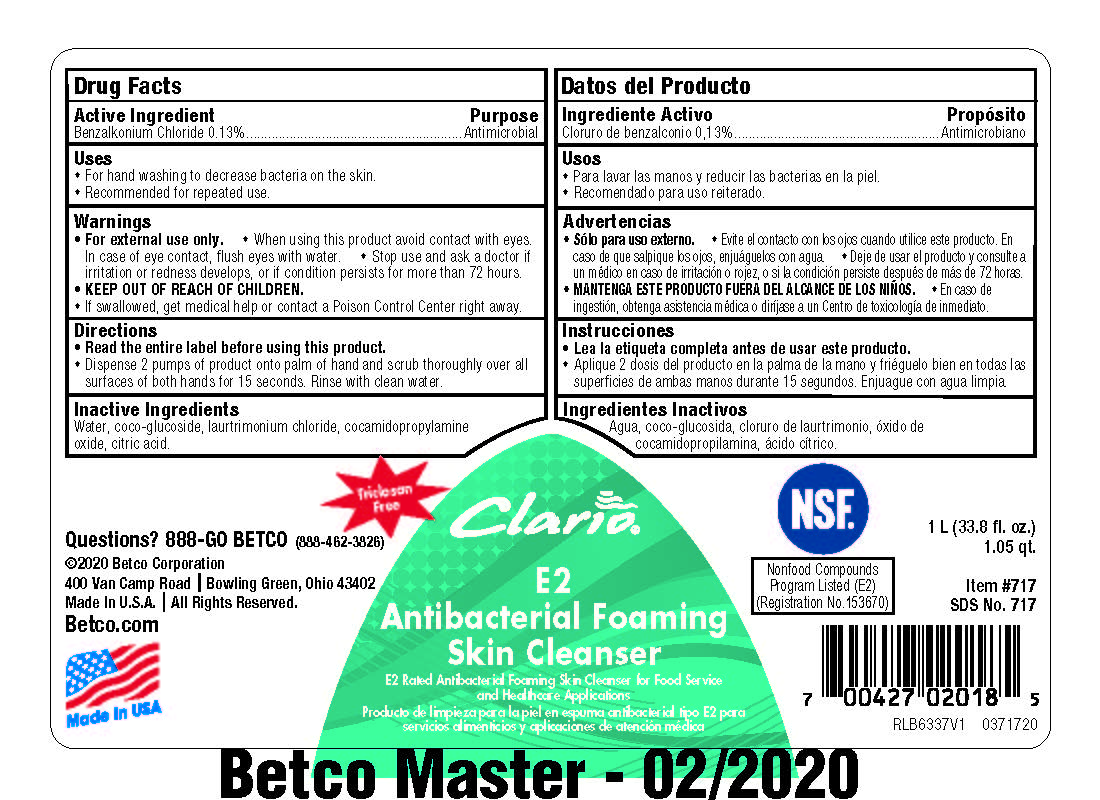
This is a Drug Facts label for an antibacterial foaming skin cleanser that contains 0.13% benzalkonium chloride. It is intended for hand-washing purposes to reduce bacteria on the skin and is recommended for repeated use. The product should be kept out of reach of children and should not come into contact with eyes. The directions on the label instruct the user to dispense two pumps of the cleanser onto the palm of the hand and scrub thoroughly for 15 seconds before rinsing with clean water. The product is made in the USA and has a SDS number of 717. The inactive ingredients include water, coco-glucoside, laurtrimonium chloride, cocamidopropylamine oxide, and citric acid. The label also includes information in Spanish.*
FDA Label Image

29

29
This appears to be a description of a product's drug facts, including its active and inactive ingredients, usage, purpose, and warnings. It also includes instructions on how to use the product and who to contact in case of ingestion or eye contact. Overall, the product seems to be an antimicrobial foaming skin cleanser, recommended for hand washing for repeated use, with water, coco-glucoside, laurtrimonium chloride, cocamidopropylamine oxide, citric acid, and benzalkonium chloride as its ingredients.*

* These product label images have been analyzed using experimental machine learning. Please verify findings with the primary label text.