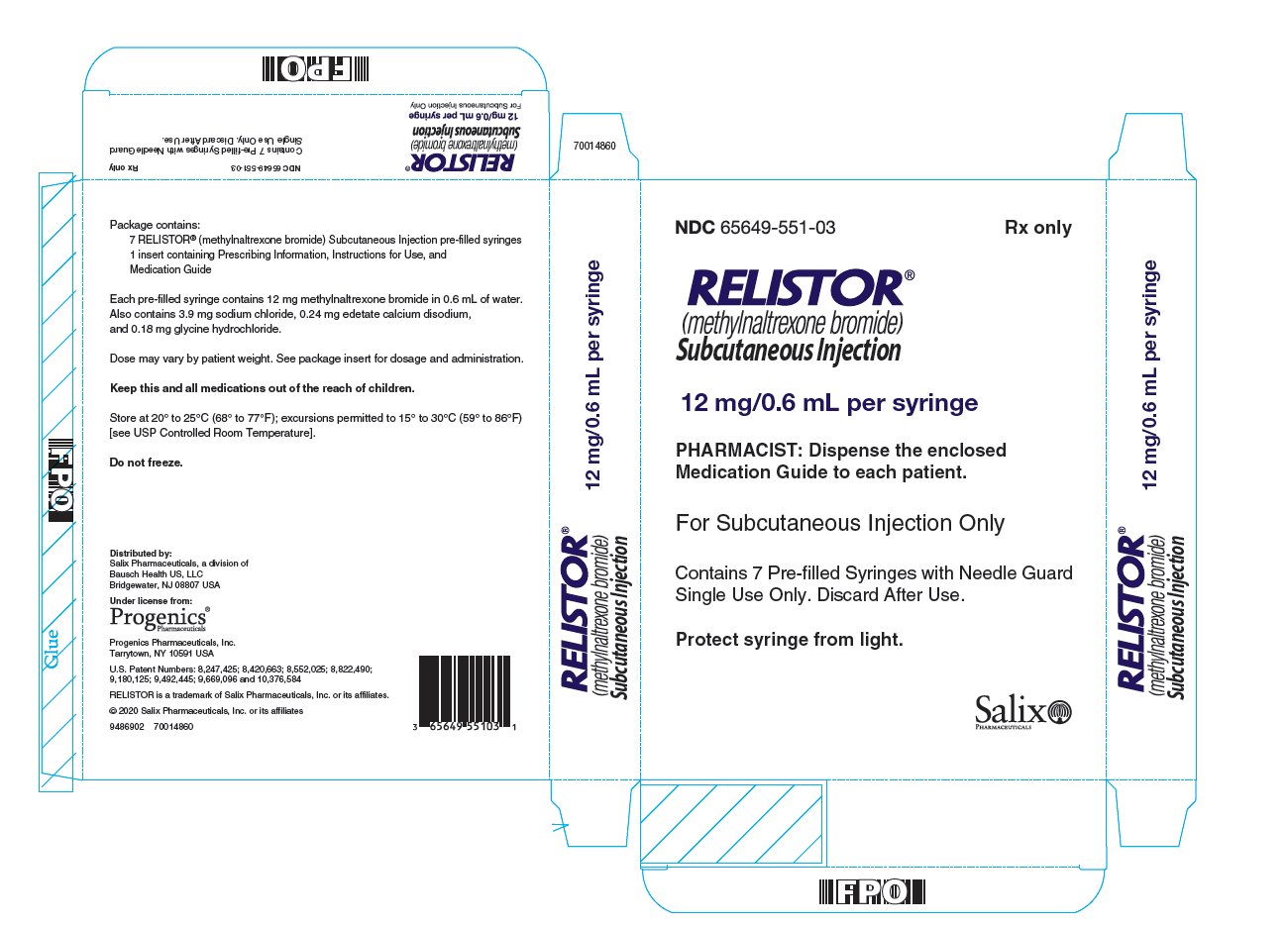
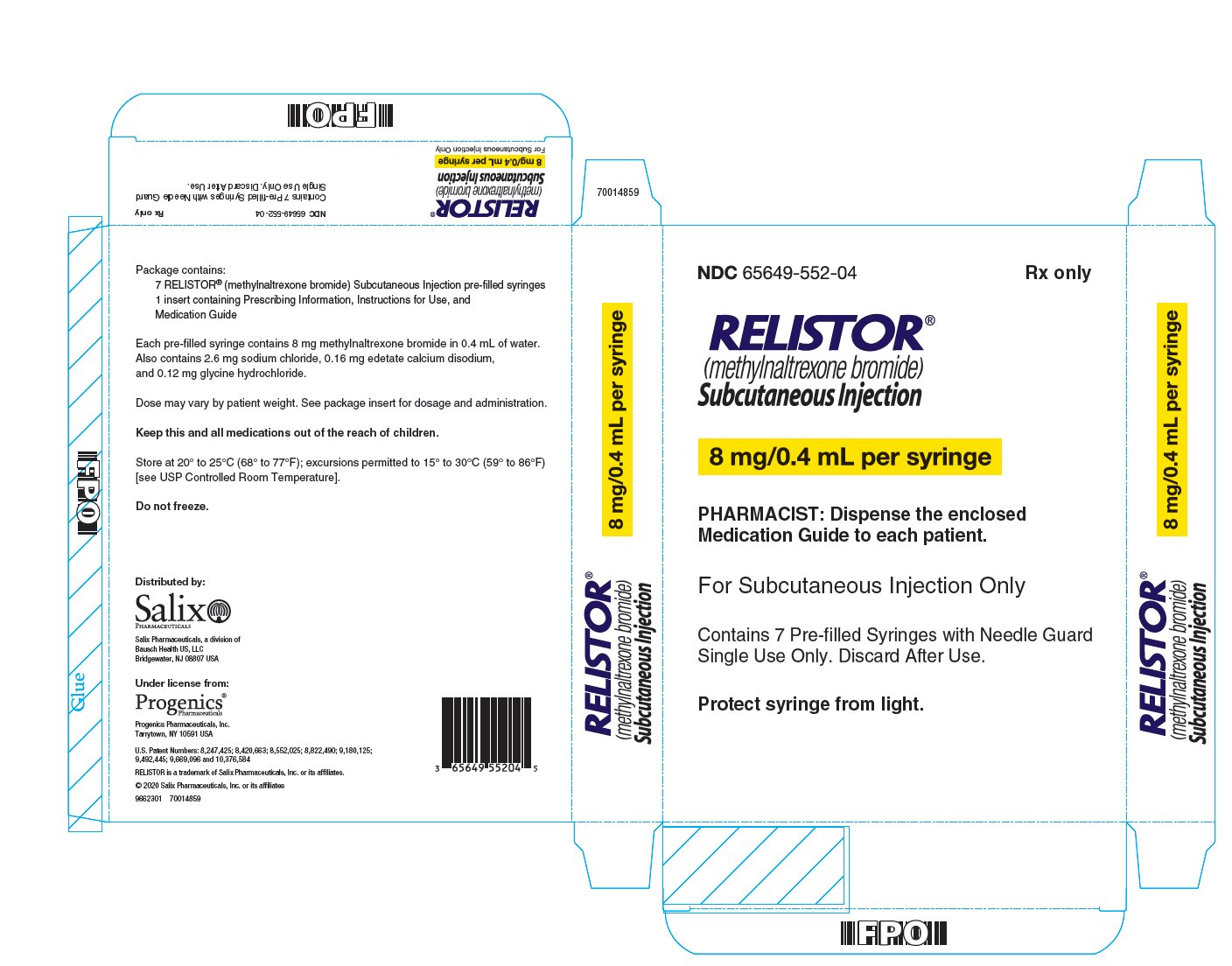
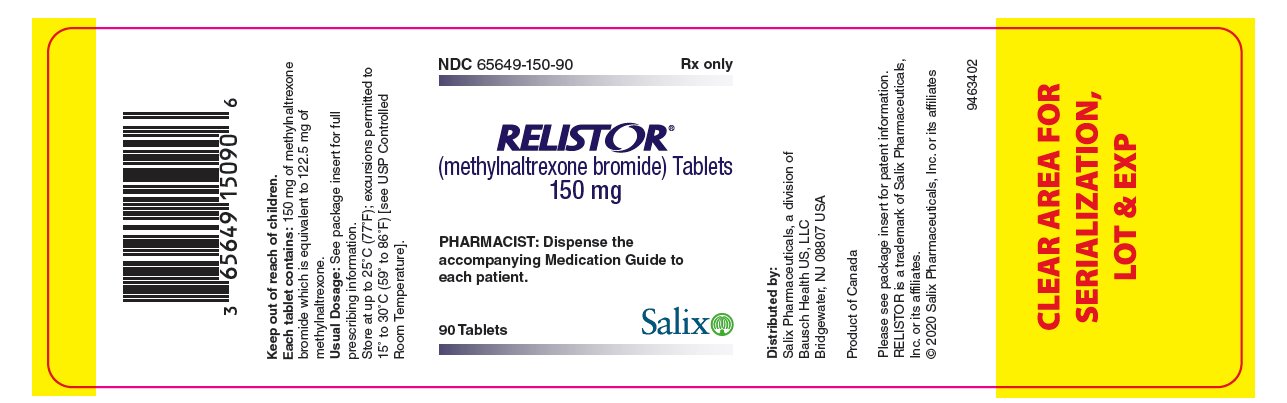
Relistor Injection, Solution
FDA Label NDC 65649-552

44 label sections · Submitted to the FDA by Salix Pharmaceuticals, Inc. · Indications, Dosage, Usage, and Precautions

Structured Product Label

The following Structured Product Label (SPL) was submitted to the FDA by Salix Pharmaceuticals, Inc. for the product Relistor (NDC 65649-552). This document serves as the official prescribing information, containing essential scientific data and clinical materials required for healthcare providers and patients.

This specific version of the label includes detailed information regarding 1.1 opioid-induced constipation in adult patients with chronic non-cancer pain, 1.2 opioid-induced constipation in adult patients with advanced illness, 2.1 important administration information, 2.2 opioid-induced constipation in adult patients with chronic non-cancer pain, 2.3 opioid-induced constipation in adult patients with advanced illness, 2.4 dosage in patients with renal impairment, 2.5 dosage in patients with hepatic impairment, 2.6 preparation and administration of relistor injection, and other regulatory disclosures. Use the navigation below to review specific sections of the FDA submission.

Label Section Quick Index

2.2 Opioid-Induced Constipation In Adult Patients With Chronic Non-Cancer Pain

  • The recommended dosage of RELISTOR tablets is 450 mg taken orally once daily in the morning.
  • The recommended dosage of RELISTOR injection is 12 mg administered subcutaneously once daily.

2.3 Opioid-Induced Constipation In Adult Patients With Advanced Illness

The pre-filled syringe is only for patients who require a RELISTOR injection dose of 8 mg or 12 mg. Use the vial for patients who require other doses of RELISTOR injection.

Table 1 below shows the recommended weight-based dose of RELISTOR injection and the corresponding injection volume. The recommended dosage regimen is one dose administered subcutaneously every other day, as needed. Do not administer more frequently than one dose per 24-hour period.

Table 1: Weight-Based Dosing of RELISTOR Injection and Corresponding Injection Volume for Adult Patients with OIC and Advanced Illness

Weight of Adult Patient

Subcutaneous

Dose

Injection Volume

Less than 38 kg

0.15 mg/kg

See below*

38 kg to less than 62 kg

8 mg

0.4 mL

62 kg to 114 kg

12 mg

0.6 mL

More than 114 kg

0.15 mg/kg

See below*

*Calculate the injection volume for these patients by multiplying the patient weight in kilograms by 0.0075 and then rounding up the volume to the nearest 0.1 mL.

2.4 Dosage In Patients With Renal Impairment

The recommended dosage of RELISTOR in patients with moderate and severe renal impairment (i.e., creatinine clearance less than 60 mL/minute as estimated by Cockcroft-Gault) [see Use in Specific Populations (8.6)], is shown below by indication:

OIC in Adult Patients with Chronic Non-Cancer Pain

  • RELISTOR tablets: 150 mg once daily in the morning.
  • RELISTOR injection: 6 mg administered subcutaneously once daily
  • OIC in Adult Patients with Advanced Illness

    RELISTOR injection: The recommended dosage regimen is one dose every other day, as needed is shown in Table 2.

    Table 2: Weight-Based Dosing in Moderate and Severe Renal Impairment of RELISTOR Injection and Corresponding Injection Volume for Adult Patients with OIC and Advanced Illness

    Weight of Adult Patient

    Subcutaneous Dose

    Injection Volume

    Less than 38 kg

    0.075 mg/kg

    See below*

    38 kg to less than 62 kg

    4 mg

    0.2 mL

    62 kg to 114 kg

    6 mg

    0.3 mL

    More than 114 kg

    0.075 mg/kg

    See below*

    *Calculate the injection volume for these patients by multiplying the patient weight in kilograms by 0.00375 and then rounding up the volume to the nearest 0.1 mL.

2.5 Dosage In Patients With Hepatic Impairment

OIC in Adult Patients with Chronic Non-Cancer Pain

  • RELISTOR tablets: The recommended dosage in adult patients with moderate or severe hepatic impairment (Child-Pugh Class B or C) is 150 mg, once daily in the morning [see Use in Specific Populations (8.7)].
  • RELISTOR injection: If considering dose adjustment for patients with severe hepatic impairment, follow the recommendations in Table 3 [see Use in Specific Populations (8.7)].
  • Table 3: Weight-Based Dosing in Severe Hepatic Impairment of RELISTOR Injection and

    Corresponding Injection Volume for Adult Patients with OIC and Chronic Non-Cancer Pain

    Weight of Adult Patient

    Subcutaneous Dose

    Injection Volume

    Less than 38 kg

    0.075 mg/kg

    See below*

    38 kg to less than 62 kg

    4 mg

    0.2 mL

    62 kg to 114 kg

    6 mg

    0.3 mL

    More than 114 kg

    0.075 mg/kg

    See below*

    * Calculate the injection volume for these patients by multiplying the patient weight in kilograms by 0.00375 and then rounding up the volume to the nearest 0.1 mL.

2.6 Preparation And Administration Of Relistor Injection

  • RELISTOR injection is for subcutaneous use only.
  • Single-dose pre-filled syringes: Do not remove the pre-filled syringe from the tray until ready to administer.
  • Inspect RELISTOR injection visually for particulate matter and discoloration prior to administration. RELISTOR injection is colorless to pale yellow. Discard the pre-filled syringe or vial if particulate matter or discoloration is present.
  • Administer RELISTOR injection subcutaneously in the upper arm, abdomen or thigh. Do not inject at the same spot each time (rotate injection sites).
  • RELISTOR single-dose vials: Once drawn into the syringe, if immediate administration is not possible, store at ambient room temperature and administer within 24 hours. Discard any unused portion that remains in the vial.

  • For patient or caregiver instructions for preparation and administration of RELISTOR injection (including recommended specifications for the syringe and needle to be used with the single-dose vial), see Instructions for Use.
6 Adverse Reactions

Serious and important adverse reactions described elsewhere in the labeling include:

  • Gastrointestinal perforation [see Warnings and Precautions (5.1)]
  • Severe or persistent diarrhea [see Warnings and Precautions (5.2)]
  • Opioid withdrawal [see Warnings and Precautions (5.3)]

Opioid-Induced Constipation In Adult Patients With Chronic Non-Cancer Pain

The safety of RELISTOR tablets was evaluated in a double-blind, placebo-controlled trial in adult patients with OIC and chronic non-cancer pain receiving opioid analgesia. This study (Study 1) included a 12-week, double-blind, placebo-controlled period in which adult patients were randomized to receive RELISTOR tablets 450 mg orally (200 patients) or placebo (201 patients) [see Clinical Studies (14.1)]. After 4 weeks of double-blind treatment administered once daily, patients continued 8 weeks of double-blind treatment on an as needed basis (but not more than once daily).

The most common adverse reactions in adult patients with OIC and chronic non-cancer pain receiving RELISTOR tablets are shown in Table 4. Adverse reactions of abdominal pain, diarrhea, hyperhidrosis, anxiety, rhinorrhea, and chills may reflect symptoms of opioid withdrawal.

Table 4: Adverse Reactions* in 4-Week Double-Blind, Placebo-Controlled Period of Clinical Study of RELISTOR Tablets in Adult Patients with OIC and Chronic Non-Cancer Pain (Study 1)

Adverse Reaction

RELISTOR Tablets
n = 200

Placebo
n = 201

Abdominal Pain **

14%

10%

Diarrhea

5%

2%

Headache

4%

3%

Abdominal Distention

4%

2%

Vomiting

3%

2%

Hyperhidrosis

3%

1%

Anxiety

2%

1%

Muscle Spasms

2%

1%

Rhinorrhea

2%

1%

Chills

2%

0%

* Adverse reactions occurring in at least 2% of patients receiving RELISTOR tablets 450 mg once daily and at an incidence greater than placebo.

** Includes: abdominal pain, upper abdominal pain, lower abdominal pain, abdominal discomfort and abdominal tenderness

The safety of RELISTOR injection was evaluated in a double-blind, placebo-controlled trial in adult patients with OIC and chronic non-cancer pain receiving opioid analgesia. This study (Study 2) included a 4-week, double-blind, placebo-controlled period in which adult patients were randomized to receive RELISTOR injection 12 mg subcutaneously once daily (150 patients) or placebo (162 patients) [see Clinical Studies (14.1)]. After 4 weeks of double-blind treatment, patients began an 8‑week open-label treatment period during which RELISTOR injection 12 mg subcutaneously was administered less frequently than the recommended dosage regimen of 12 mg once daily.

The most common adverse reactions in adult patients with OIC and chronic non-cancer pain receiving RELISTOR injection are shown in Table 5. The adverse reactions in the table below may reflect symptoms of opioid withdrawal.

Table 5: Adverse Reactions* in 4-Week Double-Blind, Placebo-Controlled Period of Clinical Study of RELISTOR Injection in Adult Patients with OIC and Chronic Non-Cancer Pain (Study 2)

Adverse Reaction

RELISTOR Injection
n = 150

Placebo
n = 162

Abdominal Pain**

21%

7%

Nausea

9%

6%

Diarrhea

6%

4%

Hyperhidrosis

6%

1%

Hot Flush

3%

2%

Tremor

1%

<1%

Chills

1%

0%

* Adverse reactions occurring in at least 1% of patients receiving RELISTOR injection 12 mg subcutaneously once daily and at an incidence greater than placebo.

** Includes: abdominal pain, upper abdominal pain, lower abdominal pain, abdominal discomfort and abdominal tenderness

During the 4-week double-blind period, in patients with OIC and chronic non-cancer pain that received RELISTOR every other day, there was a higher incidence of adverse reactions, including nausea (12%), diarrhea (12%), vomiting (7%), tremor (3%), feeling of body temperature change (3%), piloerection (3%), and chills (2%) as compared to daily RELISTOR dosing. Use of RELISTOR injection 12 mg subcutaneously every other day is not recommended in patients with OIC and chronic non-cancer pain [see Dosage and Administration (2.2)]. The rates of discontinuation due to adverse reactions during the double-blind period (Study 2) were higher in the RELISTOR once daily (7%) than the placebo group (3%). Abdominal pain was the most common adverse reaction resulting in discontinuation from the double-blind period in the RELISTOR once daily group (2%).

The safety of RELISTOR injection was also evaluated in a 48-week, open-label, uncontrolled trial in 1034 adult patients with OIC and chronic non-cancer pain (Study 3). Patients were allowed to administer RELISTOR injection 12 mg subcutaneously less frequently than the recommended dosage regimen of 12 mg once daily, and took a median of 6 doses per week. A total of 624 patients (60%) completed at least 24 weeks of treatment and 477 (46%) completed the 48‑week study. The adverse reactions seen in this study were similar to those observed during the 4-week double-blind period of Study 2. Additionally, in Study 3, investigators reported 4 myocardial infarctions (1 fatal), 1 stroke (fatal), 1 fatal cardiac arrest and 1 sudden death. It is not possible to establish a relationship between these events and RELISTOR.

Opioid-Induced Constipation In Adult Patients With Advanced Illness

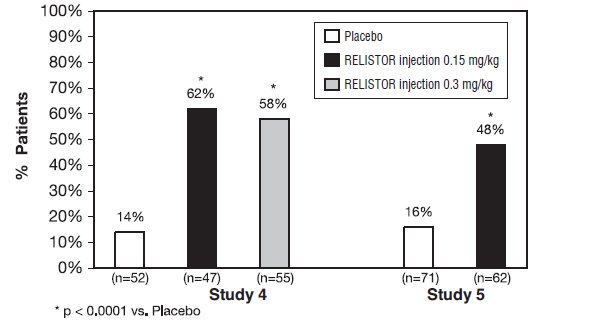
The safety of RELISTOR injection was evaluated in two, double-blind, placebo-controlled trials in adult patients with OIC and advanced illness receiving palliative care: Study 4 included a single-dose, double-blind, placebo-controlled period, whereas Study 5 included a 14-day multiple dose, double-blind, placebo-controlled period [see Clinical Studies (14.2)].

The most common adverse reactions in adult patients with OIC and advanced illness receiving RELISTOR injection are shown in Table 6 below.

Table 6: Adverse Reactions from All Doses in Double-Blind, Placebo-Controlled Clinical Studies of RELISTOR Injection in Adult Patients with OIC and Advanced Illness* (Studies 4 and 5)
Adverse ReactionRELISTOR Injection
n = 165
Placebo
n = 123

Abdominal Pain **

29%

10%

Flatulence

13%

6%

Nausea

12%

5%

Dizziness

7%

2%

Diarrhea

6%

2%

* Adverse reactions occurring in at least 5% of patients receiving all doses of RELISTOR injection (0.075, 0.15, and 0.3 mg/kg) and at an incidence greater than placebo

** Includes: abdominal pain, upper abdominal pain, lower abdominal pain, abdominal discomfort and abdominal tenderness

The rates of discontinuation due to adverse reactions during the double-blind, placebo-controlled clinical trials (Study 4 and Study 5) were comparable between RELISTOR (1%) and placebo (2%).

8.2 Lactation

Risk Summary

There is no information regarding the presence of methylnaltrexone in human milk, the effects on the breastfed infant, or the effects on milk production. Methylnaltrexone is present in rat milk [see Data]. Because of the potential for serious adverse reactions, including opioid withdrawal, in breastfed infants, advise women that breastfeeding is not recommended during treatment with RELISTOR.

Data

Radioactivity appeared in rat milk within 30 minutes of a single subcutaneous administration of radiolabeled methylnaltrexone bromide and was concentrated up to 24-fold at 8 hours after administration relative to plasma concentrations.

Medication Guide

RELISTOR has been shown to be effective in people who have taken opioid pain medicines for at least 4 weeks to treat long-lasting (chronic) pain not caused by cancer.
  • Stop taking other laxatives before you start treatment with RELISTOR. You may use other laxatives if RELISTOR does not work after 3 days of treatment.

    Tablets:

    • Take RELISTOR tablets 1 time each day with water. Take RELISTOR tablets on an empty stomach at least 30 minutes before your first meal of the day.
    • Injection (Vials and Pre-filled Syringes):

      See the detailed “Instructions for Use” that comes with RELISTOR injection for information about how to prepare and inject RELISTOR injection, and properly throw away (dispose of) used needles and syringes the right way.

      • RELISTOR injection is injected under the skin (subcutaneous injection) of the upper arm, stomach-area (abdomen), or thigh.
      • Inject RELISTOR injection exactly as your healthcare provider tells you.
      • If you use RELISTOR injection for long-lasting (chronic) pain that is not caused by cancer:
    Inject 1 dose of RELISTOR injection each day.
  • If you use RELISTOR injection and are receiving treatment for advanced illness:
  • Inject 1 dose of RELISTOR injection every other day, as needed. You should not inject more than 1 dose of RELISTOR injection in a 24-hour period.

    MEDICATION GUIDE

    RELISTOR® (rel-i–store)

    (methylnaltrexone bromide)

    tablets

    and

    RELISTOR (rel-i–store)

    (methylnaltrexone bromide)

    injection, for subcutaneous use

    What is the most important information I should know about RELISTOR?

    RELISTOR can cause serious side effects, including:

    • Tear in your stomach or intestinal wall (perforation). Stomach pain that is severe can be a sign of a serious medical condition. If you get stomach pain that is severe, does not go away, or gets worse, stop taking RELISTOR and get emergency medical help right away.
    • Diarrhea that is severe or that will not go away. Stop taking RELISTOR and call your healthcare provider if you get diarrhea that is severe or that does not go away during treatment with RELISTOR.
    • Opioid withdrawal. You may have symptoms of opioid withdrawal during treatment with RELISTOR including sweating, chills, diarrhea, stomach pain, anxiety, and yawning. Tell your healthcare provider if you have any of these symptoms.

    What is RELISTOR?

    RELISTOR is a prescription medicine used to treat constipation in adults that is caused by prescription pain medicines called opioids:

    • RELISTOR tablets and RELISTOR injection are used to treat constipation caused by opioids in adults with long-lasting (chronic) pain that is not caused by active cancer.
    • RELISTOR injection is used to treat constipation caused by opioids in adults with advanced illness or pain caused by active cancer and who need increases in their opioid dose for comfort care.
    • It is not known if RELISTOR is safe and effective in children.

    Who should not use RELISTOR?

    Do not use RELISTOR if you have a bowel blockage (intestinal obstruction) or have a history of bowel blockage.

    What should I tell my healthcare provider before taking RELISTOR?

    Before you start taking RELISTOR, tell your healthcare provider about all of your medical conditions, including if you:

    • have kidney problems.
    • have liver problems.
    • have any stomach or bowel (intestines) problems, including stomach ulcer, Crohn’s disease, diverticulitis, cancer of the stomach or bowel, or Ogilvie’s syndrome.
    • are pregnant or plan to become pregnant. Taking RELISTOR during pregnancy may cause opioid withdrawal symptoms in your unborn baby. Tell your healthcare provider right away if you become pregnant during treatment with RELISTOR.
    • are breastfeeding or plan to breastfeed. It is not known if RELISTOR passes into your breast milk. Taking RELISTOR while you are breastfeeding may cause opioid withdrawal in your baby. You should not breastfeed during treatment with RELISTOR.
    • Tell your healthcare provider about all of the medicines you take, including prescription and over-the-counter medicines, vitamins, and herbal supplements.

    How should I take RELISTOR?

    • Stay close to a toilet after taking RELISTOR.
    • Stop taking RELISTOR if you stop taking your prescription opioid pain medicine. Tell your healthcare provider if your pain medicine changes.
    • If you take too much RELISTOR, call your healthcare provider or go to the nearest emergency room right away.
    • If you take RELISTOR for long-lasting (chronic) pain that is not caused by cancer:
    oooo

    What are the possible side effects of RELISTOR?

    See “What is the most important information I should know about RELISTOR?”

    • The most common side effects of RELISTOR tablets in people with long-lasting (chronic) pain that is not caused by cancer include: stomach-area (abdomen) pain, diarrhea, headache, swelling or a feeling of fullness or pressure in your abdomen, sweating, anxiety, muscle spasms, runny nose, and chills.
    • The most common side effects of RELISTOR injection in people with long-lasting (chronic) pain that is not caused by cancer include: stomach-area (abdomen) pain, nausea, diarrhea, sweating, hot flush, tremor, and chills.
    • The most common side effects of RELISTOR injection in people receiving treatment for their advanced illness include: stomach-area (abdomen) pain, gas, nausea, dizziness, and diarrhea.
    • Tell your healthcare provider if you have any side effect that bothers you or that does not go away. These are not all of the possible side effects of RELISTOR.

      Call your doctor for medical advice about side effects. You may report side effects to FDA at 1-800-FDA-1088.

      You may also report side effects to Salix Pharmaceuticals at 1-800-321-4576.

    How should I store RELISTOR?

    RELISTOR tablets:

    • Store RELISTOR tablets at room temperature between 68° to 77°F (20° to 25°C).
    • The bottle of RELISTOR tablets contains 2 desiccant canisters to help keep your medicine dry. Do not remove the desiccant canisters from the bottle.
    • RELISTOR injection (Vials and Pre-filled Syringes):

      • Store RELISTOR vials and pre-filled syringes at room temperature between 68° to 77°F (20° to 25°C).
      • Do not freeze RELISTOR vials or pre-filled syringes.
      • Keep RELISTOR vials and pre-filled syringes away from light until you are ready to use them.
      • If the contents of a RELISTOR vial have been drawn into a syringe and you are not able to use the medicine right away, keep the syringe at room temperature for up to 24 hours.
      • Keep RELISTOR and all medicines, needles and syringes out of the reach of children.

    General information about the safe and effective use of RELISTOR

    Medicines are sometimes prescribed for purposes other than those listed in a Medication Guide. Do not use RELISTOR for a condition for which it was not prescribed. Do not give RELISTOR to other people, even if they have the same symptoms that you have. It may harm them. You can ask your pharmacist or healthcare provider for information about RELISTOR that is written for health professionals.

    What are the ingredients in RELISTOR tablets and RELISTOR injection?

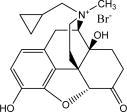
    Active ingredient: methylnaltrexone bromide

    Inactive ingredients (tablets): silicified microcrystalline cellulose, microcrystalline cellulose, sodium lauryl sulfate, croscarmellose sodium, crospovidone, poloxamer 407, stearic acid (vegetable source), colloidal silicon dioxide, edetate calcium disodium, polyvinyl alcohol, titanium dioxide, polyethylene glycol and talc

    Inactive ingredients (injection: vials and pre-filled syringes): sodium chloride USP, edetate calcium disodium USP, glycine hydrochloride. During manufacture, the pH may have been adjusted with hydrochloric acid and/or sodium hydroxide.

    Distributed by:

    Salix Pharmaceuticals, a division of

    Bausch Health US, LLC

    Bridgewater, NJ 08807 USA

    Under license from:

    Progenics Pharmaceuticals, Inc.

    Tarrytown, NY 10591 USA

    For Injection: Patented. See https://patents.salix.com for US patent information.

    For Tablets: Patented. See https://patents.salix.com for US patent information.

    For more information, go to www.RELISTOR.com or call 1-800-321-4576.

    © 2024 Salix Pharmaceuticals, Inc. or its affiliates

    This Medication Guide has been approved by the U.S. Food and Drug Administration.

    Revised: May 2024

    9502506

    70014843-01

    Instructions For Use – Pre-Filled Syringe

    INSTRUCTIONS FOR USE
    RELISTOR® (rel-i-store)
    (methylnaltrexone bromide)
    injection, for subcutaneous use
    Pre-filled Syringe

    Read this Instructions for Use before you start using RELISTOR and each time you get a refill. There may be new information. This information does not take the place of talking to your healthcare provider about your medical condition or your treatment.

    The following instructions explain how to prepare and give an injection of RELISTOR the right way, when using a pre-filled syringe of RELISTOR.

    Important information:

    • Do not use a RELISTOR pre-filled syringe and attached needle more than 1 time, even if there is medicine left in the syringe. See Step 4 “Dispose of used pre-filled syringes and needles.”
    • Safely throw away RELISTOR pre-filled syringes and attached needle after use.
    • To avoid needle-stick injuries, do not recap used needles.
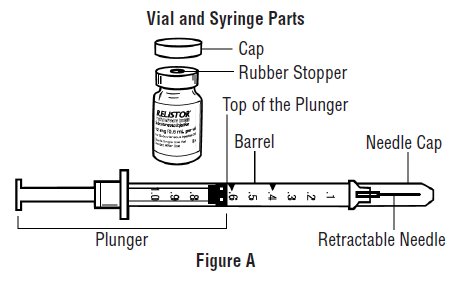
    • Avoid touching the trigger fingers of the RELISTOR pre-filled syringe to keep from activating the needle guard (safety device) too soon. The needle guard is activated by pressure from the plunger on the trigger fingers (See Figure A).
    • Gather the supplies you will need for your injection (See Figure A). These include:

      • 1 RELISTOR pre-filled syringe with attached needle
      • 1 alcohol swab
      • 1 cotton ball or gauze
      • 1 adhesive bandage
      • a puncture resistant container, such as an FDA-cleared sharps disposal container to dispose of used pre-filled syringes and needles. See Step 4: “Dispose of used pre-filled syringes and needles.”
      • Figure A (Image 03)

        Figure A (Image 03)

        Step 1: Choose and prepare the injection site

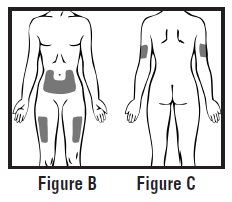
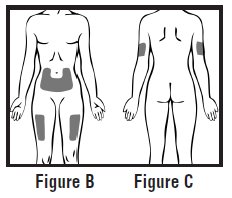
        • Choose an injection site on your stomach-area (abdomen), thighs, or upper arms. See the shaded areas in Figures B and C below. Do not inject at the exact same spot each time (rotate injection sites). Do not inject into areas where the skin is tender, bruised, red or hard. Avoid areas with scars or stretch marks.

          Figure B Abdomen or thigh – use these sites when injecting yourself or another person.

          Figure C Upper arm – use this site only when injecting another person.

        • Figures B And C (Image 05)

          Figures B And C (Image 05)

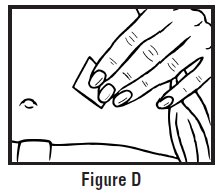
          • Clean the injection site with an alcohol swab and let it air dry. Do not touch this area again before giving the injection (See Figure D).
          • Figure D (Image 06)

            Figure D (Image 06)

            Step 2: Prepare the pre-filled syringe

            • Choose a flat, clean, well-lit work surface.
            • Wash your hands with soap and water before preparing for the injection.
            • Look at the pre-filled syringe of RELISTOR (See Figure E). Make sure that the dose prescribed by your healthcare provider matches the dose on the pre-filled syringe label. Look at the plunger rod of the syringe. If the dose prescribed by your healthcare provider is 8 mg, the plunger rod will be yellow; if the prescribed dose is 12 mg, the plunger rod of the syringe will be dark blue (See Figure E).
            • Figure E (Image 09)

              Figure E (Image 09)

              • The liquid in the pre-filled syringe should be colorless to pale yellow, and should not have any particles in it. Do not use the pre-filled syringe if it looks discolored, cloudy, or has any particles.
              • Use one hand to firmly hold the barrel of the pre-filled syringe. Use your other hand to pull the needle cap straight off (See Figure F). Do not touch the needle or allow it to touch anything.
              • Figure F (Image 10)

                Figure F (Image 10)

                Step 3: Inject RELISTOR

                • Use one hand to pinch the skin around the injection site (See Figure G).
                • Figure G (Image 11)

                  Figure G (Image 11)

                  • Use your other hand to hold the pre-filled syringe. Insert the full length of the needle into the skin at a 45-degree angle with a quick “dart-like” motion (See Figure H).
                  • Figure H (Image 12)

                    Figure H (Image 12)

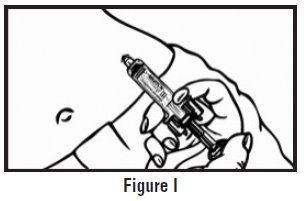
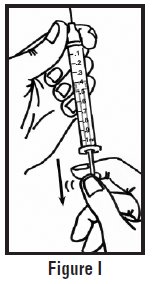
                    • Let go of the skin and slowly push the plunger in with your thumb until the pre-filled syringe is empty (See Figure I). This will release the needle guard (safety device).
                    • Figure I (Image 14)

                      Figure I (Image 14)

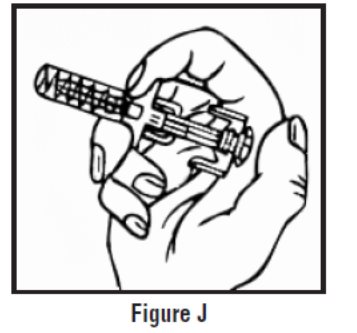
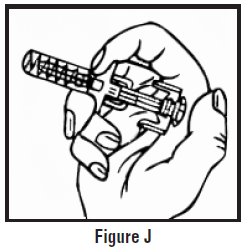
                      • Continue to hold pressure on the plunger with your thumb and quickly pull the needle out of the skin. Be careful to keep the needle at the same angle as it was inserted. Remove your thumb from the plunger to allow the protective sleeve to cover the needle (See Figure J). There may be a little bleeding at the injection site.
                      • Figure J (Image 15)

                        Figure J (Image 15)

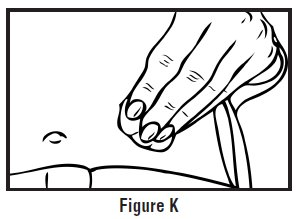
                        • Hold a cotton ball or gauze over the injection site (See Figure K). Do not rub the injection site. Apply an adhesive bandage to the injection site if needed.
                        • Figure K (Image 16)

                          Figure K (Image 16)

                          Step 4: Dispose of used pre-filled syringes and needles

                          • Do not reuse the pre-filled syringe and attached needle.
                          • To avoid needle-stick injuries, do not recap used needles.
                          • Put your used pre-filled syringes and attached needles in an FDA-cleared sharps disposal container right away after use. Do not throw away (dispose of) loose needles and syringes in your household trash.
                          • If you do not have an FDA-cleared sharps disposal container, you may use a household container that is:
                          • omade of a heavy-duty plastic,
                          • ocan be closed with a tight-fitting, puncture-resistant lid, without sharps being able to come out,
                          • oupright and stable during use,
                          • oleak-resistant, and
                          • oproperly labeled to warn of hazardous waste inside the container.
                          • When your sharps disposal container is almost full, you will need to follow your community guidelines for the right way to dispose of your sharps disposal container. There may be state or local laws about how you should throw away used needles and syringes. For more information about safe sharps disposal, and for specific information about sharps disposal in the state that you live in, go to the FDA’s website at: http://www.fda.gov/safesharpsdisposal.
                          • Do not dispose of your used sharps disposal container in your household trash unless your community guidelines permit this. Do not recycle your used sharps disposal container.
                          • If you have any questions, talk to your healthcare provider or pharmacist.
                          • How should I store RELISTOR?

                            • Store pre-filled syringes at room temperature between 68° to 77°F (20° to 25°C).
                            • Do not freeze RELISTOR.
                            • Keep RELISTOR away from light until you are ready to use it.
                            • Keep RELISTOR and all medicines, needles and syringes out of the reach of children.

                              For more information, go to www.Relistor.com or call 1-800-321-4576.

                              Distributed by:

                              Logo (Image 58)

                              Logo (Image 58)

                              Salix Pharmaceuticals, a division of
                              Bausch Health US, LLC
                              Bridgewater, NJ 08807 USA

                              Under license from:

                              Logo (Image 59)

                              Logo (Image 59)

                              Progenics Pharmaceuticals, Inc.
                              Tarrytown, NY 10591 USA
                              For Injection: Patented. See https://patents.salix.com for US patent information.
                              For Tablets: Patented. See https://patents.salix.com for US patent information.
                              RELISTOR is a trademark of Salix Pharmaceuticals, Inc. or its affiliates.
                              All other product/brand names and/or logos are trademarks of the respective owners.
                              © 2024 Salix Pharmaceuticals, Inc. or its affiliates
                              This Instructions for Use has been approved by the U.S. Food and Drug Administration.
                              Revised: 05/2024
                              9502506
                              70014843-01

    Instructions For Use - Vial And Syringe With Retractable Needle In Tray

    INSTRUCTIONS FOR USE
    RELISTOR® (rel-i-store)
    (methylnaltrexone bromide)
    injection, for subcutaneous use


    Vial and Syringe with Retractable Needle in Tray

    Read this Instructions for Use before you start using RELISTOR and each time you get a refill. There may be new information. This information does not take the place of talking to your healthcare provider about your medical condition or your treatment.

    The following instructions explain how to prepare and give an injection of RELISTOR the right way, when using a RELISTOR tray containing a syringe with a retractable needle. A retractable needle is one that is pulled back so that it is covered after use, to prevent needle-stick injury.

    Important information:

    • Do not use a RELISTOR vial more than 1 time, even if there is medicine left in the vial.
    • If RELISTOR has been drawn into a syringe and you are unable to use the medicine right away, carefully recap the needle and keep the syringe at room temperature for up to 24 hours. For more information about how to store RELISTOR, see the section called “How should I store RELISTOR?” at the end of this Instructions for Use.
    • Safely throw away RELISTOR vials after use.
    • Do not reuse syringes and needles. See Step 5: “Dispose of used syringes and needles” for information about how to safely throw away used needles and syringes.
    • To avoid needle-stick injuries, do not recap used needles.
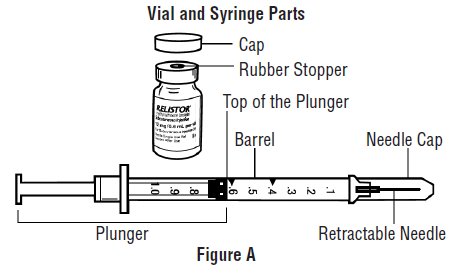
    • Your tray should include (See Figure A):

      • 1 RELISTOR vial
      • 1 1 mL syringe with retractable needle (VanishPoint)
      • 2 alcohol swabs
      •  You will also need:
      • 1 cotton ball or gauze
      • 1 adhesive bandage
      • a puncture resistant container, such as an FDA-cleared sharps disposal container to dispose of your used syringes and needles. See Step 5: “Dispose of used syringes and needles.”
      • Figure (Image 17)

        Figure (Image 17)

        Step 1: Choose and prepare the injection site

        • Choose an injection site on your stomach-area (abdomen), thighs, or upper arms. See the shaded areas in Figures B and C below. Do not inject at the exact same spot each time (rotate injection sites). Do not inject into areas where the skin is tender, bruised, red, or hard. Avoid areas with scars or stretch marks.

          Figure B Abdomen or thigh – use these sites when injecting yourself or another person.

          Figure C Upper arm – use this site only when injecting another person.

        • Figure (Image 18)

          Figure (Image 18)

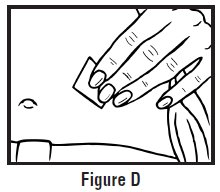
          • Clean the injection site with an alcohol swab and let it air dry. Do not touch this area again before giving the injection (See Figure D).
          • Figure (Image 19)

            Figure (Image 19)

            Step 2: Prepare the injection

            • Choose a flat, clean, well-lit work surface.
            • Wash your hands with soap and water before preparing for the injection.
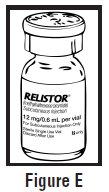
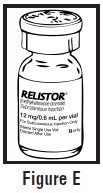
            • Look at the vial of RELISTOR (See Figure E). The liquid in the vial should be colorless to pale yellow, and should not have any particles in it. Do not use the vial if it looks discolored, cloudy, or has any particles.
            • Figure (Image 20)

              Figure (Image 20)

              Step 3: Prepare the syringe

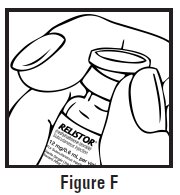
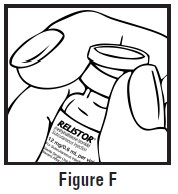
              • Remove the cap from the vial containing RELISTOR (See Figure F).
              • Figure (Image 21)

                Figure (Image 21)

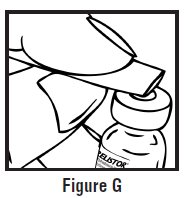
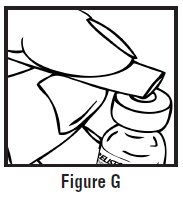
                • Wipe the rubber stopper with an alcohol swab (See Figure G).
                • Figure (Image 22)

                  Figure (Image 22)

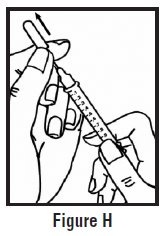
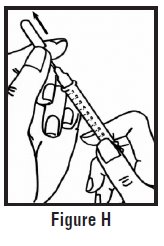
                  • Firmly hold the barrel of the syringe with one hand. With your other hand, pull the needle cap straight off (See Figure H). Do not touch the needle or allow it to touch anything.
                  • Figure (Image 23)

                    Figure (Image 23)

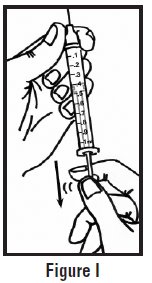
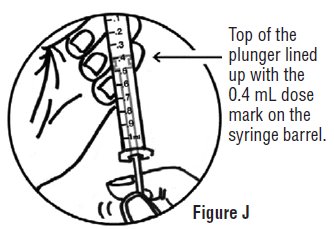
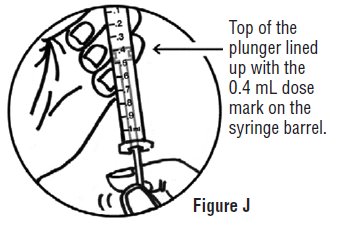
                    • Carefully pull back on the plunger to the line that matches the dose prescribed by your healthcare provider (See Figures I and J). For most people, this will be the 0.4 mL mark which is an 8 mg dose or the 0.6 mL mark which is a 12 mg dose.
                      Figure (Image 24)

                      Figure (Image 24)

                      Figure (Image 25)

                      Figure (Image 25)

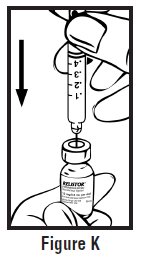
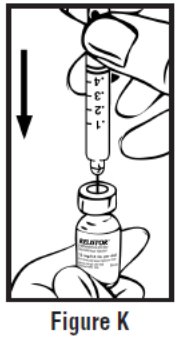
                    • Use one hand to hold the vial steady. Use your other hand to insert the needle straight down into the rubber top of the RELISTOR vial (See Figure K). Do not insert it at an angle. This may cause the needle to bend or break. You will feel some resistance as the needle passes through the rubber top.
                    • Figure (Image 26)

                      Figure (Image 26)

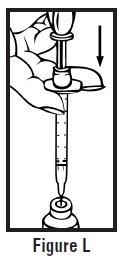
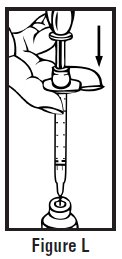
                      • Gently push down on the plunger until you feel resistance, and most of the air has gone from the syringe into the vial (See Figure L). Stop pushing down on the plunger when you feel resistance. If you continue to push down on the plunger when you feel resistance, the needle will pull back (retract) into the syringe barrel.
                      • Figure (Image 27)

                        Figure (Image 27)

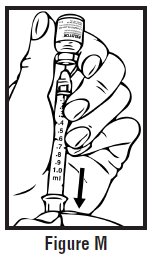
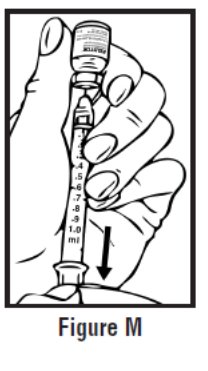
                        • With the needle still in the vial, turn the vial and syringe upside down. Hold the syringe at eye level. Make sure the tip of the needle is in the fluid. Slowly pull back on the plunger (See Figure M) until the top of the plunger lines up with the mark that matches your prescribed dose. For most people, this will be the 0.4 mL mark which is an 8 mg dose or the 0.6 mL mark which is a 12 mg dose.
                        • Figure (Image 28)

                          Figure (Image 28)

                          • You may see some fluid or bubbles inside the vial when the syringe is filled. This is normal.
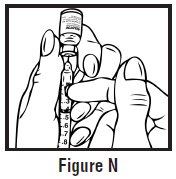
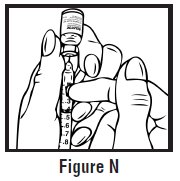
                          • With the needle still in the vial, gently tap the syringe to make any air bubbles rise to the top (See Figure N).
                          • Figure (Image 29)

                            Figure (Image 29)

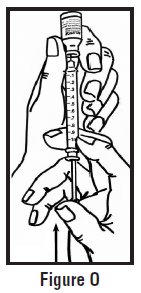
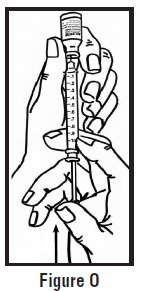
                            • Gently push the plunger up until all air bubbles are out of the syringe (See Figure O). A small air bubble may stay in the syringe. This is okay and it will not affect the dose of medicine in the syringe.
                            • Figure (Image 30)

                              Figure (Image 30)

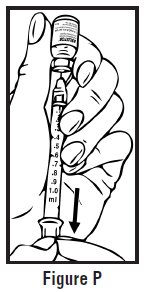
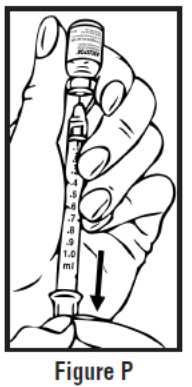
                              • Make sure the tip of the needle is in the fluid. Slowly pull back the plunger to draw the right amount of liquid back into the syringe (See Figure P).
                              • Figure (Image 31)

                                Figure (Image 31)

                                Check to be sure that you have the right dose of RELISTOR in the syringe.

                                • Slowly withdraw the needle from the vial. Do not touch the needle or allow it to touch anything. Safely throw away the vial with any unused medicine.
                                • Step 4: Inject RELISTOR

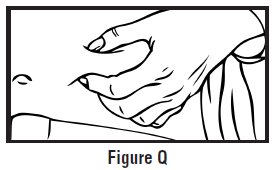
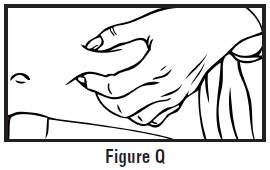
                                  • Use one hand to pinch the skin around the injection site (See Figure Q).
                                  • Figure (Image 32)

                                    Figure (Image 32)

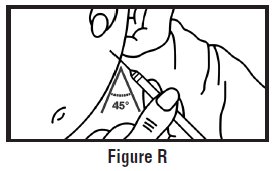
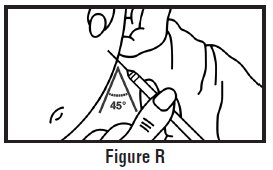
                                    • Use your other hand to hold the syringe. Insert the full length of the needle into the skin at a 45-degree angle with a quick “dart-like” motion (See Figure R).
                                    • Figure (Image 55)

                                      Figure (Image 55)

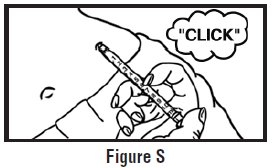
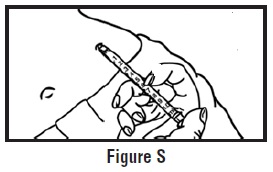
                                      • Let go of the skin and slowly push in on the plunger past the resistance point, until the syringe is empty and you hear a click (See Figure S).
                                      • Figure (Image 33)

                                        Figure (Image 33)

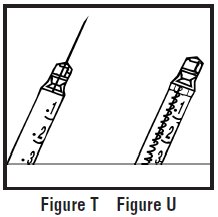
                                        • The click sound means that the needle (See Figure T) has been pulled back (retracted) into the syringe barrel (See Figure U). You can now remove the syringe from your skin.
                                        • Figure (Image 34)

                                          Figure (Image 34)

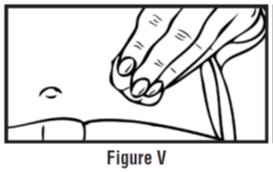
                                          • Hold a cotton ball or gauze over the injection site (See Figure V). Do not rub the injection site. Apply an adhesive bandage to the injection site if needed.
                                          • Figure (Image 35)

                                            Figure (Image 35)

                                            Step 5: Dispose of used syringes and needles

                                            • Do not re-use syringes or needles.
                                            • To avoid needle-stick injuries, do not recap used needles.
                                            • Put your used needles and syringes in an FDA-cleared sharps disposal container right away after use. Do not throw away (dispose of) loose needles and syringes in your household trash.
                                            • If you do not have an FDA-cleared sharps disposal container, you may use a household container that is:
                                            • omade of a heavy-duty plastic,
                                            • ocan be closed with a tight-fitting, puncture-resistant lid, without sharps being able to come out,
                                            • oupright and stable during use,
                                            • oleak-resistant, and
                                            • oproperly labeled to warn of hazardous waste inside the container.
                                            • When your sharps disposal container is almost full, you will need to follow your community guidelines for the right way to dispose of your sharps disposal container. There may be state or local laws about how you should throw away used needles and syringes. For more information about safe sharps disposal, and for specific information about sharps disposal in the state that you live in, go to the FDA’s website at: http://www.fda.gov/safesharpsdisposal.
                                            • Do not dispose of your used sharps disposal container in your household trash unless your community guidelines permit this. Do not recycle your used sharps disposal container.
                                            • If you have any questions, talk to your healthcare provider or pharmacist.
                                            • How should I store RELISTOR?

                                              • Store RELISTOR vials at room temperature between 68° to 77°F (20° to 25°C).
                                              • Do not freeze RELISTOR.
                                              • Keep RELISTOR away from light until you are ready to use it.
                                              • If RELISTOR has been drawn into a syringe and you are unable to use the medicine right away, keep the syringe at room temperature for up to 24 hours.
                                              • Keep RELISTOR and all medicines, needles and syringes out of the reach of children.

                                                For more information, go to www.Relistor.com or call 1-800-321-4576.

                                                Distributed by:

                                                Logo (Image 60)

                                                Logo (Image 60)

                                                Salix Pharmaceuticals, a division of
                                                Bausch Health US, LLC
                                                Bridgewater, NJ 08807 USA

                                                Under license from:

                                                Logo (Image 61)

                                                Logo (Image 61)

                                                Progenics Pharmaceuticals, Inc.
                                                Tarrytown, NY 10591 USA

                                                For Injection: Patented. See https://patents.salix.com for US patent information.
                                                For Tablets: Patented. See https://patents.salix.com for US patent information.
                                                RELISTOR is a trademark of Salix Pharmaceuticals, Inc. or its affiliates.
                                                All other product/brand names and/or logos are trademarks of the respective owners.
                                                © 2024 Salix Pharmaceuticals, Inc. or its affiliates
                                                This Instructions for Use has been approved by the U.S. Food and Drug Administration.
                                                Revised: 05/2024
                                                9502506
                                                70014843-01

    Instructions For Use - Vial

    INSTRUCTIONS FOR USE
    RELISTOR® (rel-i-store)
    (methylnaltrexone bromide)
    injection, for subcutaneous use
    Vial

    Read this Instructions for Use before you start using RELISTOR and each time you get a refill. There may be new information. This information does not take the place of talking to your healthcare provider about your medical condition or your treatment.

    The following instructions explain how to prepare and give an injection of RELISTOR the right way, when using a vial of RELISTOR.

    Important information:

    • Use the syringes and needles prescribed by your healthcare provider.
    • Do not use a RELISTOR vial more than 1 time, even if there is medicine left in the vial.
    • If RELISTOR has been drawn into a syringe and you are unable to use the medicine right away, carefully recap the needle and keep the syringe at room temperature for up to 24 hours. For more information about how to store RELISTOR, see the section “How should I store RELISTOR?” at the end of this Instructions for Use.
    • Safely throw away RELISTOR vials after use.
    • Do not re-use syringes or needles. See Step 5 “Dispose of used syringes and needles” for information about how to safely throw away used needles and syringes.
    • To avoid needle-stick injuries, do not recap used needles.
    • Gather the supplies you will need for your injection (See Figure A.). These include:

      • 1 RELISTOR vial
      • 1 1 mL syringe with a 27-gauge, ½ inch needle for subcutaneous use
      • 2 alcohol swabs
      • 1 cotton ball or gauze
      • 1 adhesive bandage
      • a puncture resistant container, such as an FDA-cleared sharps disposal container to dispose of used syringes and needles. See Step 5: “Dispose of used syringes and needles.”
      • Figure (Image 36)

        Figure (Image 36)

        Step 1: Choose and prepare the injection site

        • Choose an injection site on your stomach-area (abdomen), thighs, or upper arms. See the shaded areas in Figures B and C below. Do not inject at the exact same spot each time (rotate injection sites). Do not inject into areas where the skin is tender, bruised, red or hard. Avoid areas with scars or stretch marks.

          Figure B Abdomen or thigh – use these sites when injecting yourself or another person.

          Figure C Upper arm – use this site only when injecting another person.

        • Figure (Image 37)

          Figure (Image 37)

          • Clean the injection site with an alcohol swab and let it air dry. Do not touch this area again before giving the injection (See Figure D).
          • Figure (Image 38)

            Figure (Image 38)

            Step 2: Prepare the injection

            • Choose a flat, clean, well-lit work surface.
            • Wash your hands with soap and water before preparing for the injection.
            • Look at the vial of RELISTOR (See Figure E). The liquid in the vial should be colorless to pale yellow, and should not have any particles in it. Do not use the vial if it looks discolored, cloudy, or has any particles.
            • Figure (Image 39)

              Figure (Image 39)

              Step 3: Prepare the syringe

              • Remove the cap from the RELISTOR vial (See Figure F).
              • Figure (Image 40)

                Figure (Image 40)

                • Wipe the rubber stopper with an alcohol swab (See Figure G).
                • Figure (Image 41)

                  Figure (Image 41)

                  • Firmly hold the barrel of the syringe with one hand. With your other hand, pull the needle cap straight off (See Figure H). Do not touch the needle or allow it to touch anything.
                  • Figure (Image 42)

                    Figure (Image 42)

                    • Carefully pull back on the plunger to the line that matches the dose prescribed by your healthcare provider (See Figures I and J). For most people, this will be the 0.4 mL mark which is an 8 mg dose or the 0.6 mL mark which is a 12 mg dose.
                      Figure (Image 43)

                      Figure (Image 43)

                      Figure (Image 44)

                      Figure (Image 44)

                    • Use one hand to hold the vial steady. Use your other hand to insert the needle straight down into the rubber top of the vial (See Figure K). Do not insert it at an angle. This may cause the needle to bend or break. You will feel some resistance as the needle passes through the rubber top.
                    • Figure (Image 45)

                      Figure (Image 45)

                      • Gently push down the plunger until all of the air has gone from the syringe into the vial (See Figure L).
                      • Figure (Image 46)

                        Figure (Image 46)

                        • With the needle still in the vial, turn the vial and syringe upside down. Hold the syringe at eye level. Make sure the tip of the needle is in the fluid. Slowly pull back on the plunger (See Figure M) until the top of the plunger lines up with the mark that matches your prescribed dose. For most people, this will be the 0.4 mL mark which is an 8 mg dose or the 0.6 mL mark which is a 12 mg dose.
                        • Figure (Image 47)

                          Figure (Image 47)

                          • You may see some fluid or bubbles inside the vial when the syringe is filled. This is normal.
                          • With the needle still in the vial, gently tap the side of the syringe to make any air bubbles rise to the top (See Figure N).
                          • Figure (Image 48)

                            Figure (Image 48)

                            • Slowly push the plunger up until all air bubbles are out of the syringe (See Figure O). A small air bubble may stay in the syringe. This is okay and it will not affect the dose of medicine in the syringe.
                            • Figure (Image 49)

                              Figure (Image 49)

                              • Make sure the tip of the needle is in the fluid. Slowly pull back the plunger to draw the right amount of liquid back into the syringe (See Figure P).
                              • Figure (Image 50)

                                Figure (Image 50)

                                Check to be sure that you have the right dose of RELISTOR in the syringe.

                                • Slowly withdraw the needle from the vial. Do not touch the needle or allow it to touch anything. Safely throw away the vial with any unused medicine.
                                • Step 4: Inject RELISTOR

                                  • Use one hand to pinch the skin around the injection site (See Figure Q).
                                  • Figure (Image 51)

                                    Figure (Image 51)

                                    • Use your other hand to hold the syringe. Insert the full length of the needle into the skin at a 45-degree angle with a quick “dart-like” motion (See Figure R).
                                    • Figure (Image 52)

                                      Figure (Image 52)

                                      • Let go of the skin and slowly push in on the plunger until the syringe is empty (Figure S).
                                      • Figure (Image 53)

                                        Figure (Image 53)

                                        • When the syringe is empty, quickly pull the needle out of the skin, being careful to keep it at the same angle as it was inserted. There may be a little bleeding at the injection site.
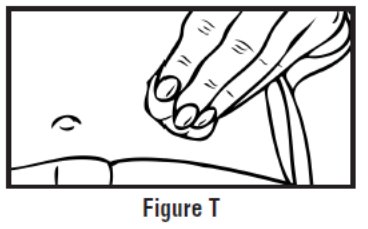
                                        • Hold a cotton ball or gauze over the injection site (Figure T). Do not rub the injection site. Apply an adhesive bandage to the injection site if needed.
                                        • Figure (Image 54)

                                          Figure (Image 54)

                                          Step 5: Dispose of used syringes and needles

                                          • Do not re-use a syringe or needle.
                                          • To avoid needle-stick injuries, do not recap a used needle.
                                          • Put your used needles and syringes in an FDA-cleared sharps disposal container right away after use. Do not throw away (dispose of) loose needles and syringes in your household trash.
                                          • If you do not have an FDA-cleared sharps disposal container, you may use a household container that is:
                                          • omade of a heavy-duty plastic,
                                          • ocan be closed with a tight-fitting, puncture-resistant lid, without sharps being able to come out,
                                          • oupright and stable during use,
                                          • oleak-resistant, and
                                          • oproperly labeled to warn of hazardous waste inside the container.
                                          • When your sharps disposal container is almost full, you will need to follow your community guidelines for the right way to dispose of your sharps disposal container. There may be state or local laws about how you should throw away used needles and syringes. For more information about safe sharps disposal, and for specific information about sharps disposal in the state that you live in, go to the FDA’s website at: http://www.fda.gov/safesharpsdisposal.
                                          • Do not dispose of your used sharps disposal container in your household trash unless your community guidelines permit this. Do not recycle your used sharps disposal container.
                                          • If you have any questions, talk to your healthcare provider or pharmacist.
                                          • How should I store RELISTOR?

                                            • Store RELISTOR vials at room temperature between 68° to 77°F (20° to 25°C).
                                            • Do not freeze RELISTOR.
                                            • Keep RELISTOR away from light until you are ready to use it.
                                            • If RELISTOR has been drawn into a syringe and you are unable to use the medicine right away, keep the syringe at room temperature for up to 24 hours.
                                            • Keep RELISTOR and all medicines, needles and syringes out of the reach of children.

                                              For more information, go to www.Relistor.com or call 1-800-321-4576.

                                              Distributed by:

                                              Logo Of Salix Pharmaceuticals Featuring The Company Name In Black Serif Font With A Circular Emblem Containing Stylized Plant Or Seed Design To The Right. The Design Emphasizes A Clean, Professional Brand Identity For A Pharmaceutical Company. (Image 01)

                                              Logo Of Salix Pharmaceuticals Featuring The Company Name In Black Serif Font With A Circular Emblem Containing Stylized Plant Or Seed Design To The Right. The Design Emphasizes A Clean, Professional Brand Identity For A Pharmaceutical Company. (Image 01)

                                              Salix Pharmaceuticals, a division of

                                              Bausch Health US, LLC

                                              Bridgewater, NJ 08807 USA

                                              Under license from:

                                              Logo Of Progenics Pharmaceuticals Featuring The Company Name In Black Serif Font With "progenics" In Larger Letters And "pharmaceuticals" Below In Smaller Letters. A Registered Trademark Symbol Appears At The Top Right Of "progenics." (Image 04)

                                              Logo Of Progenics Pharmaceuticals Featuring The Company Name In Black Serif Font With "progenics" In Larger Letters And "pharmaceuticals" Below In Smaller Letters. A Registered Trademark Symbol Appears At The Top Right Of "progenics." (Image 04)

                                              Progenics Pharmaceuticals, Inc.

                                              Tarrytown, NY 10591 USA

                                              For Injection: Patented. See https://patents.salix.com for US patent information.
                                              For Tablets: Patented. See https://patents.salix.com for US patent information.
                                              RELISTOR is a trademark of Salix Pharmaceuticals, Inc. or its affiliates.
                                              All other product/brand names and/or logos are trademarks of the respective owners.
                                              © 2024 Salix Pharmaceuticals, Inc. or its affiliates
                                              This Instructions for Use has been approved by the U.S. Food and Drug Administration.
                                              Revised: 05/2024
                                              9502506
                                              70014843-01

    * Please review the disclaimer below.