Aristada Injection, Suspension, Extended Release
Product Images NDC 65757-402

19 FDA label images from Alkermes, Inc. · Packaging, Regulatory Labels, and Product Appearance

Product Visual Gallery

This gallery contains 19 technical images submitted to the FDA as part of the official labeling for Aristada (NDC 65757-402). Unlike standard consumer photos, these assets often include clinical data figures, molecular chemical structures, and official manufacturer packaging layouts.

As provided by Alkermes, Inc., these visuals offer a comprehensive scientific overview of the product's physical and chemical identity, aiding pharmacists and researchers in product verification and study.

FDA Label Image

Figure (Ari01 0039 01)
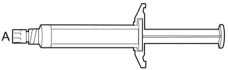
Figure (Ari01 0039 01)
Illustration of a syringe, likely representing the injection form of aripiprazole lauroxil extended release suspension. The syringe is shown in side view with a plunger and needle cap. No other packaging or labeling details are visible.*
FDA Label Image

Figure (Ari01 0039 02)

Figure (Ari01 0039 02)
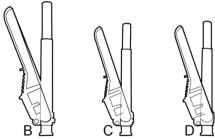
An instructional diagram showing three sequential steps labeled B, C, and D involving the activation or preparation of a drug delivery device, likely an injection device or applicator, with a focus on the movement or positioning of a lever or handle as part of the process.*
FDA Label Image

Figure (Ari01 0039 03)

Figure (Ari01 0039 03)
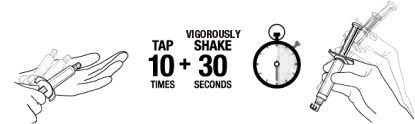
Illustration showing how to prepare an injection of aripiprazole lauroxil extended release suspension. It depicts hands holding the vial and syringe, instructions to vigorously shake the vial by tapping 10 times and shaking for 30 seconds before administration.*
FDA Label Image

Figure (Ari01 0039 04)

Figure (Ari01 0039 04)
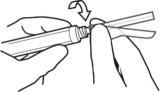
An instructional illustration showing a person removing or twisting the cap off a vial or syringe, likely as part of medication preparation or administration steps.*
FDA Label Image

Figure (Ari01 0039 05)

Figure (Ari01 0039 05)
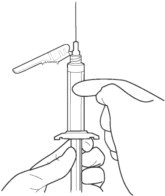
An instructional line drawing showing hands assembling a syringe with needle attachment, likely demonstrating preparation steps for an injection, relevant to a suspension or extended-release injectable drug.*
FDA Label Image

Figure (Ari01 0039 06)

Figure (Ari01 0039 06)
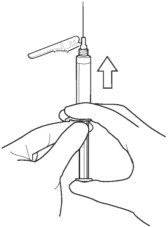
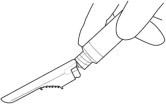
An instructional line drawing showing two hands preparing a syringe by removing the cap from the needle, indicated by an upward arrow. The image demonstrates proper needle cap removal for injection administration.*
FDA Label Image

Figure (Ari01 0039 07)

Figure (Ari01 0039 07)
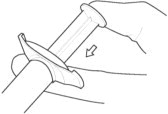
An instructional illustration showing a hand holding a syringe with an arrow indicating a step in the use or preparation of the syringe. This is likely related to the administration process of an injection, such as aripiprazole lauroxil extended-release suspension.*
FDA Label Image

Figure (Ari01 0039 08)

Figure (Ari01 0039 08)
An instructional line drawing showing a hand holding a vial and a syringe with a needle, illustrating the process of drawing up an injectable suspension dose. The syringe is angled to extract medication from the vial, indicating preparation for administration.*
FDA Label Image

Figure (Ari01 0039 09)

Figure (Ari01 0039 09)
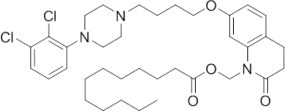
Chemical structure of aripiprazole lauroxil, the active ingredient shown as a molecular diagram with rings, chains, and two chlorine atoms on an aromatic ring. This structure represents the composition of this extended-release injectable suspension drug.*
FDA Label Image

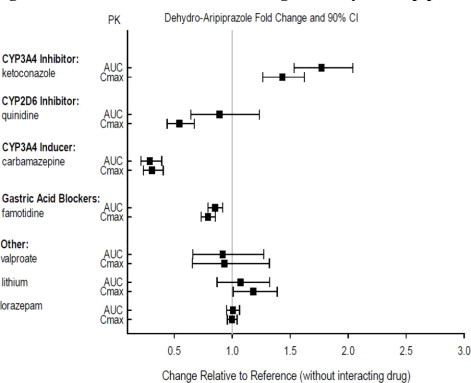
Figure 1 (Ari01 0039 10)

Figure 1 (Ari01 0039 10)
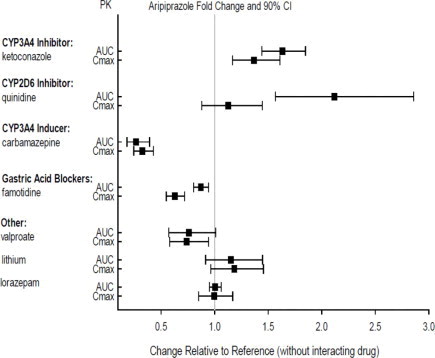
This chart depicts the pharmacokinetic fold changes and 90% confidence intervals for aripiprazole with various interacting drugs. The horizontal axis shows the change relative to a reference without interacting drug, and the vertical axis lists different inhibitors, inducers, and other agents including CYP3A4 inhibitors (ketoconazole), CYP2D6 inhibitors (quinidine), CYP3A4 inducers (carbamazepine), gastric acid blockers (famotidine), and other drugs such as valproate, lithium, and lorazepam. The chart compares AUC and Cmax fold changes for aripiprazole.*
FDA Label Image

Figure 2 (Ari01 0039 11)

Figure 2 (Ari01 0039 11)
A pharmacokinetic chart titled 'Dehydro-Aripiprazole Fold Change and 90% CI' showing the effect of various drugs on AUC and Cmax levels. It lists CYP3A4 inhibitor ketoconazole, CYP2D6 inhibitor quinidine, CYP3A4 inducer carbamazepine, gastric acid blockers famotidine, and other drugs valproate, lithium, and lorazepam, each with corresponding fold change values displayed as points with error bars on a horizontal axis representing change relative to a reference without interacting drug.*
FDA Label Image

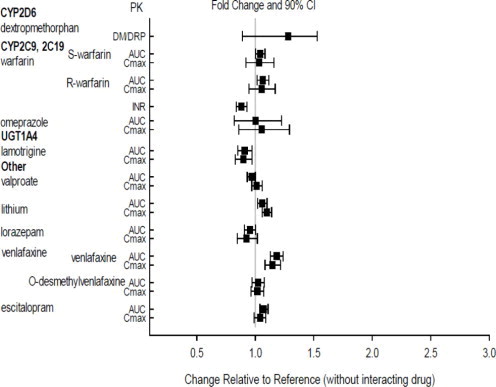
Figure 3 (Ari01 0039 12)

Figure 3 (Ari01 0039 12)
A forest plot chart showing fold change and 90% confidence intervals for pharmacokinetic parameters (AUC and Cmax) of various drugs including dextromethorphan, warfarin (S- and R-), omeprazole, lamotrigine, valproate, lithium, lorazepam, venlafaxine, O-desmethylvenlafaxine, and escitalopram. The horizontal axis represents change relative to a reference drug (without interacting drug), ranging approximately from 0.5 to 3. The vertical list groups drugs by enzyme systems CYP2D6, CYP2C9 and 2C19, UGT1A4, and others.*
FDA Label Image

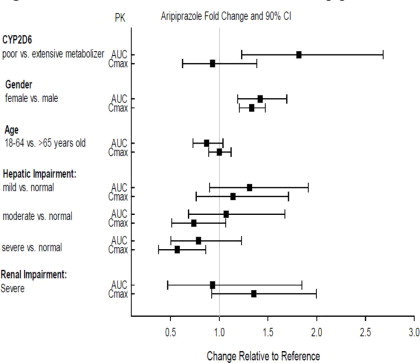
Figure 4 (Ari01 0039 13)

Figure 4 (Ari01 0039 13)
A chart displaying aripiprazole fold change with 90% confidence intervals comparing pharmacokinetic parameters (AUC and Cmax) relative to reference values across different variables, including CYP2D6 metabolism status, gender, age groups, hepatic impairment severity, and severe renal impairment.*
FDA Label Image

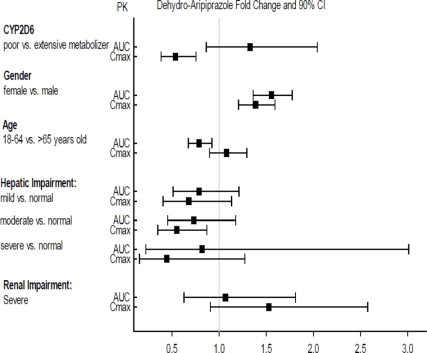
Figure 5 (Ari01 0039 14)

Figure 5 (Ari01 0039 14)
A chart showing the fold change and 90% confidence intervals of dehydro-aripiprazole levels by pharmacokinetic and demographic factors, including CYP2D6 metabolizer status, gender, age, hepatic impairment severity, and severe renal impairment, with AUC and Cmax comparisons.*
FDA Label Image

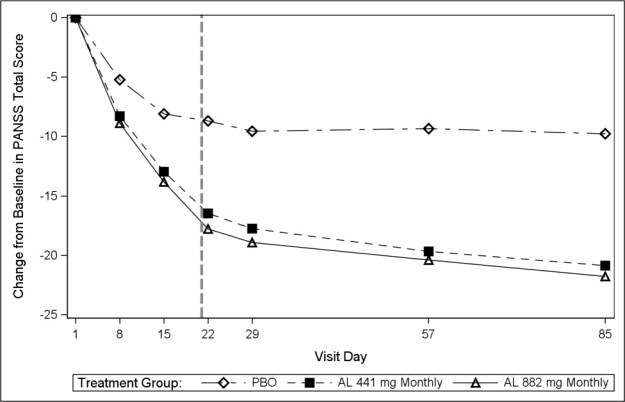
Figure 6 (Ari01 0039 15)

Figure 6 (Ari01 0039 15)
A line graph showing change from baseline in PANSS (Positive and Negative Syndrome Scale) total score over visit days for three treatment groups: placebo (PBO), aripiprazole lauroxil (AL) 441 mg monthly, and AL 882 mg monthly. The x-axis represents visit days ranging from 1 to 85, and the y-axis shows change from baseline in PANSS total score with values from 0 to -25. The graph illustrates a greater reduction in PANSS score over time with both doses of aripiprazole lauroxil compared to placebo.*
FDA Label Image

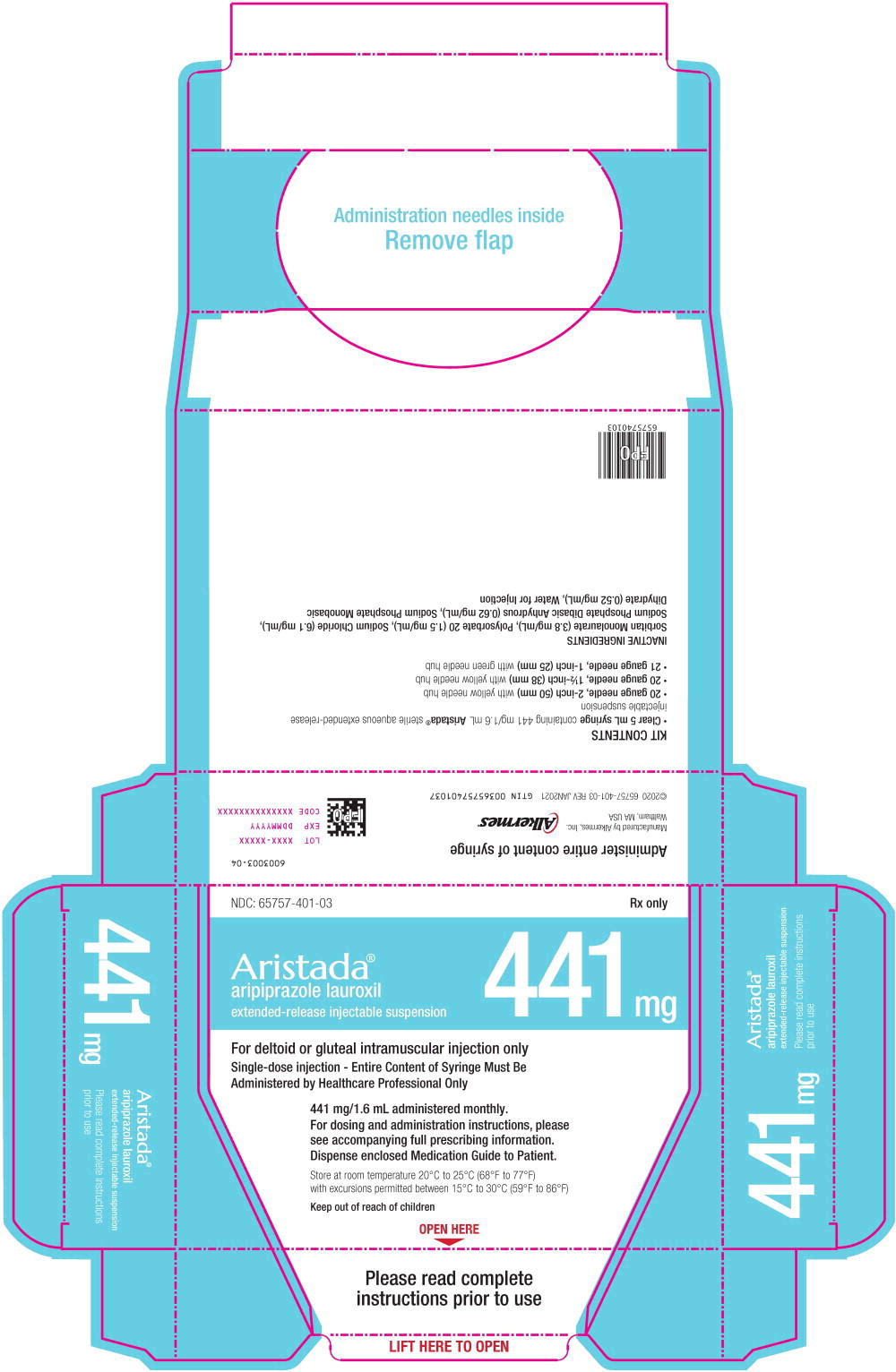
Principal Display Panel (441 mg/1.6 mL Carton Label)

Principal Display Panel (441 mg/1.6 mL Carton Label)
Aristada 441 mg aripiprazole lauroxil extended-release injectable suspension packaging label. The label specifies a single-dose syringe containing 441 mg in 1.6 mL for intramuscular injection in the deltoid or gluteal muscle. Manufactured by Alkermes, Inc., the label includes storage instructions, administration warnings, and directions to read complete instructions before use.*
FDA Label Image

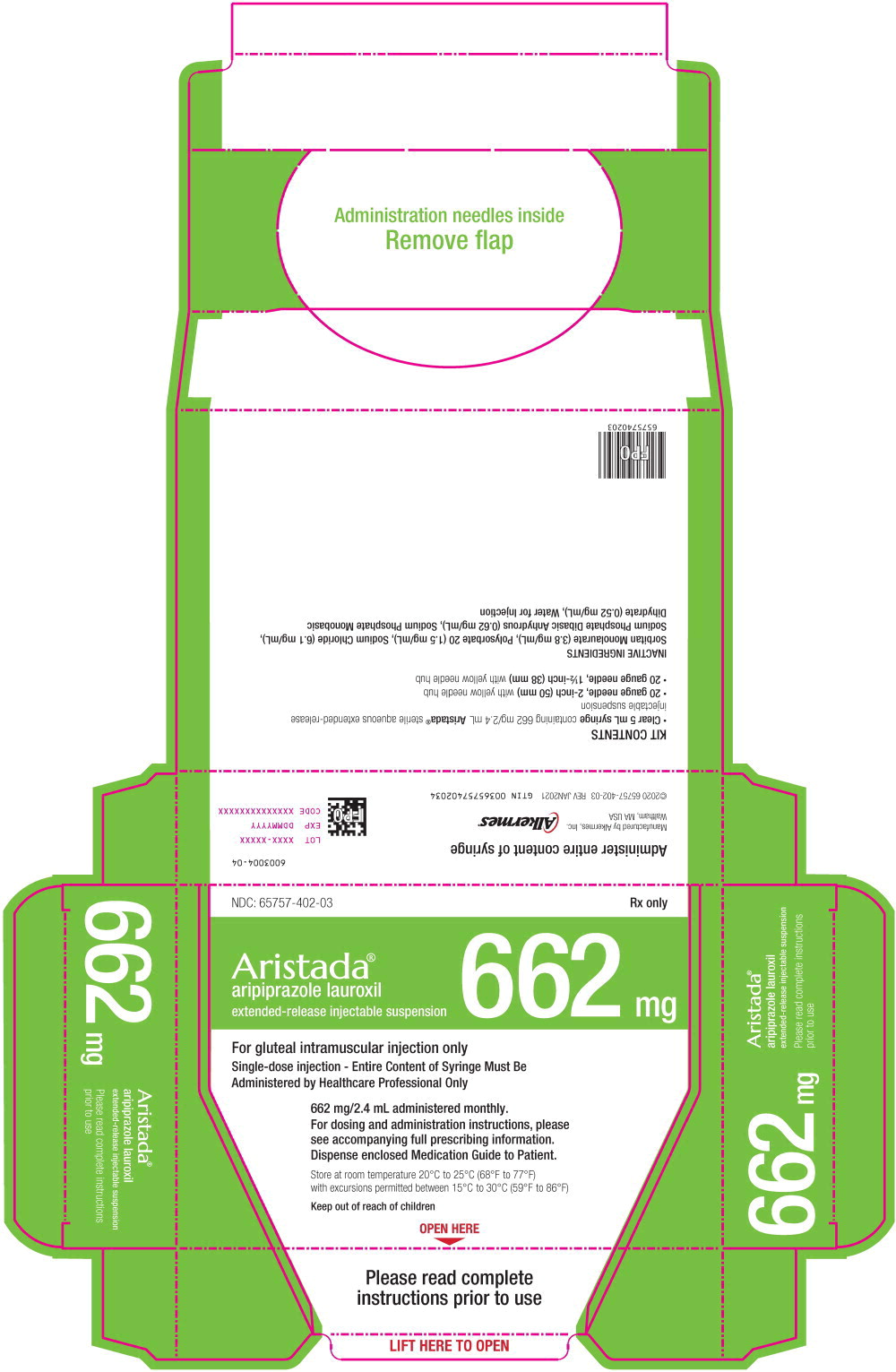
Principal Display Panel (662 mg/2.4 mL Carton Label)

Principal Display Panel (662 mg/2.4 mL Carton Label)
Label for Aristada 662 mg extended-release injectable suspension containing aripiprazole lauroxil. The label indicates a 662 mg/2.4 mL dosage for gluteal intramuscular injection by healthcare professionals only, manufactured by Alkermes, Inc. Instructions emphasize reading complete instructions prior to use and proper storage conditions.*
FDA Label Image

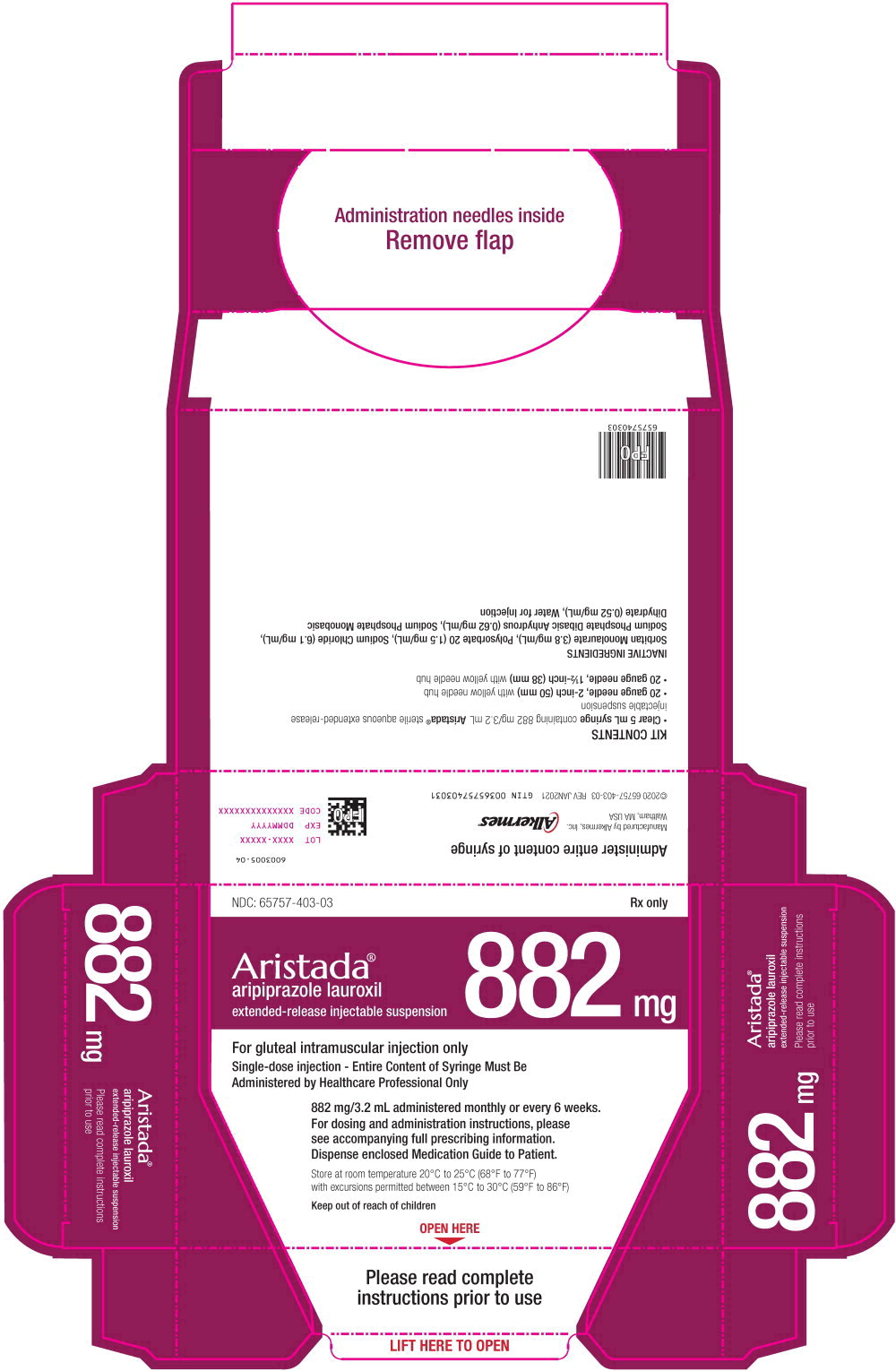
Principal Display Panel (882 mg/3.2 mL Carton Label)

Principal Display Panel (882 mg/3.2 mL Carton Label)
Packaging label for Aristada 882 mg extended-release injectable suspension, containing aripiprazole lauroxil. Labeled for a single-dose intramuscular injection by healthcare professionals only, with detailed administration, storage, and safety instructions. The labeler is Alkermes, Inc., and the label includes the NDC 65757-403-03 and dosing information specifying 882 mg/3.2 mL.*
FDA Label Image

Principal Display Panel (1064 mg/3.9 mL Carton Label)

Principal Display Panel (1064 mg/3.9 mL Carton Label)
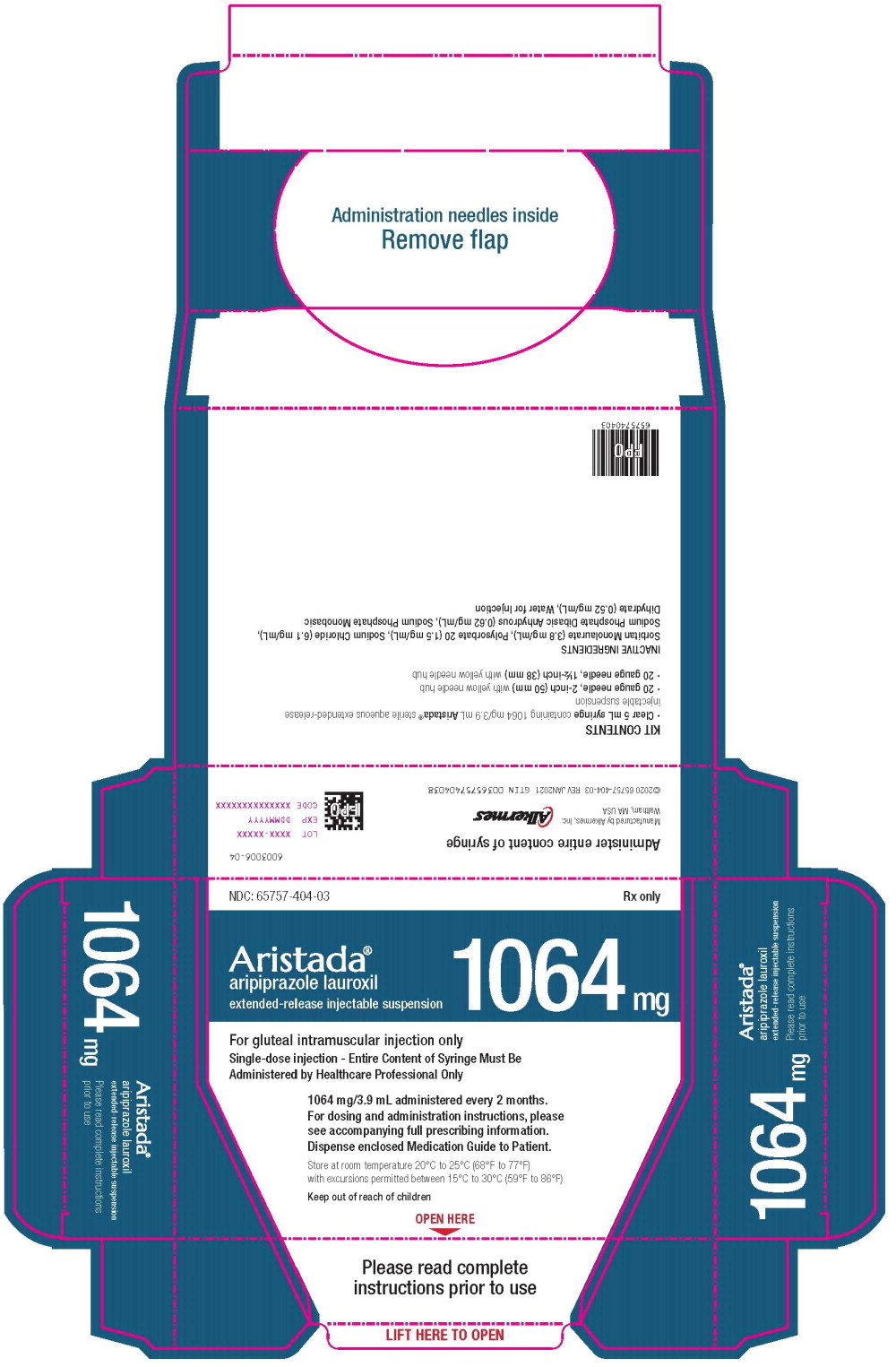
Packaging label for Aristada 1064 mg extended-release injectable suspension, containing aripiprazole lauroxil. The label indicates it is for gluteal intramuscular injection only, single-dose, and must be administered by healthcare professionals. It specifies the dose as 1064 mg/3.9 mL administered every 2 months, with storage instructions and a note to read complete instructions prior to use. The labeler is Alkermes, Inc.*

* About these descriptions: Image descriptions on this page are generated by automated AI analysis of the product label images from the manufacturer's FDA label submission (SPL). They are provided for reference only and may contain errors or omissions. Always rely on the printed label itself and the official FDA labeling, and consult a pharmacist or healthcare professional with any questions about this product.