Alendronate Sodium Tablet
Product Images NDC 65862-327
View Photos of Packaging, Regulatory Labels, and Product Appearance
Product Visual Gallery
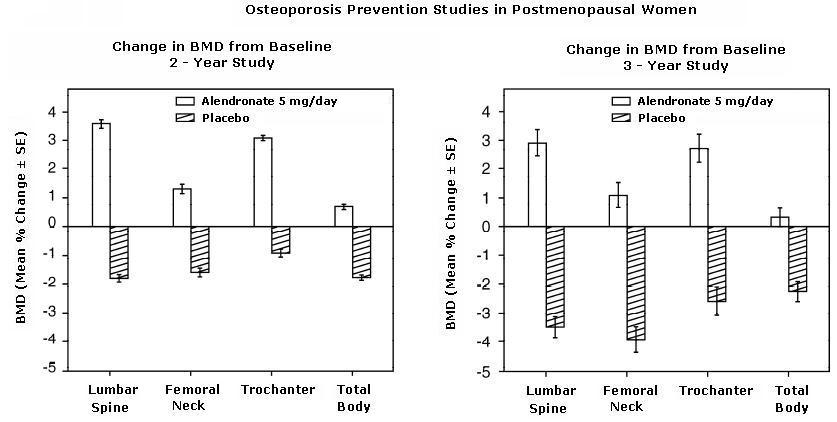
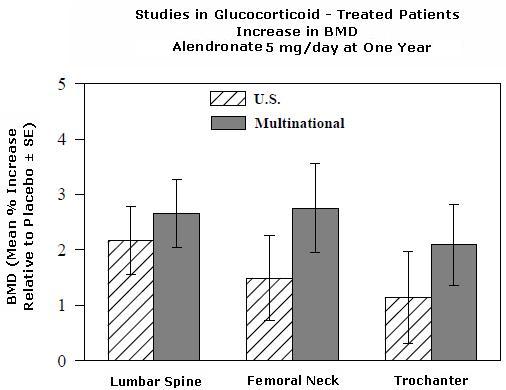
This gallery contains 11 technical images submitted to the FDA as part of the official labeling for Alendronate Sodium (NDC 65862-327). Unlike standard consumer photos, these assets often include clinical data figures, molecular chemical structures, and official manufacturer packaging layouts.
As provided by Aurobindo Pharma Limited, these visuals offer a comprehensive scientific overview of the product's physical and chemical identity, aiding pharmacists and researchers in product verification and study.
Product Images & Figures Index
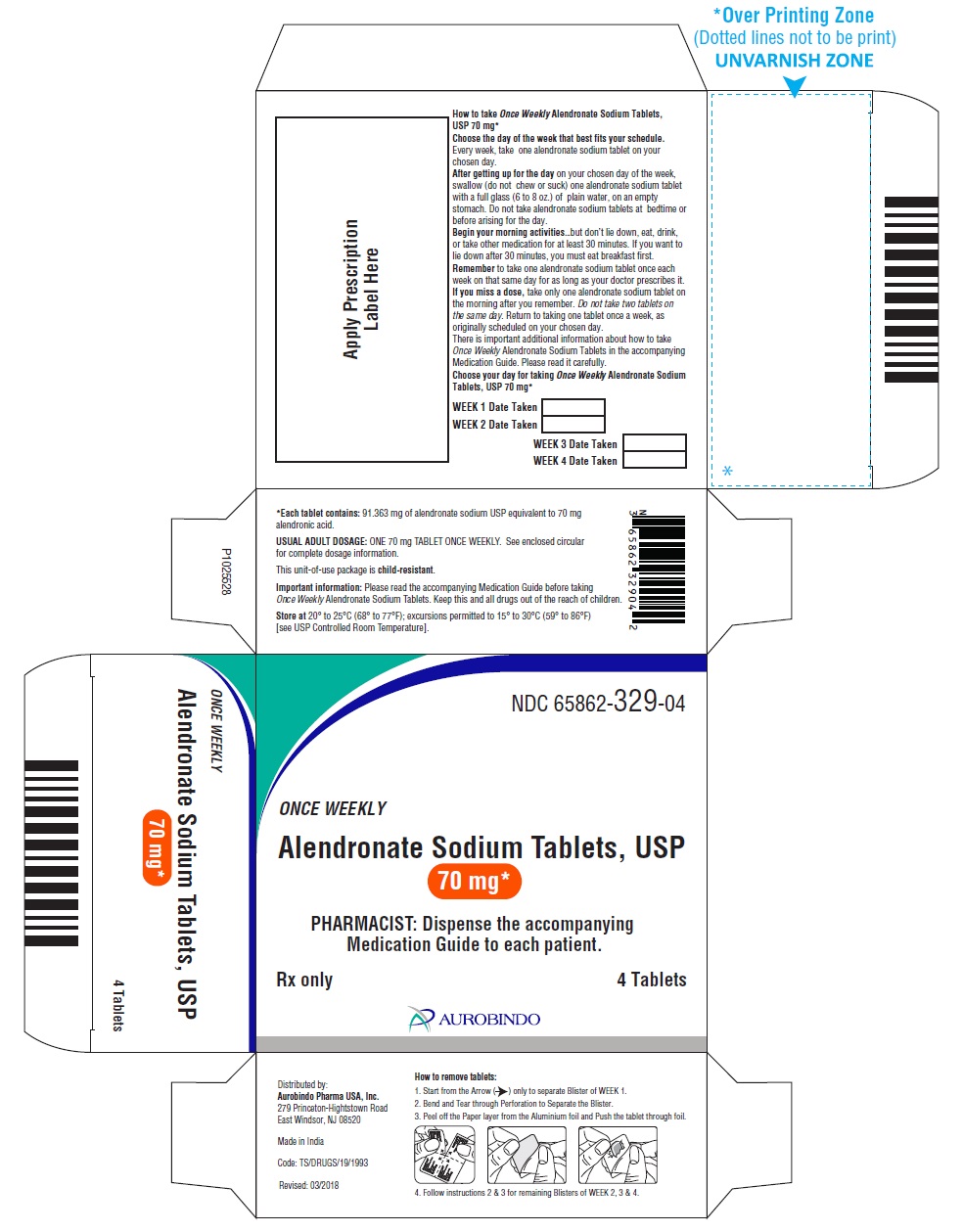
Package Label-principal Display Panel (70 mg Blister Carton (4 Unit-of-use))
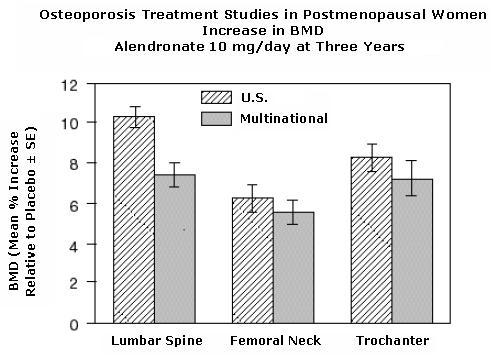
Figure 2 (Alendronate Fig2)
This text presents the mean % increase in bone mineral density (BMD) relative to placebo, in studies for osteoporosis treatment in postmenopausal women. The specific treatment mentioned is alendronate 10mg/day, with an increase in BMD of 12% at three years. The increase in BMD is noted for the lumbar spine, femoral neck, and trochanter.*
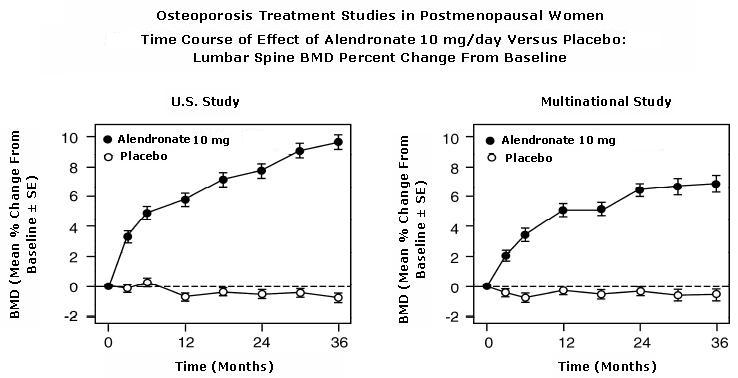
Figure 3 (Alendronate Fig3)
This is a description of a study on the effect of Alendronate 10mg/day versus the placebo in treating osteoporosis in postmenopausal women. The study was conducted in multiple countries and involved measuring the percentage change of bone mineral density (BMD) in the lumbar spine from the baseline. The time course of the effect was evaluated over 36 months. The results were presented in a graph with the mean % change from baseline and standard error (SE) plotted against time in months for both the Alendronate 10mg/day and placebo groups.*
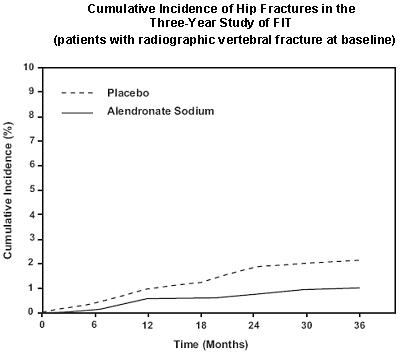
Figure 4 (Alendronate Fig4)
Figure 5 (Alendronate Fig5)
Figure 6 (Alendronate Fig6)
The text refers to a study that analyzed the effect of Alendronate on serum alkaline phosphatase in patients with Paget's Disease of Bone. The study compared the results of patients who took Alendronate 40mg/day with those who took a placebo or Etidronate 400mg/day. The data shows the mean % change from baseline over a period of 6 months, with measurements taken at 0, 3, and 6 months. There were two separate studies, one multinational and another conducted in the US, with N=27 and N=41, respectively.*
Package Label-principal Display Panel (10 mg (30 Tablets Bottle))
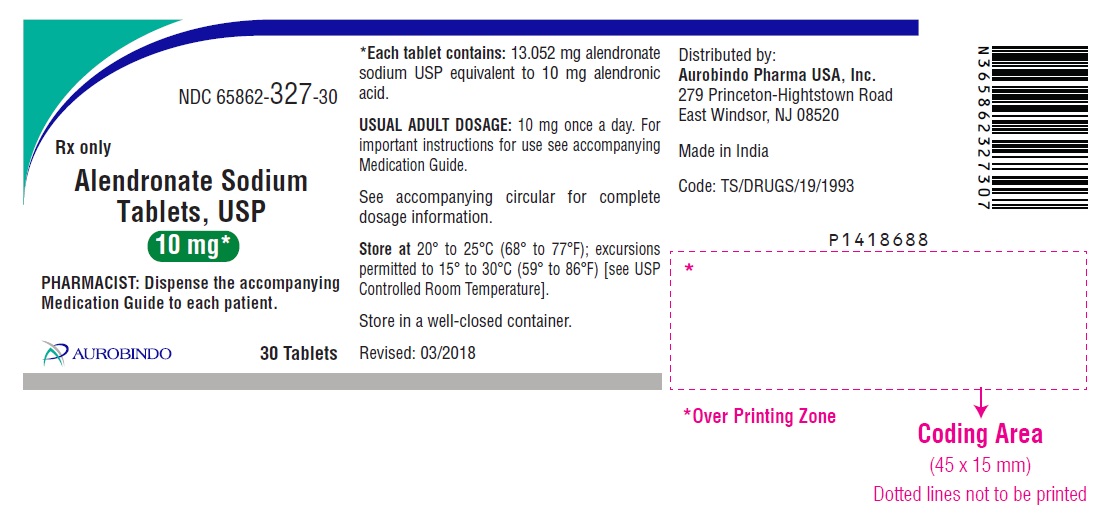
This is a medication called Alendronate Sodium in the form of tablets, available only with a prescription. Each tablet contains 13.052 mg of alendronate sodium USP, equivalent to 10 mg of alendronic acid. It is distributed by a company called Aurobindo Pharma based in New Jersey. The recommended adult dosage is 10mg to be taken once per day. The medication should be stored in a well-closed container at a temperature range of 20-25°C (68-77°F), with excursions permitted to 15-30°C (59-86°F). A medication guide has to be provided to every patient purchasing the tablets.*
Package Label-principal Display Panel (10 mg Blister Carton 100 (10 x 10) Unit-dose Tablets)
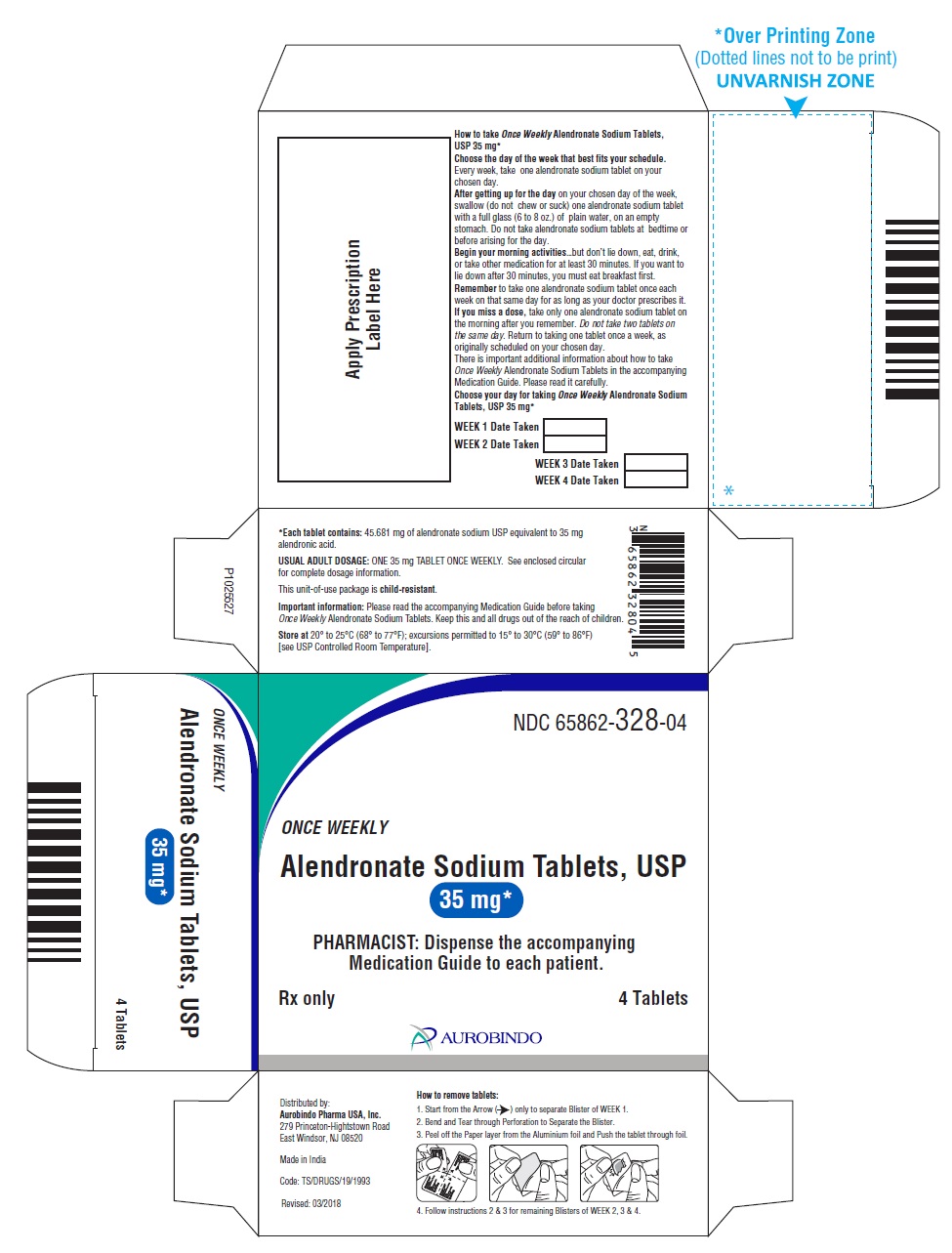
This is a medicine description for Alendronate Sodium Tablets that come in a unit-dose package of 100 (10 x 10) tablets. Each tablet contains 13,052 mg alendronate sodium USP equivalent to 10 mg alendronic acid. The usual adult dosage is 10 mg once a day, and there are important instructions for use of the medicine that can be found in the accompanying Medication Guide. Pharmacists are instructed to dispense the guide to each patient. The package is child-resistant and it is important to keep all drugs out of the reach of children. The tablets should be stored at 20° to 25°C (68° to 77°F), but excursions are permitted to 15° to 30°C (59° to 86°F) [see USP Controlled Room Temperature]. The drugs are distributed by Aurobindo Pharma USA, Inc. and were made in India.*
Package Label-principal Display Panel (35 mg Blister Carton (4 Unit-of-use))
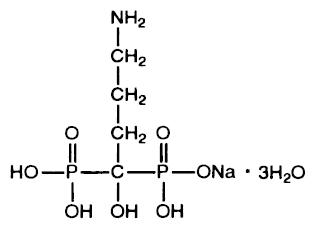
Chemical Structure (Alendronate Str)
* These product label images have been analyzed using experimental machine learning. Please verify findings with the primary label text.