Galantamine Tablet, Film Coated
Product Images NDC 65862-460

View Photos of Packaging, Regulatory Labels, and Product Appearance

Product Visual Gallery

This gallery contains 16 technical images submitted to the FDA as part of the official labeling for Galantamine (NDC 65862-460). Unlike standard consumer photos, these assets often include clinical data figures, molecular chemical structures, and official manufacturer packaging layouts.

As provided by Aurobindo Pharma Limited, these visuals offer a comprehensive scientific overview of the product's physical and chemical identity, aiding pharmacists and researchers in product verification and study.

FDA Label Image

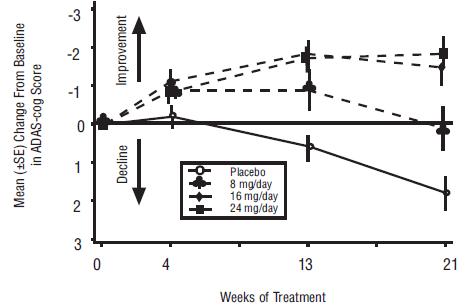
Figure 1: Time-course Of The Change From Baseline In Adas-cog Score For Patients Completing 21 Weeks (5 Months) Of Treatment (Galantamine Fig1)
FDA Label Image

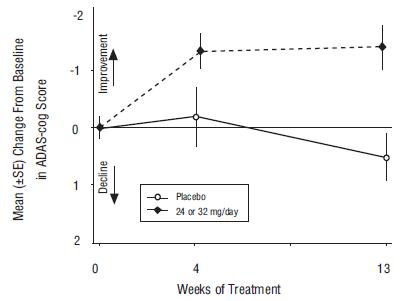
Figure 10: Time-course Of The Change From Baseline In Adas-cog Score For Patients Completing 13 Weeks Of Treatment (Galantamine Fig10)

FDA Label Image

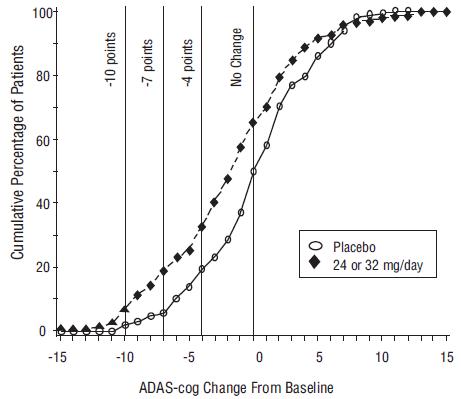
Figure 11: Cumulative Percentage Of Patients Completing 13 Weeks Of Double-blind Treatment With Specified Changes From Baseline In Adas-cog Scores. The Percentages Of Randomized Patients Who Completed The Study Were: Placebo 90%, 24 To 32 mg/day 67%. (Galantamine Fig11)

FDA Label Image

Figure 12 (Galantamine Fig12)

FDA Label Image

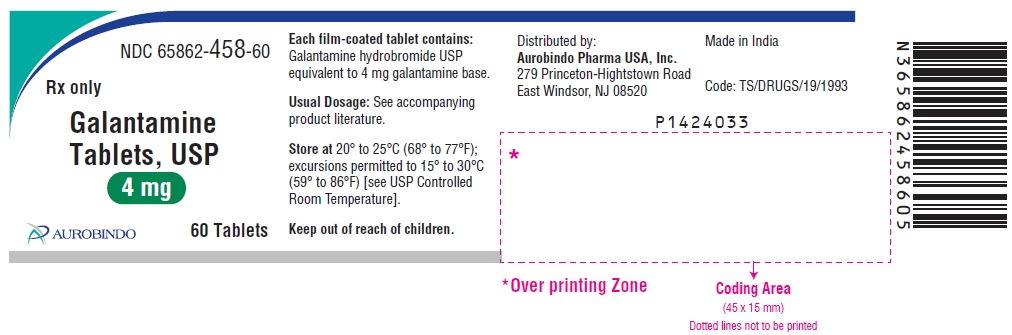
Package Label-principal Display Panel (4 mg (60 Tablets Bottle))

Package Label-principal Display Panel (4 mg (60 Tablets Bottle))
Each tablet of Gafantamine hydrobromide USP contains 4 mg of galantamine base. This product is distributed by Aurobindo Pharma USA, Inc. and is made in India. The usual dosage is provided in the accompanying Galantamine product feature. It is recommended to store the tablets at 20-25°C (68-77°F) with excursions permitted to 15-30°C (59-86°F) as per USP Controlled Room Temperature. The package contains 60 tablets and should be kept out of reach of children. No text was available in the overprinting zone coding area.*
FDA Label Image

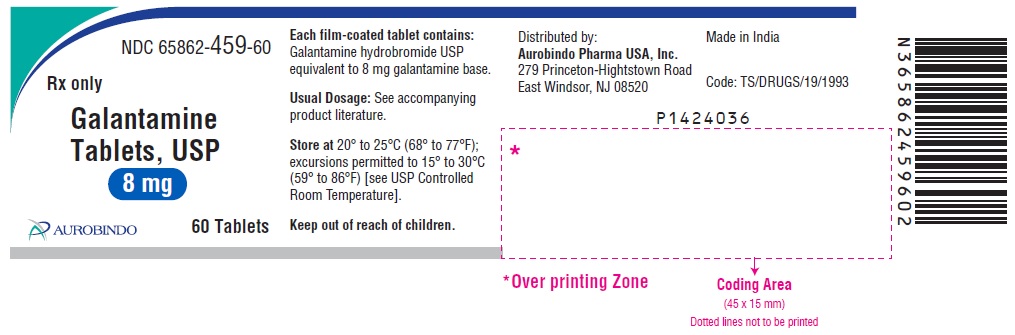
Package Label-principal Display Panel (8 mg (60 Tablets Bottle))

Package Label-principal Display Panel (8 mg (60 Tablets Bottle))
Galantamine is a prescription medication in tablet form, distributed by Aurobindo Pharma USA, Inc. Each tablet contains Galantamine hydrobromide USP equivalent to 8 mg galantamine base. The usual dosage is specified in accompanying product literature. The tablets should be stored at room temperature and protected from excursions in temperature. This medication should be kept out of reach of children. NDC code for the medication is 65862-459-60. The medication is made in India.*
FDA Label Image

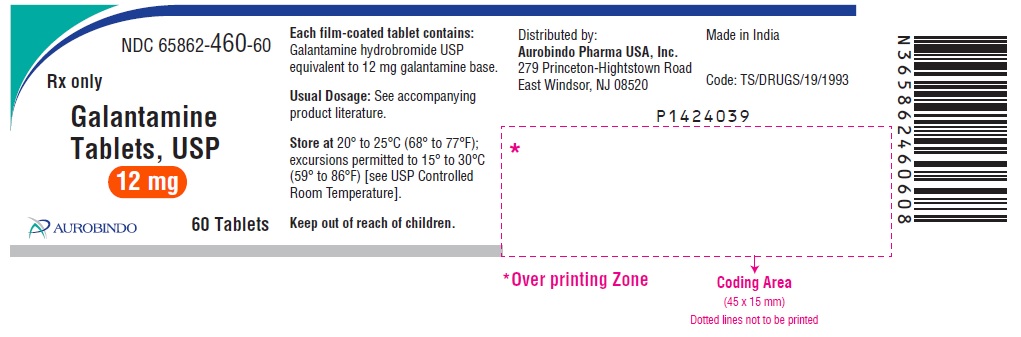
Package Label-principal Display Panel -12 mg (60 Tablets Bottle) (Galantamine Fig15)

Package Label-principal Display Panel -12 mg (60 Tablets Bottle) (Galantamine Fig15)
This is a description for the medication "Galantami". It is a prescription medication with 60 tablets, each containing 'Galantamine hydrobromide USP, equivalent to 12 mg galantamine base'. The usual dosage information can be found in the product literature. The tablets should be stored at 20° to 25°C (68° to 77°F) with permitted excursions to 15° to 30°C (59° to 86°F) [see USP Controlled Room Temperature]. It is important to keep it out of reach of children. This medication is distributed by Aurobindo Pharma USA, Inc., and is made in India.*
FDA Label Image

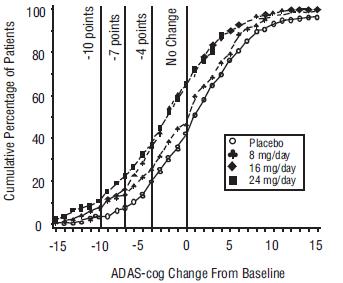
Figure 2: Cumulative Percentage Of Patients Completing 21 Weeks Of Double-blind Treatment With Specified Changes From Baseline In Adas-cog Scores. The Percentages Of Randomized Patients Who Completed The Study Were: Placebo 84%, 8 mg/day 77%, 16 mg/day 78% And 24 mg/day 78%. (Galantamine Fig2)

FDA Label Image

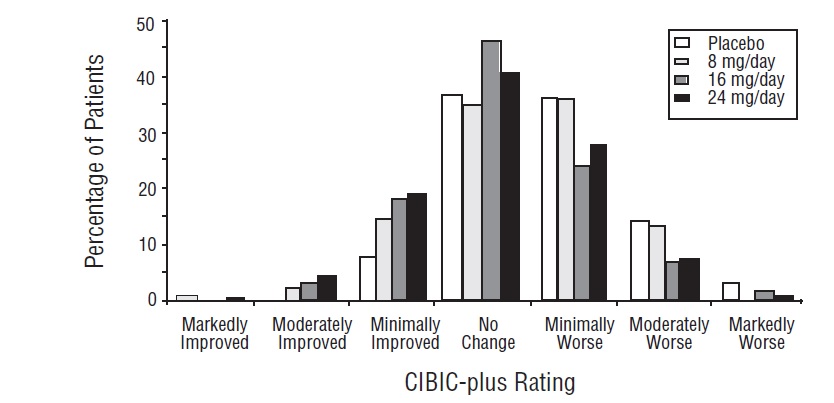
Figure 3: Distribution Of Cibic-plus Ratings At Week 21 (Galantamine Fig3)

FDA Label Image

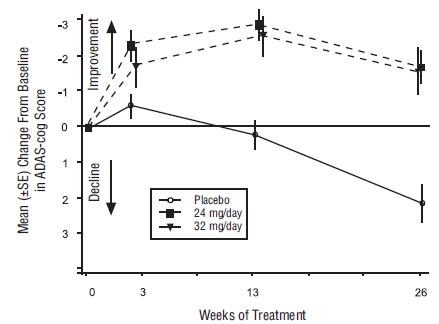
Figure 4: Time-course Of The Change From Baseline In Adas-cog Score For Patients Completing 26 Weeks Of Treatment (Galantamine Fig4)

FDA Label Image

Figure 5 (Galantamine Fig5)

Figure 5 (Galantamine Fig5)
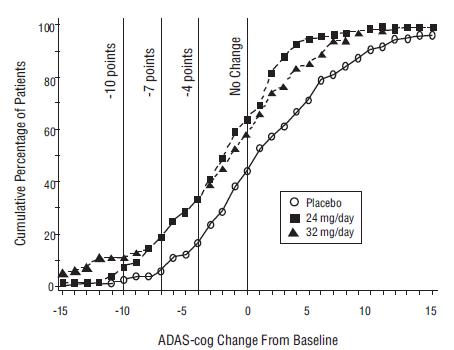
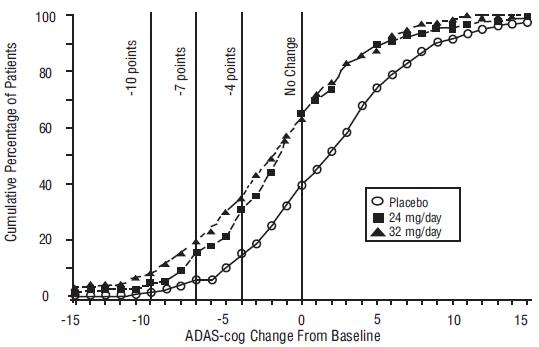
The text is showing a chart measuring the cumulative percentage of patients based on their points change related to ADAS-cog from baseline, as well as the dosage of medication administered (placebo, 24mg/day, and 32mg/day). It is not possible to provide further information without context.*
FDA Label Image

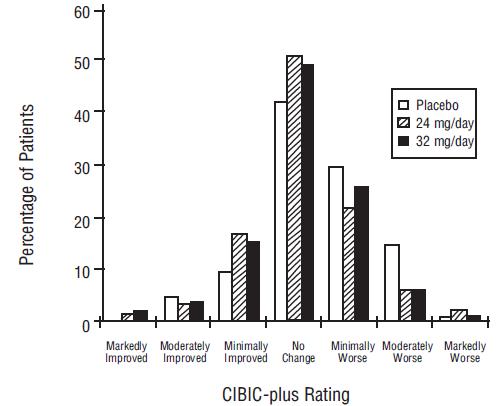
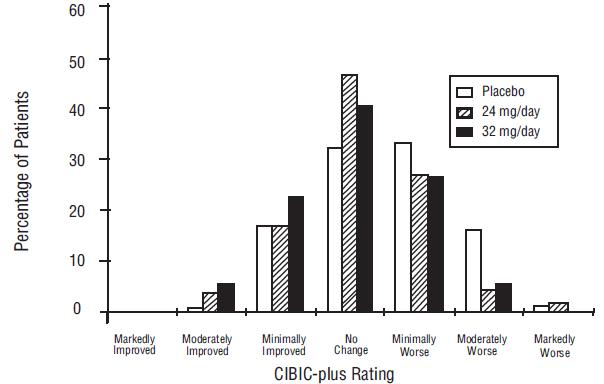
Figure 6: Distribution Of Cibic-plus Ratings At Week 26 (Galantamine Fig6)

Figure 6: Distribution Of Cibic-plus Ratings At Week 26 (Galantamine Fig6)
This appears to be a graph of the percentage of patients, divided by age group, and their corresponding CIBIC-plus rating (which presumably measures cognitive function). The graph includes three different dosage levels (0, 24mg/day, and 40&24mg/day) and a placebo group. While it is unclear what condition or medication is being examined, it is likely that the graph is showing how these different groups respond to the treatment in terms of improvement or worsening cognitive function.*
FDA Label Image

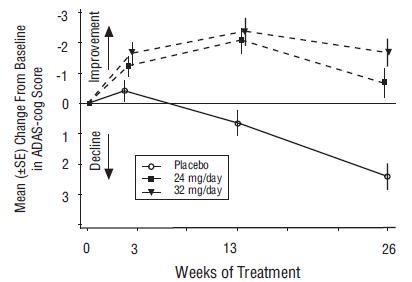
Figure 7: Time-course Of The Change From Baseline In Adas-cog Score For Patients Completing 26 Weeks Of Treatment (Galantamine Fig7)

FDA Label Image

Figure 8: Cumulative Percentage Of Patients Completing 26 Weeks Of Double-blind Treatment With Specified Changes From Baseline In Adas-cog Scores. The Percentages Of Randomized Patients Who Completed The Study Were: Placebo 87%, 24 mg/day 80%, And 32 mg/day 75%. (Galantamine Fig8)

FDA Label Image

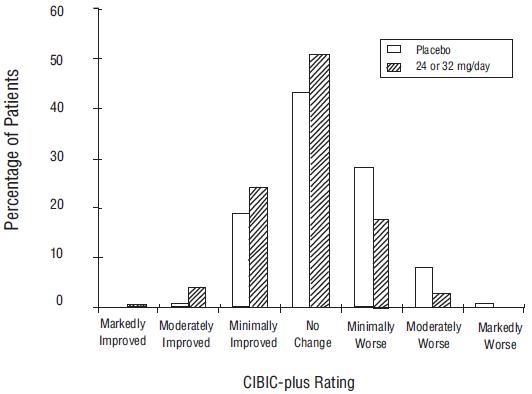
Figure 9: Distribution Of Cibic-plus Rating At Week 26 (Galantamine Fig9)

Figure 9:	Distribution Of Cibic-plus Rating At Week 26 (Galantamine Fig9)
The given text is a table with percentages and the CIBIC-plus Rating. The values in the table indicate the percentage of patients who showed improvement or worsening of their condition under specific doses of medication (specified in mg/day) compared to a placebo. The CIBIC-plus Rating is used for evaluating the effectiveness of the medication on the patient's cognitive and behavioral symptoms. Therefore, the text can be described as a clinical trial report about the effectiveness of a medication on cognitive and behavioral symptoms in patients.*
FDA Label Image

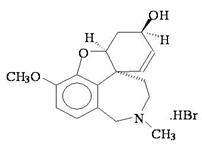
Chemical Structure (Galantamine Str)

* These product label images have been analyzed using experimental machine learning. Please verify findings with the primary label text.