Naproxen Sodium Tablet, Film Coated
Product Images NDC 65862-516

View Photos of Packaging, Regulatory Labels, and Product Appearance

Product Visual Gallery

This gallery contains 3 technical images submitted to the FDA as part of the official labeling for Naproxen Sodium (NDC 65862-516). Unlike standard consumer photos, these assets often include clinical data figures, molecular chemical structures, and official manufacturer packaging layouts.

As provided by Aurobindo Pharma Limited, these visuals offer a comprehensive scientific overview of the product's physical and chemical identity, aiding pharmacists and researchers in product verification and study.

FDA Label Image

Figure1 (Naproxen Fig1)
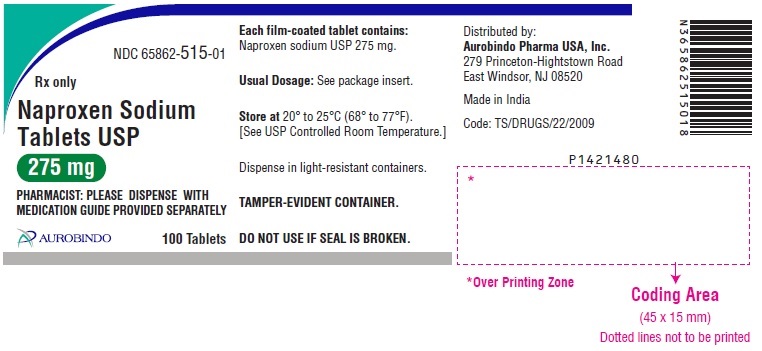
Figure1 (Naproxen Fig1)
Naproxen Sodium Tablets USP is a prescription medicine dispensed by pharmacists with a medication guide provided separately. Each film-coated tablet contains Naproxen Sodium USP 275 mg. It is recommended to store the medicine at 20° to 25°C (68° to 77°F) in a lght-resistant container. It is a TAMPER-EVIDENT CONTAINER, and it should not be used if the seal is broken. The medicine is distributed by Aurobindo Pharma USA, Inc. It is made in India. The code is TS/DRUGS/2212009. There is an overprinting zone and a coding area in the text.*
FDA Label Image

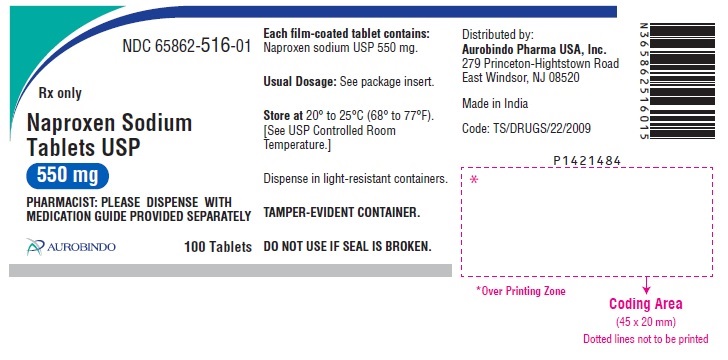
Package Label-principal Display Panel (550 mg (100 Tablet Bottle))

Package Label-principal Display Panel (550 mg (100 Tablet Bottle))
Each tablet contains 550 mg of naproxen sodium USP. This medication is distributed by Aurobindo Pharma USA Inc., with their address at 279 Princeton-Hightstown Road in East Windsor, New Jersey. The National Drug Code (NDC) for this product is 65862-516-01. The usual dosage depends on the package insert. Please note that it is necessary to dispense this medication guide separately and not to use if seal is broken. Tamper-evident containers are used to ensure the safety of the medication. The remaining text is not legible.*
FDA Label Image

Chemical Structure (Naproxen Str)

* These product label images have been analyzed using experimental machine learning. Please verify findings with the primary label text.