Irbesartan And Hydrochlorothiazide Tablet, Film Coated
Product Images NDC 65862-630

View Photos of Packaging, Regulatory Labels, and Product Appearance

Product Visual Gallery

This gallery contains 11 technical images submitted to the FDA as part of the official labeling for Irbesartan And Hydrochlorothiazide (NDC 65862-630). Unlike standard consumer photos, these assets often include clinical data figures, molecular chemical structures, and official manufacturer packaging layouts.

As provided by Aurobindo Pharma Limited, these visuals offer a comprehensive scientific overview of the product's physical and chemical identity, aiding pharmacists and researchers in product verification and study.

FDA Label Image

Figure 1a: Probability Of Achieving Sbp <140 Mmhg In Patients From Initial Therapy Studies V (week 8) And Vi (week 7)* (Irbehctz Fig1)
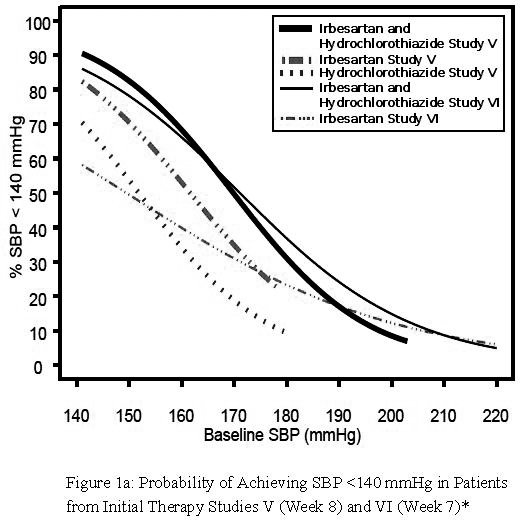
Figure 1a: Probability Of Achieving Sbp <140 Mmhg In Patients From Initial Therapy Studies V (week 8) And Vi (week 7)* (Irbehctz Fig1)
The text describes a study on the efficacy of Irbesartan, Hydrochlorothiazide, and a combination of both drugs in achieving a systolic blood pressure lower than 140 mmHg. The study is divided into two groups, Study V and Study VI, with different durations of therapy. The text includes a graph showing the probability of achieving the desired blood pressure level at different baseline levels.*
FDA Label Image

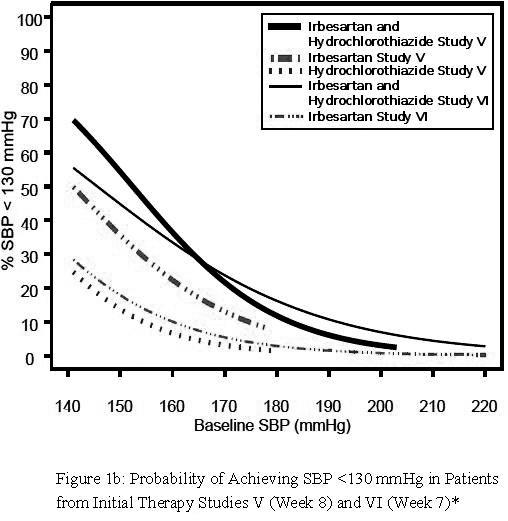
Figure 1b: Probability Of Achieving Sbp <130 Mmhg In Patients From Initial Therapy Studies V (week 8) And Vi (week 7)* (Irbehctz Fig2)

Figure 1b: Probability Of Achieving Sbp <130 Mmhg In Patients From Initial Therapy Studies V (week 8) And Vi (week 7)* (Irbehctz Fig2)
This appears to be a graph that shows the probability of patients achieving SBP (systolic blood pressure) below 130 mmHg in two medication studies (Study V and Study VI) at different baseline SBP levels. The medication used in the studies was Irbesartan and Hydrochlorothiazide.*
FDA Label Image

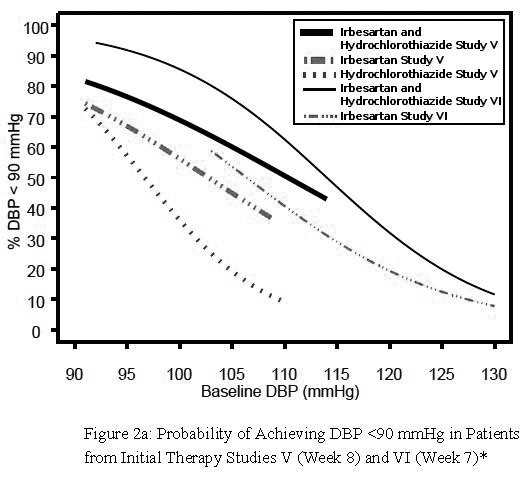
Figure 2a: Probability Of Achieving Dbp <90 Mmhg In Patients From Initial Therapy Studies V (week 8) And Vi (week 7)* (Irbehctz Fig3)

Figure 2a: Probability Of Achieving Dbp <90 Mmhg In Patients From Initial Therapy Studies V (week 8) And Vi (week 7)* (Irbehctz Fig3)
This text represents a figure (Figure 2a) that shows the probability of achieving a Diastolic Blood Pressure (DBP) lower than 90 mmHg in patients from different studies involving irbesartan and hydrochlorothiazide, after a certain number of weeks (Week 7 and Week 8). It seems to be related to the effectiveness of the drugs in lowering blood pressure, but a complete description cannot be provided without analyzing the details of the figure.*
FDA Label Image

Figure 2b: Probability Of Achieving Dbp <80 Mmhg In Patients From Initial Therapy Studies V (week 8) And Vi (week7)* (Irbehctz Fig4)

Figure 2b: Probability Of Achieving Dbp <80 Mmhg In Patients From Initial Therapy Studies V (week 8) And Vi (week7)* (Irbehctz Fig4)
This is a description of a study comparing the effectiveness of two drugs, Irbesartan and hydrochlorothiazide, in lowering diastolic blood pressure (DBP) in patients. The study is divided into two parts, Study V and Study VI, and the results are displayed in a graph that shows the probability of patients achieving a DBP of less than 80 mmHg after taking each drug for several weeks. The number of patients who achieved this goal is also listed in the text.*
FDA Label Image

Figure 3. Placebo-subtracted Reduction In Through Sesbp; Integrated Analysis (Irbehctz Fig5)

Figure 3. Placebo-subtracted Reduction In Through Sesbp; Integrated Analysis (Irbehctz Fig5)
The text provides a figure illustrating the placebo-subtracted reduction in trough SeSBP (systolic blood pressure) for different doses (in mg/day) of Irbesartan. The doses are listed as 150, 300, 450, 600, 750, and 900. There is no further context or information provided.*
FDA Label Image

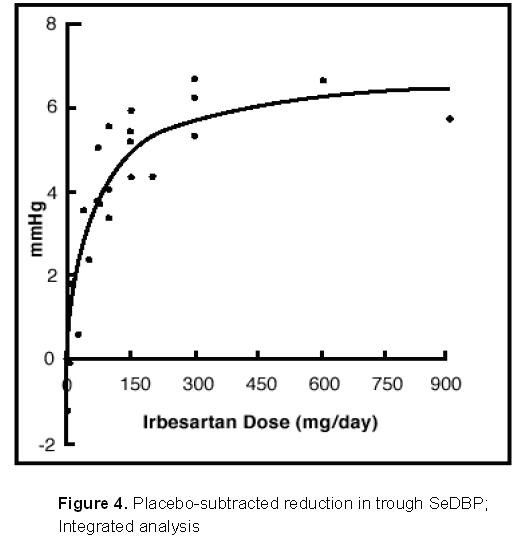
Figure 4. Placebo-subtracted Reduction In Through Sedbp; Integrated Analysis (Irbehctz Fig6)

Figure 4. Placebo-subtracted Reduction In Through Sedbp; Integrated Analysis (Irbehctz Fig6)
The text describes a chart or figure showing the dose of Irbesartan (a medication) in mg/day and the reduction in trough SeDBP (systolic blood pressure) in comparison with a placebo. It appears to be part of an integrated analysis.*
FDA Label Image

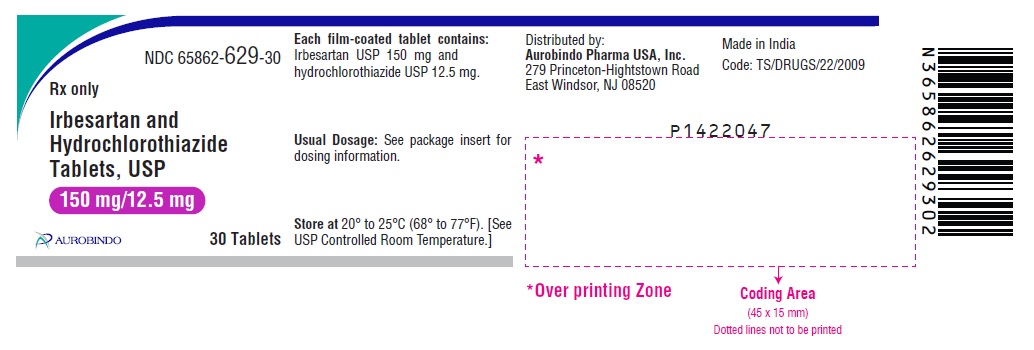
Package Label-principal Display Panel (150 mg/12.5 mg (30 Tablets Bottle))

Package Label-principal Display Panel (150 mg/12.5 mg (30 Tablets Bottle))
Each film-coated tablet contains 150 mg of Irbesartan USP and 12.5 mg of hydrochlorothiazide USP, distributed by Aurobindo Pharma USA, Inc. The tablets are packaged in a bottle containing 30 tablets and are meant for prescription use only. The recommended storage temperature is between 20° to 25°C (68° to 77°F). The product is made in India and the code on the package is TS/DRUES/22/2009.*
FDA Label Image

Package Label-principal Display Panel (300 mg/12.5 mg (30 Tablets Bottle))

Package Label-principal Display Panel (300 mg/12.5 mg (30 Tablets Bottle))
This is a description of a medication, containing irbesartan USP 300 mg and hydrochlorothiazide USP 2.5 mg, packaged in 30 tablets with controlled room temperature. The medication is distributed by Aurobindo Pharma USA, Inc. with the code TS/DRUGS/22/2009 and is Rx only. The package insert contains the necessary dosage instructions. The medication is stored at 20° to 25°C (68° to 77°F) and caution should be taken not to print on the dotted lines in the overprinting zone. The manufacturer of the medication is located in India.*
FDA Label Image

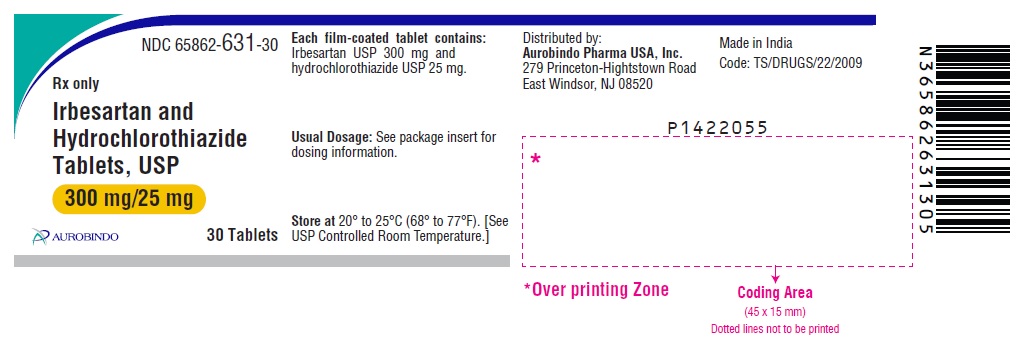
Package Label-principal Display Panel (300 mg/25 mg (30 Tablets Bottle))

Package Label-principal Display Panel (300 mg/25 mg (30 Tablets Bottle))
This is a description of a medication called Irbesartan and Hydrochlorothiazide. Each film-coated tablet contains 25 mg of hydrochlorothiazide USP and 300 mg of Irbesartan. This medication is distributed by Aurobindo Pharma USA, Inc. and is only available with a prescription. The user is directed to see the package insert for dosing information. The tablets should be stored at a controlled room temperature between 20° to 25°C (68° to 77°F). There is also some printing and coding information included.*
FDA Label Image

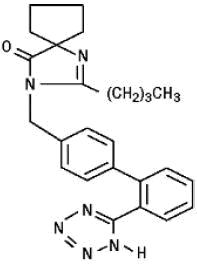
Chemical Structure (Irbehctz Str1)

FDA Label Image

Chemical Structure (Irbehctz Str2)

* These product label images have been analyzed using experimental machine learning. Please verify findings with the primary label text.