Sildenafil Tablet, Film Coated
Product Images NDC 65862-688

9 FDA label images from Aurobindo Pharma Limited · Packaging, Regulatory Labels, and Product Appearance

Product Visual Gallery

This gallery contains 9 technical images submitted to the FDA as part of the official labeling for Sildenafil (NDC 65862-688). Unlike standard consumer photos, these assets often include clinical data figures, molecular chemical structures, and official manufacturer packaging layouts.

As provided by Aurobindo Pharma Limited, these visuals offer a comprehensive scientific overview of the product's physical and chemical identity, aiding pharmacists and researchers in product verification and study.

FDA Label Image

Figure 6: Kaplan-meier Plot Of Mortality By Sildenafil Dose (Sildenafil Fig1)
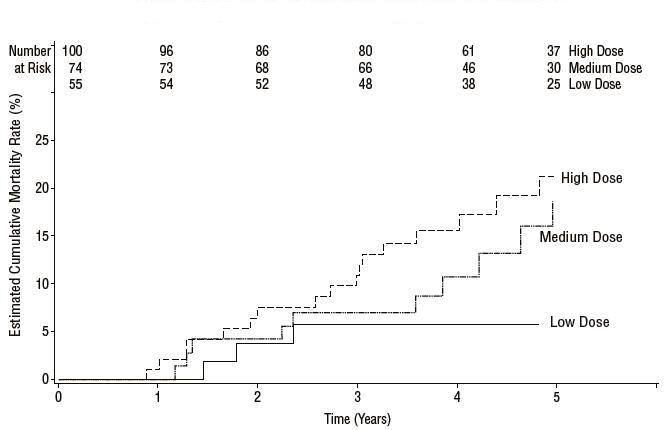
Figure 6: Kaplan-meier Plot Of Mortality By Sildenafil Dose (Sildenafil Fig1)
A line graph showing the estimated cumulative mortality rate (%) over time (years) for three dosage groups labeled High Dose, Medium Dose, and Low Dose. The graph includes data points and the number of subjects at risk over 5 years, illustrating increasing mortality rates with higher doses.*
FDA Label Image

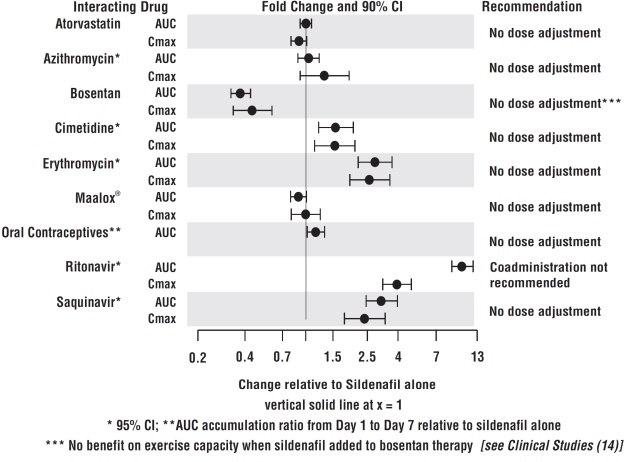
Figure 7. Effects Of Other Drugs On Sildenafil Pharmacokinetics (Sildenafil Fig2)

Figure 7. Effects Of Other Drugs On Sildenafil Pharmacokinetics (Sildenafil Fig2)
A chart depicting the fold change and 90% confidence interval of pharmacokinetic parameters AUC and Cmax for various drugs interacting with Sildenafil. It compares these changes relative to Sildenafil alone and includes dosing recommendations, highlighting that coadministration with Ritonavir is not recommended, while no dose adjustments are suggested for other drugs listed.*
FDA Label Image

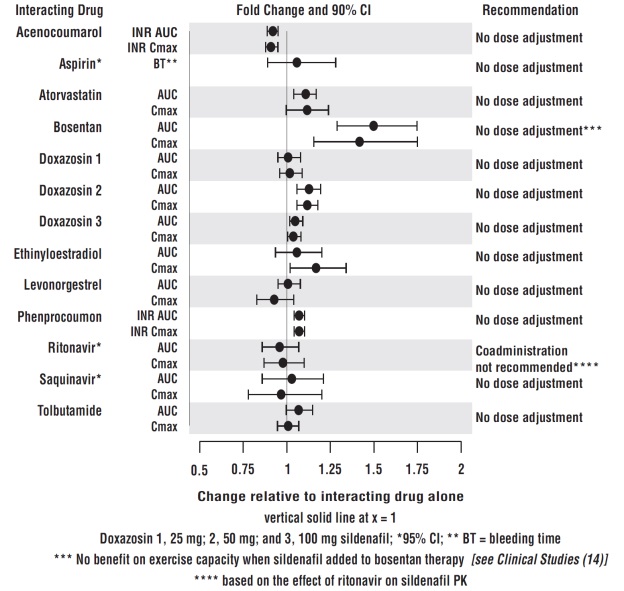
Figure 8 Effects Of Sildenafil On Other Drugs (Sildenafil Fig3)

Figure 8 Effects Of Sildenafil On Other Drugs (Sildenafil Fig3)
A scatter plot chart showing fold change and 90% confidence intervals for various pharmacokinetic parameters (AUC, Cmax, INR AUC, INR Cmax, bleeding time) of drugs interacting with sildenafil at doses of 25 mg, 50 mg, and 100 mg. The chart includes recommendations on dose adjustments for interacting drugs such as Acenocoumarol, Aspirin, Atorvastatin, Bosentan, Doxazosin, Ethinyloestradiol, Levonorgestrel, Phenprocoumon, Ritonavir, Saquinavir, and Tolbutamide. Notable notes highlight no dose adjustment for most drugs, with caution for coadministration with ritonavir and bosentan.*
FDA Label Image

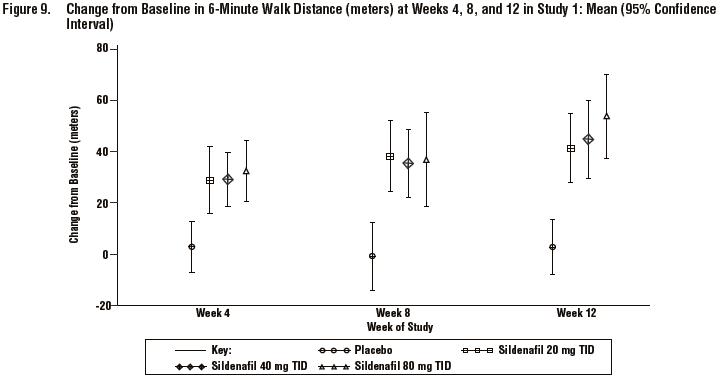
Figure 9. Change From Baseline In 6-minute Walk Distance (meters) At Weeks 4, 8, And 12 In Study 1: Mean (95% Confidence Interval) (Sildenafil Fig4)

Figure 9.  Change From Baseline In 6-minute Walk Distance (meters) At Weeks 4, 8, And 12 In Study 1: Mean (95% Confidence Interval) (Sildenafil Fig4)
A line graph titled 'Change from Baseline in 6-Minute Walk Distance (meters) at Weeks 4, 8, and 12 in Study 1' showing mean change with 95% confidence intervals. The x-axis represents weeks of study (4, 8, 12) and the y-axis shows change from baseline in meters. Data points compare Placebo, Sildenafil 20 mg TID, Sildenafil 40 mg TID, and Sildenafil 80 mg TID treatment groups.*
FDA Label Image

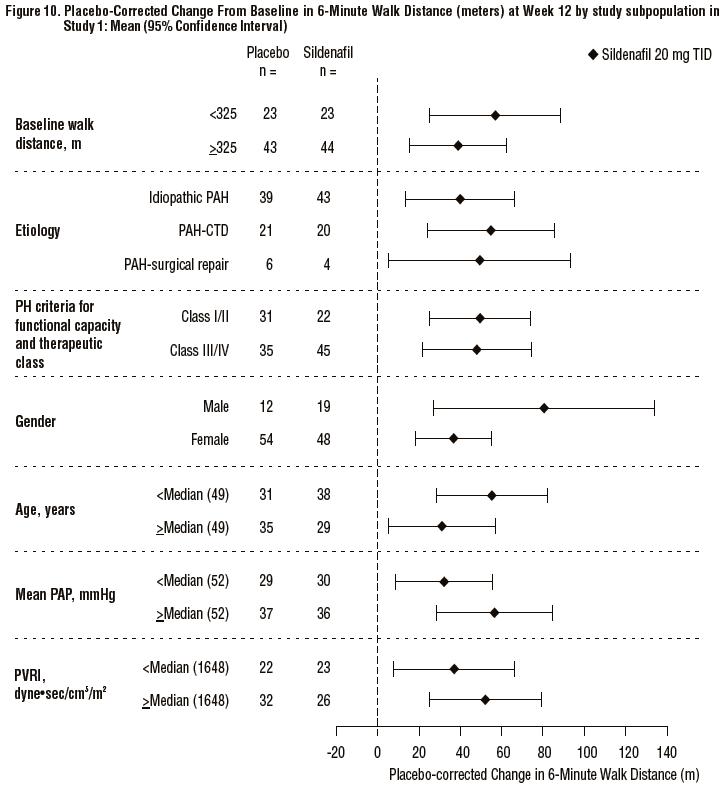
Figure 10. Placebo-corrected Change From Baseline In 6-minute Walk Distance (meters) At Week 12 By Study Subpopulation In Study 1: Mean (95% Confidence Interval) (Sildenafil Fig5)

Figure 10.  Placebo-corrected Change From Baseline In 6-minute Walk Distance (meters) At Week 12 By Study Subpopulation In Study 1: Mean (95% Confidence Interval) (Sildenafil Fig5)
A forest plot figure illustrating placebo-corrected changes from baseline in 6-minute walk distance at week 12 across various study subpopulations for Sildenafil 20 mg TID versus placebo. The chart compares mean values with 95% confidence intervals for subgroups defined by baseline walk distance, idiopathic PAH etiology, PH functional class, gender, age, mean PAP, and PVRI, depicting treatment effects in meters on the horizontal axis.*
FDA Label Image

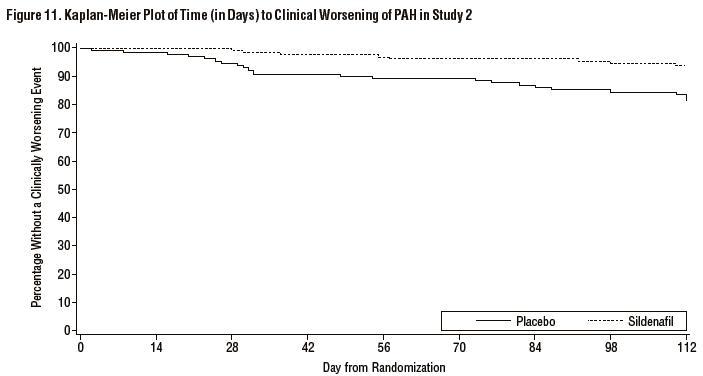
Figure 11. Kaplan-meier Plot Of Time (in Days) To Clinical Worsening Of Pah In Study 2 (Sildenafil Fig6)

Figure 11. Kaplan-meier Plot Of Time (in Days) To Clinical Worsening Of Pah In Study 2 (Sildenafil Fig6)
Kaplan-Meier plot showing the percentage of participants without clinical worsening of PAH over time in days from randomization. The graph compares two groups, one receiving placebo and the other Sildenafil, depicting the progression in a study labeled Study 2.*
FDA Label Image

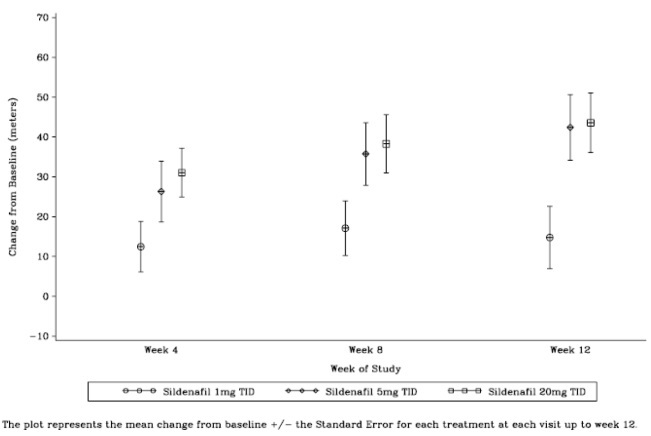
Figure 12. Mean Change From Baseline In Six Minute Walk (meters) By Visit To Week 12 – Itt Population Sildenafil Protocol A1481244 (Sildenafil Fig7)

Figure 12. Mean Change From Baseline In Six Minute Walk (meters) By Visit To Week 12 – Itt Population Sildenafil Protocol A1481244 (Sildenafil Fig7)
A line graph showing the mean change from baseline (in meters) over a 12-week study period, comparing Sildenafil 1 mg, 5 mg, and 20 mg taken three times daily (TID). The x-axis represents study weeks (4, 8, 12) and the y-axis shows change from baseline. Error bars represent standard error for each treatment at each visit.*
FDA Label Image

Figure 8 (Sildenafil Fig8)

Figure 8 (Sildenafil Fig8)
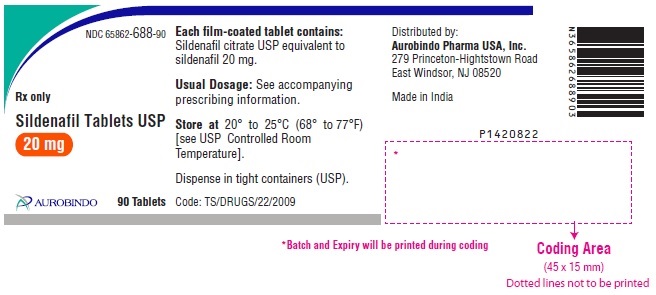
Sildenafil Tablets USP 20 mg oral film-coated tablet label from Aurobindo Pharma Limited. The label includes NDC 65862-688-90 and states each tablet contains sildenafil citrate USP equivalent to 20 mg sildenafil. It advises usual dosage according to prescribing information and storage at 20° to 25°C. The package contains 90 tablets and is distributed by Aurobindo Pharma USA, Inc.*
FDA Label Image

Chemical Structure (Sildenafil Str)

Chemical Structure (Sildenafil Str)
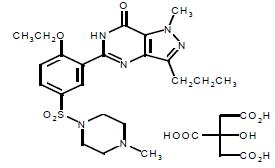
Chemical structure of Sildenafil, showing its molecular framework with key functional groups, including a piperazine ring, sulfonamide group, and heterocyclic rings, consistent with the active ingredient in the oral film-coated tablet form by Aurobindo Pharma Limited.*

* About these descriptions: Image descriptions on this page are generated by automated AI analysis of the product label images from the manufacturer's FDA label submission (SPL). They are provided for reference only and may contain errors or omissions. Always rely on the printed label itself and the official FDA labeling, and consult a pharmacist or healthcare professional with any questions about this product.