Pregabalin Capsule
Product Images NDC 65862-760

View Photos of Packaging, Regulatory Labels, and Product Appearance

Product Visual Gallery

This gallery contains 30 technical images submitted to the FDA as part of the official labeling for Pregabalin (NDC 65862-760). Unlike standard consumer photos, these assets often include clinical data figures, molecular chemical structures, and official manufacturer packaging layouts.

As provided by Aurobindo Pharma Limited, these visuals offer a comprehensive scientific overview of the product's physical and chemical identity, aiding pharmacists and researchers in product verification and study.

FDA Label Image

Pregabalin Equation (Pregabalin Equ)

Pregabalin Equation (Pregabalin Equ)
This text appears to be formulas used in the medical field to calculate certain values. The first formula calculates something based on the value of someone's age (in years) multiplied by their weight (in kg), where the result is not specified. The second formula calculates a value for CLCr (possibly creatinine clearance) based on the value of someone's serum creatinine level (in mg/dL) with a multiplication factor of 0.85 for female patients.*
FDA Label Image

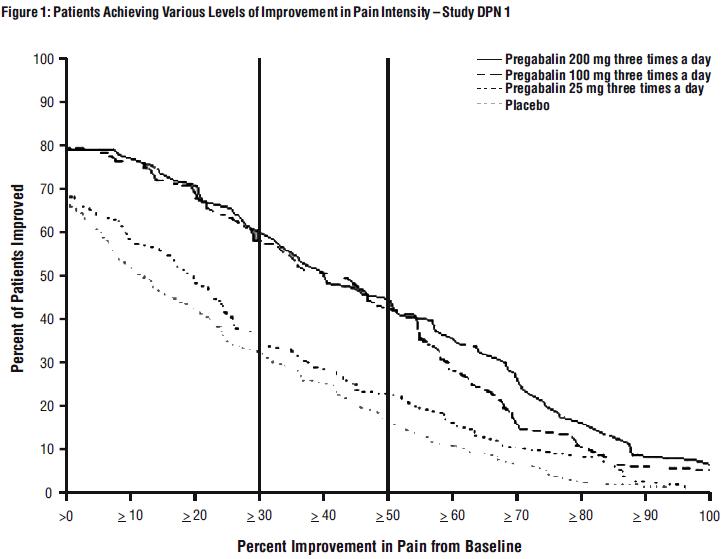
Figure 1: Patients Achieving Various Levels Of Improvement In Pain Intensity – Study Dpn 1 (Pregabalin Fig1)

Figure 1: Patients Achieving Various Levels Of Improvement In Pain Intensity – Study Dpn 1 (Pregabalin Fig1)
The text describes a figure called "Patients Achieving Various Levels of Improvement in Pain Intensity" from a study named "DPN 1". The figure shows the percentage of patients who achieved different levels of pain improvement. The figure includes four groups: Pregabalin 200 mg three times a day, Pregabalin 100 mg three times a day, Pregabalin 25 mg three times a day, and placebo. The percentage of patients improved ranges from 0 to 100.*
FDA Label Image

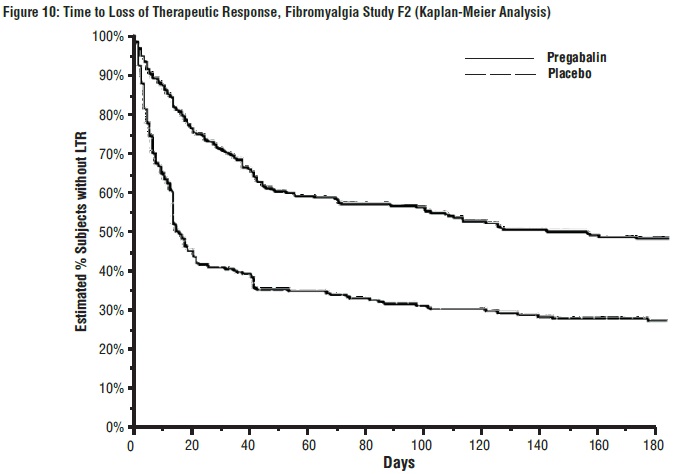
Figure 10 (Pregabalin Fig10)

Figure 10 (Pregabalin Fig10)
The figure shows the Kaplan-Meier analysis of the time to loss of therapeutic response for a fibromyalgia study F2. The percentage of subjects without LTR is estimated over time for the pregabalin and placebo groups. Not available.*
FDA Label Image

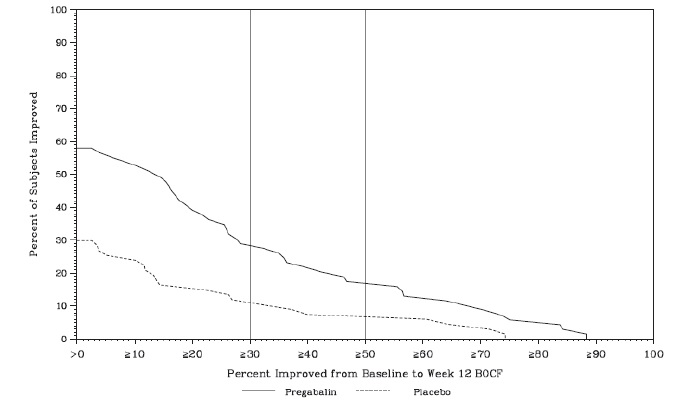
Figure 11 (Pregabalin Fig11)

FDA Label Image

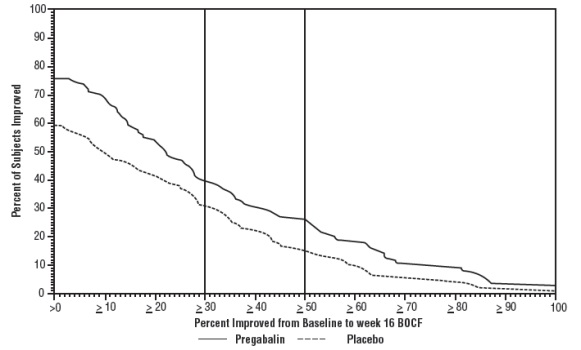
Figure 12 (Pregabalin Fig12)

FDA Label Image

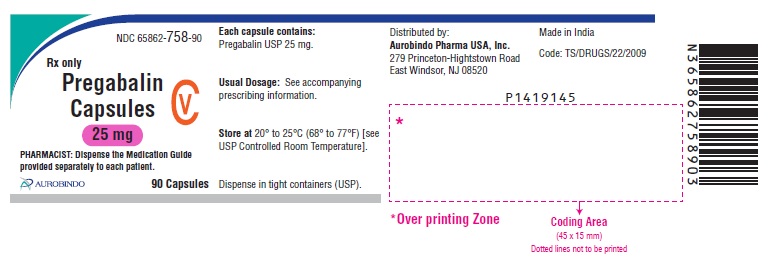
Package Label-principal Display Panel (25 mg (90 Capsules Bottle))

Package Label-principal Display Panel (25 mg (90 Capsules Bottle))
This is a description of Pregabalin capsules with a medication code of DG 6585275890. The medication is distributed by Aurobindo Pharma USA and each capsule contains 25 mg of Pregabain USP. The dosage information can be found in the accompanying prescribing information and the medication should be stored at a temperature range of 20° to 25° Celsius. It should be dispensed in a tight container. The remaining text is not readable.*
FDA Label Image

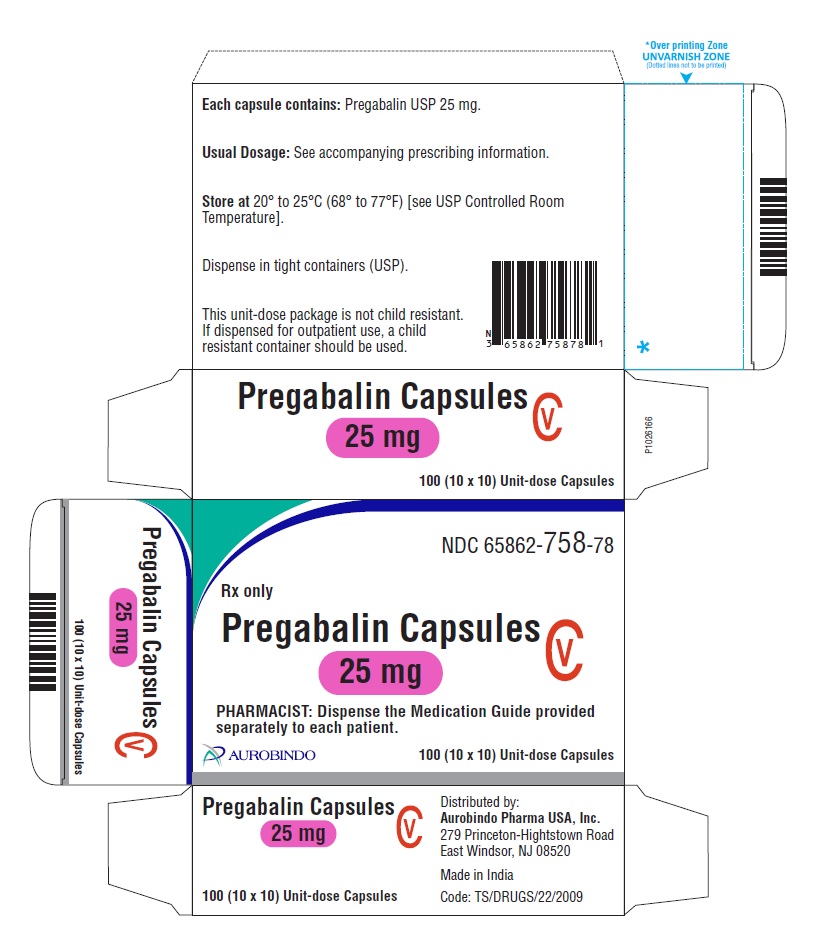
Package Label-principal Display Panel (25 mg 100 (10 x 10) Unit-dose Capsules)

Package Label-principal Display Panel (25 mg 100 (10 x 10) Unit-dose Capsules)
Each capsule contains 25mg of Pregabalin USP. The prescribing information should be consulted for the usual dosage. The capsules should be stored in tight containers at a temperature range of 20°C to 25°C. The unit-dose package is not child-resistant; dispensing for outpatient use requires a child-resistant container. The medication guide should be provided to each patient. The product is distributed by Aurobindo Pharma USA Inc. under Code TS/DRUGS/22/2009 and produced in India. No further information is available.*
FDA Label Image

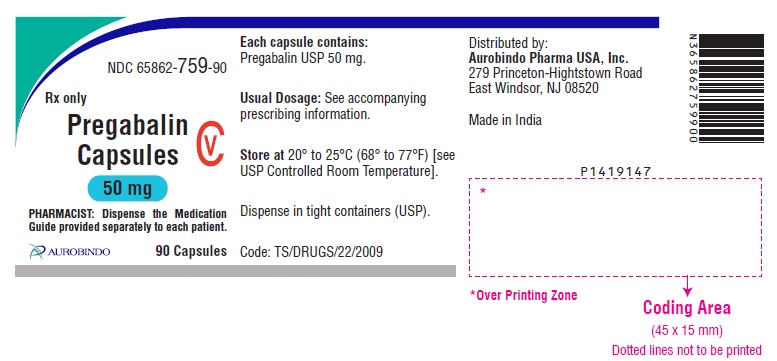
Package Label-principal Display Panel (50 mg (90 Capsules Bottle))

Package Label-principal Display Panel (50 mg (90 Capsules Bottle))
This is the description of a medicine - Pregabalin USP with a strength of 50mg in each capsule. It is distributed by Aurobindo Pharma USA, Inc. The medication needs to be dispensed by the pharmacist in tight containers as per USP guidelines. The dosage of the medicine is mentioned in the accompanying Pregabalin prescribing information. The medicine is available in the form of capsules and should be stored at a temperature between 20° to 25°C. The provided information also includes the name, address and NDC code of the manufacturer.*
FDA Label Image

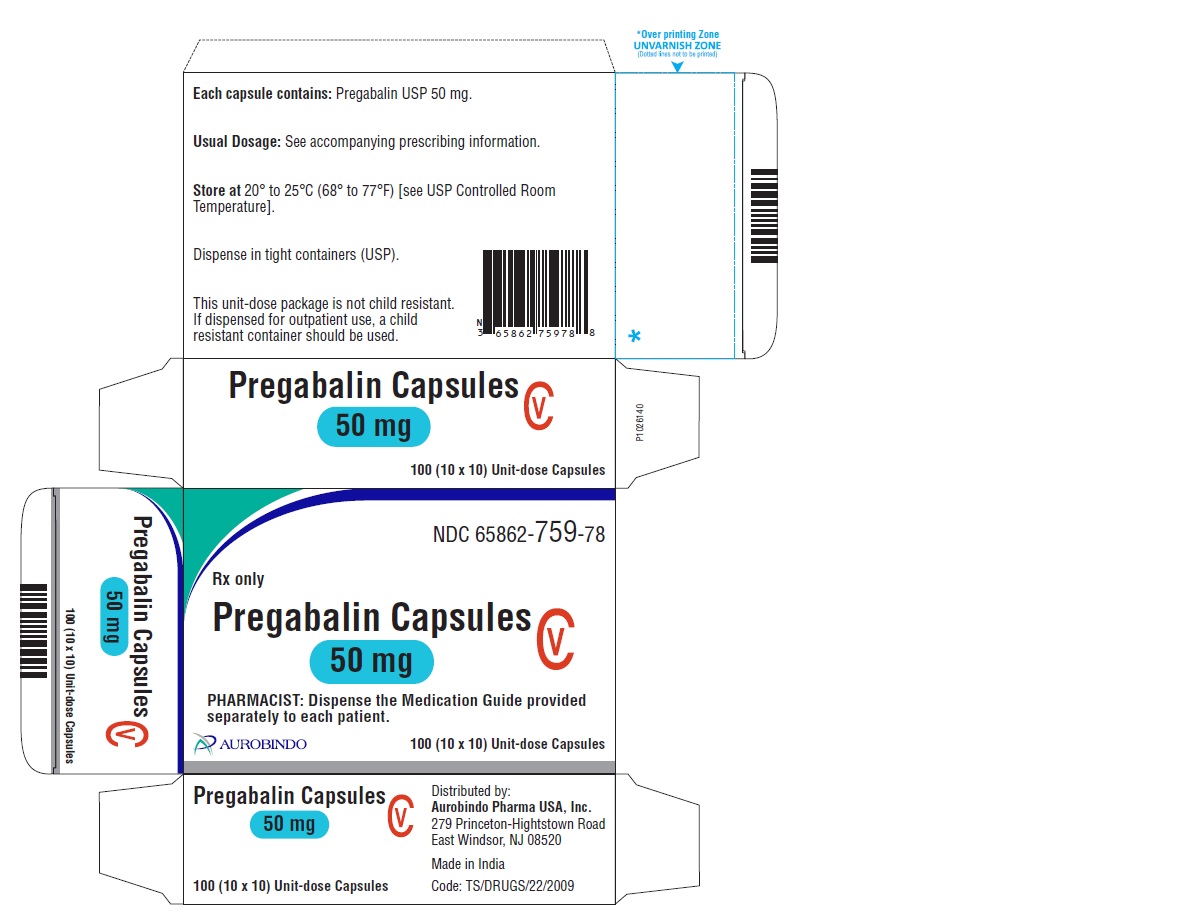
Package Label-principal Display Panel (50 mg 100 (10 x 10) Unit-dose Capsules)

FDA Label Image

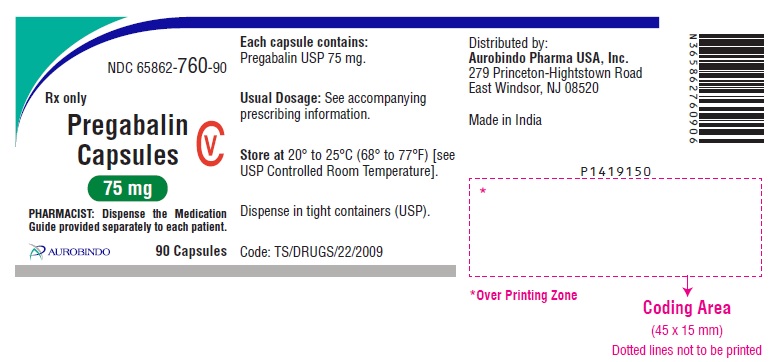
Package Label-principal Display Panel (75 mg (90 Capsules Bottle))

FDA Label Image

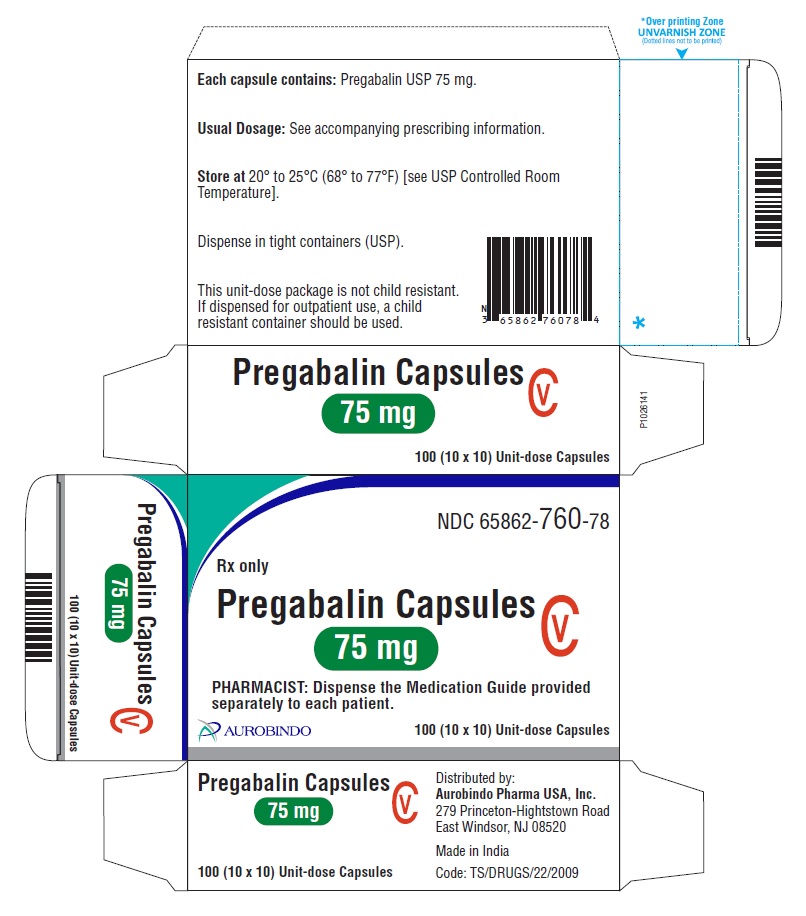
Package Label-principal Display Panel (75 mg 100 (10 x 10) Unit-dose Capsules)

Package Label-principal Display Panel (75 mg 100 (10 x 10) Unit-dose Capsules)
This is a description of Pregabalin Capsules medication in a unit-dose package of 100 capsules. Each capsule contains 75mg of Pregabalin USP. It is advised to store the medication at a controlled room temperature of 20°C to 25°C (68°F to 77°F) and dispense in tight containers. The prescription dosage should be referred to for administration instructions. If dispensed for outpatient use, a child-resistant container should be used. The capsules were distributed by a company called Aurobindo and made in India. There is additional text that is not readable due to errors.*
FDA Label Image

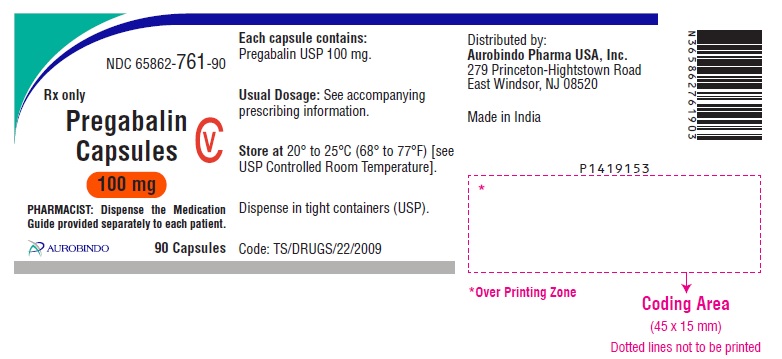
Package Label-principal Display Panel (100 mg (90 Capsules Bottle))

Package Label-principal Display Panel (100 mg (90 Capsules Bottle))
This is a description of a medication called Pregabalin, which comes in capsules containing 100mg of Pregabalin USP. The medication is only available with a prescription (Rx only), and each patient should receive a medication guide. The usual dosage is indicated in the accompanying prescribing information. The medication should be stored in a controlled room temperature of 20° to 25°C (68° to 77°F), and dispensed in tight containers (USP). It is distributed by Aurobindo Pharma USA, Inc. from East Windsor, NJ and made in India.*
FDA Label Image

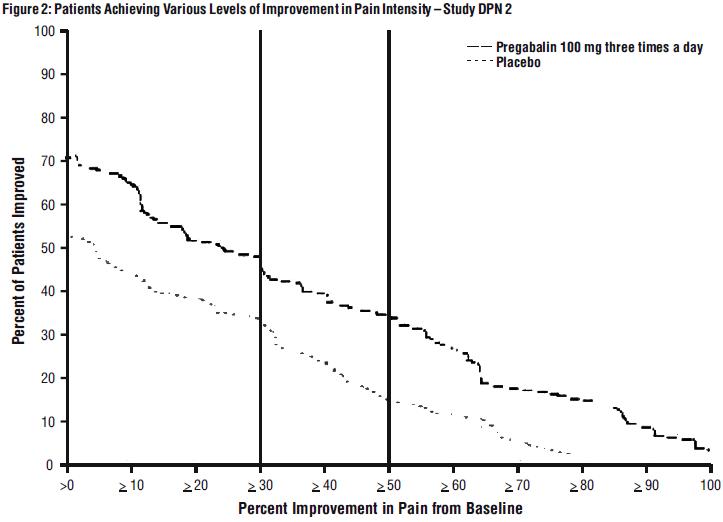
Figure 2: Patients Achieving Various Levels Of Improvement In Pain Intensity – Study (Pregabalin Fig2)

Figure 2: Patients Achieving Various Levels Of Improvement In Pain Intensity – Study (Pregabalin Fig2)
The figure shows the percentage of patients who achieved various levels of improvement in pain intensity in Study DPN 2, comparing Pregabalin 100 mg three times a day to a Placebo group. The x-axis represents the percentage of improvement in pain from baseline, and the y-axis represents the percentage of patients improved.*
FDA Label Image

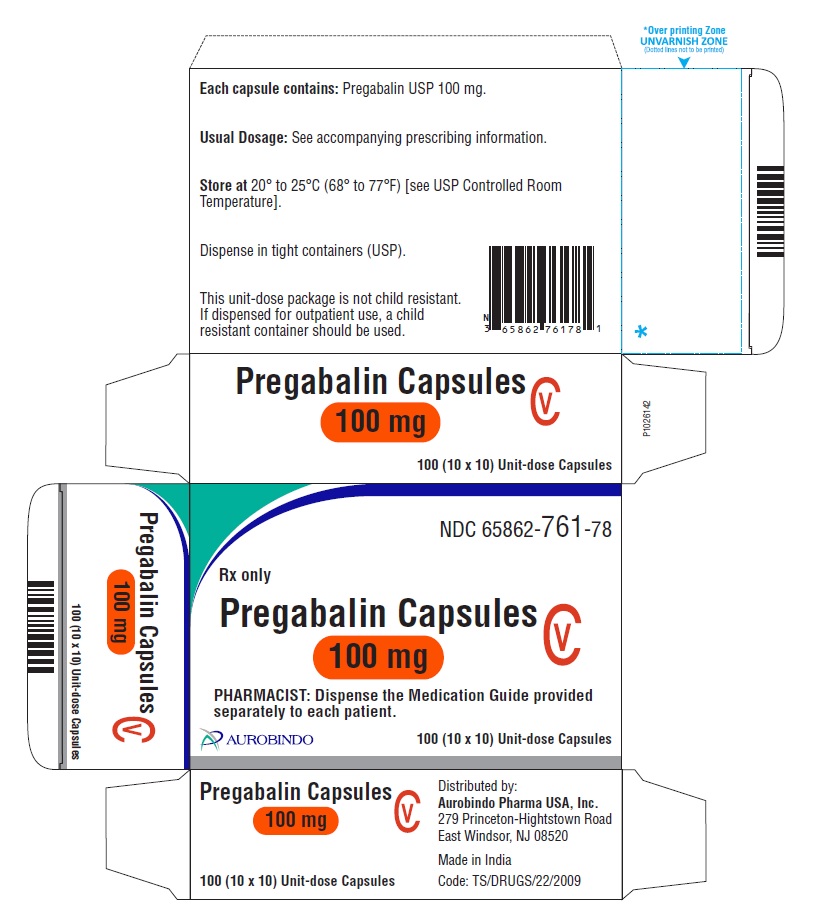
Package Label-principal Display Panel (100 mg 100 (10 x 10) Unit-dose Capsules)

Package Label-principal Display Panel (100 mg 100 (10 x 10) Unit-dose Capsules)
This is a description of Pregabalin Capsules containing 100 mg of the active ingredient. The usual dosage information can be found in the accompanying prescribing information. The capsules should be stored in tight containers at a temperature of 20-25°C. The package is not child resistant, so a child-resistant container should be used if dispensed for outpatient use. The information includes the unit-dose package details along with its barcode and drug code. The product is manufactured in India and distributed in the US by Pramaush Inc.*
FDA Label Image

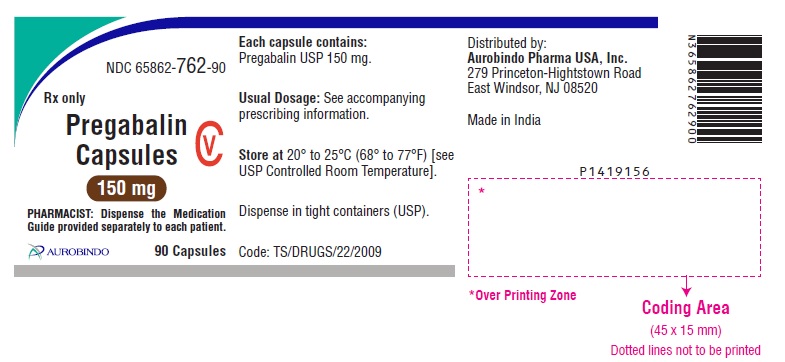
Package Label-principal Display Panel (150 mg (90 Capsules Bottle))

Package Label-principal Display Panel (150 mg (90 Capsules Bottle))
This is a description of a medication called Pregabalin, which comes in capsule form. The medication is only available through prescription and comes with a Medication Guide for each patient. The capsules are made by the pharmaceutical company Aurobindo Pharma USA, Inc. Each capsule contains 150mg of Pregabalin USP. The recommended dosage can be found in the accompanying prescribing information. The medication should be stored in a controlled room temperature environment and dispensed in a tight container. The label also includes a code and address for the manufacturer. The text also includes a note about not printing the dotted lines in a specific area.*
FDA Label Image

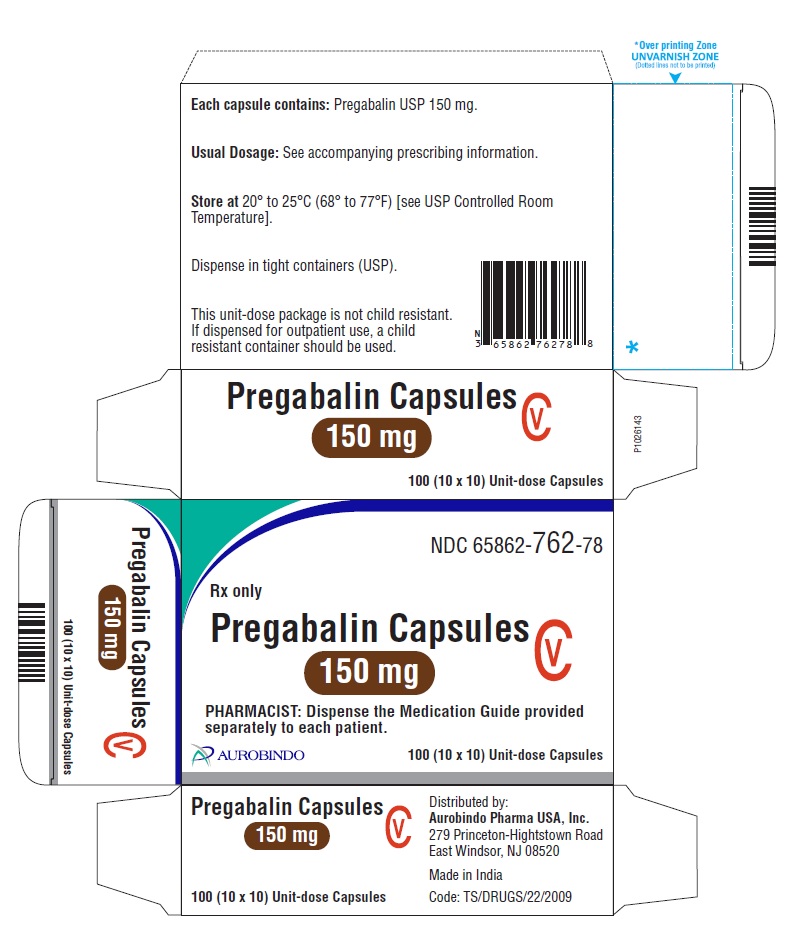
Package Label-principal Display Panel (150 mg 100 (10 x 10) Unit-dose Capsules)

Package Label-principal Display Panel (150 mg 100 (10 x 10) Unit-dose Capsules)
This is a description of Pregabalin Capsules containing 150mg of the active ingredient Pregabalin USP. The text provides information on the recommended dosage and storage conditions. It also notes that if the capsules are dispensed for outpatient use, a child-resistant container should be used. The package includes 100 unit-dose capsules and the medication guide should be provided separately to each patient. The distributor is R0 ush e m V in New Jersey, and the capsules are made in India.*
FDA Label Image

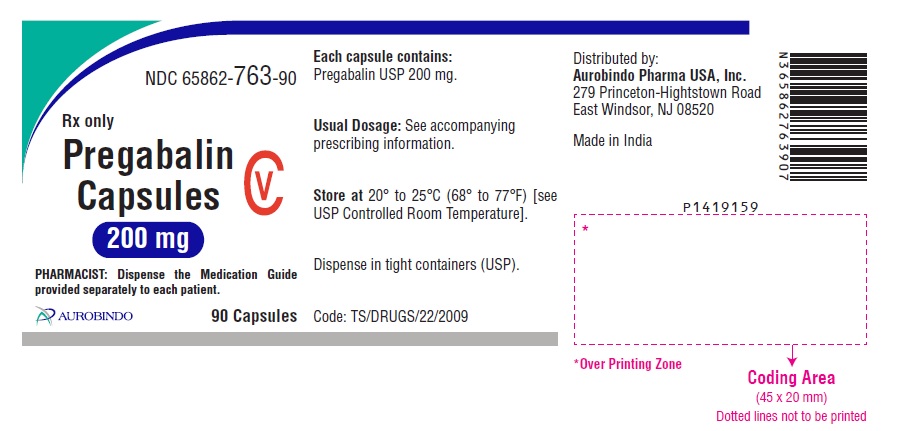
Package Label-principal Display Panel (200 mg (90 Capsules Bottle))

Package Label-principal Display Panel (200 mg (90 Capsules Bottle))
Each capsule of pregabalin USP contains 200 mg and is distributed by Aurobindo Pharma USA, Inc. The usual dosage information can be found in the accompanying prescribing information. Pharmacists are advised to dispense the Medication Guide separately to each patient, and the medication should be stored at 20° to 25°C (68° to 77°F). It must be dispensed in tight containers and the dotted lines in the overprinting zone should not be printed.*
FDA Label Image

Package Label-principal Display Panel (200 mg 100 (10 x 10) Unit-dose Capsules)

Package Label-principal Display Panel (200 mg 100 (10 x 10) Unit-dose Capsules)
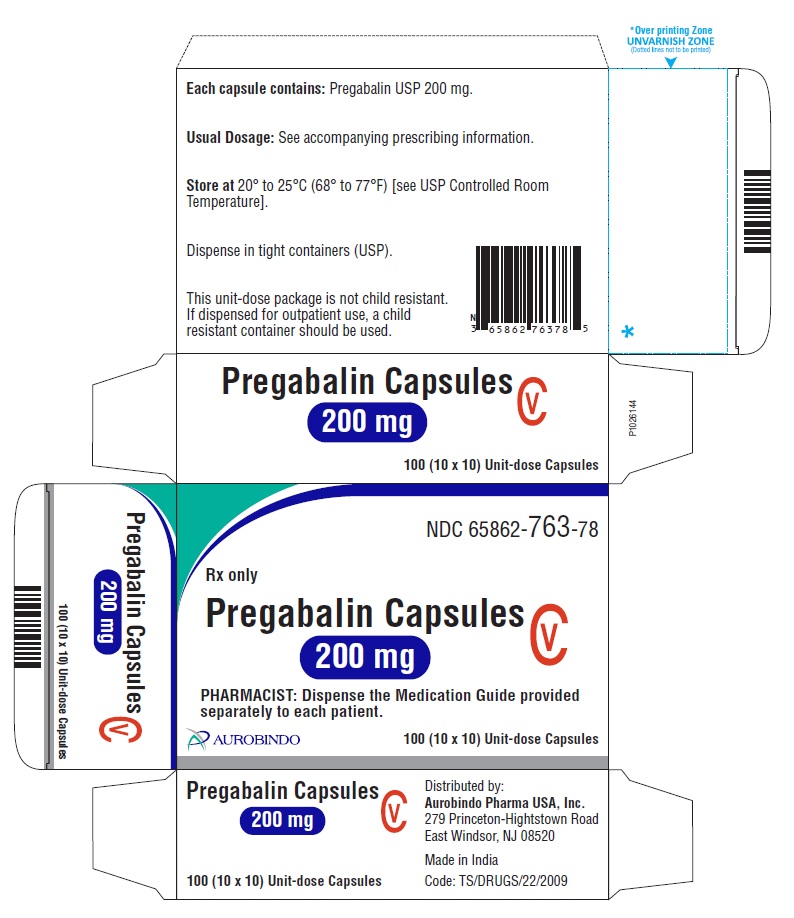
This is a label for Pregabalin Capsules containing 200mg of Pregabalin USP. The usual dosage has to be seen in the attached prescribing information. It needs to be stored at 20° to 25°C. It should be dispensed in tight containers and should be kept child-resistant. The package contains 100 unit-dose capsules that are distributed by Aurobindo Pharma USA, Inc. The label has the NDC code 65862-763-78 and it is meant for outpatient use only. The medication also comes with a Medication Guide for patients.*
FDA Label Image

Package Label-principal Display Panel (225 mg (90 Capsules Bottle))

FDA Label Image

Package Label-principal Display Panel (225 mg 100 (10 x 10) Unit-dose Capsules)

Package Label-principal Display Panel (225 mg 100 (10 x 10) Unit-dose Capsules)
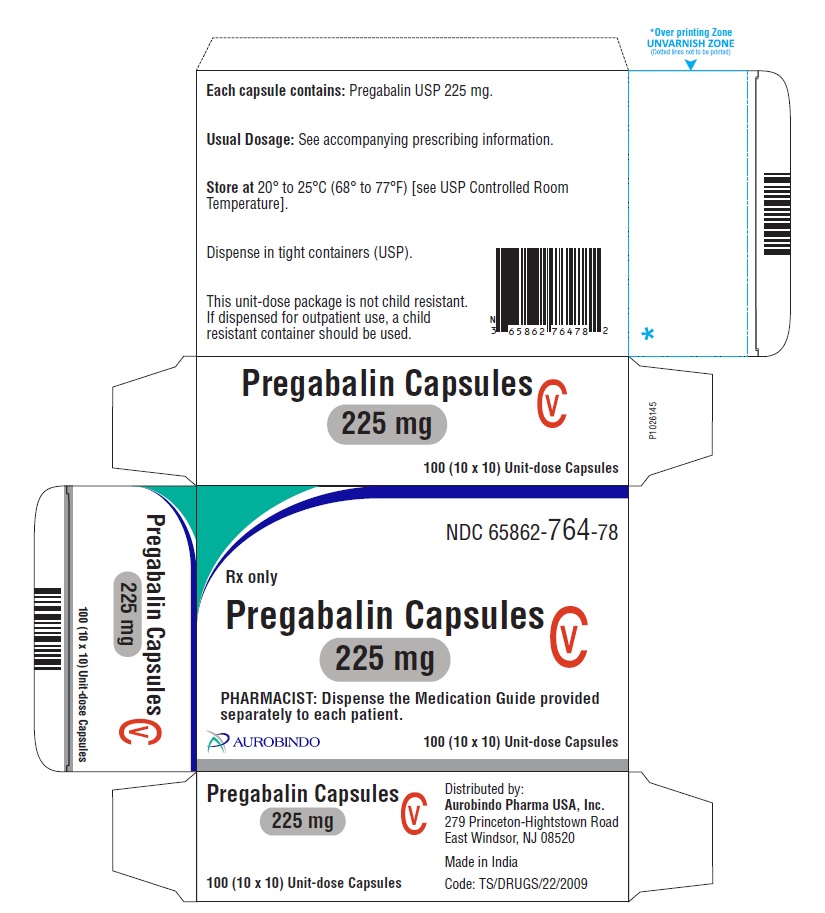
This is a description of Pregabalin capsules containing 225mg of the medication. The capsules are recommended for use as per accompanying prescribing information. The medication should be stored at 20° to 25°C (68° to 77°F) [see USP Controlled Room Temperature] and dispensed in a tight container (USP). The capsules are sold in a unit-dose package of 100 (10 x 10) capsules with an NDC code of 65862-764-78. The medication is distributed by Aurobindo Pharma USA, Inc. and made in India. There is additional text that appears to be unrelated and potentially randomly generated.*
FDA Label Image

Package Label-principal Display Panel (300 mg (90 Capsules Bottle))

Package Label-principal Display Panel (300 mg (90 Capsules Bottle))
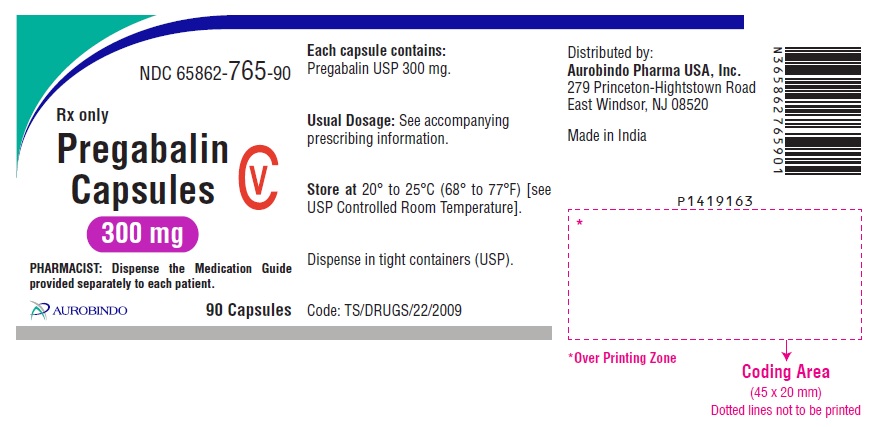
The text is a prescription drug label for Pregabalin capsules manufactured by Aurobindo Pharma USA, Inc. It includes information for pharmacists to dispense the medication, such as the usual dosage, storage conditions and precautions. Also, it contains the NDC code, number of capsules, strength, and a unique batch code. The label advises the pharmacist to dispense the medication guide to each patient.*
FDA Label Image

Package Label-principal Display Panel (300 mg 100 (10 x 10) Unit-dose Capsules)

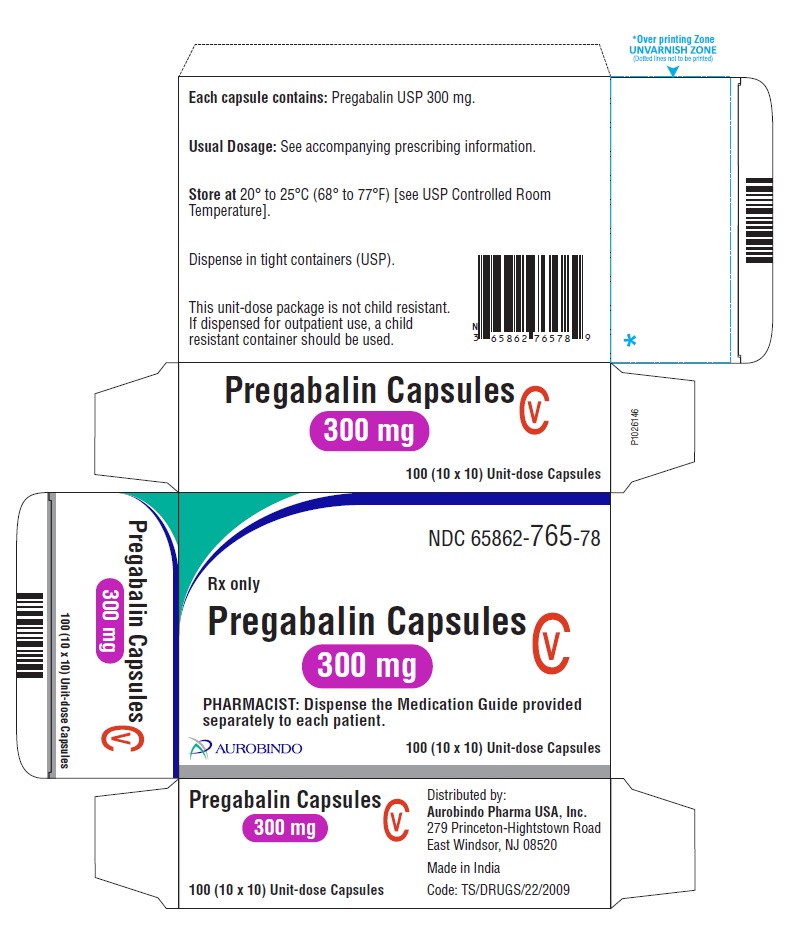
Package Label-principal Display Panel (300 mg 100 (10 x 10) Unit-dose Capsules)
This is a description of Pregabalin capsules, including their dosage, storage requirements, and packaging. The capsules contain 300mg of Pregabalin USP and are intended for outpatient use. They should be stored in a container at 20-25°C and dispensed in a tight container. The packaging is not child-resistant, and if used for outpatient purposes, a child-resistant container should be used. Additionally, a prescription is required to obtain these capsules, and the accompanying medication guide should be provided to each patient. The capsules are manufactured by Aurobindo Pharma USA and are made in India.*
FDA Label Image

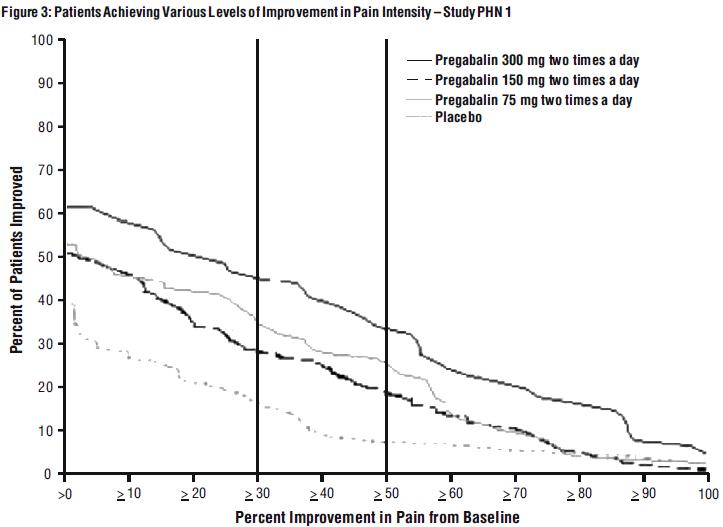
Figure 3: Patients Achieving Various Levels Of Improvement In Pain Intensity – Study Phn 1 (Pregabalin Fig3)

Figure 3: Patients Achieving Various Levels Of Improvement In Pain Intensity – Study Phn 1 (Pregabalin Fig3)
This is a figure showing the percentage of patients who achieved various levels of improvement in pain intensity in study PHN 1. The data includes patients taking pregabalin at different dosages (75 mg, 150 mg, and 300 mg, two times a day) as well as those receiving placebo. The percentage of patients who experienced improvement in pain intensity from baseline ranges from 10% to 100%.*
FDA Label Image

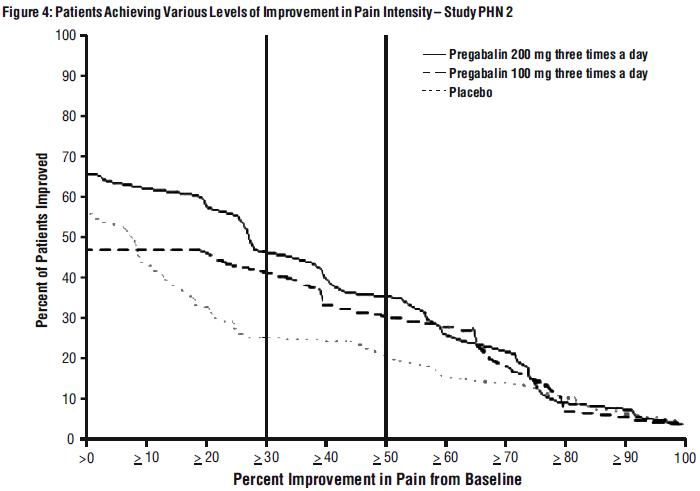
Figure 4: Patients Achieving Various Levels Of Improvement In Pain Intensity – Study Phn 2 (Pregabalin Fig4)

Figure 4: Patients Achieving Various Levels Of Improvement In Pain Intensity – Study Phn 2 (Pregabalin Fig4)
This is a graph depicting the percentage of patients achieving various levels of improvement in pain intensity in Study PHN 2. The X-axis shows the percent improvement in pain from baseline, and the Y-axis shows the percentage of patients improved. Three lines are shown on the graph: one for patients taking Pregabalin 200 mg three times a day, one for patients taking Pregabalin 100 mg three times a day, and one for patients taking Placebo.*
FDA Label Image

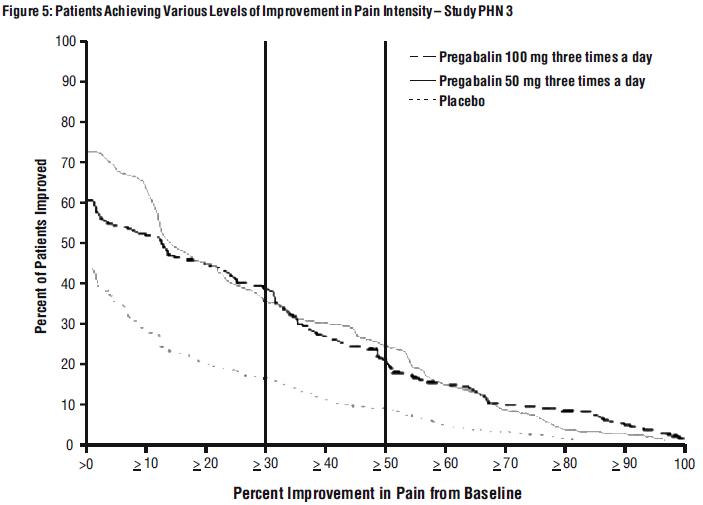
Figure 5: Patients Achieving Various Levels Of Improvement In Pain Intensity – Study Phn 3 (Pregabalin Fig5)

Figure 5: Patients Achieving Various Levels Of Improvement In Pain Intensity – Study Phn 3 (Pregabalin Fig5)
The text describes a figure showing the percentage of patients achieving different levels of improvement in pain intensity in a study named PHN 3, while being treated with Pregabalin at 50 mg and 100 mg three times a day, or a placebo. The X-axis shows the percentage of patients improved and the Y-axis shows the percent improvement in pain from baseline.*
FDA Label Image

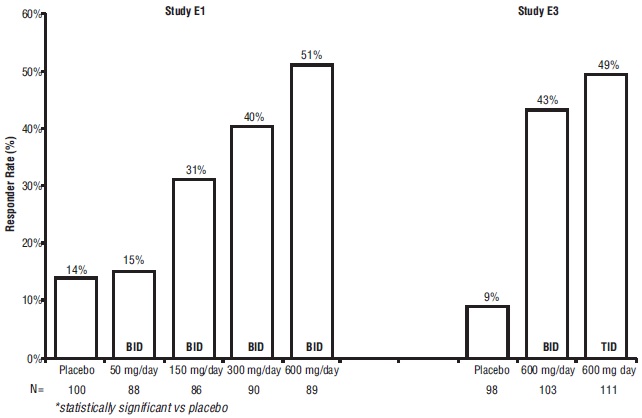
Figure6 (Pregabalin Fig6)

Figure6 (Pregabalin Fig6)
The text seems to be a set of tables with some numbers and symbols, followed by the text "statistically significant vs placebo". Therefore, the description of the content is related to a comparison between different studies or experiments on some subject, possibly related to a medical or scientific research. More context is needed to provide a more accurate description.*
FDA Label Image

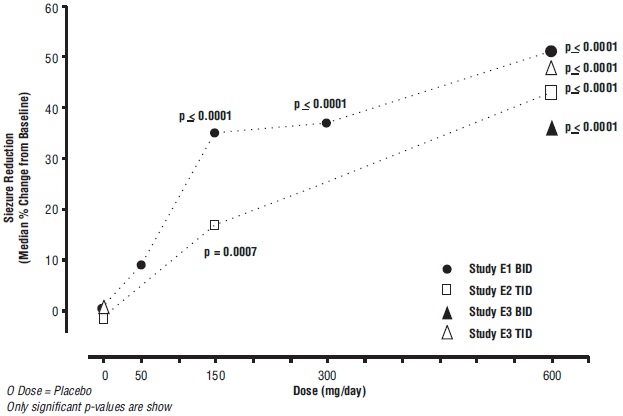
Figure7 (Pregabalin Fig7)

FDA Label Image

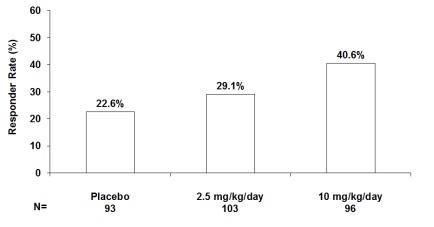
Figure 8 (Pregabalin Fig8)

Figure 8 (Pregabalin Fig8)
The text seems to represent a table or chart with several percentages under the label "Responder Rate". However, without additional context or headings, it is not possible to determine the meaning or context of the percentages provided.*
FDA Label Image

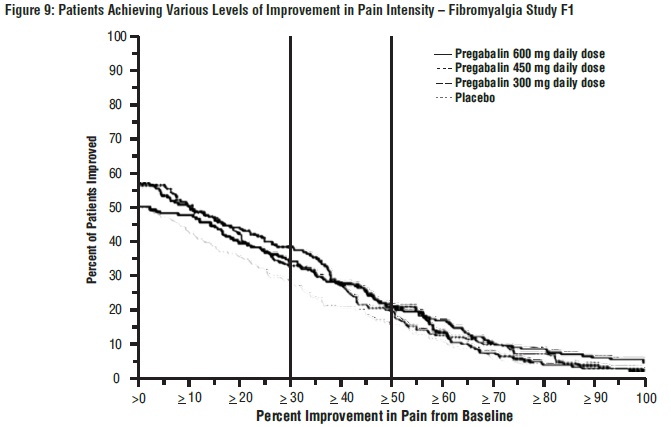
Figure 9 (Pregabalin Fig9)

Figure 9 (Pregabalin Fig9)
The figure shows the percentage of patients experiencing different levels of improvement in pain intensity in a study conducted for fibromyalgia. Four groups were tested: patients taking a daily dose of 600 mg of Pregabalin, those taking a daily dose of 450 mg of Pregabalin, those taking a daily dose of 300 mg of Pregabalin, and those taking a placebo. The x-axis reports the percentage of improvement in pain from the baseline, while the y-axis reports the percentage of patients that experienced that level of improvement. The graph shows that the higher the dose of Pregabalin, the more patients experienced an improvement in pain intensity.*
FDA Label Image

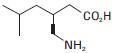
Chemical Structure (Pregabalin Str)

* These product label images have been analyzed using experimental machine learning. Please verify findings with the primary label text.