Ketorolac Tromethamine Solution/ Drops
Product Images NDC 65862-775

View Photos of Packaging, Regulatory Labels, and Product Appearance

Product Visual Gallery

This gallery contains 3 technical images submitted to the FDA as part of the official labeling for Ketorolac Tromethamine (NDC 65862-775). Unlike standard consumer photos, these assets often include clinical data figures, molecular chemical structures, and official manufacturer packaging layouts.

As provided by Aurobindo Pharma Limited, these visuals offer a comprehensive scientific overview of the product's physical and chemical identity, aiding pharmacists and researchers in product verification and study.

FDA Label Image

Package Label-principal Display Panel (0.4%)
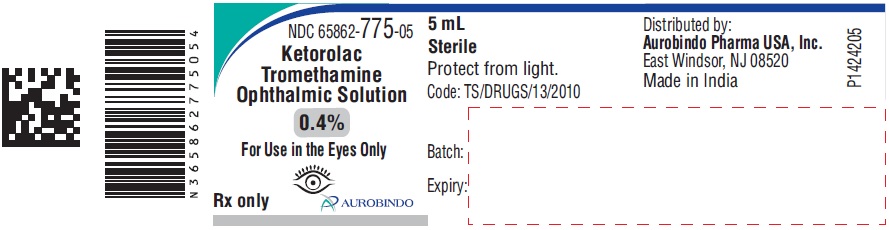
Package Label-principal Display Panel (0.4%)
This is a description for a product named "Rxonly" which comes in a 5mL sterile container to be used in the eyes only. The brand is Aurobindo and it was made in India. There is a batch number (P1424205) and an expiry date. Also, it is distributed by Aurobindo Pharma USA, Inc. in East Windsor, NJ. The concentration of the product is 0.4%.*
FDA Label Image

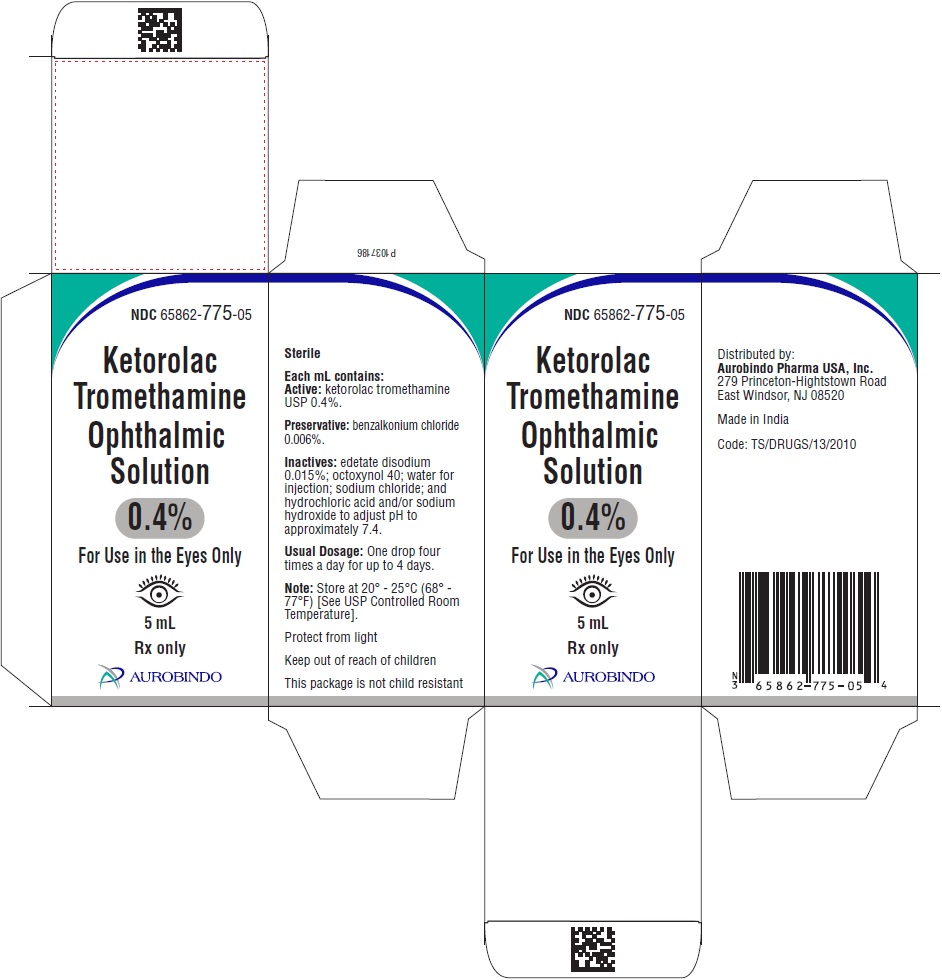
Package Label-principal Display Panel (0.4%)

Package Label-principal Display Panel (0.4%)
This is a description of Ketorolac Tromethamine Ophthalmic Solution. The solution is sterile and for use in the eyes only. It contains 0.4% ketorolac tromethamine USP and 0.006% benzalkonium chloride as a preservative. Other inactive ingredients include edetate disodium, octoxynol 40, water for injection, sodium chloride, and hydrochloric acid/sodium hydroxide to adjust pH. The recommended dosage is one drop four times a day for up to four days. The solution should be stored at 20°-25°C and protected from light. It is not child-resistant and should be kept out of reach of children. The product is distributed by Aurobindo Pharma USA, Inc. and is made in India. The NDC number is 65862-775-05.*
FDA Label Image

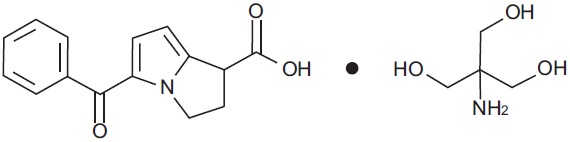
Ketorolac Tromethamine Chemical Structure (Ketorolac Str)

* These product label images have been analyzed using experimental machine learning. Please verify findings with the primary label text.