Levalbuterol Solution, Concentrate
Product Images NDC 65862-942

View Photos of Packaging, Regulatory Labels, and Product Appearance

Product Visual Gallery

This gallery contains 14 technical images submitted to the FDA as part of the official labeling for Levalbuterol (NDC 65862-942). Unlike standard consumer photos, these assets often include clinical data figures, molecular chemical structures, and official manufacturer packaging layouts.

As provided by Aurobindo Pharma Limited, these visuals offer a comprehensive scientific overview of the product's physical and chemical identity, aiding pharmacists and researchers in product verification and study.

FDA Label Image

Figure 1 (Levalbuterol Fig1)

Figure 1 (Levalbuterol Fig1)
A line graph titled 'Mean Percent Change from Baseline FEV1 on Day 1, Adults and Adolescents ≥12 years old.' The graph shows mean percent change in FEV1 (%) on the vertical axis and time in hours (0 to 8) on the horizontal axis, comparing four groups: Levalbuterol 1.25 mg, Levalbuterol 0.63 mg, Rac 2.5, and placebo (PBO). Each group is represented by distinct markers showing changes over 8 hours.*
FDA Label Image

Figure F (Levalbuterol Fig10)

Figure F (Levalbuterol Fig10)
An illustration showing a section of a compressor device with a labeled port for connecting nebulizer tubing. The image highlights the attachment point where the nebulizer tubing is connected to the compressor for respiratory inhalation use.*
FDA Label Image

Figure G.1, G.2 (Levalbuterol Fig11)

Figure G.1, G.2 (Levalbuterol Fig11)
Two black and white instructional diagrams showing the use of a respiratory solution inhalation device. Figure G.1 depicts a person using a mouthpiece attached to a reservoir. Figure G.2 shows the device with a face mask connected to the reservoir, demonstrating an alternate usage method.*
FDA Label Image

Package Label-principal Display Panel (1.25 mg/0.5 mL)

Package Label-principal Display Panel (1.25 mg/0.5 mL)
Label for Levalbuterol Inhalation Solution, USP Concentrate, 1.25 mg/0.5 mL, a respiratory inhalation solution supplied as a 0.5 mL sterile unit-dose vial. Distributed by Aurobindo Pharma USA, Inc. The label includes administration instructions, storage conditions, and a barcode.*
FDA Label Image

Package Label-principal Display Panel (1.25 mg/0.5 mL)

Package Label-principal Display Panel (1.25 mg/0.5 mL)
Levalbuterol Inhalation Solution, USP (Concentrate) 1.25 mg/0.5 mL sterile unit-dose vials by Aurobindo Pharma Limited. Label indicates 30 x 0.5 mL vials for oral inhalation only with dilution required before use. Includes storage instructions and distributor information for Aurobindo Pharma USA, Inc.*
FDA Label Image

Figure 2 (Levalbuterol Fig2)

Figure 2 (Levalbuterol Fig2)
A line graph titled 'Mean Percent Change from Baseline FEV1 on Day 29, Adults and Adolescents ≥12 years old,' depicting the mean change in FEV1 (%) over 8 hours post-dose for four groups: Lev 1.25 mg (n=57), Lev 0.63 mg (n=63), Rac 2.5 mg (n=65), and placebo (PBO, n=63). The x-axis represents time in hours from 0 to 8, and the y-axis shows percent change in FEV1 from -5 to 45% with a 15% reference line.*
FDA Label Image

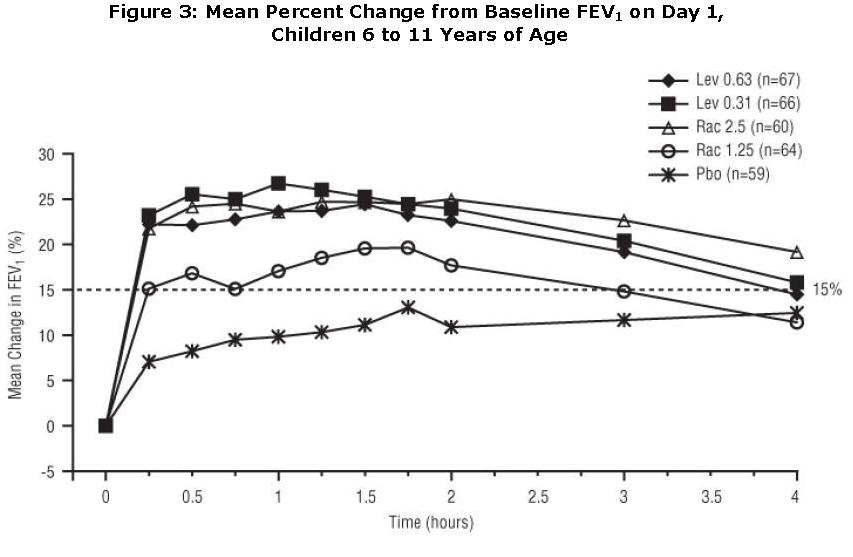
Figure 3 (Levalbuterol Fig3)

Figure 3 (Levalbuterol Fig3)
A line graph showing mean percent change from baseline FEV1 over 4 hours on Day 1 in children aged 6 to 11 years. The chart compares different treatments labeled Lev 0.63, Lev 0.31, Rac 2.5, Rac 1.25, and Pbo, with time in hours on the x-axis and mean change in FEV1 percentage on the y-axis.*
FDA Label Image

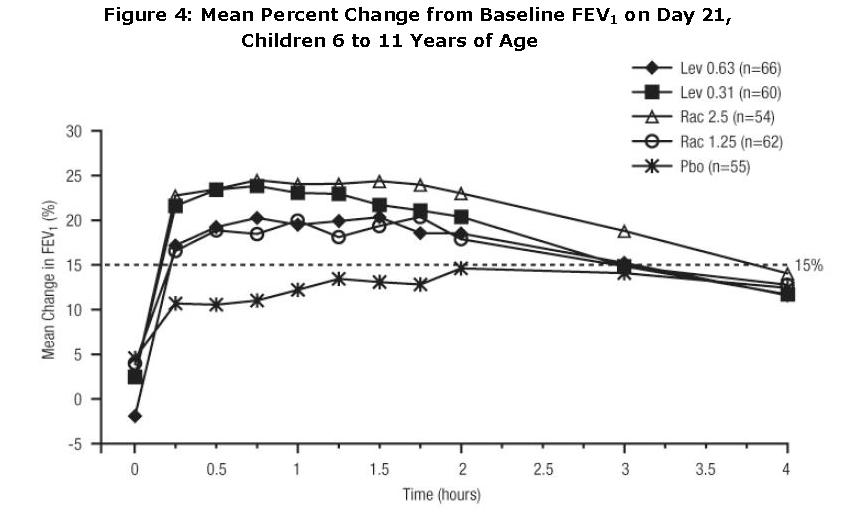
Figure 4 (Levalbuterol Fig4)

Figure 4 (Levalbuterol Fig4)
Line graph titled 'Mean Percent Change from Baseline FEV1 on Day 21, Children 6 to 11 Years of Age' showing mean percent change in FEV1 over 4 hours. The graph compares different treatments: Lev 0.63, Lev 0.31, Rac 2.5, Rac 1.25, and placebo (Pbo). Percent change in FEV1 is on the Y-axis (0 to 30%) and time in hours on the X-axis (0 to 4 hours). Each treatment group shows changes over time, with placebo having the lowest increase.*
FDA Label Image

Figure A (Levalbuterol Fig5)

Figure A (Levalbuterol Fig5)
An illustration diagram of a respiratory inhalation solution container, showing a vial with a neck and cap, likely representing the packaging form of LEVALBUTEROL solution concentrate. The figure is labeled as 'Figure A.'*
FDA Label Image

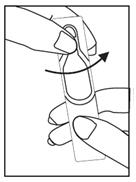
Figure B (Levalbuterol Fig6)

Figure B (Levalbuterol Fig6)
An instructional illustration showing a hand preparing a single-dose inhalation vial by twisting and opening the top to access the liquid medication inside the vial for respiratory inhalation use.*
FDA Label Image

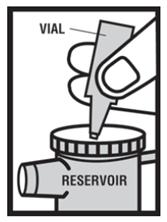
Figure C (Levalbuterol Fig7)

Figure C (Levalbuterol Fig7)
An instructional illustration showing a hand holding a vial above a reservoir opening, indicating the vial is being inserted or poured into the reservoir. The vial and reservoir are labeled accordingly to clarify the components involved in the process.*
FDA Label Image

Figure D (Levalbuterol Fig8)

Figure D (Levalbuterol Fig8)
An instructional illustration showing a cylindrical reservoir with a cap labeled 'RESERVOIR'. Arrows indicate rotating the reservoir, suggesting it needs to be turned or shaken as part of usage instructions.*
FDA Label Image

Figure E.1, E.2 (Levalbuterol Fig9)

Figure E.1, E.2 (Levalbuterol Fig9)
Illustrations showing two inhalation devices for LEVALBUTEROL solution concentrate 1.25 mg/.5 mL. Figure E.1 depicts a mouthpiece connected to a reservoir, and Figure E.2 shows a face mask attached to a reservoir, indicating options for respiratory inhalation delivery.*
FDA Label Image

Chemical Structure (Levalbuterol Str)

Chemical Structure (Levalbuterol Str)
Chemical structure of levalbuterol hydrochloride, depicting the molecular arrangement including aromatic rings, hydroxyl groups, amine, and hydrogen chloride components.*

* About these descriptions: Image descriptions on this page are generated by automated AI analysis of the product label images from the manufacturer's FDA label submission (SPL). They are provided for reference only and may contain errors or omissions. Always rely on the printed label itself and the official FDA labeling, and consult a pharmacist or healthcare professional with any questions about this product.