Risk Summary
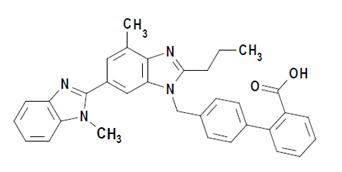
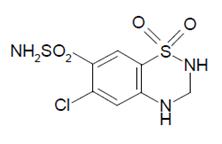
Telmisartan and hydrochlorothiazide can cause fetal harm when administered to a pregnant woman. Use of drugs that act on the renin-angiotensin system during the second and third trimesters of pregnancy reduces fetal renal function and increases fetal and neonatal morbidity and death (see Clinical Considerations). Most epidemiologic studies examining fetal abnormalities after exposure to antihypertensive use in the first trimester have not distinguished drugs affecting the renin-angiotensin system from other antihypertensive agents. Studies in rats and rabbits with telmisartan showed fetotoxicity only at maternally toxic doses (see Data). When pregnancy is detected, discontinue telmisartan and hydrochlorothiazide as soon as possible.
The estimated background risk of major birth defects and miscarriage for the indicated population is unknown. All pregnancies have a background risk of birth defect, loss, or other adverse outcomes. In the U.S. general population, the estimated background risk of major birth defects and miscarriage in clinically recognized pregnancies is 2% to 4% and 15% to 20%, respectively.
Clinical Considerations
Disease-associated maternal and/or embryo/fetal risk
Hypertension in pregnancy increases the maternal risk for pre-eclampsia, gestational diabetes, premature delivery, and delivery complications (e.g., need for cesarean section, and post-partum hemorrhage). Hypertension increases the fetal risk for intrauterine growth restriction and intrauterine death. Pregnant women with hypertension should be carefully monitored and managed accordingly.
Fetal/Neonatal adverse reactions
Telmisartan
Use of drugs that act on the RAS in the second and third trimesters of pregnancy can result in the following: oligohydramnios, reduced fetal renal function leading to anuria and renal failure, fetal lung hypoplasia, skeletal deformations, including skull hypoplasia, hypotension, and death. In the unusual case that there is no appropriate alternative to therapy with drugs affecting the renin-angiotensin system for a particular patient, apprise the mother of the potential risk to the fetus.
In patients taking telmisartan and hydrochlorothiazide during pregnancy, perform serial ultrasound examinations to assess the intra-amniotic environment. Fetal testing may be appropriate, based on the week of gestation. If oligohydramnios is observed, discontinue telmisartan and hydrochlorothiazide, unless it is considered lifesaving for the mother. Patients and physicians should be aware, however, that oligohydramnios may not appear until after the fetus has sustained irreversible injury.
Closely observe infants with histories of in utero exposure to telmisartan and hydrochlorothiazide for hypotension, oliguria, and hyperkalemia. If oliguria or hypotension occurs, support blood pressure and renal perfusion. Exchange transfusions or dialysis may be required as a means of reversing hypotension and replacing renal function [see Use in Specific Populations (8.4)].
Hydrochlorothiazide
Thiazides cross the placenta, and use of thiazides during pregnancy is associated with a risk of fetal or neonatal jaundice, thrombocytopenia, and possible other adverse reactions that have occurred in adults.
Data
Animal Data
Telmisartan and hydrochlorothiazide
A developmental toxicity study was performed in rats with telmisartan/hydrochlorothiazide doses of 3.2/1.0, 15/4.7, 50/15.6, and 0/15.6 mg/kg/day. Although the two higher dose combinations appeared to be more toxic (significant decrease in body weight gain) to the dams than either drug alone, there did not appear to be an increase in toxicity to the developing embryos.
Telmisartan
No teratogenic effects were observed when telmisartan was administered to pregnant rats at oral doses of up to 50 mg/kg/day and to pregnant rabbits at oral doses of up to 45 mg/kg/day. In rabbits, embryo lethality associated with maternal toxicity (reduced body weight gain and food consumption) was observed at 45 mg/kg/day (approximately 12 times the maximum recommended human dose [MRHD] of 80 mg on a mg/m2 basis). In rats, maternally toxic (reduced body weight gain and food consumption) telmisartan doses of 15 mg/kg/day (approximately 1.9 times the MRHD on a mg/m2 basis), administered during late gestation and lactation, were observed to produce adverse effects in neonates, including reduced viability, low birth weight, delayed maturation, and decreased weight gain. The no-observed effect doses for developmental toxicity in rats and rabbits, 5 and 15 mg/kg/day, respectively, are approximately 0.64 and 3.7 times, respectively, on a mg/m2 basis, the MRHD of telmisartan (80 mg/day).
Hydrochlorothiazide
Studies in which hydrochlorothiazide was administered to pregnant mice and rats during their respective periods of major organogenesis at doses up to 3,000 and 1,000 mg/kg/day, respectively (about 600 and 400 times the MRHD), provided no evidence of harm to the fetus.
Thiazides can cross the placenta, and concentrations reached in the umbilical vein approach those in the maternal plasma. Hydrochlorothiazide, like other diuretics, can cause placental hypoperfusion. It accumulates in the amniotic fluid, with reported concentrations up to 19 times that in umbilical vein plasma. Use of thiazides during pregnancy is associated with a risk of fetal or neonatal jaundice or thrombocytopenia. Since they do not prevent or alter the course of EPH (Edema, Proteinuria, Hypertension) gestosis (pre-eclampsia), these drugs should not be used to treat hypertension in pregnant women. The use of hydrochlorothiazide for other indications (e.g., heart disease) in pregnancy should be avoided.