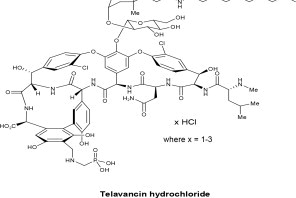
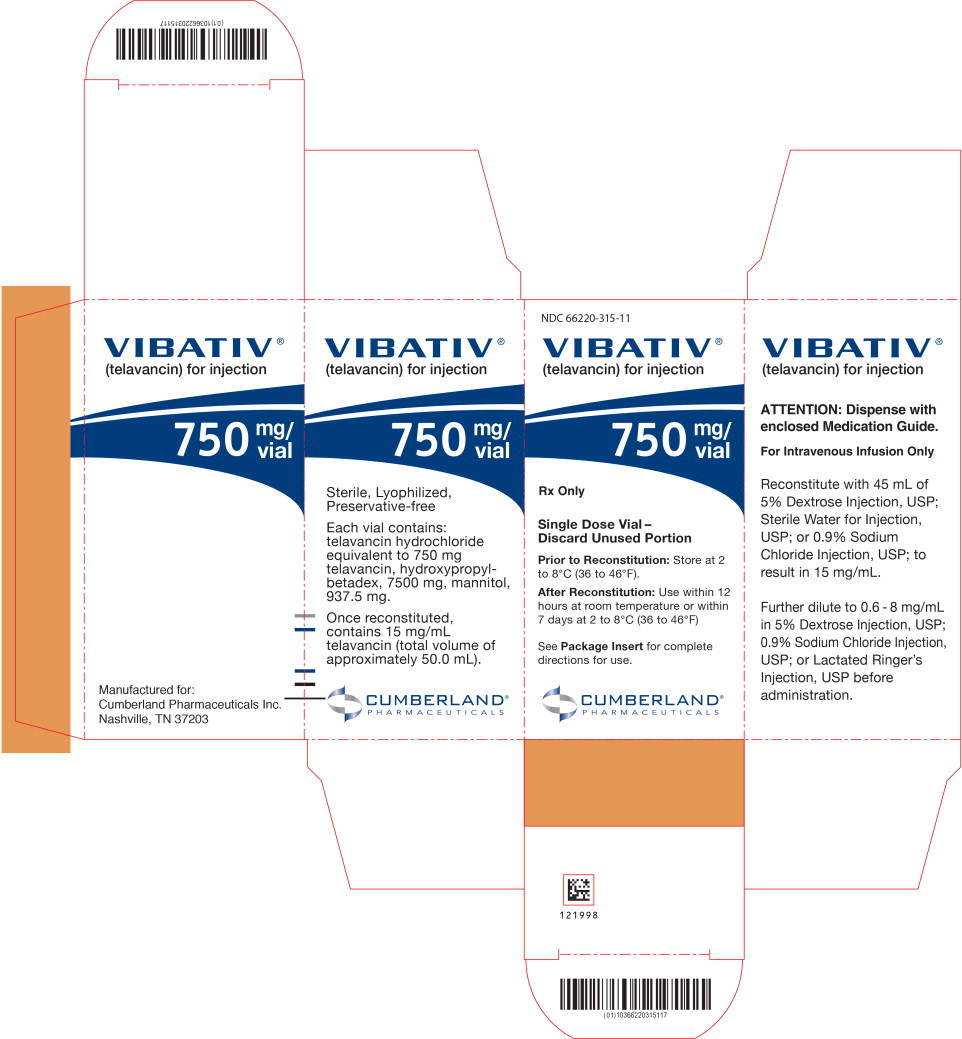
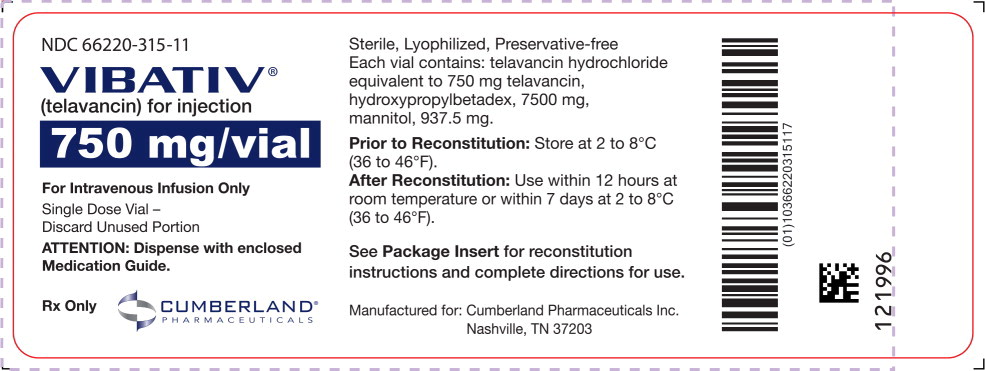
750 mg vial: Reconstitute the contents of a VIBATIV 750 mg vial with 45 mL of 5% Dextrose Injection, USP; Sterile Water for Injection, USP; or 0.9% Sodium Chloride Injection, USP. The resultant solution has a concentration of 15 mg/mL (total volume of approximately 50.0 mL).
To minimize foaming during product reconstitution, allow the vacuum of the vial to pull the diluent from the syringe into the vial. Do not forcefully inject the diluent into the vial. Do not forcefully shake the vial and do not shake final infusion solution.
The following formula can be used to calculate the volume of reconstituted VIBATIV solution required to prepare a dose:
Telavancin dose (mg) = 10 mg/kg or 7.5 mg/kg x patient weight (in kg) (see Table 1)
| Volume of reconstituted solution (mL) = | Telavancin dose (mg) |
| 15 mg/mL |
For doses of 150 to 800 mg, the appropriate volume of reconstituted solution must be further diluted in 100 to 250 mL prior to infusion. Doses less than 150 mg or greater than 800 mg should be further diluted in a volume resulting in a final concentration of 0.6 to 8 mg/mL. Appropriate infusion solutions include: 5% Dextrose Injection, USP; 0.9% Sodium Chloride Injection, USP; or Lactated Ringer's Injection, USP. The dosing solution should be administered by intravenous infusion over a period of 60 minutes.
Reconstitution time is generally under 2 minutes, but can sometimes take up to 20 minutes. Mix thoroughly to reconstitute and check to see if the contents have dissolved completely. Parenteral drug products should be inspected visually for particulate matter prior to administration. Discard the vial if the vacuum did not pull the diluent into the vial.
Since no preservative or bacteriostatic agent is present in this product, aseptic technique must be used in preparing the final intravenous solution. Studies have shown that the reconstituted solution in the vial should be used within 12 hours when stored at room temperature or within 7 days under refrigeration at 2 to 8°C (36 to 46°F). The diluted (dosing) solution in the infusion bag should be used within 12 hours when stored at room temperature or used within 7 days when stored under refrigeration at 2 to 8°C (36 to 46°F). However, the total time in the vial plus the time in the infusion bag should not exceed 12 hours at room temperature and 7 days under refrigeration at 2 to 8°C (36 to 46°F). The diluted (dosing) solution in the infusion bag can also be stored at -30 to -10°C (-22 to 14°F) for up to 32 days.
VIBATIV is administered intravenously. Because only limited data are available on the compatibility of VIBATIV with other IV substances, additives or other medications should not be added to VIBATIV single-dose vials or infused simultaneously through the same IV line. If the same intravenous line is used for sequential infusion of additional medications, the line should be flushed before and after infusion of VIBATIV with 5% Dextrose Injection, USP; 0.9% Sodium Chloride Injection, USP; or Lactated Ringer's Injection, USP.
Complicated Skin and Skin Structure Infections
The two Phase 3 cSSSI clinical trials (Trial 1 and Trial 2) for VIBATIV included 929 adult patients treated with VIBATIV at 10 mg/kg IV once daily. The mean age of patients treated with VIBATIV was 49 years (range 18-96). There was a slight male predominance (56%) in patients treated with VIBATIV, and patients were predominantly Caucasian (78%).
In the cSSSI clinical trials, <1% (8/929) patients who received VIBATIV died and <1% (8/938) patients treated with vancomycin died. Serious adverse events were reported in 7% (69/929) of patients treated with VIBATIV and most commonly included renal, respiratory, or cardiac events. Serious adverse events were reported in 5% (43/938) of vancomycin-treated patients, and most commonly included cardiac, respiratory, or infectious events. Treatment discontinuations due to adverse events occurred in 8% (72/929) of patients treated with VIBATIV, the most common events being nausea and rash (~1% each). Treatment discontinuations due to adverse events occurred in 6% (53/938) of vancomycin-treated patients, the most common events being rash and pruritus (~1% each).
The most common adverse events occurring in ≥10% of VIBATIV-treated patients observed in the VIBATIV Phase 3 cSSSI trials were taste disturbance, nausea, vomiting, and foamy urine.
Table 4 displays the incidence of treatment-emergent adverse drug reactions reported in ≥2% of patients treated with VIBATIV possibly related to the drug.
Table 4: Incidence of Treatment-Emergent Adverse Drug Reactions Reported in ≥2% of Patients Treated in cSSSI Trial 1 and Trial 2
|
| VIBATIV (N=929) | Vancomycin (N=938) |
| Body as a Whole
| | |
| Rigors
| 4%
| 2%
|
| Digestive System
| | |
| Nausea
| 27%
| 15%
|
| Vomiting
| 14%
| 7%
|
| Diarrhea
| 7%
| 8%
|
| Metabolic and Nutritional
| | |
| Decreased appetite
| 3%
| 2%
|
| Nervous System
| | |
| Taste disturbance* | 33%
| 7%
|
| Renal System
| | |
| Foamy urine
| 13%
| 3%
|
HABP/VABP
Two randomized, double-blind Phase 3 trials (Trial 1 and Trial 2) for VIBATIV included 1,503 adult patients treated with VIBATIV at 10 mg/kg IV once daily or vancomycin at 1 g IV twice daily. The mean age of patients treated with VIBATIV was 62 years (range 18-100) with 69% of the patients white and 65% male. In the combined VIBATIV group, 29% were VAP and 71% were HAP patients.
Table 5 summarizes deaths using Kaplan-Meier estimates at Day 28 as stratified by baseline creatinine clearance categorized into four groups. Patients with pre-existing moderate/severe renal impairment (CrCl ≤50 mL/min) who were treated with VIBATIV for HABP/VABP had increased mortality observed versus vancomycin in both the trials.
Table 5: 28-Day Mortality* Stratified by Baseline Creatinine Clearance- All-Treated Analysis Population
|
CrCl
(mL/min) | | Trial 1 | | | Trial 2 | |
| VIBATIV N (%) | Vancomycin N (%) | Difference (95% CI) | VIBATIV N (%) | Vancomycin N (%) | Difference (95% CI) |
| >80
| 143 (12.2%)
| 152 (14.1%)
| -1.8
(-9.6, 6.0)
| 181 (10.5%)
| 181 (18.7%)
| -8.2
(-15.5, -0.9)
|
| >50-80
| 88 (27.4%)
| 88 (17.7%)
| 9.7
(-2.7, 22.1)
| 96 (25.6%)
| 90 (27.1%)
| -1.5
(-14.4, 11.3)
|
| 30-50
| 80 (34.7%)
| 83 (23.1%)
| 11.5
(-2.5, 25.5)
| 62 (27.7%)
| 68 (23.7%)
| 4.0
(-11.1, 19.1)
|
| <30
| 61 (44.3%)
| 51 (37.3%)
| 7.0
(-11.2, 25.2)
| 38 (61.1%)
| 41 (42.1%)
| 19.0
(-2.9, 40.8)
|
Serious adverse events were reported in 31% of patients treated with VIBATIV and 26% of patients who received vancomycin. Treatment discontinuations due to adverse events occurred in 8% (60/751) of patients who received VIBATIV, the most common events being acute renal failure and electrocardiogram QTc interval prolonged (~1% each). Treatment discontinuations due to adverse events occurred in 5% (40/752) of vancomycin-patients, the most common events being septic shock and multi-organ failure (<1%).
Table 6 displays the incidence of treatment-emergent adverse drug reactions reported in ≥ 5% of HABP/VABP patients treated with VIBATIV possibly related to the drug.
Table 6: Incidence of Treatment Emergent Adverse Drug Reactions Reported in ≥5% of Patients Treated in HABP/VABP Trial 1 and Trial 2
| VIBATIV (N=751) | Vancomycin (N=752) |
| Nausea
| 5%
| 4%
|
| Vomiting
| 5%
| 4%
|
| Renal Failure Acute
| 5%
| 4%
|
Nephrotoxicity
Complicated Skin and Skin Structure Infections
In cSSSI trials, the incidence of renal adverse events indicative of renal impairment (increased serum creatinine, renal impairment, renal insufficiency, and/or renal failure) was 30/929 (3%) of VIBATIV-treated patients compared with 10/938 (1%) of vancomycin-treated patients. In 17 of the 30 VIBATIV-treated patients, these adverse events had not completely resolved by the end of the trials, compared with 6 of the 10 vancomycin-treated patients. Serious adverse events indicative of renal impairment occurred in 11/929 (1%) of VIBATIV-treated patients compared with 3/938 (0.3%) of vancomycin-treated patients. Twelve patients treated with VIBATIV discontinued treatment due to adverse events indicative of renal impairment compared with 2 patients treated with vancomycin.
Increases in serum creatinine to 1.5 times baseline occurred more frequently among VIBATIV-treated patients with normal baseline serum creatinine (15%) compared with vancomycin-treated patients with normal baseline serum creatinine (7%).
Fifteen of 174 (9%) VIBATIV-treated patients ≥65 years of age had adverse events indicative of renal impairment compared with 16 of 755 patients (2%) <65 years of age [see Use in Specific Populations (8.5)].
Hospital-Acquired and Ventilator-Associated Bacterial Pneumonia
In the HABP/VABP trials, the incidence of renal adverse events (increased serum creatinine, renal impairment, renal insufficiency, and/or renal failure) was 10% for VIBATIV vs. 8% for vancomycin. Of the patients who had at least one renal adverse event, 54% in each treatment group recovered completely, recovered with sequelae, or were improving from the renal AE at the last visit. Three percent of VIBATIV-treated patients and 2% of vancomycintreated patients experienced at least one serious renal adverse event. Renal adverse events resulted in discontinuation of study medication in 14 VIBATIV-treated patients (2%) and 7 vancomycin-treated patients (1%).
Increases in serum creatinine to 1.5 times baseline occurred more frequently among VIBATIV-treated patients (16%) compared with vancomycin-treated patients (10%).
Forty-four of 399 (11.0%) VIBATIV-treated patients ≥65 years of age had adverse events indicative of renal impairment compared with 30 of 352 patients (8%) <65 years of age [see Use in Specific Populations (8.5)].
Effects of Telavancin on Coagulation Test Parameters
Telavancin binds to the artificial phospholipid surfaces added to common anticoagulation tests, thereby interfering with the ability of the coagulation complexes to assemble on the surface of the phospholipids and promote clotting in vitro. These effects appear to depend on the type of reagents used in commercially available assays. Thus, when measured shortly after completion of an infusion of VIBATIV, increases in the PT, INR, aPTT, and ACT have been observed. These effects dissipate over time, as plasma concentrations of telavancin decrease.
Urine Protein Tests
Telavancin interferes with urine qualitative dipstick protein assays, as well as quantitative dye methods (e.g., pyrogallol red-molybdate). However, microalbumin assays are not affected and can be used to monitor urinary protein excretion during VIBATIV treatment.
Risk Summary
Based on findings in animal reproduction studies, VIBATIV may cause fetal harm. There are no available data on VIBATIV use in pregnant women to evaluate for a drug-associated risk of major birth defects, miscarriage, or adverse maternal or fetal outcomes. In embryo-fetal development studies in rats, rabbits, and minipigs, telavancin demonstrated the potential to cause limb and skeletal malformations when given intravenously during the period of organogenesis at doses providing approximately 1- to 2-fold the human exposure at the maximum recommended clinical dose (see Data). Advise pregnant women of the potential risk to a fetus. The estimated background risk of major birth defects and miscarriage for the indicated population is unknown.
All pregnancies have a background risk of birth defect, loss, or other adverse outcomes. In the U.S. general population, the estimated background risk of major birth defects and miscarriage in clinically recognized pregnancies is 2 to 4% and 15 to 20%, respectively.
Data
Animal Data
In embryo-fetal development studies in rats, rabbits, and minipigs, telavancin demonstrated the potential to cause limb and skeletal malformations when given intravenously during the period of organogenesis at doses up to 150, 45, or 75 mg/kg/day, respectively. These doses resulted in exposure levels approximately 1- to 2-fold the human exposure (AUC) at the maximum recommended clinical dose. Malformations observed at <1% (but absent or at lower rates in historical or concurrent controls), included brachymelia (rats and rabbits), syndactyly (rats, minipigs), adactyly (rabbits), and polydactyly (minipigs). Additional findings in rabbits included flexed front paw and absent ulna, and in the minipigs included misshapen digits and deformed front leg. Fetal body weights were decreased in rats.
In a prenatal/perinatal development study, pregnant rats received intravenous telavancin at up to 150 mg/kg/day (approximately the same AUC as observed at the maximum clinical dose) from the start of organogenesis through lactation. Offspring showed decreases in fetal body weight and an increase in the number of stillborn pups. Brachymelia was also observed. Developmental milestones and fertility of the pups were unaffected.
Risk Summary
There are no data on the presence of telavancin in human milk, the effects on the breastfed child, or the effects on milk production. The developmental and health benefits of breastfeeding should be considered along with the mother's clinical need for VIBATIV and any potential adverse effects on the breastfed child from VIBATIV or from the underlying maternal conditions.
Pregnancy Testing
Verify pregnancy status in females of reproductive potential prior to initiating VIBATIV.
Contraception
Females
VIBATIV may cause fetal harm when administered to a pregnant woman [see Use in Specific Populations (8.1)]. Advise females of reproductive potential to use effective contraception during treatment and for 2 days after the final dose.
Infertility
Males
Based on findings in rats, VIBATIV may impair male fertility [see Nonclinical Toxicology (13.1)]. The effect on fertility was reversible in rats.
Cardiac Electrophysiology
The effect of telavancin on cardiac repolarization was assessed in a randomized, double-blind, multiple-dose, positive-controlled, and placebo-controlled, parallel study (n=160). Healthy subjects received VIBATIV 7.5 mg/kg, VIBATIV 15 mg/kg, positive control, or placebo infused over 60 minutes once daily for 3 days. Based on interpolation of the data from VIBATIV 7.5 mg/kg and 15 mg/kg, the mean maximum baseline-corrected, placebocorrected QTc prolongation at the end of infusion was estimated to be 12-15 msec for VIBATIV 10 mg/kg and 22 msec for the positive control (Table 7). By 1 hour after infusion the maximum QTc prolongation was 6-9 msec for VIBATIV and 15 msec for the positive control.
Table 7: Mean and Maximum QTcF Changes from Baseline Relative to Placebo
|
| QTcF1
Change from Baseline |
| Mean (Upper 90% Confidence Limit2) msec | Maximum (Upper 90% Confidence Limit) msec |
| VIBATIV 7.5 mg/kg
| 4.1 (7)
| 11.6 (16)
|
| VIBATIV 15 mg/kg
| 4.6 (8)
| 15.1 (20)
|
| Positive Control
| 9.5 (13)
| 21.6 (26)
|
ECGs were performed prior to and during the treatment period in patients receiving VIBATIV 10 mg/kg in 3 cSSSI studies to monitor QTc intervals. In these trials, 214 of 1029 (21%) patients allocated to treatment with VIBATIV and 164 of 1033 (16%) allocated to vancomycin received concomitant medications known to prolong the QTc interval and known to be associated with definite or possible risk of torsades de pointes. The incidence of QTc prolongation >60 msec was 1.5% (15 patients) in the VIBATIV group and 0.6% (6 patients) in the vancomycin group. Nine of the 15 VIBATIV patients received concomitant medications known to prolong the QTc interval and definitely or possibly associated with a risk of torsades de pointes, compared with 1 of the 6 patients who received vancomycin. A similar number of patients in each treatment group (<1%) who did not receive a concomitant medication known to prolong the QTc interval experienced a prolongation >60 msec from baseline. In a separate analysis, 1 patient in the VIBATIV group and 2 patients in the vancomycin group experienced QTc >500 msec. No cardiac adverse events were ascribed to prolongation of the QTc interval. In the Phase 3 HABP/VABP studies, the incidence of QTc prolongation >60 msec or mean value >500 msec was 8% (52 patients) in the telavancin group and 7% (48 patients) in the vancomycin group.
Distribution
Telavancin binds to human plasma proteins, primarily to serum albumin, in a concentration-independent manner. The mean binding is approximately 90% and is not affected by renal or hepatic impairment.
Concentrations of telavancin in pulmonary epithelial lining fluid (ELF) and alveolar macrophages (AM) were measured through collection of bronchoalveolar lavage fluid at various times following administration of VIBATIV 10 mg/kg once daily for 3 days to healthy adults. Telavancin concentrations in ELF and AM exceeded the MIC90 for S. aureus (0.5 mcg/mL) for at least 24 hours following dosing.
Concentrations of telavancin in skin blister fluid were 40% of those in plasma (AUC0-24hr ratio) after 3 daily doses of 7.5 mg/kg VIBATIV in healthy young adults.
Metabolism
No metabolites of telavancin were detected in in vitro studies using human liver microsomes, liver slices, hepatocytes, and kidney S9 fraction. None of the following recombinant CYP 450 isoforms were shown to metabolize telavancin in human liver microsomes: CYP 1A2, 2C9, 2C19, 2D6, 3A4, 3A5, 4A11. The clearance of telavancin is not expected to be altered by inhibitors of any of these enzymes.
In a mass balance study in male subjects using radiolabeled telavancin, 3 hydroxylated metabolites were identified with the predominant metabolite (THRX-651540) accounting for <10% of the radioactivity in urine and <2% of the radioactivity in plasma. The metabolic pathway for telavancin has not been identified.
Excretion
Telavancin is primarily eliminated by the kidney. In a mass balance study, approximately 76% of the administered dose was recovered from urine and <1% of the dose was recovered from feces (collected up to 216 hours) based on total radioactivity.
Specific Populations
Geriatric Patients
The impact of age on the pharmacokinetics of telavancin was evaluated in healthy young (range 21-42 years) and elderly (range 65-83 years) subjects. The mean CrCl of elderly subjects was 66 mL/min. Age alone did not have a clinically meaningful impact on the pharmacokinetics of telavancin [see Use in Specific Populations (8.5)].
Pediatric Patients
The pharmacokinetics of telavancin in patients less than 18 years of age have not been studied.
Gender
The impact of gender on the pharmacokinetics of telavancin was evaluated in healthy male (n=8) and female (n=8) subjects. The pharmacokinetics of telavancin were similar in males and females. No dosage adjustment is recommended based on gender.
Renal Impairment
The pharmacokinetics of telavancin were evaluated in subjects with normal renal function and subjects with varying degrees of renal impairment following administration of a single dose of telavancin 7.5 mg/kg (n=28). The mean AUC0-∞ values were approximately 13%, 29%, and 118% higher for subjects with CrCl >50 to 80 mL/min, CrCl 30 to 50 mL/min, and CrCl <30 mL/min, respectively, compared with subjects with normal renal function. Dosage adjustment is required in patients with CrCl ≤50 mL/min [see Dosage and Administration (2)].
Creatinine clearance was estimated from serum creatinine based on the Cockcroft-Gault formula:
CrCl = [140 – age (years)] x ideal body weight (kg)* {x 0.85 for female patients}
[72 x serum creatinine (mg/dL)]
*Use actual body weight if < ideal body weight (IBW)
IBW (male) = 50 kg + 0.9 kg/cm over 152 cm height
IBW (female) = 45.5 kg + 0.9 kg/cm over 152 cm height
Following administration of a single dose of VIBATIV 7.5 mg/kg to subjects with end-stage renal disease, approximately 5.9% of the administered dose of telavancin was recovered in the dialysate following 4 hours of hemodialysis. The effects of peritoneal dialysis have not been studied.
Following a single intravenous dose of VIBATIV 7.5 mg/kg, the clearance of hydroxypropyl-beta-cyclodextrin was reduced in subjects with renal impairment, resulting in a higher exposure to hydroxypropyl-beta-cyclodextrin. In subjects with mild, moderate, and severe renal impairment, the mean clearance values were 38%, 59%, and 82% lower, respectively, compared with subjects with normal renal function. Multiple infusions of VIBATIV may result in accumulation of hydroxypropyl-beta-cyclodextrin.
Hepatic Impairment
The pharmacokinetics of telavancin were not altered in subjects with moderate hepatic impairment (n= 8, Child-Pugh B) compared with healthy subjects with normal hepatic function matched for gender, age, and weight. The pharmacokinetics of telavancin have not been evaluated in patients with severe hepatic impairment (Child-Pugh C).
Drug Interactions
In Vitro
The inhibitory activity of telavancin against the following CYP 450 enzymes was evaluated in human liver microsomes: CYP 1A2, 2C9, 2C19, 2D6, and 3A4/5. Telavancin inhibited CYP 3A4/5 at potentially clinically relevant concentrations. Upon further evaluation in a Phase 1 clinical trial, telavancin was found not to inhibit the metabolism of midazolam, a sensitive CYP3A substrate (see below).
Midazolam
The impact of telavancin on the pharmacokinetics of midazolam (CYP 3A4/5 substrate) was evaluated in 16 healthy adult subjects following administration of a single dose of VIBATIV 10 mg/kg, intravenous midazolam 1 mg, and both. The results showed that telavancin had no impact on the pharmacokinetics of midazolam and midazolam had no effect on the pharmacokinetics of telavancin.
Aztreonam
The impact of telavancin on the pharmacokinetics of aztreonam was evaluated in 11 healthy adult subjects following administration of a single dose of VIBATIV 10 mg/kg, aztreonam 2 g, and both. Telavancin had no impact on the pharmacokinetics of aztreonam and aztreonam had no effect on the pharmacokinetics of telavancin. No dosage adjustment of telavancin or aztreonam is recommended when both drugs are coadministered.
Piperacillin-tazobactam
The impact of telavancin on the pharmacokinetics of piperacillin-tazobactam was evaluated in 12 healthy adult subjects following administration of a single dose of VIBATIV 10 mg/kg, piperacillin-tazobactam 4.5 g, and both. Telavancin had no impact on the pharmacokinetics of piperacillin-tazobactam and piperacillin-tazobactam had no effect on the pharmacokinetics of telavancin. No dosage adjustment of telavancin or piperacillin-tazobactam is recommended when both drugs are coadministered.
Mechanism of Action
Telavancin inhibits cell wall biosynthesis by binding to late-stage peptidoglycan precursors, including lipid II. Telavancin also binds to the bacterial membrane and disrupts membrane barrier function.
Interactions with Other Antibacterial Drugs
In vitro investigations demonstrated no antagonism between telavancin and amikacin, aztreonam, cefepime, ceftriaxone, ciprofloxacin, gentamicin, imipenem, meropenem, oxacillin, piperacillin/tazobactam, rifampin, and trimethoprim/sulfamethoxazole when tested in various combinations against telavancin-susceptible staphylococci, streptococci, and enterococci. This information is not available for other bacteria.
Cross-Resistance
Some vancomycin-resistant enterococci have a reduced susceptibility to telavancin. There is no known crossresistance between telavancin and other classes of antibacterial drugs.
Antibacterial Activity
Telavancin has been shown to be active against most isolates of the following microorganisms both in vitro and in clinical infections as described in the Indications and Usage section [see Indications and Usage (1)]:
Gram-Positive Bacteria
Staphylococcus aureus (including methicillin-resistant isolates)
Enterococcus faecalis (vancomycin-susceptible isolates only)
Streptococcus agalactiae
Streptococcus anginosus group (includes S. anginosus, S. intermedius, and S. constellatus)
Streptococcus pyogenes
Greater than 90% of the following microorganisms exhibit an in vitro MIC less than or equal to the telavancinsusceptible breakpoint for organisms of similar genus. The safety and effectiveness of telavancin in treating clinical infections due to these microorganisms have not been established in adequate and well-controlled clinical trials.
Gram-Positive Bacteria
Enterococcus faecium (vancomycin-susceptible isolates only)
Staphylococcus haemolyticus
Streptococcus dysgalactiae subsp. equisimilis
Staphylococcus epidermidis
Susceptibility Testing
For specific information regarding susceptibility test interpretive criteria and associated test methods and quality control standards recognized by FDA for this drug, please see: https://www.fda.gov/STIC.
Embryo-Fetal Toxicity
Advise pregnant women and females of reproductive potential of the potential risk to a fetus. Advise females to inform their healthcare provider of a known or suspected pregnancy [see Warnings and Precautions (5.4) and Use in Specific Populations (8.1, 8.3)].
Advise female patients of reproductive potential to use effective contraception during treatment with VIBATIV and for 2 days after the final dose [see Use in Specific Populations (8.3)]
Diarrhea
Diarrhea is a common problem caused by antibiotics that usually ends when the antibiotic is discontinued. Sometimes after starting treatment with antibiotics, patients can develop watery and bloody stools (with or without stomach cramps and fever) even as late as 2 or more months after having received the last dose of the antibiotic. If this occurs, patients should contact their physician as soon as possible.
Antibacterial Resistance
Patients should be counseled that antibacterial drugs including VIBATIV should only be used to treat bacterial infections. They do not treat viral infections (e.g., the common cold). When VIBATIV is prescribed to treat a bacterial infection, patients should be told that although it is common to feel better early in the course of therapy, the medication should be taken exactly as directed. Skipping doses or not completing the full course of therapy may: (1) decrease the effectiveness of immediate treatment, and (2) increase the likelihood that the bacteria will develop resistance and will not be treatable by VIBATIV or other antibacterial drugs in the future.
Common Adverse Effects
Patients should be informed about the common adverse effects of VIBATIV including diarrhea, taste disturbance, nausea, vomiting, headache, and foamy urine. Patients should be instructed to inform their healthcare provider if they develop any unusual symptom, or if any known symptom persists or worsens. Patients should be instructed to inform their healthcare provider of any other medications they are currently taking with VIBATIV, including over-thecounter medications.
Manufactured for:
Cumberland Pharmaceuticals Inc.
Nashville, TN 37203
US Patent Nos. 6,635,618 B2; 6,858,584 B2; 6,872,701 B2; 7,008,923 B2; 7,208,471 B2; 7,351,691 B2; 7,531,623 B2; 7,544,364 B2; 7,700,550 B2; 8,101,575 B2; 8,158,580 B2.
VIBATIV® and the VIBATIV® logo are a registered trademark of Cumberland Pharmaceuticals Inc.