Other
Infusion Reactions
- Serious and potentially life-threatening infusion reactions occurred in 26% of patients treated with Unituxin. Administer required prehydration and premedication including antihistamines prior to each Unituxin infusion. Monitor patients closely for signs and symptoms of an infusion reaction during and for at least four hours following completion of each Unituxin infusion. Immediately interrupt Unituxin for severe infusion reactions and permanently discontinue Unituxin for anaphylaxis (2.2, 2.3, 5.1).
Unituxin causes serious neurologic adverse reactions including severe neuropathic pain and peripheral neuropathy.
Severe neuropathic pain occurs in the majority of patients. Administer intravenous opioid prior to, during, and for 2 hours following completion of the Unituxin infusion.
In clinical studies of patients with high-risk neuroblastoma, Grade 3 peripheral sensory neuropathy occurred in 2% to 9% of patients. In clinical studies of Unituxin and related GD2-binding antibodies, severe motor neuropathy has occurred. Resolution of motor neuropathy did not occur in all cases. Discontinue Unituxin for severe unresponsive pain, severe sensory neuropathy, and moderate to severe peripheral motor neuropathy (2.2, 2.3, 5.2).
- Administer 0.9% Sodium Chloride Injection, USP 10 mL/kg as an intravenous infusion over one hour just prior to initiating each Unituxin infusion.
- Administer morphine sulfate (50 mcg/kg) intravenously immediately prior to initiation of Unituxin and then continue as a morphine sulfate drip at an infusion rate of 20 to 50 mcg/kg/hour during and for two hours following completion of Unituxin.
- Administer additional 25 mcg/kg to 50 mcg/kg intravenous doses of morphine sulfate as needed for pain up to once every 2 hours followed by an increase in the morphine sulfate infusion rate in clinically stable patients.
- Consider using fentanyl or hydromorphone if morphine sulfate is not tolerated.
- If pain is inadequately managed with opioids, consider use of gabapentin or lidocaine in conjunction with intravenous morphine.
- Administer an antihistamine such as diphenhydramine (0.5 to 1 mg/kg; maximum dose 50 mg) intravenously over 10 to 15 minutes starting 20 minutes prior to initiation of Unituxin and as tolerated every 4 to 6 hours during the Unituxin infusion.
- Administer acetaminophen (10 to 15 mg/kg; maximum dose 650 mg) 20 minutes prior to each Unituxin infusion and every 4 to 6 hours as needed for fever or pain. Administer ibuprofen (5 to 10 mg/kg) every 6 hours as needed for control of persistent fever or pain.
- Store vials in a refrigerator at 2°C to 8°C (36°F to 46°F). Protect from light by storing in the outer carton. DO NOT FREEZE OR SHAKE vials.
- Inspect visually for particulate matter and discoloration prior to administration. Do not administer Unituxin and discard the single-use vial if the solution is cloudy, has pronounced discoloration, or contains particulate matter.
- Aseptically withdraw the required volume of Unituxin from the single-use vial and inject into a 100 mL bag of 0.9% Sodium Chloride Injection, USP. Mix by gentle inversion. Do not shake. Discard unused contents of the vial.
- Store the diluted Unituxin solution under refrigeration (2°C to 8°C). Initiate infusion within 4 hours of preparation.
- Discard diluted Unituxin solution 24 hours after preparation.
- Administer Unituxin as a diluted intravenous infusion only [see Dosage and Administration (2.1)]. Do not administer Unituxin as an intravenous push or bolus.
Neurotoxicity
Intravenous Hydration
Analgesics
Antihistamines and Antipyretics
Preparation
Administration
Pain
In Study 1, 114 (85%) patients treated in the Unituxin/RA group experienced pain despite pre-treatment with analgesics including morphine sulfate infusion. Severe (Grade 3) pain occurred in 68 (51%) patients in the Unituxin/RA group compared to 5 (5%) patients in the RA group. Pain typically occurred during the Unituxin infusion and was most commonly reported as abdominal pain, generalized pain, extremity pain, back pain, neuralgia, musculoskeletal chest pain, and arthralgia.
Premedicate with analgesics including intravenous opioids prior to each dose of Unituxin and continue analgesics until two hours following completion of Unituxin [see Dosage and Administration (2.2)].
For severe pain, decrease the Unituxin infusion rate to 0.875 mg/m2/hour. Discontinue Unituxin if pain is not adequately controlled despite infusion rate reduction and institution of maximum supportive measures [see Dosage and Administration (2.3)].
Peripheral Neuropathy
In Study 1, severe (Grade 3) peripheral sensory neuropathy occurred in 2 (1%) patients and severe peripheral motor neuropathy occurred in 2 (1%) patients in the Unituxin/RA group. No patients treated with RA alone experienced severe peripheral neuropathy. The duration and reversibility of peripheral neuropathy occurring in Study 1 was not documented. In Study 3, no patients experienced peripheral motor neuropathy. Among the 9 (9%) patients who experienced peripheral sensory neuropathy of any severity, the median (min, max) duration of peripheral sensory neuropathy was 9 (3, 163) days.
In a study of a related anti-GD2 antibody conducted in 12 adult patients with metastatic melanoma, 2 (13%) patients developed severe motor neuropathy. One patient developed lower extremity weakness and inability to ambulate that persisted for approximately 6 weeks. Another patient developed severe lower extremity weakness resulting in an inability to ambulate without assistance that lasted for approximately 16 weeks and neurogenic bladder that lasted for approximately 3 weeks. Complete resolution of motor neuropathy was not documented in this case.
Permanently discontinue Unituxin in patients with peripheral motor neuropathy of Grade 2 or greater severity, Grade 3 sensory neuropathy that interferes with daily activities for more than 2 weeks, or Grade 4 sensory neuropathy [see Dosage and Administration (2.3)].
Neurological Disorders of the Eye
Neurological disorders of the eye experienced by two or more patients treated with Unituxin in Studies 1, 2, or 3 included blurred vision, photophobia, mydriasis, fixed or unequal pupils, optic nerve disorder, eyelid ptosis, and papilledema.
In Study 1, 3 (2%) patients in the Unituxin/RA group experienced blurred vision, compared to no patients in the RA group. Diplopia, mydriasis, and unequal pupillary size occurred in 1 patient each in the Unituxin/RA group, compared to no patients in the RA group. The duration of eye disorders occurring in Study 1 was not documented. In Study 3, eye disorders occurred in 16 (15%) patients, and in 3 (3%) patients resolution of the eye disorder was not documented. Among the cases with documented resolution, the median duration of eye disorders was 4 days (range: 0, 221 days).
Interrupt Unituxin in patients experiencing dilated pupil with sluggish light reflex or other visual disturbances that do not cause visual loss. Upon resolution and if continued treatment with Unituxin is warranted, decrease the Unituxin dose by 50%. Permanently discontinue Unituxin in patients with recurrent signs or symptoms of an eye disorder following dose reduction and in patients who experience loss of vision [see Dosage and Administration (2.3)].
Prolonged Urinary Retention
Urinary retention that persists for weeks to months following discontinuation of opioids has occurred in patients treated with Unituxin. Permanently discontinue Unituxin in patients with urinary retention that does not resolve following discontinuation of opioids [see Dosage and Administration (2.3) and Postmarketing Experience (6.3)].
Transverse Myelitis
Transverse myelitis has occurred in patients treated with Unituxin. Promptly evaluate any patient with signs or symptoms of transverse myelitis such as weakness, paresthesia, sensory loss, or incontinence. Permanently discontinue Unituxin in patients who develop transverse myelitis [see Dosage and Administration (2.3) and Postmarketing Experience (6.3)].
Reversible Posterior Leukoencephalopathy Syndrome
Reversible Posterior Leukoencephalopathy Syndrome (RPLS) has occurred in patients treated with Unituxin. Institute appropriate medical treatment and permanently discontinue Unituxin in patients with signs and symptoms of RPLS (e.g., severe headache, hypertension, visual changes, lethargy, or seizures) [see Dosage and Administration (2.3) and Postmarketing Experience (6.3)].
Study 1
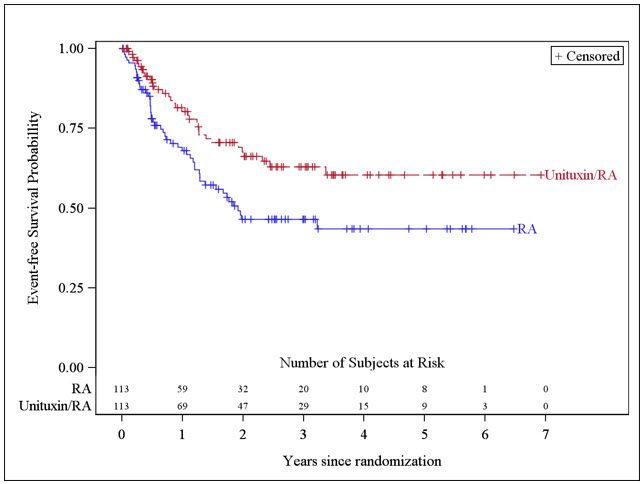
In a randomized, open label, multi-center study (Study 1), 134 patients received dinutuximab in combination with GM-CSF, IL-2 and RA (Unituxin/RA group), including 109 randomized patients and 25 patients with biopsy-proven residual disease who were non-randomly assigned to receive dinutuximab. A total of 106 randomized patients received RA alone (RA group) [see Dosage and Administration (2) and Clinical Studies (14)]. Patients had a median age at enrollment of 3.8 years (range: 0.94 to 15.3 years), and were predominantly male (60%) and White (82%). In Study 1, adverse reactions of Grade 3 or greater severity were comprehensively collected, but adverse reactions of Grade 1 or 2 severity were collected sporadically and laboratory data were not comprehensively collected.
Approximately 71% of patients in the Unituxin/RA group and 77% of patients in the RA group completed planned treatment. The most common reason for premature discontinuation of study therapy was adverse reactions in the Unituxin/RA group (19%) and progressive disease (17%) in the RA group.
The most common adverse drug reactions (≥ 25%) in the Unituxin/RA group were pain, pyrexia, thrombocytopenia, lymphopenia, infusion reactions, hypotension, hyponatremia, increased alanine aminotransferase, anemia, vomiting, diarrhea, hypokalemia, capillary leak syndrome, neutropenia, urticaria, hypoalbuminemia, increased aspartate aminotransferase, and hypocalcemia. The most common serious adverse reactions (≥ 5%) in the Unituxin/RA group were infections, infusion reactions, hypokalemia, hypotension, pain, fever, and capillary leak syndrome.
Table 5 lists the adverse reactions reported in at least 10% of patients in the Unituxin/RA group for which there was a between group difference of at least 5% (all grades) or 2% (Grade 3 or greater severity).
| Adverse Reaction Includes adverse reactions that occurred in at least 10% of patients in the Unituxin/RA group with at least a 5% (All Grades) or 2% (Grades 3-5) absolute higher incidence in the Unituxin/RA group compared to the RA group. ,Adverse drug reactions were graded using CTCAE version 3.0. | Unituxin/RA (N=134) | RA (N=106) | ||
|---|---|---|---|---|
| All Grades (%) | Grades 3-4 (%) | All Grades (%) | Grades 3-4 (%) | |
| General Disorders and Administration Site Conditions | ||||
| Pain Includes preferred terms abdominal pain, abdominal pain upper, arthralgia, back pain, bladder pain, bone pain, chest pain, facial pain, gingival pain, infusion related reaction, musculoskeletal chest pain, myalgia, neck pain, neuralgia, oropharyngeal pain, pain, pain in extremity, and proctalgia. | 85 | 51 | 16 | 6 |
| Pyrexia | 72 | 40 | 27 | 6 |
| Edema | 17 | 0 | 0 | 0 |
| Blood and Lymphatic System Disorders Based on investigator reported adverse reactions. | ||||
| Thrombocytopenia | 66 | 39 | 43 | 25 |
| Lymphopenia | 62 | 51 | 36 | 20 |
| Anemia | 51 | 34 | 22 | 16 |
| Neutropenia | 39 | 34 | 16 | 13 |
| Immune System Disorders | ||||
| Infusion reactions | 60 | 25 | 9 | 1 |
| Vascular Disorders | ||||
| Hypotension | 60 | 16 | 3 | 0 |
| Capillary leak syndrome One Grade 5 adverse reaction. | 40 | 23 | 1 | 0 |
| Hemorrhage Includes preferred terms gastrointestinal hemorrhage, hematochezia, rectal hemorrhage, hematemesis, upper gastrointestinal hemorrhage, hematuria, hemorrhage urinary tract, renal hemorrhage, epistaxis, respiratory tract hemorrhage, disseminated intravascular coagulation, catheter site hemorrhage, hemorrhage and hematoma. | 17 | 6 | 6 | 3 |
| Hypertension | 14 | 2 | 7 | 1 |
| Metabolism and Nutrition Disorders | ||||
| Hyponatremia | 58 | 23 | 12 | 4 |
| Hypokalemia | 43 | 37 | 4 | 2 |
| Hypoalbuminemia | 33 | 7 | 3 | 0 |
| Hypocalcemia | 27 | 7 | 0 | 0 |
| Hypophosphatemia | 20 | 8 | 3 | 0 |
| Hyperglycemia | 18 | 6 | 4 | 1 |
| Hypertriglyceridemia | 16 | 1 | 11 | 1 |
| Decreased appetite | 15 | 10 | 5 | 4 |
| Hypomagnesemia | 12 | 2 | 1 | 0 |
| Investigations | ||||
| Increased alanine aminotransferase | 56 | 23 | 31 | 3 |
| Increased aspartate aminotransferase | 28 | 10 | 7 | 0 |
| Increased serum creatinine | 15 | 2 | 6 | 0 |
| Increased weight | 10 | 0 | 0 | 0 |
| Gastrointestinal Disorders | ||||
| Vomiting | 46 | 6 | 19 | 3 |
| Diarrhea | 43 | 13 | 15 | 1 |
| Nausea | 10 | 2 | 3 | 1 |
| Skin and Subcutaneous Tissue Disorders | ||||
| Urticaria | 37 | 13 | 3 | 0 |
| Respiratory, Thoracic and Mediastinal Disorders | ||||
| Hypoxia | 24 | 12 | 2 | 1 |
| Cardiac Disorders | ||||
| Tachycardia Includes preferred terms tachycardia and sinus tachycardia. | 19 | 2 | 1 | 0 |
| Infections and Infestations | ||||
| Sepsis | 18 | 16 | 9 | 9 |
| Device related infection | 16 | 16 | 11 | 11 |
| Renal and Urinary Disorders | ||||
| Proteinuria | 16 | 0 | 3 | 1 |
| Nervous System Disorders | ||||
| Peripheral neuropathy | 13 | 3 | 6 | 0 |
Table 6 compares the per-patient incidence of selected adverse reactions occurring during cycles containing dinutuximab in combination with GM-CSF (Cycles 1, 3, and 5) with cycles containing dinutuximab in combination with IL-2 (Cycles 2 and 4).
| Preferred Term Includes preferred terms with a per-patient incidence of at least 20% in the Unituxin and RA group for either IL-2 or GM-CSF containing cycles. ,Adverse drug reactions were graded using CTCAE version 3.0. | All Grades | Severe | ||
|---|---|---|---|---|
| GM-CSF N=134 (%) | IL-2 Seven patients who received GM-CSF in Cycle 1 discontinued prior to starting Cycle 2. N=127 (%) | GM-CSF N=134 (%) | IL-2 N=127 (%) | |
| Abbreviations: GM-CSF: granulocyte-macrophage colony-stimulating factor; IL-2: interleukin-2. | ||||
| General Disorders and administration site conditions | ||||
| Pyrexia | 55 | 65 | 10 | 37 |
| Pain Includes preferred terms abdominal pain, abdominal pain upper, arthralgia, back pain, bladder pain, bone pain, chest pain, facial pain, gingival pain, infusion related reaction, musculoskeletal chest pain, myalgia, neck pain, neuralgia, oropharyngeal pain, pain, pain in extremity, and proctalgia. | 77 | 61 | 43 | 35 |
| Blood and Lymphatic System Disorders Based on investigator reported adverse reactions. | ||||
| Thrombocytopenia | 62 | 61 | 31 | 33 |
| Lymphopenia | 54 | 61 | 33 | 50 |
| Anemia | 42 | 42 | 21 | 24 |
| Neutropenia | 25 | 32 | 19 | 28 |
| Immune System Disorders | ||||
| Infusion reactions | 47 | 54 | 10 | 20 |
| Vascular Disorders | ||||
| Hypotension | 43 | 54 | 5 | 16 |
| Capillary leak syndrome | 22 | 36 | 11 | 20 |
| Metabolism and Nutrition Disorders | ||||
| Hyponatremia | 36 | 55 | 5 | 21 |
| Hypokalemia | 26 | 39 | 13 | 33 |
| Hypoalbuminemia | 29 | 29 | 3 | 5 |
| Hypocalcemia | 20 | 21 | 2 | 6 |
| Investigations | ||||
| Increased alanine aminotransferase | 43 | 48 | 15 | 13 |
| Aspartate aminotransferase increased | 16 | 21 | 4 | 7 |
| Gastrointestinal Disorders | ||||
| Diarrhea | 31 | 37 | 6 | 13 |
| Vomiting | 33 | 35 | 3 | 2 |
| Skin and Subcutaneous Tissue Disorders | ||||
| Urticaria | 25 | 29 | 7 | 7 |
Study 2 and Study 3
Study 2 was a single arm, multicenter expanded access trial that enrolled patients with high-risk neuroblastoma (N=783). The reported adverse event profile of dinutuximab in Study 2 was similar to that observed in Study 1.
Study 3 was a multicenter, single arm safety study of dinutuximab in combination with GM-CSF, IL-2 and RA. In Study 3, adverse events of all CTCAE grades and laboratory data were systematically and comprehensively collected. Of 104 patients enrolled and treated in Study 3, 77% of patients completed study therapy. In general, the adverse reaction profile of dinutuximab observed in Study 3 was similar to that observed in Study 1 and Study 2. The following adverse reactions not previously reported in Study 1 were reported in at least 10% of patients in Study 3: nasal congestion (20%) and wheezing (15%). Table 7 provides the per-patient incidence of laboratory abnormalities in Study 3.
| Laboratory Test Laboratory abnormalities with a per-patient incidence of at least 20% (all grades) and at least a 5% per-patient incidence of severe (Grade 3 or 4) laboratory abnormalities. | Grade Based on CTCAE version 4.0. | |
|---|---|---|
| All Grades % | Grades 3-4 % | |
| ND: not determined | ||
| Hematology | ||
| Anemia | 100 | 46 |
| Neutropenia | 99 | 63 |
| Thrombocytopenia | 98 | 49 |
| Chemistry | ||
| Hypoalbuminemia | 100 | 8 |
| Hypocalcemia | 97 | 7 |
| Hyponatremia | 93 | 36 |
| Hyperglycemia | 87 | 6 |
| Aspartate Aminotransferase Increased | 84 | 8 |
| Alanine Aminotransferase Increased | 83 | 13 |
| Hypokalemia | 82 | 41 |
| Hypophosphatemia | 78 | 6 |
| Urinalysis Urinalysis results were reported as positive or negative without assessment of grade. | ||
| Urine protein | 66 | ND |
| Red blood cell casts | 38 | ND |
Risk Summary
Based on its mechanism of action, Unituxin may cause fetal harm when administered to a pregnant woman [see Clinical Pharmacology (12.1)]. There are no studies in pregnant women and no reproductive studies in animals to inform the drug-associated risk. Monoclonal antibodies are transported across the placenta in a linear fashion as pregnancy progresses, with the largest amount transferred during the third trimester. Advise pregnant women of the potential risk to a fetus. The background risk of major birth defects and miscarriage for the indicated population is unknown. However, the background risk in the U.S. general population of major birth defects is 2-4% and of miscarriage is 15-20% of clinically recognized pregnancies.
Risk Summary
There is no information available on the presence of dinutuximab in human milk, the effects of the drug on the breastfed infant, or the effects of the drug on milk production. However, human IgG is present in human milk. Because of the potential for serious adverse reactions in a breastfed infant, advise a nursing woman to discontinue breastfeeding during treatment with Unituxin.
Contraception
Females
Unituxin may cause fetal harm [see Use in Specific Populations (8.1)]. Advise females of reproductive potential to use effective contraception during treatment and for two months after the last dose of Unituxin.
©Copyright 2017 United Therapeutics Corp. All rights reserved.
Unituxin manufactured by:
United Therapeutics Corp.
Silver Spring, MD 20910
US License No. 1993