Subcutaneous Infusion
Remodulin is administered subcutaneously by continuous infusion without further dilution, via a subcutaneous catheter, using an infusion pump designed for subcutaneous drug delivery. To avoid potential interruptions in drug delivery, the patient must have immediate access to a backup infusion pump and subcutaneous infusion sets. The ambulatory infusion pump used to administer Remodulin should: (1) be small and lightweight, (2) be adjustable to approximately 0.002 mL/hr, (3) have occlusion/no delivery, low battery, programming error and motor malfunction alarms, (4) have delivery accuracy of ±6% or better and (5) be positive pressure driven. The reservoir should be made of polyvinyl chloride, polypropylene or glass.
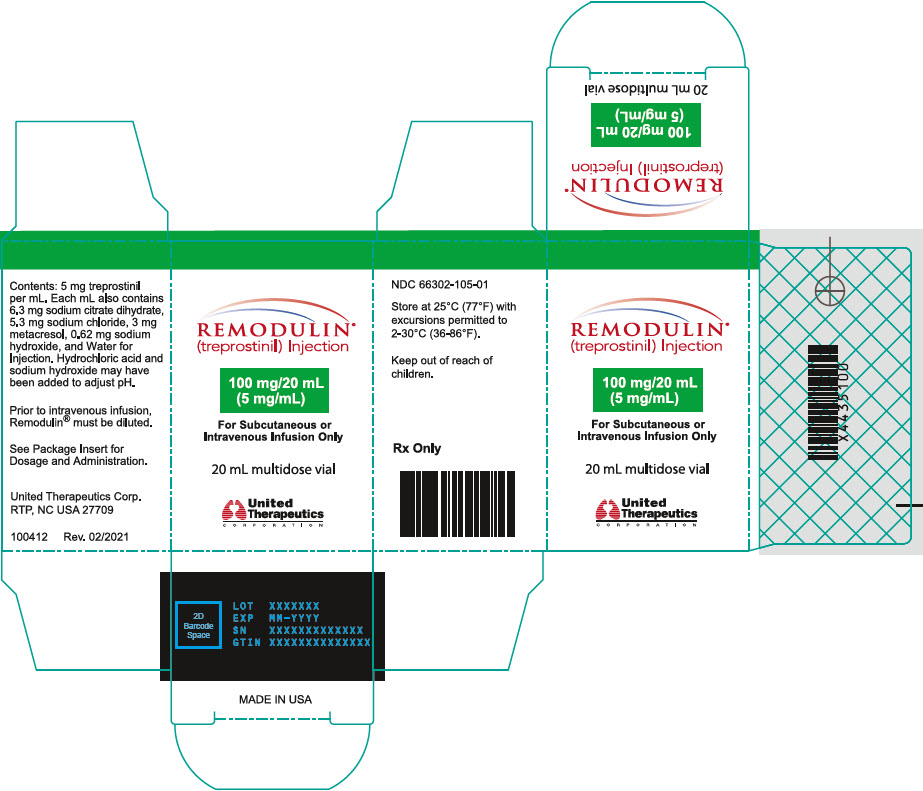
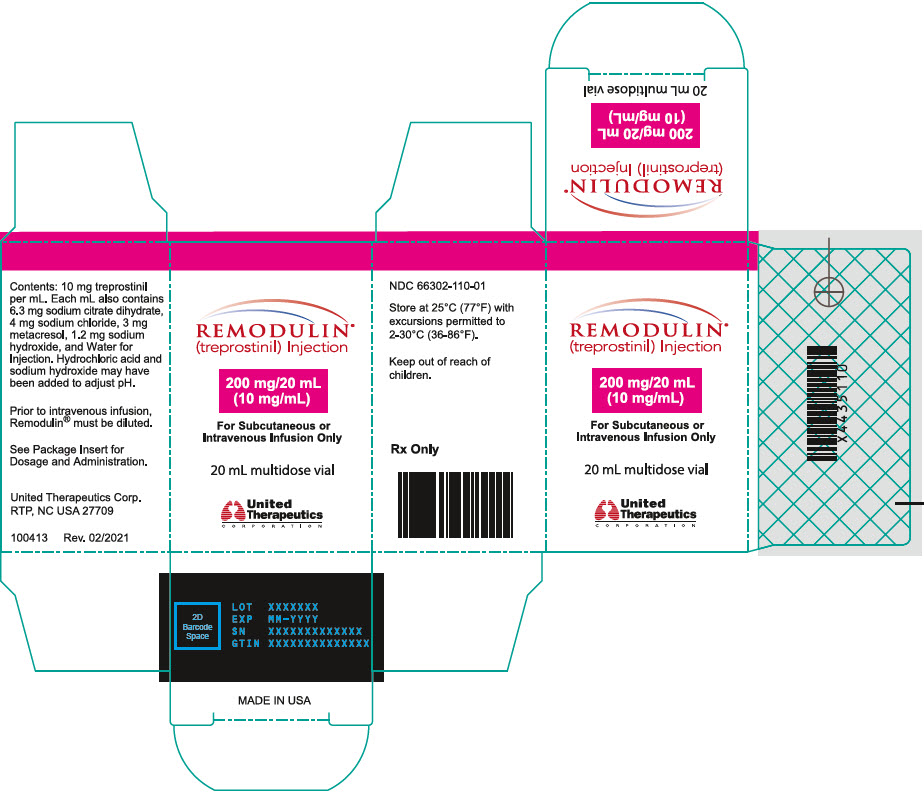
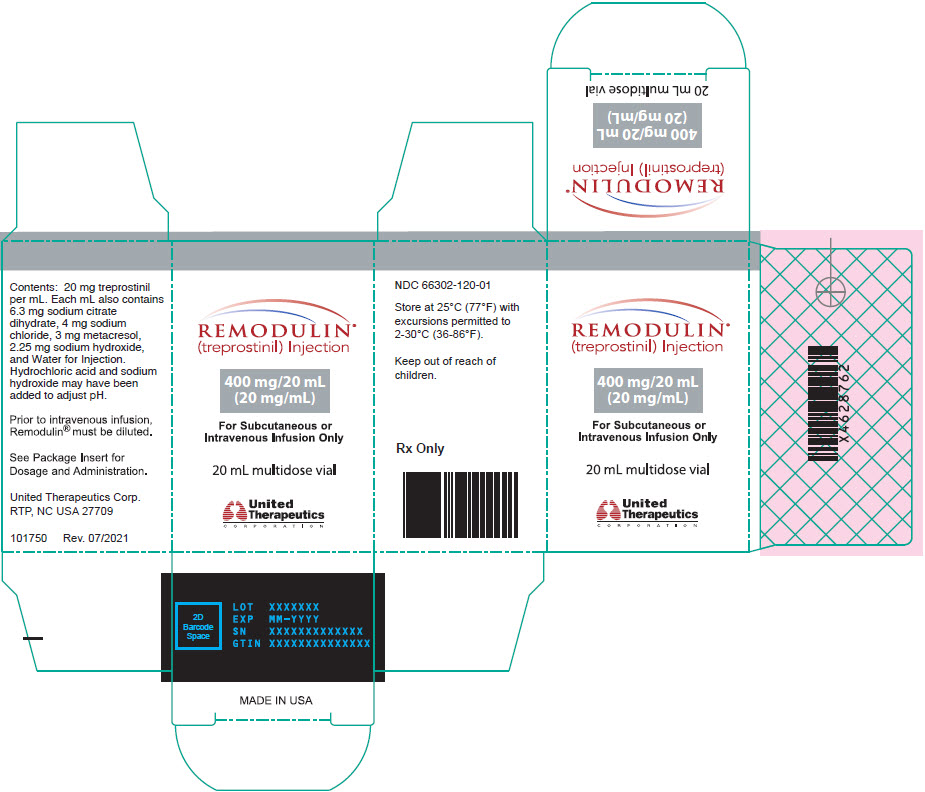
Remodulin is administered subcutaneously by continuous infusion at a calculated subcutaneous infusion rate (mL/hr) based on a patient's dose (ng/kg/min), weight (kg), and the vial strength (mg/mL) of Remodulin being used. During use, a single reservoir (syringe) of undiluted Remodulin can be administered up to 72 hours at 37°C. The subcutaneous infusion rate is calculated using the following formula:
| Subcutaneous Infusion Rate (mL/hr) | = | Dose (ng/kg/min) | × | Weight (kg) | × | 0.00006 Conversion factor of 0.00006 = 60 min/hour × 0.000001 mg/ng |
| Remodulin Vial Strength (mg/mL) |
Example calculations for Subcutaneous Infusion are as follows:
| Example 1: |
| For a 60 kg person at the recommended initial dose of 1.25 ng/kg/min using the 1 mg/mL Remodulin, the infusion rate would be calculated as follows: |
| Subcutaneous Infusion Rate (mL/hr) | = | 1.25 ng/kg/min | × | 60 kg | × | 0.00006 | = 0.005 mL/hr |
| 1 mg/mL
|
| Example 2: |
| For a 65 kg person at a dose of 40 ng/kg/min using the 5 mg/mL Remodulin, the infusion rate would be calculated as follows: |
| Subcutaneous Infusion Rate (mL/hr) | = | 40 ng/kg/min | × | 65 kg | × | 0.00006 | = 0.031 mL/hr |
| 5 mg/mL |
Intravenous Infusion
Diluted Remodulin is administered intravenously by continuous infusion via a surgically placed indwelling central venous catheter using an infusion pump designed for intravenous drug delivery. If clinically necessary, a temporary peripheral intravenous cannula, preferably placed in a large vein, may be used for short term administration of Remodulin. Use of a peripheral intravenous infusion for more than a few hours may be associated with an increased risk of thrombophlebitis. To avoid potential interruptions in drug delivery, the patient must have immediate access to a backup infusion pump and infusion sets. The ambulatory infusion pump used to administer Remodulin should: (1) be small and lightweight, (2) have occlusion/no delivery, low battery, programming error and motor malfunction alarms, (3) have delivery accuracy of ±6% or better of the hourly dose, and (4) be positive pressure driven. The reservoir should be made of polyvinyl chloride, polypropylene or glass.
Infusion sets with an in-line 0.22 or 0.2 micron pore size filter should be used.
Diluted Remodulin has been shown to be stable at ambient temperature when stored for up to 14 days using high-pH glycine diluent at concentrations as low as 0.004 mg/mL (4,000 ng/mL).
Select the intravenous infusion rate to allow for a desired infusion period length of up to 48 hours between system changeovers. Typical intravenous infusion system reservoirs have volumes of 50 or 100 mL. With this selected intravenous infusion rate (mL/hr) and the patient's dose (ng/kg/min) and weight (kg), the diluted intravenous Remodulin concentration (mg/mL) can be calculated using the following formula:
Step 1
Diluted Intravenous Remodulin Concentration
(mg/mL) | = | Dose
(ng/kg/min) | × | Weight
(kg) | × | 0.00006 |
Intravenous Infusion Rate
(mL/hr) |
The volume of Remodulin Injection needed to make the required diluted intravenous Remodulin concentration for the given reservoir size can then be calculated using the following formula:
Step 2
Volume of Remodulin Injection
(mL) | = | Diluted Intravenous Remodulin Concentration
(mg/mL) | × | Total Volume of Diluted Remodulin Solution in Reservoir
(mL) |
Remodulin Vial Strength
(mg/mL) |
The calculated volume of Remodulin Injection is then added to the reservoir along with the sufficient volume of diluent to achieve the desired total volume in the reservoir.
Example calculations for Intravenous Infusion are as follows:
| Example 3: |
| For a 60 kg person at a dose of 5 ng/kg/min, with a predetermined intravenous infusion rate of 1 mL/hr and a reservoir of 50 mL, the diluted intravenous Remodulin concentration would be calculated as follows:
|
| Step 1
|
| Diluted Intravenous Remodulin Concentration
(mg/mL) | = | 5 ng/kg/min | × | 60 kg | × | 0.00006 | = 0.018 mg/mL
(18,000 ng/mL) |
| 1 mL/hr |
| |
| The volume of Remodulin Injection (using 1 mg/mL Vial Strength) needed for a total diluted Remodulin concentration of 0.018 mg/mL and a total volume of 50 mL would be calculated as follows: |
| Step 2
|
| Volume of Remodulin Injection
(mL) | = | 0.018 mg/mL | × 50 mL = 0.9 mL |
| 1 mg/mL |
| |
| The diluted intravenous Remodulin concentration for the person in Example 3 would thus be prepared by adding 0.9 mL of 1 mg/mL Remodulin Injection to a suitable reservoir along with a sufficient volume of diluent to achieve a total volume of 50 mL in the reservoir. The pump flow rate for this example would be set at 1 mL/hr.
|
| Example 4: |
| For a 75 kg person at a dose of 30 ng/kg/min, with a predetermined intravenous infusion rate of 2 mL/hr, and a reservoir of 100 mL, the diluted intravenous Remodulin concentration would be calculated as follows:
|
| Step 1 |
| Diluted Intravenous Remodulin Concentration
(mg/mL) | = | 30 ng/kg/min | × | 75 kg | × | 0.00006 | = 0.0675 mg/mL
(67,500 ng/mL) |
| 2 mL/hr |
| |
| The volume of Remodulin Injection (using 2.5 mg/mL Vial Strength) needed for a total diluted Remodulin concentration of 0.0675 mg/mL and a total volume of 100 mL would be calculated as follows:
|
| Step 2 |
| Volume of Remodulin Injection
(mL) | = | 0.0675 mg/mL | × 100 mL = 2.7 mL |
| 2.5 mg/mL |
| |
| The diluted intravenous Remodulin concentration for the person in Example 4 would thus be prepared by adding 2.7 mL of 2.5 mg/mL Remodulin Injection to a suitable reservoir along with a sufficient volume of diluent to achieve a total volume of 100 mL in the reservoir. The pump flow rate for this example would be set at 2 mL/hr. |
Adverse Events with Subcutaneously Administered Remodulin
Patients receiving Remodulin as a subcutaneous infusion reported a wide range of adverse events, many potentially related to the underlying disease (dyspnea, fatigue, chest pain, right ventricular heart failure, and pallor). During clinical trials with subcutaneous infusion of Remodulin, infusion site pain and reaction were the most common adverse events among those treated with Remodulin. Infusion site reaction was defined as any local adverse event other than pain or bleeding/bruising at the infusion site and included symptoms such as erythema, induration or rash. Infusion site reactions were sometimes severe and could lead to discontinuation of treatment.
Table 3: Percentages of subjects reporting subcutaneous infusion site adverse events | Reaction | Pain |
|---|
| Placebo | Remodulin | Placebo | Remodulin |
|---|
| Severe | 1 | 38 | 2 | 39 |
| Requiring narcotics based on prescriptions for narcotics, not actual use | NA medications used to treat infusion site pain were not distinguished from those used to treat site reactions | NA | 1 | 32 |
| Leading to discontinuation | 0 | 3 | 0 | 7 |
Other adverse events included diarrhea, jaw pain, edema, vasodilatation and nausea, and these are generally considered to be related to the pharmacologic effects of Remodulin, whether administered subcutaneously or intravenously.
Adverse Reactions during Chronic Dosing
Table 4 lists adverse reactions defined by a rate of at least 3% more frequent in patients treated with subcutaneous Remodulin than with placebo in controlled trials in PAH.
Table 4: Adverse Reactions in Controlled 12-Week Studies of Subcutaneous Remodulin and at least 3% more frequent than on Placebo.| Adverse Reaction | Remodulin
(N=236)
Percent of Patients | Placebo
(N=233)
Percent of Patients |
|---|
| Infusion Site Pain | 85 | 27 |
| Infusion Site Reaction | 83 | 27 |
| Headache | 27 | 23 |
| Diarrhea | 25 | 16 |
| Nausea | 22 | 18 |
| Rash | 14 | 11 |
| Jaw Pain | 13 | 5 |
| Vasodilatation | 11 | 5 |
| Edema | 9 | 3 |
Reported adverse reactions (at least 3% more frequent on drug than on placebo) are included except those too general to be informative, and those not plausibly attributable to the use of the drug, because they were associated with the condition being treated or are very common in the treated population.
While hypotension occurred in both groups, the event was experienced twice as frequently in the Remodulin group as compared to the placebo group (4% in Remodulin treatment group verses 2% in placebo-controlled group). As a potent vasodilator, hypotension is possible with the administration of Remodulin.
The safety of Remodulin was also studied in a long-term, open-label extension study in which 860 patients were dosed for a mean duration of 1.6 years, with a maximum exposure of 4.6 years. Twenty-nine (29%) percent achieved a dose of at least 40 ng/kg/min (max: 290 ng/kg/min). The safety profile during this chronic dosing study was similar to that observed in the 12-week placebo controlled study except for the following suspected adverse drug reactions (occurring in at least 3% of patients): anorexia, vomiting, infusion site infection, asthenia, and abdominal pain.
Adverse Events Attributable to the Drug Delivery System
In controlled studies of Remodulin administered subcutaneously, there were no reports of infection related to the drug delivery system. There were 187 infusion system complications reported in 28% of patients (23% Remodulin, 33% placebo); 173 (93%) were pump related and 14 (7%) related to the infusion set. Eight of these patients (4 Remodulin, 4 Placebo) reported non-serious adverse events resulting from infusion system complications. Adverse events resulting from problems with the delivery systems were typically related to either symptoms of excess Remodulin (e.g., nausea) or return of PAH symptoms (e.g., dyspnea). These events were generally resolved by correcting the delivery system pump or infusion set problem such as replacing the syringe or battery, reprogramming the pump, or straightening a crimped infusion line. Adverse events resulting from problems with the delivery system did not lead to clinical instability or rapid deterioration. In addition to these adverse events due to the drug delivery system during subcutaneous administration, the following adverse events may be attributable to the IV mode of infusion including arm swelling, paresthesias, hematoma and pain [see Warnings and Precautions (5.1)].
Absorption
Remodulin is relatively rapidly and completely absorbed after subcutaneous infusion, with an absolute bioavailability approximating 100%. Steady-state concentrations occurred in approximately 10 hours. Concentrations in patients treated with an average dose of 9.3 ng/kg/min were approximately 2,000 pg/mL.
Distribution
The volume of distribution of the drug in the central compartment is approximately 14L/70 kg ideal body weight. Remodulin at in vitro concentrations ranging from 330-10,000 mcg/L was 91% bound to human plasma protein.
Metabolism and Excretion
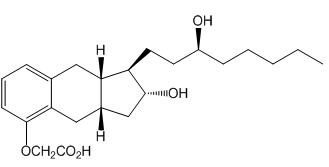
Treprostinil is substantially metabolized by the liver, primarily by CYP2C8. In a study conducted in healthy volunteers using [14C] treprostinil, 78.6% and 13.4% of the subcutaneous dose was recovered in the urine and feces, respectively, over 10 days. Only 4% was excreted as unchanged treprostinil in the urine. Five metabolites were detected in the urine, ranging from 10.2% to 15.5% and representing 64.4% of the dose administered. Four of the metabolites are products of oxidation of the 3-hydroxyloctyl side chain and one is a glucuroconjugated derivative (treprostinil glucuronide). The identified metabolites do not appear to have activity.
The elimination of treprostinil (following subcutaneous administration) is biphasic, with a terminal elimination half-life of approximately 4 hours using a two compartment model. Systemic clearance is approximately 30 L/hr for a 70 kg person.
Based on in vitro studies treprostinil does not inhibit or induce major CYP enzymes [see Drug Interactions (7.5)].
Special Populations
Hepatic Insufficiency
In patients with portopulmonary hypertension and mild (n=4) or moderate (n=5) hepatic insufficiency, Remodulin at a subcutaneous dose of 10 ng/kg/min for 150 minutes had a Cmax that was 2-fold and 4-fold, respectively, and an AUC 0-∞ that was 3-fold and 5-fold, respectively, values observed in healthy subjects. Clearance in patients with hepatic insufficiency was reduced by up to 80% compared to healthy adults.
Renal Insufficiency
No studies have been performed in patients with renal insufficiency, so no specific advice about dosing in such patients can be given. Although only 4% of the administered dose is excreted unchanged in the urine, the five identified metabolites are all excreted in the urine.
Hemodynamic Effects
As shown in Table 5, chronic therapy with Remodulin resulted in small hemodynamic changes consistent with pulmonary and systemic vasodilation.
Table 5: Hemodynamics during Chronic Administration of Remodulin in Patients with PAH in 12-Week Studies| Hemodynamic Parameter | Baseline | Mean change from baseline at Week 12 |
|---|
Remodulin
(N=204-231) | Placebo
(N=215-235) | Remodulin
(N=163-199) | Placebo
(N=182-215) |
|---|
| CI = cardiac index; PAPm = mean pulmonary arterial pressure; PVRI = pulmonary vascular resistance indexed; RAPm = mean right atrial pressure; SAPm = mean systemic arterial pressure; SVRI = systemic vascular resistance indexed; SvO2 = mixed venous oxygen saturation; HR = heart rate. |
CI
(L/min/m2) | 2.4 ± 0.88 | 2.2 ± 0.74 | +0.12 ± 0.58 Denotes statistically significant difference between Remodulin and placebo, p<0.05. | -0.06 ± 0.55 |
PAPm
(mmHg) | 62 ± 17.6 | 60 ± 14.8 | -2.3 ± 7.3 | +0.7 ± 8.5 |
RAPm
(mmHg) | 10 ± 5.7 | 10 ± 5.9 | -0.5 ± 5.0 | +1.4 ± 4.8 |
PVRI
(mmHg/L/min/m2) | 26 ± 13 | 25 ± 13 | -3.5 ± 8.2 | +1.2 ± 7.9 |
SVRI
(mmHg/L/min/m2) | 38 ± 15 | 39 ± 15 | -3.5 ± 12 | -0.80 ± 12 |
SvO2
(%) | 62 ± 100 | 60 ± 11 | +2.0 ± 10 | -1.4 ± 8.8 |
SAPm
(mmHg) | 90 ± 14 | 91 ± 14 | -1.7 ± 12 | -1.0 ± 13 |
HR
(bpm) | 82 ± 13 | 82 ± 15 | -0.5 ± 11 | -0.8 ± 11 |
Clinical Effects
The effect of Remodulin on 6-minute walk, the primary end point of the 12-week studies, was small and did not achieve conventional levels of statistical significance. For the combined populations, the median change from baseline on Remodulin was 10 meters and the median change from baseline on placebo was 0 meters from a baseline of approximately 345 meters. Although it was not the primary endpoint of the study, the Borg dyspnea score was significantly improved by Remodulin during the 6-minute walk, and Remodulin also had a significant effect, compared with placebo, on an assessment that combined walking distance with the Borg dyspnea score. Remodulin also consistently improved indices of dyspnea, fatigue and signs and symptoms of pulmonary hypertension, but these indices were difficult to interpret in the context of incomplete blinding to treatment assignment resulting from infusion site symptoms.
©Copyright 2014 United Therapeutics Corp. All rights reserved.
REMODULIN manufactured for:
United Therapeutics Corp.
Research Triangle Park, NC 27709