Risk Factors for Myopathy
Risk factors for myopathy include age 65 years or greater, uncontrolled hypothyroidism, renal impairment, concomitant use of certain drugs (including other lipid-lowering therapies), and higher LIVALO dosage [see Dosage and Administration (2.2), Drug Interactions (7), and Use in Specific Populations (8.5, 8.6)]. Dosages of LIVALO greater than 4 mg once daily were associated with an increased risk for severe myopathy in premarketing clinical studies. The maximum recommended dose of LIVALO is 4 mg once daily.
Steps to Prevent or Reduce the Risk of Myopathy and Rhabdomyolysis
LIVALO is contraindicated in patients taking cyclosporine and not recommended in patients taking gemfibrozil [see Contraindications (4) and Drug Interactions (7)]. There are LIVALO dosage restrictions for patients taking erythromycin or rifampin [see Dosage and Administration (2.4)]. The following drugs when used concomitantly with LIVALO may also increase the risk of myopathy and rhabdomyolysis: lipid-modifying dosages of niacin (>1grams/day), fibrates, and colchicine [see Drug Interactions (7)].
Discontinue LIVALO if markedly elevated CK levels occur or if myopathy is either diagnosed or suspected. Muscle symptoms and CK elevations may resolve if LIVALO is discontinued. Temporarily discontinue LIVALO in patients experiencing an acute or serious condition at high risk of developing renal failure secondary to rhabdomyolysis (e.g., sepsis; shock; severe hypovolemia; major surgery; trauma; severe metabolic, endocrine, or electrolyte disorders; or uncontrolled epilepsy).
Inform patients of the risk of myopathy and rhabdomyolysis when starting or increasing the LIVALO dosage. Instruct patients to promptly report any unexplained muscle pain, tenderness or weakness, particularly if accompanied by malaise or fever.
Adverse Reactions in Adults with Primary Hyperlipidemia
In 10 controlled clinical studies and 4 subsequent open-label extension studies, 3,291 adult patients with primary hyperlipidemia were administered LIVALO 1 mg to 4 mg daily. The mean continuous exposure of pitavastatin (1 mg to 4 mg) was 36.7 weeks (median 51.1 weeks). The mean age of the patients was 60.9 years (range; 18 years – 89 years) and 52% were females. Approximately 93% of the patients were White, 7% were Asian/Indian, 0.2% were African American and 0.3% were Hispanic and other.
In controlled clinical studies and their open-label extensions, 3.9% (1 mg), 3.3% (2 mg), and 3.7% (4 mg) of LIVALO-treated patients were discontinued due to adverse reactions. The most common adverse reactions that led to treatment discontinuation were: elevated creatine phosphokinase (0.6% on 4 mg) and myalgia (0.5% on 4 mg).
Adverse reactions reported in ≥ 2% of patients in controlled clinical studies and at a rate greater than or equal to placebo are shown in Table 1. These studies had treatment duration of up to 12 weeks.
Table 1. Adverse Reactions ( ≥ 2% and ≥ placebo) in Adults with Primary Hyperlipidemia in Studies up to 12 Weeks| Adverse Reactions | Placebo
(n= 208)
% | LIVALO 1 mg
(n=309)
% | LIVALO 2 mg
(n=951)
% | LIVALO 4 mg
(n=1540)
% |
|---|
| Myalgia | 1.4 | 1.9 | 2.8 | 3.1 |
| Constipation | 1.9 | 3.6 | 1.5 | 2.2 |
| Diarrhea | 1.9 | 2.6 | 1.5 | 1.9 |
| Back pain | 2.9 | 3.9 | 1.8 | 1.4 |
| Pain in extremity | 1.9 | 2.3 | 0.6 | 0.9 |
Other adverse reactions reported from clinical studies were arthralgia, headache, influenza, and nasopharyngitis.
Hypersensitivity reactions including rash, pruritus, and urticaria have been reported with LIVALO.
The following laboratory abnormalities have been reported: elevated creatine phosphokinase, transaminases, alkaline phosphatase, bilirubin, and glucose.
Adverse Reactions in Adult HIV-Infected Patients with Dyslipidemia
In a double-blind, randomized, controlled, 52-week trial, 252 HIV-infected patients with dyslipidemia were treated with either LIVALO 4 mg once daily (n=126) or another statin (n=126). All patients were taking antiretroviral therapy (excluding darunavir) and had HIV-1 RNA less than 200 copies/mL and CD4 count greater than 200 cell/µL for at least 3 months prior to randomization. The safety profile of LIVALO was generally consistent with that observed in the clinical trials described above. One patient (0.8%) treated with LIVALO had a peak creatine phosphokinase value exceeding 10 times the upper limit of normal (ULN), which resolved spontaneously. Four patients (3%) treated with LIVALO had at least one ALT value exceeding 3 times but less than 5 times the ULN, none of which led to drug discontinuation. Virologic failure was reported for four patients (3%) treated with LIVALO, defined as a confirmed measurement of HIV-1 RNA exceeding 200 copies/mL that was also more than a 2-fold increase from baseline.
Adverse Reactions in Pediatric Patients Aged 8 Years and Older with HeFH
In a 12-week, double-blind, placebo-controlled trial of LIVALO 1 mg, 2 mg, and 4 mg once daily in 82 pediatric patients 8 years to 16 years of age with HeFH and a 52-week open-label trial in 85 pediatric patients with HeFH, the safety profile was similar to that observed in the adult population.
Risk Summary
Discontinue LIVALO when pregnancy is recognized. Alternatively, consider the ongoing therapeutic needs of the individual patient.
LIVALO decreases synthesis of cholesterol and possibly other biologically active substances derived from cholesterol; therefore, LIVALO may cause fetal harm when administered to pregnant patients based on the mechanism of action [see Clinical Pharmacology (12.1)]. In addition, treatment of hyperlipidemia is not generally necessary during pregnancy. Atherosclerosis is a chronic process and the discontinuation of lipid-lowering drugs during pregnancy should have little impact on the outcome of long-term therapy of primary hyperlipidemia for most patients.
Available data from case series and prospective and retrospective observational cohort studies over decades of use with statins in pregnant women have not identified a drug-associated risk of major congenital malformations. Published data from prospective and retrospective observational cohort studies with statin use in pregnant women are insufficient to determine if there is a drug associated risk of miscarriage (see Data).
In animal reproduction studies, no embryo-fetal toxicity or congenital malformations were observed in pregnant rats and rabbits orally administered pitavastatin during the period of organogenesis at doses which were 22 and 4 times, respectively, the human exposure at the maximum recommended human dosage (MRHD) of 4 mg, based on AUC [see Data].
The estimated background risk of major birth defects and miscarriage for the indicated population is unknown. Adverse outcomes in pregnancy occur regardless of the health of the mother or the use of medications. In the U.S. general population, the estimated background risk of major birth defects and miscarriage in clinically recognized pregnancies is 2-4% and 15-20%, respectively.
Data
Human Data
A Medicaid cohort linkage study of 1152 statin-exposed pregnant women compared to 886,996 controls did not find a significant teratogenic effect from maternal use of statins in the first trimester of pregnancy, after adjusting for potential confounders – including maternal age, diabetes mellitus, hypertension, obesity, and alcohol and tobacco use – using propensity score-based methods. The relative risk of congenital malformations between the group with statin use and the group with no statin use in the first trimester was 1.07 (95% confidence interval 0.85 to 1.37) after controlling for confounders, particularly pre-existing diabetes mellitus. There were also no statistically significant increases in any of the organ-specific malformations assessed after accounting for confounders. In the majority of pregnancies, statin treatment was initiated prior to pregnancy and was discontinued at some point in the first trimester when pregnancy was identified. Study limitations include reliance on physician coding to define the presence of a malformation, lack of control for certain confounders such as body mass index, use of prescription dispensing as verification for the use of a statin, and lack of information on non-live births.
Animal Data
Embryo-fetal developmental studies were conducted in pregnant rats administered 3, 10, 30 mg/kg/day pitavastatin by oral gavage during organogenesis (gestation days 7-17). No adverse effects were observed at 3 mg/kg/day, systemic exposures 22 times human systemic exposure at 4 mg/day based on AUC.
Embryo-fetal developmental studies were conducted in pregnant rabbits administered 0.1, 0.3, 1 mg/kg/day pitavastatin by oral gavage during the period of fetal organogenesis (gestation days 6-18). Maternal toxicity consisting of reduced body weight and abortion was observed at all doses tested (4 times human systemic exposure at 4 mg/day based on AUC).
In perinatal/postnatal studies in pregnant rats given oral gavage doses of pitavastatin at 0.1, 0.3, 1, 3, 10, 30 mg/kg/day from organogenesis through weaning (gestation day 17 to lactation day 21), maternal toxicity consisting of mortality at ≥0.3 mg/kg/day and impaired lactation at all doses contributed to the decreased survival of neonates in all dose groups (0.1 mg/kg/day represents approximately 1 time human systemic exposure at 4 mg/day dose based on AUC).
Reproductive toxicity studies have shown that pitavastatin crosses the placenta in rats and is found in fetal tissues at ≤36% of maternal plasma concentrations following a single dose of 1 mg/kg/day during gestation (at the end of organogenesis).
Risk Summary
There is no available information about the prescence of pitavastatin in human or animal milk, the effects of the drug on the breastfed infant, or the effects of the drug on milk production. However, it has been shown that another drug in this class passes into human milk. Statins, including LIVALO, decrease cholesterol synthesis and possibly the synthesis of other biologically active substances derived from cholesterol and may cause harm to the breastfed infant.
Because of the potential for serious adverse reactions in a breastfed infant, based upon the mechanism of action, advise patients that breastfeeding is not recommended during treatment with LIVALO [see Use in Specific Populations (8.1), Clinical Pharmacology (12.1)].
Cardiac Electrophysiology
In a randomized, double-blind, placebo-controlled, 4-way parallel, active-comparator study with moxifloxacin in 174 healthy participants, LIVALO was not associated with clinically meaningful prolongation of the QTc interval or heart rate at daily doses up to 16 mg (4 times the recommended maximum dose of 4 mg daily).
Absorption
Pitavastatin peak plasma concentrations are achieved about 1 hour after oral administration. Both Cmax and AUC0-inf increased in an approximately dose-proportional manner for single LIVALO doses from 1 mg to 24 mg once daily. The absolute bioavailability of pitavastatin oral solution is 51%. The Cmax and AUC of pitavastatin did not differ following evening or morning drug administration. In healthy volunteers receiving 4 mg pitavastatin, the percent change from baseline for LDL-C following evening dosing was slightly greater than that following morning dosing. Pitavastatin was absorbed in the small intestine but very little in the colon.
Effect of Food
Administration of LIVALO with a high fat meal (50% fat content) decreases pitavastatin Cmax by 43% but does not significantly reduce pitavastatin AUC.
Distribution
Pitavastatin is more than 99% protein bound in human plasma, mainly to albumin and alpha 1-acid glycoprotein, and the mean volume of distribution is approximately 148 L.
Elimination
Metabolism
The principal route of pitavastatin metabolism is glucuronidation via liver uridine 5'-diphosphate glucuronosyltransferase (UGT) with subsequent formation of pitavastatin lactone. There is only minimal metabolism by the cytochrome P450 system. Pitavastatin is marginally metabolized by CYP2C9 and to a lesser extent by CYP2C8. The major metabolite in human plasma is the lactone, which is formed via an ester-type pitavastatin glucuronide conjugate by UGTs (UGT1A3 and UGT2B7).
Excretion
A mean of 15% of radioactivity of orally administered, single 32 mg 14C-labeled pitavastatin dose was excreted in urine, whereas a mean of 79% of the dose was excreted in feces within 7 days. The mean plasma elimination half-life is approximately 12 hours.
Specific Populations
Geriatric Patients
In a pharmacokinetic study which compared healthy young and geriatric (≥65 years) volunteers, pitavastatin Cmax and AUC were 10 and 30% higher, respectively, in the geriatric patients [see Use in Specific Populations (8.4)].
Pediatric Patients
A 12-week study in pediatric patients 8 to 16 years of age treated with pitavastatin 1 mg, 2 mg and 4 mg administered once daily, showed a dose-dependent increase in pitavastatin plasma concentrations at trough (for 2 mg and 4 mg doses) and 1 hour post dose. A dose-dependent increase in pitavastatin lactone plasma concentrations was observed at trough and 1 hour post dose.
Male and Female Patients
In a pharmacokinetic study, which compared healthy male and female volunteers, pitavastatin Cmax and AUC were 60 and 54% higher, respectively in females.
Racial or Ethnic Groups
In pharmacokinetic studies pitavastatin Cmax and AUC were 21 and 5% lower, respectively in Black or African American healthy volunteers compared with those of White healthy volunteers. In pharmacokinetic comparison between White volunteers and Japanese volunteers, there were no significant differences in Cmax and AUC.
Patients with Renal Impairment
In patients with moderate renal impairment (estimated glomerular filtration rate of 30 – 59 mL/min/1.73 m2) and end stage renal disease receiving hemodialysis, pitavastatin AUC0-inf is 102% and 86% higher than those of healthy volunteers, respectively, while pitavastatin Cmax is 60% and 40% higher than those of healthy volunteers, respectively. Patients received hemodialysis immediately before pitavastatin dosing and did not undergo hemodialysis during the pharmacokinetic study. Hemodialysis patients have 33% and 36% increases in the mean unbound fraction of pitavastatin as compared to healthy volunteers and patients with moderate renal impairment, respectively [see Use in Specific Populations (8.5)].
In another pharmacokinetic study, patients with severe renal impairment (estimated glomerular filtration rate 15 – 29 mL/min/1.73 m2) not receiving hemodialysis were administered a single dose of LIVALO 4 mg. The AUC0-inf and the Cmax were 36% and 18% higher, respectively, compared with those of healthy volunteers. For both patients with severe renal impairment and healthy volunteers, the mean percentage of protein-unbound pitavastatin was approximately 0.6% [see Use in Specific Populations (8.5)].
The effect of mild renal impairment on pitavastatin exposure has not been studied.
Patients with Hepatic Impairment
The disposition of pitavastatin was compared in healthy volunteers and patients with various degrees of hepatic impairment. Pitavastatin Cmax and AUCinf in patients with moderate hepatic impairment (Child-Pugh B disease) was 2.7-fold and 3.8-fold higher, respectively as compared to healthy volunteers. In patients with mild hepatic impairment (Child-Pugh A disease), pitavastatin Cmax and AUCinf were 30% and 60% higher as compared to healthy volunteers. Mean pitavastatin half-life for moderate hepatic impairment, mild hepatic impairment, and healthy volunteers were 15, 10, and 8 hours, respectively [see Contraindications (4), Warnings and Precautions (5.3)].
Drug Interaction Studies
Warfarin
The steady-state pharmacodynamics (international normalized ratio [INR] and prothrombin time [PT]) and pharmacokinetics of warfarin in healthy volunteers were unaffected by the coadministration of LIVALO 4 mg daily.
Table 3 presents the effect of coadministered drugs on pitavastatin systemic exposure:
Table 3. Effect of Coadministered Drugs on Pitavastatin Systemic Exposure| Coadministered drug | Dosage regimen | Change in AUC Data presented as x-fold change represent the ratio between coadministration and pitavastatin alone (i.e., 1-fold = no change). Data presented as % change represent % difference relative to pitavastatin alone (i.e., 0% = no change). | Change in Cmax |
|---|
| BID = twice daily; QD = once daily; LA = Long Acting |
| Cyclosporine | Pitavastatin 2 mg QD for 6 days + cyclosporine 2 mg/kg on Day 6 | ↑ 4.6 fold Considered clinically significant [see Dosage and Administration (2.4),Drug Interactions (7)] | ↑ 6.6 fold |
| Erythromycin | Pitavastatin 4 mg single dose on Day 4 + erythromycin 500 mg 4 times daily for 6 days | ↑ 2.8 fold | ↑ 3.6 fold |
| Rifampin | Pitavastatin 4 mg QD + rifampin 600 mg QD for 5 days | ↑ 29% | ↑ 2.0 fold |
| Atazanavir | Pitavastatin 4 mg QD + atazanavir 300 mg daily for 5 days | ↑ 31% | ↑ 60% |
| Darunavir/Ritonavir | Pitavastatin 4mg QD on Days 1-5 and 12-16 + darunavir/ritonavir 800mg/100 mg QD on Days 6-16 | ↓ 26% | ↓ 4% |
| Lopinavir/Ritonavir | Pitavastatin 4 mg QD on Days 1-5 and 20-24 + lopinavir/ritonavir 400 mg/100 mg BID on Days 9 – 24 | ↓ 20% | ↓4 % |
| Gemfibrozil | Pitavastatin 4 mg QD + gemfibrozil 600 mg BID for 7 days | ↑ 45% | ↑ 31% |
| Fenofibrate | Pitavastatin 4 mg QD + fenofibrate 160 mg QD for 7 days | ↑18% | ↑ 11% |
| Ezetimibe | Pitavastatin 2 mg QD + ezetimibe 10 mg for 7 days | ↓ 2% | ↓0.2% |
| Enalapril | Pitavastatin 4 mg QD + enalapril 20 mg daily for 5 days | ↑ 6% | ↓ 7% |
| Digoxin | Pitavastatin 4 mg QD + digoxin 0.25 mg for 7 days | ↑ 4% | ↓ 9% |
| Diltiazem LA | Pitavastatin 4 mg QD on Days 1-5 and 11-15 and diltiazem LA 240 mg on Days 6-15 | ↑10% | ↑15% |
| Grapefruit Juice | Pitavastatin 2 mg single dose on Day 3 + grapefruit juice for 4 days | ↑ 15% | ↓ 12% |
| Itraconazole | Pitavastatin 4 mg single dose on Day 4 + itraconazole 200 mg daily for 5 days | ↓ 23% | ↓ 22% |
Table 4 presents the effect of pitavastatin coadministration on systemic exposure of other drugs:
Table 4. Effect of Pitavastatin Coadministration on Systemic Exposure to Other Drugs| Coadministered drug | Dosage regimen | Change in
AUCData presented as % change represent % difference relative to the investigated drug alone (i.e., 0% = no change). | Change in Cmax |
|---|
| BID = twice daily; QD = once daily; LA = Long Acting |
| Atazanavir | Pitavastatin 4 mg QD + atazanavir 300 mg daily for 5 days | ↑ 6% | ↑ 13% |
| Darunavir | Pitavastatin 4mg QD on Days 1-5 and 12-16 + darunavir/ritonavir 800mg/100 mg QD on Days 6-16 | ↑ 3% | ↑ 6% |
| Lopinavir | Pitavastatin 4 mg QD on Days 1-5 and 20-24 + lopinavir/ritonavir 400 mg/100 mg BID on Days 9 – 24 | ↓ 9% | ↓ 7% |
| Ritonavir | Pitavastatin 4 mg QD on Days 1-5 and 20-24 + lopinavir/ritonavir 400 mg/100 mg BID on Days 9 – 24 | ↓ 11% | ↓ 11% |
| Ritonavir | Pitavastatin 4mg QD on Days 1-5 and 12-16 + darunavir/ritonavir 800mg/100 mg QD on Days 6-16 | ↑ 8% | ↑ 2% |
| Enalapril | Pitavastatin 4 mg QD + enalapril 20 mg
daily for 5 days | Enalapril | ↑ 12% | ↑ 12% |
| Enalaprilat | ↓ 1% | ↓ 1% |
| Warfarin | Individualized maintenance dose of warfarin (2 - 7 mg) for 8 days + pitavastatin 4 mg QD for 9 days | R-warfarin | ↑ 7% | ↑ 3% |
| S-warfarin | ↑ 6% | ↑ 3% |
| Ezetimibe | Pitavastatin 2 mg QD + ezetimibe 10 mg for 7 days | ↑ 9% | ↑ 2% |
| Digoxin | Pitavastatin 4 mg QD + digoxin 0.25 mg for 7 days | ↓ 3% | ↓ 4% |
| Diltiazem LA | Pitavastatin 4 mg QD on Days 1-5 and 11-15 and diltiazem LA 240 mg on Days 6-15 | ↓ 2% | ↓ 7% |
| Rifampin | Pitavastatin 4 mg QD + rifampin 600 mg QD for 5 days | ↓ 15% | ↓ 18% |
Primary Hyperlipidemia in Adults
Study with Atorvastatin (Study 301)
LIVALO was compared with atorvastatin calcium tablets (referred to as atorvastatin) in a randomized, multicenter, double-blind, double-dummy, active-controlled, non-inferiority study of 817 adult patients with primary hyperlipidemia or mixed dyslipidemia. Patients entered a 6- to 8-week wash-out/dietary lead-in period and then were randomized to a 12-week treatment with either LIVALO or atorvastatin (Table 5). Non-inferiority of pitavastatin to a given dose of atorvastatin was considered to be demonstrated if the lower bound of the 95% CI for the mean treatment difference was greater than -6% for the mean percent change in LDL-C.
Lipid results are shown in Table 5. For the percent change from baseline to endpoint in LDL-C, LIVALO was non-inferior to atorvastatin for the two pairwise comparisons: LIVALO 2 mg vs. atorvastatin 10 mg and LIVALO 4 mg vs. atorvastatin 20 mg. Mean treatment differences (95% CI) were 0% (-3%, 3%) and 1% (-2%, 4%), respectively.
Table 5. Lipid Response by Dose of LIVALO and Atorvastatin in Adult Patients with Primary Hyperlipidemia or Mixed Dyslipidemia in Study 301 (Mean % Change from Baseline at Week 12)| Treatment | N | LDL-C | Apo-B | TC | TG | HDL-C | non-HDL-C |
|---|
LIVALO
2 mg daily | 315 | -38 | -30 | -28 | -14 | 4 | -35 |
LIVALO
4 mg daily | 298 | -45 | -35 | -32 | -19 | 5 | -41 |
Atorvastatin
10 mg daily | 102 | -38 | -29 | -28 | -18 | 3 | -35 |
Atorvastatin
20 mg daily | 102 | -44 | -36 | -33 | -22 | 2 | -41 |
Study with Simvastatin (Study 302)
LIVALO was compared with simvastatin tablets (referred to as simvastatin) in a randomized, multicenter, double-blind, double-dummy, active-controlled, non-inferiority study of 843 adult patients with primary hyperlipidemia or mixed dyslipidemia. Patients entered a 6- to 8-week wash-out/dietary lead-in period and then were randomized to a 12 week treatment with either LIVALO or simvastatin (Table 6). Non-inferiority of pitavastatin to a given dose of simvastatin was considered to be demonstrated if the lower bound of the 95% CI for the mean treatment difference was greater than -6% for the mean percent change in LDL-C.
Lipid results are shown in Table 6. For the percent change from baseline to endpoint in LDL-C, LIVALO was non-inferior to simvastatin for the two pairwise comparisons: LIVALO 2 mg vs. simvastatin 20 mg and LIVALO 4 mg vs. simvastatin 40 mg. Mean treatment differences (95% CI) were 4% (1%, 7%) and 1% (-2%, 4%), respectively.
Table 6. Lipid Response by Dose of LIVALO and Simvastatin in Adult Patients with Primary Hyperlipidemia or Mixed Dyslipidemia in Study 302 (Mean % Change from Baseline at Week 12)| Treatment | N | LDL-C | Apo-B | TC | TG | HDL-C | non-HDL-C |
|---|
LIVALO
2 mg daily | 307 | -39 | -30 | -28 | -16 | 6 | -36 |
LIVALO
4 mg daily | 319 | -44 | -35 | -32 | -17 | 6 | -41 |
Simvastatin
20 mg daily | 107 | -35 | -27 | -25 | -16 | 6 | -32 |
Simvastatin
40 mg daily | 110 | -43 | -34 | -31 | -16 | 7 | -39 |
Study with Pravastatin in Geriatric Patients (Study 306)
LIVALO was compared with pravastatin sodium tablets (referred to as pravastatin) in a randomized, multicenter, double-blind, double-dummy, parallel group, active-controlled non-inferiority study of 942 geriatric patients (≥65 years) with primary hyperlipidemia or mixed dyslipidemia. Patients entered a 6- to 8-week wash-out/dietary lead-in period, and then were randomized to a once daily dose of LIVALO or pravastatin for 12 weeks (Table 7). Non-inferiority of LIVALO to a given dose of pravastatin was assumed if the lower bound of the 95% CI for the treatment difference was greater than -6% for the mean percent change in LDL-C.
Lipid results are shown in Table 7. LIVALO significantly reduced LDL-C compared to pravastatin as demonstrated by the following pairwise dose comparisons: LIVALO 1 mg vs. pravastatin 10 mg, LIVALO 2 mg vs. pravastatin 20 mg and LIVALO 4 mg vs. pravastatin 40 mg. Mean treatment differences (95% CI) were 9% (6%, 12%), 10% (7%, 13%) and 10% (7%, 13% ), respectively.
Table 7. Lipid Response by Dose of LIVALO and Pravastatin in Geriatric Patients with Primary Hyperlipidemia or Mixed Dyslipidemia in Study 306 (Mean % Change from Baseline at Week 12)| Treatment | N | LDL-C | Apo-B | TC | TG | HDL-C | non-HDL-C |
|---|
LIVALO
1 mg daily | 207 | -31 | -25 | -22 | -13 | 1 | -29 |
LIVALO
2 mg daily | 224 | -39 | -31 | -27 | -15 | 2 | -36 |
LIVALO
4 mg daily | 210 | -44 | -37 | -31 | -22 | 4 | -41 |
Pravastatin
10 mg daily | 103 | -22 | -17 | -15 | -5 | 0 | -20 |
Pravastatin
20 mg daily | 96 | -29 | -22 | -21 | -11 | -1 | -27 |
Pravastatin
40 mg daily | 102 | -34 | -28 | -24 | -15 | 1 | -32 |
Study with Simvastatin in Patients with ≥2 Risk Factors for Coronary Heart Disease (Study 304)
LIVALO was compared with simvastatin tablets (referred to as simvastatin) in a randomized, multicenter, double-blind, double-dummy, active-controlled, non-inferiority study of 351 adult patients with primary hyperlipidemia or mixed dyslipidemia with ≥2 risk factors for coronary heart disease. After a 6- to 8-week wash-out/dietary lead-in period, patients were randomized to a 12-week treatment with either LIVALO or simvastatin (Table 8). Non-inferiority of LIVALO to simvastatin was considered to be demonstrated if the lower bound of the 95% CI for the mean treatment difference was greater than -6% for the mean percent change in LDL-C.
Lipid results are shown in Table 8. LIVALO 4 mg was non-inferior to simvastatin 40 mg for percent change from baseline to endpoint in LDL-C. The mean treatment difference (95% CI) was 0% (-2%, 3%).
Table 8. Lipid Response by Dose of LIVALO and Simvastatin in Adult Patients with Primary Hyperlipidemia or Mixed Dyslipidemia with ≥2 Risk Factors for Coronary Heart Disease in Study 304 (Mean % Change from Baseline at Week 12)| Treatment | N | LDL-C | Apo-B | TC | TG | HDL-C | non-HDL-C |
|---|
LIVALO
4 mg daily | 233 | -44 | -34 | -31 | -20 | 7 | -40 |
Simvastatin
40 mg daily | 118 | -44 | -34 | -31 | -15 | 5 | -39 |
Study with Atorvastatin in Patients with Type 2 Diabetes Mellitus (Study 305)
LIVALO was compared with atorvastatin calcium tablets (referred to as atorvastatin) in a randomized, multicenter, double-blind, double-dummy, parallel group, active-controlled, non-inferiority study of 410 adult patients with type 2 diabetes mellitus and mixed dyslipidemia. Patients entered a 6- to 8-week washout/dietary lead-in period and were randomized to a once daily dose of LIVALO or atorvastatin for 12 weeks. Non-inferiority of LIVALO was considered to be demonstrated if the lower bound of the 95% CI for the mean treatment difference was greater than -6% for the mean percent change in LDL-C.
Lipid results are shown in Table 9. The treatment difference (95% CI) for LDL-C percent change from baseline was -2% (-6.2%, 1.5%). The two treatment groups were not statistically different on LDL-C. However, the lower limit of the CI was -6.2%, slightly exceeding the -6% non-inferiority limit. The study failed to demonstrate that LIVALO was not significantly different than atorvastatin in lowering LDL-C in patients with type 2 diabetes mellitus and mixed dyslipidemia.
Table 9. Lipid Response by Dose of LIVALO and Atorvastatin in Adult Patients with Type 2 Diabetes Mellitus and Mixed Dyslipidemia in Study 305 (Mean % Change from Baseline at Week 12)| Treatment | N | LDL-C | Apo-B | TC | TG | HDL-C | non-HDL-C |
|---|
LIVALO
4 mg daily | 274 | -41 | -32 | -28 | -20 | 7 | -36 |
Atorvastatin
20 mg daily | 136 | -43 | -34 | -32 | -27 | 8 | -40 |
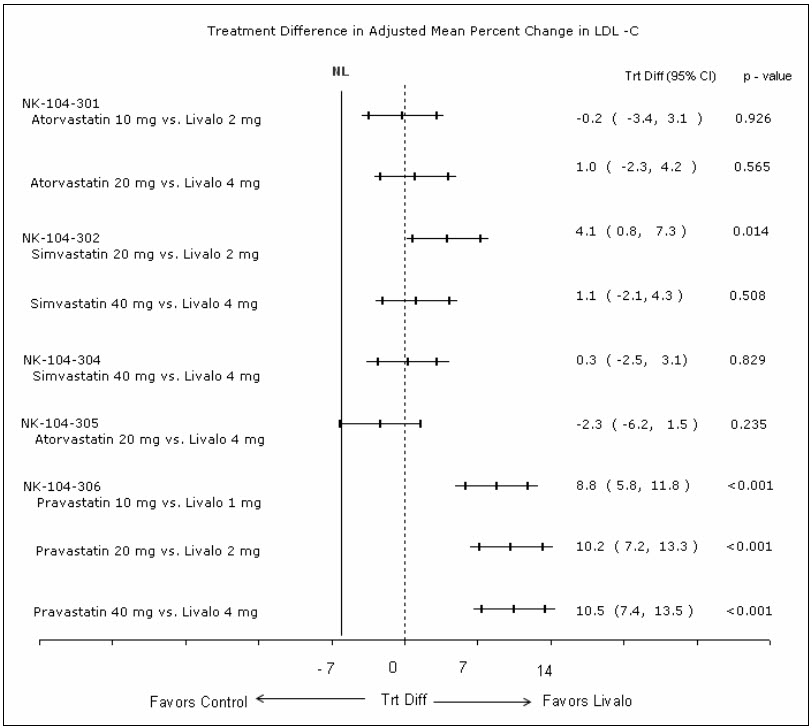
The treatment differences in efficacy in LDL-C change from baseline between LIVALO and active controls (i.e., atorvastatin, simvastatin, or pravastatin) in the active-controlled studies described above are summarized in Figure 1.
Figure 1. Treatment Difference in Adjusted Mean Percent Change in LDL-C between LIVALO and the Comparator (Atorvastatin, Simvastatin, or Pravastatin)
NL=non-inferiority limit.
HeFH in Pediatric Patients
In a double-blind, placebo-controlled, 12-week trial, 82 pediatric patients (36 boys and 46 girls), 8 to 16 years of age with genetically confirmed HeFH, fasting low-density lipoprotein cholesterol (LDL-C) ≥190 mg/dL or LDL-C ≥160 mg/dL with an additional cardiovascular risk factor (male gender, a family history of premature CV disease, presence of low HDL (<45 mg/dL) or high TG (>150 mg/dL), presence of high lipoprotein (a) (>75 nmol/L), presence of type 2 diabetes mellitus or presence of hypertension) were randomized to LIVALO 1 mg, 2 mg, and 4 mg. Mean LDL-C at baseline was 235 mg/dL (range 160.5 mg/dL to 441mg/dL). Approximately 39% of patients were Tanner Stage 1 at baseline.
LIVALO significantly reduced plasma LDL-C, non-HDL-C, TC, and Apo-B compared to placebo. The reductions in LDL-C, Apo-B, TC, and non-HDL-C were dose dependent. There was no statistically significant improvement in HDL-C or TG at any LIVALO dose. See the lipid results in Table 10.
Table 10. Lipid Response in Pediatric Patients with HeFH (Mean % Change from Baseline at Week 12)| Treatment | N | LDL-C | Apo-B | TC | TG Difference from placebo not statistically significant Median Percent Change from Baseline at Week 12 | HDL-C | non-HDL-C |
|---|
| Placebo | 19 | -1 | -3 | -1 | -3 | -1 | -1 |
LIVALO
1 mg daily | 20 | -21 | -20 | -16 | -14 | 7 | -21 |
LIVALO
2 mg daily | 24 | -30 | -25 | -25 | -15 | -3 | -29 |
LIVALO
4 mg daily | 19 | -38 | -28 | -30 | 5 | -2 | -36 |
Myopathy and Rhabdomyolysis
Advise patients that LIVALO may cause myopathy and rhabdomyolysis. Inform patients that the risk is increased when taking certain types of medication and they should discuss all medication, both prescription and over the counter, with their healthcare provider. Instruct patients to promptly report any unexplained muscle pain, tenderness or weakness particularly if accompanied by malaise or fever [see Warnings and Precautions (5.1)].
Hepatic Dysfunction
Inform patients that LIVALO may cause liver enzyme elevations and possibly liver failure. Advise patients to promptly report fatigue, anorexia, right upper abdominal discomfort, dark urine or jaundice [see Warnings and Precautions (5.3)].
Increases in HbA1c and Fasting Serum Glucose Levels
Inform patients that increases in HbA1c and fasting serum glucose levels may occur with LIVALO. Encourage patients to optimize lifestyle measures, including regular exercise, maintaining a healthy body weight, and making healthy food choices [see Warnings and Precautions (5.4)].
Pregnancy
Advise pregnant patients and patients who become pregnant of the potential risk to a fetus. Advise patients to inform their healthcare provider of a known or suspected pregnancy to discuss if LIVALO should be discontinued [see Use in Specific Populations (8.1)].
Lactation
Advise patients that breastfeeding is not recommended during treatment with LIVALO [see Use in Specific Populations (8.2)].
Manufactured for:
Kowa Company, Limited Tokyo 103-8433 Japan
Manufactured by:
Kowa Company, LTD Nagoya, 462-0024 Japan
Marketed and Distributed by:
Kowa Pharmaceuticals America, Inc. Montgomery, AL 36117 USA
LIV-RA-0149 03/2026
LIVALO is a trademark of the Kowa group of companies.
© Kowa Pharmaceuticals America, Inc. (2009)