Germ Attack 70% Isopropyl Alcohol Liquid
Product Images NDC 66902-070

View Photos of Packaging, Regulatory Labels, and Product Appearance

Product Visual Gallery

This gallery contains 2 technical images submitted to the FDA as part of the official labeling for Germ Attack 70% Isopropyl Alcohol (NDC 66902-070). Unlike standard consumer photos, these assets often include clinical data figures, molecular chemical structures, and official manufacturer packaging layouts.

As provided by Natural Essentials, Inc., these visuals offer a comprehensive scientific overview of the product's physical and chemical identity, aiding pharmacists and researchers in product verification and study.

Product Images & Figures Index

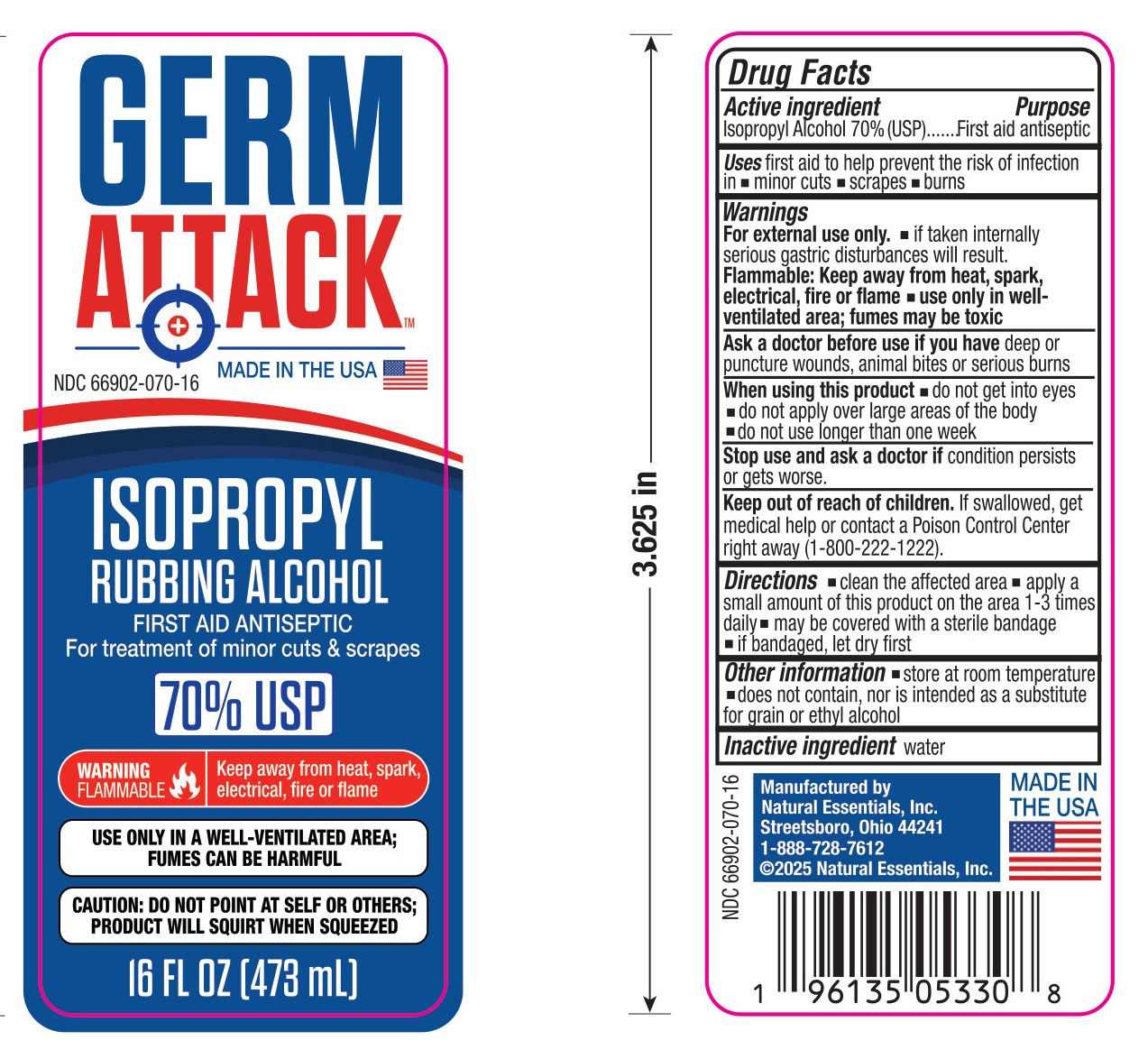
FDA Label Image

70% Ipa (16 oz.)

70% Ipa (16 oz.)
This text provides information about Isopropyl Rubbing Alcohol, a first aid antiseptic for minor cuts and scrapes. It contains 70% Isopropyl Alcohol and comes in a 16 fl oz bottle. The product should be used in a well-ventilated area as fumes can be harmful. The directions include cleaning the affected area and applying the product 1-3 times daily. It warns against using the product on deep wounds or punctures, and in case of ingestion, advises contacting a Poison Control Center. The product should not be used for more than one week and caution should be observed when applying to avoid contact with eyes.*
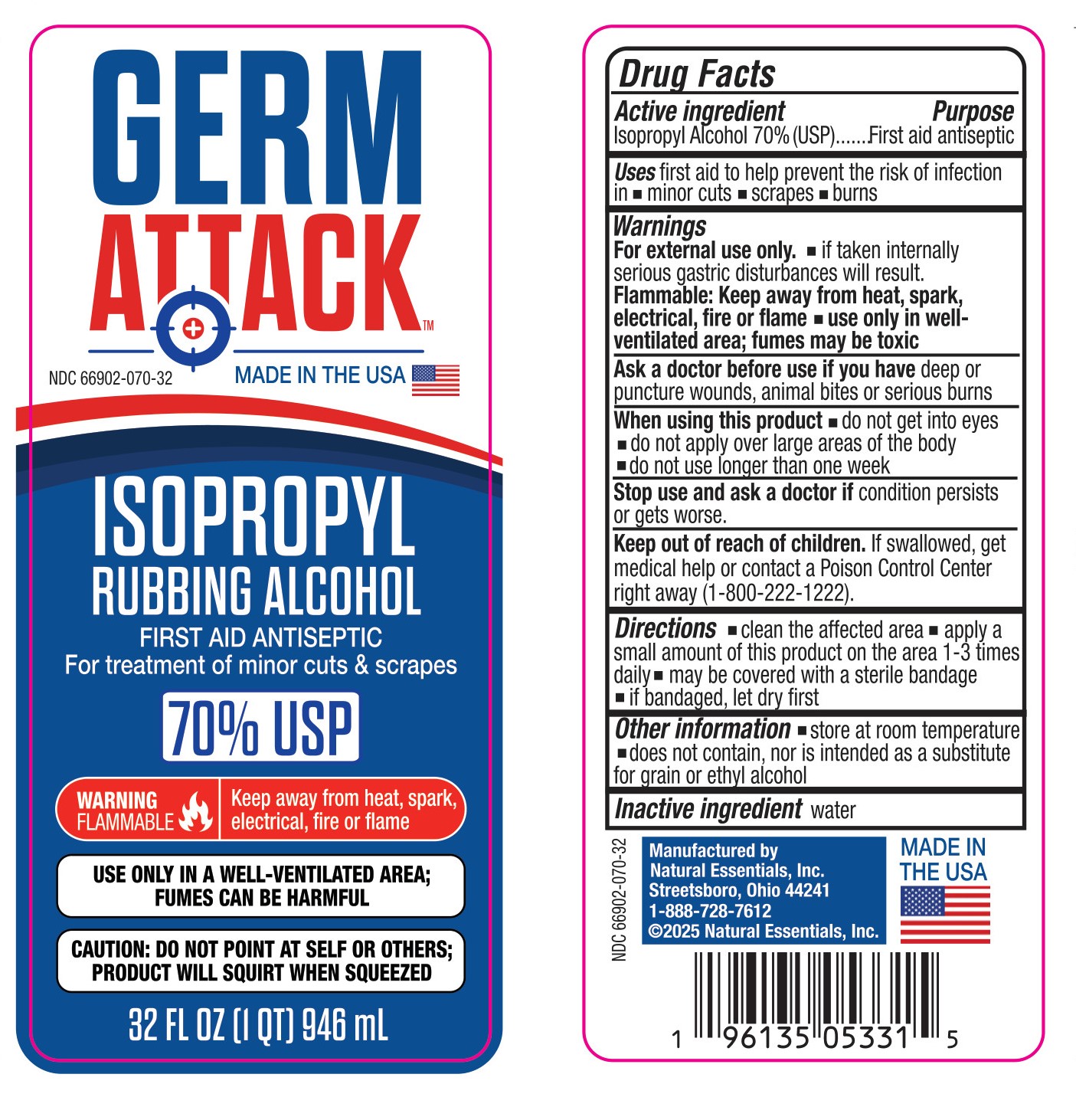
FDA Label Image

70% Ipa (32 oz)

70% Ipa (32 oz)
This is a drug label for Isopropyl Rubbing Alcohol, a first aid antiseptic used for treating minor cuts and scrapes. The product is made in the USA and contains 70% Isopropyl Alcohol. It is important to keep it away from heat, spark, and flame as it is flammable. Directions for use include cleaning the affected area and applying the product 1-3 times daily. It is advised to not use longer than one week and consult a doctor if the condition persists. The product should be stored at room temperature and kept out of reach of children. The manufacturer is Natural Essentials, Inc.*

* These product label images have been analyzed using experimental machine learning. Please verify findings with the primary label text.