Lung Function
The clinical development program for umeclidinium and vilanterol ELLIPTA included two 6-month, randomized, double-blind, placebo-controlled, parallel-group trials; two 6-month active-controlled trials; and two 12-week crossover trials in subjects with COPD designed to evaluate the efficacy of umeclidinium and vilanterol ELLIPTA on lung function. The 6-month trials treated 4,733 subjects that had a clinical diagnosis of COPD, were 40 years of age or older, had a history of smoking ≥10 pack-years, had a post-albuterol FEV1 ≤70% of predicted normal values, had a ratio of FEV1/FVC of <0.7, and had a Modified Medical Research Council (mMRC) score ≥2. Of the 4,713 subjects included in the efficacy analysis, 68% were male and 84% were white. They had a mean age of 63 years and an average smoking history of 45 pack-years, with 50% identified as current smokers. At screening, the mean postbronchodilator percent predicted FEV1 was 48% (range: 13% to 76%), the mean postbronchodilator FEV1/FVC ratio was 0.47 (range: 0.13 to 0.78), and the mean percent reversibility was 14% (range: -36% to 109%).
Trial 1 (NCT01313650) evaluated umeclidinium and vilanterol ELLIPTA (umeclidinium/vilanterol 62.5/25 mcg), umeclidinium 62.5 mcg, vilanterol 25 mcg, and placebo. The primary endpoint was change from baseline in trough (predose) FEV1 at Day 169 (defined as the mean of the FEV1 values obtained at 23 and 24 hours after the previous dose on Day 168) compared with placebo, umeclidinium 62.5 mcg, and vilanterol 25 mcg. The comparison of umeclidinium and vilanterol ELLIPTA with umeclidinium 62.5 mcg and vilanterol 25 mcg was assessed to evaluate the contribution of the individual comparators to umeclidinium and vilanterol ELLIPTA. Umeclidinium and vilanterol ELLIPTA demonstrated a larger increase in mean change from baseline in trough (predose) FEV1 relative to placebo, umeclidinium 62.5 mcg, and vilanterol 25 mcg (Table 2).
Table 2. Least Squares Mean Change from Baseline in Trough FEV1 (mL) at Day 169 in the Intent-to-Treat Population (Trial 1)| n = Number in intent-to-treat population. |
| a The umeclidinium and vilanterol comparators used the same inhaler and excipients as umeclidinium and vilanterol ELLIPTA. |
Treatment | n | Trough FEV1 (mL) at Day 169 |
Difference from |
Placebo (95% CI) n = 280 | Umeclidinium 62.5 mcga (95% CI) n = 418 | Vilanterol 25 mcga (95% CI) n = 421 |
Umeclidinium and Vilanterol ELLIPTA | 413 | 167 (128, 207) | 52 (17, 87) | 95 (60, 130) |
Trial 2 (NCT01313637) had a similar study design as Trial 1 but evaluated umeclidinium/vilanterol 125/25 mcg, umeclidinium 125 mcg, vilanterol 25 mcg, and placebo. Results for umeclidinium/vilanterol 125/25 mcg in Trial 2 were similar to those observed for umeclidinium and vilanterol ELLIPTA in Trial 1.
Results from the 2 active-controlled trials and the two 12-week trials provided additional support for the efficacy of umeclidinium and vilanterol ELLIPTA in terms of change from baseline in trough FEV1 compared with the single-ingredient comparators and placebo.
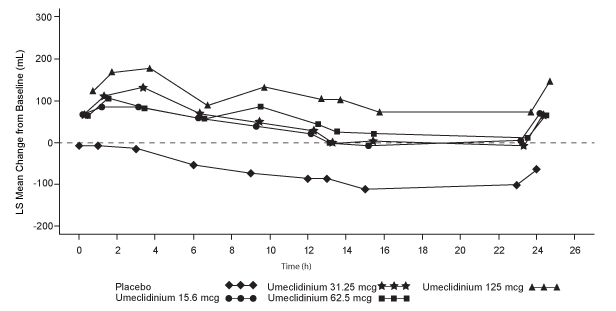
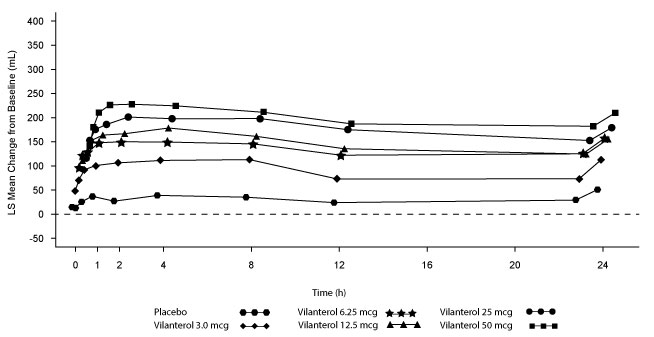
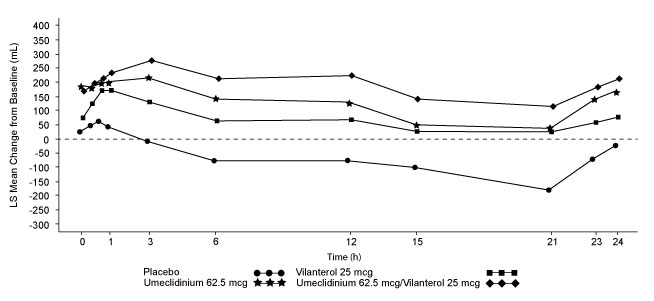
Serial spirometric evaluations throughout the 24-hour dosing interval were performed in a subset of subjects (n = 197) at Days 1, 84, and 168 in Trial 1. Results from Trial 1 at Day 1 and Day 168 are shown in Figure 5.
Figure 5. Least Squares (LS) Mean Change from Baseline in FEV1 (mL) over Time (0‑24 h) on Days 1 and 168 (Trial 1 Subset Population)
Day 1
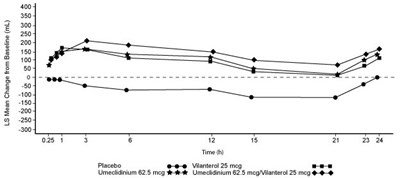
Figure 5 (Umeclidinium Vilanterol Ellipta Spl Graphic 09)
Day 168
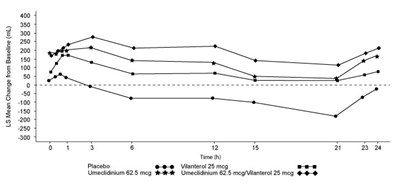
Figure 5 (Umeclidinium Vilanterol Ellipta Spl Graphic 10)
The peak FEV1 was defined as the maximum FEV1 recorded within 6 hours after the dose of trial medicine on Days 1, 28, 84, and 168 (measurements recorded at 15 and 30 minutes and 1, 3, and 6 hours). The mean peak FEV1 improvement from baseline for umeclidinium and vilanterol ELLIPTA compared with placebo at Day 1 and at Day 168 was 167 and 224 mL, respectively. The median time to onset on Day 1, defined as a 100-mL increase from baseline in FEV1, was 27 minutes in subjects receiving umeclidinium and vilanterol ELLIPTA.
Exacerbations
In Trial 6 (NCT02164513), a total of 10,355 subjects with COPD with a history of 1 or more moderate or severe exacerbations in the prior 12 months were randomized (1:2:2) to receive umeclidinium and vilanterol ELLIPTA (n = 2,070), fluticasone furoate/umeclidinium/vilanterol 100/62.5/25 mcg (n = 4,151), or fluticasone furoate/vilanterol 100/25 mcg (n = 4,134) administered once daily in a 12-month trial. The population demographics across all treatments were: mean age of 65 years, 77% white, 66% male, and an average smoking history of 46.6 pack-years, with 35% identified as current smokers. At trial entry, the most common COPD medications were ICS + anticholinergic + LABA (34%), ICS + LABA (26%), anticholinergic + LABA (8%), and anticholinergic (7%). The mean postbronchodilator percent predicted FEV1 was 46% (standard deviation: 15%), the mean postbronchodilator FEV1/FVC ratio was 0.47 (standard deviation: 0.12), and the mean percent reversibility was 10% (range: -59% to 125%).
The primary endpoint was annual rate of on-treatment moderate and severe exacerbations in subjects treated with fluticasone furoate/umeclidinium/vilanterol compared with the fixed-dose combinations of fluticasone furoate/vilanterol and umeclidinium and vilanterol ELLIPTA. Exacerbations were defined as worsening of 2 or more major symptoms (dyspnea, sputum volume, and sputum purulence) or worsening of any 1 major symptom together with any 1 of the following minor symptoms: sore throat, colds (nasal discharge and/or nasal congestion), fever without other cause, and increased cough or wheeze for at least 2 consecutive days. Exacerbations were considered to be of moderate severity if treatment with systemic corticosteroids and/or antibiotics was required and were considered to be severe if resulted in hospitalization or death.
Contribution of Umeclidinium on COPD Exacerbations: Evidence of efficacy for umeclidinium and vilanterol ELLIPTA on COPD exacerbations was established by the efficacy of the umeclidinium component of fluticasone furoate/umeclidinium/vilanterol in Trial 6. Treatment with fluticasone furoate/umeclidinium/vilanterol statistically significantly reduced the on-treatment annual rate of moderate/severe exacerbations by 15% compared with fluticasone furoate/vilanterol (Table 3). A reduction in risk of on-treatment moderate/severe exacerbation (as measured by time to first) was also observed for the same comparison. The benefit of umeclidinium on exacerbations is not expected to diminish when combined with vilanterol in umeclidinium and vilanterol ELLIPTA.
Umeclidinium and Vilanterol ELLIPTA and COPD Exacerbations: In Trial 6, the primary efficacy analysis of the rate of moderate/severe exacerbations, treatment with fluticasone furoate/umeclidinium/vilanterol statistically significantly reduced the on-treatment annual rate of moderate/severe exacerbations by 25% compared with umeclidinium and vilanterol ELLIPTA (Table 3).
Table 3. Moderate and Severe Chronic Obstructive Pulmonary Disease Exacerbations (Trial 6)aFF/UMEC/VI = Fluticasone furoate/umeclidinium/vilanterol 100/62.5/25 mcg, FF/VI = Fluticasone furoate/vilanterol 100/25 mcg, Umeclidinium and vilanterol ELLIPTA = Umeclidinium/vilanterol 62.5/25 mcg.
a On-treatment analyses excluded exacerbation data collected after discontinuation of study treatment. |
Treatment | n | Mean Annual Rate (exacerbations/year) | FF/UMEC/VI Rate Ratio vs. Comparator (95% CI) | % Reduction in Exacerbation Rate (95% CI) | P Value |
FF/UMEC/VI | 4,145 | 0.91 | | | |
FF/VI | 4,133 | 1.07 | 0.85 (0.80, 0.90) | 15 (10, 20) | P<0.001 |
Umeclidinium and Vilanterol ELLIPTA | 2,069 | 1.21 | 0.75 (0.70, 0.81) | 25 (19, 30) | P<0.001 |