The efficacy and safety of dapagliflozin 10 mg were assessed independently in two Phase 3 studies in patients with heart failure.
Dapagliflozin And Prevention of Adverse outcomes in Heart Failure (DAPA-HF, NCT03036124) was an international, multicenter, randomized, double-blind, placebo-controlled study in patients with heart failure (New York Heart Association [NYHA] functional class II-IV) with reduced ejection fraction (left ventricular ejection fraction [LVEF] 40% or less) to determine whether dapagliflozin reduces the risk of cardiovascular death and hospitalization for heart failure. Of 4744 patients, 2373 were randomized to dapagliflozin 10 mg and 2371 to placebo and were followed for a median of 18 months.
Dapagliflozin Evaluation to Improve the LIVEs of Patients with PReserved Ejection Fraction Heart Failure (DELIVER, NCT03619213) was an international, multicenter, randomized, double-blind, placebo-controlled study in patients aged ≥40 years with heart failure (NYHA class II-IV) with LVEF >40% and evidence of structural heart disease to determine whether dapagliflozin reduces the risk of cardiovascular death, hospitalization for heart failure or urgent heart failure visits. Of 6263 patients, 3131 were randomized to dapagliflozin 10 mg and 3132 to placebo and were followed for a median of 28 months. The study included 654 (10%) heart failure patients who were randomized during hospitalization for heart failure or within 30 days of discharge.
In DAPA-HF, at baseline, 94% of patients were treated with ACEi, ARB or angiotensin receptor-neprilysin inhibitor (ARNI, including sacubitril/valsartan 11%), 96% with beta-blocker, 71% with mineralocorticoid receptor antagonist (MRA), 93% with diuretic, and 26% had an implantable device.
In DELIVER, at baseline, 77% of patients were treated with ACEi, ARB or ARNI, 83% with beta-blocker, 43% with MRA, 98% with diuretic.
In both studies, dapagliflozin reduced the incidence of the primary composite endpoint of CV death, hospitalization for heart failure or urgent heart failure visit (see Table 17).
Table 17: Treatment Effect for the Primary Composite EndpointFull analysis set.
, its Components in the DAPA-HF and DELIVER Studies | DAPA-HF Study | DELIVER Study |
Patients with events
(event rate) | Hazard ratio
(95% CI) | p-value Two-sided p-values. | Patients with events
(event rate) | Hazard ratio
(95% CI) | p-value |
Efficacy Variable (Time to first occurrence) | Dapagliflozin 10 mg
N=2373 | Placebo
N=2371 | Dapagliflozin 10 mg
N=3131 | Placebo
N=3132 |
Composite of Hospitalization for Heart Failure, CV Death In DAPA-HF, the CV death component of the primary endpoint included death of undetermined cause. In DELIVER, the CV death component of the primary endpoint excluded death of undetermined cause. or Urgent Heart Failure Visit | 386
(11.6) | 502
(15.6) | 0.74
(0.65, 0.85) | <0.0001 | 512
(7.8) | 610
(9.6) | 0.82
(0.73, 0.92) | 0.0008 |
Components of the composite endpoints |
CV Death | 227
(6.5) | 273
(7.9) | 0.82
(0.69, 0.98) | | 231
(3.3) | 261
(3.8) | 0.88
(0.74, 1.05) | |
Hospitalization for Heart Failure or Urgent Heart Failure Visit | 237
(7.1) | 326
(10.1) | 0.70
(0.59, 0.83) | | 368
(5.6) | 455
(7.2) | 0.79
(0.69, 0.91) | |
Hospitalization for Heart Failure | 231
(6.9) | 318
(9.8) | 0.70
(0.59, 0.83) | | 329
(5.0) | 418
(6.5) | 0.77
(0.67, 0.89) | |
Urgent Heart Failure Visit | 10
(0.3) | 23
(0.7) | 0.43
(0.20, 0.90) | | 60
(0.9) | 78
(1.1) | 0.76
(0.55, 1.07) | |
N=Number of patients, CI=Confidence interval, CV=Cardiovascular. |
NOTE: Time to first event was analyzed in a Cox proportional hazards model. The number of first events for the single components are the actual number of first events for each component and does not add up to the number of events in the composite endpoint. Event rates are presented as the number of subjects with event per 100 patient years of follow-up.
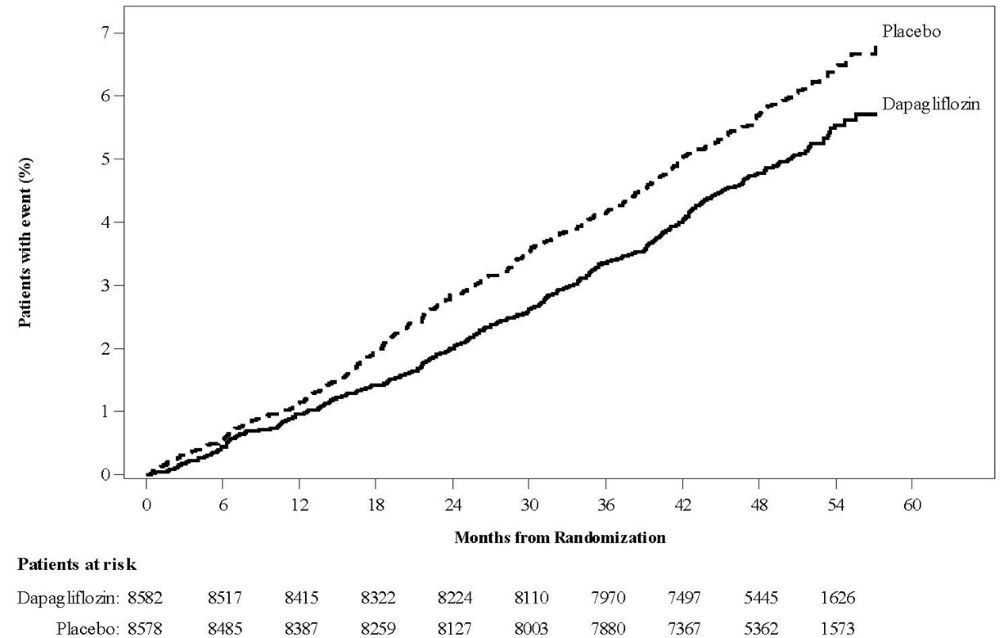
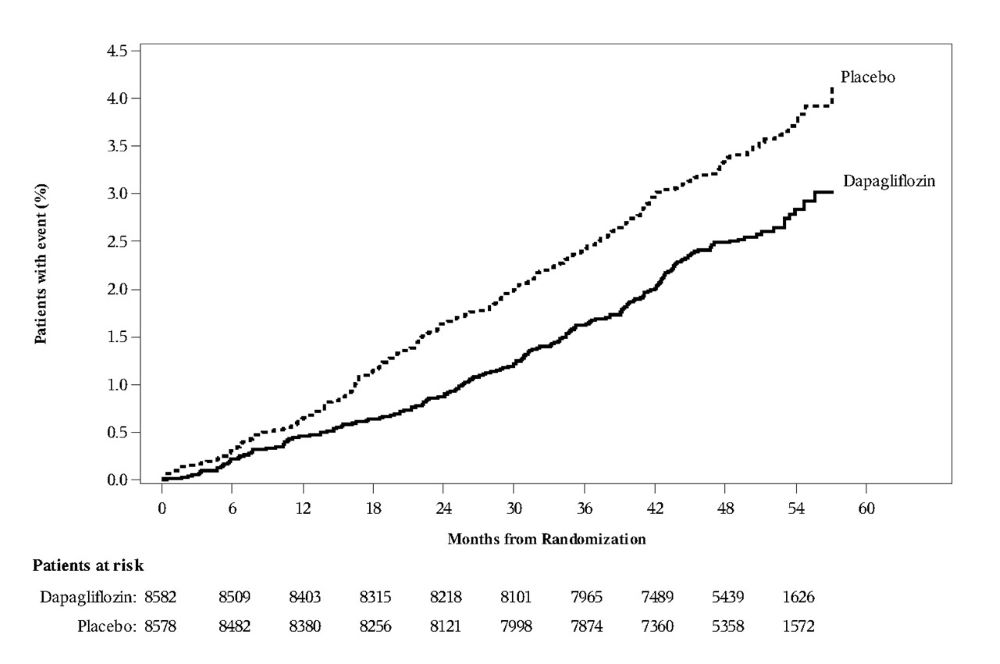
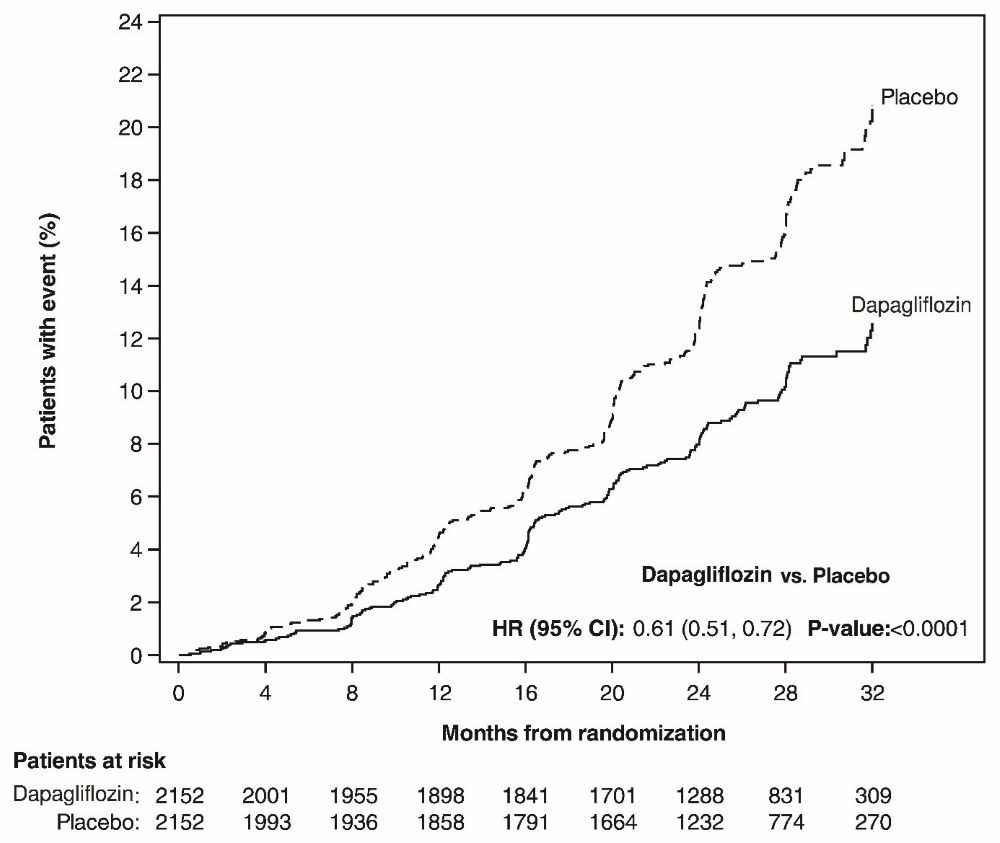
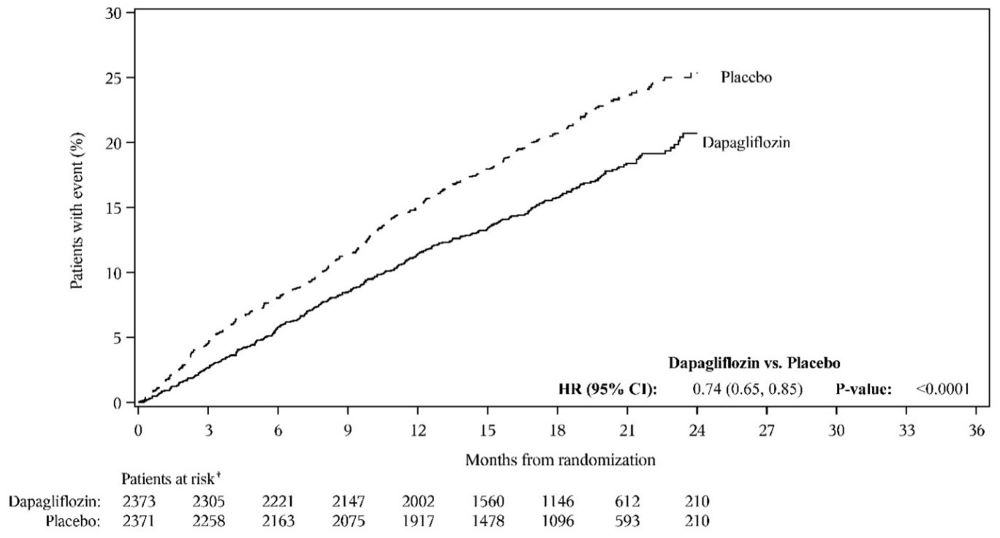
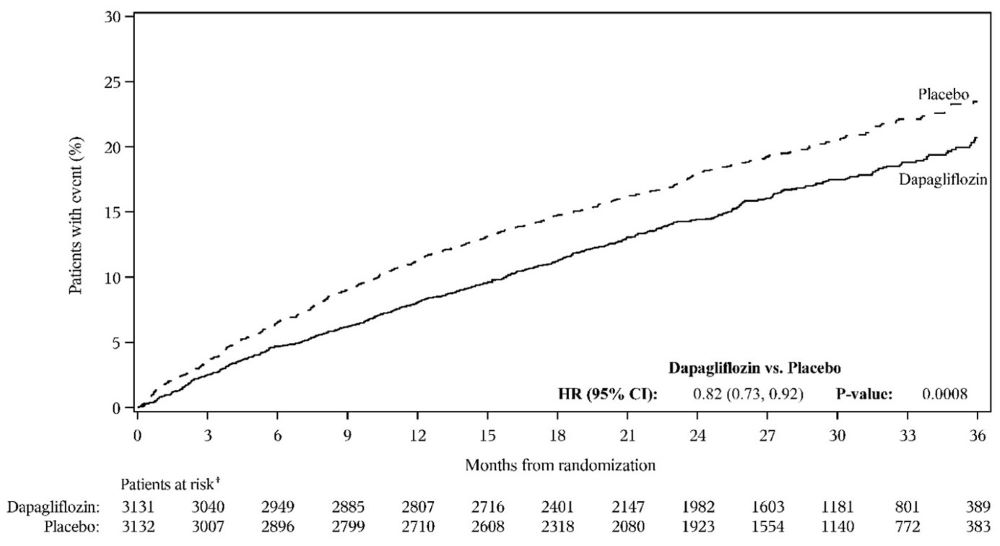
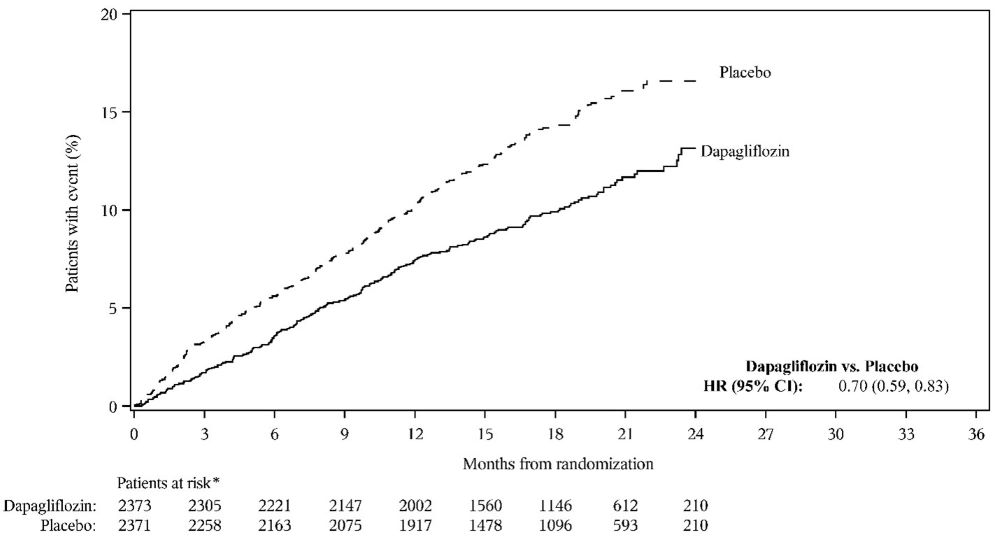
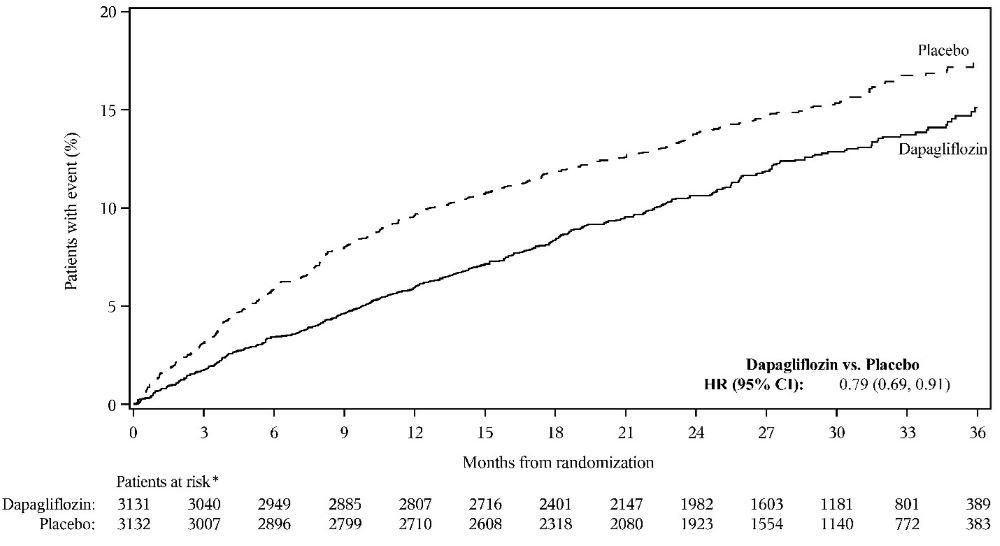
In both studies, all three components of the primary composite endpoint individually contributed to the treatment effect. In both studies, the dapagliflozin and placebo event curves separated early and continued to diverge over the study period (see Figures 7 and 9).
Figure 7: Time to the First Occurrence of the Composite of Cardiovascular Death*, Hospitalization for Heart Failure or Urgent Heart Failure Visit
A) DAPA-HF Study
B) DELIVER Study
NOTE: An urgent heart failure visit was defined as an urgent, unplanned, assessment by a physician, e.g., in an Emergency Department, and requiring treatment for worsening heart failure (other than just an increase in oral diuretics).
* In DAPA-HF, the CV death component of the primary endpoint included death of undetermined cause. In DELIVER, the CV death component of the primary endpoint excluded death of undetermined cause.
† Patients at risk is the number of patients at risk at the beginning of the period.
HR=Hazard ratio, CI=Confidence interval, CV=Cardiovascular.
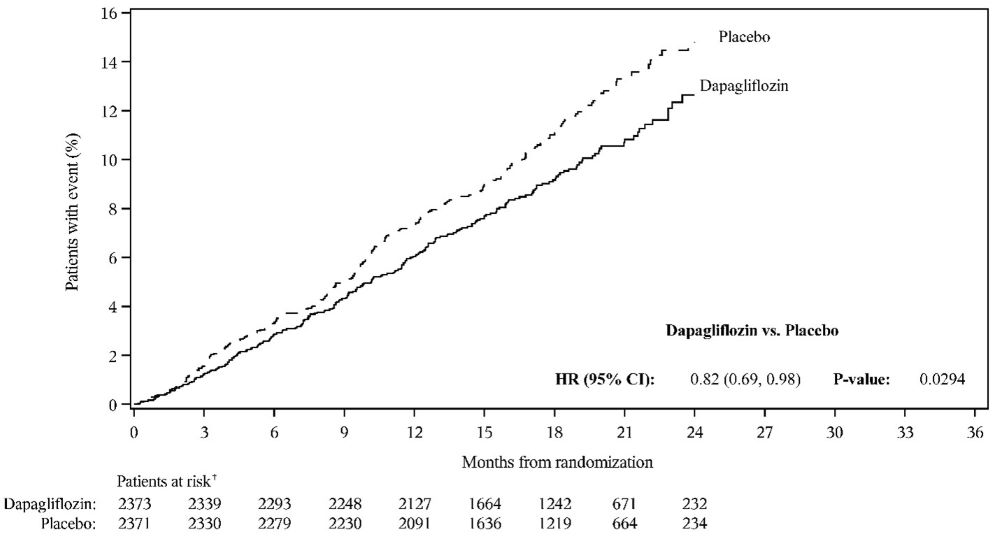
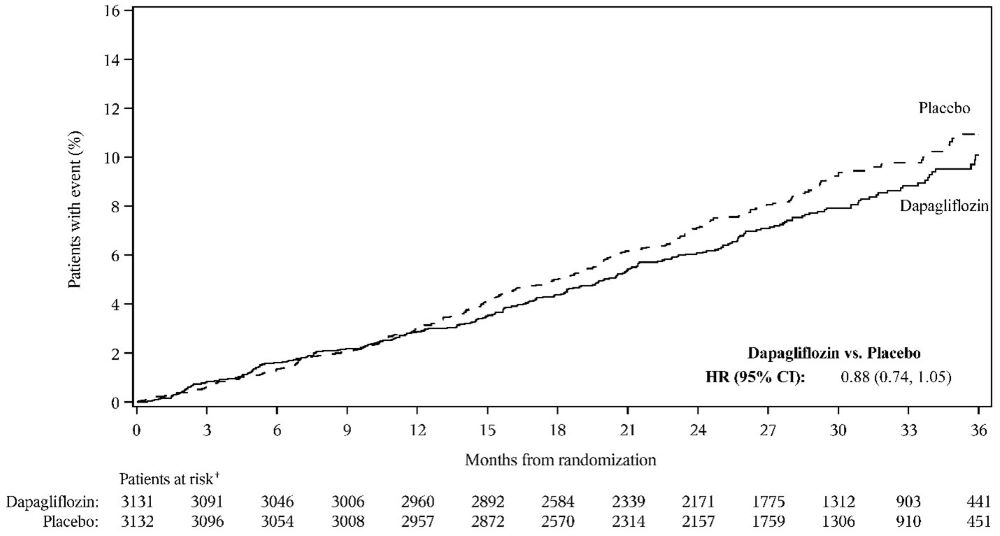
Figure 8: Time to Cardiovascular Death*
A) DAPA-HF Study
B) DELIVER Study
* In DAPA-HF, the CV death component of the primary endpoint included death of undetermined cause. In DELIVER, the CV death component of the primary endpoint excluded death of undetermined cause.
† Patients at risk is the number of patients at risk at the beginning of the period.
HR=Hazard ratio, CI=Confidence interval, CV=Cardiovascular.
Figure 9: Time to the First Occurrence of Hospitalization for Heart Failure or Urgent Heart Failure Visit
A) DAPA-HF Study
B) DELIVER Study
* Patients at risk is the number of patients at risk at the beginning of the period.
HR=Hazard ratio, CI=Confidence interval.
In DAPA-HF, dapagliflozin reduced the total number of hospitalizations for heart failure (first and recurrent) events and CV death, with 567 and 742 total events in the dapagliflozin-treated vs placebo group (Rate Ratio 0.75 [95% CI 0.65, 0.88]; p=0.0002).
In DELIVER, dapagliflozin reduced the total number of heart failure events (first and recurrent hospitalization for heart failure or urgent heart failure visit) and CV death, with 815 and 1057 total events in the dapagliflozin treated vs placebo group (Rate Ratio 0.77 [95% CI 0.67, 0.89]; p=0.0003).
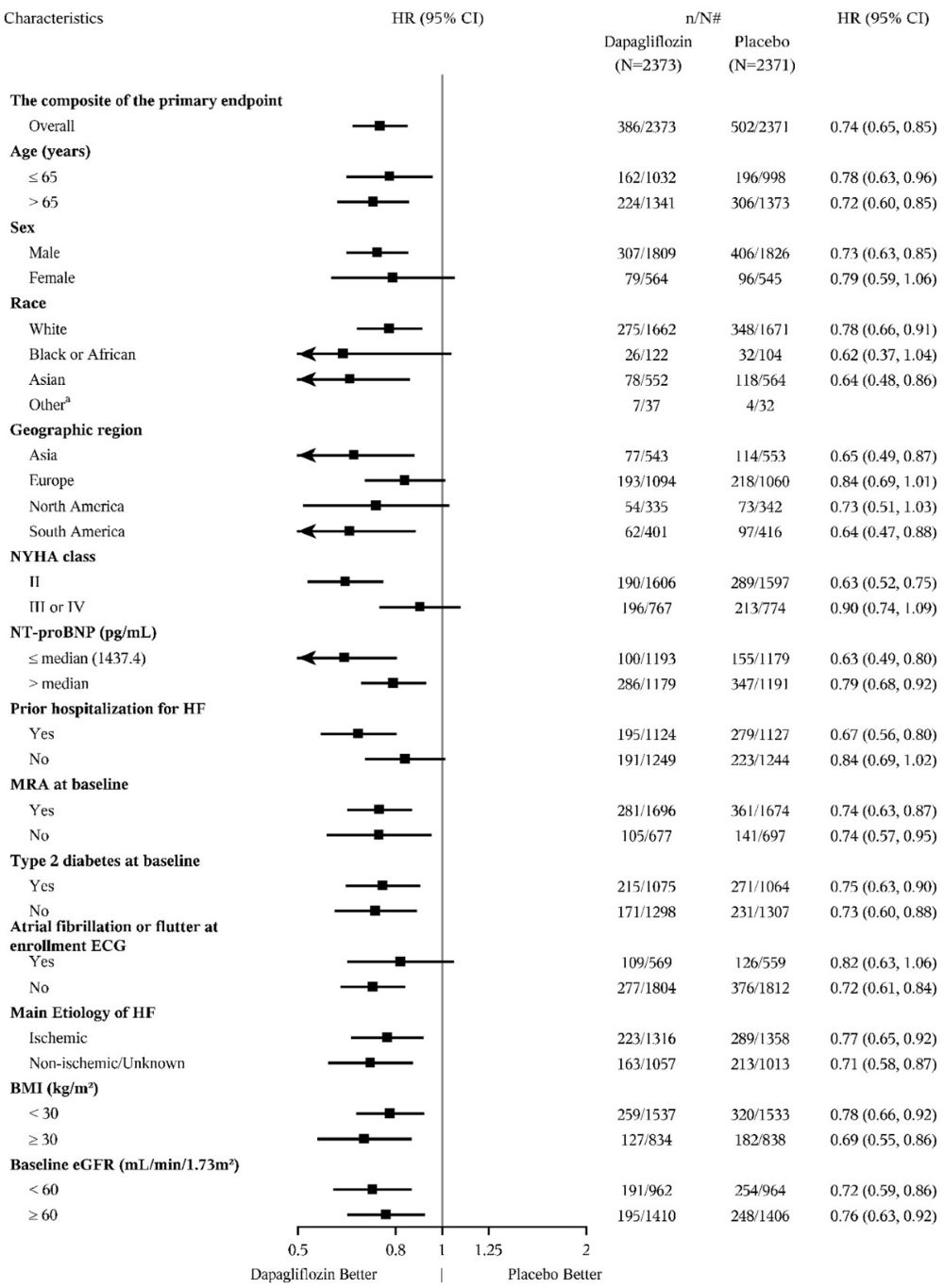
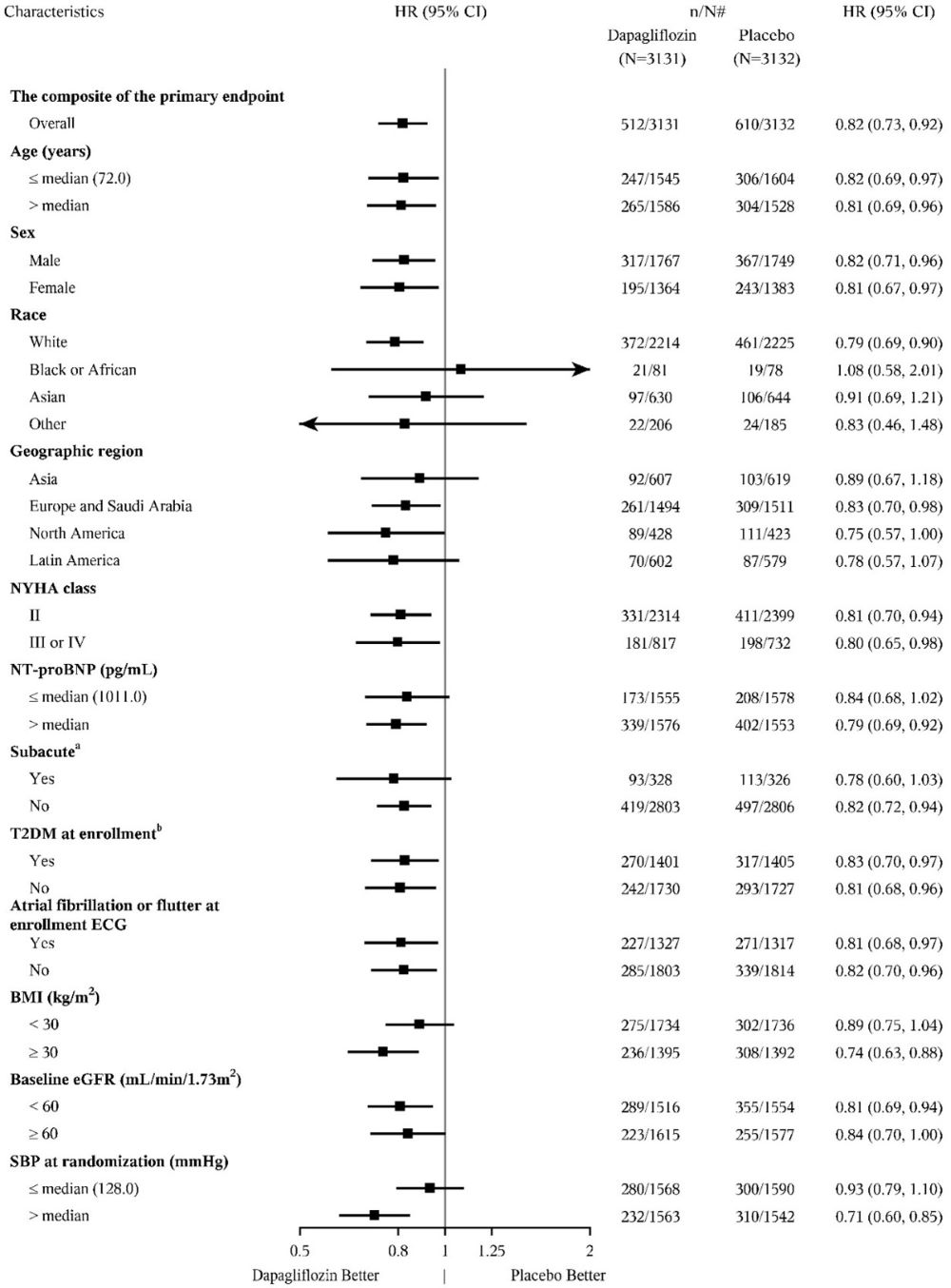
In both studies, the results of the primary composite endpoint were consistent across the subgroups examined (see Figure 10).
Figure 10: Treatment Effects for Primary Composite Endpoint (Cardiovascular Death and Heart Failure Events) Subgroup Analysis
A) DAPA-HF Study
a Hazard ratio estimates are not presented for subgroups with less than 15 events in total, both arms combined.
n/N# Number of subjects with event/number of subjects in the subgroup.
NT-proBNP = N-terminal pro b-type natriuretic peptide, HF = Heart failure, MRA = mineralocorticoid receptor antagonist,
ECG = electrocardiogram, eGFR = estimated glomerular filtration rate.
Note: The figure above presents effects in various subgroups, all of which are baseline characteristics. The 95% confidence limits that are shown do not take into account the number of comparisons made and may not reflect the effect of a particular factor after adjustment for all other factors. Apparent homogeneity or heterogeneity among groups should not be over-interpreted.
B) DELIVER Study
a Subacute patient defined as randomized during hospitalization for heart failure or within 30 days of discharge.
b Defined as history of type 2 diabetes mellitus. This analysis does not include type 2 diabetes mellitus as a stratification factor.
n/N# Number of subjects with event/number of subjects in the subgroup.
NT-proBNP = N-terminal pro b-type natriuretic peptide, HF = Heart failure, ECG = electrocardiogram, eGFR = estimated glomerular filtration rate, BMI = body mass index, SBP = systolic blood pressure, T2DM = type 2 diabetes mellitus.
NOTE: The figure above presents effects in various subgroups, all of which are baseline characteristics. The 95% confidence limits that are shown do not take into account the number of comparisons made and may not reflect the effect of a particular factor after adjustment for all other factors. Apparent homogeneity or heterogeneity among groups should not be over-interpreted.
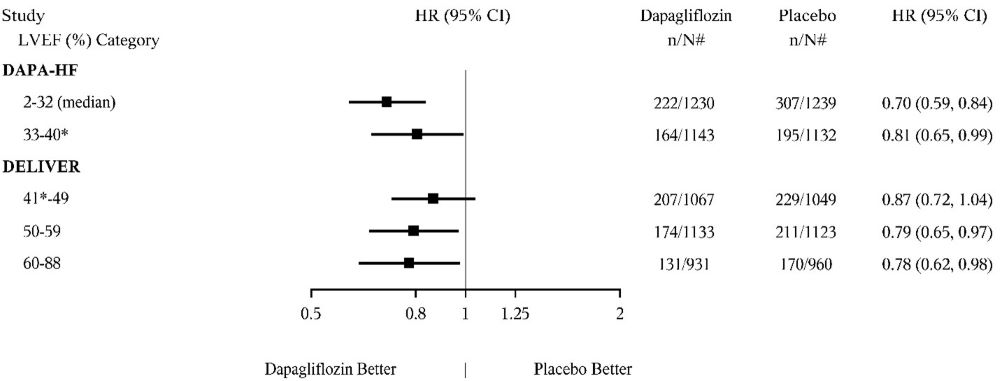
The treatment effect of dapagliflozin on the composite endpoint of cardiovascular death, hospitalization for heart failure or urgent heart failure was consistent across the LVEF range as evaluated in DAPA-HF and DELIVER studies (Figure 11).
Figure 11: Treatment Effects for Primary Composite Endpoint (Cardiovascular Death and Heart Failure Events) by LVEF (DAPA-HF and DELIVER Studies)
* 1 patient in DAPA-HF study had LVEF >40. 4 patients in DELIVER study had LVEF≤40.
In DAPA-HF study, the 5% and 95% percentiles of LVEF were 20 and 40 respectively. In DELIVER study, the 5% and 95% percentiles of LVEF were 42 and 70, respectively.