Adverse events reported since market introduction that were temporally related to Teriparatide Injection therapy include the following:
- Allergic Reactions: Anaphylactic reactions, drug hypersensitivity, angioedema, urticaria
- Investigations: Hyperuricemia
- Respiratory System: Acute dyspnea, chest pain
- Musculoskeletal: Muscle spasms of the leg or back
- Other: Injection site reactions including injection site pain, swelling and bruising; oro-facial edema
Adverse Reactions from Observational Studies to Assess Incidence of Osteosarcoma
Two osteosarcoma surveillance safety studies (U.S. claims-based database studies) were designed to obtain data on the incidence rate of osteosarcoma among Teriparatide Injection-treated patients. In these two studies, three and zero osteosarcoma cases were identified among 379,283 and 153,316 Teriparatide Injection users, respectively. The study results suggest a similar risk for osteosarcoma between Teriparatide Injection users and their comparators. However, the interpretation of the study results calls for caution owing to the limitations of the data sources which do not allow for complete measurement and control for confounders.
Risk Summary
There are no available data on Teriparatide Injection use in pregnant women to evaluate for drug-associated risk of major birth defects, miscarriage, or adverse maternal or fetal outcomes. Consider discontinuing Teriparatide Injection when pregnancy is recognized.
In animal reproduction studies, teriparatide increased skeletal deviations and variations in mouse offspring at subcutaneous doses equivalent to more than 60 times the recommended 20 mcg human daily dose (based on body surface area, mcg/m2), and produced mild growth retardation and reduced motor activity in rat offspring at subcutaneous doses equivalent to more than 120 times the human dose (see Data).
The background risk of major birth defects and miscarriage for the indicated population is unknown. The background risk in the US general population of major birth defects is 2% to 4% and of miscarriage is 15% to 20% of clinically recognized pregnancies.
Data
Animal Data
In animal reproduction studies, pregnant mice received teriparatide during organogenesis at subcutaneous doses equivalent to 8 to 267 times the human dose (based on body surface area, mcg/m2). At subcutaneous doses ≥60 times the human dose, the fetuses showed an increased incidence of skeletal deviations or variations (interrupted rib, extra vertebra or rib). When pregnant rats received teriparatide during organogenesis at subcutaneous doses 16 to 540 times the human dose, the fetuses showed no abnormal findings.
In a perinatal/postnatal study in pregnant rats dosed subcutaneously from organogenesis through lactation, mild growth retardation was observed in female offspring at doses ≥120 times the human dose. Mild growth retardation in male offspring and reduced motor activity in both male and female offspring were observed at maternal doses of 540 times the human dose. There were no developmental or reproductive effects in mice or rats at doses 8 or 16 times the human dose, respectively.
Risk Summary
It is not known whether teriparatide is excreted in human milk, affects human milk production, or has effects on the breastfed infant. Avoid Teriparatide Injection use in women who are breastfeeding.
Overdose Management — There is no specific antidote for a Teriparatide Injection overdosage. Treatment of suspected overdosage should include discontinuation of Teriparatide Injection, monitoring of serum calcium and phosphorus, and implementation of appropriate supportive measures, such as hydration.
Pharmacodynamics in Men with Primary or Hypogonadal Osteoporosis and Postmenopausal Women with Osteoporosis
Effects on Mineral Metabolism — Teriparatide affects calcium and phosphorus metabolism in a pattern consistent with the known actions of endogenous PTH (e.g., increases serum calcium and decreases serum phosphorus).
Serum Calcium Concentrations — When teriparatide 20 mcg was administered once daily, the serum calcium concentration increased transiently, beginning approximately 2 hours after dosing and reaching a maximum concentration between 4 and 6 hours (median increase, 0.4 mg/dL). The serum calcium concentration began to decline approximately 6 hours after dosing and returned to baseline by 16 to 24 hours after each dose.
In a clinical study of postmenopausal women with osteoporosis, the median peak serum calcium concentration measured 4 to 6 hours after dosing with Teriparatide Injection (20 mcg subcutaneous once daily) was 9.68 mg/dL at 12 months. The peak serum calcium remained below 11 mg/dL in >99% of women at each visit. Sustained hypercalcemia was not observed.
In this study, 11.1% of women treated with Teriparatide Injection had at least 1 serum calcium value above the upper limit of normal (ULN) (10.6 mg/dL) compared with 1.5% of women treated with placebo. The percentage of women treated with Teriparatide Injection whose serum calcium was above the ULN on consecutive 4- to 6-hour post-dose measurements was 3% compared with 0.2% of women treated with placebo. In these women, calcium supplements and/or Teriparatide Injection doses were reduced. The timing of these dose reductions was at the discretion of the investigator. Teriparatide Injection dose adjustments were made at varying intervals after the first observation of increased serum calcium (median 21 weeks). During these intervals, there was no evidence of progressive increases in serum calcium.
In a clinical study of men with either primary or hypogonadal osteoporosis, the effects on serum calcium were similar to those observed in postmenopausal women. The median peak serum calcium concentration measured 4 to 6 hours after dosing with Teriparatide Injection was 9.44 mg/dL at 12 months. The peak serum calcium remained below 11 mg/dL in 98% of men at each visit. Sustained hypercalcemia was not observed.
In this study, 6% of men treated with Teriparatide Injection daily had at least 1 serum calcium value above the ULN (10.6 mg/dL) compared with none of the men treated with placebo. The percentage of men treated with Teriparatide Injection whose serum calcium was above the ULN on consecutive measurements was 1.3% (2 men) compared with none of the men treated with placebo. Calcium supplementation was reduced in these men [see Warnings and Precautions (5.2) and Adverse Reactions (6.1)].
In a clinical study of women previously treated for 18 to 39 months with raloxifene (n=26) or alendronate (n=33), mean serum calcium >12 hours after Teriparatide Injection treatment was increased by 0.36 to 0.56 mg/dL, after 1 to 6 months of Teriparatide Injection treatment compared with baseline. Of the women pretreated with raloxifene, 3 (11.5%) had a serum calcium >11 mg/dL, and of those pretreated with alendronate, 3 (9.1%) had a serum calcium >11 mg/dL. The highest serum calcium reported was 12.5 mg/dL. None of the women had symptoms of hypercalcemia. There were no placebo controls in this study.
In the study of patients with glucocorticoid-induced osteoporosis, the effects of Teriparatide Injection on serum calcium were similar to those observed in postmenopausal women with osteoporosis not taking glucocorticoids.
Urinary Calcium Excretion — In a clinical study of postmenopausal women with osteoporosis who received 1000 mg of supplemental calcium and at least 400 IU of vitamin D, daily Teriparatide Injection increased urinary calcium excretion. The median urinary excretion of calcium was 190 mg/day at 6 months and 170 mg/day at 12 months. These levels were 30 mg/day and 12 mg/day higher, respectively, than in women treated with placebo. The incidence of hypercalciuria (>300 mg/day) was similar in the women treated with Teriparatide Injection or placebo.
In a clinical study of men with either primary or hypogonadal osteoporosis who received 1000 mg of supplemental calcium and at least 400 IU of vitamin D, daily Teriparatide Injection had inconsistent effects on urinary calcium excretion. The median urinary excretion of calcium was 220 mg/day at 1 month and 210 mg/day at 6 months. These levels were 20 mg/day higher and 8 mg/day lower, respectively, than in men treated with placebo. The incidence of hypercalciuria (>300 mg/day) was similar in the men treated with Teriparatide Injection or placebo.
Phosphorus and Vitamin D — In single-dose studies, teriparatide produced transient phosphaturia and mild transient reductions in serum phosphorus concentration. However, hypophosphatemia (<2.4 mg/dL) was not observed in clinical trials with Teriparatide Injection.
In clinical trials of daily Teriparatide Injection, the median serum concentration of 1,25-dihydroxyvitamin D was increased at 12 months by 19% in women and 14% in men, compared with baseline. In the placebo group, this concentration decreased by 2% in women and increased by 5% in men. The median serum 25-hydroxyvitamin D concentration at 12 months was decreased by 19% in women and 10% in men compared with baseline. In the placebo group, this concentration was unchanged in women and increased by 1% in men.
In the study of patients with glucocorticoid-induced osteoporosis, the effects of Teriparatide Injection on serum phosphorus were similar to those observed in postmenopausal women with osteoporosis not taking glucocorticoids.
Effects on Markers of Bone Turnover — Daily administration of Teriparatide Injection to men and postmenopausal women with osteoporosis in clinical studies stimulated bone formation, as shown by increases in the formation markers serum bone-specific alkaline phosphatase (BSAP) and procollagen I carboxy-terminal propeptide (PICP). Data on biochemical markers of bone turnover were available for the first 12 months of treatment. Peak concentrations of PICP at 1 month of treatment were approximately 41% above baseline, followed by a decline to near-baseline values by 12 months. BSAP concentrations increased by 1 month of treatment and continued to rise more slowly from 6 through 12 months. The maximum increases of BSAP were 45% above baseline in women and 23% in men. After discontinuation of therapy, BSAP concentrations returned toward baseline. The increases in formation markers were accompanied by secondary increases in the markers of bone resorption: urinary N-telopeptide (NTX) and urinary deoxypyridinoline (DPD), consistent with the physiological coupling of bone formation and resorption in skeletal remodeling. Changes in BSAP, NTX, and DPD were lower in men than in women, possibly because of lower systemic exposure to teriparatide in men.
In the study of patients with glucocorticoid-induced osteoporosis, the effects of Teriparatide Injection on serum markers of bone turnover were similar to those observed in postmenopausal women with osteoporosis not taking glucocorticoids.
Absorption — Teriparatide is absorbed after subcutaneous injection; the absolute bioavailability is approximately 95% based on pooled data from 20-, 40-, and 80- mcg doses (1-, 2-, and 4- times the recommended dosage, respectively). The peptide reaches peak serum concentrations about 30 minutes after subcutaneous injection of a 20-mcg dose and declines to non-quantifiable concentrations within 3 hours.
Distribution — Volume of distribution following intravenous injection is approximately 0.12 L/kg.
Elimination — Systemic clearance of teriparatide (approximately 62 L/hour in women and 94 L/hour in men) exceeds the rate of normal liver plasma flow, consistent with both hepatic and extra-hepatic clearance. The half-life of teriparatide in serum was approximately 1 hour when administered by subcutaneous injection.
No metabolism or excretion studies have been performed with teriparatide. Peripheral metabolism of PTH is believed to occur by non-specific enzymatic mechanisms in the liver followed by excretion via the kidneys.
Specific Populations
Geriatric Patients — No age-related differences in teriparatide pharmacokinetics were detected (range 31 to 85 years).
Male and Female Patients — Although systemic exposure to teriparatide was approximately 20% to 30% lower in men than women, the recommended dosage for men and women is the same.
Racial Groups — The influence of race has not been determined.
Patients with Renal Impairment — No pharmacokinetic differences were identified in 11 patients with creatinine clearance (CrCl) 30 to 72 mL/minute administered a single dose of teriparatide. In 5 patients with severe renal impairment (CrCl<30 mL/minute), the AUC and T1/2 of teriparatide were increased by 73% and 77%, respectively. Maximum serum concentration of teriparatide was not increased. No studies have been performed in patients undergoing dialysis for chronic renal failure.
Patients with Hepatic Impairment — No studies have been performed in patients with hepatic impairment. Non-specific proteolytic enzymes in the liver (possibly Kupffer cells) cleave PTH(1-34) and PTH(1-84) into fragments that are cleared from the circulation mainly by the kidney.
Drug Interaction Studies
Digoxin — In a study of 15 healthy people administered digoxin daily to steady state, a single Teriparatide Injection dose did not alter the effect of digoxin on the systolic time interval (from electrocardiographic Q-wave onset to aortic valve closure, a measure of digoxin's calcium-mediated cardiac effect).
Hydrochlorothiazide — In a study of 20 healthy people, the coadministration of hydrochlorothiazide 25 mg with 40 mcg of Teriparatide Injection (2 times the recommended dose) did not affect the serum calcium response to Teriparatide Injection. The 24-hour urine excretion of calcium was reduced by a clinically unimportant amount (15%). The effect of coadministration of a higher dose of hydrochlorothiazide with Teriparatide Injection on serum calcium levels has not been studied.
Furosemide — In a study of 9 healthy people and 17 patients with CrCl 13 to 72 mL/minute, coadministration of intravenous furosemide (20 to 100 mg) with Teriparatide Injection 40 mcg (2 times the recommended dose) resulted in small increases in the serum calcium (2%) and 24-hour urine calcium (37%); however, these changes did not appear to be clinically important.
Carcinogenesis
Two carcinogenicity bioassays were conducted in Fischer 344 rats. In the first study, male and female rats were given daily subcutaneous teriparatide injections of 5, 30, or 75 mcg/kg/day for 24 months from 2 months of age. These doses resulted in rat systemic exposures that were 3, 20, and 60 times higher than the systemic exposure observed in humans, respectively, following a subcutaneous dose of 20 mcg (based on AUC comparison). Teriparatide treatment resulted in a marked dose-related increase in the incidence of osteosarcoma, a rare malignant bone tumor, in both male and female rats. Osteosarcomas were observed at all doses and the incidence reached 40% to 50% in the high-dose groups. Teriparatide also caused a dose-related increase in osteoblastoma and osteoma in both sexes. No osteosarcomas, osteoblastomas or osteomas were observed in untreated control rats. The bone tumors in rats occurred in association with a large increase in bone mass and focal osteoblast hyperplasia.
The second 2-year study was carried out in order to determine the effect of treatment duration and animal age on the development of bone tumors. Female rats were treated for different periods between 2 and 26 months of age with subcutaneous teriparatide doses of 5 and 30 mcg/kg (equivalent to 3 and 20 times the human exposure at the 20-mcg dose, respectively, based on AUC comparison). The study showed that the occurrence of osteosarcoma, osteoblastoma and osteoma was dependent upon dose and duration of teriparatide exposure. Bone tumors were observed when immature 2-month old rats were treated with 30 mcg/kg/day of teriparatide for 24 months or with 5 or 30 mcg/kg/day of teriparatide for 6 months. Bone tumors were also observed when mature 6-month old rats were treated with 30 mcg/kg/day of teriparatide for 6 or 20 months. Tumors were not detected when mature 6-month old rats were treated with 5 mcg/kg/day of teriparatide for 6 or 20 months. The results did not demonstrate a difference in susceptibility to bone tumor formation, associated with teriparatide treatment, between mature and immature rats.
No bone tumors were detected in a long-term monkey study [see Nonclinical Toxicology (13.2)].
Mutagenesis
Teriparatide was not genotoxic in any of the following test systems: the Ames test for bacterial mutagenesis; the mouse lymphoma assay for mammalian cell mutation; the chromosomal aberration assay in Chinese hamster ovary cells, with and without metabolic activation; and the in vivo micronucleus test in mice.
Impairment of Fertility
No effects on fertility were observed in male and female rats given subcutaneous teriparatide doses of 30, 100, or 300 mcg/kg/day prior to mating and in females continuing through gestation Day 6 (16 to 160 times the human dose of 20 mcg based on surface area, mcg/m2).
Effect on Fracture Incidence
New Vertebral Fractures — Teriparatide Injection, when taken with calcium and vitamin D and compared with calcium and vitamin D alone, reduced the risk of 1 or more new vertebral fractures from 14.3% of women in the placebo group to 5.0% in the Teriparatide Injection group (444 of the 541 patients treated with 20 mcg once daily of Teriparatide Injection were included in this analysis). This difference was statistically significant (p<0.001); the absolute reduction in risk was 9.3% and the relative reduction was 65%. Teriparatide Injection was effective in reducing the risk for vertebral fractures regardless of age, baseline rate of bone turnover, or baseline BMD (see
Table 2).
Table 2: Effect of Teriparatide Injection on Risk of Vertebral Fractures in Postmenopausal Women with Osteoporosis
|
| Percent of Women With Fracture |
|
Teriparatide Injection
(N=444) |
Placebo
(N=448) | Absolute Risk Reduction
(%, 95% CI) | Relative Risk Reduction
(%, 95% CI) |
| New fracture (≥1)
| 5.0a | 14.3
| 9.3 (5.5-13.1)
| 65 (45-78)
|
| 1 fracture
| 3.8
| 9.4
| | |
| 2 fractures
| 0.9
| 2.9
| | |
| ≥3 fractures
| 0.2
| 2.0
| | |
New Nonvertebral Osteoporotic Fractures — Teriparatide Injection significantly reduced the risk of any nonvertebral fracture from 5.5% in the placebo group to 2.6% in the Teriparatide Injection group (p<0.05). The absolute reduction in risk was 2.9% and the relative reduction was 53%. The incidence of new nonvertebral fractures in the Teriparatide Injection group compared with the placebo group was ankle/foot (0.2%, 0.7%), hip (0.2%, 0.7%), humerus (0.4%, 0.4%), pelvis (0%, 0.6%), ribs (0.6%, 0.9%), wrist (0.4%, 1.3%), and other sites (1.1%, 1.5%), respectively.
The cumulative percentage of postmenopausal women with osteoporosis who sustained new nonvertebral fractures was lower in women treated with Teriparatide Injection than in women treated with placebo (see Figure 1).
Figure 1: Cumulative Percentage of Postmenopausal Women with Osteoporosis Sustaining New Nonvertebral Osteoporotic Fractures
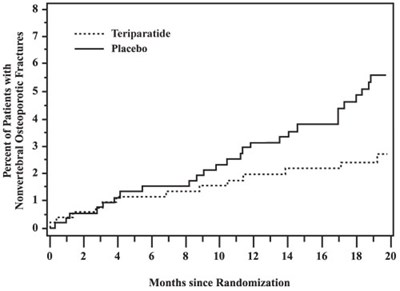
Figure 1 (Teriparatide F002 V1)
Effect on Bone Mineral Density (BMD)
Teriparatide Injection increased lumbar spine BMD in postmenopausal women with osteoporosis. Statistically significant increases were seen at 3 months and continued throughout the treatment period. Postmenopausal women with osteoporosis who were treated with Teriparatide Injection had statistically significant increases in BMD from baseline to endpoint at the lumbar spine, femoral neck, total hip, and total body (see
Table 3).
Table 3: Mean Percent Change in BMD from Baseline to Endpointa in Postmenopausal Women with Osteoporosis, Treated with Teriparatide Injection or Placebo for a Median of 19 Months
|
|
|
| Teriparatide Injection
N=541 | Placebo
N=544 |
| Lumbar spine BMD
| 9.7b | 1.1
|
| Femoral neck BMD
| 2.8c | -0.7
|
| Total hip BMD
| 2.6c | -1.0
|
| Trochanter BMD
| 3.5c | -0.2
|
| Intertrochanter BMD
| 2.6c | -1.3
|
| Ward's triangle BMD
| 4.2c | -0.8
|
| Total body BMD
| 0.6c | -0.5
|
| Distal 1/3 radius BMD
| -2.1
| -1.3
|
| Ultradistal radius BMD
| -0.1
| -1.6
|
Teriparatide Injection treatment increased lumbar spine BMD from baseline in 96% of postmenopausal women treated. Seventy-two percent of patients treated with Teriparatide Injection achieved at least a 5% increase in spine BMD, and 44% gained 10% or more.
Both treatment groups lost height during the trial. The mean decreases were 3.61 and 2.81 mm in the placebo and Teriparatide Injection groups, respectively.
Bone Histology
The effects of Teriparatide Injection on bone histology were evaluated in iliac crest biopsies of 35 postmenopausal women treated for 12 to 24 months with calcium and vitamin D and Teriparatide Injection. Normal mineralization was observed with no evidence of cellular toxicity. The new bone formed with Teriparatide Injection was of normal quality (as evidenced by the absence of woven bone and marrow fibrosis).
Effect on Bone Mineral Density (BMD)
In patients with glucocorticoid-induced osteoporosis, Teriparatide Injection increased lumbar spine BMD compared with baseline at 3 months through 18 months of treatment. In patients treated with Teriparatide Injection, the mean percent change in BMD from baseline to endpoint was 7.2% at the lumbar spine, 3.6% at the total hip, and 3.7% at the femoral neck (p <0.001 all sites). The relative treatment effects of Teriparatide Injection were consistent in subgroups defined by gender, age, geographic region, body mass index, underlying disease, prevalent vertebral fracture, baseline glucocorticoid dose, prior bisphosphonate use, and glucocorticoid discontinuation during trial.
Osteosarcoma
Patients should be made aware that in rats, teriparatide caused an increase in the incidence of osteosarcoma (a malignant bone tumor). Although cases of osteosarcoma have been reported in patients using Teriparatide Injection no increased risk of osteosarcoma was observed in adult humans treated with Teriparatide Injection [see Warnings and Precautions (5.1)].
Hypercalcemia
Instruct patients taking Teriparatide Injection to contact a health care provider if they develop persistent symptoms of hypercalcemia (e.g., nausea, vomiting, constipation, lethargy, muscle weakness) [see Warnings and Precautions (5.2)].
Orthostatic Hypotension
When initiating Teriparatide Injection treatment, instruct patients to be prepared to immediately sit or lie down during or after administration in case they feel lightheaded or have palpitations after the injection. Instruct patients to sit or lie down until the symptoms resolve. If symptoms persist or worsen, instruct patients to consult a healthcare provider before continuing treatment [see Warnings and Precautions (5.4)].
Other Osteoporosis Treatment Modalities
Patients should be informed regarding the roles of supplemental calcium and/or vitamin D.
Use of the Prefilled Delivery Device (Pen)
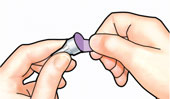
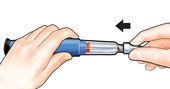
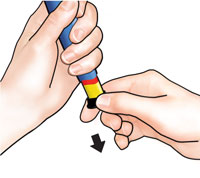
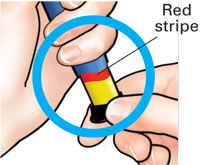
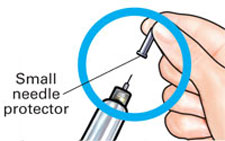
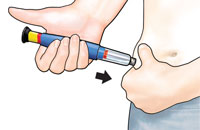
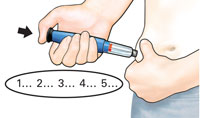
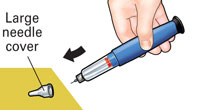
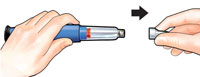
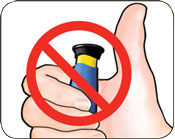
Instruct patients and caregivers who administer Teriparatide Injection on how to properly use the delivery device (refer to User Manual), to properly dispose of needles, and not to share their prefilled delivery device with other patients. Instruct patients and caregivers who administer Teriparatide Injection that the contents of the delivery device should not be transferred to a syringe.
Inform patients that each Teriparatide Injection delivery device can be used for up to 28 days. After the 28-day use period, instruct patients to discard the Teriparatide Injection delivery device, even if it still contains some unused solution. Instruct patients not to use Teriparatide Injection after the expiration date printed on the delivery device and packaging.
Manufactured for: Prasco Laboratories, Mason, OH 45040, USA
Manufactured by: Eli Lilly and Company Indianapolis, IN 46285, USA
Copyright © 2002, 2021, Eli Lilly and Company. All rights reserved.
TER-0005-USPI-20210514