Levetiracetam Injection
Product Images NDC 67457-255

View Photos of Packaging, Regulatory Labels, and Product Appearance

Product Visual Gallery

This gallery contains 8 technical images submitted to the FDA as part of the official labeling for Levetiracetam (NDC 67457-255). Unlike standard consumer photos, these assets often include clinical data figures, molecular chemical structures, and official manufacturer packaging layouts.

As provided by Mylan Institutional Llc, these visuals offer a comprehensive scientific overview of the product's physical and chemical identity, aiding pharmacists and researchers in product verification and study.

FDA Label Image

Levetiracetam Injection 500 mg/100 mL Carton Label (Image 01)
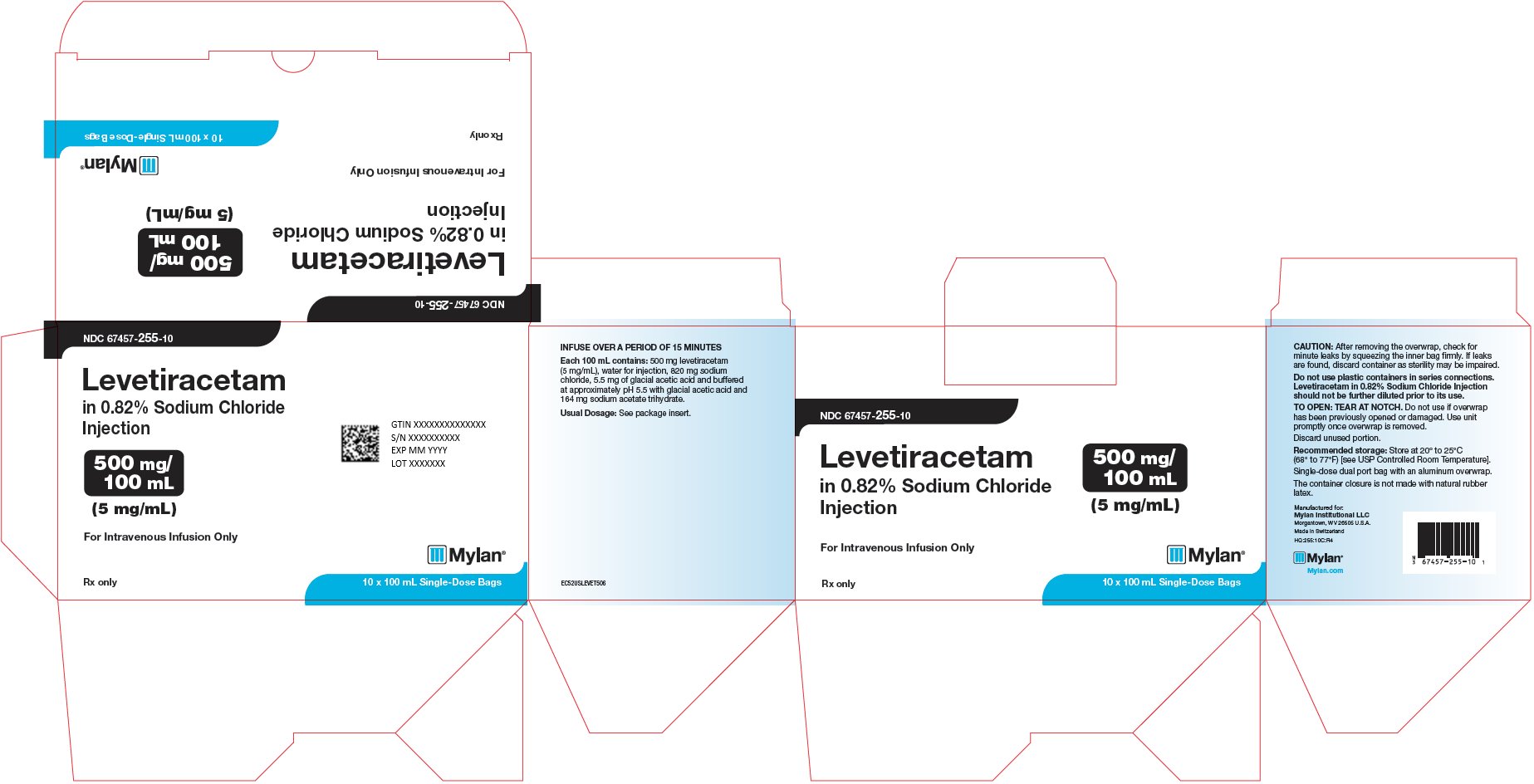
Levetiracetam Injection 500 mg/100 mL Carton Label (Image 01)
This is a description of a Levetiracetam drug which is in the form of an injection. The injection comes in a 100mL bag that contains 5mg/mL or 500mg Levetiracetam. Other ingredients in the injection include 20mg sodium chloride, 55mg acetic acid, and 164g sodium acetate. The drug is supposed to be used for intravenous infusion only and should be infused over a period of 15 minutes. The usual dosage is indicated in the package. The injection should be stored at controlled room temperature and the unused portion should be discarded appropriately. The container has an aluminum overwrap and a natural rubber closure.*
FDA Label Image

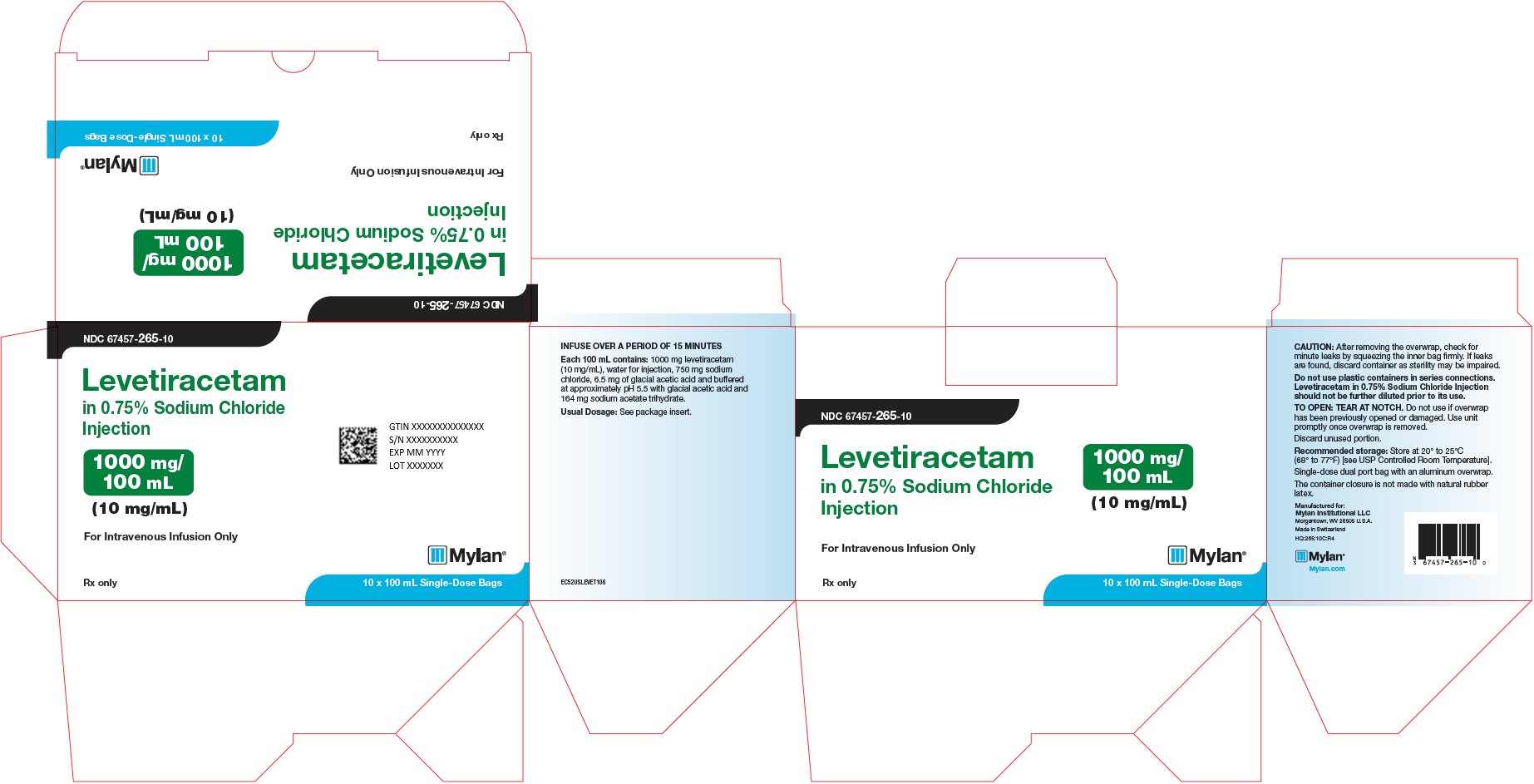
Levetiracetam Injection 1000 mg/100 mL Carton Label (Image 02)

Levetiracetam Injection 1000 mg/100 mL Carton Label (Image 02)
This is a description of a medication called Levetiracetam which is available in 1000mg/100ml dosage as a 0.75% Sodium Chloride injection for intravenous infusion only. The package contains 10x 100ml single-dose bags with a caution message outside the bag that advises the user to discard the container immediately should there be any leaks, and the unused portion should also be properly disposed of. The recommended storage is at 20 to 25°C. There are instructions to infuse over a period of 15 minutes and the package contains the usual dosage instructions. The container closure is not made from natural rubber latex.*
FDA Label Image

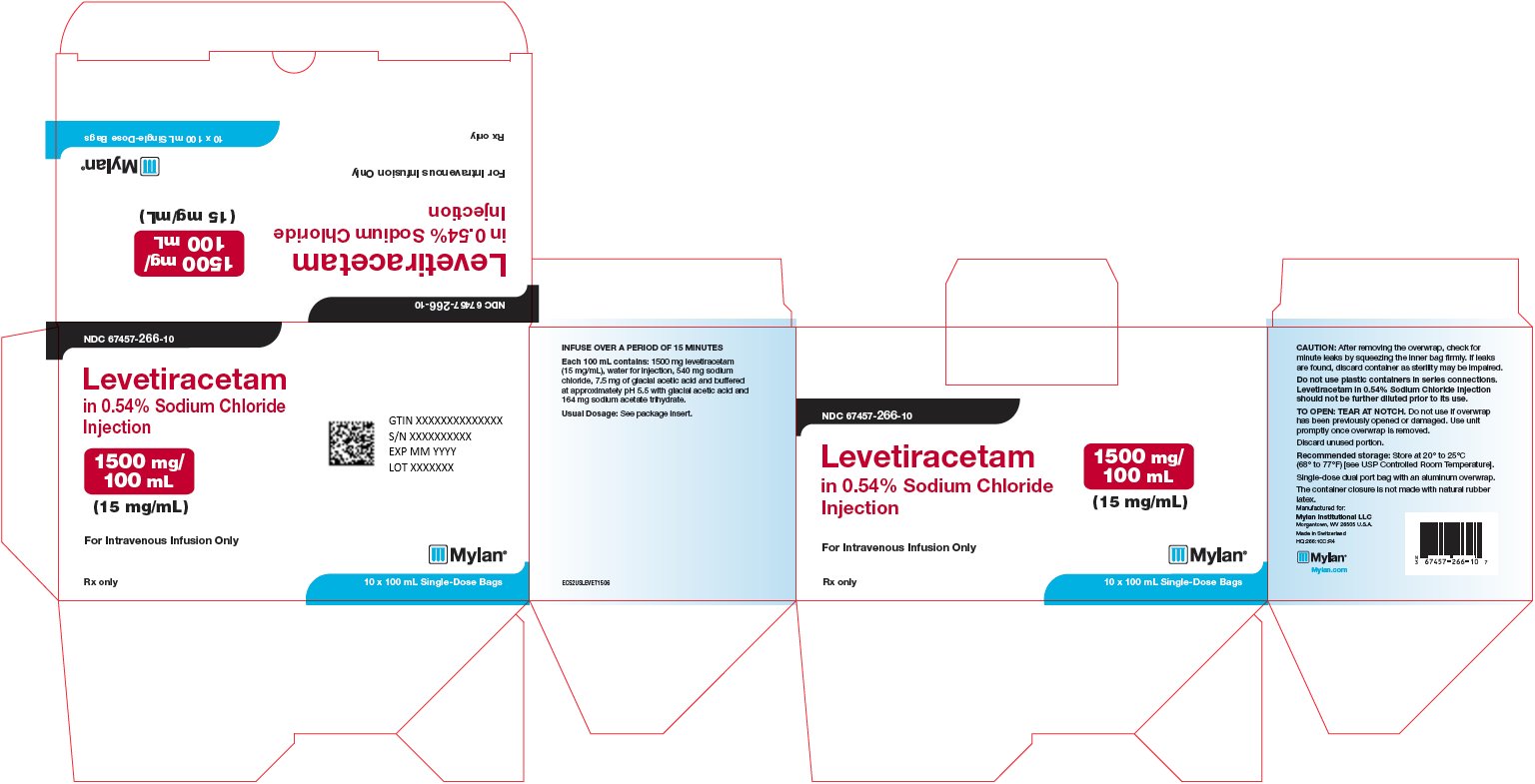
Levetiracetam Injection 1500 mg/100 mL Carton Label (Image 03)

Levetiracetam Injection 1500 mg/100 mL Carton Label (Image 03)
This is a description of a medication called Levetiracetam which is an injection administered through intravenous infusion. The injection contains 500mg of Levetiracetam in 0.54% Sodium Chloride solution and comes in a 100mL vial with 15mg/mL concentration. There are instructions on the dosage, storage, and opening the vial. The text advises that the medication should not be used on damaged containers and it must be handled with caution. There is also information on the manufacturer's lot number, expiration date and recommended storage conditions.*
FDA Label Image

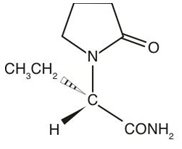
Levetiracetam Structural Formula (Image 04)

FDA Label Image

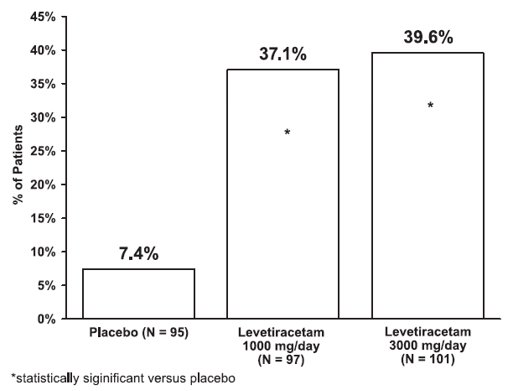
Figure 1: Responder Rate (≥50% Reduction From Baseline) In Study 1 (Image 05)

Figure 1: Responder Rate (≥50% Reduction From Baseline) In Study 1 (Image 05)
This appears to be a bar graph showing the percentage of patients versus the dosage of Levetiracetam, a medication used to treat epilepsy. The graph compares the effectiveness of a placebo with dosages of 1000 mg/day and 3000 mg/day. The text indicates that the 3000 mg/day dosage was "statistically significant" compared to the placebo.*
FDA Label Image

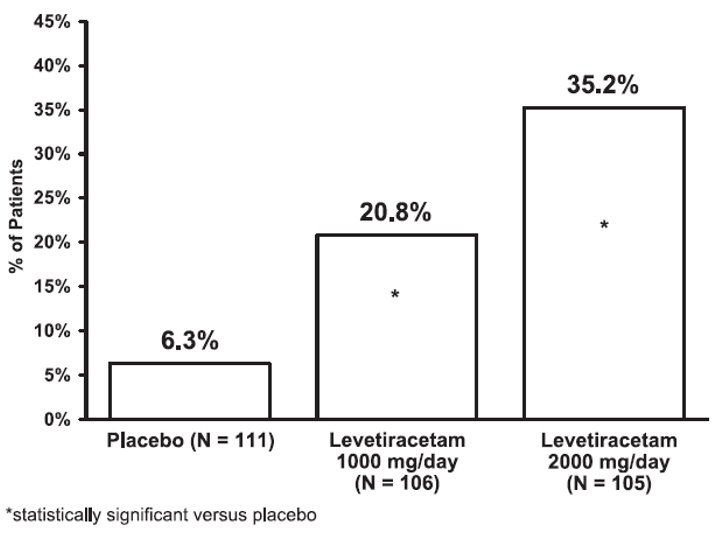
Figure 2: Responder Rate (≥50% Reduction From Baseline) In Study 2: Period A (Image 06)

Figure 2: Responder Rate (≥50% Reduction From Baseline) In Study 2: Period A (Image 06)
This appears to be a graph displaying the percentages of patients experiencing some kind of effect, likely related to a medication called Levetiracetam. The graph shows varying percentages at different doses, with asterisks indicating a statistically significant difference from the placebo group. However, without further context or information about what effect is being measured, it is difficult to give a more specific description.*
FDA Label Image

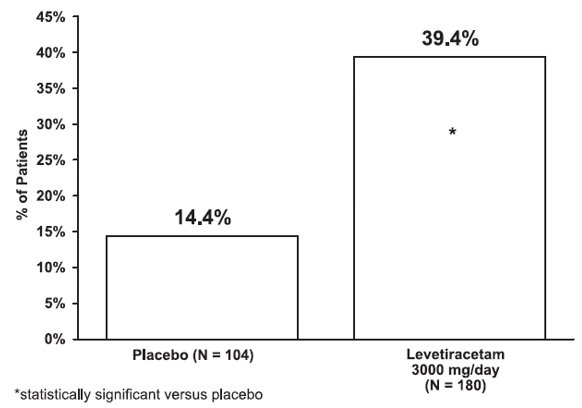
Figure 3: Responder Rate (≥50% Reduction From Baseline) In Study 3 (Image 07)

Figure 3: Responder Rate (≥50% Reduction From Baseline) In Study 3 (Image 07)
This appears to be a chart showing the percentage of patients experiencing an effect in a clinical trial. The chart includes percentages ranging from 0% to 45%, with the vertical axis labeled "% of Patients" and the horizontal axis unlabelled. A note at the bottom of the chart indicates that the data is statistically significant versus placebo. Two data points are included in the chart, one labeled "39.4%" and marked as statistically significant versus placebo, and another labeled "14.4%" and not marked as statistically significant versus placebo. The first data point represents a group treated with a drug called Levetiracetam at 3000 mg/day, while the second data point represents a placebo group. The total number of patients included in the study is shown as 180 for the Levetiracetam group and 104 for the placebo group.*
FDA Label Image

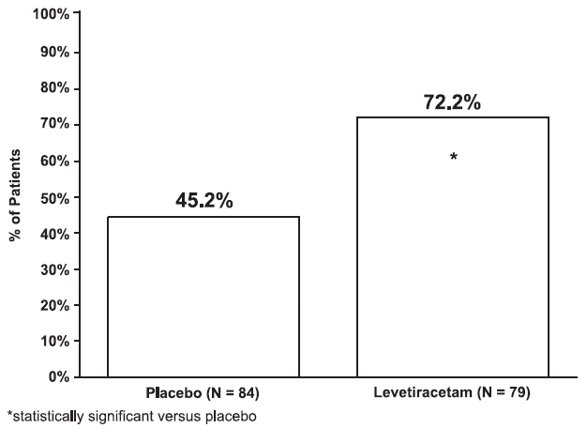
Figure 4: Responder Rate (≥50% Reduction From Baseline) In Pgtc Seizure Frequency Per Week (Image 08)

Figure 4: Responder Rate (≥50% Reduction From Baseline) In Pgtc Seizure Frequency Per Week (Image 08)
The text describes a chart showing the percentage of patients in different treatment groups, placebo (N = 84) and Levetiracetam (N = 79). The chart indicates that a particular treatment's efficacy is statistically significant when compared to the placebo. No further details are available.*

* These product label images have been analyzed using experimental machine learning. Please verify findings with the primary label text.