Levetiracetam Injection, Solution, Concentrate
Product Images NDC 67457-790
View Photos of Packaging, Regulatory Labels, and Product Appearance
Product Visual Gallery
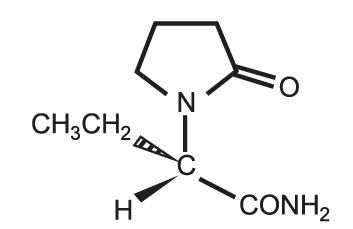
This gallery contains 8 technical images submitted to the FDA as part of the official labeling for Levetiracetam (NDC 67457-790). Unlike standard consumer photos, these assets often include clinical data figures, molecular chemical structures, and official manufacturer packaging layouts.
As provided by Mylan Institutional Llc, these visuals offer a comprehensive scientific overview of the product's physical and chemical identity, aiding pharmacists and researchers in product verification and study.
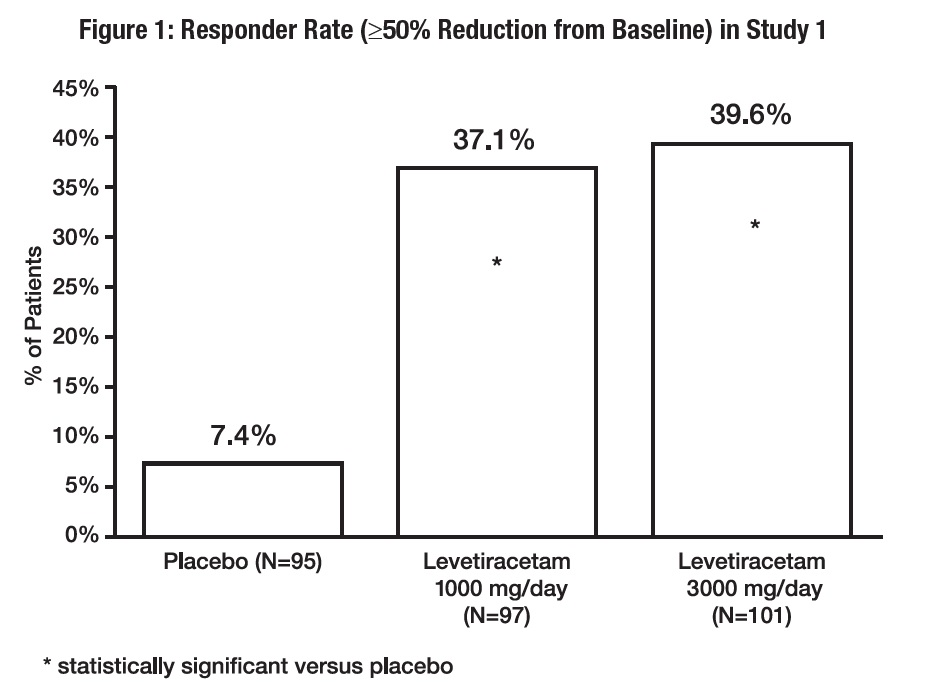
Figure 1 (Image 02)
The figure shows the responder rate of patients (>50% reduction from baseline) in Study 1. The responder rate was compared between patients who received placebo (N=95) and those who received Levetiracetam at doses of 1000 mg/day (N=97) and 3000 mg/day (N=101). The percentage of patients who responded is shown on the y-axis and ranges from 0% to 45%. The results show that treatment with Levetiracetam at both doses resulted in a statistically significant increase in responder rate compared to placebo.*
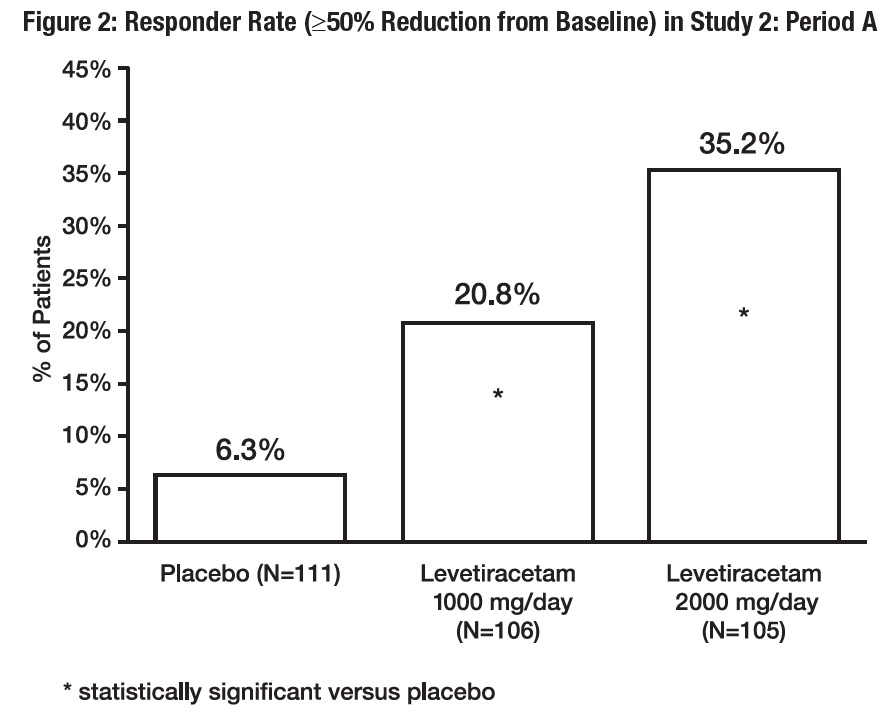
Figure 2 (Image 03)
The text describes a figure showing responder rates in Study 2, during Period A. The figure shows a graph with percentages of patients, where at the y-axis there are rates varying from 0% to 45%, and at the x-axis there are treatment groups. The treatment groups consist of Placebo (N=111), Levetiracetam 1000 mg/day (N=106), and Levetiracetam 2000 mg/day (N=105). The figure indicates which treatment group had statistically significant results versus placebo.*
Figure 5 (Image 04)
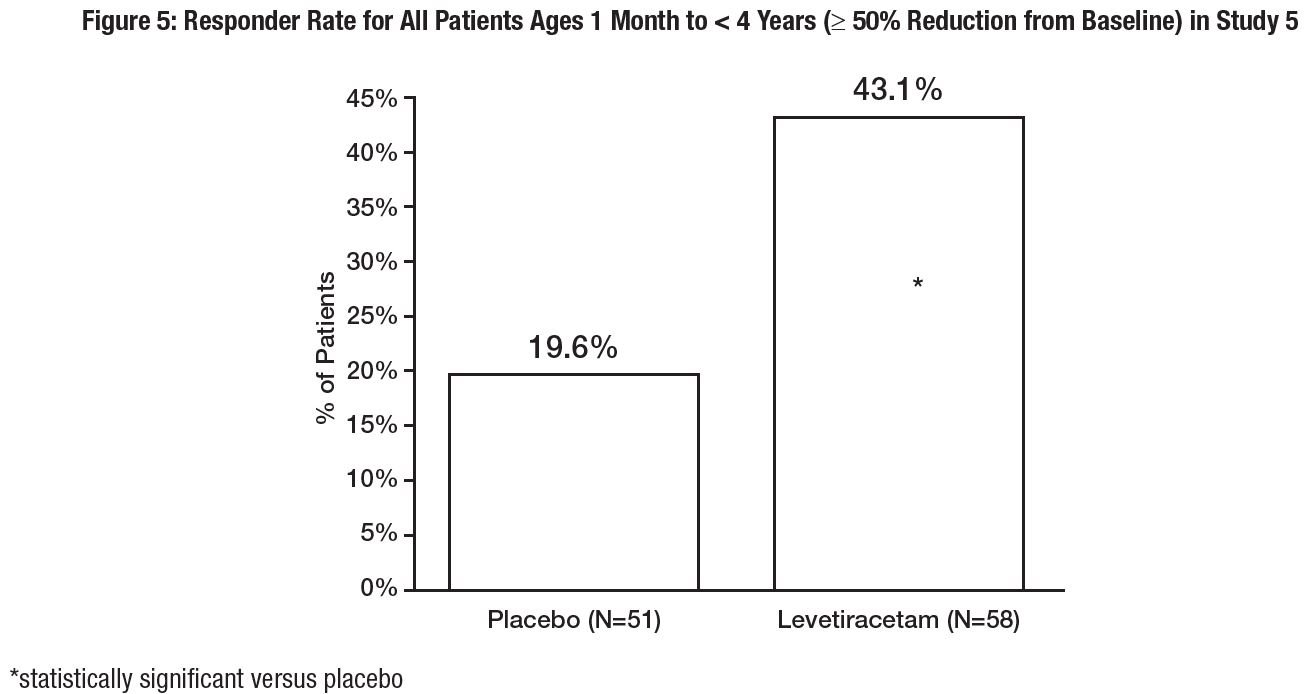
Figure 5 (Image 05)
The text describes Figure 5 that shows the Responder Rate for patients between 1 month to less than 4 years of age in Study 5. The figure displays the percentage of patients who responded positively to the treatment, with a more than 50% reduction from baseline. The graph compares the response rates of patients who received a placebo (N=51) and those who received Levetiracetam (N=58). It also states that the Levetiracetam group had a statistically significant improvement compared to the placebo group.*
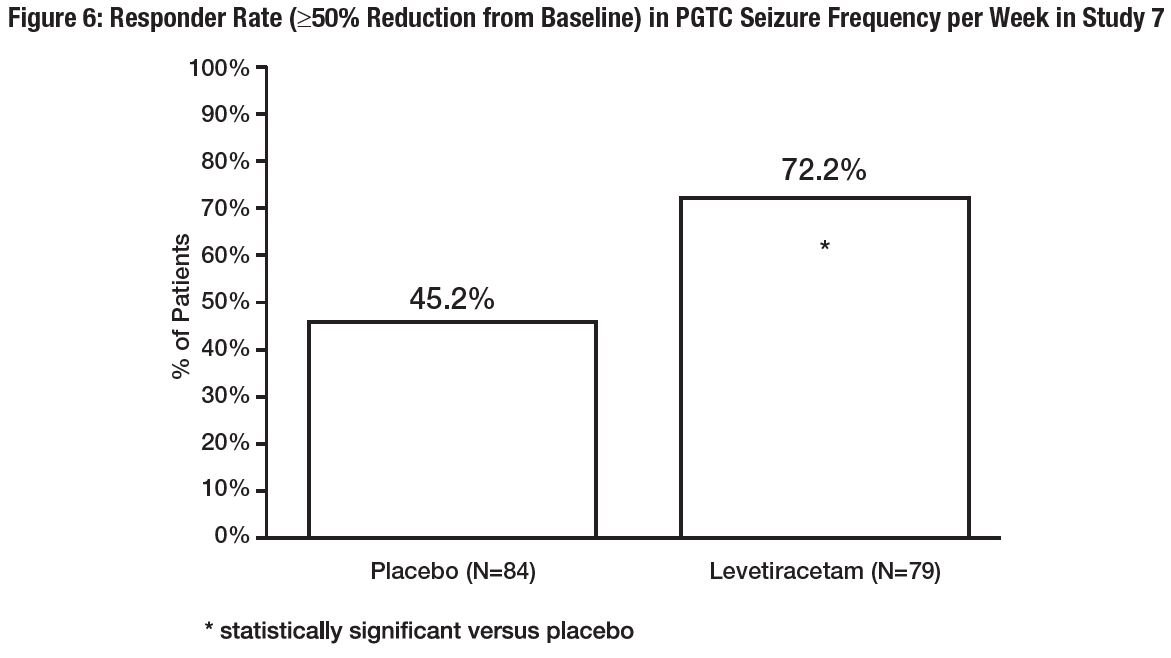
Figure 6 (Image 06)
The text describes a graph labeled as "Figure 6". It shows the responder rate of patients who had more than a 50% reduction in PGTC seizure frequency per week in a study labeled as "Study 7". The graph displays two groups; one treated with a placebo consisting of 84 patients and the other treated with Levetiracetam, consisting of 79 patients. The percentage of patients is displayed on the y-axis and ranges from 0% to 100%. The x-axis shows the different percentages from 0 to 100%. The results show that Levetiracetam was statistically significant compared to the placebo group.*
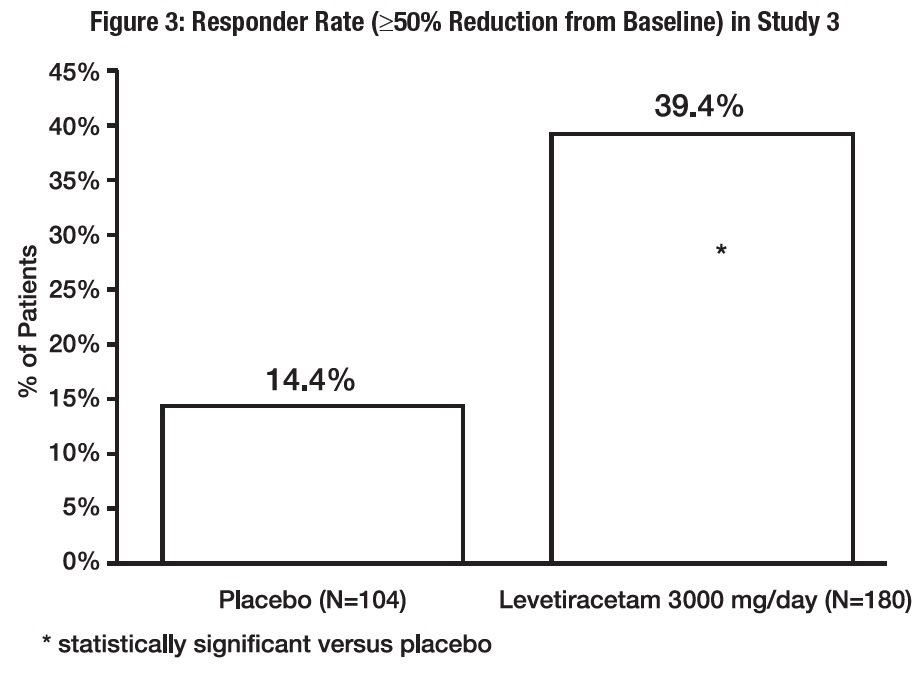
Figure 3 (Image 07)
This is a graph that displays the responder rate of patients who achieved more than 50% reduction from baseline in Study 3. It compares the response rate of patients taking placebo (N=104) versus patients taking levetiracetam 3000 mg/day (N=180). The y-axis shows the percentage of patients and the x-axis displays the groups compared. The graph indicates that the percentage of responders was statistically significant higher in the levetiracetam group than the placebo group.*
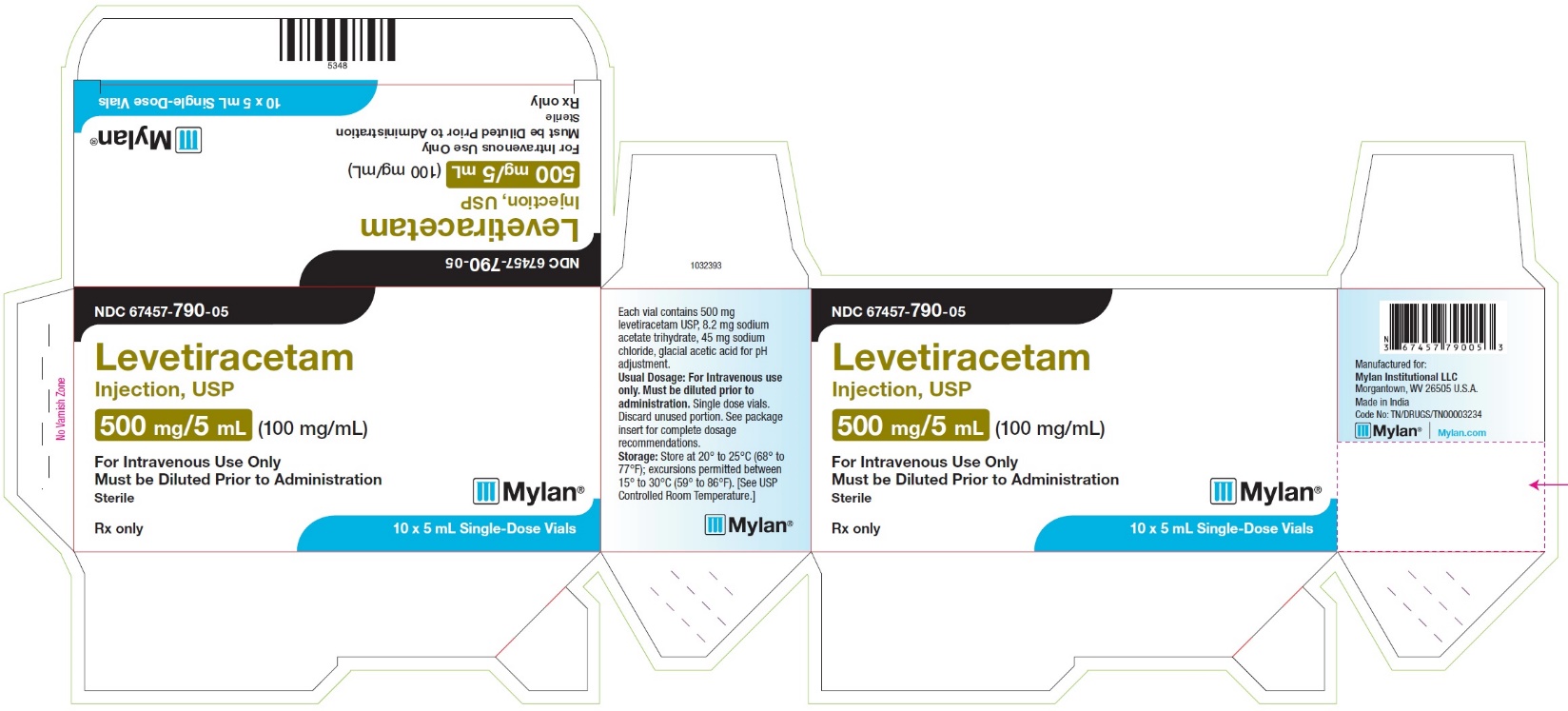
Carton.jpg (Image 12)
Levetiracetam Injection is a sterile solution for intravenous use only. Each 5 mL single-dose vial contains 500mg of Levetiracetam USP, 8.2mg of Sodium acetate trivycrate, and 45mg of Sodium chloride. Dilution is required before administration. The usual dosage, administration, and storage requirements must be followed, including the mandatory discarding of unused portions. Each carton of MMylan® contains ten vials and is only available with a prescription.*
* These product label images have been analyzed using experimental machine learning. Please verify findings with the primary label text.