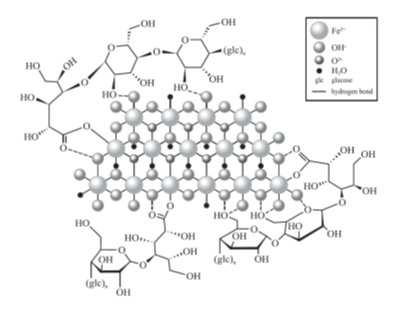
The safety and efficacy of ferric carboxymaltose for treatment of IDA were evaluated in two randomized, open-label, controlled clinical trials (Trial 1 and Trial 2). In these two trials, ferric carboxymaltose was administered at a dose of 15 mg/kg body weight up to a maximum single dose of 750 mg of iron on two occasions separated by at least 7 days up to a cumulative dose of 1,500 mg of iron.
Trial 1: Iron Deficiency Anemia in Patients Who Are Intolerant to Oral Iron or Have Had Unsatisfactory Response to Oral Iron
Trial 1: A Multi-center, Randomized, Active Controlled Study to Investigate the Efficacy and Safety of Intravenous Ferric Carboxymaltose (FCM) in Patients with Iron Deficiency Anemia (IDA), (NCT00982007) was a randomized, open-label, controlled clinical study in patients with IDA who had an unsatisfactory response to oral iron (Cohort 1) or who were intolerant to oral iron (Cohort 2) during the 14-day oral iron run-in period. Inclusion criteria prior to randomization included hemoglobin (Hb) < 12 g/dL, ferritin ≤ 100 ng/mL or ferritin ≤ 300 ng/mL when transferrin saturation (TSAT) ≤ 30%. Cohort 1 subjects were randomized to ferric carboxymaltose or oral iron for 14 more days. Cohort 2 subjects were randomized to ferric carboxymaltose or another IV iron per standard of care [90% of subjects received iron sucrose]. The mean age of study patients was 43 years (range, 18 to 94); 94% were female; 42% were Caucasian, 32% were African American, 24% were Hispanic, and 2% were other races. The primary etiologies of IDA were heavy uterine bleeding (47%) and gastrointestinal disorders (17%).
Table 5 shows the baseline and the change in hemoglobin from baseline to highest value between baseline and Day 35 or time of intervention.
Table 5. Mean Change in Hemoglobin From Baseline to the Highest Value Between Day 35 or Time of Intervention (Modified Intent-to-Treat Population)| SD=standard deviation |
Hemoglobin (g/dL) Mean (SD) | Cohort 1 | Cohort 2 |
Ferric
Carboxymaltose
(N = 244) | Oral Iron
(N = 251) | Ferric
Carboxymaltose
(N = 245) | IV SC Intravenous iron per standard of care
(N = 237) |
Baseline | 10.6 (1.0) | 10.6 (1.0) | 9.1 (1.6) | 9.0 (1.5) |
Highest Value | 12.2 (1.1) | 11.4 (1.2) | 12.0 (1.2) | 11.2 (1.3) |
Change (from baseline to highest value) | 1.6 (1.2) | 0.8 (0.8) | 2.9 (1.6) | 2.2 (1.3) |
p-value | 0.001 | 0.001 |
Increases from baseline in mean ferritin (264.2 ± 224.2 ng/mL in Cohort 1 and 218.2 ± 211.4 ng/mL in Cohort 2), and transferrin saturation (13 ± 16% in Cohort 1 and 20 ± 15% in Cohort 2) were observed at Day 35 in ferric carboxymaltose-treated patients.
Trial 2: Iron Deficiency Anemia in Patients with Non-Dialysis Dependent Chronic Kidney Disease
Trial 2: REPAIR-IDA, Randomized Evaluation of efficacy and safety of Ferric Carboxymaltose in Patients with Iron Deficiency Anemia and Impaired Renal function, (NCT00981045) was a randomized, open-label, controlled clinical study in patients with non-dialysis dependent chronic kidney disease. Inclusion criteria included hemoglobin (Hb) ≤ 11.5 g/dL, ferritin ≤ 100 ng/mL or ferritin ≤ 300 ng/mL when transferrin saturation (TSAT) ≤ 30%. Study patients were randomized to either ferric carboxymaltose or Venofer. The mean age of study patients was 67 years (range, 19 to 101); 64% were female; 54% were Caucasian, 26% were African American, 18% Hispanics, and 2% were other races.
Table 6 shows the baseline and the change in hemoglobin from baseline to highest value between baseline and Day 56 or time of intervention.
Table 6. Mean Change in Hemoglobin From Baseline to the Highest Value Between Baseline and Day 56 or Time of Intervention (Modified Intent-to-Treat Population)Hemoglobin (g/dL)
Mean (SD) | Ferric Carboxymaltose
(N = 1,249) | Venofer
(N = 1,244) |
Baseline | 10.3 (0.8) | 10.3 (0.8) |
Highest Value | 11.4 (1.2) | 11.3 (1.1) |
Change (from baseline to highest value) | 1.1 (1.0) | 0.9 (0.92) |
Treatment Difference | (95% CI) | 0.21 (0.13, 0.28) |
Increases from baseline in mean ferritin (734.7 ± 337.8 ng/mL), and transferrin saturation (30 ± 17%) were observed prior to Day 56 in ferric carboxymaltose-treated patients.