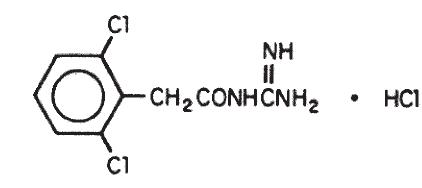
Adverse reactions noted with Tenex (guanfacine hydrochloride) are
similar to those of other drugs of the central
α2-adrenoreceptor agonist class: dry mouth, sedation
(somnolence), weakness (asthenia), dizziness, constipation, and impotence.
While the reactions are common, most are mild and tend to disappear on
continued dosing.
Skin rash with exfoliation has been reported in a few cases; although
clear cause and effect relationships to Tenex could not be established, should
a rash occur, Tenex should be discontinued and the patient monitored
appropriately.
In the dose-response monotherapy study described under CLINICAL PHARMACOLOGY, the frequency of the
most commonly observed adverse reactions showed a dose relationship from 0.5 to
3 mg as follows:
Adverse
Reaction | Placebo
n=59 | 0.5 mg
n=60 | 1 mg
n=61 | 2 mg
n=60 | 3 mg
n=59 |
|---|
| Dry Mouth | 0% | 10% | 10% | 42% | 54% |
| Somnolence | 8% | 5% | 10% | 13% | 39% |
| Asthenia | 0% | 2% | 3% | 7% | 3% |
| Dizziness | 8% | 12% | 2% | 8% | 15% |
| Headache | 8% | 13% | 7% | 5% | 3% |
| Impotence | 0% | 0% | 0% | 7% | 3% |
| Constipation | 0% | 2% | 0% | 5% | 15% |
| Fatigue | 2% | 2% | 5% | 8% | 10% |
The percent of patients who dropped out because of adverse reactions
are shown below for each dosage group.
| Placebo | 0.5 mg | 1 mg | 2 mg | 3 mg |
|---|
| Percent dropouts | 0% | 2.0% | 5.0% | 13% | 32% |
The most common reasons for dropouts among patients who received
guanfacine were dry mouth, somnolence, dizziness, fatigue, weakness, and
constipation.
In the 12-week, placebo-controlled, dose-response study of guanfacine
administered with 25 mg chlorthalidone at bedtime, the frequency of the most
commonly observed adverse reactions showed a clear dose relationship from 0.5
to 3 mg as follows:
Adverse
Reaction | Placebo
n=73 | 0.5 mg
n=72 | 1 mg
n=72 | 2 mg
n=72 | 3 mg
n=72 |
|---|
| Dry Mouth | 5 (7%) | 4 (5%) | 6 (8%) | 8 (11%) | 20 (28%) |
| Somnolence | 1 (1%) | 3 (4%) | 0 (0%) | 1 (1%) | 10 (14%) |
| Asthenia | 0 (0%) | 2 (3%) | 0 (0%) | 2 (2%) | 7 (10%) |
| Dizziness | 2 (2%) | 1 (1%) | 3 (4%) | 6 (8%) | 3 (4%) |
| Headache | 3 (4%) | 4 (3%) | 3 (4%) | 1 (1%) | 2 (2%) |
| Impotence | 1 (1%) | 1 (0%) | 0 (0%) | 1 (1%) | 3 (4%) |
| Constipation | 0 (0%) | 0 (0%) | 0 (0%) | 1 (1%) | 1 (1%) |
| Fatigue | 3 (3%) | 2 (3%) | 2 (3%) | 5 (6%) | 3 (4%) |
There were 41 premature terminations because of adverse reactions in
this study. The percent of patients who dropped out and the dose at which the
dropout occurred were as follows:
| Dose | Placebo | 0.5 mg | 1 mg | 2 mg | 3 mg |
|---|
| Percent dropouts | 6.9% | 4.2% | 3.2% | 6.9% | 8.3% |
Reasons for dropouts among patients who received guanfacine were:
somnolence, headache, weakness, dry mouth, dizziness, impotence, insomnia,
constipation, syncope, urinary incontinence, conjunctivitis, paresthesia, and
dermatitis.
In a second 12-week placebo-controlled combination therapy study in
which the dose could be adjusted upward to 3 mg per day in 1-mg increments at
3-week intervals, i.e., a setting more similar to ordinary clinical use, the
most commonly recorded reactions were: dry mouth, 47%; constipation, 16%;
fatigue, 12%; somnolence, 10%; asthenia, 6%; dizziness, 6%; headache, 4%; and
insomnia, 4%.
Reasons for dropouts among patients who received guanfacine were:
somnolence, dry mouth, dizziness, impotence, constipation, confusion,
depression, and palpitations.
In the clonidine/guanfacine comparison described in CLINICAL PHARMACOLOGY, the most common adverse
reactions noted were as follows:
Adverse
Reactions | Guanfacine
(n=279) | Clonidine
(n=278) |
|---|
| Dry Mouth | 30% | 37% |
| Somnolence | 21% | 35% |
| Dizziness | 11% | 8% |
| Constipation | 10% | 5% |
| Fatigue | 9% | 8% |
| Headache | 4% | 4% |
| Insomnia | 4% | 3% |
Adverse reactions occurring in 3% or less of patients in the three
controlled trials of Tenex (guanfacine hydrochloride) with a diuretic were:
Cardiovascular- bradycardia, palpitations, substernal pain
Gastrointestinal- abdominal pain, diarrhea, dyspepsia, dysphagia,
nausea
CNS- amnesia, confusion, depression, insomnia, libido decrease
ENT disorders- rhinitis, taste perversion, tinnitus
Eye disorders- conjunctivitis, iritis, vision disturbance
Musculoskeletal- leg cramps, hypokinesia
Respiratory- dyspnea
Dermatologic- dermatitis, pruritus, purpura, sweating
Urogenital- testicular disorder, urinary incontinence
Other- malaise, paresthesia, paresis
Adverse reaction reports tend to decrease over time. In an open-label
trial of one year's duration, 580 hypertensive subjects were given guanfacine,
titrated to achieve goal blood pressure, alone (51%), with diuretic (38%), with
beta blocker (3%), with diuretic plus beta blocker (6%), or with diuretic plus
vasodilator (2%). The mean daily dose of guanfacine reached was 4.7 mg.
Adverse
Reaction | Incidence of adverse reactions at any time during the study | Incidence of adverse reactions at end of one year |
|---|
| n = 580 | n = 580 |
|---|
| Dry Mouth | 60% | 15% |
| Drowsiness | 33% | 6% |
| Dizziness | 15% | 1% |
| Constipation | 14% | 3% |
| Weakness | 5% | 1% |
| Headache | 4% | 0.2% |
| Insomnia | 5% | 0% |
There were 52 (8.9%) dropouts due to adverse effects in this 1-year
trial. The causes were: dry mouth (n = 20), weakness (n = 12), constipation (n
= 7), somnolence (n = 3), nausea (n = 3), orthostatic hypotension (n = 2),
insomnia (n = 1), rash (n = 1), nightmares (n = 1), headache (n = 1), and
depression (n = 1).
Postmarketing ExperienceAn open-label postmarketing study involving 21,718 patients was
conducted to assess the safety of Tenex (guanfacine hydrochloride) 1 mg/day
given at bedtime for 28 days. Tenex was administered with or without other
antihypertensive agents. Adverse events reported in the postmarketing study at
an incidence greater than 1% included dry mouth, dizziness, somnolence,
fatigue, headache and nausea. The most commonly reported adverse events in this
study were the same as those observed in controlled clinical trials.
Less frequent, possibly Tenex-related events observed in the
postmarketing study and/or reported spontaneously include:
BODY AS A WHOLE asthenia, chest pain, edema, malaise, tremor
CARDIOVASCULAR bradycardia, palpitations, syncope, tachycardia
CENTRAL NERVOUS SYSTEM paresthesias, vertigo
EYE DISORDERS blurred vision
GASTROINTESTINAL SYSTEM abdominal pain, constipation, diarrhea,
dyspepsia
LIVER AND BILLIARY SYSTEM abnormal liver function tests
MUSCULO-SKELETAL SYSTEM arthralgia, leg cramps, leg pain, myalgia
PSYCHIATRIC agitation, anxiety, confusion, depression, insomnia,
nervousness
RREPRODUCTIVE SYSTEM, Male- impotence
RESPIRATORY SYSTEM dyspnea
SKIN AND APPENDAGES alopecia, dermatitis, exfoliative dermatitis,
pruritus, rash
SPECIAL SENSES alterations in taste
URINARY SYSTEM nocturia, urinary frequency
Rare, serious disorders with no definitive cause and effect
relationship to Tenex have been reported spontaneously and/or in the
postmarketing study. These events include acute renal failure, cardiac
fibrillation, cerebrovascular accident, congestive heart failure, heart block,
and myocardial infarction.