Pregabalin Solution
Product Images NDC 67877-457

View Photos of Packaging, Regulatory Labels, and Product Appearance

Product Visual Gallery

This gallery contains 15 technical images submitted to the FDA as part of the official labeling for Pregabalin (NDC 67877-457). Unlike standard consumer photos, these assets often include clinical data figures, molecular chemical structures, and official manufacturer packaging layouts.

As provided by Ascend Laboratories, Llc, these visuals offer a comprehensive scientific overview of the product's physical and chemical identity, aiding pharmacists and researchers in product verification and study.

FDA Label Image

Pregabalin-image (Pregabalin Image)

FDA Label Image

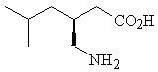
Pregabalin-structure (Pregabalin Structure)

FDA Label Image

Pregabalin-bottle (Pregabalin Bottle)

Pregabalin-bottle (Pregabalin Bottle)
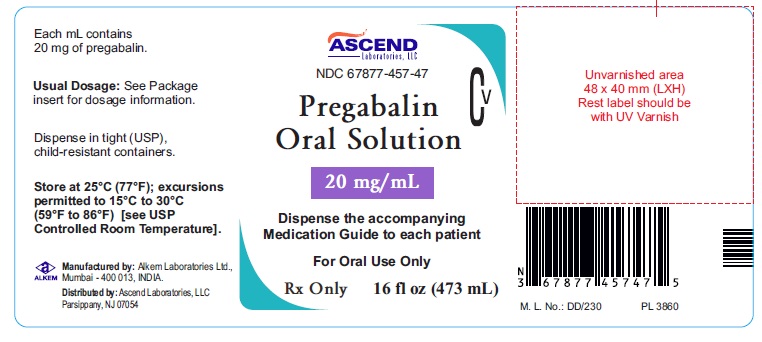
Each milliliter of Pregabalin ASCEND contains 20 milligrams of pregabalin. It is an oral solution and should be dispensed in child-resistant containers with UV varnish. The usual dosage should be referred to on the package insert. Store it at a temperature between 15-30°C (59- 86°F) and dispense the accompanying medication guide to each patient. The text appears to be medication information.*
FDA Label Image

Pregabalin Carton

Pregabalin Carton
This is a description for a medication called "Pregabalin Oral Solution" from Ascend Laboratories, LLC. It is an oral solution with a recommended dosage provided in the package insert. Each milliliter of the solution contains 20 mg of pregabalin. It is only for oral use and can be dispensed to patients only by a prescription. The medication guide accompanying the oral solution should be given to each patient. The solution should be stored at a temperature of 25°C and should be kept in child-resistant containers. The number "7877145" appears at the end of the text, but its meaning is unclear.*
FDA Label Image

Pregabalin-chart1.jpg (Pregabalin Chart1)

FDA Label Image

Pregabalin-chart10 (Pregabalin Chart10)

FDA Label Image

Pregabalin-chart11 (Pregabalin Chart11)

FDA Label Image

Pregabalin-chart2 (Pregabalin Chart2)

FDA Label Image

Pregabalin-chart3 (Pregabalin Chart3)

FDA Label Image

Pregabalin-chart4 (Pregabalin Chart4)

FDA Label Image

Pregabalin-chart5 (Pregabalin Chart5)

Pregabalin-chart5 (Pregabalin Chart5)
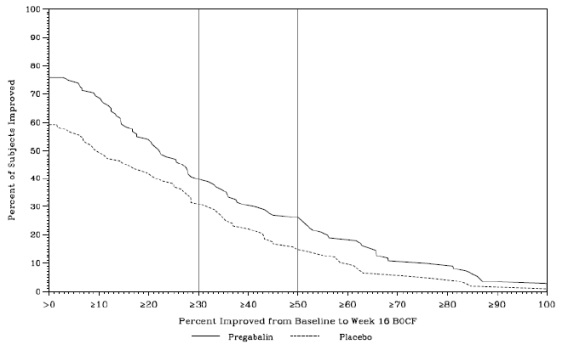
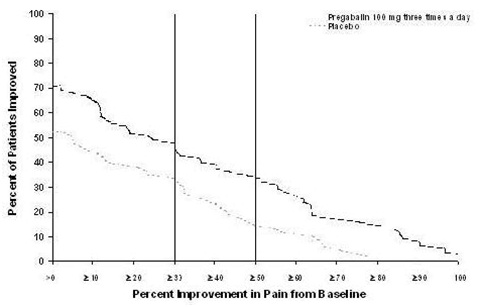
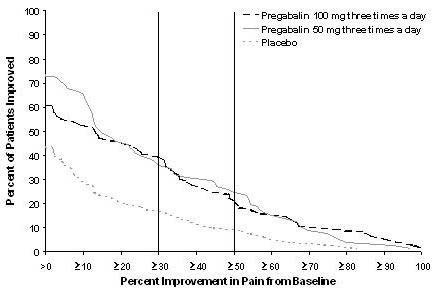
The text describes a chart or table that shows the percentage of patients who experienced improvement in pain compared to baseline. The table includes data for three treatment options: Pregabalin 100 mg taken three times a day, Pregabalin 8 mg taken three times a day, and Placeta. The percentage improvement in pain is not provided and only the column heading is visible "Percent Inprovementin Pain fromBaseline".*
FDA Label Image

Pregabalin-chart7new (Pregabalin Chart7new)

Pregabalin-chart7new (Pregabalin Chart7new)
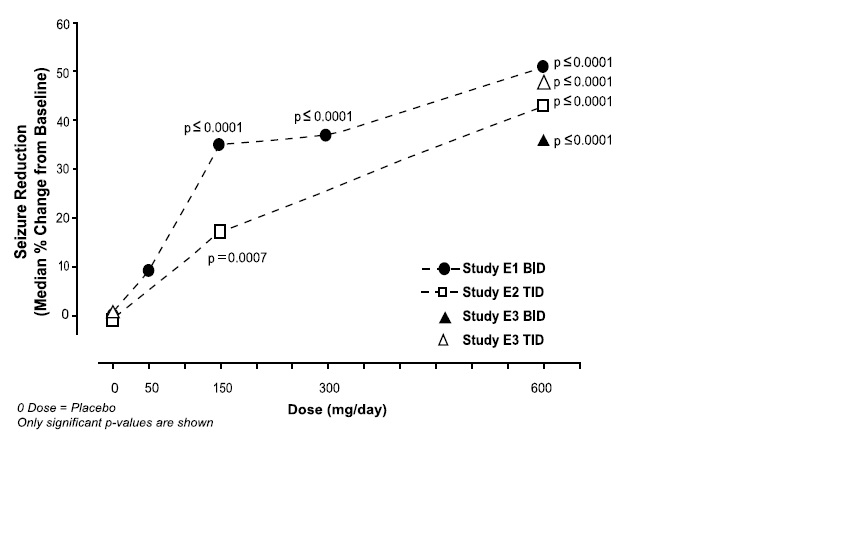
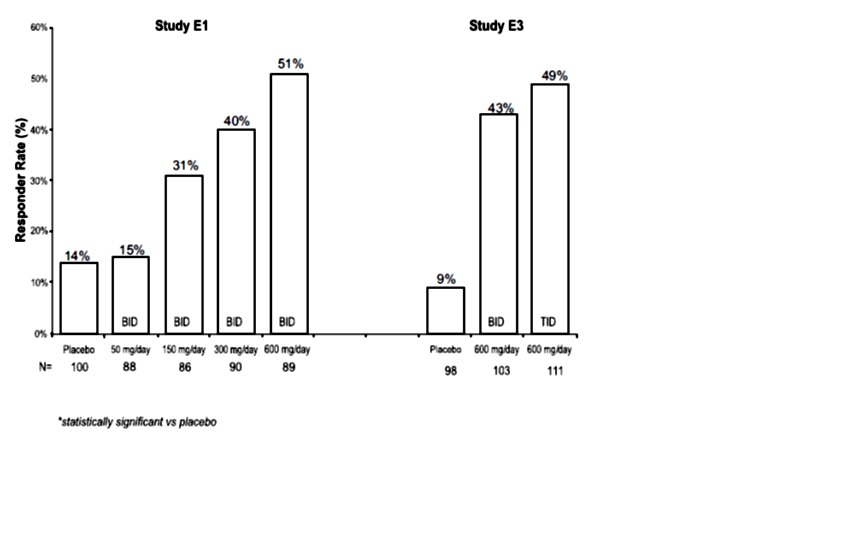
This text appears to be a statistical table representing dose in mg/day, and the corresponding significant p-values, of different studies. The studies are labeled E1BID, E2 TID, E3BID, and E3TID. The dose levels are shown in the range of 0 to 600. However, no information is provided about what this research is about, what the significance of the p-values is or how to interpret the numbers.*
FDA Label Image

Pregabalin-chart9new1 (Pregabalin Chart9new1)

Pregabalin-chart9new1 (Pregabalin Chart9new1)
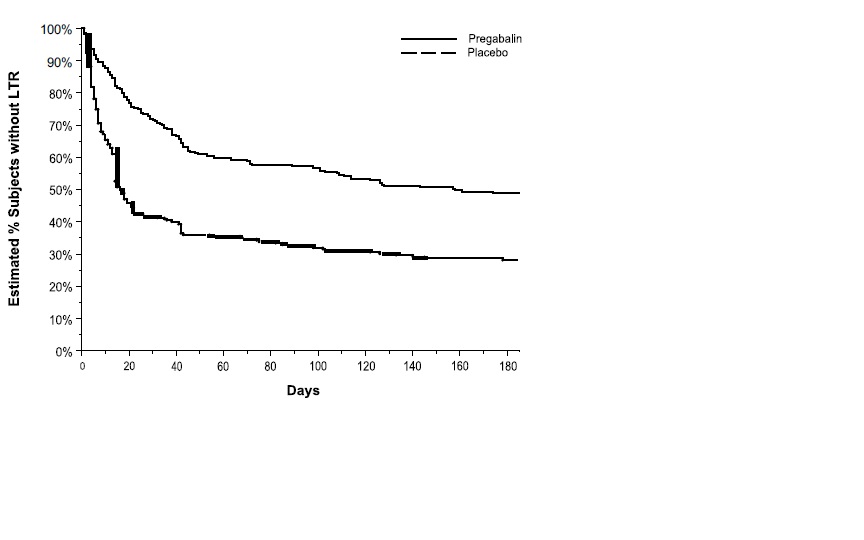
This appears to be a graph that shows estimated percentages of subjects without LTR (not sure what LTR stands for without additional context) in relation to days of treatment with Pregabaiin and Placebo. The x-axis represents the days and the y-axis shows the percentage values, ranging from 0% to 100%. The Pregabaiin and Placebo lines may represent the percentage of subjects without LTR for subjects receiving the respective treatments.*
FDA Label Image

Pregabalin-figure-6new (Pregabalin Figure 6new)

FDA Label Image

Pregabalin-figure 9 (Pregabalin Figure 9)

Pregabalin-figure 9 (Pregabalin Figure 9)
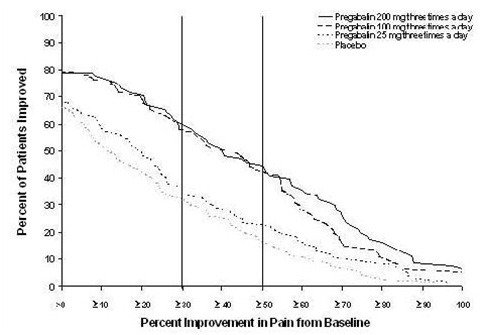
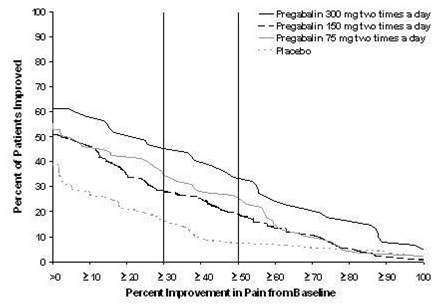
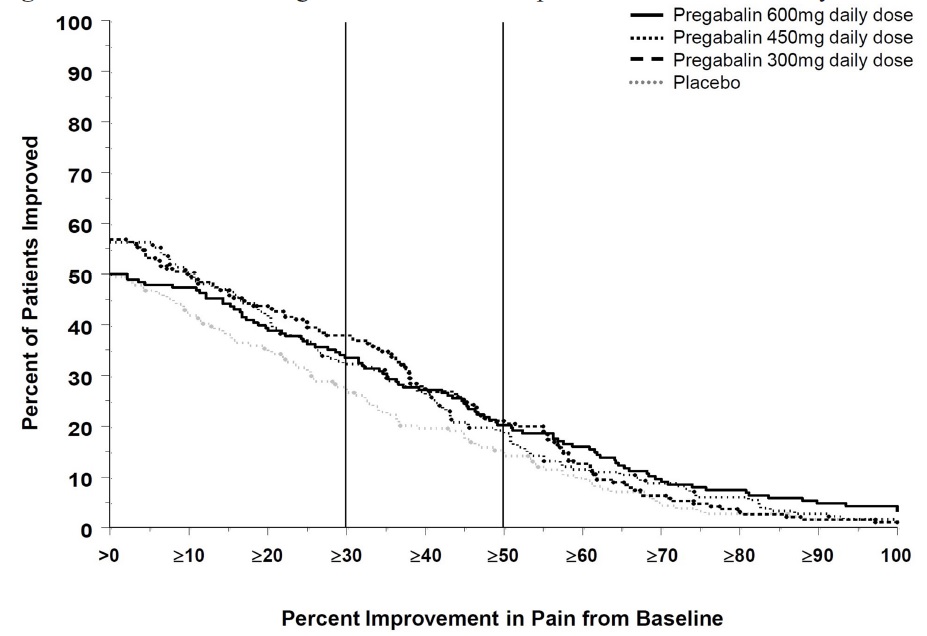
This is a chart showing the percent of patients who improved while taking different doses of Pregabalin daily and a placebo, measured against the baseline pain.*

* These product label images have been analyzed using experimental machine learning. Please verify findings with the primary label text.