Capecitabine Tablet, Film Coated
Product Images NDC 67877-458

View Photos of Packaging, Regulatory Labels, and Product Appearance

Product Visual Gallery

This gallery contains 9 technical images submitted to the FDA as part of the official labeling for Capecitabine (NDC 67877-458). Unlike standard consumer photos, these assets often include clinical data figures, molecular chemical structures, and official manufacturer packaging layouts.

As provided by Ascend Laboratories, Llc, these visuals offer a comprehensive scientific overview of the product's physical and chemical identity, aiding pharmacists and researchers in product verification and study.

FDA Label Image

Capecitabine 150mg 60tab
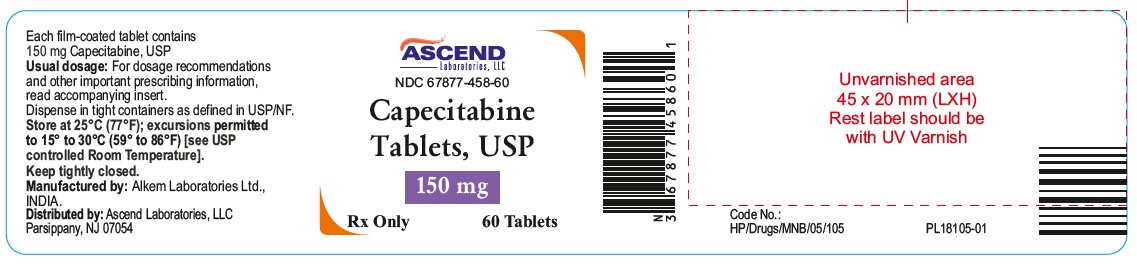
Capecitabine 150mg 60tab
This is a medication called Capecitabine, which is available in the form of film-coated tablets with each tablet containing 450 mg of the medicine. The recommended dosage for this medication is specified in the accompanying insert. The tablet should be stored in a tight container at a temperature range of 25°C (T7°F) with controlled excursions permitted between 10-15° and 30°C (59° to 86°F). The medicine has been manufactured by Alkem Laboratories Lid, located in India, and is distributed by Ascend Laboratories in Parsippany, NJ, USA. The label has an NDC number 67877-458-60 and the tablet comes in a packaging of 60 tablets. The provided text suggests that the medicine is used for treating a medical condition but does not specify what it is.*
FDA Label Image

Capecitabine 500mg 120tab

FDA Label Image

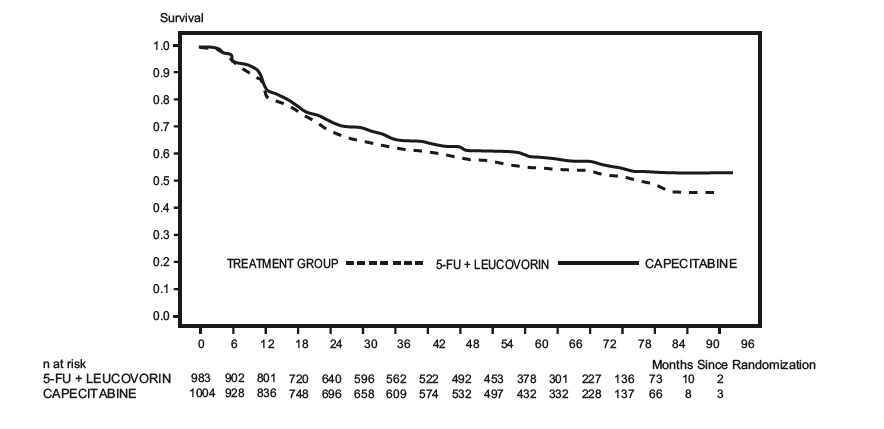
Capecitabine Fig 1

Capecitabine Fig 1
The text is showing a chart that compares the survival rates of two treatment groups over different months since randomization. The treatment groups received either 5FU+ leucovorin or capecitabine. The chart shows the number of patients who survived at each month since the beginning of the study, with a final count at 96 months.*
FDA Label Image

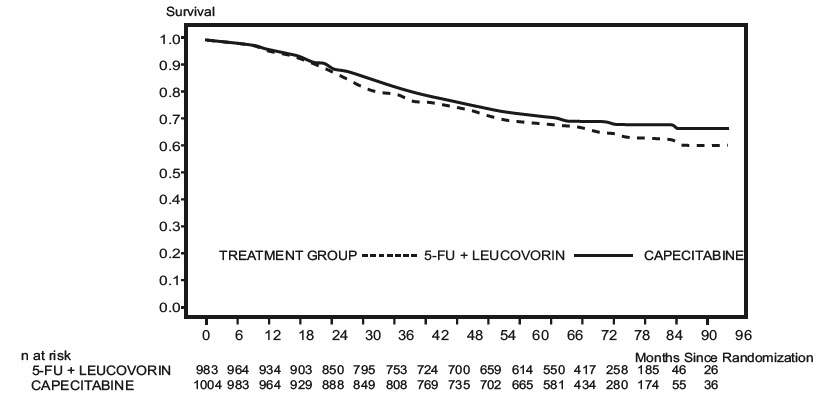
Capecitabine Fig 2

Capecitabine Fig 2
This is a chart showing the results of a study on the survival rates of two different treatment groups over a period of 96 months. The two groups received either 5-FU + Leucovorin or Capecitabine. The chart displays the number of patients in the 5-FU + Leucovorin group over time, ranging from close to 1000 at the start of the study to only 26 surviving after 96 months. The corresponding numbers for the Capecitabine group are also shown.*
FDA Label Image

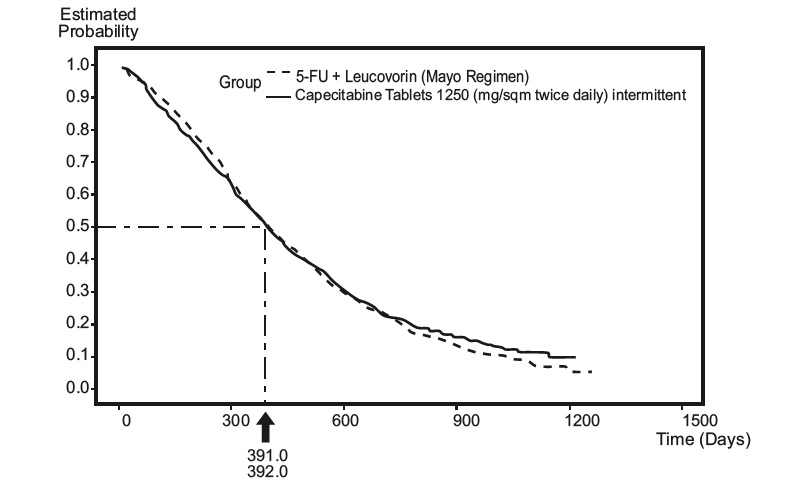
Capecitabine Fig 3

Capecitabine Fig 3
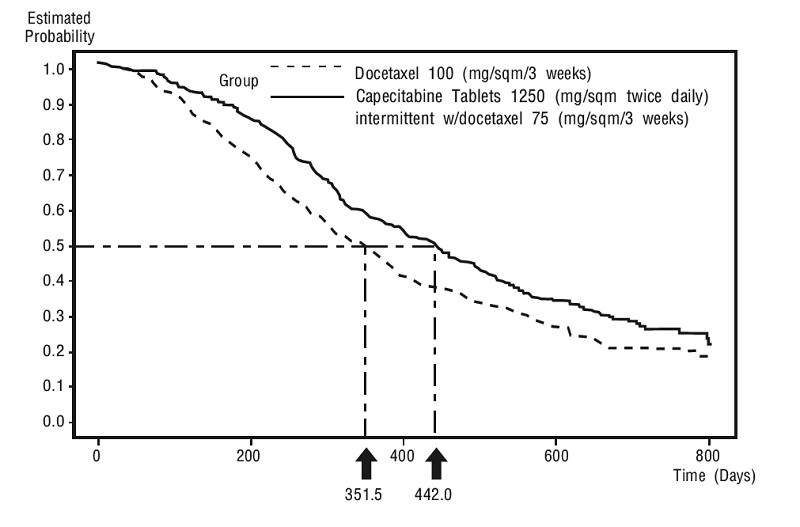
This text appears to be a graph or chart showing the estimated probability for two different groups receiving different medications. The first group is receiving a combination of 5-FU and Leucovorin using the Mayo Regimen, while the second group is taking Capecitabine Tablets at a dosage of 1250mg/sqm twice daily, intermittently. The x-axis measures time in days and the y-axis represents the estimated probability. Not enough information is given to provide an exact description of the graph's content or purpose.*
FDA Label Image

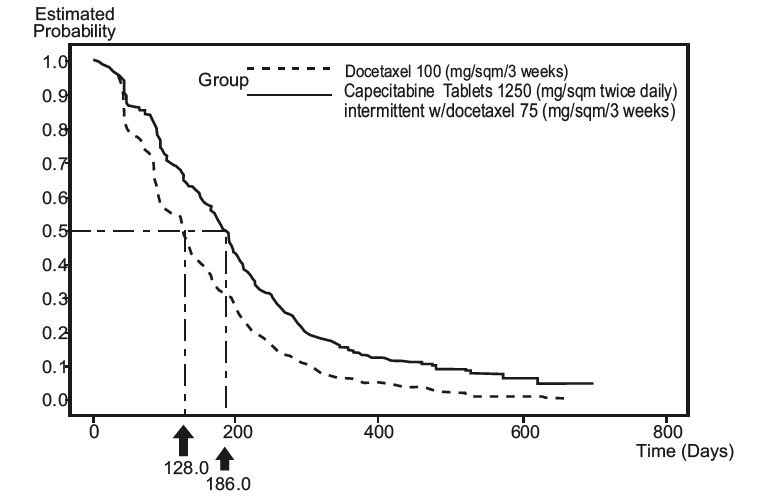
Capecitabine Fig 4

Capecitabine Fig 4
This appears to be a chart or table with drug names, doses, and a timeline. Without additional context or headers, it is not possible to provide a useful description of what it represents or how it could be applied.*
FDA Label Image

Capecitabine Fig 5

FDA Label Image

Capecitabine Meta Path

Capecitabine Meta Path
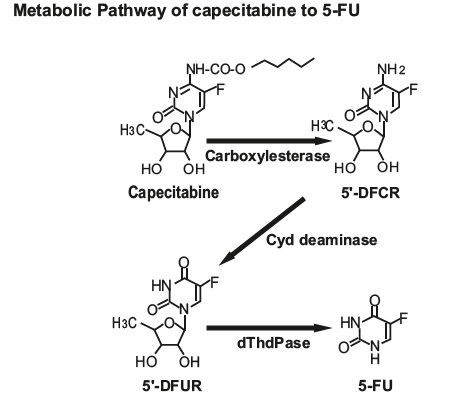
This text shows the metabolic pathway of capecitabine to 5-FU. Carboxylesterase breaks down capecitabine into 5-DFCR, which is further broken down into 5-DFUR and finally converted to 5FU by cyd deaminase.*
FDA Label Image

Capecitabine Str

* These product label images have been analyzed using experimental machine learning. Please verify findings with the primary label text.