1.2 Pediatric Neurogenic Detrusor Overactivity (Ndo)
Mirabegron for Extended-Release Oral Suspension
Mirabegron for extended-release oral suspension is indicated for the treatment of NDO in pediatric patients aged 3 years and older.
The following Structured Product Label (SPL) was submitted to the FDA by Ascend Laboratories, Llc for the product Mirabegron (NDC 67877-890). This document serves as the official prescribing information, containing essential scientific data and clinical materials required for healthcare providers and patients.
This specific version of the label includes detailed information regarding 1.2 pediatric neurogenic detrusor overactivity (ndo), 2.1 important dosage information, 2.3 recommended dosage for pediatric patients aged 3 years and older with ndo, 2.5 recommended dosage in pediatric patients with renal or hepatic impairment, 2.6 preparation and storage instructions for mirabegron for extended-release oral suspension, 2.7 administration instructions, 2.8 missed dose, 3 dosage forms & strengths, and other regulatory disclosures. Use the navigation below to review specific sections of the FDA submission.
Mirabegron for Extended-Release Oral Suspension
Mirabegron for extended-release oral suspension is indicated for the treatment of NDO in pediatric patients aged 3 years and older.
MYRBETRIQ and mirabegron for extended-release oral suspension are two different products and they are not substitutable on a milligram-per-milligram basis:
For pediatric patients 3 years of age and older, select the appropriate product (MYRBETRIQ or Mirabegron for extended-release oral suspension) based on the patient’s weight.
Pediatric Patients weighing less than 35 kg: Use Mirabegron for Extended-Release Oral Suspension
The recommended starting and maximum doses of mirabegron for extended-release oral suspension, administered as extended-release oral suspension once daily [see Dosage and Administration (2.6)], are shown in Table 1. The recommended dosages are determined based on patient weight. Evaluate patients periodically for potential dosage adjustment. For administration instructions, see Dosage and Administration (2.7).
Table 1: Mirabegron for Extended-Release Oral Suspension Recommended Dosage for Pediatric Patients Aged 3 Years and Older Weighing Less Than 35 kg as an Extended-Release Oral Suspension (Administered Orally Once Daily)
| Body Weight Range | Starting Dose | Maximum Volume |
| 11 kg to less than 22 kg | 3 mL (24 mg) | 6 mL (48 mg) |
| 22 kg to less than 35 kg | 4 mL (32 mg) | 8 mL (64 mg) |
| Greater than or equal to 35 kg | Refer to information in next section | |
Pediatric Patients weighing 35 kg or more: Use MYRBETRIQ or Mirabegron for Extended-Release Oral Suspension
The recommended starting dosage of mirabegron for extended-release oral suspension is 6 mL (48 mg) orally once daily. If needed, increase to a maximum dosage of mirabegron for extended-release oral suspension 10 mL (80 mg) orally once daily after 4 to 8 weeks. For administration instructions, see Dosage and Administration (2.7).
For pediatric patients 3 years of age and older, select the appropriate product (MYRBETRIQ or mirabegron for extended-release oral suspension) based on the patient’s weight.
Pediatric Patients Weighing Less Than 35 kg with Renal or Hepatic Impairment: Use Mirabegron for Extended-Release Oral Suspension
Dosage in Pediatric Patients with Renal Impairment
The recommended dosage of mirabegron for extended-release oral suspension in pediatric patients with renal impairment (administered orally once daily) is described in Table 4 [see Use in Specific Populations (8.6)]. For administration instructions, see Dosage and Administration (2.7).
Table 4: Mirabegron for Extended-Release Oral Suspension Recommended Dosage in Pediatric Patients Aged 3 Years and Older Weighing Less Than 35 kg with Renal Impairment (Administered Orally Once Daily)
| Estimated GFR1 | Body Weight Range | Starting Dose | Maximum Dose |
| eGFR 30 to 89 mL/min/1.73 m2 | 11 kg to less than 22 kg | 3 mL (24 mg) | 6 mL (48 mg) |
| 22 kg to less than 35 kg | 4 mL (32 mg) | 8 mL (64 mg) | |
| eGFR 15 to 29 mL/min/1.73 m2 | 11 kg to less than 22 kg | 3 mL (24 mg) | 3 mL (24 mg) |
| 22 kg to less than 35 kg | 4 mL (32 mg) | 4 mL (32 mg) | |
| eGFR < 15 mL/min/1.73 m2 or undergoing dialysis | Use is Not Recommended | ||
1. Estimate GFR using a validated eGFR estimating equation for the pediatric age range of the approved indication.
Dosage in Pediatric Patients with Hepatic Impairment
The recommended dosage of mirabegron for extended-release oral suspension in pediatric patients with hepatic impairment (administered orally once daily) is described in Table 5 [see Use in Specific Populations (8.7)]. For administration instructions, see Dosage and Administration (2.7).
Table 5: Mirabegron for Extended-Release Oral Suspension Recommended Dosage in Pediatric Patients Aged 3 Years and Older Weighing Less Than 35 kg with Hepatic Impairment (Administered Orally Once Daily)
| Hepatic Impairment Classification | Body Weight Range | Starting Dose | Maximum Dose |
| Child-Pugh Class A (Mild hepatic impairment) | 11 kg to less than 22 kg | 3 mL (24 mg) | 6 mL (48 mg) |
| 22 kg to less than 35 kg | 4 mL (32 mg) | 8 mL (64 mg) | |
| Child-Pugh Class B (Moderate hepatic impairment) | 11 kg to less than 22 kg | 3 mL (24 mg) | 3 mL (24 mg) |
| 22 kg to less than 35 kg | 4 mL (32 mg) | 4 mL (32 mg) | |
| Child-Pugh Class C (Severe hepatic impairment) | Use is Not Recommended | ||
Pediatric Patients weighing 35 kg or more with renal or hepatic impairment: Use MYRBETRIQ or Mirabegron for Extended-Release Oral Suspension
Dosage in Pediatric Patients with Renal Impairment
The recommended dosage of mirabegron for extended-release oral suspension in pediatric patients with renal impairment weighing 35 kg or more (administered orally once daily) is described in Table 6 [see Use in Specific Populations (8.6)]. For administration instructions, see Dosage and Administration (2.7).
Table 6: Mirabegron for Extended-Release Oral Suspension Recommended Dosage in Pediatric Patients Aged 3 Years and Older with Renal Impairment Weighing 35 kg or More (Administered Orally Once Daily)
| Estimated GFR1 | Starting Dose | Maximum Dose |
| eGFR 30 to 89 mL/min/1.73 m2 | 6 mL (48 mg) | 10 mL (80 mg) |
| eGFR 15 to 29 mL/min/1.73 m2 | 6 mL (48 mg) | 6 mL (48 mg) |
| eGFR < 15 mL/min/1.73 m2 or undergoing dialysis | Use is Not Recommended | |
1. Estimate GFR using a validated eGFR estimating equation for the pediatric age range of the approved indication.
Dosage in Pediatric Patients with Hepatic Impairment
The recommended dosage of mirabegron for extended-release oral suspension in pediatric patients with hepatic impairment weighing 35 kg or more (administered orally once daily) is described in Table 7 [see Use in Specific Populations (8.7)]. For administration instructions, see Dosage and Administration (2.7).
Table 7: Mirabegron for Extended-Release Oral Suspension Recommended Dosage in Pediatric Patients Aged 3 Years and Older with Hepatic Impairment Weighing 35 kg or More (Administered Orally Once Daily)
| Hepatic Impairment Classification | Starting Dose | Maximum Dose |
| Child-Pugh Class A (Mild hepatic impairment) | 6 mL (48 mg) | 10 mL (80 mg) |
| Child-Pugh Class B (Moderate hepatic impairment) | 6 mL (48 mg) | 6 mL (48 mg) |
| Child-Pugh Class C (Severe hepatic impairment) | Use is Not Recommended | |
The required dose for mirabegron for extended-release oral suspension is calculated based on the weight of the patient. Prepare oral suspension at the time of dispensing.
Keep the bottle in the pouch up until the time of reconstitution.
After reconstitution with 100 mL water, the suspension contains 8 mg/mL of mirabegron.
Administration instructions for MYRBETRIQ and mirabegron for extended-release oral suspension differ based on the patient population.
Mirabegron for Extended-Release Oral Suspension
Adult patients: A recommended dosage for mirabegron for extended-release oral suspension for adults has not been determined.
Pediatric patients: Take mirabegron for extended-release oral suspension prepared as an extended-release oral suspension [see Dosage and Administration (2.6)]. Take with food to reduce potential exposure-related risks [see Use in Specific Populations (8.4)].
Instruct patients to take any missed doses as soon as they remember, unless more than 12 hours have passed since the missed dose. If more than 12 hours have passed, the missed dose can be skipped, and the next dose should be taken at the usual time.
Mirabegron for extended-release oral suspension: Each bottle is filled with approximately 8.3 g of yellowish to brownish colored granular powder filled in amber colored PET bottle, which contain 830 mg of mirabegron. After reconstitution with 100 mL water, the oral suspension is pale yellow to brownish yellow with 8 mg/mL of mirabegron.
Increases in Blood Pressure in Adults
Mirabegron can increase blood pressure. Periodic blood pressure determinations are recommended, especially in hypertensive patients. Mirabegron is not recommended for use in patients with severe uncontrolled hypertension (defined as systolic blood pressure greater than or equal to 180 mm Hg and/or diastolic blood pressure greater than or equal to 110 mm Hg) [see Clinical Pharmacology (12.2)].
In two, randomized, placebo-controlled, healthy adult volunteer studies, MYRBETRIQ was associated with dose-related increases in supine blood pressure. In these studies, at the maximum recommended dose of 50 mg, the mean maximum increase in systolic/diastolic blood pressure was approximately 3.5/1.5 mm Hg greater than placebo.
In contrast, in adult OAB patients in clinical trials, MYRBETRIQ, taken as monotherapy or in combination with solifenacin succinate 5 mg, the mean increase in systolic and diastolic blood pressure at the maximum recommended mirabegron dose of 50 mg was approximately 0.5 to 1 mm Hg greater than placebo. Worsening of pre-existing hypertension was reported infrequently in patients taking MYRBETRIQ.
Increases in Blood Pressure in Pediatric Patients 3 Years and Older
Mirabegron can increase blood pressure in pediatric patients. Blood pressure increases may be larger in children (3 to less than 12 years of age) than in adolescents (12 to less than 18 years of age). Periodic blood pressure determinations are recommended. Mirabegron is not recommended for use in pediatric patients with severe uncontrolled hypertension, defined as a systolic and/or diastolic blood pressure above the 99th percentile plus 5 mm Hg for age, sex, and stature using appropriate reference values [see Adverse Reactions (6.1)].
In patients taking MYRBETRIQ, urinary retention has been reported to occur in patients with bladder outlet obstruction (BOO) and in patients taking muscarinic antagonist medications for the treatment of OAB. A controlled clinical safety study in patients with BOO did not demonstrate increased urinary retention in patients treated with mirabegron; however, MYRBETRIQ should still be administered with caution to patients with clinically significant BOO. For example, monitor these patients for signs and symptoms of urinary retention. MYRBETRIQ should also be administered with caution to patients taking muscarinic antagonist medications for the treatment of OAB, including solifenacin succinate [see Clinical Pharmacology (12.2)].
Angioedema of the face, lips, tongue, and/or larynx has been reported with mirabegron. In some cases, angioedema occurred after the first dose, however, cases have been reported to occur hours after the first dose or after multiple doses. Angioedema, associated with upper airway swelling, may be life-threatening. If involvement of the tongue, hypopharynx, or larynx occurs, promptly discontinue mirabegron and provide appropriate therapy and/or measures necessary to ensure a patent airway [see Adverse Reactions (6.2)].
Since mirabegron is a moderate CYP2D6 inhibitor, the systemic exposure to CYP2D6 substrates is increased when coadministered with mirabegron. Therefore, appropriate monitoring and dose adjustment may be necessary, especially with narrow therapeutic index drugs metabolized by CYP2D6 [see Drug Interactions (7.1) and Clinical Pharmacology (12.3)].
Because clinical trials are conducted under widely varying conditions, adverse reaction rates observed in the clinical trials of a drug cannot be directly compared to rates in the clinical trials of another drug and may not reflect the rates observed in clinical practice.
Mirabegron for Pediatric Neurogenic Detrusor Overactivity (NDO)
The safety of mirabegron was evaluated in a 52-week, open-label, baseline-controlled, multicenter, dose titration study (Study 9) [see Clinical Studies (14.3)]. The study included 86 pediatric patients 3 to 17 years of age with neurogenic detrusor overactivity (NDO); 55% were female, 72% were White. Treatment was initiated at the weight-based starting recommended dose and was increased to a dose equivalent of MYRBETRIQ 50 mg daily dose in adults by Week 8. Subsequent to the dose titration period, patients continued their optimized dose for the duration of the 52-week study (mean exposure duration 303 days, range 1 to 390 days).
The most commonly reported adverse reactions were UTI, nasopharyngitis, constipation, and headache.
Table 12 lists the adverse reactions that were reported in 2% or more of patients treated with mirabegron in Study 9.
Table 12: Percentages of Patients with Adverse Reactions Reported in ≥ 2% of Patients 3 to 17 Years of Age with Neurogenic Detrusor Overactivity (NDO) Treated with Mirabegron in Study 9
| Adverse Reaction | Percentage (%) of Patients Reporting Adverse Reactions N=86 |
| Number of Patients | 51 (59.3) |
| Urinary Tract Infection1 | 24.4 |
| Nasopharyngitis | 5.8 |
| Constipation | 4.7 |
| Headache | 3.5 |
| Nausea | 2.3 |
| Gastroenteritis | 2.3 |
| Rhinitis | 2.3 |
| Cough | 2.3 |
1. Includes any recorded UTI while patient was on treatment with mirabegron.
Increased Blood Pressure in Pediatric Patients with NDO Treated with Mirabegron:
Mean systolic and diastolic blood pressures increased in Study 9 by 4.3 mm Hg and 1.7 mm Hg, respectively, in patients less than 12 years of age on mirabegron at a dose equivalent of MYRBETRIQ 50 mg daily dose in adults. The blood pressure increases were larger in patients less than 8 years of age with mean systolic and diastolic blood pressure increases of 5.9 mm Hg and 2.3 mm Hg, respectively. Ten (24%) patients less than 12 years of age who were normotensive at baseline had at least one blood pressure measured at or above the 95th percentile for age, sex, and stature during Study 9. Stage 1 hypertension, defined as repeated blood pressure measurements at or above the 95th percentile for age, sex, and stature, was sustained in six of these 10 patients (60%) at the end of the study.
The following adverse reactions have been identified during post-approval use of mirabegron. Because these reactions are reported voluntarily from a population of uncertain size, it is not always possible to reliably estimate their frequency or establish a causal relationship to drug exposure. The following events have been reported in association with mirabegron use in worldwide postmarketing experience:
Cardiac disorders: atrial fibrillation
Gastrointestinal disorders: nausea, constipation, diarrhea
Nervous system disorders: dizziness, headache
There have been postmarketing reports of confusion, hallucinations, insomnia, and anxiety in patients taking mirabegron. The majority of these patients had pre-existing medical conditions or concomitant medications that may cause confusion, hallucinations, insomnia, and anxiety. A causal relationship between mirabegron and these disorders has not been established.
Skin and subcutaneous tissue disorders: angioedema of the face, lips, tongue, and larynx, with or without respiratory symptoms [see Warnings and Precautions (5.3)]; pruritus
Renal and urinary disorders: urinary retention [see Warnings and Precautions (5.2)]
Drug interaction studies were conducted in adult patients to investigate the effect of coadministered drugs on the pharmacokinetics of mirabegron and the effect of mirabegron on the pharmacokinetics of coadministered drugs (e.g., ketoconazole, rifampin, solifenacin succinate, tamsulosin, and oral contraceptives) [see Clinical Pharmacology (12.3)]. No dose adjustment is recommended when these drugs are coadministered with mirabegron.
The following are drug interactions for which monitoring is recommended:
Since mirabegron is a moderate CYP2D6 inhibitor, the systemic exposure of drugs metabolized by CYP2D6 enzyme is increased when coadministered with mirabegron. Therefore, appropriate monitoring and dose adjustment may be necessary when mirabegron is coadministered with these drugs, especially with narrow therapeutic index CYP2D6 substrates [see Warnings and Precautions (5.4) and Clinical Pharmacology (12.3)].
When given in combination, 100 mg mirabegron increased mean digoxin Cmax from 1.01 to 1.3 ng/mL (29%) and AUC from 16.7 to 19.3 ng.h/mL (27%). Concomitant administration of 0.25 mg digoxin with a combination of 5 mg solifenacin and 50 mg mirabegron increased digoxin AUCtau and Cmax by approximately 10% and 14%, respectively. For patients who are initiating a combination of mirabegron and digoxin, the lowest dose for digoxin should initially be considered. Serum digoxin concentrations should be monitored and used for titration of the digoxin dose to obtain the desired clinical effect [see Clinical Pharmacology (12.3)].
The mean Cmax of S- and R-warfarin was increased by approximately 4% and AUC by approximately 9% when administered as a single dose of 25 mg after multiple doses of 100 mg mirabegron. Following a single dose administration of 25 mg warfarin, mirabegron had no effect on the warfarin pharmacodynamic endpoints such as International Normalized Ratio (INR) and prothrombin time. However, the effect of mirabegron on multiple doses of warfarin and on warfarin pharmacodynamic end points such as INR and prothrombin time has not been fully investigated [see Clinical Pharmacology (12.3)].
Risk Summary
There are no studies with the use of mirabegron in pregnant women or adolescents to inform a drug-associated risk of major birth defects, miscarriages, or adverse maternal or fetal outcomes. Mirabegron administration to pregnant animals during organogenesis resulted in reversible skeletal variations (in rats) at 22-fold (via AUC) the maximum recommended human dose (MRHD) of 50 mg/day and decreased fetal body weights (in rabbits) at 14-fold the MRHD. At maternally-toxic exposures in rats (96-fold), decreased fetal weight and increased fetal mortality were observed and, in rabbits (36-fold), cardiac findings (fetal cardiomegaly and fetal dilated aortae) were observed [see Data].
The estimated background risks of major birth defects and miscarriage for the indicated populations are unknown. In the U.S. general population, the estimated background risk of major birth defects or miscarriage in clinically recognized pregnancies are 2-4% and 15-20%, respectively.
Data
Animal Data
No embryo-fetal lethality or morphological fetal developmental abnormalities were produced in pregnant rats following daily oral administration of mirabegron during the period of organogenesis (Days 7 to 17 of gestation) at 0, 10, 30, 100, or 300 mg/kg, doses which were associated with systemic exposures (AUC) 0, 1, 6, 22, and 96-fold the MRHD. Skeletal variations (wavy ribs, delayed ossification) were observed in fetuses at doses 22-fold the systemic exposure at the MRHD and were reversible during development. Exposures 96-fold the MRHD were maternally-toxic (mortality, decreased body weight gain) and associated with fetal growth reduction.
Pregnant rabbits were treated with daily oral doses of mirabegron at 0, 3, 10, or 30 mg/kg/day during the period of organogenesis (Days 6 to 20 of gestation), which resulted in plasma exposures that were 0, 1, 14, or 36-fold the MRHD based on AUC. At 10 mg/kg/day (14-fold the MRHD) and higher, fetal body weights were reduced. At 30 mg/kg/day, maternal toxicity (increased heart rate, mortality, reduced body weight gain, reduced food consumption) occurred, and fetal deaths, fetal cardiomegaly and fetal dilated aortae were observed at systemic exposure levels (AUC) 36-fold the MRHD.
In a pre- and postnatal developmental study, rats were treated with daily oral doses of mirabegron at 0, 10, 30, or 100 mg/kg/day (0, 1, 6, or 22-fold the MRHD) from day 7 of gestation until day 20 after birth. Decreased maternal body weight was observed along with decreased pup survival in the first few days after birth (92.7% survival) compared to the control group (98.8% survival), at 100 mg/kg/day (22-fold the MRHD). Pup body weight gain was reduced until postnatal day 7 but not further affected throughout the remainder of the lactation period. In utero and lactational exposure did not affect developmental milestones, behavior, or fertility of offspring. No effects were observed at 30 mg/kg/day.
Risk Summary
There are no data on the presence of mirabegron in human milk, the effects on the breastfed child, or the effects on milk production. Mirabegron-related material was present in rat milk and in the stomach of nursing pups following administrations of a single 10 mg/kg oral dose of 14C-labeled mirabegron to lactating rats. When a drug is present in animal milk, it is likely that the drug will be present in human milk.
The developmental and health benefits of breastfeeding should be considered along with the mother’s clinical need for mirabegron and any potential adverse effects on the breastfed child from mirabegron or from the underlying maternal condition.
The safety and effectiveness have been established only for the following pediatric indications:
The safety and effectiveness of mirabegron in pediatric patients aged 3 years and older have been established for the treatment of neurogenic detrusor overactivity (NDO) and the information on this use is discussed throughout the labeling. Use of mirabegron for this indication is supported by evidence from a 52-week, open-label, baseline-controlled, multicenter, dose titration trial in pediatric patients 3 years of age and older with NDO (Study 9) [see Adverse Reactions (6.1), Clinical Studies (14.3)]. Results showed an improvement from baseline in maximum cystometric (bladder) capacity (MCC) with mirabegron use [see Clinical Studies (14.3)]. The most commonly reported adverse reactions in Study 9 (≥3%) were UTI, nasopharyngitis, constipation, and headache. Increased mean systolic and diastolic blood pressures with use of mirabegron occurred in patients less than 12 years of age with larger increases in patients younger than 8 years of age [see Adverse Reactions (6.1)].
Take mirabegron with food to reduce potential exposure-related risks, such as increased heart rate, as predicted by modeling of vital signs data in Study 9 [see Clinical Pharmacology (12.3)].
Mirabegron have not been studied in patients with End-Stage Renal Disease (eGFR < 15 mL/min/1.73 m2) or patients requiring hemodialysis and, therefore, is not recommended for use in these patient populations. No dose adjustment is necessary in patients with mild or moderate renal impairment (eGFR 30 to 89 mL/min/1.73 m2).
In pediatric patients with severe renal impairment, the daily dose of mirabegron should not exceed the recommended starting dose [see Clinical Pharmacology (12.3)].
Mirabegron have not been studied in patients with severe hepatic impairment (Child-Pugh Class C) and, therefore, is not recommended for use in this patient population. No dose adjustment is necessary in patients with mild hepatic impairment (Child-Pugh Class A).
In pediatric patients with moderate hepatic impairment (Child-Pugh Class B), the daily dose of mirabegron should not exceed the recommended starting dose [see Clinical Pharmacology (12.3)].
Mirabegron has been administered to healthy volunteers at single doses up to 400 mg. At this dose, adverse events reported included palpitations (1 of 6 subjects) and increased pulse rate exceeding 100 beats per minute (bpm) (3 of 6 subjects). Multiple doses of mirabegron up to 300 mg daily for 10 days showed increases in pulse rate and systolic blood pressure when administered to healthy volunteers. Treatment for overdosage should be symptomatic and supportive. In the event of overdosage, pulse rate, blood pressure and ECG monitoring is recommended.
Mirabegron for extended-release oral suspension are beta-3 adrenergic agonists.
The chemical name of mirabegron is 2-(2-aminothiazol-4-yl)-N-[4-(2-{[(2R)-2-hydroxy-2- phenylethyl]amino}ethyl)phenyl]acetamide having an molecular formula of C21H24N4O2S and a molecular weight of 396.51. The structural formula of mirabegron is:
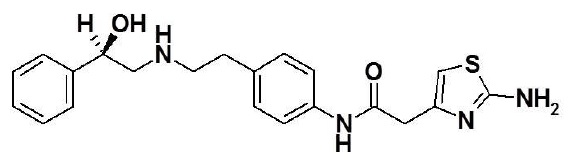
Mirabegron-stru (Mirabegron Stru)
Mirabegron is a white to off white solid. It is soluble in methanol and dimethyl sulfoxide, practically insoluble in water.
Each bottle of mirabegron for extended-release oral suspension contains approximately 8.3 g of granules, which contain 830 mg of mirabegron, and the following inactive ingredients: acesulfame potassium, colloidal silicon dioxide, ethyl paraben, hydrochloric acid, hypromellose, mannitol, methyl paraben, simethicone, sodium polystyrene sulfonate, talc, xanthan gum. After reconstituted with 100 mL water, the suspension contains 8 mg/mL of mirabegron.
Mirabegron is an agonist of the human beta-3 adrenergic receptor (AR) as demonstrated by in vitro laboratory experiments using the cloned human beta-3 AR. Mirabegron relaxes the detrusor smooth muscle during the storage phase of the urinary bladder fill-void cycle by activation of beta-3 AR which increases bladder capacity. Although mirabegron showed very low intrinsic activity for cloned human beta-1 AR and beta-2 AR, results in humans indicate that beta-1 AR stimulation occurred at a mirabegron dose of 200 mg.
Urodynamics
The effects of mirabegron on maximum urinary flow rate and detrusor pressure at maximum flow rate were assessed in a urodynamic study consisting of 200 male patients with lower urinary tract symptoms (LUTS) and BOO. Administration of mirabegron once daily for 12 weeks did not adversely affect the mean maximum flow rate or mean detrusor pressure at maximum flow rate in this study. Nonetheless, mirabegron should be administered with caution to patients with clinically significant BOO [see Warnings and Precautions (5.2)].
Cardiac Electrophysiology
The effect of multiple doses of mirabegron 50 mg, 100 mg, and 200 mg (four times the maximum recommended dose) once daily on QTc interval was evaluated in a randomized, placebo- and active-controlled (moxifloxacin 400 mg), four- treatment arm, parallel crossover study in 352 healthy subjects. In a study with demonstrated ability to detect small effects, the upper bound of the one-sided 95% confidence interval for the largest placebo-adjusted, baseline-corrected QTc based on individual correction method (QTcI) was below 10 msec. For the 50 mg mirabegron dose group (the maximum approved dosage), the mean difference from placebo on QTcI interval at 4 to 5 hours post-dose was 3.7 msec (upper bound of the 95% CI 5.1 msec).
For the mirabegron 100 mg and 200 mg dose groups (dosages greater than the maximum approved dose and resulting in substantial multiples of the anticipated maximum blood levels at 50 mg), the mean differences from placebo in QTcI interval at 4 to 5 hours post dose were 6.1 msec (upper bound of the 95% CI 7.6 msec) and 8.1 msec (upper bound of the 95% CI 9.8 msec), respectively. At the mirabegron 200 mg dose, in females, the mean effect was 10.4 msec (upper bound of the 95% CI 13.4 msec).
In this thorough QT study, mirabegron increased heart rate on ECG in a dose-dependent manner. Maximum mean increases from baseline in heart rate for the 50 mg, 100 mg, and 200 mg dose groups compared to placebo were 6.7 bpm, 11 bpm, and 17 bpm, respectively. In the clinical efficacy and safety studies, the change from baseline in mean pulse rate for mirabegron 50 mg was approximately 1 bpm. In this thorough QT study, mirabegron also increased blood pressure in a dose-dependent manner (see Effects on Blood Pressure).
Effects on Blood Pressure
In a study of 352 healthy subjects assessing the effect of multiple daily doses of 50 mg, 100 mg, and 200 mg (four times the maximum recommended dose) of mirabegron for 10 days on the QTc interval, the maximum mean increase in supine systolic blood pressure (SBP)/diastolic blood pressure (DBP) at the maximum recommended dose of 50 mg was approximately 4.0/1.6 mm Hg greater than placebo [see Warnings and Precautions (5.1)]. The 24-hour average increases in SBP compared to placebo were 3.0, 5.5, and 9.7 mm Hg at mirabegron doses of 50 mg, 100 mg, and 200 mg, respectively. Increases in DBP were also dose-dependent, but were smaller than SBP.
In another study in 96 healthy subjects to assess the impact of age on pharmacokinetics of multiple daily doses of 50 mg, 100 mg, 200 mg, and 300 mg (six times the maximum recommended dose) of mirabegron for 10 days, SBP also increased in a dose-dependent manner. The mean maximum increases in SBP were approximately 2.5, 4.5, 5.5, and 6.5 mm Hg for mirabegron exposures associated with doses of 50 mg, 100 mg, 200 mg, and 300 mg, respectively.
In three, 12-week, double-blind, placebo-controlled, safety and efficacy studies (Studies 1, 2, and 3) in patients with OAB receiving mirabegron 25 mg, 50 mg, or 100 mg (two times the maximum recommended dose) once daily, mean increases in SBP/DBP compared to placebo of approximately 0.5 – 1 mm Hg were observed. Morning SBP increased by at least 15 mm Hg from baseline in 5.3%, 5.1%, and 6.7% of placebo, mirabegron 25 mg and mirabegron 50 mg patients, respectively. Morning DBP increased by at least 10 mm Hg in 4.6%, 4.1%, and 6.6% of placebo, mirabegron 25 mg, and mirabegron 50 mg patients, respectively. Both SBP and DBP increases were reversible upon discontinuation of treatment.
In a 12-week, double-blind, placebo-controlled, safety and efficacy study (Study 6) in patients with OAB receiving mirabegron 25 mg or 50 mg once daily coadministered with solifenacin succinate 5 mg, no consistent differences in 24-hour mean SBP/DBP were observed compared to placebo, mirabegron or solifenacin succinate monotherapy as assessed with 24-hour Ambulatory Blood Pressure Monitoring (ABPM). Similar frequencies of categorical changes were observed for combination treatment versus placebo in 24-hour mean SBP/DBP.
Effect on Intraocular Pressure (IOP)
Mirabegron 100 mg once daily did not increase IOP in healthy subjects after 56 days of treatment. In a phase 1 study assessing the effect of mirabegron on IOP using Goldmann applanation tonometry in 310 healthy subjects, a dose of mirabegron 100 mg was non-inferior to placebo for the primary endpoint of the treatment difference in mean change from baseline to day 56 in subject average IOP; the upper bound of the two-sided 95% CI of the treatment difference between mirabegron 100 mg and placebo was 0.3 mm Hg.
Absorption
Mirabegron for Pediatric Neurogenic Detrusor Overactivity (NDO)
The median Tmax of mirabegron following oral administration of a single dose of mirabegron for extended-release oral suspension in pediatric patients under fed state was 4-5 hours. Population pharmacokinetic analysis predicted that the median Tmax of mirabegron for extended-release oral suspension at steady-state was 3-4 hours.
Effect of Food
Mirabegron for Pediatric Neurogenic Detrusor Overactivity (NDO)
In the fasted state, steady-state mirabegron AUC increased by 120% relative to the fed state in pediatric patients receiving MYRBETRIQ. Fasted Cmax and AUC increased by 170% and 80%, respectively, compared to the fed state following administration of mirabegron for extended-release oral suspension in healthy volunteers.
Distribution
Mirabegron for Pediatric Neurogenic Detrusor Overactivity (NDO)
Mirabegron volume of distribution was relatively large in pediatric patients (the range of mean Vz/F under fed state in pediatric patients across studies: 4895-13726 L) and increased with increasing body weight.
Elimination
Mirabegron for Pediatric Neurogenic Detrusor Overactivity (NDO)
The mean terminal elimination half-life (t1/2) of mirabegron is approximately 26 to 31 hours in pediatric patients.
Metabolism
Mirabegron is metabolized via multiple pathways involving dealkylation, oxidation, (direct) glucuronidation, and amide hydrolysis. Mirabegron is the major circulating component following a single dose of 14C-mirabegron. Two major metabolites were observed in human plasma and are phase 2 glucuronides representing 16% and 11% of total exposure, respectively. These metabolites are not pharmacologically active toward beta-3 adrenergic receptor.
Although, in vitro studies suggest a role for CYP2D6 and CYP3A4 in the oxidative metabolism of mirabegron, in vivo results indicate that these isozymes play a limited role in the overall elimination. In healthy subjects who were genotypically poor metabolizers of CYP2D6, mean Cmax and AUCtau were approximately 16% and 17% higher than in extensive metabolizers of CYP2D6, respectively. In vitro and ex vivo studies have shown the involvement of butylcholinesterase, uridine diphospho-glucuronosyltransferases (UGT), and possibly alcohol dehydrogenase in the metabolism of mirabegron, in addition to CYP3A4 and CYP2D6.
Excretion
Mirabegron for Pediatric Neurogenic Detrusor Overactivity (NDO)
Population pharmacokinetic model predicted that mirabegron clearance in pediatric patients increased with body weight.
Specific Populations
Pediatric Patients
In patients 3 to less than 18 years of age, age was not predicted to affect mirabegron pharmacokinetic parameters after accounting for differences in body weight [see Use in Specific Populations (8.4)].
Gender
Mirabegron for Pediatric Neurogenic Detrusor Overactivity (NDO)
Gender has no meaningful impact on mirabegron pharmacokinetics in the pediatric population from 3 to less than 18 years of age.
Race
The pharmacokinetics of mirabegron were comparable between Caucasians and African-American Blacks. Cross studies comparison showed that the exposure in Japanese subjects were higher than that in North American subjects. However, when the Cmax and AUC were normalized for dose and body weight, the difference was smaller.
Patients with Renal Impairment
Following single-dose administration of 100 mg mirabegron in adult volunteers with mild renal impairment (eGFR 60 to 89 mL/min/1.73 m2 as estimated by MDRD), mean mirabegron Cmax and AUC were increased by 6% and 31% relative to adult volunteers with normal renal function. In adult volunteers with moderate renal impairment (eGFR 30 to 59 mL/min/1.73 m2), Cmax and AUC were increased by 23% and 66%, respectively. In adult volunteers with severe renal impairment (eGFR 15 to 29 mL/min/1.73 m2), mean Cmax and AUC values were 92% and 118% higher compared to healthy subjects with normal renal function. Mirabegron has not been studied in adult patients with End- Stage Renal Disease (ESRD) (eGFR less than 15 mL/min/1.73 m2) or adult patients requiring dialysis.
Patients with Hepatic Impairment
Following single-dose administration of 100 mg mirabegron in adult volunteers with mild hepatic impairment (Child- Pugh Class A), mean mirabegron Cmax and AUC were increased by 9% and 19%, relative to adult volunteers with normal hepatic function. In adult volunteers with moderate hepatic impairment (Child-Pugh Class B), mean Cmax and AUC values were 175% and 65% higher. Mirabegron has not been studied in adult patients with severe hepatic impairment (Child-Pugh Class C).
Drug Interaction Studies
In Vitro Studies
Effect of Other Drugs on Mirabegron
Mirabegron is transported and metabolized through multiple pathways. Mirabegron is a substrate for CYP3A4, CYP2D6, butyrylcholinesterase, UGT, the efflux transporter P-glycoprotein (P-gp), and the influx organic cation transporters (OCT) OCT1, OCT2, and OCT3. Sulfonylurea hypoglycemic agents glibenclamide (a CYP3A4 substrate), gliclazide (a CYP2C9 and CYP3A4 substrate), and tolbutamide (a CYP2C9 substrate) did not affect the in vitro metabolism of mirabegron.
Effect of Mirabegron on Other Drugs
Studies of mirabegron using human liver microsomes and recombinant human CYP enzymes showed that mirabegron is a moderate and time-dependent inhibitor of CYP2D6 and a weak inhibitor of CYP3A. Mirabegron is unlikely to inhibit the metabolism of coadministered drugs metabolized by the following cytochrome P450 enzymes: CYP1A2, CYP2B6, CYP2C8, CYP2C9, CYP2C19, and CYP2E1 because mirabegron did not inhibit the activity of these enzymes at clinically relevant concentrations. Mirabegron did not induce CYP1A2 or CYP3A. Mirabegron inhibited P-gp-mediated drug transport at high concentrations. Mirabegron is predicted not to cause clinically relevant inhibition of OCT-mediated drug transport. Mirabegron did not affect the metabolism of glibenclamide or tolbutamide.
Effect of Alcohol on Mirabegron
The addition of alcohol (5, 10, 20, and 40%) increases the dissolution rate of mirabegron from mirabegron for extended-release oral suspension at pH 6.8. The clinical impact on the systemic exposure of mirabegron has not been evaluated. The addition of alcohol does not increase the dissolution rate of mirabegron for extended-release oral suspension at pH 1.0 or MYRBETRIQ (extended- release tablets) regardless of pH.
Carcinogenicity
Long-term carcinogenicity studies were conducted in rats and mice dosed orally with mirabegron for two years. Male rats were dosed at 0, 12.5, 25, or 50 mg/kg/day and female rats and both sexes of mice were dosed at 0, 25, 50, or 100 mg/kg/day. Mirabegron showed no carcinogenic potential at systemic exposures (AUC) 38 to 45-fold higher than the MRHD in rats and 21 to 38-fold higher than the MRHD in mice than the human systemic exposure at the 50 mg dose.
Mutagenesis
Mirabegron was not mutagenic in the Ames bacterial reverse mutation assay, did not induce chromosomal aberrations in human peripheral blood lymphocytes at concentrations that were not cytotoxic, and was not clastogenic in the rat micronucleus assay.
Impairment of Fertility
Fertility studies in rats showed that mirabegron had no effect on either male or female fertility at non-lethal doses up to 100 mg/kg/day. Systemic exposures (AUC) at 100 mg/kg in female rats was estimated to be 22-fold the MRHD in women and 93-fold the MRHD in men.
The efficacy of mirabegron was evaluated in Study 9 (NCT02751931), a 52-week, open-label, baseline-controlled, multicenter, dose titration study in pediatric patients 3 years of age and older for the treatment of neurogenic detrusor overactivity (NDO). Study 9 included patients 3 to 17 years of age. Entry criteria required that patients had a diagnosis of neurogenic detrusor overactivity (NDO) with involuntary detrusor contractions with detrusor pressure increase greater than 15 cm H2O and that patients or their caregivers practiced clean intermittent catheterization (CIC). Mirabegron were administered orally once daily. All patients initially received a weight-based starting dose equivalent to 25 mg daily dose followed by dose titration to a dose equivalent of 50 mg daily dose. The duration of the dose titration period was up to 8 weeks and this period was followed by a dose maintenance period that continued for the duration of the 52-week study.
In Study 9, a total of 86 patients 3 to 17 years of age received mirabegron. Of these, 71 patients completed treatment through week 24 and 70 completed 52 weeks of treatment. A total of 68 patients (43 patients 3 to less than 12 years of age and 25 patients 12 to 17 years of age) had valid urodynamic measurements for evaluation of efficacy. The study population included 39 males (45%) and 47 females (55%). The optimized maintenance dose within this study population included 94% of patients at the maximum dose, and 6% of patients at the starting dose.
The primary efficacy endpoint was change from baseline in the patients’ maximum cystometric (bladder) capacity (MCC) after 24 weeks of treatment with mirabegron. As shown in Table 16, improvements in MCC were observed in patients 3 to less than 12 years of age and in patients 12 to 17 years of age. The magnitude of the observed changes from baseline in the primary and secondary efficacy endpoints were comparable between patients 3 to less than 12 years of age and patients 12 to 17 years of age.
Table 16: Change from Baseline in Maximum Cystometric Capacity (MCC) at 24 Weeks in Pediatric Patients with Neurogenic Detrusor Overactivity (NDO) Treated with Mirabegron in Study 9
| Parameter | Children Aged 3 to Less than 12 Years (N=43)1 Mean (SD) | Adolescents Aged 12 to 17 Years (N=25)1 Mean (SD) |
| Maximum Cystometric Capacity (mL) | ||
| Baseline Week 24 Change from baseline 95% CI | 159 (95) 231 (129) 72 (87) (45, 99) | 239 (99) 352 (125) 113 (83) (79, 147) |
1. N is the number of patients who took at least one dose and provided valid values for MCC at Baseline and Week 24.
Secondary efficacy endpoints from Study 9 for mirabegron in pediatric patients with neurogenic detrusor overactivity (NDO) are shown below in Table 17 and Table 18.
Table 17: Changes from Baseline in Other Urodynamic Parameters at Week 24 in Pediatric Patients with Neurogenic Detrusor Overactivity (NDO) Treated with Mirabegron in Study 9
| Parameter | Children Aged 3 to Less than 12 Years (N=43)1 Mean (SD) | Adolescents Aged 12 to 17 Years (N=25)1 Mean (SD) |
| Bladder Compliance (mL/cm H2O)2 | ||
| Baseline Change from baseline | 16.0 (55.8) 14.6 (42.1) 95% CI: -0.3, 29.5 | 11.1 (10.7) 13.6 (15.0) 95% CI: 6.7, 20.4 |
| Number of Overactive Detrusor Contractions (>15 cm H2O)2 | ||
| Baseline Change from baseline | 3.0 (4.0) -1.9 (4.2) 95% CI: -3.3, -0.4 | 2.1 (3.1) -0.8 (3.9) 95% CI: -2.5, 0.9 |
| Bladder Volume Prior To First Detrusor Contraction (> 15 cm H2O)2 | ||
| Baseline Change from baseline | 115 (83) 93 (88) 95% CI: 64, 122 | 177 (117) 121 (160) 95% CI: 54, 189 |
1. N is the number of patients who took at least one dose and provided valid values for MCC at Baseline and Week 24.
2. Number of patients (Children/Adolescents) with data available for both Baseline and Week 24; Bladder Compliance: n=33/21; Number of Overactive Detrusor Contractions: n=36/22; Bladder Volume Prior To First Detrusor Contraction: n=38/24.
Table 18: Changes from Baseline in Maximum Catheterized Urine Volume and Number of Leakage Episodes at Week 24 in Pediatric Patients with Neurogenic Detrusor Overactivity (NDO) Treated with Mirabegron in Study 9
| Parameter | Children Aged 3 to Less than 12 Years (N=43)1 Mean (SD) | Adolescents Aged 12 to 17 Years (N=25)1 Mean (SD) |
| Maximum Catheterized Urine Volume per Day (mL)2 | ||
| Baseline Change from baseline | 304 (109) 50 (104) 95% CI: 17, 83 | 360 (111) 84 (122) 95% CI: 32, 137 |
| Number of Leakage Episodes per Day2 | ||
| Baseline Change from baseline | 2.8 (3.7) -2.0 (3.2) 95% CI: -3.2, -0.7 | 1.8 (1.7) -1.0 (1.1) 95% CI: -1.5, -0.5 |
1. N is the number of patients who took at least one dose and provided valid values for MCC at Baseline and Week 24.
2. Number of patients (Children/Adolescents) with data available for both Baseline and Week 24; Maximum Catheterized Urine Volume per Day: n=41/23; Number of Leakage Episodes per Day: n=26/21.
Mirabegron for extended-release oral suspension is supplied as granules in bottles with a child- resistant cap packaged in an aluminum pouch with desiccant. Each bottle is filled with approximately 8.3 g of yellowish to brownish colored granular powder, which contain 830 mg of mirabegron. After reconstitution with 100 mL water, the oral suspension is pale yellow to brownish yellow with 8 mg/mL of mirabegron.
| 1 Carton Containing 1 Bottle | NDC 67877-890-88 |
Store and Dispense
Store mirabegron for extended-release oral suspension at 20°C to 25°C (68°F to 77°F) with excursions permitted from 15°C to 30°C (59°F to 86°F) [see USP Controlled Room Temperature].
Store the reconstituted suspension at 20°C to 25°C (68°F to 77°F) for up to 28 days. Discard the unused portion after 28 days.
Advise the patient and/or caregiver to read the FDA-approved patient labeling (Patient Information).
Increases in Blood Pressure
Inform patients and/or their caregivers that mirabegron may increase blood pressure. Advise patients, especially patients with hypertension, to periodically monitor their blood pressure and report increased measurement to their health care provider [see Warnings and Precautions (5.1)].
Urinary Retention
Inform patients and/or their caregivers that MYRBETRIQ may cause urinary retention in adult patients with bladder outlet obstruction and in patients taking muscarinic antagonist medications for the treatment of OAB. Advise patients to contact their physician if they experience these effects while taking MYRBETRIQ [see Warnings and Precautions (5.2)].
Angioedema
Inform patients and/or their caregivers that mirabegron may cause angioedema. Advise patients and/or their caregivers to promptly discontinue mirabegron and seek medical attention if angioedema associated with the upper airway swelling occurs as this may be life-threatening [see Warnings and Precautions (5.3)].
Drug Interactions
Advise patients to report their use of any other prescription or nonprescription medications or dietary supplements because co-administration with mirabegron may require a dose adjustment and/or increased monitoring of these drugs [see Drug Interactions (7)].
Administration Instructions
Mirabegron for Extended-Release Oral Suspension
Advise pediatric patients and/or their caregivers to use an appropriate measuring device and instructions for measuring the correct dose of mirabegron for extended-release oral suspension. Instruct patients or their caregivers that patients should take mirabegron for extended-release oral suspension orally within 1 hour after preparation with food once daily and not save the dose for later.
The bottle should be shaken for 1 minute each day if the suspension will not be used for 2 or more days. When ready to use, shake the bottle vigorously for 1 minute then let it stand until the foam on top of the suspension is gone (approximately 1 to 2 minutes).
Missed Dose
Instruct patients and/or their caregivers to take any missed doses as soon as they remember, unless more than 12 hours have passed since the missed dose. If more than 12 hours have passed, the missed dose can be skipped and the next dose should be taken at the usual time.
Manufactured by:
Alkem Laboratories Ltd.,
Mumbai - 400 013, INDIA.
Distributed by:
Ascend Laboratories, LLC
Bedminster, NJ 07921
All other trademarks are the property of their respective owners.
Mirabegron (mir″ a beg′ ron) for Extended-Release Oral Suspension
for oral use
What are mirabegron for extended-release oral suspension?
Children
It is not known if mirabegron for extended-release oral suspension to treat NDO, are safe and effective in children under 3 years of age.
Who should not take mirabegron extended-release oral suspension?
Do not take mirabegron for extended-release oral suspension if you are allergic to mirabegron or any of the ingredients in mirabegron for extended-release oral suspension. See the end of this Patient Information leaflet for a complete list of ingredients in mirabegron for extended-release oral suspension.
Before you take mirabegron for extended-release oral suspension, tell your doctor about all of your medical conditions, including if you:
Tell your doctor about all the medicines you take, including prescription and over-the-counter medicines, vitamins, and herbal supplements. Mirabegron for extended-release oral suspension may affect the way other medicines work, and other medicines may affect how mirabegron for extended-release oral suspension work.
Especially tell your doctor if you take:
How should I take mirabegron for extended-release oral suspension?
Note: You will receive mirabegron for extended-release oral suspension from the pharmacy as a suspension. The suspension is prepared by your pharmacist. You will receive an oral dosing device with the suspension. If the suspension will not be used for 2 or more days, shake the bottle vigorously for 1 minute each day to make sure the granules are mixed well (dispersed).
Talk to your pharmacist if you have any questions.
Steps to prepare and take the suspension:
Step 1. Shake the bottle vigorously for 1 minute then let it stand until the foam on top of the suspension is gone (approximately 1 to 2 minutes). If the granules have not mixed well (dispersed), shake the bottle vigorously again for 1 minute and let it stand until the foam is gone.
Step 2. Using the oral dosing device provided by the pharmacist, place the dose into the oral dosing device and take the suspension within 1 hour with food. Disregard any bubbles.
Step 3. After each use, wash the oral dosing device with mild household detergent, rinse under running tap water, and allow it to air dry.
What are the possible side effects of mirabegron for extended-release oral suspension?
Mirabegron for extended-release oral suspension may cause serious side effects, including:
Tell your doctor if you have any side effect that bothers you, does not go away, or if you have
swelling of the face, lips, tongue or throat, hives, skin rash or itching while taking mirabegron for extended-release oral suspension.
These are not all the possible side effects of mirabegron for extended-release oral suspension. For more information, ask your doctor or pharmacist.
Call your doctor for medical advice about side effects. You may report side effects to FDA at 1-800-FDA-1088.
How should I store mirabegron for extended-release oral suspension?
Keep mirabegron for extended-release oral suspension, and all medicines out of the reach of children.
General information about the safe and effective use of mirabegron for extended-release oral suspension.
Medicines are sometimes prescribed for purposes other than those listed in a Patient Information leaflet. Do not use mirabegron for extended-release oral suspension for a condition for which it was not prescribed. Do not give mirabegron for extended-release oral suspension to other people, even if they have the same symptoms you have. It may harm them.
This leaflet summarizes the most important information about mirabegron for extended-release oral suspension. If you would like more information, talk with your doctor. You can ask your doctor or pharmacist for information about mirabegron for extended-release oral suspension that is written for health professionals.
What are the ingredients in mirabegron for extended-release oral suspension?
Active ingredient: mirabegron
Inactive ingredients: acesulfame potassium, colloidal silicon dioxide, ethyl paraben, hydrochloric acid, hypromellose, mannitol, methyl paraben, simethicone, sodium polystyrene sulfonate, talc, xanthan gum.
Manufactured by:
Alkem Laboratories Ltd.,
Mumbai - 400 013, INDIA.
Distributed by:
Ascend Laboratories, LLC
Bedminster, NJ 07921
All other trademarks are the property of their respective owners.
For more information, call 1-877-272-7901.
This Patient Information has been approved by the U.S. Food and Drug Administration.
Revised: 8/2025
PT 9187-01
NDC 67877-890-88
Mirabegron for Extended-Release Oral Suspension
8 mg/mL
PHARMACIST: Reconstitute product prior to dispensing and dispense with dosing device.
Rx Only
100 mL
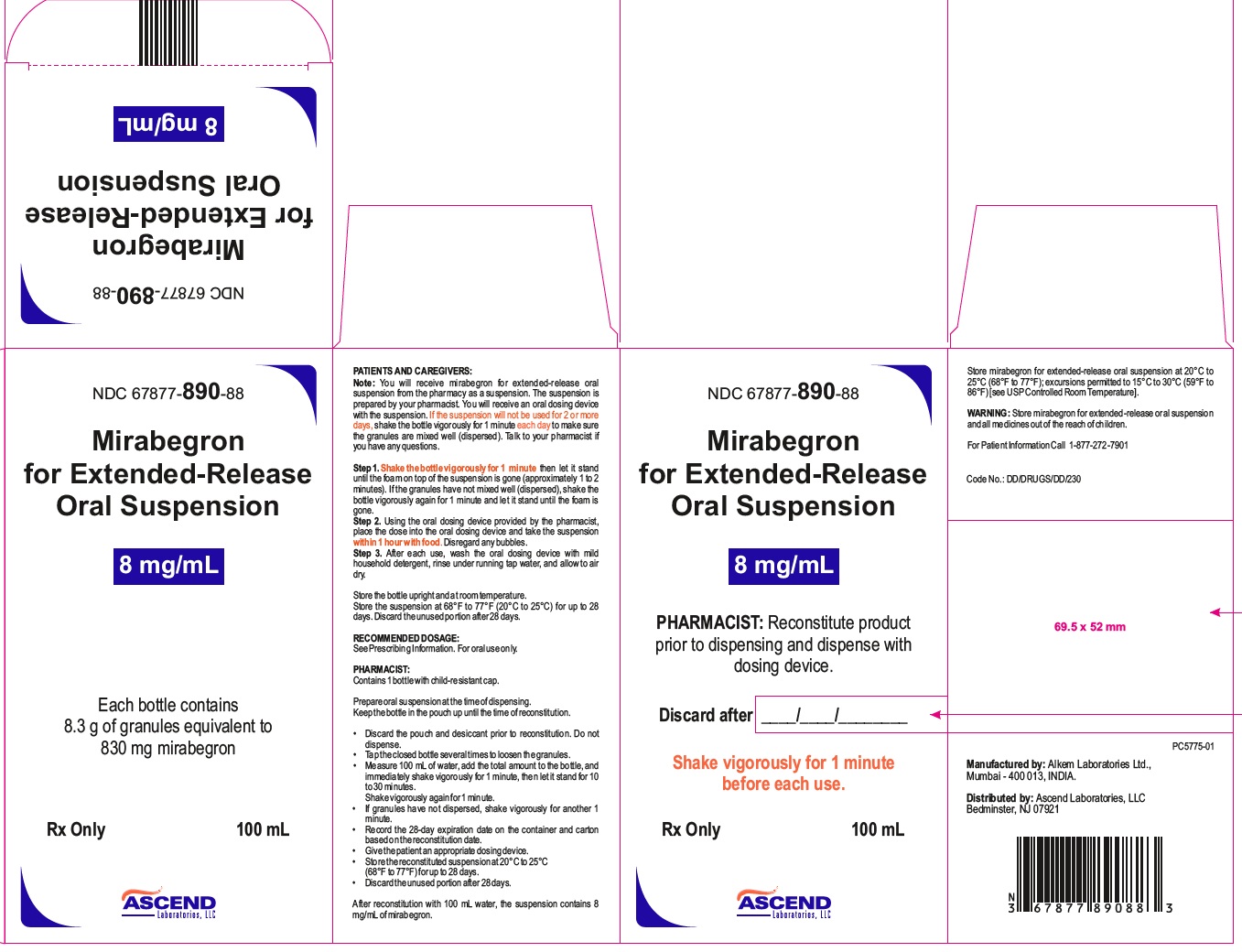
Mirabegron Carton Label (Mirabegron Cart B)
NDC 67877-890-88
1 Bottle
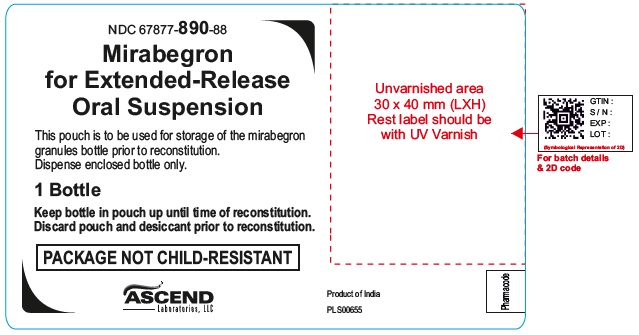
Mirabegron Pouch Label (Mirabegron Pouch A)
* Please review the disclaimer below.
