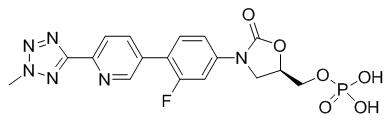
The contents of the vial should be reconstituted using aseptic technique as follows:
Note: To minimize foaming, AVOID vigorous agitation or shaking of the vial during or after reconstitution.
- Reconstitute the SIVEXTRO vial with 4 mL of Sterile Water for Injection.
- Gently swirl the contents and let the vial stand until the cake has completely dissolved and any foam disperses.
- Inspect the vial to ensure the solution contains no particulate matter and no cake or powder remains attached to the sides of the vial. If necessary, invert the vial to dissolve any remaining powder and swirl gently to prevent foaming. The reconstituted solution is clear and colorless to pale-yellow in color; the total storage time should not exceed 24 hours at either room temperature or under refrigeration at 2°C to 8°C (36°F to 46°F).
- Tilt the upright vial and insert a syringe with appropriately sized needle into the bottom corner of the vial and remove 4 mL of the reconstituted solution. Do not invert the vial during extraction.
- The reconstituted solution must be further diluted in 250 mL of 0.9% Sodium Chloride Injection, USP. Slowly inject the 4 mL of reconstituted solution into a 250 mL bag of 0.9% Sodium Chloride Injection, USP. Invert the bag gently to mix. Do NOT shake the bag as this may cause foaming.
Administration
Administer as an intravenous infusion only.
Do not administer as an intravenous push or bolus. Do not mix SIVEXTRO with other drugs when administering. It is not intended for intra-arterial, intramuscular, intrathecal, intraperitoneal, or subcutaneous administration.
The intravenous bag containing the reconstituted and diluted intravenous solution should be inspected visually for particulate matter prior to administration. Discard if visible particles are observed. The resulting solution is clear and colorless to pale-yellow in color.
After reconstitution and dilution, SIVEXTRO is to be administered via intravenous infusion using a total time of 1 hour.
The total time from reconstitution to administration should not exceed 24 hours at room temperature or under refrigeration at 2°C to 8°C (36°F to 46°F).
Serious Adverse Reactions and Adverse Reactions Leading to Discontinuation
Serious adverse reactions occurred in 12/662 (1.8%) of patients treated with SIVEXTRO and in 13/662 (2.0%) of patients treated with the comparator. SIVEXTRO was discontinued due to an adverse reaction in 3/662 (0.5%) of patients and the comparator was discontinued due to an adverse reaction in 6/662 (0.9%) of patients.
Most Common Adverse Reactions
The most common adverse reactions in patients treated with SIVEXTRO were nausea (8%), headache (6%), diarrhea (4%), vomiting (3%), and dizziness (2%). The median time of onset of adverse reactions was 5 days for both SIVEXTRO and linezolid with 12% occurring on the second day of treatment in both treatment groups.
Table 2 lists selected adverse reactions occurring in at least 2% of patients treated with SIVEXTRO in clinical trials.
Table 2: Selected Adverse Reactions Occurring in ≥2% of Patients Receiving SIVEXTRO in the Pooled Phase 3 ABSSSI Clinical Trials| Adverse Reactions | Pooled Phase 3 ABSSSI Clinical Trials |
|---|
SIVEXTRO
(200 mg oral/intravenous once daily for 6 days)
(N=662) | Linezolid
(600 mg oral/intravenous twice daily for 10 days)
(N=662) |
|---|
| Gastrointestinal Disorders |
| Nausea | 8% | 12% |
| Diarrhea | 4% | 5% |
| Vomiting | 3% | 6% |
| Nervous System Disorder |
| Headache | 6% | 6% |
| Dizziness | 2% | 2% |
Safety was additionally evaluated in a randomized, double-blind, multicenter study conducted in China, the Philippines, Taiwan, and the US, which included a total of 292 adult patients treated with tedizolid 200 mg administered IV and/or oral once daily for 6 days for the treatment of ABSSSI. The safety profile in this study was similar to the Phase 3 clinical trials; however, infusion site reactions (phlebitis) were reported in 3.1% of tedizolid-treated subjects, particularly among Asian patients.
The following selected adverse reactions were reported in SIVEXTRO-treated patients at a rate of less than 2% in these clinical trials:
Blood and Lymphatic System Disorders: anemia
Cardiovascular: palpitations, tachycardia
Eye Disorders: asthenopia, vision blurred, visual impairment, vitreous floaters
General Disorders and Administration Site Conditions: infusion-related reactions
Immune System Disorders: drug hypersensitivity
Infections and Infestations: Clostridium difficile colitis, oral candidiasis, vulvovaginal mycotic infection
Investigations: hepatic transaminases increased, white blood cell count decreased
Nervous System Disorders: hypoesthesia, paresthesia, VIIth nerve paralysis
Psychiatric Disorders: insomnia
Skin and Subcutaneous Tissue Disorders: pruritus, urticaria, dermatitis
Vascular Disorders: flushing, hypertension
Laboratory Parameters
Hematology laboratory abnormalities that were determined to be potentially clinically significant in the pooled Phase 3 ABSSSI clinical trials are provided in Table 3.
Table 3: Potentially Clinically Significant Lowest Laboratory Values in the Pooled Phase 3 ABSSSI Clinical Trials| Laboratory Assay | Potentially Clinically Significant Values <75% (<50% for absolute neutrophil count) of lower limit of normal (LLN) for values normal at baseline Represents lowest abnormal post-baseline value through the last dose of active drug |
|---|
SIVEXTRO
(200 mg oral/intravenous once daily for 6 days)
(N=618)Number of patients with non-missing laboratory values | Linezolid
(600 mg oral/intravenous twice daily for 10 days)
(N=617) |
|---|
| M = male; F = female |
Hemoglobin
(<10.1 g/dL [M])
(<9 g/dL [F]) | 3.1% | 3.7% |
Platelet count
(<112 × 103/mm3) | 2.3% | 4.9% |
Absolute neutrophil count
(<0.8 × 10³/mm3) | 0.5% | 0.6% |
Myelosuppression
Phase 1 studies conducted in healthy adults exposed to SIVEXTRO for 21 days showed a possible dose and duration effect on hematologic parameters beyond 6 days of treatment. In the Phase 3 trials, clinically significant changes in these parameters were generally similar for both treatment arms (see Table 3).
Peripheral and Optic Neuropathy
Peripheral and optic neuropathy have been described in patients treated with another member of the oxazolidinone class for longer than 28 days. In Phase 3 trials, reported adverse reactions for peripheral neuropathy and optic nerve disorders were similar between both treatment arms (peripheral neuropathy 1.2% vs. 0.6% for tedizolid phosphate and linezolid, respectively; optic nerve disorders 0.3% vs. 0.2%, respectively). No data are available for patients exposed to SIVEXTRO for longer than 6 days.
Cardiac Electrophysiology
In a randomized, positive- and placebo-controlled crossover thorough QTc study, 48 enrolled subjects were administered a single oral dose of SIVEXTRO at a therapeutic dose of 200 mg, SIVEXTRO at a supratherapeutic dose of 1200 mg, placebo, and a positive control; no significant effects of SIVEXTRO on heart rate, electrocardiogram morphology, PR, QRS, or QT interval were detected. Therefore, SIVEXTRO does not affect cardiac repolarization.
Absorption
Peak plasma tedizolid concentrations are achieved within approximately 3 hours following oral administration under fasting conditions or at the end of the 1 hour intravenous infusion of tedizolid phosphate. The absolute bioavailability is approximately 91% and no dosage adjustment is necessary between intravenous and oral administration.
Tedizolid phosphate (oral) may be administered with or without food as total systemic exposure (AUC0-∞) is unchanged between fasted and fed (high-fat, high-calorie) conditions.
Distribution
Protein binding of tedizolid to human plasma proteins is approximately 70 to 90%. The mean steady state volume of distribution of tedizolid in healthy adults following a single intravenous dose of tedizolid phosphate 200 mg ranged from 67 to 80 L (approximately twice total body water). Tedizolid penetrates into the interstitial space fluid of adipose and skeletal muscle tissue with exposure similar to free drug exposure in plasma.
Metabolism
Other than tedizolid, which accounts for approximately 95% of the total radiocarbon AUC in plasma, there are no other significant circulating metabolites in humans.
There was no degradation of tedizolid in human liver microsomes indicating tedizolid is unlikely to be a substrate for hepatic CYP450 enzymes.
In vitro studies showed that conjugation of tedizolid is mediated via multiple sulfotransferase (SULT) isoforms (SULT1A1, SULT1A2, and SULT2A1).
Excretion
Following single oral administration of 14C-labeled tedizolid phosphate under fasted conditions, the majority of elimination occurred via the liver, with 82% of the radioactive dose recovered in feces and 18% in urine, primarily as a non-circulating and microbiologically inactive sulfate conjugate. Most of the elimination of tedizolid (>85%) occurs within 96 hours. Less than 3% of the tedizolid phosphate-administered dose is excreted in feces and urine as unchanged tedizolid.
Specific Populations
Based on the population pharmacokinetic analysis, there are no clinically relevant demographic or clinical patient factors (including age, gender, race, ethnicity, weight, body mass index, and measures of renal or liver function) that impact the pharmacokinetics of tedizolid.
Hepatic Impairment
Following administration of a single 200 mg oral dose of SIVEXTRO, no clinically meaningful changes in mean tedizolid Cmax and AUC0-∞ were observed in patients with moderate (n=8) or severe (n=8) hepatic impairment (Child-Pugh Class B and C) compared to 8 matched healthy control subjects. No dose adjustment is necessary for patients with hepatic impairment.
Renal Impairment
Following administration of a single 200 mg intravenous dose of SIVEXTRO to 8 subjects with severe renal impairment defined as eGFR <30 mL/min/1.73 m2, the Cmax was essentially unchanged and AUC0-∞ was decreased by less than 10% compared to 8 matched healthy control subjects. Hemodialysis does not result in meaningful removal of tedizolid from systemic circulation, as assessed in subjects with end-stage renal disease (eGFR <15 mL/min/1.73 m2). No dosage adjustment is necessary in patients with renal impairment or patients on hemodialysis.
Geriatric Patients
The pharmacokinetics of tedizolid were evaluated in a Phase 1 study conducted in elderly healthy volunteers (age 65 years and older, with at least 5 subjects at least 75 years old; n=14) compared to younger control subjects (25 to 45 years old; n=14) following administration of a single oral dose of SIVEXTRO 200 mg. There were no clinically meaningful differences in tedizolid Cmax and AUC0-∞ between elderly subjects and younger control subjects. No dosage adjustment of SIVEXTRO is necessary in elderly patients.
Gender
The impact of gender on the pharmacokinetics of SIVEXTRO was evaluated in clinical trials of healthy males and females and in a population pharmacokinetics analysis. The pharmacokinetics of tedizolid were similar in males and females. No dosage adjustment of SIVEXTRO is necessary based on gender.
Drug Interaction Studies
Drug Metabolizing Enzymes
Transformation via Phase 1 hepatic oxidative metabolism is not a significant pathway for elimination of SIVEXTRO.
Neither SIVEXTRO nor tedizolid detectably inhibited or induced the metabolism of selected CYP enzyme substrates, suggesting that drug-drug interactions based on oxidative metabolism are unlikely.
Membrane Transporters
The potential for tedizolid or tedizolid phosphate to inhibit transport of probe substrates of important drug uptake (OAT1, OAT3, OATP1B1, OATP1B3, OCT1, and OCT2) and efflux transporters (P-gp and BCRP) was tested in vitro. No clinically relevant interactions are expected to occur with these transporters except BCRP. Coadministration of multiple oral doses of SIVEXTRO (200 mg once daily) increased the Cmax and AUC of rosuvastatin (10 mg single oral dose), a known BCRP substrate, by approximately 55% and 70%, respectively, in healthy subjects [see Drug Interactions (7)].
Monoamine Oxidase Inhibition
Tedizolid is a reversible inhibitor of monoamine oxidase (MAO) in vitro. The interaction with MAO inhibitors could not be evaluated in Phase 2 and 3 trials, as subjects taking such medications were excluded from the trials.
Adrenergic Agents
Two placebo-controlled crossover studies were conducted to assess the potential of 200 mg oral SIVEXTRO at steady state to enhance pressor responses to pseudoephedrine and tyramine in healthy individuals. No meaningful changes in blood pressure or heart rate were seen with pseudoephedrine. The median tyramine dose required to cause an increase in systolic blood pressure of ≥30 mmHg from pre-dose baseline was 325 mg with SIVEXTRO compared to 425 mg with placebo. Palpitations were reported in 21/29 (72.4%) subjects exposed to SIVEXTRO compared to 13/28 (46.4%) exposed to placebo in the tyramine challenge study.
Serotonergic Agents
Serotonergic effects at doses of tedizolid phosphate up to 30-fold above the human equivalent dose did not differ from vehicle control in a mouse model that predicts serotonergic activity. In Phase 3 trials, subjects taking serotonergic agents including antidepressants such as selective serotonin reuptake inhibitors (SSRIs), tricyclic antidepressants, and serotonin 5-hydroxytryptamine (5-HT1) receptor agonists (triptans), meperidine, or buspirone were excluded.
Mechanism of Action
The antibacterial activity of tedizolid is mediated by binding to the 50S subunit of the bacterial ribosome resulting in inhibition of protein synthesis. Tedizolid inhibits bacterial protein synthesis through a mechanism of action different from that of other non-oxazolidinone class antibacterial drugs; therefore, cross-resistance between tedizolid and other classes of antibacterial drugs is unlikely. The results of in vitro time-kill studies show that tedizolid is bacteriostatic against enterococci, staphylococci, and streptococci.
Mechanism of Resistance
Organisms resistant to oxazolidinones via mutations in chromosomal genes encoding 23S rRNA or ribosomal proteins (L3 and L4) are generally cross-resistant to tedizolid. In the limited number of Staphylococcus aureus strains tested, the presence of the chloramphenicol-florfenicol resistance (cfr) gene did not result in resistance to tedizolid in the absence of chromosomal mutations.
Frequency of Resistance
Spontaneous mutations conferring reduced susceptibility to tedizolid occur in vitro at a frequency rate of approximately 10-10.
Interaction with Other Antimicrobial Drugs
In vitro drug combination studies with tedizolid and aztreonam, ceftriaxone, ceftazidime, imipenem, rifampin, trimethoprim/sulfamethoxazole, minocycline, clindamycin, ciprofloxacin, daptomycin, vancomycin, gentamicin, amphotericin B, ketoconazole, and terbinafine demonstrate neither synergy nor antagonism.
Spectrum of Activity
Tedizolid has been shown to be active against most isolates of the following bacteria, both in vitro and in clinical infections, as described in Indications and Usage (1).
Aerobic and Facultative Gram-positive Bacteria
- Staphylococcus aureus (including methicillin-resistant [MRSA] and methicillin-susceptible [MSSA] isolates)
- Streptococcus pyogenes
- Streptococcus agalactiae
- Streptococcus anginosus Group (including S. anginosus, S. intermedius, and S. constellatus)
- Enterococcus faecalis
The following in vitro data are available, but their clinical significance has not been established. At least 90% of the following microorganisms exhibit an in vitro minimum inhibitory concentration (MIC) less than or equal to 0.5 mcg/mL for tedizolid. However, the safety and effectiveness of SIVEXTRO in treating clinical infections due to these microorganisms have not been established in adequate and well-controlled clinical trials.
Aerobic and Facultative Anaerobic Gram-positive Bacteria
- Staphylococcus epidermidis (including methicillin-susceptible and methicillin-resistant isolates)
- Staphylococcus haemolyticus
- Staphylococcus lugdunensis
- Enterococcus faecium
Susceptibility Test Methods
When available, the clinical microbiology laboratory should provide cumulative results of the in vitro susceptibility test results for antimicrobial drugs used in local hospitals and practice areas to the physician as periodic reports that describe the susceptibility profile of nosocomial and community-acquired pathogens. These reports should aid the physician in selecting an effective antibacterial drug for treatment.
Dilution Techniques
Quantitative methods are used to determine antimicrobial minimum inhibitory concentrations (MICs). These MIC values provide estimates of the susceptibility of bacteria to antimicrobial compounds. The MIC values should be determined using a standardized procedure based on dilution methods (broth, agar, or microdilution) or equivalent using standardized inoculum and concentrations of tedizolid.1, 3 The MIC values should be interpreted according to the criteria provided in Table 5.
Table 5: Susceptibility Test Interpretive Criteria for SIVEXTRO| Pathogen | Minimum Inhibitory Concentrations (mcg/mL) | Disk Diffusion Zone Diameter (mm) |
|---|
| S | I | R | S | I | R |
|---|
| S=susceptible, I=intermediate, R=resistant |
Staphylococcus aureus
(methicillin-resistant and methicillin-susceptible isolates) | ≤0.5 | 1 | ≥2 | ≥19 | 16 - 18 | ≤15 |
| Streptococcus pyogenes | ≤0.5 | - | - | ≥18 | - | - |
| Streptococcus agalactiae | ≤0.5 | - | - | ≥18 | - | - |
| Streptococcus anginosus Group Includes S. anginosus, S. intermedius, S. constellatus | ≤0.25 | - | - | ≥17 | - | - |
| Enterococcus faecalis | ≤0.5 | - | - | ≥19 | - | - |
Diffusion techniques
Quantitative methods that require measurement of zone diameters also provide reproducible estimates of the susceptibility of bacteria to antimicrobial compounds. The standardized procedure requires the use of standardized inoculum concentrations.2, 3 This procedure uses paper disks impregnated with 20 mcg tedizolid to test the susceptibility of microorganisms to tedizolid. Reports from the laboratory providing results of the standard single-disk susceptibility test with a 20 mcg tedizolid disk should be interpreted according to the criteria in Table 5.
A report of "Susceptible" indicates that the antimicrobial drug is likely to inhibit growth of the pathogen if the antimicrobial drug reaches the concentration usually achievable at the site of infection. A report of "Intermediate" indicates that the result should be considered equivocal, and if the microorganism is not fully susceptible to alternative drugs, the test should be repeated. This category implies possible clinical efficacy in body sites where the drug is physiologically concentrated. This category also provides a buffer zone that prevents small uncontrolled technical factors from causing major discrepancies in interpretation. A report of "Resistant" indicates that the antimicrobial drug is not likely to inhibit growth of the pathogen if the antimicrobial drug reaches the concentrations usually achievable at the infection site; other therapy should be selected.
Quality Control
Standardized susceptibility test procedures require the use of laboratory control microorganisms to monitor and ensure the accuracy and precision of supplies and reagents used in the assay, and the techniques of the individuals performing the test.1, 2, 3 Standardized tedizolid powder should provide the following range of MIC values noted in Table 6. For the diffusion technique using the 20 mcg tedizolid disk, results within the ranges specified in Table 6 should be observed.
Table 6: Acceptable Quality Control Ranges for Susceptibility Testing| Quality Control Organism | Minimum Inhibitory Concentrations (mcg/mL) | Disk Diffusion (zone diameter in mm) |
|---|
Staphylococcus aureus
ATCC 29213 | 0.12 – 1 | Not Applicable |
Staphylococcus aureus
ATCC 25923 | 0.12 – 0.5 | 22 - 29 |
Enterococcus faecalis
ATCC 29212 | 0.25 - 1 | Not Applicable |
Streptococcus pneumoniae
ATCC 49619 | 0.12 - 0.5 | 24 - 30 |
Administration with Food
Patients should be informed that SIVEXTRO tablets may be taken with or without food and without any dietary restrictions [see Dosage and Administration (2.1) and Clinical Pharmacology (12.3)].
Usage Safeguards
Patients should be advised that antibacterial drugs including SIVEXTRO should only be used to treat bacterial infections. SIVEXTRO does not treat viral infections (e.g., the common cold). When SIVEXTRO is prescribed to treat a bacterial infection, patients should be told that although it is common to feel better early in the course of therapy, the medication should be taken exactly as directed. Skipping doses or not completing the full course of therapy may (1) decrease the effectiveness of the immediate treatment and (2) increase the likelihood that bacteria will develop resistance and will not be treatable by SIVEXTRO or other antibacterial drugs in the future [see Indications and Usage (1.2)].
Patients should be informed that if they miss a dose, they should take the dose as soon as possible anytime up to 8 hours prior to their next scheduled dose. If less than 8 hours remains before the next dose, then they should wait until their next scheduled dose. Patients should take the prescribed number of doses [see Dosage and Administration (2.1)].
Keep SIVEXTRO and all medications out of reach of children.
Potentially Serious Adverse Reactions
Patients should be advised that diarrhea is a common problem caused by antibacterial drugs including SIVEXTRO and usually resolves when the drug is discontinued. Sometimes after starting treatment with antibiotics, patients can develop frequent watery and bloody stools (with or without stomach cramps and fever) even as late as two or more months after having taken the last dose of the antibiotic and may be a sign of a more serious intestinal infection [see Warnings and Precautions (5.2) and Adverse Reactions (6.1)]. If this occurs, patients should contact their healthcare provider as soon as possible.
Manuf. for: Merck Sharp & Dohme Corp., a subsidiary of
MERCK & CO., INC., Whitehouse Station, NJ 08889, USA
Sivextro tablets
Manufactured by: Patheon Inc.
Whitby, Ontario, L1N 5Z5 Canada
Sivextro for injection
Manufactured by: Patheon Italia S.p.A.
03013, Ferentino, FR Italy
For patent information: www.merck.com/product/patent/home.html
Copyright © 2015-2017 Merck Sharp & Dohme Corp., a subsidiary of Merck & Co., Inc.
All rights reserved.
uspi-mk1986-mf-1708r002