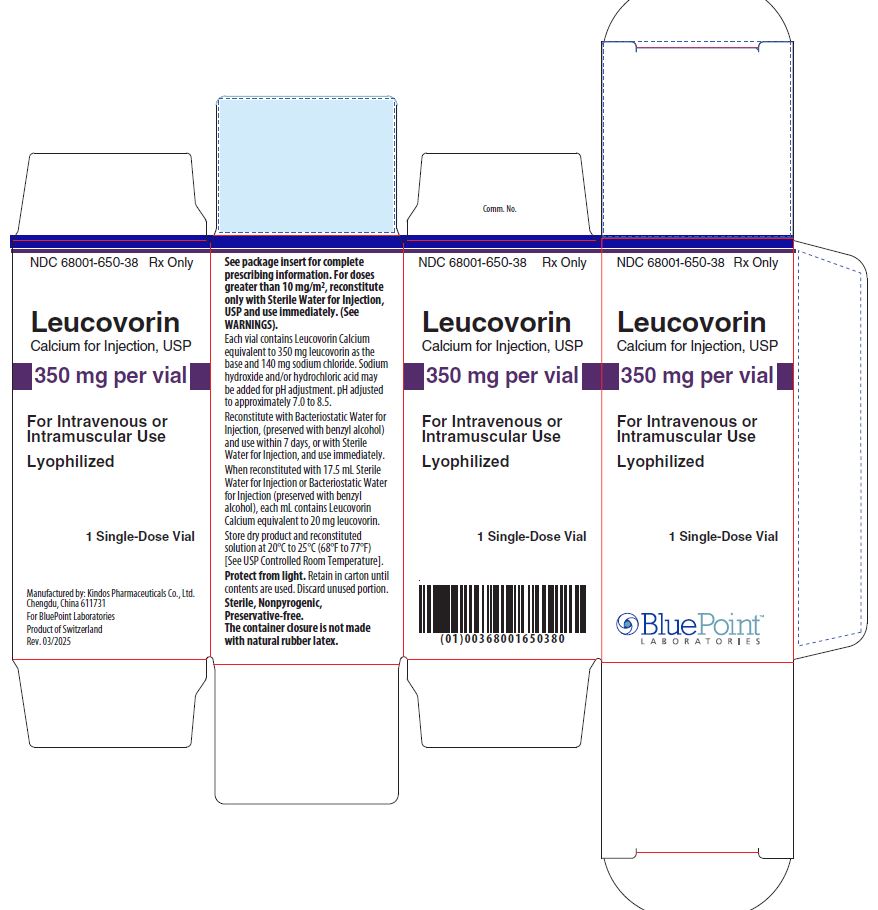
Other
Rx only
Allergic sensitization, including anaphylactoid reactions and urticaria, has been reported following administration of both oral and parenteral leucovorin calcium. No other adverse reactions have been attributed to the use of leucovorin calcium per se.
The following table summarizes significant adverse events occurring in 316 patients treated with the leucovorin calcium/5-fluorouracil combinations compared against 70 patients treated with 5-fluorouracil alone for advanced colorectal carcinoma. These data are taken from the Mayo/NCCTG large multicenter prospective trial evaluating the efficacy and safety of the combination regimen.
| High LV= Leucovorin calcium 200 mg/m 2 | ||||||
| Low LV=Leucovorin calcium 20 mg/m 2 | ||||||
| Any= percentage of patients reporting toxicity of any severity | ||||||
| Grade 3+ = percentage of patients reporting toxicity of Grade 3 or higher | ||||||
PERCENTAGE OF PATIENTS TREATED WITH LEUCOVORIN CALCIUM/FLUOROURACIL FOR ADVANCED COLORECTAL CARCINOMA REPORTING ADVERSE EXPERIENCES OR HOSPITALIZED FOR TOXICITY | ||||||
(High LV)/5-FU
| (Low LV)/5-FU
| 5-FU Alone
| ||||
Any | Grade3+ | Any | Grade 3+ | Any | Grade 3+ | |
(%) | (%) | (%) | (%) | (%) | (%) | |
Leukopenia | 69 | 14 | 83 | 23 | 93 | 48 |
Thrombocytopenia | 8 | 2 | 8 | 1 | 18 | 3 |
Infection | 8 | 1 | 3 | 1 | 7 | 2 |
Nausea | 74 | 10 | 80 | 9 | 60 | 6 |
Vomiting | 46 | 8 | 44 | 9 | 40 | 7 |
Diarrhea | 66 | 18 | 67 | 14 | 43 | 11 |
Stomatitis | 75 | 27 | 84 | 29 | 59 | 16 |
Constipation | 3 | 0 | 4 | 0 | 1 | - |
Lethargy/Malaise/Fatigue | 13 | 3 | 12 | 2 | 6 | 3 |
Alopecia | 42 | 5 | 43 | 6 | 37 | 7 |
Dermatitis | 21 | 2 | 25 | 1 | 13 | - |
Anorexia | 14 | 1 | 22 | 4 | 14 | - |
Hospitalization for Toxicity | 5% | 15% | 7% | |||
To report SUSPECTED ADVERSE REACTIONS, contact Meitheal Pharmaceuticals Inc. at 1-844-824-8426 or FDA at 1-800-FDA-1088 or www.fda.gov/medwatch.
GUIDELINES FOR LEUCOVORIN CALCIUM FOR INJECTION DOSAGE AND ADMINISTRATION DO NOT ADMINISTER LEUCOVORIN CALCIUM FOR INJECTION INTRATHECALLY | ||
Clinical Situation | Laboratory Findings | Leucovorin Calcium for Injection Dosage and Duration |
Normal Methotrexate Elimination | Serum methotrexate level approximately 10 micromolar at 24 hours after administration, 1 micromolar at 48 hours, and less than 0.2 micromolar at 72 hours. | 15 mg PO, IM, or IV q 6 hours for 60 hours (10 doses starting at 24 hours after start of methotrexate infusion). |
Delayed Late Methotrexate Elimination | Serum methotrexate level remaining above 0.2 micromolar at 72 hours, and more than 0.05 micromolar at 96 hours after administration. | Continue 15 mg PO, IM, or IV q 6 hours, until methotrexate level is less than 0.05 micromolar. |
Delayed Early Methotrexate Elimination and/or Evidence of Acute Renal Injury | Serum methotrexate level of 50 micromolar or more at 24 hours, or 5 micromolar or more at 48 hours after administration, OR; a 100% or greater increase in serum creatinine level at 24 hours after methotrexate administration (eg, an increase from 0.5 mg/dL to a level of 1 mg/dL or more) | 150 mg IV q 3 hours, until methotrexate level is less than 1 micromolar; then 15 mg IV q 3 hours until methotrexate level is less than 0.05 micromolar. |
Patients who experience delayed early methotrexate elimination are likely to develop reversible renal failure. In addition to appropriate leucovorin calcium for injection therapy, these patients require continuing hydration and urinary alkalinization, and close monitoring of fluid and electrolyte status, until the serum methotrexate level has fallen to below 0.05 micromolar and the renal failure has resolved.
Some patients will have abnormalities in methotrexate elimination or renal function following methotrexate administration, which are significant but less severe than the abnormalities described in the table above. These abnormalities may or may not be associated with significant clinical toxicity. If significant clinical toxicity is observed, leucovorin rescue should be extended for an additional 24 hours (total of 14 doses over 84 hours) in subsequent courses of therapy. The possibility that the patient is taking other medications which interact with methotrexate (eg, medications which may interfere with methotrexate elimination or binding to serum albumin) should always be reconsidered when laboratory abnormalities or clinical toxicities are observed.