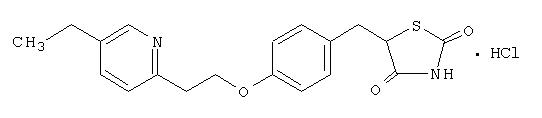
Common Adverse Events: 16- to 26-Week Monotherapy Trials
A summary of the incidence and type of common adverse events reported in three pooled 16- to 26-week placebo-controlled monotherapy trials of pioglitazone hydrochloride is provided in Table 1. Terms that are reported represent those that occurred at an incidence of >5% and more commonly in patients treated with pioglitazone hydrochloride than in patients who received placebo. None of these adverse events were related to pioglitazone hydrochloride dose.
Table 1. Three Pooled 16- to 26-Week Placebo-Controlled Clinical Trials of Pioglitazone Hydrochloride Monotherapy: Adverse Events Reported at an Incidence > 5% and More Commonly in Patients Treated with Pioglitazone Hydrochloride than in Patients Treated with Placebo| % of Patients |
|---|
| Placebo
N=259
| Pioglitazone Hydrochloride
N=606
|
|---|
| Upper Respiratory Tract Infection | 8.5 | 13.2 |
| Headache | 6.9 | 9.1 |
| Sinusitis | 4.6 | 6.3 |
| Myalgia | 2.7 | 5.4 |
| Pharyngitis | 0.8 | 5.1 |
Common Adverse Events: 16- to 24-Week Add-on Combination Therapy Trials
A summary of the overall incidence and types of common adverse events reported in trials of pioglitazone hydrochloride add-on to sulfonylurea is provided in Table 2. Terms that are reported represent those that occurred at an incidence of >5% and more commonly with the highest tested dose of pioglitazone hydrochloride.
Table 2. 16- to 24-Week Clinical Trials of Pioglitazone Hydrochloride Add-on to Sulfonylurea |
|---|
| Note: The preferred terms of edema peripheral, generalized edema, pitting edema and fluid retention were combined to form the aggregate term of "edema." |
| 16-Week Placebo-Controlled Trial
Adverse Events Reported in > 5% of Patients and More Commonly in Patients Treated with Pioglitazone Hydrochloride 30 mg + Sulfonylurea than in Patients Treated with Placebo + Sulfonylurea
|
| % of Patients |
Placebo
+ Sulfonylurea
N=187
| Pioglitazone Hydrochloride 15 mg
+ Sulfonylurea
N=184
| Pioglitazone Hydrochloride 30 mg
+ Sulfonylurea
N=189
|
| Edema | 2.1 | 1.6 | 12.7 |
| Headache | 3.7 | 4.3 | 5.3 |
| Flatulence | 0.5 | 2.7 | 6.3 |
| Weight Increased | 0 | 2.7 | 5.3 |
| 24-Week Non-Controlled Double-Blind Trial
Adverse Events Reported in > 5% of Patients and More Commonly in Patients Treated with Pioglitazone Hydrochloride 45 mg + Sulfonylurea than in Patients Treated with Pioglitazone Hydrochloride 30 mg + Sulfonylurea
|
| % of Patients |
Pioglitazone Hydrochloride 30 mg
+ Sulfonylurea
N=351
| Pioglitazone Hydrochloride 45 mg
+ Sulfonylurea
N=351
|
| Hypoglycemia | 13.4 | 15.7 |
| Edema | 10.5 | 23.1 |
| Upper Respiratory Tract Infection | 12.3 | 14.8 |
| Weight Increased | 9.1 | 13.4 |
| Urinary Tract Infection | 5.7 | 6.8 |
A summary of the overall incidence and types of common adverse events reported in trials of pioglitazone hydrochloride add-on to metformin is provided in Table 3. Terms that are reported represent those that occurred at an incidence of >5% and more commonly with the highest tested dose of pioglitazone hydrochloride.
Table 3. 16- to 24-Week Clinical Trials of Pioglitazone Hydrochloride Add-on to Metformin |
|---|
| Note: The preferred terms of edema peripheral, generalized edema, pitting edema and fluid retention were combined to form the aggregate term of "edema." |
| 16-Week Placebo-Controlled Trial
Adverse Events Reported in > 5% of Patients and More Commonly in Patients Treated with Pioglitazone Hydrochloride + Metformin than in Patients Treated with Placebo + Metformin
|
| % of Patients |
Placebo
+ Metformin
N=160
| Pioglitazone Hydrochloride 30 mg
+ Metformin
N=168
|
| Edema | 2.5 | 6.0 |
| Headache | 1.9 | 6.0 |
| 24-Week Non-Controlled Double-Blind Trial Adverse Events Reported in > 5% of Patients and More Commonly in Patients Treated with Pioglitazone Hydrochloride 45 mg + Metformin than in Patients Treated with
Pioglitazone Hydrochloride 30 mg + Metformin
|
| % of Patients |
Pioglitazone Hydrochloride 30 mg
+ Metformin
N=411
| Pioglitazone Hydrochloride 45 mg
+ Metformin
N=416
|
| Upper Respiratory Tract Infection | 12.4 | 13.5 |
| Edema | 5.8 | 13.9 |
| Headache | 5.4 | 5.8 |
| Weight Increased | 2.9 | 6.7 |
Table 4 summarizes the incidence and types of common adverse events reported in trials of pioglitazone hydrochloride add-on to insulin. Terms that are reported represent those that occurred at an incidence of >5% and more commonly with the highest tested dose of pioglitazone hydrochloride.
Table 4. 16- to 24-Week Clinical Trials of Pioglitazone Hydrochloride Add-on to Insulin |
|---|
| Note: The preferred terms of edema peripheral, generalized edema, pitting edema and fluid retention were combined to form the aggregate term of "edema." |
| 16-Week Placebo-Controlled Trial
Adverse Events Reported in > 5% of Patients and More Commonly in Patients Treated with Pioglitazone Hydrochloride 30 mg + Insulin than in Patients Treated with Placebo + Insulin
|
| % of Patients |
Placebo
+Insulin
N=187
| Pioglitazone Hydrochloride 15 mg
+ Insulin
N=191
| Pioglitazone Hydrochloride 30 mg
+ Insulin
N=188
|
| Hypoglycemia | 4.8 | 7.9 | 15.4 |
| Edema | 7.0 | 12.6 | 17.6 |
| Upper Respiratory Tract Infection | 9.6 | 8.4 | 14.9 |
| Headache | 3.2 | 3.1 | 6.9 |
| Weight Increased | 0.5 | 5.2 | 6.4 |
| Back Pain | 4.3 | 2.1 | 5.3 |
| Dizziness | 3.7 | 2.6 | 5.3 |
| Flatulence | 1.6 | 3.7 | 5.3 |
| 24-Week Non-Controlled Double-Blind Trial
Adverse Events Reported in > 5% of Patients and More Commonly in Patients Treated with Pioglitazone Hydrochloride 45 mg + Insulin than in Patients Treated with Pioglitazone Hydrochloride 30 mg + Insulin
|
| % of Patients |
Pioglitazone Hydrochloride 30 mg
+ Insulin
N=345
| Pioglitazone Hydrochloride 45 mg
+ Insulin
N=345
|
| Hypoglycemia | 43.5 | 47.8 |
| Edema | 22.0 | 26.1 |
| Weight Increased | 7.2 | 13.9 |
| Urinary Tract Infection | 4.9 | 8.7 |
| Diarrhea | 5.5 | 5.8 |
| Back Pain | 3.8 | 6.4 |
| Blood Creatine Phosphokinase Increased | 4.6 | 5.5 |
| Sinusitis | 4.6 | 5.5 |
| Hypertension | 4.1 | 5.5 |
A summary of the overall incidence and types of common adverse events reported in the PROactive trial is provided in Table 5. Terms that are reported represent those that occurred at an incidence of >5% and more commonly in patients treated with pioglitazone hydrochloride than in patients who received placebo.
Table 5. PROactive Trial: Incidence and Types of Adverse Events Reported in > 5% of Patients Treated with Pioglitazone Hydrochloride and More Commonly than Placebo | % of Patients |
|---|
Placebo
N=2633
| Pioglitazone Hydrochloride
N=2605
|
|---|
| Mean duration of patient follow-up was 34.5 months. |
| Hypoglycemia | 18.8 | 27.3 |
| Edema | 15.3 | 26.7 |
| Cardiac Failure | 6.1 | 8.1 |
| Pain in Extremity | 5.7 | 6.4 |
| Back Pain | 5.1 | 5.5 |
| Chest Pain | 5.0 | 5.1 |
Congestive Heart Failure
A summary of the incidence of adverse events related to congestive heart failure is provided in Table 6 for the 16- to 24-week add-on to sulfonylurea trials, for the 16 to 24-week add-on to insulin trials, and for the 16- to 24-week add-on to metformin trials. None of the events were fatal.
Table 6. Treatment –Emergent Adverse Events of Congestive Heart Failure (CHF) | Patients Treated with Pioglitazone Hydrochloride or Placebo Added on to a Sulfonylurea |
| Number (%) of Patients |
Placebo-Controlled Trial
(16 weeks)
| Non-Controlled Double-Blind Trial
(24 weeks)
|
Placebo
+ Sulfonylurea
N=187
| Pioglitazone Hydrochloride 15 mg
+ Sulfonylurea
N=184
| Pioglitazone Hydrochloride 30 mg
+ Sulfonylurea
N=189
| Pioglitazone Hydrochloride 30 mg
+ Sulfonylurea
N=351
| Pioglitazone Hydrochloride 45 mg
+ Sulfonylurea
N=351
|
At least one congestive
heart failure event
| 2 (1.1%) | 0 | 0 | 1 (0.3%) | 6 (1.7%) |
| Hospitalized | 2 (1.1%) | 0 | 0 | 0 | 2 (0.6%) |
| Patients Treated with Pioglitazone Hydrochloride or Placebo Added on to Insulin |
| Number (%) of Patients |
Placebo-Controlled Trial
(16 weeks)
| Non-Controlled
Double-Blind Trial
(24 weeks)
|
Placebo
+ Insulin
N=187
| Pioglitazone Hydrochloride 15 mg
+ Insulin
N=191
| Pioglitazone Hydrochloride 30 mg
+ Insulin
N=188
| Pioglitazone Hydrochloride 30 mg
+ Insulin
N=345
| Pioglitazone Hydrochloride 45 mg
+ Insulin
N=345
|
| At least one congestive heart failure event | 0 | 2 (1.0%) | 2 (1.1%) | 3 (0.9%) | 5 (1.4%) |
| Hospitalized | 0 | 2 (1.0%) | 1 (0.5%) | 1 (0.3%) | 3 (0.9%) |
| Patients Treated with Pioglitazone Hydrochloride or Placebo Added on to Metformin |
| Number (%) of Patients |
Placebo-Controlled Trial
(16 weeks)
| Non-Controlled
Double-Blind Trial
(24 weeks)
|
Placebo
+ Metformin
N=160
| Pioglitazone Hydrochloride 30 mg
+ Metformin
N=168
| Pioglitazone Hydrochloride 30 mg
+ Metformin
N=411
| Pioglitazone Hydrochloride 45 mg
+ Metformin
N=416
|
| At least one congestive heart failure event | 0 | 1 (0.6%) | 0 | 1 (0.2%) |
| Hospitalized | 0 | 1 (0.6%) | 0 | 1 (0.2%) |
Patients with type 2 diabetes and NYHA class II or early class III congestive heart failure were randomized to receive 24 weeks of double-blind treatment with either pioglitazone hydrochloride at daily doses of 30 mg to 45 mg (n=262) or glyburide at daily doses of 10 mg to 15 mg (n=256). A summary of the incidence of adverse events related to congestive heart failure reported in this study is provided in Table 7.
Table 7. Treatment –Emergent Adverse Events of Congestive Heart Failure (CHF) in Patients with NYHA Class II or III Congestive Heart Failure Treated with Pioglitazone Hydrochloride or Glyburide | Number (%) of Subjects |
|---|
Pioglitazone Hydrochloride
N=262
| Glyburide
N=256
|
|---|
| Death due to cardiovascular causes (adjudicated) | 5 (1.9%) | 6 (2.3%) |
| Overnight hospitalization for worsening CHF (adjudicated) | 26 (9.9%) | 12 (4.7%) |
| Emergency room visit for CHF (adjudicated) | 4 (1.5%) | 3 (1.2%) |
Patients experiencing CHF
progression during study
| 35 (13.4%) | 21 (8.2%) |
Congestive heart failure events leading to hospitalization that occurred during the PROactive trial are summarized in Table 8.
Table 8. Treatment –Emergent Adverse Events of Congestive Heart Failure (CHF) in PROactive Trial | Number (%) of Patients |
|---|
Placebo
N=2633
| Pioglitazone Hydrochloride
N=2605
|
|---|
| At least one hospitalized congestive heart failure event | 108 (4.1%) | 149 (5.7%) |
| Fatal | 22 (0.8%) | 25 (1.0%) |
| Hospitalized, nonfatal | 86 (3.3%) | 124 (4.7%) |
Cardiovascular Safety
In the PROactive trial, 5238 patients with type 2 diabetes and a history of macrovascular disease were randomized to pioglitazone hydrochloride (N=2605), force-titrated up to 45 mg daily or placebo (N=2633) in addition to standard of care. Almost all patients (95%) were receiving cardiovascular medications (beta blockers, ACE inhibitors, angiotensin II receptor blockers, calcium channel blockers, nitrates, diuretics, aspirin, statins and fibrates). At baseline, patients had a mean age of 62 years, mean duration of diabetes of 9.5 years, and mean HbA1c of 8.1%. Mean duration of follow-up was 34.5 months.
The primary objective of this trial was to examine the effect of pioglitazone hydrochloride on mortality and macrovascular morbidity in patients with type 2 diabetes mellitus who were at high risk for macrovascular events. The primary efficacy variable was the time to the first occurrence of any event in a cardiovascular composite endpoint that included all-cause mortality, nonfatal myocardial infarction (MI) including silent MI, stroke, acute coronary syndrome, cardiac intervention including coronary artery bypass grafting or percutaneous intervention, major leg amputation above the ankle, and bypass surgery or revascularization in the leg. A total of 514 (19.7%) patients treated with pioglitazone hydrochloride and 572 (21.7%) placebo-treated patients experienced at least one event from the primary composite endpoint (hazard ratio 0.90; 95% Confidence Interval: 0.80, 1.02; p=0.10).
Although there was no statistically significant difference between pioglitazone hydrochloride and placebo for the three-year incidence of a first event within this composite, there was no increase in mortality or in total macrovascular events with pioglitazone hydrochloride. The number of first occurrences and total individual events contributing to the primary composite endpoint is shown in Table 9.
Table 9. PROactive: Number of First and Total Events for Each Component within the Cardiovascular Composite Endpoint | Cardiovascular Events | Placebo
N=2633
| Pioglitazone Hydrochloride
N=2605
|
|---|
First Events
n (%)
| Total events
n
| First Events
n (%)
| Total events
n
|
|---|
| CABG = coronary artery bypass grafting; PCI = percutaneous intervention |
| Any event | 572 (21.7) | 900 | 514 (19.7) | 803 |
| All-cause mortality | 122 (4.6) | 186 | 110 (4.2) | 177 |
| Nonfatal myocardial infarction (MI) | 118 (4.5) | 157 | 105 (4.0) | 131 |
| Stroke | 96 (3.6) | 119 | 76 (2.9) | 92 |
| Acute coronary syndrome | 63 (2.4) | 78 | 42 (1.6) | 65 |
| Cardiac intervention (CABG/PCI) | 101 (3.8) | 240 | 101 (3.9) | 195 |
| Major leg amputation | 15 (0.6) | 28 | 9 (0.3) | 28 |
| Leg revascularization | 57 (2.2) | 92 | 71 (2.7) | 115 |
Weight Gain
Dose-related weight gain occurs when pioglitazone hydrochloride is used alone or in combination with other antidiabetic medications. The mechanism of weight gain is unclear but probably involves a combination of fluid retention and fat accumulation.
Tables 10 and 11 summarize the changes in body weight with pioglitazone hydrochloride and placebo in the 16- to 26-week randomized, double-blind monotherapy and 16- to 24-week combination add-on therapy trials and in the PROactive trial.
Table 10. Weight Changes (kg) from Baseline During Randomized, Double-Blind Clinical Trials | Control Group
(Placebo)
| Pioglitazone Hydrochloride
15 mg
| Pioglitazone Hydrochloride
30 mg
| Pioglitazone Hydrochloride
45 mg
|
|---|
Median
(25
th/75
th percentile)
| Median
(25
th/75
th percentile)
| Median
(25
th/75
th percentile)
| Median
(25
th/75
th percentile)
|
|---|
Monotherapy
(16 to 26 weeks)
| | -1.4 (-2.7/0.0)
N=256
| 0.9 (-0.5/3.4)
N=79
| 1.0 (-0.9/3.4)
N=188
| 2.6 (0.2/5.4)
N=79
|
Combination Therapy
(16 to 24 weeks)
| Sulfonylurea | -0.5 (-1.8/0.7)
N=187
| 2.0 (0.2/3.2)
N=183
| 3.1 (1.1/5.4)
N=528
| 4.1 (1.8/7.3)
N=333
|
| Metformin | -1.4 (-3.2/0.3)
N=160
| N/A | 0.9 (-1.3/3.2)
N=567
| 1.8 (-0.9/5.0)
N=407
|
| Insulin | 0.2 (-1.4/1.4)
N=182
| 2.3 (0.5/4.3)
N=190
| 3.3 (0.9/6.3)
N=522
| 4.1 (1.4/6.8)
N=338
|
Table 11. Median Change in Body Weight in Patients Treated with Pioglitazone Hydrochloride Versus Patients Treated with Placebo During the Double-Blind Treatment Period in the PROactive Trial | Placebo | Pioglitazone Hydrochloride |
|---|
Median
(25
th/75
th
percentile)
| Median
(25
th/75
th
percentile)
|
|---|
| Note: Median exposure for both Pioglitazone Hydrochloride and Placebo was 2.7 years. |
| Change from baseline to final visit (kg) | -0.5 (-3.3, 2.0)
N=2581
| +3.6 (0.0, 7.5)
N=2560
|
Edema
Edema induced from taking pioglitazone hydrochloride is reversible when pioglitazone hydrochloride is discontinued. The edema usually does not require hospitalization unless there is coexisting congestive heart failure. A summary of the frequency and types of edema adverse events occurring in clinical investigations of pioglitazone hydrochloride is provided in Table 12.
Table 12. Adverse Events of Edema in Patients Treated with Pioglitazone Hydrochloride | Number (%) of Patients |
|---|
| Placebo | Pioglitazone Hydrochloride
15 mg
| Pioglitazone Hydrochloride
30 mg
| Pioglitazone Hydrochloride
45 mg
|
|---|
| Note: The preferred terms of edema peripheral, generalized edema, pitting edema and fluid retention were combined to form the aggregate term of "edema." |
| Monotherapy (16 to 26 weeks) | 3 (1.2%)
N=259
| 2(2.5%)
N= 81
| 13 (4.7%)
N= 275
| 11 (6.5%)
N=169
|
Combined Therapy
(16 to 24 weeks)
| Sulfonylurea | 4 (2.1%)
N=187
| 3(1.6%)
N=184
| 61 (11.3%)
N=540
| 81 (23.1%)
N=351
|
| Metformin | 4 (2.5%)
N=160
| N/A | 34 (5.9%)
N=579
| 58 (13.9%)
N=416
|
| Insulin | 13 (7.0%)
N=187
| 24(12.6%)
N=191
| 109(20.5%)
N=533
| 90 (26.1%)
N=345
|
Table 13. Adverse Events of Edema in Patients in the PROactive Trial| Number (%) of Patients |
|---|
Placebo
N=2633
| Pioglitazone Hydrochloride
N=2605
|
|---|
| Note: The preferred terms of edema peripheral, generalized edema, pitting edema and fluid retention were combined to form the aggregate term of "edema." |
| 419 (15.9%) | 712 (27.3%) |
Hepatic Effects
There has been no evidence of induced hepatotoxicity with pioglitazone hydrochloride in the pioglitazone hydrochloride controlled clinical trial database to date. One randomized, double-blind 3-year trial comparing pioglitazone hydrochloride to glyburide as add-on to metformin and insulin therapy was specifically designed to evaluate the incidence of serum ALT elevation to greater than three times the upper limit of the reference range, measured every eight weeks for the first 48 weeks of the trial then every 12 weeks thereafter. A total of 3/1051 (0.3%) patients treated with pioglitazone hydrochloride and 9/1046 (0.9%) patients treated with glyburide developed ALT values greater than three times the upper limit of the reference range. None of the patients treated with pioglitazone hydrochloride in the pioglitazone hydrochloride controlled clinical trial database to date have had a serum ALT greater than three times the upper limit of the reference range and a corresponding total bilirubin greater than two times the upper limit of the reference range, a combination predictive of the potential for severe drug-induced liver injury.
Hypoglycemia
In the pioglitazone hydrochloride clinical trials, adverse events of hypoglycemia were reported based on clinical judgment of the investigators and did not require confirmation with fingerstick glucose testing.
In the 16-week add-on to sulfonylurea trial, the incidence of reported hypoglycemia was 3.7% with pioglitazone hydrochloride 30 mg and 0.5% with placebo. In the 16-week add-on to insulin trial, the incidence of reported hypoglycemia was 7.9% with pioglitazone hydrochloride 15 mg, 15.4% with pioglitazone hydrochloride 30 mg, and 4.8% with placebo.
The incidence of reported hypoglycemia was higher with pioglitazone hydrochloride 45 mg compared to pioglitazone hydrochloride 30 mg in both the 24-week add-on to sulfonylurea trial (15.7% vs. 13.4%) and in the 24-week add-on to insulin trial (47.8% vs. 43.5%).
Three patients in these four trials were hospitalized due to hypoglycemia. All three patients were receiving pioglitazone hydrochloride 30 mg (0.9%) in the 24-week add-on to insulin trial. An additional 14 patients reported severe hypoglycemia (defined as causing considerable interference with patient's usual activities) that did not require hospitalization. These patients were receiving pioglitazone hydrochloride 45 mg in combination with sulfonylurea (n=2) or pioglitazone hydrochloride 30 mg or 45 mg in combination with insulin (n=12).
Urinary Bladder Tumors
Tumors were observed in the urinary bladder of male rats in the two-year carcinogenicity study
[see
Nonclinical Toxicology (13.1)]
. During the three year PROactive clinical trial, 14 patients out of 2605 (0.54%) randomized to pioglitazone hydrochloride and 5 out of 2633 (0.19%) randomized to placebo were diagnosed with bladder cancer. After excluding patients in whom exposure to study drug was less than one year at the time of diagnosis of bladder cancer, there were 6 (0.23%) cases on pioglitazone hydrochloride and two (0.08%) cases on placebo. After completion of the trial, a large subset of patients was observed for up to 10 additional years, with little additional exposure to pioglitazone hydrochloride. During the 13 years of both PROactive and observational follow-up, the occurrence of bladder cancer did not differ between patients randomized to pioglitazone hydrochloride or placebo (HR =1.00; 95% CI: 0.59-1.72)
[see
Warnings and Precautions (5.4)]
.
Laboratory Abnormalities
Hematologic Effects
Pioglitazone hydrochloride may cause decreases in hemoglobin and hematocrit. In placebo-controlled monotherapy trials, mean hemoglobin values declined by 2% to 4% in patients treated with pioglitazone hydrochloride compared with a mean change in hemoglobin of -1% to +1% in placebo-treated patients. These changes primarily occurred within the first 4 to 12 weeks of therapy and remained relatively constant thereafter. These changes may be related to increased plasma volume associated with pioglitazone hydrochloride therapy and are not likely to be associated with any clinically significant hematologic effects.
Creatine Phosphokinase
During protocol-specified measurement of serum creatine phosphokinase (CPK) in pioglitazone hydrochloride clinical trials, an isolated elevation in CPK to greater than 10 times the upper limit of the reference range was noted in nine (0.2%) patients treated with pioglitazone hydrochloride (values of 2150 to 11400 IU/L) and in no comparator-treated patients. Six of these nine patients continued to receive pioglitazone hydrochloride, two patients were noted to have the CPK elevation on the last day of dosing and one patient discontinued pioglitazone hydrochloride due to the elevation. These elevations resolved without any apparent clinical sequelae. The relationship of these events to pioglitazone hydrochloride therapy is unknown.
Risk Summary
Limited data with pioglitazone hydrochloride in pregnant women are not sufficient to determine a drug-associated risk for major birth defects or miscarriage. There are risks to the mother and fetus associated with poorly controlled diabetes in pregnancy
[see
Clinical Considerations]
.
In animal reproduction studies, no adverse developmental effects were observed when pioglitazone was administered to pregnant rats and rabbits during organogenesis at exposures up to 5-and 35-times the 45 mg clinical dose, respectively, based on body surface area
[see
Data]
.
The estimated background risk of major birth defects is 6 to 10% in women with pre-gestational diabetes with a HbA1c >7 and has been reported to be as high as 20 to 25% in women with a HbA1c >10. The estimated background risk of miscarriage for the indicated population is unknown. In the U.S. general population, the estimated background risk of major birth defects and miscarriage in clinically recognized pregnancies is 2 to 4% and 15 to 20%, respectively.
Clinical Considerations
Disease-associated maternal and/or embryo/fetal risk
Poorly controlled diabetes in pregnancy increases the maternal risk for diabetic ketoacidosis, pre-eclampsia, spontaneous abortions, preterm delivery, still birth and delivery complications. Poorly controlled diabetes increases the fetal risk for major birth defects, still birth, and macrosomia related morbidity.
Data
Animal Data
Pioglitazone administered to pregnant rats during organogenesis did not cause adverse developmental effects at a dose of 20 mg/kg (~5-times the 45 mg clinical dose), but delayed parturition and reduced embryofetal viability at 40 and 80 mg/kg, or ≥9-times the 45 mg clinical dose, by body surface area. In pregnant rabbits administered pioglitazone during organogenesis, no adverse developmental effects were observed at 80 mg/kg (~35-times the 45 mg clinical dose), but reduced embryofetal viability at 160 mg/kg, or ~69-times the 45 mg clinical dose, by body surface area. When pregnant rats received pioglitazone during late gestation and lactation, delayed postnatal development, attributed to decreased body weight, occurred in offspring at maternal doses of 10 mg/kg and above or ≥2 times the 45 mg clinical dose, by body surface area.
Absorption
Following oral administration of pioglitazone, T
max of pioglitazone was within two hours. Food delays the T
max to three to four hours, but does not alter the extent of absorption (AUC).
Distribution
The mean apparent volume of distribution (Vd/F) of pioglitazone following single-dose administration is 0.63 ± 0.41 (mean ± SD) L/kg of body weight. Pioglitazone is extensively protein bound (> 99%) in human serum, principally to serum albumin. Pioglitazone also binds to other serum proteins, but with lower affinity. M-III and M-IV are also extensively bound (> 98%) to serum albumin.
Metabolism
Pioglitazone is extensively metabolized by hydroxylation and oxidation; the metabolites also partly convert to glucuronide or sulfate conjugates. Metabolites M-III and M-IV are the major circulating active metabolites in humans.
In vitro data demonstrate that multiple CYP isoforms are involved in the metabolism of pioglitazone, which include CYP2C8 and, to a lesser degree, CYP3A4 with additional contributions from a variety of other isoforms including the mainly extrahepatic CYP1A1.
In vivo study of pioglitazone in combination with gemfibrozil, a strong CYP2C8 inhibitor, showed that pioglitazone is a CYP2C8 substrate
[see
Dosage and Administration (2.3) and
Drug Interactions (7)]
. Urinary 6ß-hydroxycortisol/cortisol ratios measured in patients treated with pioglitazone hydrochloride showed that pioglitazone is not a strong CYP3A4 enzyme inducer.
Excretion and Elimination
Following oral administration, approximately 15% to 30% of the pioglitazone dose is recovered in the urine. Renal elimination of pioglitazone is negligible, and the drug is excreted primarily as metabolites and their conjugates. It is presumed that most of the oral dose is excreted into the bile either unchanged or as metabolites and eliminated in the feces.
The mean serum half-life (t
1/2) of pioglitazone and its metabolites (M-III and M-IV) range from three to seven hours and 16 to 24 hours, respectively. Pioglitazone has an apparent clearance, CL/F, calculated to be five to seven L/hr.
Renal Impairment
The serum elimination half-life of pioglitazone, M-III, and M-IV remains unchanged in patients with moderate (creatinine clearance [CL
cr] 30 to 50 mL/min) and severe (CL
cr < 30 mL/min) renal impairment when compared to subjects with normal renal function. Therefore, no dose adjustment in patients with renal impairment is required.
Hepatic Impairment
Compared with healthy controls, subjects with impaired hepatic function (Child-Turcotte-Pugh Grade B/C) have an approximate 45% reduction in pioglitazone and total pioglitazone (pioglitazone, M-III and M-IV) mean C
max but no change in the mean AUC values. Therefore, no dose adjustment in patients with hepatic impairment is required.
There are postmarketing reports of liver failure with pioglitazone hydrochloride and clinical trials have generally excluded patients with serum ALT >2.5 times the upper limit of the reference range. Use caution in patients with liver disease
[see Warnings and Precautions (5.3)]
.
Geriatric Patients
In healthy elderly subjects, C
max of pioglitazone was not significantly different, but AUC values were approximately 21% higher than those achieved in younger subjects. The mean t
1/2 of pioglitazone was also prolonged in elderly subjects (about ten hours) as compared to younger subjects (about seven hours). These changes were not of a magnitude that would be considered clinically relevant.
Pediatric Patients
Safety and efficacy of pioglitazone in pediatric patients have not been established. Pioglitazone hydrochloride is not recommended for use in pediatric patients
[see
Use in Specific Populations (8.4)]
.
Gender
The mean C
max and AUC values of pioglitazone were increased 20% to 60% in women compared to men. In controlled clinical trials, HbA1c decreases from baseline were generally greater for females than for males (average mean difference in HbA1c 0.5%). Because therapy should be individualized for each patient to achieve glycemic control, no dose adjustment is recommended based on gender alone.
Ethnicity
Pharmacokinetic data among various ethnic groups are not available.
Drug-Drug Interactions
Table 15. Effect of Pioglitazone Coadministration on Systemic Exposure of Other Drugs | Co-administered Drug |
|---|
Pioglitazone Dosage
Regimen (mg)
Daily for 7 days unless otherwise noted | Name and Dose Regimens | Change in AUC
% change (with/without coadministered drug and no change = 0%); symbols of ↑ and ↓ indicate the exposure increase and decrease, respectively. | Change in Cmax
|
|---|
45 mg
(N = 12)
| Warfarin Pioglitazone had no clinically significant effect on prothrombin time |
Daily loading then maintenance doses based PT and INR values
Quick's Value = 35 ± 5%
| R-Warfarin | ↓ 3% | R-Warfarin | ↓ 2% | |
| S-Warfarin | ↓ 1% | S-Warfarin | ↑ 1% | |
45 mg
(N = 12)
| Digoxin | |
0.200 mg twice daily (loading dose) then
0.250 mg daily (maintenance dose, 7 days)
| ↑ 15% | ↑ 17% | |
45 mg daily
for 21 days
(N = 35)
| Oral Contraceptive | |
[Ethinyl Estradiol (EE) 0.035 mg plus
Norethindrone (NE) 1 mg] for 21 days
| EE | ↓11% | EE | ↓13% | |
| NE | ↑ 3% | NE | ↓ 7% | |
45 mg
(N = 23)
| Fexofenadine | |
| 60 mg twice daily for 7 days | ↑ 30% | ↑ 37% | |
45 mg
(N = 14)
| Glipizide | |
| 5 mg daily for 7 days | ↓ 3% | ↓ 8% | |
45 mg daily
for 8 days
(N = 16)
| Metformin | |
| 1000 mg single dose on Day 8 | ↓ 3% | ↓ 5% | |
45 mg
(N = 21)
| Midazolam | |
| 7.5 mg single dose on Day 15 | ↓ 26% | ↓ 26% | |
45 mg
(N = 24)
| Ranitidine | |
| 150 mg twice daily for 7 days | ↑ 1% | ↓1% | |
45 mg daily
for 4 days
(N = 24)
| Nifedipine ER | |
| 30 mg daily for 4 days | ↓ 13% | ↓ 17% | |
45 mg
(N = 25)
| Atorvastatin Ca | |
| 80 mg daily for 7 days | ↓ 14% | ↓ 23% | |
45 mg
(N = 22)
| Theophylline | |
| 400 mg twice daily for 7 days | ↑ 2% | ↑ 5% |
Table 16. Effect of Coadministered Drugs on Pioglitazone Systemic Exposure| Coadministered Drug and Dosage Regimen | Pioglitazone |
|---|
Dose Regimen
(mg)
Daily for 7 days unless otherwise noted | Change
in AUC
Mean ratio (with/without coadministered drug and no change = 1-fold) % change (with/without coadministered drug and no change = 0%); symbols of ↑ and ↓ indicate the exposure increase and decrease, respectively | Change
in C
max |
|---|
Gemfibrozil 600 mg
twice daily for 2 days
(N = 12)
| 15 mg
single dose
| ↑ 3.2-fold
The half-life of pioglitazone increased from 8.3 hours to 22.7 hours in the presence of gemfibrozil [
see
Dosage and Administration (2.3) and
Drug Interactions (7.1)]
| ↑ 6% |
Ketoconazole 200 mg
twice daily for 7 days
(N = 28)
| 45 mg | ↑ 34% | ↑ 14% |
Rifampin 600 mg
daily for 5 days
(N = 10)
| 30 mg
single dose
| ↓ 54% | ↓ 5% |
Fexofenadine 60 mg
twice daily for 7 days
(N = 23)
| 45 mg | ↑ 1% | 0% |
Ranitidine 150 mg
twice daily for 4 days
(N = 23)
| 45 mg | ↓ 13% | ↓ 16% |
Nifedipine ER 30 mg
daily for 7 days
(N = 23)
| 45 mg | ↑ 5% | ↑ 4% |
Atorvastatin Ca 80 mg
daily for 7 days
(N = 24)
| 45 mg | ↓ 24% | ↓ 31% |
Theophylline 400 mg
twice daily for 7 days
(N = 22)
| 45 mg | ↓ 4% | ↓ 2% |
Topiramate 96 mg
twice daily for 7 days
Indicates duration of concomitant administration with highest twice-daily dose of topiramate from Day 14 onwards over the 22 days of study
(N = 26)
| 30 mg
| ↓15%
Additional decrease in active metabolites; 60% for M-III and 16% for M-IV | 0% |
Add-on to Sulfonylurea Trials
Two clinical trials were conducted with pioglitazone hydrochloride in combination with a sulfonylurea. Both studies included patients with type 2 diabetes on any dose of a sulfonylurea, either alone or in combination with another antidiabetic agent. All other antidiabetic agents were withdrawn at least three weeks prior to starting study treatment.
In the first study, 560 patients were randomized to receive 15 mg or 30 mg of pioglitazone hydrochloride or placebo once daily for 16 weeks in addition to their current sulfonylurea regimen. Treatment with pioglitazone hydrochloride as add-on to sulfonylurea produced statistically significant improvements in HbA1c and FPG at endpoint compared to placebo add-on to sulfonylurea (
see
Table 20)
.
Table 20. Glycemic Parameters in a 16-Week Placebo-Controlled, Add-on to Sulfonylurea Trial | Placebo
+ Sulfonylurea
| Pioglitazone Hydrochloride 15 mg
+ Sulfonylurea
| Pioglitazone Hydrochloride 30 mg
+ Sulfonylurea
|
|---|
| Total Population |
| HbA1c (%) | N=181 | N=176 | N=182 |
| Baseline (mean) | 9.9 | 10.0 | 9.9 |
| Change from baseline (adjusted mean
Adjusted for baseline, pooled center, and pooled center by treatment interaction )
| 0.1 | -0.8 | -1.2 |
Difference from placebo + sulfonylurea (adjusted mean
)
95% Confidence Interval
| | -0.9
p ≤ 0.05 vs. placebo + sulfonylurea
(-1.2, -0.6)
| -1.3
(-1.6, -1.0)
|
| Fasting Plasma Glucose (mg/dL) | N=182 | N=179 | N=186 |
| Baseline (mean) | 236 | 247 | 239 |
| Change from baseline (adjusted mean
)
| 6 | -34 | -52 |
Difference from placebo + sulfonylurea (adjusted mean
)
95% Confidence Interval
| | -39
(-52, -27)
| -58
(-70, -46)
|
In the second trial, 702 patients were randomized to receive 30 mg or 45 mg of pioglitazone hydrochloride once daily for 24 weeks in addition to their current sulfonylurea regimen. The mean reduction from baseline at Week 24 in HbA1 c was 1.6% for the 30 mg dose and 1.7% for the 45 mg dose (see Table 21). The mean reduction from baseline at Week 24 in FPG was 52 mg/dL for the 30 mg dose and 56 mg/dL for the 45 mg dose.
The therapeutic effect of pioglitazone hydrochloride in combination with sulfonylurea was observed in patients regardless of the sulfonylurea dose.
Table 21. Glycemic Parameters in a 24-Week Add-on to Sulfonylurea Trial | Pioglitazone Hydrochloride 30 mg +
Sulfonylurea
| Pioglitazone Hydrochloride 45 mg +
Sulfonylurea
|
|---|
| 95% CI = 95% confidence interval |
| Total Population |
| HbA1c (%) | N=340 | N=332 |
| Baseline (mean) | 9.8 | 9.9 |
| Change from baseline (adjusted mean
Adjusted for baseline, pooled center, and pooled center by treatment interaction )
| -1.6 | -1.7 |
| Difference from 30 mg daily pioglitazone hydrochloride + sulfonylurea (adjusted mean
) (95% CI)
| | -0.1
(-0.4, 0.1)
|
| Fasting Plasma Glucose (mg/dL) | N=338 | N=329 |
| Baseline (mean) | 214 | 217 |
| Change from baseline (adjusted mean
)
| -52 | -56 |
| Difference from 30 mg daily pioglitazone hydrochloride + sulfonylurea (adjusted mean
) (95% CI)
| | -5
(-12, 3)
|
Add-on to Metformin Trials
Two clinical trials were conducted with pioglitazone hydrochloride in combination with metformin. Both trials included patients with type 2 diabetes on any dose of metformin, either alone or in combination with another antidiabetic agent. All other antidiabetic agents were withdrawn at least three weeks prior to starting study treatment.
In the first trial, 328 patients were randomized to receive either 30 mg of pioglitazone hydrochloride or placebo once daily for 16 weeks in addition to their current metformin regimen. Treatment with pioglitazone hydrochloride as add-on to metformin produced statistically significant improvements in HbA1c and FPG at endpoint compared to placebo add-on to metformin (see
Table 22).
Table 22. Glycemic Parameters in a 16-Week Placebo-Controlled, Add-on to Metformin Trial | Placebo
+ Metformin
| Pioglitazone Hydrochloride 30 mg
+ Metformin
|
|---|
| Total Population |
| HbA1c (%) | N=153 | N=161 |
| Baseline (mean) | 9.8 | 9.9 |
| Change from baseline (adjusted mean
Adjusted for baseline, pooled center, and pooled center by treatment interaction )
| 0.2 | -0.6 |
Difference from placebo + metformin (adjusted mean
)
95% Confidence Interval
| | -0.8
p ≤ 0.05 vs. placebo + metformin
(-1.2, -0.5)
|
| Fasting Plasma Glucose (mg/dL) | N=157 | N=165 |
| Baseline (mean) | 260 | 254 |
| Change from baseline (adjusted mean
)
| -5 | -43 |
Difference from placebo + metformin (adjusted mean
)
95% Confidence Interval
| | -38
(-49, -26)
|
In the second trial, 827 patients were randomized to receive either 30 mg or 45 mg of pioglitazone hydrochloride once daily for 24 weeks in addition to their current metformin regimen. The mean reduction from baseline at Week 24 in HbA1 c was 0.8% for the 30 mg dose and 1.0% for the 45 mg dose (see
Table 23). The mean reduction from baseline at Week 24 in FPG was 38 mg/dL for the 30 mg dose and 51 mg/dL for the 45 mg dose.
Table 23. Glycemic Parameters in a 24-Week Add-on to Metformin Study | Pioglitazone Hydrochloride 30 mg +
Metformin
| Pioglitazone Hydrochloride 45 mg
+ Metformin
|
|---|
| 95% CI = 95% confidence interval |
| Total Population |
| HbA1c (%) | N=400 | N=398 |
| Baseline (mean) | 9.9 | 9.8 |
| Change from baseline (adjusted mean
Adjusted for baseline, pooled center, and pooled center by treatment interaction )
| -0.8 | -1.0 |
| Difference from 30 mg daily pioglitazone hydrochloride + Metformin (adjusted mean
) (95% CI)
| | -0.2
(-0.5, 0.1)
|
| Fasting Plasma Glucose (mg/dL) | N=398 | N=399 |
| Baseline (mean) | 233 | 232 |
| Change from baseline (adjusted mean
)
| -38 | -51 |
| Difference from 30 mg daily pioglitazone hydrochloride + Metformin (adjusted mean
) (95% CI)
| | -12
p ≤ 0.05 vs. 30 mg daily pioglitazone hydrochloride + metformin
(-21, -4)
|
The therapeutic effect of pioglitazone hydrochloride in combination with metformin was observed in patients regardless of the metformin dose.
Add-on to Insulin Trials
Two clinical trials were conducted with pioglitazone hydrochloride in combination with insulin. Both trials included patients with type 2 diabetes on insulin, either alone or in combination with another antidiabetic agent. All other antidiabetic agents were withdrawn prior to starting study treatment. In the first trial, 566 patients were randomized to receive either 15 mg or 30 mg of pioglitazone hydrochloride or placebo once daily for 16 weeks in addition to their insulin regimen. Treatment with pioglitazone hydrochloride as add-on to insulin produced statistically significant improvements in HbA1c and FPG at endpoint compared to placebo add-on to insulin (see
Table 24). The mean daily insulin dose at baseline in each treatment group was approximately 70 units. The majority of patients (75% overall, 86% treated with placebo, 77% treated with pioglitazone
hydrochloride 15 mg, and 61% treated with pioglitazone hydrochloride 30 mg) had no change in their daily insulin dose from baseline to the final study visit. The mean change from baseline in daily dose of insulin (including patients with no insulin dose modifications) was -3 units in the patients treated with pioglitazone hydrochloride 15 mg, -8 units in the patients treated with pioglitazone hydrochloride 30 mg, and -1 unit in patients treated with placebo.
Table 24. Glycemic Parameters in a 16-Week Placebo-Controlled, Add-on to Insulin Trial | Placebo
+ Insulin
| Pioglitazone Hydrochloride 15 mg
+ Insulin
| Pioglitazone Hydrochloride 30 mg
+ Insulin
|
|---|
| Total Population |
| HbA1c (%) |
N=177
|
N=177
|
N=185
|
| Baseline (mean) | 9.8 | 9.8 | 9.8 |
| Change from baseline (adjusted mean
Adjusted for baseline, pooled center, and pooled center by treatment interaction )
| -0.3 | -1.0 | -1.3 |
Difference from placebo + Insulin (adjusted mean
)
95% Confidence Interval
| | -0.7
p ≤ 0.05 vs. placebo + insulin
(-1.0, -0.5)
| -1.0
(-1.3, -0.7)
|
| Fasting Plasma Glucose (mg/dL) | N=179 | N=183 | N=184 |
| Baseline (mean) | 221 | 222 | 229 |
| Change from baseline (adjusted mean
)
| 1 | -35 | -48 |
Difference from placebo + Insulin (adjusted mean
)
95% Confidence Interval
| | -35
(-51, -19)
| -49
(-65, -33)
|
In the second trial, 690 patients receiving a median of 60 units per day of insulin were randomized to receive either 30 mg or 45 mg of pioglitazone hydrochloride once daily for 24 weeks in addition to their current insulin regimen. The mean reduction from baseline at Week 24 in HbA1c was 1.2% for the 30 mg dose and 1.5% for the 45 mg dose. The mean reduction from baseline at Week 24 in FPG was 32 mg/dL for the 30 mg dose and 46 mg/dL for the 45 mg dose (see
Table 25). The mean daily insulin dose at baseline in both treatment groups was approximately 70 units. The majority of patients (55% overall, 58% treated with pioglitazone hydrochloride 30 mg, and 52% treated with pioglitazone hydrochloride 45 mg) had no change in their daily insulin dose from baseline to the final study visit. The mean change from baseline in daily dose of insulin (including patients with no insulin dose modifications) was -5 units in the patients treated with pioglitazone hydrochloride 30 mg and -8 units in the patients treated with pioglitazone hydrochloride 45 mg.
The therapeutic effect of pioglitazone hydrochloride in combination with insulin was observed in patients regardless of the insulin dose.
Table 25. Glycemic Parameters in a 24-Week Add-on to Insulin Trial | Pioglitazone Hydrochloride 30 mg +
Insulin
| Pioglitazone Hydrochloride 45 mg +
Insulin
|
|---|
| 95% CI = 95% confidence interval |
| Total Population |
| HbA1c (%) | N=328 | N=328 |
| Baseline (mean) | 9.9 | 9.7 |
| Change from baseline (adjusted mean
Adjusted for baseline, pooled center, and pooled center by treatment interaction )
| -1.2 | -1.5 |
| Difference from 30 mg daily pioglitazone hydrochloride + Insulin (adjusted mean
) (95% CI)
| | -0.3
p ≤ 0.05 vs. 30 mg daily pioglitazone hydrochloride + insulin
(-0.5, -0.1)
|
| Fasting Plasma Glucose (mg/dL) | N=325 | N=327 |
| Baseline (mean) | 202 | 199 |
| Change from baseline (adjusted mean
)
| -32 | -46 |
| Difference from 30 mg daily pioglitazone hydrochloride + Insulin (adjusted mean
) (95% CI)
| | -14
(-25, -3)
|
- It is important to instruct patients to adhere to dietary instructions and to have blood glucose and glycosylated hemoglobin tested regularly. During periods of stress such as fever, trauma, infection, or surgery, medication requirements may change and patients should be reminded to seek medical advice promptly.
- Patients who experience an unusually rapid increase in weight or edema or who develop shortness of breath or other symptoms of heart failure while on pioglitazone tablets should immediately report these symptoms to a physician.
- Tell patients to promptly stop taking pioglitazone tablets and seek immediate medical advice if there is unexplained nausea, vomiting, abdominal pain, fatigue, anorexia, or dark urine as these symptoms may be due to hepatotoxicity.
- Tell patients to promptly report any sign of macroscopic hematuria or other symptoms such as dysuria or urinary urgency that develop or increase during treatment as these may be due to bladder cancer.
- Tell patients to take pioglitazone tablets once daily. Pioglitazone tablets can be taken with or without meals. If a dose is missed on one day, the dose should not be doubled the following day.
- When using combination therapy with insulin or other antidiabetic medications, the risks of hypoglycemia, its symptoms and treatment, and conditions that predispose to its development should be explained to patients and their family members.
- Inform female patients that treatment with pioglitazone tablets, like other thiazolidinediones, may result in an unintended pregnancy in some premenopausal anovulatory females due to its effect on ovulation
[see
Use in Specific Populations (8.3)].
Manufactured For:
Accord Healthcare, Inc.,
1009 Slater Road,
Suite 210-B,
Durham, NC 27703,
USA.
Manufactured By:
Intas Pharmaceuticals Limited,
Plot No. : 457, 458,
Village – Matoda,
Bavla Road, Ta.- Sanand,
Dist.- Ahmedabad – 382 210,
INDIA.
10 0219 2 688906
Issued October 2018
“Licensed-United States Patent Nos. 5,965,584, 6,150,383, 6,150,384, 6,166,042, 6,166,043, 6,172,090, 6,211,205, 6,271,243, 6,329,404, and 6,303,640.”