Tamsulosin Hydrochloride Capsule
Product Images NDC 68071-2561

View Photos of Packaging, Regulatory Labels, and Product Appearance

Product Visual Gallery

This gallery contains 7 technical images submitted to the FDA as part of the official labeling for Tamsulosin Hydrochloride (NDC 68071-2561). Unlike standard consumer photos, these assets often include clinical data figures, molecular chemical structures, and official manufacturer packaging layouts.

As provided by Nucare Pharmaceuticals,inc., these visuals offer a comprehensive scientific overview of the product's physical and chemical identity, aiding pharmacists and researchers in product verification and study.

FDA Label Image

Pdp (68071 2561 9)

Pdp (68071 2561 9)
Label from NuCare Pharmaceuticals, Inc. for Tamsulosin Hydrochloride 0.4 mg capsules, with a count of 90. The label includes the NDC 68071-2561-9, product number P1849000, and dosage form described as oblong olive green opaque/orange opaque capsule, imprinted with 'D' on the cap and '53' on the body. It advises storage at controlled temperatures between 68-77°F and includes warnings to keep out of reach of children.*
FDA Label Image

Figure 1 Mean Plasma Tamsulosin Hydrochloride Concentrations Following Single-dose Administration Of Tamsulosin Hydrochloride Capsules 0.4 mg Under Fasted And Fed Conditions (n=8) (Tamsulosin Fig1)

Figure 1 Mean Plasma Tamsulosin Hydrochloride Concentrations Following Single-dose Administration Of Tamsulosin Hydrochloride Capsules 0.4 mg Under Fasted And Fed Conditions (n=8) (Tamsulosin Fig1)
A line graph showing mean plasma tamsulosin hydrochloride concentrations over 36 hours after a single 0.4 mg dose, comparing fasted and fed conditions for 8 subjects. The y-axis represents plasma concentration in ng/mL, and the x-axis represents time in hours. The fasted condition shows a higher peak concentration than fed.*
FDA Label Image

Figure 2a Mean Change From Baseline In Total Aua Symptom Score (0 To 35) Study 1 (Tamsulosin Fig2)

Figure 2a	Mean Change From Baseline In Total Aua Symptom Score (0 To 35) Study 1 (Tamsulosin Fig2)
This line graph shows the mean change from baseline in total AUA symptom score over a 13-week treatment period in Study 1. The x-axis represents treatment duration in weeks, and the y-axis represents mean change. Three treatment groups are compared: 0.8 mg (circles), 0.4 mg (triangles) of Tamsulosin Hydrochloride, and placebo (squares). Both doses show greater symptom score improvement than placebo over time.*
FDA Label Image

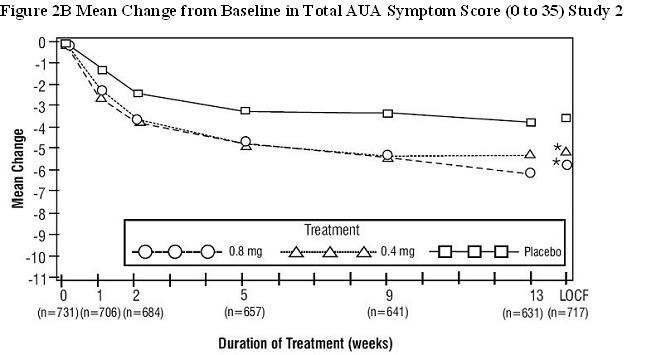
Figure 2b Mean Change From Baseline In Total Aua Symptom Score (0 To 35) Study 2 (Tamsulosin Fig3)

Figure 2b	Mean Change From Baseline In Total Aua Symptom Score (0 To 35) Study 2 (Tamsulosin Fig3)
A line graph showing the mean change from baseline in total AUA symptom score over 13 weeks of treatment. The graph compares three groups: 0.8 mg dosage, 0.4 mg dosage, and placebo. The x-axis represents duration of treatment in weeks, while the y-axis shows mean change in score. Data points and trend lines show greater symptom improvement in the 0.4 mg and 0.8 mg groups compared to placebo.*
FDA Label Image

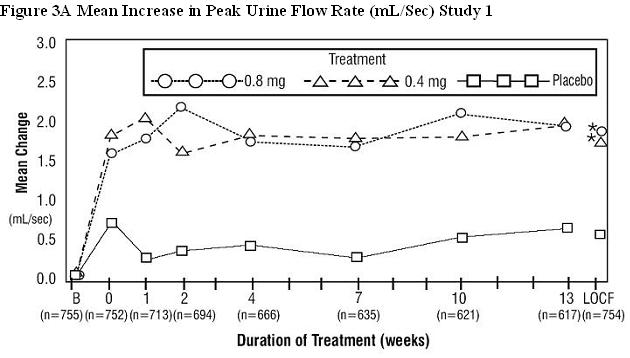
Figure 3a Mean Increase In Peak Urine Flow Rate (ml/sec) Study 1 (Tamsulosin Fig4)

Figure 3a Mean Increase In Peak Urine Flow Rate (ml/sec) Study 1 (Tamsulosin Fig4)
Line graph titled 'Mean Increase in Peak Urine Flow Rate (mL/Sec) Study 1' comparing mean change in urine flow rate over a 13-week treatment duration. It shows three groups: 0.8 mg, 0.4 mg, and placebo. The 0.8 mg and 0.4 mg groups exhibit higher increases in flow rate compared to placebo over time.*
FDA Label Image

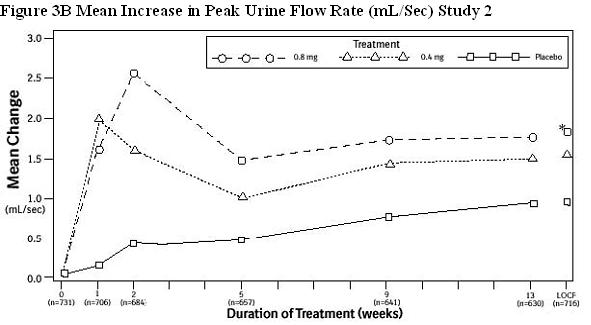
Figure 3b Mean Increase In Peak Urine Flow Rate (ml/sec) Study 2 (Tamsulosin Fig5)

Figure 3b Mean Increase In Peak Urine Flow Rate (ml/sec) Study 2 (Tamsulosin Fig5)
A line graph titled 'Figure 3B Mean Increase in Peak Urine Flow Rate (mL/Sec) Study 2' showing mean change in mL/sec on the y-axis and duration of treatment in weeks on the x-axis. It compares treatment groups: 0.8 mg, 0.4 mg, and placebo, with 0.8 mg and 0.4 mg groups showing higher increases over time compared to placebo.*
FDA Label Image

Chemical Structure (Tamsulosin Str)

Chemical Structure (Tamsulosin Str)
Chemical structure of Tamsulosin Hydrochloride showing its molecular composition with distinct functional groups including a methoxy-substituted benzene ring, sulfonamide group, and an ethoxy-substituted phenyl ring.*

* About these descriptions: Image descriptions on this page are generated by automated AI analysis of the product label images from the manufacturer's FDA label submission (SPL). They are provided for reference only and may contain errors or omissions. Always rely on the printed label itself and the official FDA labeling, and consult a pharmacist or healthcare professional with any questions about this product.