Gabapentin Capsule
Product Images NDC 68071-3664

View Photos of Packaging, Regulatory Labels, and Product Appearance

Product Visual Gallery

This gallery contains 13 technical images submitted to the FDA as part of the official labeling for Gabapentin (NDC 68071-3664). Unlike standard consumer photos, these assets often include clinical data figures, molecular chemical structures, and official manufacturer packaging layouts.

As provided by Nucare Pharmaceuticals, Inc., these visuals offer a comprehensive scientific overview of the product's physical and chemical identity, aiding pharmacists and researchers in product verification and study.

FDA Label Image

Pdp (68071 3664 4)

Pdp (68071 3664 4)
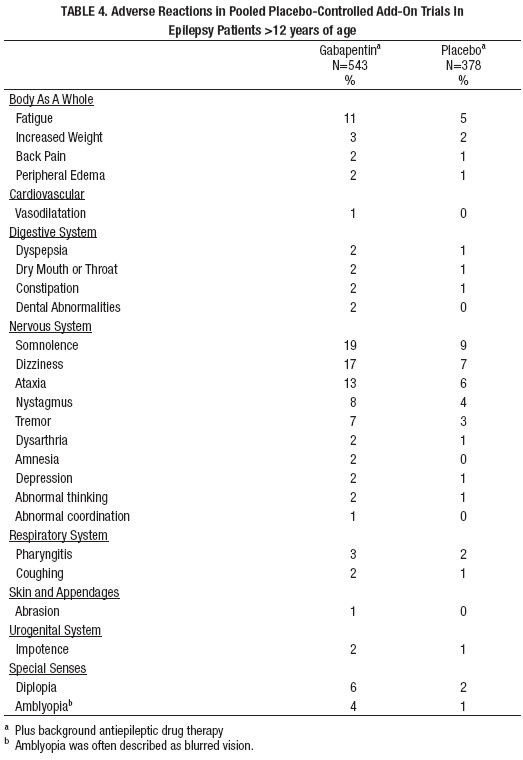
This appears to be a label for Gabapentin 100mg capsules. The information includes details such as lot number, NDC numbers, expiration date, manufacturer information, and dosage. It also provides a warning to keep the medication out of reach of children and to store it at a controlled temperature of 68-77°F. For medical advice, it suggests contacting a doctor or the FDA.*
FDA Label Image

Equation (Equ)

Equation (Equ)
This is a formula for calculating a person's estimated glomerular filtration rate (eGFR) based on their age, weight, and serum creatinine level. The equation involves subtracting the age from 140, multiplying by the weight in kilograms, and then multiplying the product by the serum creatinine level in mg/dL (adjusted for female patients by multiplying by 0.85). The eGFR is an important measure of kidney function.*
FDA Label Image

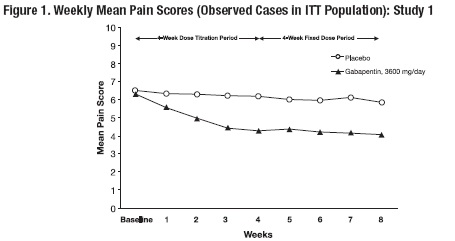
Fig 1 (Fig 1)

Fig 1 (Fig 1)
Not available.*
FDA Label Image

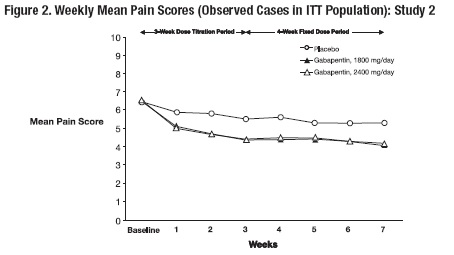
Fig 2 (Fig 2)

FDA Label Image

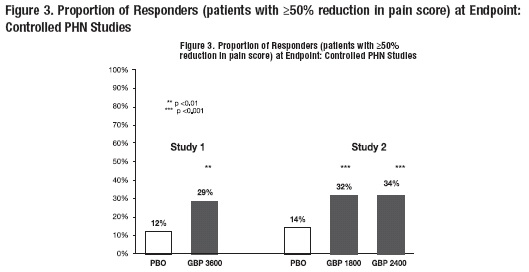
Fig 3 (Fig 3)

FDA Label Image

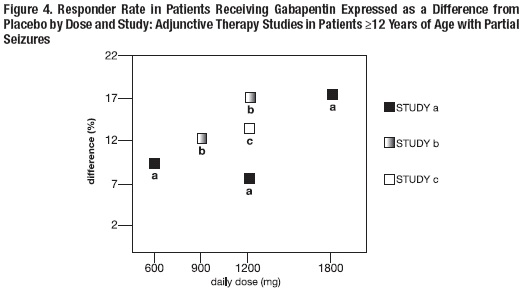
Fig 4 (Fig 4)

FDA Label Image

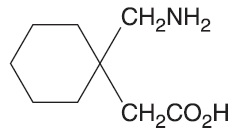
Structure (Struct)

FDA Label Image

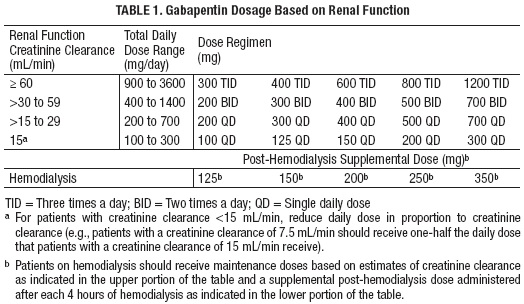
Table 1 (Tab 1)

Table 1 (Tab 1)
This is a table showing the recommended dosage of Gabapentin based on renal function. The dosage varies depending on the patient's creatinine clearance levels, with specific regimens for different levels of renal function. For patients on hemodialysis, there are additional supplemental doses recommended to be administered post-hemodialysis. The table also provides abbreviations for dosing frequencies such as TID (three times a day), BID (two times a day), and QD (single daily dose). Additionally, it includes instructions for adjusting the daily dose for patients with lower creatinine clearance levels.*
FDA Label Image

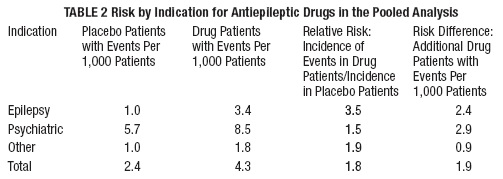
Table 2 (Tab 2)

Table 2 (Tab 2)
This text provides a table presenting the risk by indication for antiepileptic drugs in a pooled analysis. It shows the number of events per 1,000 patients for different indications such as Epilepsy, Psychiatric, and Other, both for Placebo Patients and Drug Patients. It also includes the relative risk incidence of events in Drug Patients compared to Placebo Patients, as well as the risk difference showing the additional Drug Patients with events per 1,000 patients.*
FDA Label Image

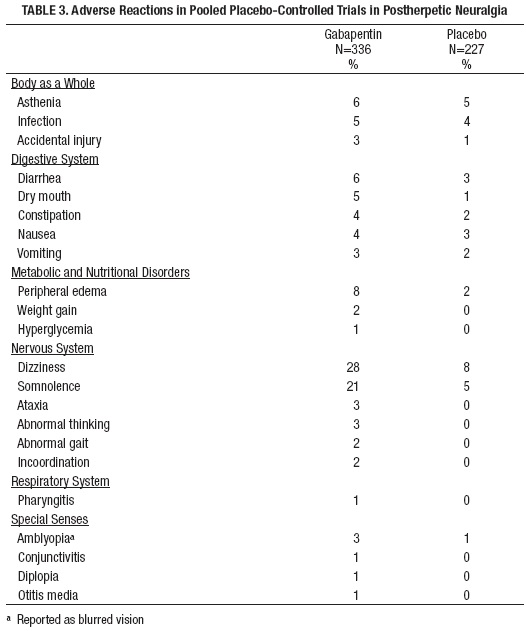
Table 3 (Tab 3)

Table 3 (Tab 3)
This table provides information on adverse reactions observed in pooled placebo-controlled trials for Postherpetic Neuraigia with Gabapentin compared to Placebo. The data includes the percentage of patients experiencing various adverse reactions such as Asthenia, Diarrhea, Dizziness, Somnolence, and other symptoms categorized by body system. It indicates the frequency of side effects reported with Gabapentin compared to Placebo, with numbers reflecting the percentage of patients affected in each group.*
FDA Label Image

Table 4 (Tab 4)

Table 4 (Tab 4)
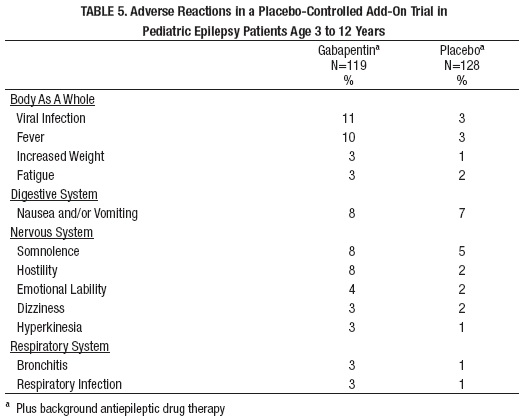
This table presents adverse reactions observed in pooled placebo-controlled add-on trials involving patients with epilepsy aged over 12 years. Reported reactions include fatigue, increased weight, back pain, peripheral edema, cardiovascular issues, digestive problems like dyspepsia and constipation, nervous system effects such as somnolence and dizziness, respiratory problems like pharyngitis and coughing, skin issues like abrasions, and urogenital problems. Notable reactions include amnesia, depression, diplopia, and impotence. It is mentioned that amblyopia was commonly described as blurred vision in these cases.*
FDA Label Image

Table 5 (Tab 5)

Table 5 (Tab 5)
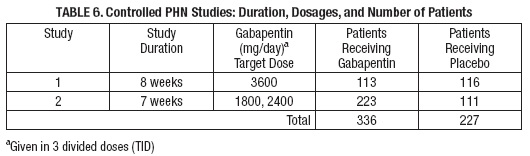
This information presents adverse reactions observed in pediatric epilepsy patients aged 3 to 12 years during a placebo-controlled add-on trial with Gabapentin. The reactions include viral infection, fever, increased weight, fatigue, nausea and/or vomiting, somnolence, hostility, emotional lability, dizziness, hyperkinesia, bronchitis, and respiratory infections. These reactions were observed alongside existing antiepileptic drug therapy.*
FDA Label Image

Tab 6 (Tab 6)

Tab 6 (Tab 6)
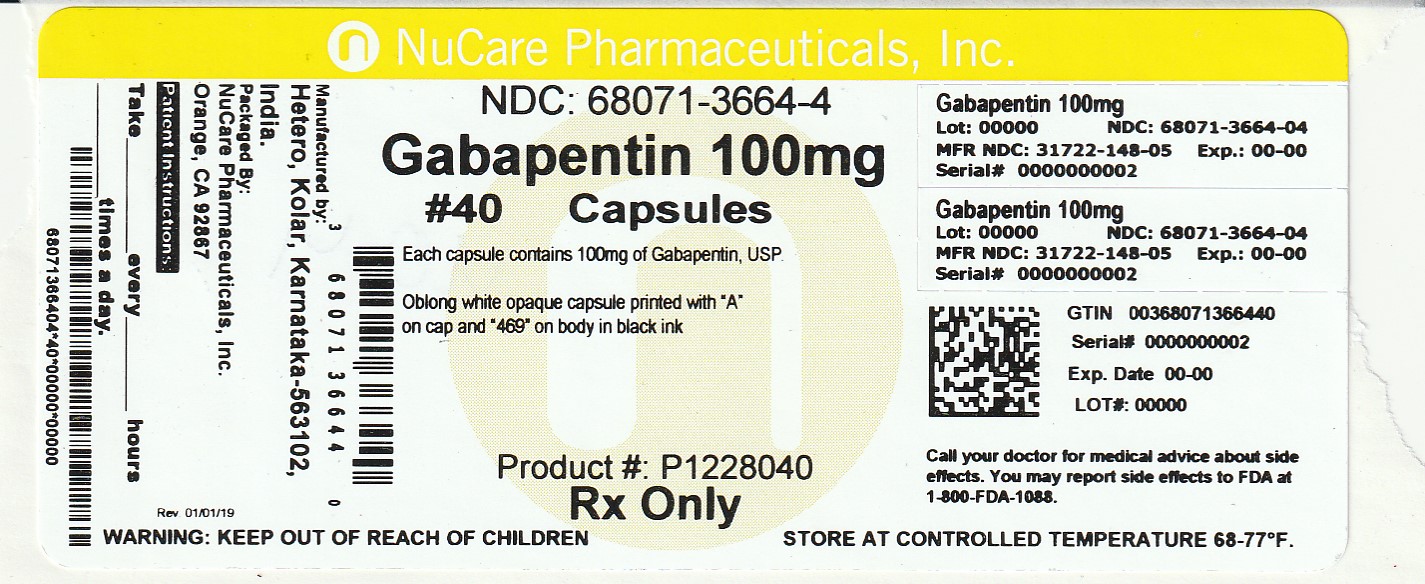
This text provides a table showing controlled post-herpetic neuralgia (PHN) studies with information on the duration, dosages, and number of patients involved. The studies involved the administration of Gabapentin at varying dosages over different durations to a total of 336 patients, alongside a placebo group of 227 patients. Dosages for Gabapentin ranged from 1600 to 3600 mg/day, given in 3 divided doses (TID). This data could be valuable for evaluating the efficacy of Gabapentin in managing PHN symptoms.*

* These product label images have been analyzed using experimental machine learning. Please verify findings with the primary label text.