Dutasteride Capsule, Liquid Filled
Product Images NDC 68071-3732

View Photos of Packaging, Regulatory Labels, and Product Appearance

Product Visual Gallery

This gallery contains 11 technical images submitted to the FDA as part of the official labeling for Dutasteride (NDC 68071-3732). Unlike standard consumer photos, these assets often include clinical data figures, molecular chemical structures, and official manufacturer packaging layouts.

As provided by Nucare Pharmaceuticals, Inc., these visuals offer a comprehensive scientific overview of the product's physical and chemical identity, aiding pharmacists and researchers in product verification and study.

FDA Label Image

Pdp (68071 3732 6)

Pdp (68071 3732 6)
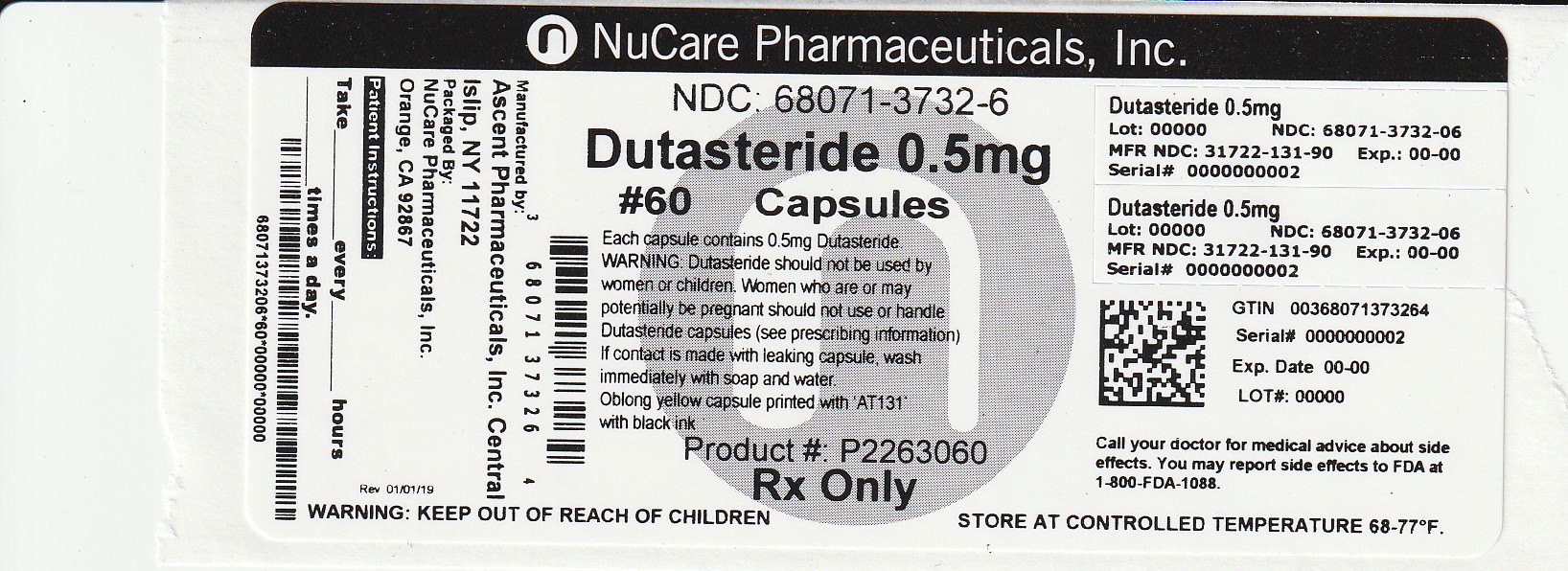
Label for Dutasteride 0.5 mg capsules by NuCare Pharmaceuticals, Inc. The label states a count of 60 capsules in the package. It includes warnings against use by women or children and advises to avoid handling if pregnant. The capsules are described as oblong yellow printed with 'AT131' in black ink. Storage instructions note controlled temperature between 68-77°F. The label also includes NDC 68071-3732 and provides contact information for reporting side effects to the FDA.*
FDA Label Image

Fig 1 (Fig1)

Fig 1 (Fig1)
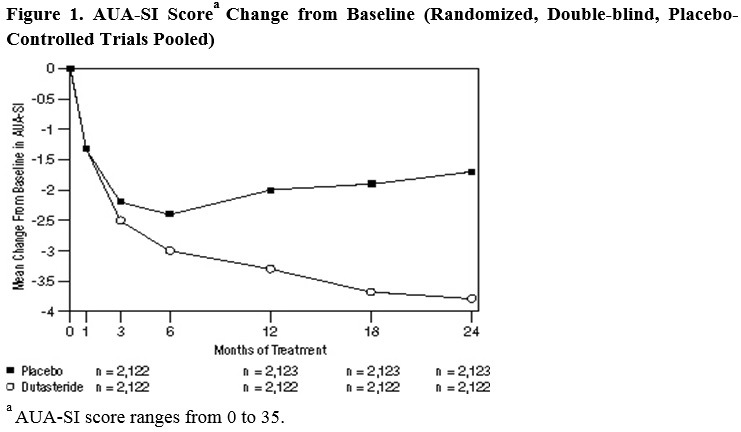
A line graph showing the mean change from baseline in AUA-SI score over 24 months of treatment comparing placebo and Dutasteride in randomized, double-blind, placebo-controlled trials. The graph plots months of treatment on the x-axis and mean change in AUA-SI on the y-axis, with Dutasteride showing a greater decrease in score than placebo over time.*
FDA Label Image

Fig 2 (Fig2)

Fig 2 (Fig2)
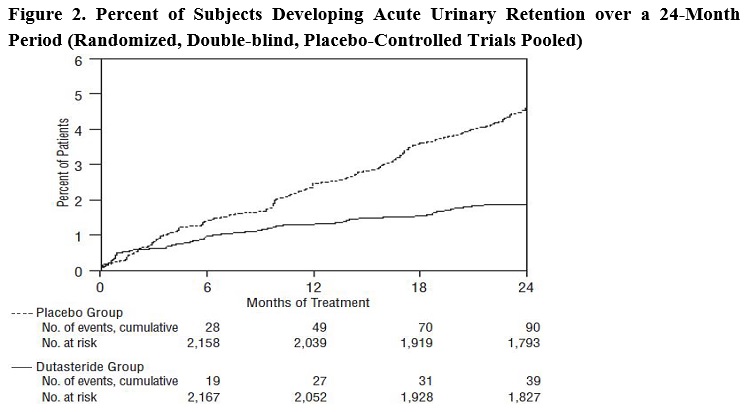
A line graph showing the percent of subjects developing acute urinary retention over a 24-month period in randomized, double-blind, placebo-controlled trials. The x-axis represents months of treatment from 0 to 24, and the y-axis shows the percent of patients from 0 to 6%. Two groups are compared: the placebo group, with a higher cumulative percent reaching nearly 5%, and the dutasteride group, with a lower percent reaching about 2%. Below the graph, cumulative event numbers and patients at risk for each group are listed at 0, 6, 12, 18, and 24 months.*
FDA Label Image

Fig 3 (Fig3)

Fig 3 (Fig3)
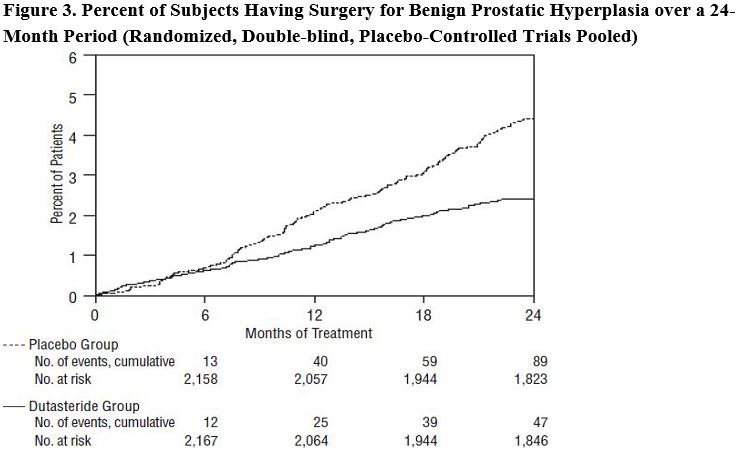
A line graph titled 'Percent of Subjects Having Surgery for Benign Prostatic Hyperplasia over a 24-Month Period' comparing placebo and dutasteride groups in a randomized, double-blind, placebo-controlled trial. The X-axis shows months of treatment from 0 to 24, and the Y-axis shows the percent of patients from 0 to 6%. Two lines represent cumulative percent surgery events: one for the placebo group (dashed line) and one for the dutasteride group (solid line). The placebo group shows a higher cumulative percent over time compared to the dutasteride group. Below the graph, cumulative events and the number of patients at risk are tabulated for both groups at 0, 6, 12, 18, and 24 months.*
FDA Label Image

Fig 4 (Fig4)

Fig 4 (Fig4)
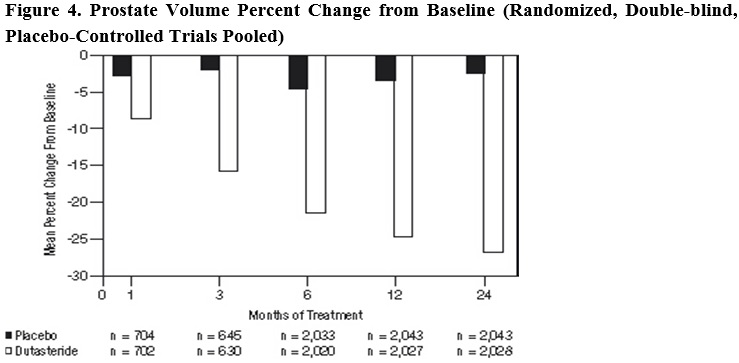
A bar chart showing prostate volume percent change from baseline over 24 months of treatment in a randomized, double-blind, placebo-controlled trial. It compares mean percent changes for placebo (black bars) and Dutasteride (white bars) groups at 1, 3, 6, 12, and 24 months, with Dutasteride consistently showing greater reductions in prostate volume.*
FDA Label Image

Fig 5 (Fig5)

Fig 5 (Fig5)
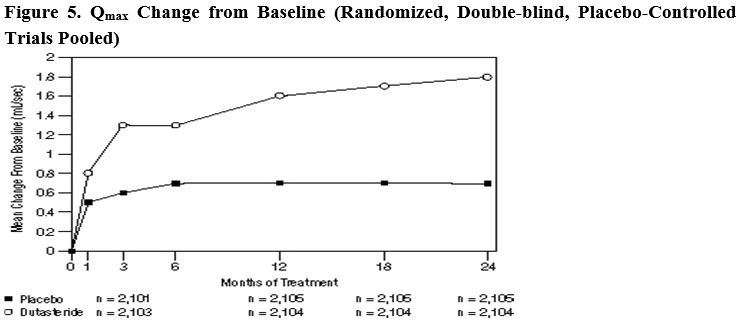
A line graph titled 'Qmax Change from Baseline (Randomized, Double-blind, Placebo-Controlled Trials Pooled)' showing the mean change in Qmax (mL/sec) over months of treatment. There are two lines: one for placebo with stable lower values, and one for Dutasteride showing a gradual increase over 24 months. Sample sizes for each group at different time points are indicated below the x-axis.*
FDA Label Image

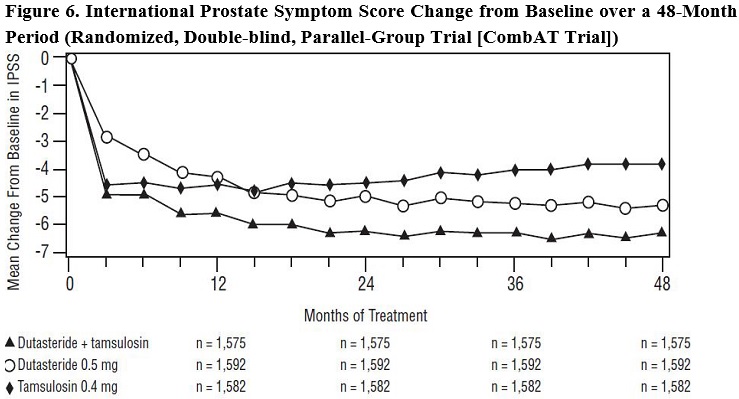
Fig 6 (Fig6)

Fig 6 (Fig6)
A line graph showing the International Prostate Symptom Score (IPSS) change from baseline over a 48-month treatment period in a randomized, double-blind, parallel-group trial (CombAT Trial). The graph displays three distinct treatment groups: Dutasteride plus tamsulosin, Dutasteride 0.5 mg, and Tamsulosin 0.4 mg, with sample sizes around 1,580-1,590 each. The y-axis represents mean change from baseline in IPSS, and the x-axis shows months of treatment from 0 to 48.*
FDA Label Image

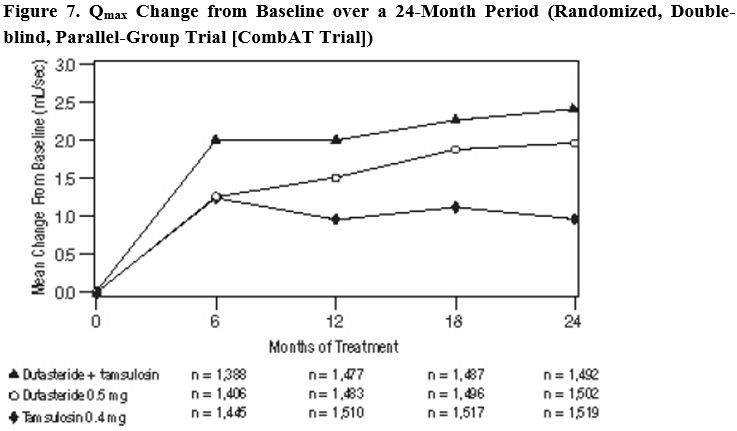
Fig 7 (Fig7)

Fig 7 (Fig7)
A line graph titled 'Qmax Change from Baseline over a 24-Month Period (Randomized, Double-blind, Parallel-Group Trial [CombAT Trial])' showing mean change from baseline in Qmax (mL/sec) over 24 months of treatment. The graph compares three groups: Dutasteride plus tamsulosin, Dutasteride 0.5 mg, and Tamsulosin 0.4 mg, with the x-axis representing months of treatment and the y-axis representing mean change from baseline.*
FDA Label Image

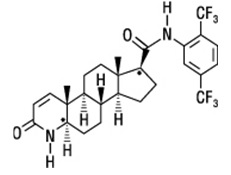
Structure (Structure)

Structure (Structure)
Chemical structure of Dutasteride as a complex steroidal molecule with trifluoromethyl-substituted aromatic ring and multiple rings including lactam and hydrazide functional groups.*
FDA Label Image

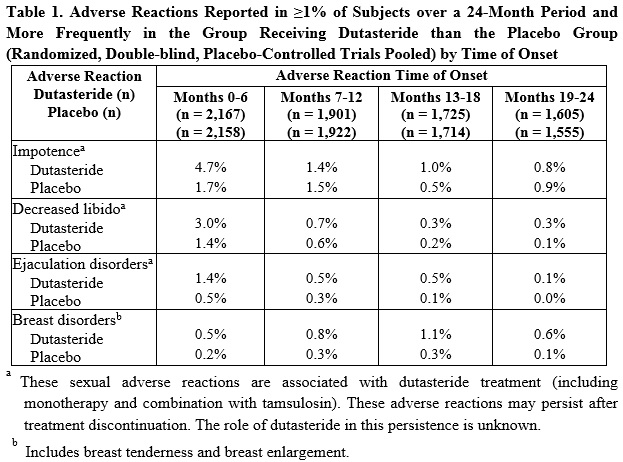
Tab 1 (Tab1)

Tab 1 (Tab1)
A data table showing adverse reactions reported in at least 1% of subjects over a 24-month period, comparing Dutasteride to placebo in randomized, double-blind, placebo-controlled trials. It details incidence rates of impotence, decreased libido, ejaculation disorders, and breast disorders over four time intervals: 0-6 months, 7-12 months, 13-18 months, and 19-24 months.*
FDA Label Image

Tab 2 (Tab2)

Tab 2 (Tab2)
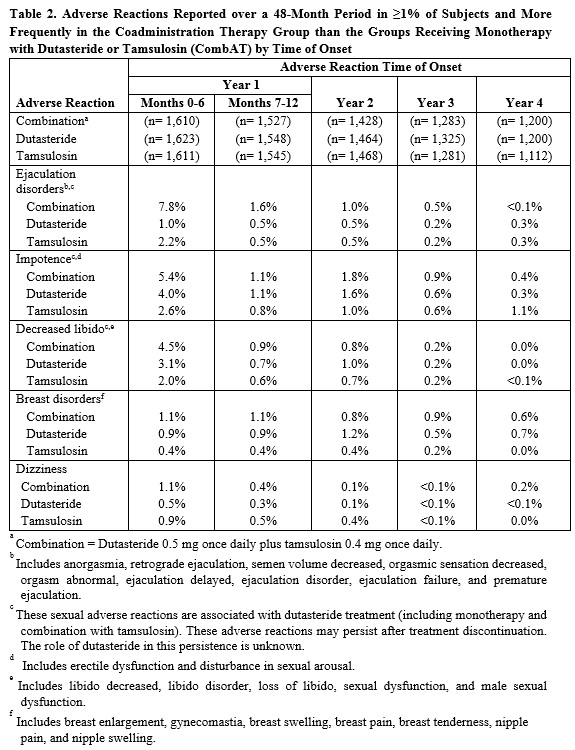
A data table presenting adverse reactions reported over 48 months in subjects receiving Dutasteride alone, Tamsulosin alone, or combination therapy. It shows percentages of patients experiencing specific adverse reactions like ejaculation disorders, impotence, decreased libido, breast disorders, and dizziness, with time of onset divided into months 0-6, months 7-12, year 2, year 3, and year 4.*

* About these descriptions: Image descriptions on this page are generated by automated AI analysis of the product label images from the manufacturer's FDA label submission (SPL). They are provided for reference only and may contain errors or omissions. Always rely on the printed label itself and the official FDA labeling, and consult a pharmacist or healthcare professional with any questions about this product.