Anastrozole Tablet
Product Images NDC 68071-3838

View Photos of Packaging, Regulatory Labels, and Product Appearance

Product Visual Gallery

This gallery contains 8 technical images submitted to the FDA as part of the official labeling for Anastrozole (NDC 68071-3838). Unlike standard consumer photos, these assets often include clinical data figures, molecular chemical structures, and official manufacturer packaging layouts.

As provided by Nucare Pharmaceuticals,inc., these visuals offer a comprehensive scientific overview of the product's physical and chemical identity, aiding pharmacists and researchers in product verification and study.

FDA Label Image

Pdp (68071 3838 9)

Pdp (68071 3838 9)
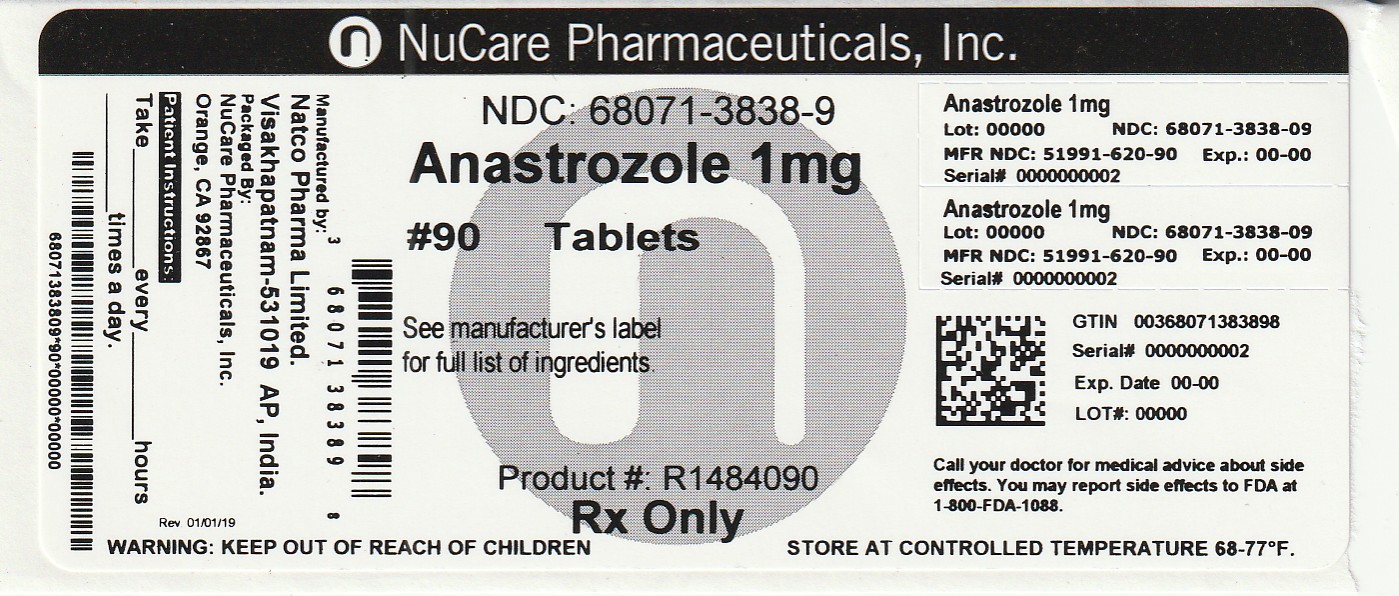
Anastrozole 1 mg oral tablets label from NuCare Pharmaceuticals, Inc. The label indicates a quantity of 90 tablets, with instructions to take the medication a specified number of times daily. The label includes multiple barcodes, lot number, expiration date, and safety warnings such as keeping out of reach of children and storage temperature instructions.*
FDA Label Image

Chemical Structure (Anastrozole 01)

Chemical Structure (Anastrozole 01)
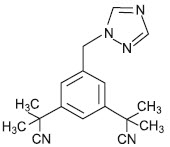
Chemical structure diagram of anastrozole, showing its molecular framework including a triazole ring attached to a substituted benzene ring with cyano and methyl groups.*
FDA Label Image

Figure 1 (Anastrozole 02)

Figure 1 (Anastrozole 02)
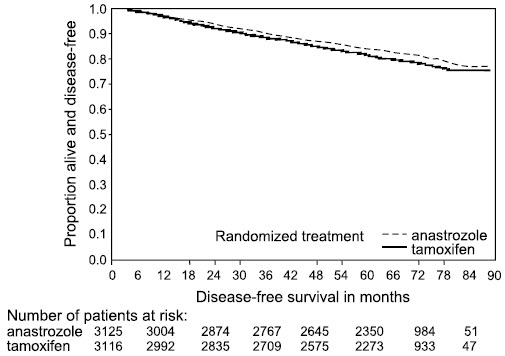
A survival curve graph comparing disease-free survival in months between anastrozole and tamoxifen treatments. The y-axis represents the proportion of patients alive and disease-free, ranging from 0 to 1. The x-axis shows disease-free survival duration in months, up to 90 months. The chart includes the number of patients at risk at various time points for both treatments.*
FDA Label Image

Figure 2 (Anastrozole 03)

Figure 2 (Anastrozole 03)
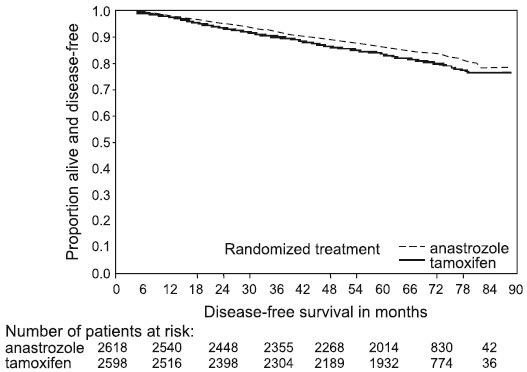
A line graph comparing disease-free survival over time (in months) between patients treated with anastrozole and tamoxifen. The y-axis shows the proportion alive and disease-free from 0.0 to 1.0, while the x-axis spans 0 to 90 months. Patient numbers at risk are listed below the x-axis for each treatment group at multiple time points.*
FDA Label Image

Figure 3 (Anastrozole 04)

Figure 3 (Anastrozole 04)
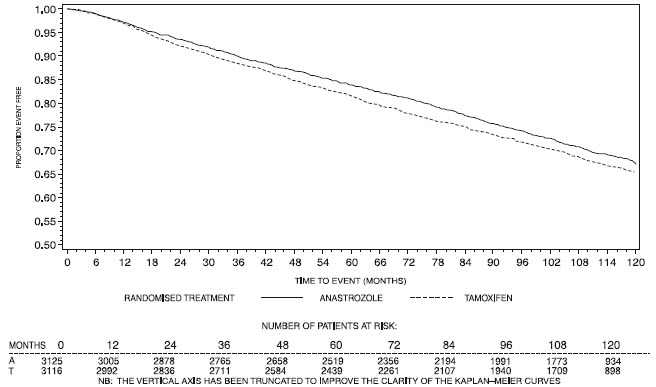
Kaplan-Meier survival curve comparing the proportion of event-free patients over time (up to 120 months) for two randomized treatments: Anastrozole (solid line) and Tamoxifen (dashed line). The x-axis represents time to event in months, and the y-axis shows the proportion event-free. A table below the graph lists the number of patients at risk at various time points for each treatment group.*
FDA Label Image

Figure 4 (Anastrozole 05)

Figure 4 (Anastrozole 05)
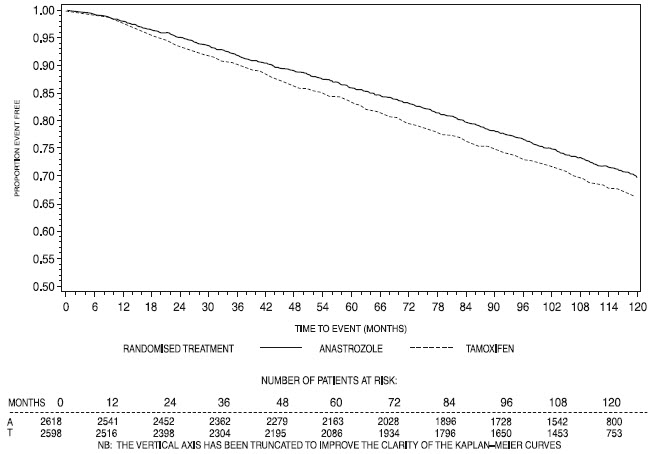
A Kaplan-Meier survival curve chart comparing time to event over 120 months between two randomized treatments: Anastrozole and Tamoxifen. The solid line represents Anastrozole, while the dashed line represents Tamoxifen. The chart includes the proportion event free on the vertical axis and number of patients at risk at various time points below.*
FDA Label Image

Figure 5 (Anastrozole 06)

Figure 5 (Anastrozole 06)
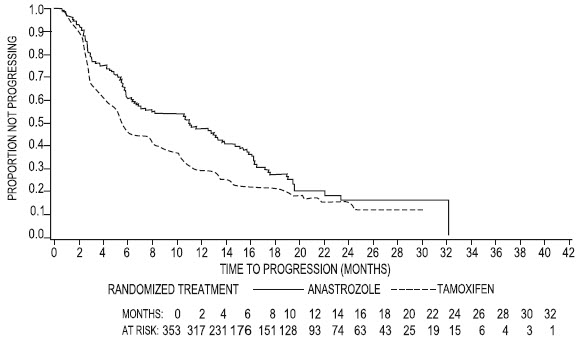
A Kaplan-Meier survival curve chart depicting the proportion of patients with no disease progression over time in months, comparing Anastrozole and Tamoxifen treatments. The x-axis represents time to progression in months, and the y-axis shows the proportion not progressing. The number of patients at risk is listed below the x-axis for each treatment group at various months.*
FDA Label Image

Figure 6 (Anastrozole 07)

Figure 6 (Anastrozole 07)
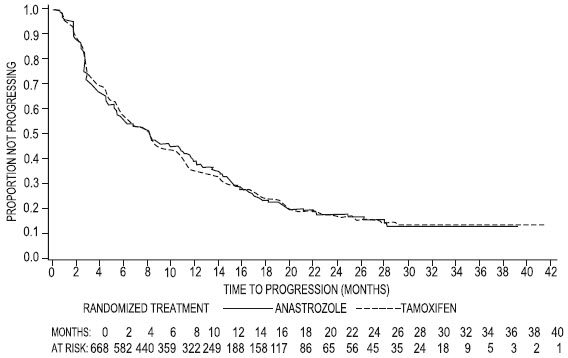
A Kaplan-Meier survival curve comparing time to progression (months) for two randomized treatments, Anastrozole and Tamoxifen. The y-axis shows the proportion of patients not progressing, and the x-axis represents time in months, with patient risk numbers listed below.*

* About these descriptions: Image descriptions on this page are generated by automated AI analysis of the product label images from the manufacturer's FDA label submission (SPL). They are provided for reference only and may contain errors or omissions. Always rely on the printed label itself and the official FDA labeling, and consult a pharmacist or healthcare professional with any questions about this product.