Clopidogrel Bisulfate Tablet, Film Coated
Product Images NDC 68071-5277

View Photos of Packaging, Regulatory Labels, and Product Appearance

Product Visual Gallery

This gallery contains 10 technical images submitted to the FDA as part of the official labeling for Clopidogrel Bisulfate (NDC 68071-5277). Unlike standard consumer photos, these assets often include clinical data figures, molecular chemical structures, and official manufacturer packaging layouts.

As provided by Nucare Pharmaceuticals,inc., these visuals offer a comprehensive scientific overview of the product's physical and chemical identity, aiding pharmacists and researchers in product verification and study.

FDA Label Image

Pdp (68071 5277 9)

Pdp (68071 5277 9)
This is a description of Clopidogrel 75mg tablets manufactured by NuCare Pharmaceuticals, Inc. The tablets come in bottles of 35 and 90 tablets. The lot number for the tablet is 000000 and the product number is R1500090. The medicine is available with a prescription only and has a warning "KEEP OUT OF REACH OF CHILDREN". The tablets should be stored at a controlled temperature of 59 to 86°F. The serial and exp dates for the medicine are mentioned on the label. Those who experience side effects should contact a doctor or report it to the FDA.*
FDA Label Image

Figure1 (Clopidogrel Fig)

Figure1 (Clopidogrel Fig)
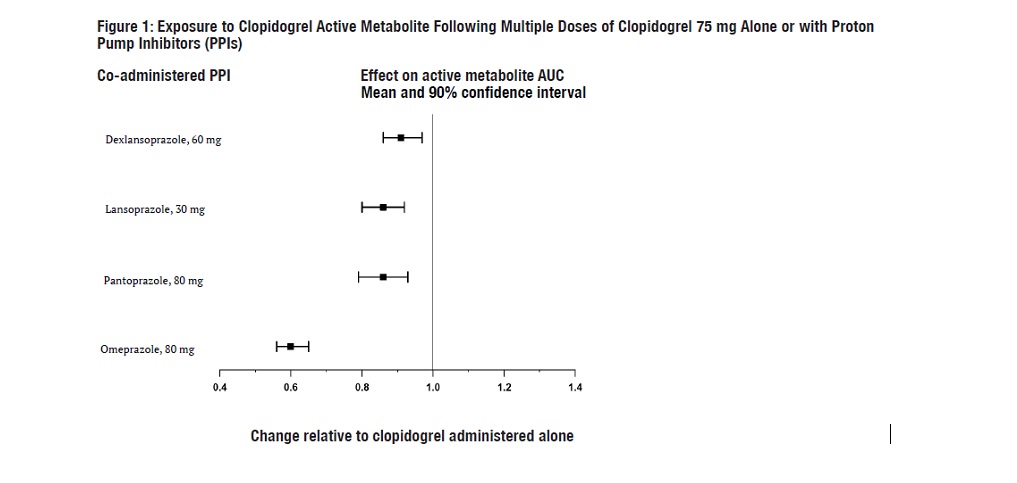
This is a figure from a study showing the effect of co-administered proton pump inhibitors (PPIs) on the exposure to Clopidogrel Active Metabolite following multiple doses of Clopidogrel 75 mg. The figure shows the mean and 90% confidence interval of the effect of Deslansoprazole, Lansoprazole, Pantoprazole, and Omeprazole on the active metabolite AUC compared to Clopidogrel administered alone.*
FDA Label Image

Figure3 (Clopidogrel Fig2)

Figure3 (Clopidogrel Fig2)
The text appears to be a chart showing cumulative event rates for cardiovascular death, myocardial infarction, and stroke with the use of placebo and clopidogrel (with aspirin). The chart shows a significant decrease in the cumulative event rate with the use of clopidogrel (with aspirin) compared to placebo, with a p-value of 0.00009. The chart is followed by a note stating that other standard therapies were also used.*
FDA Label Image

Figure3 (Clopidogrel Fig3)

FDA Label Image

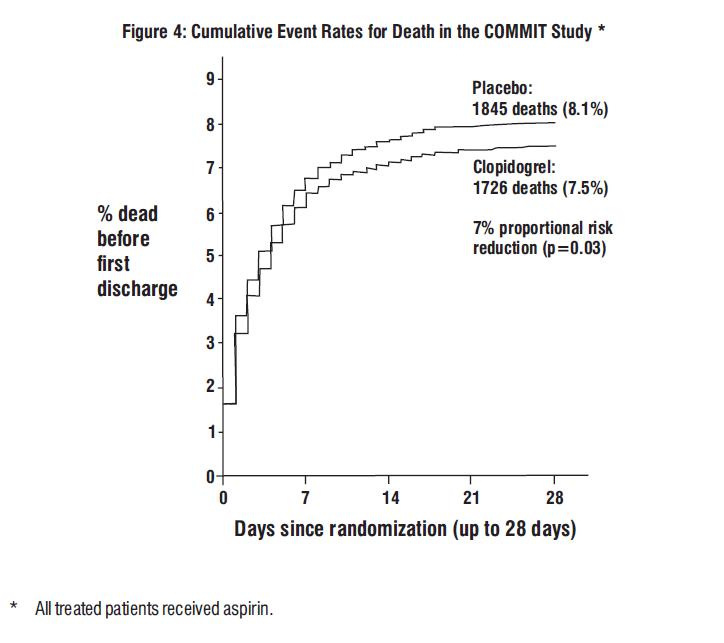
Figure4 (Clopidogrel Fig4)

Figure4 (Clopidogrel Fig4)
The text describes the result of the COMMIT Study, showing the percentage of deaths before the first discharge with the use of placebo and clopidogrel. The data is presented in a graph, indicating a 7% proportional risk reduction with the use of clopidogrel (p=0.03). All treated patients received aspirin.*
FDA Label Image

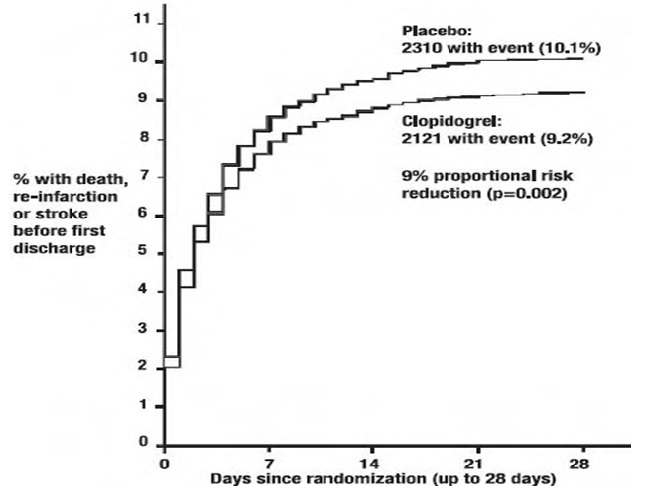
Figure5 (Clopidogrel Fig5)

Figure5 (Clopidogrel Fig5)
This is a report on a clinical trial evaluating the effectiveness of a medication called Clopidogrel. The trial involves comparing the outcome of patients taking Clopidogrel versus Placebo. Both groups experienced a similar percentage of events, however, Clopidogrel resulted in a 9% proportional risk reduction in deaths (with a p-value of 0.002) and re-infarction or stroke instances. The study also tracked the timeline of events occurring within 28 days after randomization.*
FDA Label Image

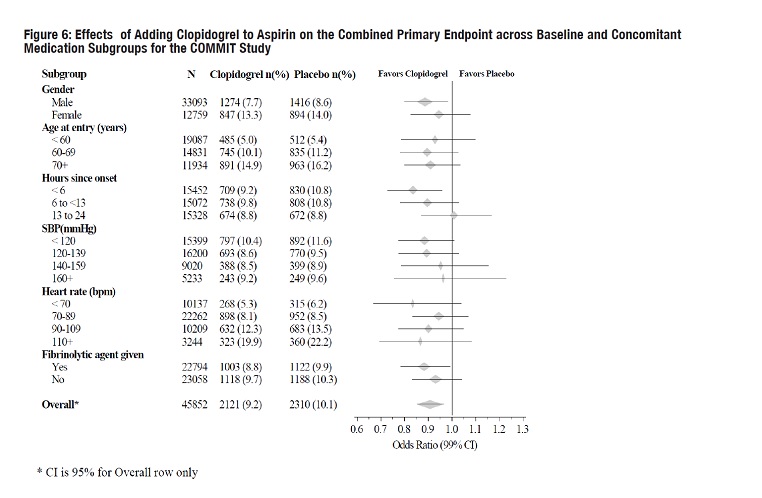
Figure6 (Clopidogrel Fig6)

Figure6 (Clopidogrel Fig6)
Figure 6 shows the effects of adding Clopidogrel to Aspirin on the combined primary endpoint across different baseline and concomitant medication subgroups for the COMMIT study. However, without proper context, it is not possible to determine the exact nature of the results presented in the figure.*
FDA Label Image

Figure7 (Clopidogrel Fig7)

Figure7 (Clopidogrel Fig7)
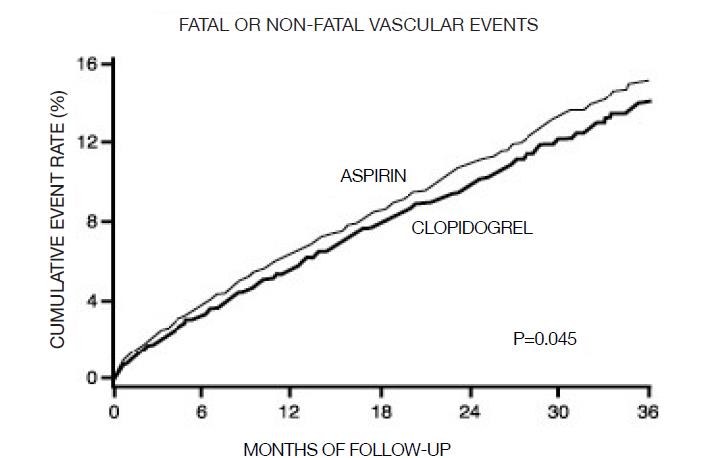
This appears to be a chart showing the cumulative event rate (percentage) in relation to time (measured in months) for fatal or non-fatal vascular events for patients taking aspirin and clopidogrel. The specific numbers and details of the chart cannot be fully interpreted without additional information.*
FDA Label Image

Figure8 (Clopidogrel Fig8)

FDA Label Image

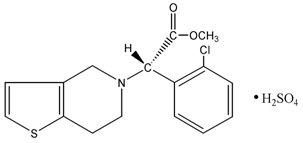
Structure (Clopidogrel Str)

* These product label images have been analyzed using experimental machine learning. Please verify findings with the primary label text.