Argatroban Solution
Product Images NDC 68083-141
View Photos of Packaging, Regulatory Labels, and Product Appearance
Product Visual Gallery
This gallery contains 6 technical images submitted to the FDA as part of the official labeling for Argatroban (NDC 68083-141). Unlike standard consumer photos, these assets often include clinical data figures, molecular chemical structures, and official manufacturer packaging layouts.
As provided by Gland Pharma Limited, these visuals offer a comprehensive scientific overview of the product's physical and chemical identity, aiding pharmacists and researchers in product verification and study.
Image2 (Argatroban 02)
This appears to be a table or chart displaying laboratory results, with headings for two tests: W aPTT (a blood test used to monitor heparin therapy) and Plasma Argatroban (a test to monitor anticoagulant therapy with Argatroban). The results for each test have been measured at various intervals, with corresponding infusion doses. However, without additional context it is difficult to provide a more specific description of the purpose or implications of these results.*
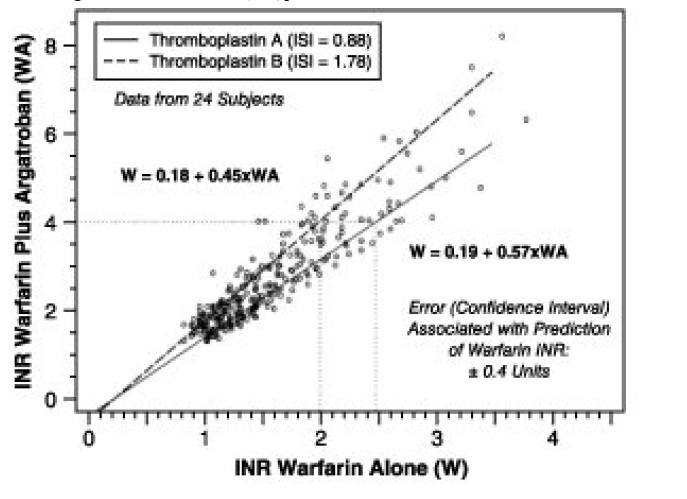
Image3 (Argatroban 03)
Figure 3 (Argatroban 04)
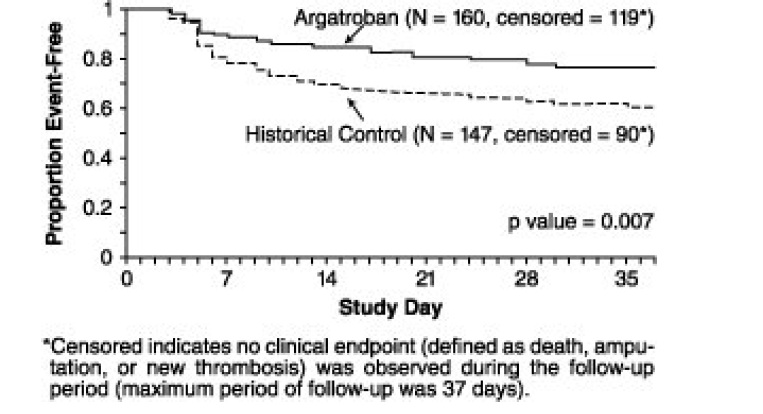
This is a description of a study with a historical control group of 147 individuals, 90 of which were censored. The results show a proportion of event-free days and a p value of 0.007. The study period had a maximum follow-up of 37 days and no clinical endpoints (death, amputation, or new thrombosis) were observed during this period.*
Figure4 (Argatroban 05)
The data presented appears to be related to a comparison between the effectiveness of Argatroban and a Historical Control. The sample size (N), number of censored cases, and p-value are reported. The x-axis seems to represent different study days, while the y-axis may represent the proportion of event-free cases. The text also clarifies that "censored" denotes cases where no clinical endpoint was observed during the follow-up period.*
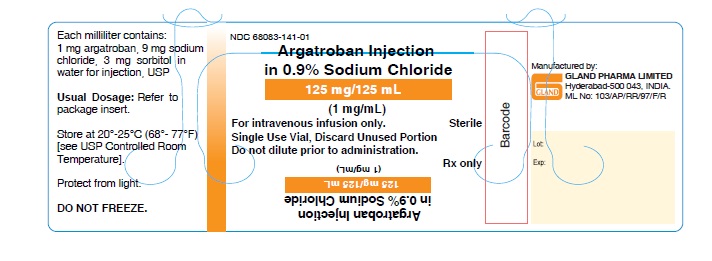
Image6 (Argatroban 06)
* These product label images have been analyzed using experimental machine learning. Please verify findings with the primary label text.