Bortezomib Injection, Powder, Lyophilized, For Solution
Product Images NDC 68083-651

View Photos of Packaging, Regulatory Labels, and Product Appearance

Product Visual Gallery

This gallery contains 11 technical images submitted to the FDA as part of the official labeling for Bortezomib (NDC 68083-651). Unlike standard consumer photos, these assets often include clinical data figures, molecular chemical structures, and official manufacturer packaging layouts.

As provided by Gland Pharma Limited, these visuals offer a comprehensive scientific overview of the product's physical and chemical identity, aiding pharmacists and researchers in product verification and study.

FDA Label Image

Bortezomib-spl-1mg-carton (Bortezomib Spl 1mg Carton)
Bortezomib-spl-1mg-carton (Bortezomib Spl 1mg Carton)
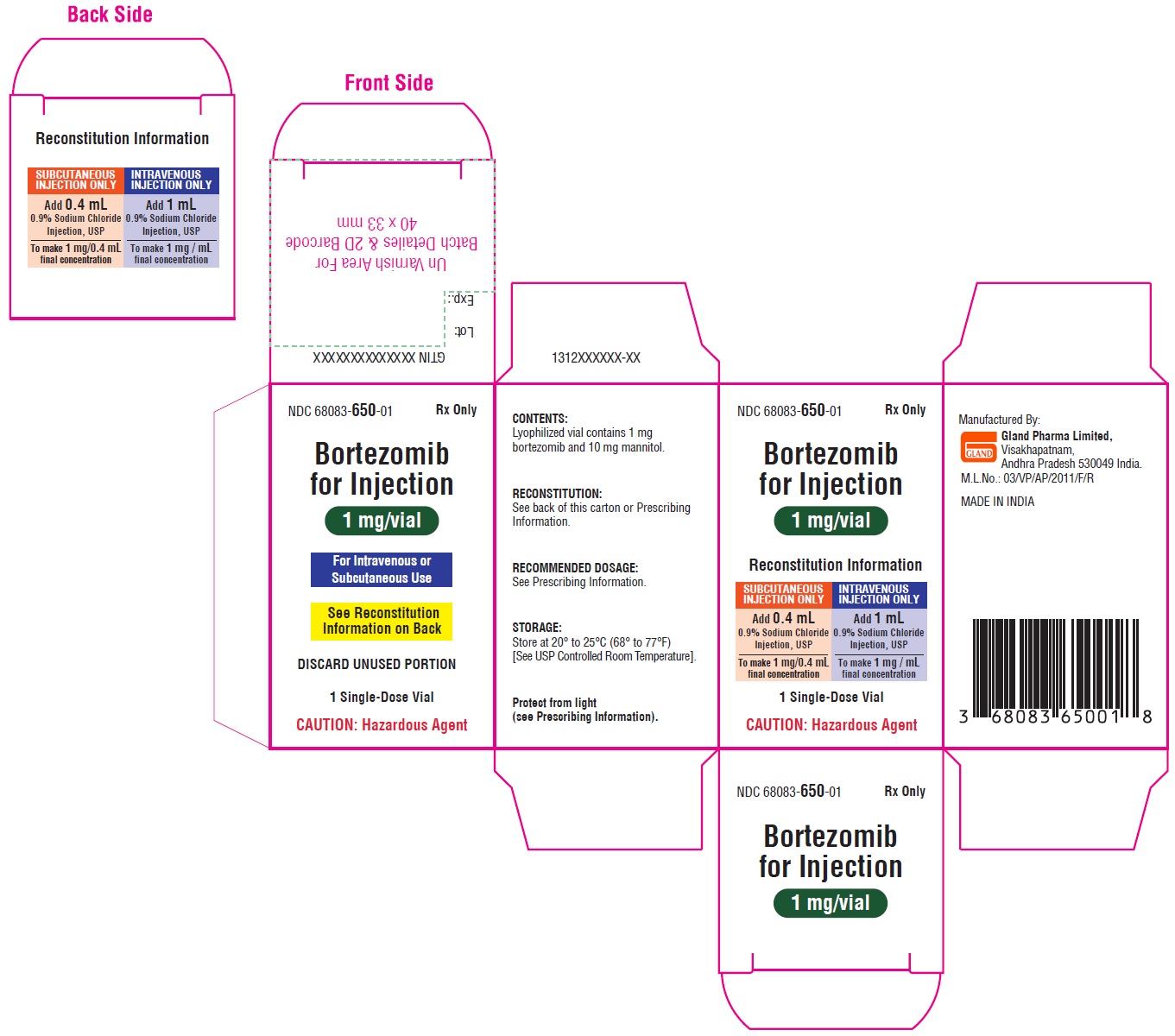
This packaging label is for Bortezomib for Injection 1 mg/vial, a lyophilized powder for solution by Gland Pharma Limited. It displays reconstitution instructions, indicating subcutaneous and intravenous injection uses with specific volumes of 0.9% Sodium Chloride Injection. The label includes storage guidelines, caution as a hazardous agent, and manufacturer information from India. The package is for a single-dose vial.*
FDA Label Image

Bortezomib-spl-1mg-container (Bortezomib Spl 1mg Container)

Bortezomib-spl-1mg-container (Bortezomib Spl 1mg Container)
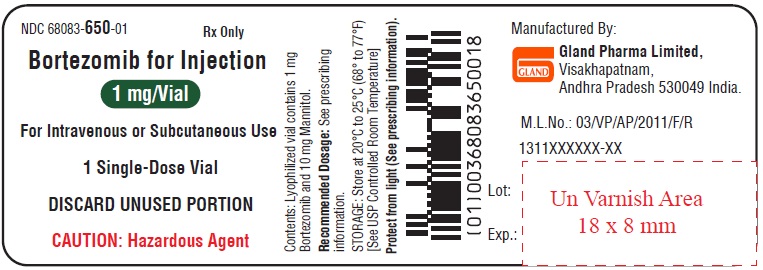
Bortezomib for Injection 1 mg per vial lyophilized powder for solution, for intravenous or subcutaneous use, single-dose vial. Label includes warnings to discard unused portion and caution about hazardous agent. Manufactured by Gland Pharma Limited, Visakhapatnam, India, with storage instructions and lot/expiration fields visible.*
FDA Label Image

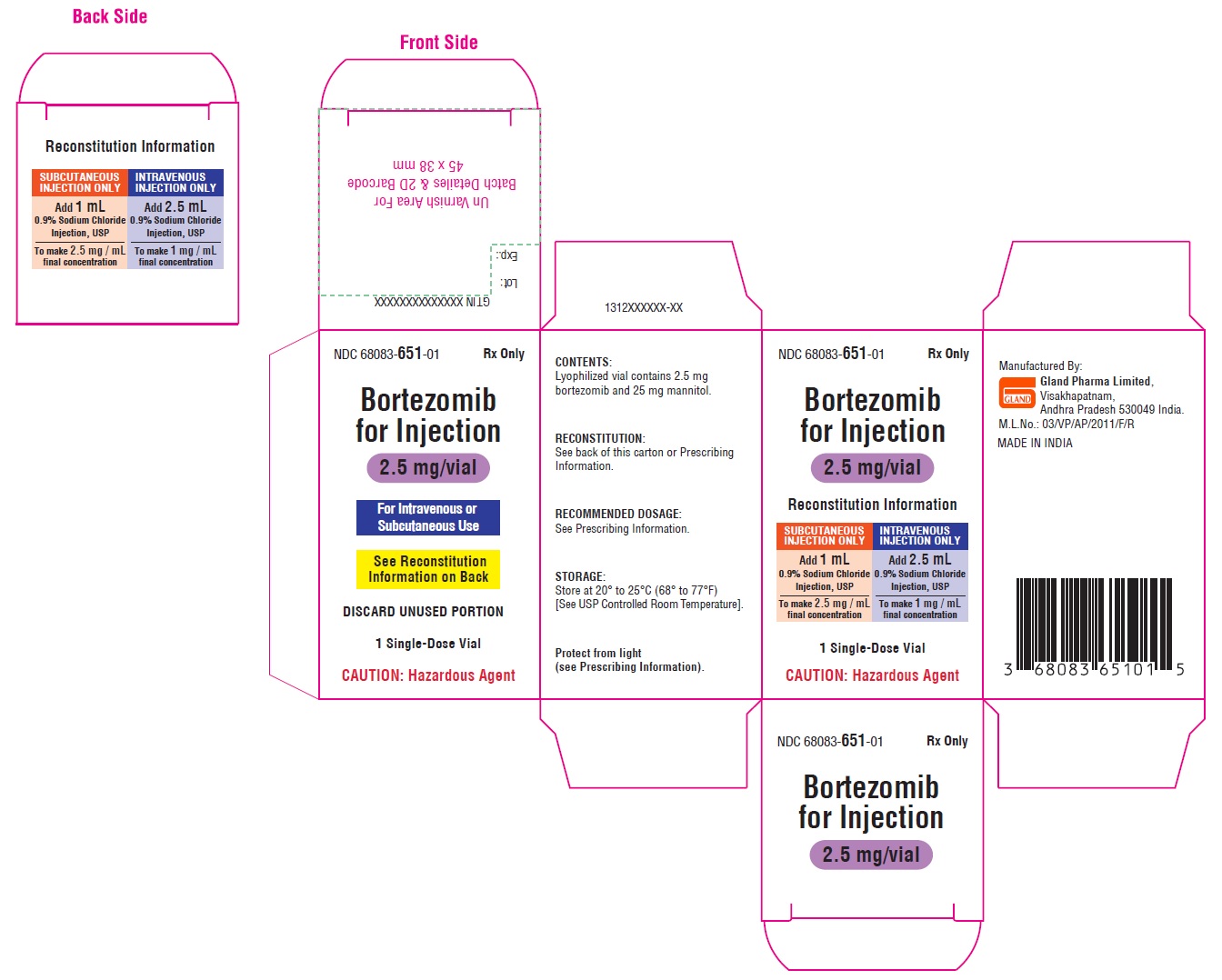
Bortezomib-spl-2-5mg-carton (Bortezomib Spl 2 5mg Carton)

Bortezomib-spl-2-5mg-carton (Bortezomib Spl 2 5mg Carton)
Packaging label for Bortezomib for Injection 2.5 mg/vial, lyophilized powder for solution, intended for intravenous or subcutaneous use. The label includes reconstitution instructions, storage conditions, and manufacturer details for Gland Pharma Limited. The vial is a single-dose container, with caution noted as a hazardous agent.*
FDA Label Image

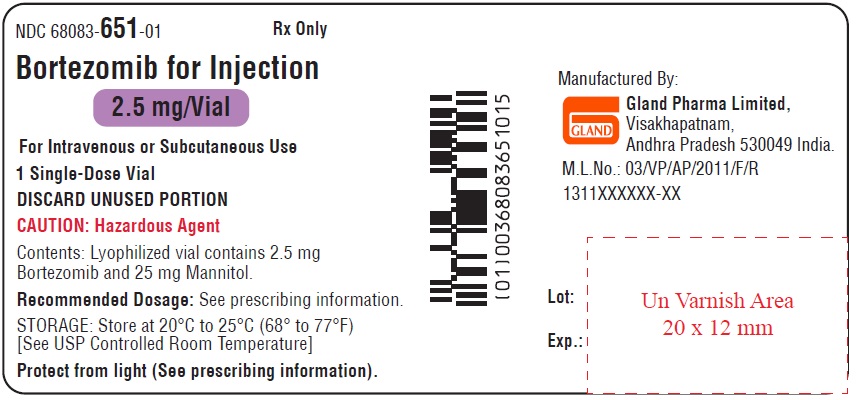
Bortezomib-spl-2-5mg-container (Bortezomib Spl 2 5mg Container)

Bortezomib-spl-2-5mg-container (Bortezomib Spl 2 5mg Container)
Label for Bortezomib for Injection 2.5 mg per vial, lyophilized powder for intravenous or subcutaneous use. The label includes usage instructions, storage conditions (20°C to 25°C), a caution for hazardous agent, and is manufactured by Gland Pharma Limited, Visakhapatnam, India. The vial is single-dose with 2.5 mg Bortezomib and 25 mg Mannitol.*
FDA Label Image

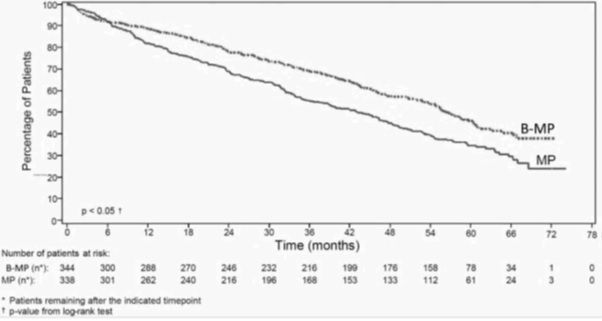
Bortezomib-spl-figure-1.jpg (Bortezomib Spl Figure 1)

Bortezomib-spl-figure-1.jpg (Bortezomib Spl Figure 1)
A Kaplan-Meier survival curve chart showing percentage of patients over time in months. Two groups are compared: B-MP and MP, with the B-MP group showing higher survival percentage over the time period up to 24 months. The chart includes a table of the number of patients at risk at various time points and a p-value from a log-rank test.*
FDA Label Image

Bortezomib-spl-figure-2.jpg (Bortezomib Spl Figure 2)

Bortezomib-spl-figure-2.jpg (Bortezomib Spl Figure 2)
A survival curve chart comparing two patient groups labeled B-MP and MP over a time period of up to 78 months. The vertical axis represents the percentage of patients, while the horizontal axis shows time in months. The chart includes a table of numbers of patients at risk at various time points, with a p-value indicator from a log-rank test positioned below the graph.*
FDA Label Image

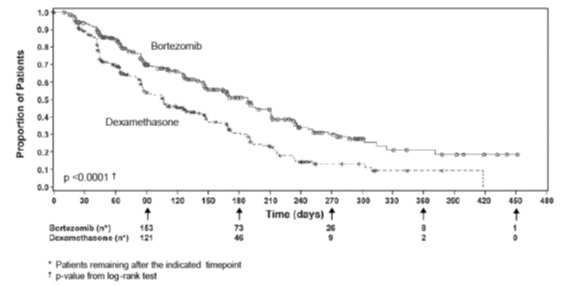
Bortezomib-spl-figure-3.jpg (Bortezomib Spl Figure 3)

Bortezomib-spl-figure-3.jpg (Bortezomib Spl Figure 3)
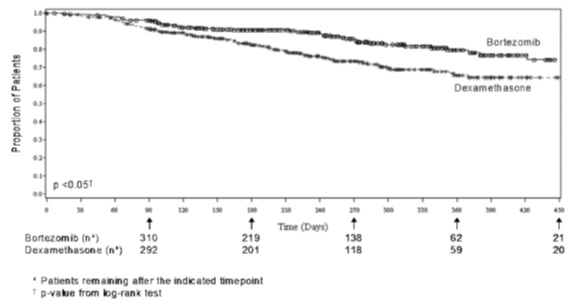
A Kaplan-Meier survival curve chart comparing the proportion of patients over time (up to around 450 days) treated with Bortezomib versus Dexamethasone. The vertical axis shows the proportion of patients, and the horizontal axis shows time in days. The chart notes a statistically significant difference with a p-value less than 0.0001, indicating survival or response differences between the two treatments.*
FDA Label Image

Bortezomib-spl-figure-4.jpg (Bortezomib Spl Figure 4)

Bortezomib-spl-figure-4.jpg (Bortezomib Spl Figure 4)
A Kaplan-Meier survival curve showing the proportion of patients over time (days) treated with Bortezomib versus Dexamethasone. The graph includes patient numbers at various time points and notes a p-value from a log-rank test comparing survival outcomes between the two treatments.*
FDA Label Image

Bortezomib-spl-figure-5.jpg (Bortezomib Spl Figure 5)

Bortezomib-spl-figure-5.jpg (Bortezomib Spl Figure 5)
A Kaplan-Meier survival curve comparing two treatment groups, VcR-CAP and R-CHOP, showing the percentage of patients over time in months. The VcR-CAP group consistently shows higher survival rates compared to the R-CHOP group. The chart includes a log rank test p-value of less than 0.001, indicating statistical significance, with the number of subjects at risk listed below for each time point.*
FDA Label Image

Bortezomib-spl-figure-6.jpg (Bortezomib Spl Figure 6)

Bortezomib-spl-figure-6.jpg (Bortezomib Spl Figure 6)
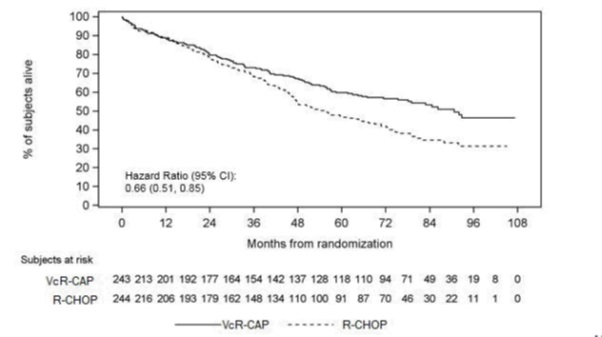
A survival curve chart comparing two treatment groups, VcR-CAP and R-CHOP, over time in months from randomization. The y-axis shows the percentage of subjects alive, ranging from 0 to 100%. The chart includes a hazard ratio of 0.66 with a 95% confidence interval of 0.51 to 0.85. Below the x-axis, the number of subjects at risk at various time points is displayed for both groups.*
FDA Label Image

Bortezomib-spl-structure.jpg (Bortezomib Spl Structure)

Bortezomib-spl-structure.jpg (Bortezomib Spl Structure)
Chemical structure diagram of the active ingredient bortezomib. The structure displays the molecular configuration including the boronic acid moiety and peptide linkage characteristic of bortezomib.*

* About these descriptions: Image descriptions on this page are generated by automated AI analysis of the product label images from the manufacturer's FDA label submission (SPL). They are provided for reference only and may contain errors or omissions. Always rely on the printed label itself and the official FDA labeling, and consult a pharmacist or healthcare professional with any questions about this product.