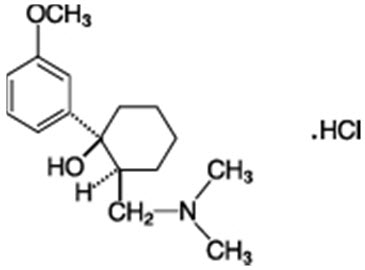
Other
RISK OF MEDICATION ERRORS
Ensure accuracy when prescribing, dispensing, and administering tramadol hydrochloride oral solution. Dosing errors due to confusion between mg and mL can result in accidental overdose and death
[see Dosage and Administration (
2.1), Warnings and Precautions (
5.1)].
ADDICTION, ABUSE AND MISUSE
Tramadol hydrochloride oral solution exposes patients and other users to the risks of opioid addiction, abuse and misuse, which can lead to overdose and death. Assess each patient's risk prior to prescribing tramadol hydrochloride oral solution, and monitor all patients regularly for the development of these behaviors and conditions [see Warnings and Precautions ( 5.2)] .
OPIOID ANALGESIC RISK EVALUATION AND MITIGATION STRATEGY (REMS)
To ensure that the benefits of opioid analgesics outweigh the risks of addiction, abuse, and misuse, the Food and Drug Administration (FDA) has required a REMS for these products [see Warnings and Precautions ( 5.3)] . Under the requirements of the REMS, drug companies with approved opioid analgesic products must make REMS-compliant education programs available to healthcare providers. Healthcare providers are strongly encouraged to
- complete a REMS-compliant education program,
- counsel patients and/or their caregivers, with every prescription, on safe use, serious risks, storage, and disposal of these products,
- emphasize to patients and their caregivers the importance of reading the Medication Guide every time it is provided by their pharmacist, and
- consider other tools to improve patient, household, and community safety.
- Reserve concomitant prescribing of tramadol hydrochloride oral solution and benzodiazepines or other CNS depressants for use in patients for whom alternative treatment options are inadequate.
- Limit treatment to the minimum effective dosages and durations.
- Follow patients for signs and symptoms of respiratory depression and sedation.
- Have not been tolerated or are not expected to be tolerated.
- Have not provided adequate analgesia or are not expected to provide adequate analgesia.
- Mix tramadol hydrochloride oral solution with an unpalatable substance such as dirt, cat litter, or used coffee grounds;
- Place the mixture in a container such as a sealed plastic bag;
- Throw the container in the household trash;
- Delete all personal information on the prescription label of the empty bottle.
- How to treat with naloxone in the event of an opioid overdose
- To tell family and friends about their naloxone and to keep it in a place where family and friends can access it in an emergency
- To read the Patient Information (or other educational material) that will come with their naloxone. Emphasize the importance of doing this before an opioid emergency happens, so the patient and caregiver will know what to do.
- Instruct patients how to measure and take the correct dose of tramadol hydrochloride oral solution and to use extreme caution when measuring the dose.
- Strongly advise patients to always use a calibrated oral syringe or other oral dosing device, with metric units of measurements (i.e., mL), to correctly measure the prescribed amount of medication.
- Inform patients that oral dosing devices may be obtained from their pharmacy and to never use household teaspoons or tablespoons to measure tramadol hydrochloride oral solution [see Dosage and Administration ( 2.1)] .
- Advise patients not to adjust the dose of tramadol hydrochloride oral solution without consulting with a physician or other healthcare professional.
LIFE-THREATENING RESPIRATORY DEPRESSION
Serious, life-threatening, or fatal respiratory depression may occur with use of tramadol hydrochloride oral solution.
Monitor for respiratory depression, especially during initiation of tramadol hydrochloride oral solution or following a dose increase [see Warnings and Precautions ( 5.4)]
ACCIDENTAL INGESTION
Accidental ingestion of tramadol hydrochloride oral solution, especially by children, can be fatal. [see Warnings and Precautions ( 5.4)] .
ULTRA-RAPID METABOLISM OF TRAMADOL AND OTHER RISK FACTORS FOR LIFE-THREATENING RESPIRATORY DEPRESSION IN CHILDREN
Life-threatening respiratory depression and death have occurred in children who received tramadol. Some of the reported cases followed tonsillectomy and/or adenoidectomy; in at least one case, the child had evidence of being an ultra-rapid metabolizer of tramadol due to a CYP2D6 polymorphism [see Warnings and Precautions ( 5.5)] . Tramadol hydrochloride oral solution is contraindicated in children younger than 12 years of age and in children younger than 18 years of age following tonsillectomy and/or adenoidectomy [see Contraindications ( 4)] . Avoid the use of tramadol hydrochloride oral solution in adolescents 12 to 18 years of age who have other risk factors that may increase their sensitivity to the respiratory depressant effects of tramadol [see Warnings and Precautions ( 5.5)] .
NEONATAL OPIOID WITHDRAWAL SYNDROME
Prolonged use of tramadol hydrochloride oral solution during pregnancy can result in neonatal opioid withdrawal syndrome, which may be life-threatening if not recognized and treated, and requires management according to protocols developed by neonatology experts. If opioid use is required for a prolonged period in a pregnant woman, advise the patient of the risk of neonatal opioid withdrawal syndrome and ensure that appropriate treatment will be available [see Warnings and Precautions ( 5.6)] .
INTERACTIONS WITH DRUGS AFFECTING CYTOCHROME P450 ISOENZYMES
The effects of concomitant use or discontinuation of cytochrome P450 3A4 inducers, 3A4 inhibitors, or 2D6 inhibitors with tramadol are complex. Use of cytochrome P450 3A4 inducers, 3A4 inhibitors, or 2D6 inhibitors with tramadol hydrochloride oral solution requires careful consideration of the effects on the parent drug, tramadol, and the active metabolite, M1 [see Warnings and Precautions ( 5.7), Drug Interactions ( 7)] .
RISKS FROM CONCOMITANT USE WITH BENZODIAZEPINES OR OTHER CNS DEPRESSANTS
Concomitant use of opioids with benzodiazepines or other central nervous system (CNS) depressants, including alcohol, may result in profound sedation, respiratory depression, coma, and death [see Warnings and Precautions ( 5.8), Drug Interactions ( 7)] .
Limitations of Use
Because of the risks of addiction, abuse, and misuse with opioids, even at recommended doses
[see Warnings and Precautions (
5.2)]
, reserve tramadol hydrochloride oral solution for use in patients for whom alternative treatment options [e.g., non-opioid analgesics]:
Initiating Treatment with Tramadol Hydrochloride Oral Solution
For patients not requiring rapid onset of analgesic effect, the tolerability of tramadol hydrochloride oral solution can be improved by initiating therapy with the following titration regimen: Start tramadol hydrochloride oral solution at 25 mg/day and titrate in 25 mg increments as separate doses every 3 days to reach 100 mg/day (25 mg four times a day). Thereafter the total daily dose may be increased by 50 mg as tolerated every 3 days to reach 200 mg/day (50 mg four times a day). After titration, tramadol hydrochloride oral solution 50 mg to 100 mg can be administered as needed for pain relief every 4 to 6 hours not to exceed 400 mg/day.
For the subset of patients for whom rapid onset of analgesic effect is required and for whom the benefits outweigh the risk of discontinuation due to adverse events associated with higher initial doses, tramadol hydrochloride oral solution 50 mg to 100 mg can be administered as needed for pain relief every four to six hours, not to exceed 400 mg/day.
Conversion from Tramadol Hydrochloride Oral Solution to Extended-Release Tramadol
The relative bioavailability of tramadol hydrochloride oral solution compared to extended-release tramadol is unknown, so conversion to extended-release formulations must be accompanied by close observation for signs of excessive sedation and respiratory depression.
Dosage Modification in Patients with Hepatic Impairment
The recommended dose for adult patients with severe hepatic impairment is 50 mg every 12 hours.
Dosage Modification in Patients with Renal Impairment
In all patients with creatinine clearance less than 30 mL/min, it is recommended that the dosing interval of tramadol hydrochloride oral solution be increased to 12 hours, with a maximum daily dose of 200 mg. Since only 7% of an administered dose is removed by hemodialysis, dialysis patients can receive their regular dose on the day of dialysis.
Dosage Modification in Geriatric Patients
Do not exceed a total dose of 300 mg/day in patients over 75 years old.
Patient Access to Naloxone for the Emergency Treatment of Opioid Overdose
Discuss the availability of naloxone for the emergency treatment of opioid overdose with the patient and caregiver and assess the potential need for access to naloxone, both when initiating and renewing treatment with tramadol hydrochloride oral solution. Inform patients and caregivers about the various ways to obtain naloxone as permitted by individual state naloxone dispensing and prescribing requirements or guidelines (e.g., by prescription, directly from a pharmacist, or as part of a community-based program). Educate patients and caregivers on how to recognize respiratory depression and emphasize the importance of calling 911 or getting emergency medical help, even if naloxone is administered [see Patient Counseling Information ( 17)] .
Consider prescribing naloxone, based on the patient’s risk factors for overdose, such as concomitant use of CNS depressants, a history of opioid use disorder, or prior opioid overdose. The presence of risk factors for overdose should not prevent the proper management of pain in any given patient. Also consider prescribing naloxone if the patient has household members (including children) or other close contacts at risk for accidental ingestion or overdose. If naloxone is prescribed, educate patients and caregivers on how to treat with naloxone. [ see Warnings and Precautions ( 5.2, 5.8), Patient Counseling Information ( 17)] .
Nursing Mothers
Tramadol is subject to the same polymorphic metabolism as codeine, with ultra-rapid metabolizers of CYP2D6 substrates being potentially exposed to life-threatening levels of the active metabolite O-desmethyltramadol (M1). At least one death was reported in a nursing infant who was exposed to high levels of morphine in breast milk because the mother was an ultra-rapid metabolizer of codeine. A baby nursing from an ultra-rapid metabolizer mother taking tramadol hydrochloride oral solution could potentially be exposed to high levels of M1, and experience life-threatening respiratory depression. For this reason, breastfeeding is not recommended during treatment with tramadol hydrochloride oral solution [see Use in Specific Populations ( 8.2)] .
CYP2D6 Genetic Variability: Ultra-rapid Metabolizer
Some individuals may be ultra-rapid metabolizers because of a specific CYP2D6 genotype (e.g., gene duplications denoted as *1/*1×N or *1/*2×N). The prevalence of this CYP2D6 phenotype varies widely and has been estimated at 1 to 10% for Whites (European, North American), 3 to 4% for Blacks (African Americans), 1 to 2% for East Asians (Chinese, Japanese, Korean), and may be greater than 10% in certain racial/ethnic groups (i.e., Oceanian, Northern African, Middle Eastern, Ashkenazi Jews, Puerto Rican). These individuals convert tramadol into its active metabolite, O-desmethyltramadol (M1), more rapidly and completely than other people. This rapid conversion results in higher than expected serum M1 levels. Even at labeled dosage regimens, individuals who are ultra-rapid metabolizers may have life-threatening or fatal respiratory depression or experience signs of overdose (such as extreme sleepiness, confusion, or shallow breathing) [see Overdosage ( 10)] . Therefore, individuals who are ultra-rapid metabolizers should not use tramadol hydrochloride oral solution.
Risks of Concomitant Use or Discontinuation of Cytochrome P450 2D6 Inhibitors
The concomitant use of tramadol hydrochloride oral solution with all cytochrome P450 2D6 inhibitors (e.g., amiodarone, quinidine) may result in an increase in tramadol plasma levels and a decrease in the levels of the active metabolite, M1. A decrease in M1 exposure in patients who have developed physical dependence to tramadol, may result in signs and symptoms of opioid withdrawal and reduced efficacy. The effect of increased tramadol levels may be an increased risk for serious adverse events including seizures and serotonin syndrome.
Discontinuation of a concomitantly used cytochrome P450 2D6 inhibitor may result in a decrease in tramadol plasma levels and an increase in active metabolite M1 levels, which could increase or prolong adverse reactions related to opioid toxicity and may cause potentially fatal respiratory depression.
Follow patients receiving tramadol hydrochloride oral solution and any CYP2D6 inhibitor for the risk of serious adverse events including seizures and serotonin syndrome, signs and symptoms that may reflect opioid toxicity, and opioid withdrawal when tramadol hydrochloride oral solution is used in conjunction with inhibitors of CYP2D6 [see Drug Interactions ( 7)] .
Cytochrome P450 3A4 Interaction
The concomitant use of tramadol hydrochloride oral solution with cytochrome P450 3A4 inhibitors, such as macrolide antibiotics (e.g., erythromycin), azole-antifungal agents (e.g., ketoconazole), and protease inhibitors (e.g., ritonavir) or discontinuation of a cytochrome P450 3A4 inducer such as rifampin, carbamazepine, and phenytoin, may result in an increase in tramadol plasma concentrations, which could increase or prolong adverse reactions, increase the risk for serious adverse events including seizures and serotonin syndrome, and may cause potentially fatal respiratory depression.
The concomitant use of tramadol hydrochloride oral solution with all cytochrome P450 3A4 inducers or discontinuation of a cytochrome P450 3A4 inhibitor may result in lower tramadol levels. This may be associated with a decrease in efficacy, and in some patients, may result in signs and symptoms of opioid withdrawal.
Follow patients receiving tramadol hydrochloride oral solution and any CYP3A4 inhibitor or inducer for the risk for serious adverse events including seizures and serotonin syndrome, signs and symptoms that may reflect opioid toxicity and opioid withdrawal when tramadol hydrochloride oral solution is used in conjunction with inhibitors and inducers of CYP3A4 [see Drug Interactions ( 7)] .
Patients with Chronic Pulmonary Disease
Tramadol hydrochloride oral solution-treated patients with significant chronic obstructive pulmonary disease or cor pulmonale, and those with a substantially decreased respiratory reserve, hypoxia, hypercapnia, or pre-existing respiratory depression are at increased risk of decreased respiratory drive including apnea, even at recommended dosages of tramadol hydrochloride oral solution [see Warnings and Precautions ( 5.4)] .
Elderly, Cachectic, or Debilitated Patients
Life-threatening respiratory depression is more likely to occur in elderly, cachectic, or debilitated patients because they may have altered pharmacokinetics or altered clearance compared to younger, healthier patients [see Warnings and Precautions ( 5.4)] .
Monitor such patients closely, particularly when initiating and titrating tramadol hydrochloride oral solution and when tramadol hydrochloride oral solution is given concomitantly with other drugs that depress respiration [see Warnings and Precautions ( 5.8), Drug Interactions ( 7)] . Alternatively, consider the use of non-opioid analgesics in these patients.
Incidence 1% to Less than 5% Possibly Causally Related
The following lists adverse reactions that occurred with an incidence of 1% to less than 5% in clinical trials, and for which the possibility of a causal relationship with tramadol hydrochloride exists.
Body as a Whole: Malaise.
Cardiovascular: Vasodilation.
Central Nervous System: Anxiety, Confusion, Coordination disturbance, Euphoria, Miosis, Nervousness, Sleep disorder.
Gastrointestinal: Abdominal pain, Anorexia, Flatulence.
Musculoskeletal: Hypertonia.
Skin: Rash.
Special Senses: Visual disturbance.
Urogenital: Menopausal symptoms, Urinary frequency, Urinary retention.
Incidence Less than 1%, Possibly Causally Related
The following lists adverse reactions that occurred with an incidence of less than 1% in clinical trials of tramadol and/or reported in postmarketing experience with tramadol-containing products.
Body as a Whole: Accidental injury, Allergic reaction, Anaphylaxis, Death, Suicidal tendency, Weight loss, Serotonin syndrome (mental status change, hyperreflexia, fever, shivering, tremor, agitation, diaphoresis, seizures and coma).
Cardiovascular: Orthostatic hypotension, Syncope, Tachycardia.
Central Nervous System: Abnormal gait, Amnesia, Cognitive dysfunction, Depression, Difficulty in concentration, Hallucinations, Paresthesia, Seizure, Tremor.
Respiratory: Dyspnea.
Skin: Stevens-Johnson syndrome/Toxic epidermal necrolysis, Urticaria, Vesicles.
Special Senses: Dysgeusia.
Urogenital: Dysuria, Menstrual disorder.
Other Adverse Experiences, Causal Relationship Unknown
A variety of other adverse events were reported infrequently in patients taking tramadol hydrochloride during clinical trials and/or reported in postmarketing experience. A causal relationship between tramadol hydrochloride and these events has not been determined. However, the most significant events are listed below as alerting information to the physician.
Cardiovascular: Abnormal ECG, Hypertension, Hypotension, Myocardial ischemia, Palpitations, Pulmonary edema, Pulmonary embolism.
Central Nervous System: Migraine.
Gastrointestinal: Gastrointestinal bleeding, Hepatitis, Stomatitis, Liver failure.
Laboratory Abnormalities: Creatinine increase, Elevated liver enzymes, Hemoglobin decrease, Proteinuria.
Sensory: Cataracts, Deafness, Tinnitus.
Risk Summary
Prolonged use of opioid analgesics during pregnancy may cause neonatal opioid withdrawal syndrome. Available data with tramadol hydrochloride in pregnant women are insufficient to inform a drug-associated risk for major birth defects and miscarriage or adverse maternal outcomes. There are adverse outcomes reported with fetal exposure to opioid analgesics ( see Clinical Considerations).
In animal reproduction studies, tramadol administration during organogenesis decreased fetal weights and reduced ossification in mice, rats, and rabbits at 1.4, 0.6, and 3.6 times the maximum recommended human daily dosage (MRHD). In a pre- and post-natal development study, tramadol decreased pup body weight and increased pup mortality at 1.2 and 1.9 times the MRHD. In a published study, tramadol caused structural abnormalities in the brains of fetuses when administered to female Sprague Dawley rats from Gestation Days 10-21 at a dose comparable to the MRHD [see Data] . Based on animal data, advise pregnant women of the potential risk to a fetus.
The estimated background risk of major birth defects and miscarriage for the indicated population is unknown. All pregnancies have a background risk of birth defect, loss, or other adverse outcomes. In the U.S. general population, the estimated background risk of major birth defects and miscarriage in clinically recognized pregnancies is 2–4% and 15–20%, respectively.
Clinical Considerations
Fetal/Neonatal Adverse Reactions
Prolonged use of opioid analgesics during pregnancy for medical or nonmedical purposes can result in respiratory depression and physical dependence in the neonate and neonatal opioid withdrawal syndrome shortly after birth.
Neonatal opioid withdrawal syndrome can present as irritability, hyperactivity and abnormal sleep pattern, high pitched cry, tremor, vomiting, diarrhea and failure to gain weight. The onset, duration, and severity of neonatal opioid withdrawal syndrome vary based on the specific opioid used, duration of use, timing and amount of last maternal use, and rate of elimination of the drug by the newborn. Observe newborns for symptoms and signs of neonatal opioid withdrawal syndrome and manage accordingly [see Warnings and Precautions ( 5.6)] .
Neonatal seizures, neonatal withdrawal syndrome, fetal death and still birth have been reported during postmarketing.
Labor or Delivery
Opioids cross the placenta and may produce respiratory depression and psycho-physiologic effects in neonates. An opioid antagonist, such as naloxone, must be available for reversal of opioid-induced respiratory depression in the neonate. Tramadol hydrochloride oral solution is not recommended for use in pregnant women during or immediately prior to labor, when other analgesic techniques are more appropriate. Opioid analgesics, including tramadol hydrochloride oral solution, can prolong labor through actions which temporarily reduce the strength, duration, and frequency of uterine contractions. However, this effect is not consistent and may be offset by an increased rate of cervical dilation, which tends to shorten labor. Monitor neonates exposed to opioid analgesics during labor for signs of excess sedation and respiratory depression.
Tramadol has been shown to cross the placenta. The mean ratio of serum tramadol in the umbilical veins compared to maternal veins was 0.83 for 40 women given tramadol during labor.
The effect of tramadol hydrochloride, if any, on the later growth, development, and functional maturation of the child is unknown.
Data
Animal Data
Tramadol has been shown to be embryotoxic and fetotoxic in mice, (120 mg/kg), rats (25 mg/kg) and rabbits (75 mg/kg) at maternally toxic dosages, but did not cause malformations at these dose levels. These doses on a mg/m 2 basis are 1.4, 0.6, and 3.6 times the maximum recommended human daily dosage (MRHD) for mouse, rat and rabbit, respectively.
No drug-related malformations were observed in progeny of mice (up to 140 mg/kg), rats (up to 80 mg/kg) or rabbits (up to 300 mg/kg) treated with tramadol by various routes. Embryo and fetal toxicity consisted primarily of decreased fetal weights, decreased skeletal ossification and increased supernumerary ribs at maternally toxic dose levels. Transient delays in developmental or behavioral parameters were also seen in pups from rat dams allowed to deliver. Embryo and fetal lethality were reported only in one rabbit study at 300 mg/kg, a dose that would cause extreme maternal toxicity in the rabbit. The dosages listed for mouse, rat and rabbit are 1.7, 1.9 and 14.6 times the MRHD, respectively.
Tramadol was evaluated in pre- and post-natal studies in rats. Progeny of dams receiving oral (gavage) dose levels of 50 mg/kg (1.2 times the MRHD) or greater had decreased weights, and pup survival was decreased early in lactation at 80 mg/kg (1.9 times the MRHD).
Risk Summary
Tramadol hydrochloride oral solution is not recommended for obstetrical preoperative medication or for post-delivery analgesia in nursing mothers because its safety in infants and newborns has not been well studied.
Tramadol and its metabolite, O-desmethyltramadol (M1), are present in human milk. There is no information on the effects of the drug on the breastfed infant or the effects of the drug on milk production. The M1 metabolite is more potent than tramadol in mu opioid receptor binding [see Clinical Pharmacology ( 12)] . Published studies have reported tramadol and M1 in colostrum with administration of tramadol to nursing mothers in the early post-partum period. Women who are ultra-rapid metabolizers of tramadol may have higher than expected serum levels of M1, potentially leading to higher levels of M1 in breast milk that can be dangerous in their breastfed infants. In women with normal tramadol metabolism, the amount of tramadol secreted into human milk is low and dose-dependent. Because of the potential for serious adverse reactions, including excess sedation and respiratory depression in a breastfed infant, advise patients that breastfeeding is not recommended during treatment with tramadol hydrochloride oral solution [see Warnings and Precautions ( 5.5, 5.6)] .
Clinical Considerations
If infants are exposed to tramadol hydrochloride oral solution through breast milk, they should be monitored for excess sedation and respiratory depression. Withdrawal symptoms can occur in breastfed infants when maternal administration of an opioid analgesic is stopped, or when breast-feeding is stopped.
Data
Following a single IV 100 mg dose of tramadol, the cumulative excretion in breast milk within 16 hours post dose was 100 mcg of tramadol (0.1% of the maternal dose) and 27 mcg of M1.
Infertility
Chronic use of opioids may cause reduced fertility in females and males of reproductive potential. It is not known whether these effects on fertility are reversible [see Adverse Reactions ( 6.2)] .
Published studies in adult male rodents report that tramadol, at clinically relevant doses, can produce adverse effects on male reproductive hormones and tissues [See Nonclinical Toxicology ( 13.1)] .
Risks Specific to Abuse of Tramadol Hydrochloride Oral Solution
Tramadol hydrochloride oral solution is intended for oral use only. Abuse of tramadol hydrochloride oral solution poses a risk of overdose and death. The risk is increased with concurrent abuse of tramadol hydrochloride oral solution with alcohol and other central nervous system depressants.
Parenteral drug abuse is commonly associated with transmission of infectious diseases such as hepatitis and HIV.
Clinical Presentation
Acute overdosage with tramadol hydrochloride oral solution can be manifested by respiratory depression, somnolence progressing to stupor or coma, skeletal muscle flaccidity, cold and clammy skin, constricted pupils, and, in some cases, pulmonary edema, bradycardia, QT prolongation, hypotension, partial or complete airway obstruction, atypical snoring, seizures, and death. Marked mydriasis rather than miosis may be seen with hypoxia in overdose situations.
Deaths due to overdose have been reported with abuse and misuse of tramadol [see Warnings and Precautions ( 5.2), Drug Abuse and Dependence ( 9.2)] . Review of case reports has indicated that the risk of fatal overdose is further increased when tramadol is abused concurrently with alcohol or other CNS depressants, including other opioids.
Treatment of Overdose
In case of overdose, priorities are the re-establishment of a patent and protected airway and institution of assisted or controlled ventilation, if needed. Employ other supportive measures (including oxygen and vasopressors) in the management of circulatory shock and pulmonary edema as indicated. Cardiac arrest or serious arrhythmias will require advanced life-supporting measures.
Opioid antagonists, such as naloxone, are specific antidotes to respiratory depression resulting from opioid overdose. For clinically significant respiratory or circulatory depression secondary to tramadol overdose, administer an opioid antagonist.
While naloxone will reverse some, but not all, symptoms caused by overdosage with tramadol, the risk of seizures is also increased with naloxone administration. In animals, convulsions following the administration of toxic doses of tramadol hydrochloride could be suppressed with barbiturates or benzodiazepines but were increased with naloxone. Naloxone administration did not change the lethality of an overdose in mice. Hemodialysis is not expected to be helpful in an overdose because it removes less than 7% of the administered dose in a 4-hour dialysis period.
Because the duration of opioid reversal is expected to be less than the duration of action of tramadol in tramadol hydrochloride oral solution, carefully monitor the patient until spontaneous respiration is reliably re-established. If the response to an opioid antagonist is suboptimal or only brief in nature, administer additional antagonist as directed by the product's prescribing information.
In an individual physically dependent on opioids, administration of the recommended usual dosage of the antagonist will precipitate an acute withdrawal syndrome. The severity of the withdrawal symptoms experienced will depend on the degree of physical dependence and the dose of the antagonist administered. If a decision is made to treat serious respiratory depression in the physically dependent patient, administration of the antagonist should be begun with care and by titration with smaller than usual doses of the antagonist.
Effects on the Central Nervous System
Tramadol produces respiratory depression by direct action on brain stem respiratory centers. The respiratory depression involves a reduction in the responsiveness of the brain stem respiratory centers to both increases in carbon dioxide tension and electrical stimulation.
Tramadol administration may produce a constellation of symptoms including nausea and vomiting, dizziness, and somnolence.
Tramadol causes miosis, even in total darkness. Pinpoint pupils are a sign of opioid overdose but are not pathognomonic (e.g., pontine lesions of hemorrhagic or ischemic origins may produce similar findings). Marked mydriasis rather than miosis may be seen due to hypoxia in overdose situations.
Effects on the Gastrointestinal Tract and Other Smooth Muscle
Tramadol causes a reduction in motility associated with an increase in smooth muscle tone in the antrum of the stomach and duodenum. Digestion of food in the small intestine is delayed and propulsive contractions are decreased. Propulsive peristaltic waves in the colon are decreased, while tone may be increased to the point of spasm resulting in constipation. Other opioid-induced effects may include a reduction in biliary and pancreatic secretions, spasm of sphincter of Oddi, and transient elevations in serum amylase.
Effects on the Cardiovascular System
Tramadol produces peripheral vasodilation, which may result in orthostatic hypotension or syncope. Manifestations of peripheral vasodilation may include pruritus, flushing, red eyes, sweating and/or orthostatic hypotension.
The effect of oral tramadol on the QTcF interval was evaluated in a double-blind, randomized, four-way crossover, placebo- and positive- (moxifloxacin) controlled study in 68 adult male and female healthy subjects. At a 600 mg/day dose (1.5-fold the maximum immediate-release daily dose), the study demonstrated no significant effect on the QTcF interval.
Effects on the Endocrine System
Opioids inhibit the secretion of adrenocorticotropic hormone (ACTH), cortisol, and luteinizing hormone (LH) in humans. They also stimulate prolactin, growth hormone (GH) secretion, and pancreatic secretion of insulin and glucagon [see Warnings and Precautions ( 5.12); Adverse Reactions ( 6)] .
Chronic use of opioids may influence the hypothalamic-pituitary-gonadal axis, leading to androgen deficiency that may manifest as low libido, impotence, erectile dysfunction, amenorrhea, or infertility. The causal role of opioids in the clinical syndrome of hypogonadism is unknown because the various medical, physical, lifestyle, and psychological stressors that may influence gonadal hormone levels have not been adequately controlled for in studies conducted to date [see Adverse Reactions ( 6)] .
Effects on the Immune System
Opioids have been shown to have a variety of effects on components of the immune system in in vitro and animal models. The clinical significance of these findings is unknown. Overall, the effects of opioids appear to be modestly immunosuppressive.
Concentration–Efficacy Relationships
The minimum effective analgesic concentration will vary widely among patients, especially among patients who have been previously treated with potent opioid agonists. The minimum effective analgesic concentration of tramadol for any individual patient may increase over time due to an increase in pain, the development of a new pain syndrome and/or the development of analgesic tolerance [see Dosage and Administration ( 2)] .
Concentration–Adverse Reaction Relationships
There is a relationship between increasing tramadol plasma concentration and increasing frequency of dose-related opioid adverse reactions such as nausea, vomiting, CNS effects, and respiratory depression. In opioid-tolerant patients, the situation may be altered by the development of tolerance to opioid-related adverse reactions [see Dosage and Administration ( 2)] .
Absorption
Table 3 shows the mean plasma concentrations of tramadol and M1 pharmacokinetic parameters following a single-dose administration of 50 mg tramadol hydrochloride oral solution and 50 mg immediate-release tramadol tablet under fasted conditions in healthy adult subjects.
| Parameters | Tramadol hydrochloride oral solution
50 mg Fasted | Immediate-release tramadol
tablet 50 mg Fasted | Tramadol hydrochloride oral solution
50 mg Fasted | Immediate-release tramadol
tablet 50 mg Fasted |
| Tramadol | M1 | |||
| Mean ± SD | Mean ± SD | Mean ± SD | Mean ± SD | |
| T
max median (min – max) (hr) | 1.5 (0.50 2.50) | 1.5 (0.75 3.0) | 2.0 (0.50 5.00) | 2.25 (1.25 10.00) |
| C max (ng/mL) | 180.20 ± 33.81 | 173.51 ± 29.59 | 47.77 ± 19.06 | 46.14 ± 18.28 |
| AUC 0-t (hr*ng/mL) | 1623.93 ± 502.43 | 1681.64 ± 578.06 | 624.12 ± 205.58 | 624.10 ± 199.82 |
| AUC 0-inf (hr*ng/mL) | 1658.31 ± 525.97 | 1721.47 ± 624.72 | 638.95 ± 207.13 | 639.26 ± 198.04 |
| t 1/2 (hr) | 7.65 ± 1.63 | 7.61 ± 1.82 | 7.94 ± 1.65 | 8.06 ± 2.11 |
The mean absolute bioavailability of a 100 mg oral dose is approximately 75%. The mean peak plasma concentration of racemic tramadol and M1 occurs at two and three hours, respectively, after administration in healthy adults. In general, both enantiomers of tramadol and M1 follow a parallel time course in the body following single and multiple doses although small differences (~ 10%) exist in the absolute amount of each enantiomer present.
Steady-state plasma concentrations of both tramadol and M1 are achieved within two days with four-times-per-day dosing. There is no evidence of self-induction (see Figure 1 and Table 4 below).
Figure 1: Mean Tramadol and M1 Plasma Concentration Profiles after a Single 100 mg Oral Dose and after Twenty-Nine 100 mg Oral Doses of Tramadol HCl given four times per day.
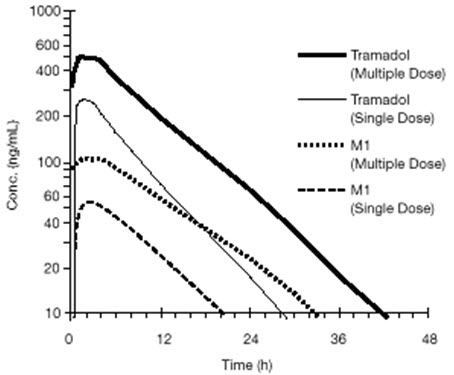
Figure 1 (Figure 02)
| Population/Dosage Regimen
SD = Single dose, MD = Multiple dose, p.o.= Oral administration, i.v.= Intravenous administration, q.i.d. = Four times daily | Parent Drug/ Metabolite | Peak Conc.(ng/mL) | Time to Peak (hrs) | Clearance/F b
F represents the oral bioavailability of tramadol (mL/min/Kg) | t 1/2 (hrs) |
|---|---|---|---|---|---|
| Healthy Adults,
100 mg qid, MD p.o. | Tramadol
M1 | 592 (30)
110 (29) | 2.3 (61)
2.4 (46) | 5.90 (25)
Not applicable | 6.7 (15)
7.0 (14) |
| Healthy Adults,
100 mg SD p.o. | Tramadol
M1 | 308 (25)
55.0 (36) | 1.6 (63)
3.0 (51) | 8.50 (31)
| 5.6 (20)
6.7 (16) |
| Geriatric, (>75 yrs)
50 mg SD p.o. | Tramadol
M1 | 208 (31)
Not measured | 2.1 (19)
| 6.89 (25)
| 7.0 (23)
|
| Hepatic Impaired,
50 mg SD p.o. | Tramadol
M1 | 217 (11)
19.4 (12) | 1.9 (16)
9.8 (20) | 4.23 (56)
| 13.3 (11)
18.5 (15) |
| Renal Impaired,
CLcr1030 mL/min 100 mg SD i.v. | Tramadol
M1 | 4.23 (54)
| 10.6 (31)
11.5 (40) | ||
| Renal Impaired,
CLcr<5 mL/min 100 mg SD i.v. | Tramadol
M1 | 3.73 (17)
| 11.0 (29)
16.9 (18) |
Food Effects
Oral administration of tramadol hydrochloride oral solution with food does not significantly affect its rate or extent of absorption, therefore, tramadol hydrochloride oral solution can be administered without regard to food.
Distribution
The volume of distribution of tramadol was 2.6 and 2.9 liters/kg in male and female subjects, respectively, following a 100 mg intravenous dose. The binding of tramadol to human plasma proteins is approximately 20% and binding also appears to be independent of concentration up to 10 mcg/mL. Saturation of plasma protein binding occurs only at concentrations outside the clinically relevant range.
Elimination
Tramadol is eliminated primarily through metabolism by the liver and the metabolites are eliminated primarily by the kidneys. The mean (%CV) apparent total clearance of tramadol after a single 100 mg oral dose is 8.50 (31) mL/min/kg. The mean terminal plasma elimination half-lives of racemic tramadol and racemic M1 are 6.3 ± 1.4 and 7.4 ± 1.4 hours, respectively. The plasma elimination half-life of racemic tramadol increased from approximately six hours to seven hours upon multiple dosing.
Metabolism
Tramadol is extensively metabolized after oral administration by a number of pathways, including CYP2D6 and CYP3A4, as well as by conjugation of parent and metabolites. Approximately 30% of the dose is excreted in the urine as unchanged drug, whereas 60% of the dose is excreted as metabolites. The remainder is excreted either as unidentified or as unextractable metabolites. The major metabolic pathways appear to be N- and O-demethylation and glucuronidation or sulfation in the liver. One metabolite ( O-desmethyltramadol, denoted M1) is pharmacologically active in animal models. Formation of M1 is dependent on CYP2D6 and as such is subject to inhibition, which may affect the therapeutic response [Warnings and Precautions ( 5.5); Drug Interactions ( 7)] .
Approximately 7% of the population has reduced activity of the CYP2D6 isoenzyme of cytochrome P-450. These individuals are "poor metabolizers" of debrisoquine, dextromethorphan, tricyclic antidepressants, among other drugs. Based on a population PK analysis of Phase I studies in healthy subjects, concentrations of tramadol were approximately 20% higher in "poor metabolizers" versus "extensive metabolizers", while M1 concentrations were 40% lower. Concomitant therapy with inhibitors of CYP2D6 such as fluoxetine, paroxetine and quinidine could result in significant drug interactions. In vitro drug interaction studies in human liver microsomes indicate that inhibitors of CYP2D6 such as fluoxetine and its metabolite norfluoxetine, amitriptyline and quinidine inhibit the metabolism of tramadol to various degrees, suggesting that concomitant administration of these compounds could result in increases in tramadol concentrations and decreased concentrations of M1. The full pharmacological impact of these alterations in terms of either efficacy or safety is unknown. Concomitant use of serotonin re-uptake inhibitors and MAO inhibitors may enhance the risk of adverse events, including seizure and serotonin syndrome [see Warnings and Precautions ( 5.9), Drug Interactions ( 7)] .
Excretion
Tramadol metabolites are eliminated primarily by the kidneys. Approximately 30% of the dose is excreted in the urine as unchanged drug, whereas 60% of the dose is excreted as metabolites. The remainder is excreted either as unidentified or as unextractable metabolites.
Special Populations
Hepatic Impairment
Metabolism of tramadol and M1 is reduced in patients with severe hepatic impairment based on a study in patients with advanced cirrhosis of the liver, resulting in both a larger area under the concentration time curve for tramadol and longer tramadol and M1 elimination half-lives (13 hrs. for tramadol and 19 hrs. for M1). In patients with severe hepatic impairment, adjustment of the dosing regimen is recommended [see Dosage and Administration ( 2)] .
Renal Impairment
Impaired renal function results in a decreased rate and extent of excretion of tramadol and its active metabolite, M1. In patients with creatinine clearances of less than 30 mL/min, adjustment of the dosing regimen is recommended [see Dosage and Administration ( 2)] . The total amount of tramadol and M1 removed during a 4-hour dialysis period is less than 7% of the administered dose.
Age: Geriatric
Healthy elderly subjects aged 65 to 75 years have plasma tramadol concentrations and elimination half-lives comparable to those observed in healthy subjects less than 65 years of age. In subjects over 75 years, maximum serum concentrations are elevated (208 vs. 162 ng/mL) and the elimination half-life is prolonged (7 vs. 6 hours) compared to subjects 65 to 75 years of age. Adjustment of the daily dose is recommended for patients older than 75 years [see Dosage and Administration ( 2.3)] .
Sex
The absolute bioavailability of tramadol was 73% in males and 79% in females. The plasma clearance was 6.4 mL/min/kg in males and 5.7 mL/min/kg in females following a 100 mg IV dose of tramadol. Following a single oral dose, and after adjusting for body weight, females had a 12% higher peak tramadol concentration and a 35% higher area under the concentration-time curve compared to males. The clinical significance of this difference is unknown.
Poor / Extensive Metabolizers, CYP2D6
The formation of the active metabolite, M1, is mediated by CYP2D6, a polymorphic enzyme. Approximately 7% of the population has reduced activity of the CYP2D6 isoenzyme of cytochrome P450 metabolizing enzyme system. These individuals are "poor metabolizers" of debrisoquine, dextromethorphan and tricyclic antidepressants, among other drugs. Based on a population PK analysis of Phase 1 studies with IR tablets in healthy subjects, concentrations of tramadol were approximately 20% higher in "poor metabolizers" versus "extensive metabolizers," while M1 concentrations were 40% lower.
Carcinogenesis
A slight, but statistically significant, increase in two common murine tumors, pulmonary and hepatic, was observed in an NMRI mouse carcinogenicity study, particularly in aged mice. Mice were dosed orally up to 30 mg/kg in the drinking water (0.36 times the MRHD) for approximately two years, although the study was not done with the Maximum Tolerated Dose. This finding is not believed to suggest risk in humans. No evidence of carcinogenicity was noted in a rat 2-year carcinogenicity study testing oral doses of up to 30 mg/kg in the drinking water, 0.73 times the MRHD.
Mutagenesis
Tramadol was mutagenic in the presence of metabolic activation in the mouse lymphoma assay. Tramadol was not mutagenic in the in vitro bacterial reverse mutation assay using Salmonella and E. coli (Ames), the mouse lymphoma assay in the absence of metabolic activation, the in vitro chromosomal aberration assay, or the in vivo micronucleus assay in bone marrow.
Impairment of Fertility
No effects on fertility were observed for tramadol at oral dose levels up to 50 mg/kg in male rats and 75 mg/kg in female rats. These dosages are 1.2 and 1.8 times the maximum recommended human daily dose based on body surface area, respectively.
However, published studies report that treatment of adult male rats with tramadol (40 mg/kg, IP and SC for 30 and 60 days, respectively, 1.2x the MRHD based on BSA; or 4.5 to 135 mg/kg, SC for 18 weeks, 0.01x to 3.2x the MRHD based on BSA) produced adverse effects on male reproductive hormones and male reproductive tissues.
Titration Trials
In a randomized, blinded clinical study with 129 to 132 patients per group, a 10-day titration to a daily tramadol hydrochloride dose of 200 mg (50 mg four times per day), attained in 50 mg increments every 3 days, was found to result in fewer discontinuations due to dizziness or vertigo than titration over only 4 days or no titration. In a second study with 54 to 59 patients per group, patients who had nausea or vomiting when titrated over 4 days were randomized to re-initiate tramadol hydrochloride therapy using slower titration rates.
A 16-day titration schedule, starting with 25 mg every morning and using additional doses in 25 mg increments every third day to 100 mg/day (25 mg four times per day), followed by 50 mg increments in the total daily dose every third day to 200 mg/day (50 mg four times per day), resulted in fewer discontinuations due to nausea or vomiting and fewer discontinuations due to any cause than did a 10-day titration schedule (See Figure 2).
Figure 2:
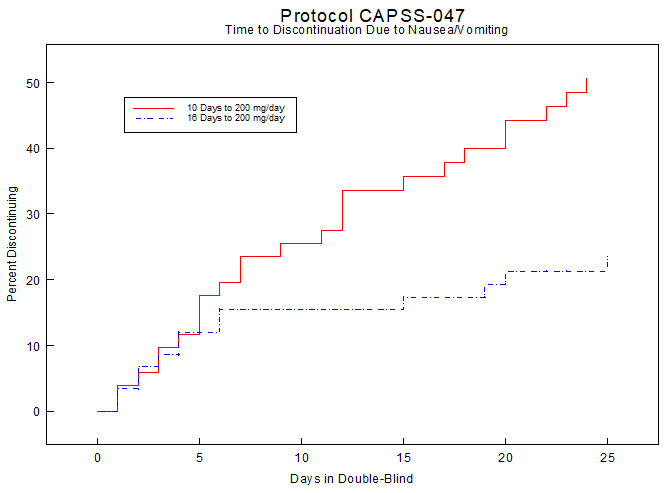
Figure 2 (Figure 03)
Storage and Disposal
Because of the risks associated with accidental ingestion, misuse, and abuse, advise patients to store tramadol hydrochloride oral solution securely, out of sight and reach of children, and in a location not accessible by others, including visitors to the home
[see Warnings and Precautions (
5.2,
5.3), Drug Abuse and Dependence (
9.2)]
. Inform patients that leaving tramadol hydrochloride oral solution unsecured can pose a deadly risk to others in the home.
Advise patients and caregivers that when medicines are no longer needed, they should be disposed of promptly. Inform patients that medicine take-back options are the preferred way to safely dispose of most types of unneeded medicines. If no take back programs or Drug Enforcement Administration (DEA)-registered collectors are available, instruct patients to dispose of tramadol hydrochloride oral solution by following these four steps:
Inform patients that they can visit www.fda.gov/drugdisposal for additional information on disposal of unused medicines.
Medication Errors
Instruct patients on how to measure and take the correct dose of tramadol hydrochloride oral solution and to always use a calibrated oral syringe or other oral dosing device to correctly measure the prescribed amount of medication
[see Dosage and Administration (
2.1), Warnings and Precautions (
5.1)]
.
Addiction, Abuse, and Misuse
Inform patients that the use of tramadol hydrochloride oral solution, even when taken as recommended, can result in addiction, abuse, and misuse, which can lead to overdose and death [see Warnings and Precautions ( 5.2)] . Instruct patients not to share tramadol hydrochloride oral solution with others and to take steps to protect tramadol hydrochloride oral solution from theft or misuse.
Life-Threatening Respiratory Depression
Inform patients of the risk of life-threatening respiratory depression, including information that the risk is greatest when starting tramadol hydrochloride oral solution or when the dosage is increased, and that it can occur even at recommended dosages. Educate patients and caregivers on how to recognize respiratory depression and emphasize the importance of calling 911 or getting emergency medical help right away in the event of a known or suspected overdose [see Warnings and Precautions ( 5.4)] .
Patient Access to Naloxone for the Emergency Treatment of Opioid Overdose
Discuss with the patient and caregiver the availability of naloxone for the emergency treatment of opioid overdose, both when initiating and renewing treatment with tramadol hydrochloride oral solution. Inform patients and caregivers about the various ways to obtain naloxone as permitted by individual state naloxone dispensing and prescribing requirements or guidelines (e.g., by prescription, directly from a pharmacist, or as part of a community-based program) [see Dosage and Administration ( 2.2), Warnings and Precautions ( 5.4)] .
Educate patients and caregivers on how to recognize the signs and symptoms of an overdose.
Explain to patients and caregivers that naloxone’s effects are temporary, and that they must call 911 or get emergency medical help right away in all cases of known or suspected opioid overdose, even if naloxone is administered [see Overdosage ( 10)] .
If naloxone is prescribed, also advise patients and caregivers:
Accidental Ingestion
Inform patients that accidental ingestion, especially by children, may result in respiratory depression or death [see Warnings and Precautions ( 5.4)] .
Ultra-Rapid Metabolism of Tramadol and Other Risk Factors for Life-threatening Respiratory Depression in Children
Advise caregivers that tramadol hydrochloride oral solution is contraindicated in children younger than 12 years of age and in children younger than 18 years of age following tonsillectomy and/or adenoidectomy. Advise caregivers of children ages 12 to 18 years of age receiving tramadol hydrochloride oral solution to monitor for signs of respiratory depression [see Warnings and Precautions ( 5.5)] .
Interactions with Benzodiazepines and Other CNS Depressants
Inform patients and caregivers that potentially fatal additive effects may occur if tramadol hydrochloride oral solution is used with benzodiazepines, CNS depressants, including alcohol, or some illicit drugs and not to use these concomitantly unless supervised by a healthcare provider [see Warnings and Precautions ( 5.8), Drug Interactions ( 7)] .
Serotonin Syndrome
Inform patients that opioids could cause a rare but potentially life-threatening condition resulting from concomitant administration of serotonergic drugs. Warn patients of the symptoms of serotonin syndrome, and to seek medical attention right away if symptoms develop. Instruct patients to inform their healthcare provider if they are taking, or plan to take serotonergic medications [see Warnings and Precautions ( 5.9)] .
Seizures
Inform patients that tramadol hydrochloride oral solution may cause seizures with concomitant use of serotonergic agents (including SSRIs, SNRIs, and triptans) or drugs that significantly reduce the metabolic clearance of tramadol [see Warnings and Precautions ( 5.10)] .
MAOI Interaction
Inform patients not to take tramadol hydrochloride oral solution while using any drugs that inhibit monoamine oxidase. Patients should not start MAOIs while taking tramadol hydrochloride oral solution [see Drug Interactions ( 7)] .
Adrenal Insufficiency
Inform patients that opioids could cause adrenal insufficiency, a potentially life-threatening condition. Adrenal insufficiency may present with non-specific symptoms and signs such as nausea, vomiting, anorexia, fatigue, weakness, dizziness, and low blood pressure. Advise patients to seek medical attention if they experience a constellation of these symptoms [see Warnings and Precautions ( 5.12)] .
Important Administration Instructions
Important Discontinuation Instructions
In order to avoid developing withdrawal symptoms, instruct patients not to discontinue tramadol hydrochloride oral solution without first discussing a tapering plan with the prescriber [see Dosage and Administration ( 2.5)] .
Hypotension
Inform patients that tramadol hydrochloride oral solution may cause orthostatic hypotension and syncope. Instruct patients how to recognize symptoms of low blood pressure and how to reduce the risk of serious consequences should hypotension occur (e.g., sit or lie down, carefully rise from a sitting or lying position) [see Warnings and Precautions ( 5.14)] .
Anaphylaxis
Inform patients that anaphylaxis has been reported with ingredients contained in tramadol hydrochloride oral solution. Advise patients how to recognize such a reaction and when to seek medical attention [see Contraindications ( 4), Warnings and Precautions ( 5.17), Adverse Reactions ( 6)] .
Pregnancy
Neonatal Opioid Withdrawal Syndrome
Inform female patients of reproductive potential that prolonged use of tramadol hydrochloride oral solution during pregnancy can result in neonatal opioid withdrawal syndrome, which may be life-threatening if not recognized and treated and that the patient should inform their healthcare provider if they have used opioids at any time during their pregnancy, especially near the time of birth. [see Warnings and Precautions ( 5.6), Use in Specific Populations ( 8.1)] .
Embryo-Fetal Toxicity
Inform female patients of reproductive potential that tramadol hydrochloride oral solution may cause fetal harm and to inform the healthcare provider of a known or suspected pregnancy [see Use in Specific Populations ( 8.1)] .
Lactation
Advise women that breastfeeding is not recommended during treatment with tramadol hydrochloride oral solution [see Warnings and Precautions ( 5.5), Use in Specific Populations ( 8.2)] .
Infertility
Inform patients that chronic use of opioids may cause reduced fertility. It is not known whether these effects on fertility are reversible [see Use in Specific Populations ( 8.3)] .
Driving or Operating Heavy Machinery
Inform patients that tramadol hydrochloride oral solution may impair the ability to perform potentially hazardous activities such as driving a car or operating heavy machinery. Advise patients not to perform such tasks until they know how they will react to the medication [see Warnings and Precautions ( 5.19)] .
Constipation
Advise patients of the potential for severe constipation, including management instructions and when to seek medical attention [see Adverse Reactions ( 6)] .
Maximum single-dose and 24-hour dose
Advise patients not to exceed the single-dose and 24-hour dose limit and the time interval between doses, since exceeding these recommendations can result in respiratory depression, seizures and death [see Dosage and Administration ( 2), Warnings and Precautions ( 5.4)] .
Manufactured for:
Palmetto Pharmaceuticals, Inc.
Greenville, SC 29615
Revised 09/2021
500529-01