Other
Postmarketing cases of metformin-associated lactic acidosis have resulted in death, hypothermia, hypotension, and resistant bradyarrhythmias. The onset of metformin-associated lactic acidosis is often subtle, accompanied only by nonspecific symptoms such as malaise, myalgias, respiratory distress, somnolence, and abdominal pain. Metformin-associated lactic acidosis was characterized by elevated blood lactate levels (> 5 mmol/Liter), anion gap acidosis (without evidence of ketonuria or ketonemia), an increased lactate/pyruvate ratio, and metformin plasma levels generally >5 mcg/mL [see WARNINGS AND PRECAUTIONS (5.1)].
Risk factors for metformin-associated lactic acidosis include renal impairment, concomitant use of certain drugs (e.g., carbonic anhydrase inhibitors such as topiramate), age 65 years old or greater, having a radiological study with contrast, surgery and other procedures, hypoxic states (e.g., acute congestive heart failure), excessive alcohol intake, and hepatic impairment.
Steps to reduce the risk of and manage metformin-associated lactic acidosis in these high risk groups are provided in the full prescribing information [see DOSAGE AND ADMINISTRATION (2.2), CONTRAINDICATIONS (4), WARNINGS AND PRECAUTIONS (5.1), and DRUG INTERACTIONS (7)].
If metformin-associated lactic acidosis is suspected, immediately discontinue metformin hydrochloride extended-release tablet and institute general supportive measures in a hospital setting. Prompt hemodialysis is recommended [see WARNINGS AND PRECAUTIONS (5.1)].
Metformin hydrochloride extended-release tablets are indicated as an adjunct to diet and exercise to improve glycemic control in adults with type 2 diabetes mellitus.
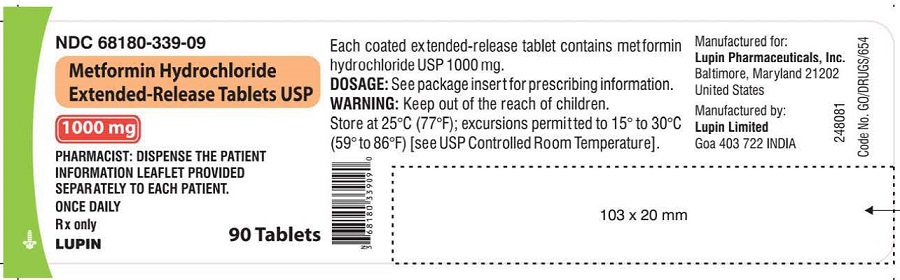
Metformin hydrochloride extended-release tablets, 500 mg are available as white to off-white, oval shaped, biconvex coated tablet, debossed with "L41" on one side and "LU" on the other side.
Metformin hydrochloride extended-release tablets, 1,000 mg are available as white to off-white, oval shaped, biconvex coated tablet, debossed with "L42" on one side and "LU" on the other side.
Metformin hydrochloride extended-release tablets are contraindicated in patients with:
- Severe renal impairment (eGFR below 30mL/minute/1.73 m2) [see WARNINGS AND PRECAUTIONS (5.1)] .
- Known hypersensitivity to metformin.
- Acute or chronic metabolic acidosis, including diabetic ketoacidosis, with or without coma.
- Lactic Acidosis [see BOXED WARNING and WARNINGS AND PRECAUTIONS (5.1)]
- Vitamin B12Deficiency [see WARNINGS AND PRECAUTIONS (5.2)]
- Hypoglycemia [see WARNINGS AND PRECAUTIONS (5.3)]
The following adverse reactions are discussed in more detail in other sections of the labeling:
Table 2 presents clinically significant drug interactions with metformin hydrochloride extended-release tablets.
| Carbonic Anhydrase Inhibitors | |
| Clinical Impact: | Carbonic anhydrase inhibitors frequently cause a decrease in serum bicarbonate and induce non-anion gap, hyperchloremic metabolic acidosis. Concomitant use of these drugs with metformin hydrochloride extended-release tablets may increase the risk for lactic acidosis. |
| Intervention: | Consider more frequent monitoring of these patients. |
| Examples: | Topiramate, zonisamide, acetazolamide or dichlorphenamide. |
| Drugs that Reduce Metformin Hydrochloride Extended-Release Tablets Clearance | |
| Clinical Impact: | Concomitant use of drugs that interfere with common renal tubular transport systems involved in the renal elimination of metformin (e.g., organic cationic transporter-2 [OCT2] / multidrug and toxin extrusion [MATE] inhibitors) could increase systemic exposure to metformin and may increase the risk for lactic acidosis [see CLINICAL PHARMACOLOGY (12.3)]. |
| Intervention: | Consider the benefits and risks of concomitant use with metformin hydrochloride extended-release tablets. |
| Examples: | Ranolazine, vandetanib, dolutegravir, and cimetidine. |
| Alcohol | |
| Clinical Impact: | Alcohol is known to potentiate the effect of metformin on lactate metabolism. |
| Intervention: | Warn patients against excessive alcohol intake while receiving metformin hydrochloride extended-release tablets. |
| Insulin Secretagogues or Insulin | |
| Clinical Impact: | Coadministration of metformin hydrochloride extended-release tablets with an insulin secretagogue (e.g., sulfonylurea) or insulin may increase the risk of hypoglycemia. |
| Intervention: | Patients receiving an insulin secretagogue or insulin may require lower doses of the insulin secretagogue or insulin. |
| Drugs Affecting Glycemic Control | |
| Clinical Impact: | Certain drugs tend to produce hyperglycemia and may lead to loss of glycemic control. |
| Intervention: | When such drugs are administered to a patient receiving metformin hydrochloride extended-release tablets, observe the patient closely for loss of blood glucose control. When such drugs are withdrawn from a patient receiving metformin hydrochloride extended-release tablets, observe the patient closely for hypoglycemia. |
| Examples: | Thiazides and other diuretics, corticosteroids, phenothiazines, thyroid products, estrogens, oral contraceptives, phenytoin, nicotinic acid, sympathomimetics, calcium channel blockers, and isoniazid. |