Rivaroxaban Tablet, Film Coated
Product Images NDC 68180-709

View Photos of Packaging, Regulatory Labels, and Product Appearance

Product Visual Gallery

This gallery contains 11 technical images submitted to the FDA as part of the official labeling for Rivaroxaban (NDC 68180-709). Unlike standard consumer photos, these assets often include clinical data figures, molecular chemical structures, and official manufacturer packaging layouts.

As provided by Lupin Pharmaceuticals, Inc., these visuals offer a comprehensive scientific overview of the product's physical and chemical identity, aiding pharmacists and researchers in product verification and study.

FDA Label Image

Image (186d9028 88fd 4703 804c 2e3c98a5b007 01)

Image (186d9028 88fd 4703 804c 2e3c98a5b007 01)
Chemical structure of rivaroxaban, an oral anticoagulant active ingredient depicted in a molecular diagram showing its atomic arrangement and bonding.*
FDA Label Image

Figure 3 (186d9028 88fd 4703 804c 2e3c98a5b007 02)

Figure 3 (186d9028 88fd 4703 804c 2e3c98a5b007 02)
A pharmacokinetic chart depicting fold change and 90% confidence intervals for Cmax and AUC of rivaroxaban in various populations including end-stage renal disease, renal impairment (severe, moderate, mild), different age groups (75-83 years vs. 18-43 years), body weight categories (<=50 kg, 70-80 kg, >120 kg), and hepatic impairment (moderate, mild). The plot shows how the pharmacokinetic parameters change relative to reference values.*
FDA Label Image

Image (186d9028 88fd 4703 804c 2e3c98a5b007 03)

Image (186d9028 88fd 4703 804c 2e3c98a5b007 03)
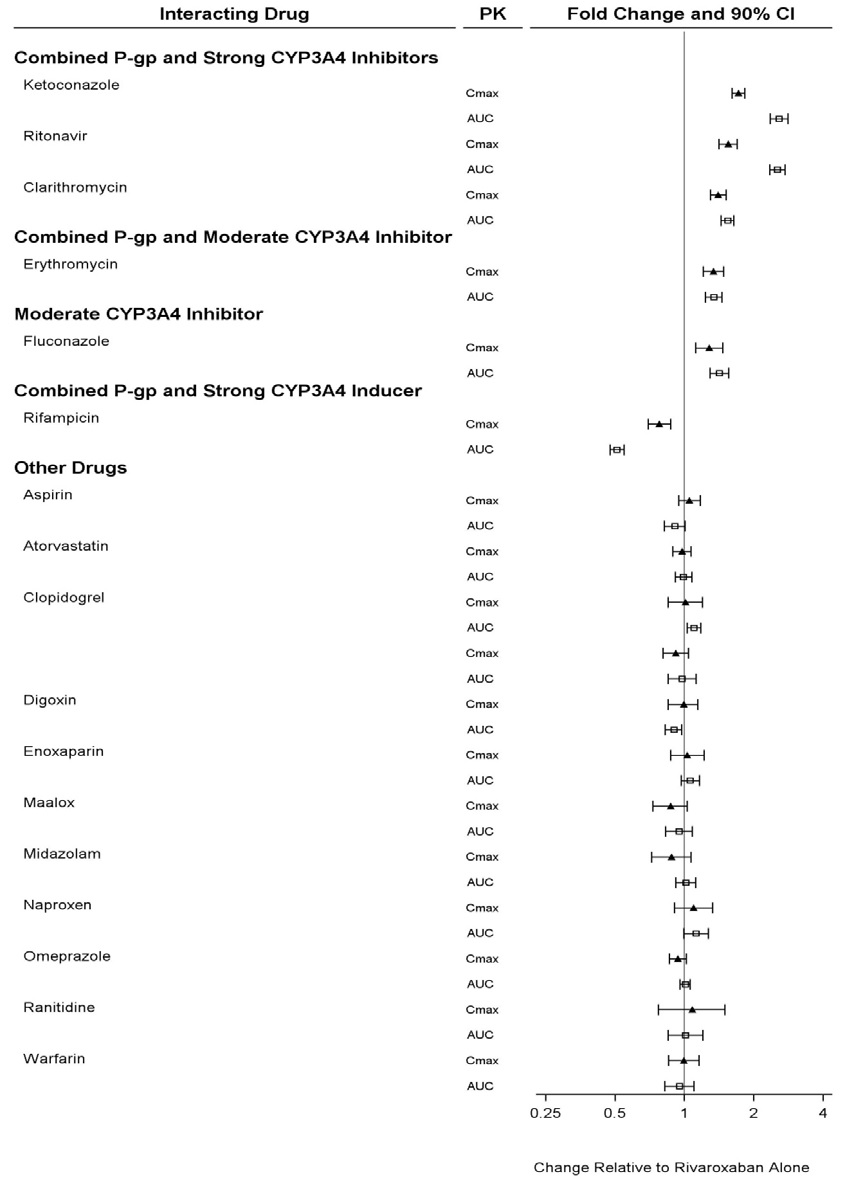
A pharmacokinetic (PK) chart showing fold change and 90% confidence intervals in drug plasma concentration (Cmax and AUC) relative to rivaroxaban alone. The chart lists interacting drugs under categories like combined P-gp and CYP3A4 inhibitors and inducers, and other drugs such as aspirin and warfarin, displaying how each affects rivaroxaban exposure.*
FDA Label Image

Fig 9 (186d9028 88fd 4703 804c 2e3c98a5b007 04)

Fig 9 (186d9028 88fd 4703 804c 2e3c98a5b007 04)
A forest plot comparing the primary efficacy outcome (composite of stroke, myocardial infarction, or cardiovascular death) between Rivaroxaban and placebo across various subgroups including age, sex, region, weight, eGFR, MI history, stroke history, prior heart failure, baseline diabetes, and peripheral artery disease (PAD). The plot shows hazard ratios with 95% confidence intervals for each subgroup, indicating the relative risk favoring either Rivaroxaban or placebo.*
FDA Label Image

Figure 10 (186d9028 88fd 4703 804c 2e3c98a5b007 05)

Figure 10 (186d9028 88fd 4703 804c 2e3c98a5b007 05)
A Kaplan-Meier curve chart showing the cumulative incidence rate (%) over days from randomization comparing Rivaroxaban and placebo. The solid line represents Rivaroxaban, and the dashed line represents placebo. The chart includes a risk table indicating the number of subjects at risk for both groups at various time points.*
FDA Label Image

Figure 11 (186d9028 88fd 4703 804c 2e3c98a5b007 06)

Figure 11 (186d9028 88fd 4703 804c 2e3c98a5b007 06)
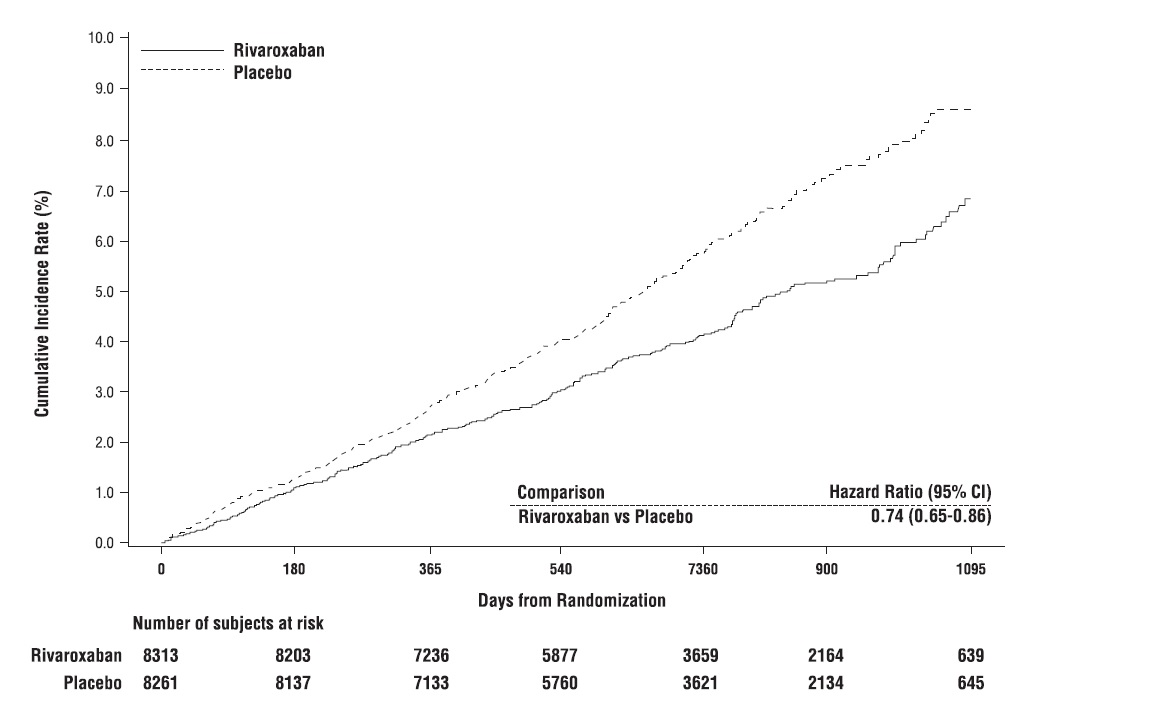
A line graph depicting cumulative incidence rate (%) over days from randomization (0 to 1095 days) comparing Rivaroxaban and placebo treatment groups. Two curves show that the cumulative incidence rate increases over time, with the placebo group having a consistently higher rate than the Rivaroxaban group. Number of subjects at risk is listed for both groups at various time points. A hazard ratio (95% CI) of 0.85 (0.76, 0.96) for Rivaroxaban versus placebo is indicated.*
FDA Label Image

Figure 12 (186d9028 88fd 4703 804c 2e3c98a5b007 07)

Figure 12 (186d9028 88fd 4703 804c 2e3c98a5b007 07)
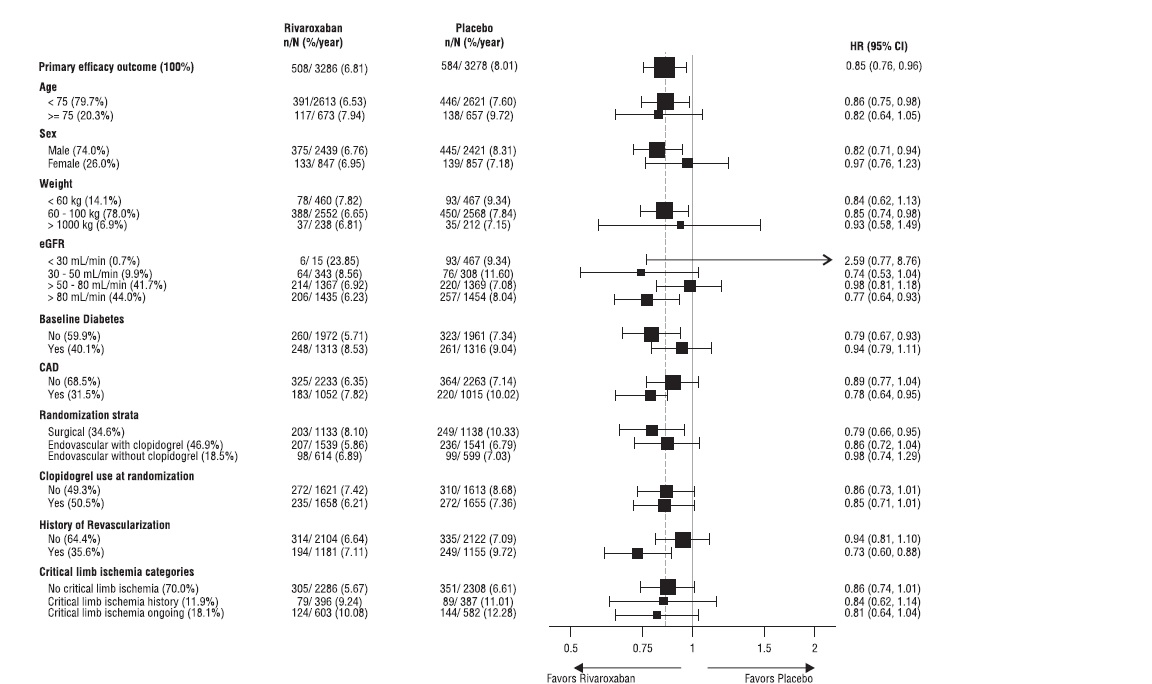
A forest plot comparing the primary efficacy outcome of Rivaroxaban versus placebo across various subgroups including age, sex, weight, eGFR, diabetes status, CAD, randomization strata, clopidogrel use, history of revascularization, and critical limb ischemia categories. The plot displays hazard ratios (HR) with 95% confidence intervals for each subgroup, indicating the comparative efficacy of Rivaroxaban relative to placebo.*
FDA Label Image

Container 2.5 mg (186d9028 88fd 4703 804c 2e3c98a5b007 08)

Container 2.5 mg (186d9028 88fd 4703 804c 2e3c98a5b007 08)
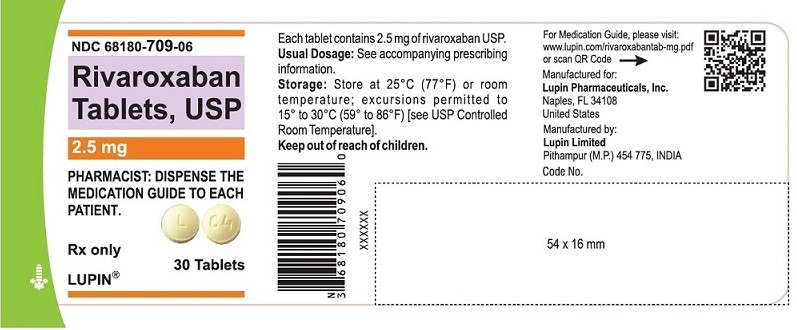
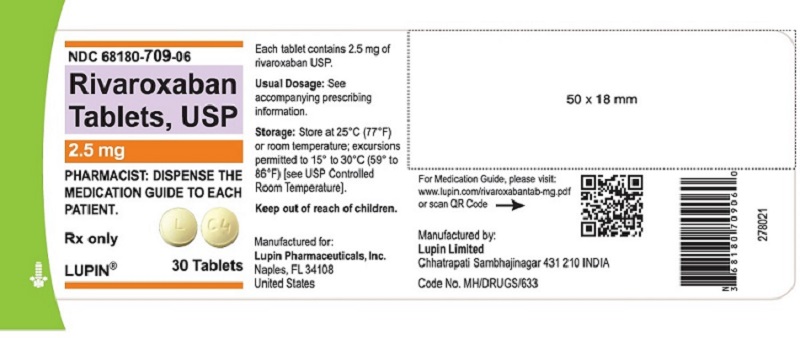
Rivaroxaban Tablets USP 2.5 mg film-coated tablets label showing 30 tablets per package. The label includes storage instructions, a QR code for medication guide, and manufacturing details for Lupin Pharmaceuticals, Inc. and Lupin Limited. The label also features an image of two round tablets marked 'L' and '04'.*
FDA Label Image

Container 2.5 mg (186d9028 88fd 4703 804c 2e3c98a5b007 09)

Container 2.5 mg (186d9028 88fd 4703 804c 2e3c98a5b007 09)
Rivaroxaban 2.5 mg tablets, USP, oral film-coated tablets in a bottle label by Lupin Pharmaceuticals, Inc. The label indicates 30 tablets per bottle. Storage instructions note keeping tablets at 25°C (77°F) or room temperature with permitted excursions. The label includes a QR code for medication guide access and a barcode. Manufactured by Lupin Limited, India.*
FDA Label Image

Image (186d9028 88fd 4703 804c 2e3c98a5b007 689 1)

Image (186d9028 88fd 4703 804c 2e3c98a5b007 689 1)
RIVAROXABAN 2.5 mg film-coated tablets packaging from Lupin Pharmaceuticals, Inc. The label shows the product name and strength prominently with an artistic design featuring black cross shapes on a white background. The product is an oral prescription tablet.*
FDA Label Image

Image (186d9028 88fd 4703 804c 2e3c98a5b007 711 1)

Image (186d9028 88fd 4703 804c 2e3c98a5b007 711 1)
RIVAROXABAN 2.5 mg film-coated tablets package label by Lupin Pharmaceuticals, Inc. The image shows a rectangular blister card containing 10 tablets arranged in two columns of five. Each tablet is round and white, sealed under a silver foil backing with perforations between each dose for easy separation.*

* About these descriptions: Image descriptions on this page are generated by automated AI analysis of the product label images from the manufacturer's FDA label submission (SPL). They are provided for reference only and may contain errors or omissions. Always rely on the printed label itself and the official FDA labeling, and consult a pharmacist or healthcare professional with any questions about this product.